Bermuda grass (Cynodon dactylon) can germinate and establish in the UK during a warm summer, but it will not reliably survive as a permanent year-round lawn across most of Britain. Milkweed (a group of plants in the genus Asclepias) is generally grown for its flowers and can survive outdoors in parts of the UK depending on the species and local winter conditions, but it is not a typical lawn plant like Bermuda grass does milkweed grow in UK.
Does Bermuda grass grow in the UK? What to expect

James Hartwell
3 Jul 2026
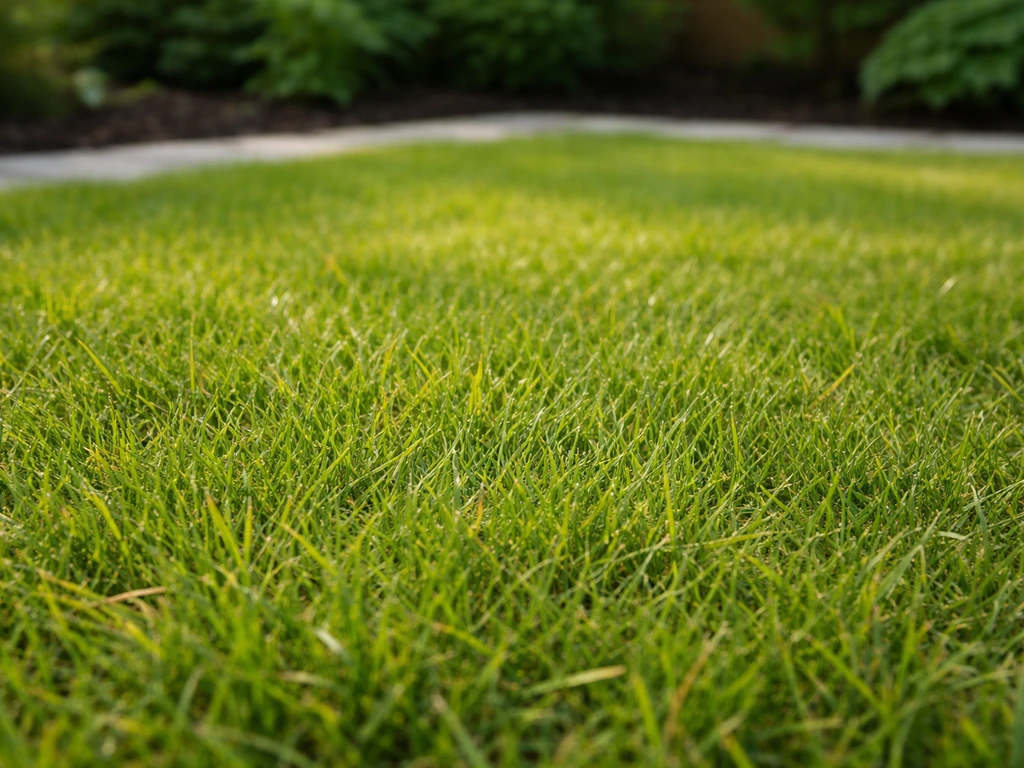
In the warmest, most sheltered spots along the South Coast, it might just scrape through a mild winter and regrow in spring. Everywhere else, expect it to die back hard or not return at all. You can grow it as a warm-season annual or semi-permanent turf in the right conditions, but walking out expecting a lush Bermuda lawn across a typical British garden is setting yourself up for disappointment.
The honest answer for UK gardens
The core issue is winter cold. Research on Cynodon dactylon shows that 50% of plants in tested cultivars are killed at temperatures between −7.7°C and −9.6°C (roughly 15°F to 18°F). The RHS hardiness rating blank" rel="noopener noreferrer">H5, which covers plants tolerant down to around −10°C to −15°C, is about the limit of what the UK regularly delivers in a cold winter. A severe frost event, which the UK sees somewhere most winters, falls right into the kill zone for Bermuda grass. It is not truly winter hardy here in the way that ryegrass or fescue are.
That said, "grows" means different things to different people. Lotus flowers, unlike Bermuda grass, have their own climate and water needs, so it is important to check whether your UK conditions can support them can lotus flowers grow in uk. If you want to know whether Bermuda grass seed will sprout and produce green turf in a UK summer, the answer is yes, provided you have a warm, sunny spot and you time it right. If you want to know whether it will persist, spread, and come back year after year without intervention, the honest answer is: probably not north of the Midlands, and even in the South it is marginal.
What Bermuda grass actually needs to thrive

Bermuda grass is a subtropical grass. It evolved in hot, open landscapes and its whole biology is tuned to warmth. Understanding what it really wants makes it obvious why the UK is a stretch.
- Heat: Active growth needs soil temperatures consistently above 18°C to 21°C. It really gets going above 24°C. In the UK, soil temperatures in that range happen for maybe 8 to 10 weeks in a good summer in the South, and barely at all in Scotland.
- Sun: Full sun, all day. Bermuda grass has almost zero shade tolerance. Even light tree cover or a north-facing slope will weaken it severely.
- Low winter temperatures: The critical kill threshold is around −8°C to −10°C at root level. Air frosts colder than this, which are common across most of the UK, will destroy the root system.
- Season length: Bermuda grass needs a long warm season to build up enough root mass to have any hope of surviving winter. A short UK summer gives it little time to establish that energy reserve.
- Watering: Established plants are moderately drought tolerant in warm climates, but during the UK establishment phase in summer you will need to keep soil consistently moist. UK rainfall is rarely warm enough or timed well enough to substitute for active irrigation in dry spells.
- Soil: Well-drained, sandy or loamy soil with a pH of around 6.0 to 7.0. Wet, heavy clay soils common in much of the UK are a major problem, both for establishment and for winter survival.
How the UK climate matches up, region by region
The UK is not one climate. That matters a lot for a plant this temperature-sensitive. Here is a realistic breakdown.
| Region | Summer heat | Winter risk | Realistic outcome |
|---|---|---|---|
| South Coast (Cornwall, Devon, Isle of Wight, parts of Kent/Sussex) | Best in UK, July averages 18–21°C | Mild frosts, but cold snaps can still hit −5°C to −8°C | Best chance of persistence; marginal overwinter possible with protection |
| London and South East | Warm summers, occasional heat | Regular frosts below −5°C most winters | Establishes well in summer, overwinter survival is hit-and-miss |
| Midlands and East Anglia | Decent summer warmth | Cold continental frosts, −8°C to −12°C possible | Likely to die back each winter; treat as annual |
| Wales and South West inland | Variable, often wet and cool | Moderate frosts, high rainfall | Establishment slow, overwinter unlikely |
| North of England and Northern Ireland | Cool summers, short season | Regular hard frosts | Very poor prospects; not recommended outdoors |
| Scotland | Cool summers, low soil temps | Severe winters | Will not persist outdoors; not viable |
Microclimate tips that actually help

If you are in a marginal area and really want to try, microclimate is everything. A south-facing slope or wall that traps heat, free-draining sandy soil that warms up fast in spring, and shelter from cold north and east winds can push conditions a zone warmer in practice. Urban gardens in London or Bristol benefit from the heat island effect, which genuinely raises winter minimums by a degree or two compared to surrounding rural areas. A courtyard garden with brick walls on three sides reflecting heat is your best bet in the UK for keeping Bermuda grass alive.
Planting and establishing Bermuda grass in the UK
Timing is critical. Bermuda grass is a warm-season species and its germination is entirely temperature-dependent. Research on rhizome and stolon sprouting shows that establishment only kicks off properly once soil temperatures reach at least 18°C, and really accelerates at 24°C and above. In the UK, that rules out anything before late May, and realistically you are looking at June to mid-July for the best germination window in the South.
- Wait until soil temperature is consistently above 18°C at 5cm depth. Use a soil thermometer. Do not guess by air temperature.
- Choose a full-sun site with well-drained soil. Improve clay soils by incorporating sharp sand and grit before sowing. Aim for pH 6.0 to 7.0.
- Prepare a fine, firm seedbed. Bermuda grass seed is tiny and needs good soil contact to germinate.
- Sow seed at the standard rate (around 25–35g per square metre for hulled seed). Rake lightly to cover seed shallowly, no more than 3mm deep.
- Water gently but consistently. Keep the seedbed moist throughout germination, which typically takes 7 to 14 days in warm conditions. In UK summers this means checking daily and irrigating in dry spells.
- Alternatively, plant stolons or plugs if you can source them from specialist suppliers. This is faster than seed and gives the plant more time to establish root mass before autumn.
- Do not mow until grass reaches at least 5cm. First cut should be light.
One practical reality: sourcing genuine Cynodon dactylon seed or plugs from a UK supplier is not always straightforward. Many products labelled as warm-season or sports turf mixes in the UK use ryegrass or tall fescue blends. Check what you are actually buying before you spend money on establishment.
Managing it like a warm-season lawn through summer
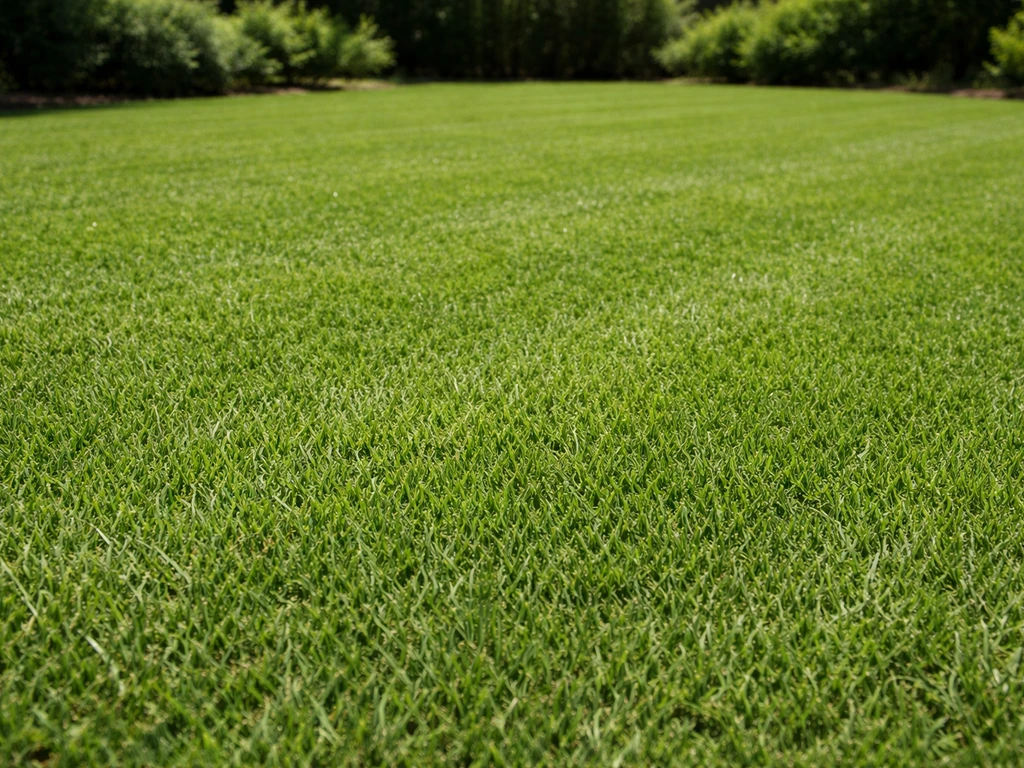
If you do get Bermuda grass established, it behaves very differently from a typical UK lawn, and managing it that way will kill it. Here is what a warm-season management approach looks like in a British context.
Mowing
Bermuda grass loves being cut short, between 2cm and 4cm is ideal. Unlike fescue or ryegrass, scalping it slightly in late spring actually helps by removing thatch and letting warmth reach the crown. Mow regularly during active growth (every 5 to 7 days in peak summer), but stop mowing in August or September as temperatures drop. Cutting it late in the season prevents it building the carbohydrate reserves it needs to survive dormancy.
Feeding
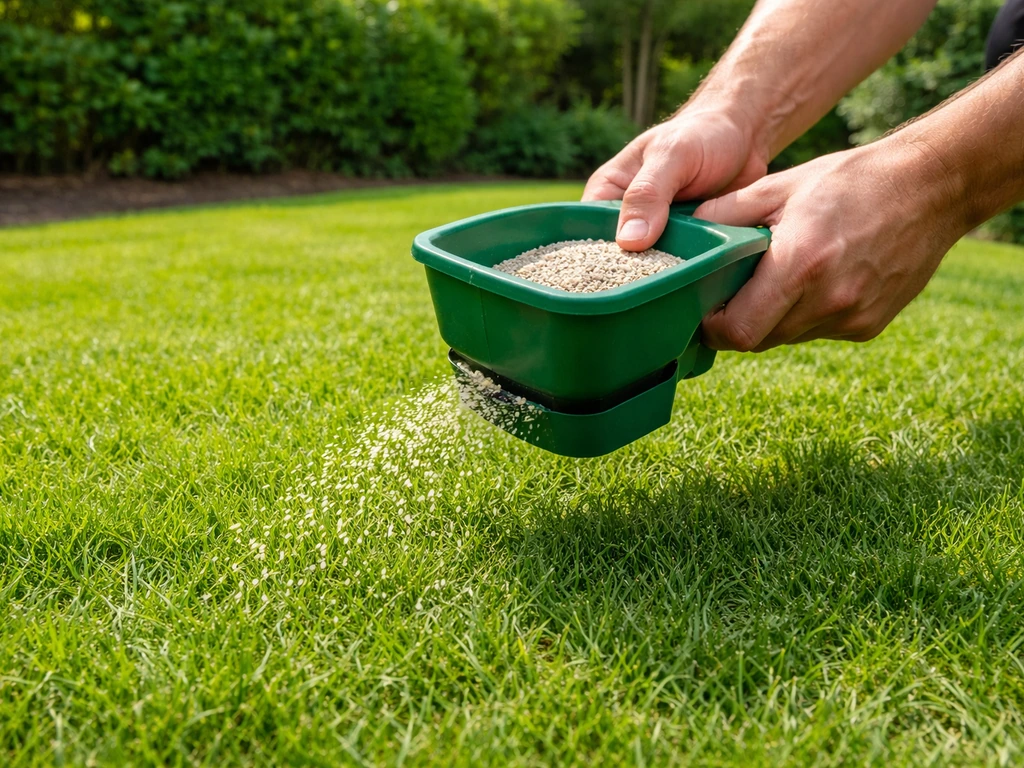
Feed with a nitrogen-rich fertiliser during active growth only, from June to the end of July in the UK. A granular lawn fertiliser at around 25g per square metre once a month during that window is plenty. Do not feed after August. Late feeding pushes soft, frost-vulnerable growth exactly when you need the plant hardening off.
Irrigation
The UK's cool, irregular rainfall is not what Bermuda grass evolved with. During dry spells in summer you will need to water, particularly during establishment. Once established, deep, infrequent watering (allowing the soil to dry slightly between sessions) is better than frequent shallow watering, as it encourages deeper rooting. Stop watering in September to encourage the plant into dormancy.
Will it survive winter? Setting realistic expectations
Bermuda grass goes dormant when temperatures drop below around 10°C. In the UK, that means it will turn brown and look dead from October through to April or May in most years. When do nettles grow in the UK? They tend to sprout in spring and keep growing through summer as long as temperatures are mild and moisture is available winter. That is normal behaviour, not death. The question is whether the roots and rhizomes survive hard frost beneath the soil surface.
Given the kill threshold of around −8°C to −10°C at root level, here is the practical reality: in a mild winter in a sheltered South Coast garden, the roots may survive and you will see regrowth in May. In a cold winter anywhere in the UK, even in the South, you may lose the entire stand. Plan for replanting every one to three years as a realistic budget and effort commitment, rather than treating this as a permanent lawn. The RHS explains its hardiness ratings are based on absolute minimum winter temperatures, not long-term averages, which helps interpret winter survival risk treating this as a permanent lawn.
Winter protection strategies

You can improve overwinter survival odds, though none of these guarantees success in a hard UK winter.
- Apply a 5–7cm layer of dry mulch (straw or bark) over the lawn area in November once the grass has gone dormant. Remove it in March. This insulates the soil against hard frost.
- In smaller garden areas or containers, move pots under cover (unheated greenhouse or cold frame) for the winter.
- Avoid heavy clay soils where cold waterlogging will rot dormant roots even if frost does not kill them.
- Do not walk on dormant Bermuda grass during winter. Compressing frozen or dormant turf damages the crowns.
If overwinter survival is genuinely important to you, the most reliable strategy is to treat Bermuda grass as a container lawn in the UK. A large raised bed or container filled with free-draining, sandy growing medium can be moved to a frost-free but unheated space for winter and brought back out in May. It is more effort, but it gives you actual control over the outcome.
Naming confusion and look-alikes to know about
Bermuda grass gets confused with several other grasses in the UK, and the naming confusion goes both ways. If you think you have spotted Bermuda grass in a UK lawn or field, you have almost certainly found common couch grass (Elymus repens, also called twitch grass). Couch grass has the same vigorous creeping stolons and rhizomes, the same wiry texture, and the same habit of spreading aggressively. It is a completely different species and a persistent weed in UK lawns, fully winter hardy. Bermuda grass would not be spreading naturally across British lawns and fields.
Some seed products sold as 'Bermuda-style' or 'sports turf' mixes in the UK contain no Cynodon dactylon at all. If you are wondering do fiddleheads grow in UK conditions, the answer is that you need the right spring habitat and timing, not a warm-season lawn setup Bermuda-style. They use drought-tolerant fescue blends or ryegrass cultivars that are marketed for their fine texture and hard-wearing qualities. Read the species list on the packet before buying.
Better alternatives for a UK lawn
If what you are really after is a fine, hard-wearing, drought-tolerant lawn that actually survives British winters reliably, there are UK-appropriate options that deliver similar visual qualities without the overwinter anxiety. Sweetgrass is a different plant, and whether it grows in the UK depends on finding the right light, soil, and winter protection for its specific needs sweetgrass in the UK.
- Creeping red fescue (Festuca rubra): Fine-leaved, drought tolerant, spreads by stolons, and fully winter hardy across the UK. The closest realistic match to Bermuda grass's texture and low-maintenance appeal.
- Hard fescue (Festuca brevipila): Dense, low-growing, tolerates dry poor soils very well. Excellent for sunny, free-draining sites where Bermuda grass might be tempting.
- Microclover lawn mixes: Not a grass, but increasingly popular for low-maintenance, drought-tolerant lawns that stay green in dry summers and do not need feeding.
- Zoysia grass: Another warm-season grass, but notably more cold-tolerant than Bermuda grass. Some Zoysia cultivars are rated hardy to around −15°C, making them a more realistic warm-season experiment for sheltered UK gardens.
- Buffalo grass (Bouteloua dactyloides): Low-growing warm-season grass that handles cold better than Bermuda, though still marginal in the UK. Worth considering for very sheltered, sunny sites.
It is worth noting that other plants with a similar feasibility question in the UK, such as sweetgrass or lotus flowers, follow the same pattern: warm-season or tropical species can sometimes establish in sheltered UK microclimates but face the same hard ceiling of winter cold. You might also wonder, do poppies grow in the UK, and the answer depends on which type you mean and how well it handles winter cold. Bermuda grass sits in that same category, technically possible in the right spot, but never a safe bet across most of Britain.
The bottom line for UK gardeners
If you are in Cornwall, the Isle of Wight, or a genuinely sheltered urban garden in the South with free-draining soil and a south-facing aspect, it is worth experimenting with Bermuda grass. Sow in June, manage it carefully through summer, mulch it in November, and cross your fingers. You might get two or three years of really attractive warm-season turf before a cold winter resets you.
If you are north of Birmingham, save yourself the effort and go with a fine fescue blend instead. And wherever you are, if you just want a tough, low-maintenance lawn that reliably comes back every spring, UK-native grass mixes will serve you far better than chasing a subtropical species across a climate it was never designed for.
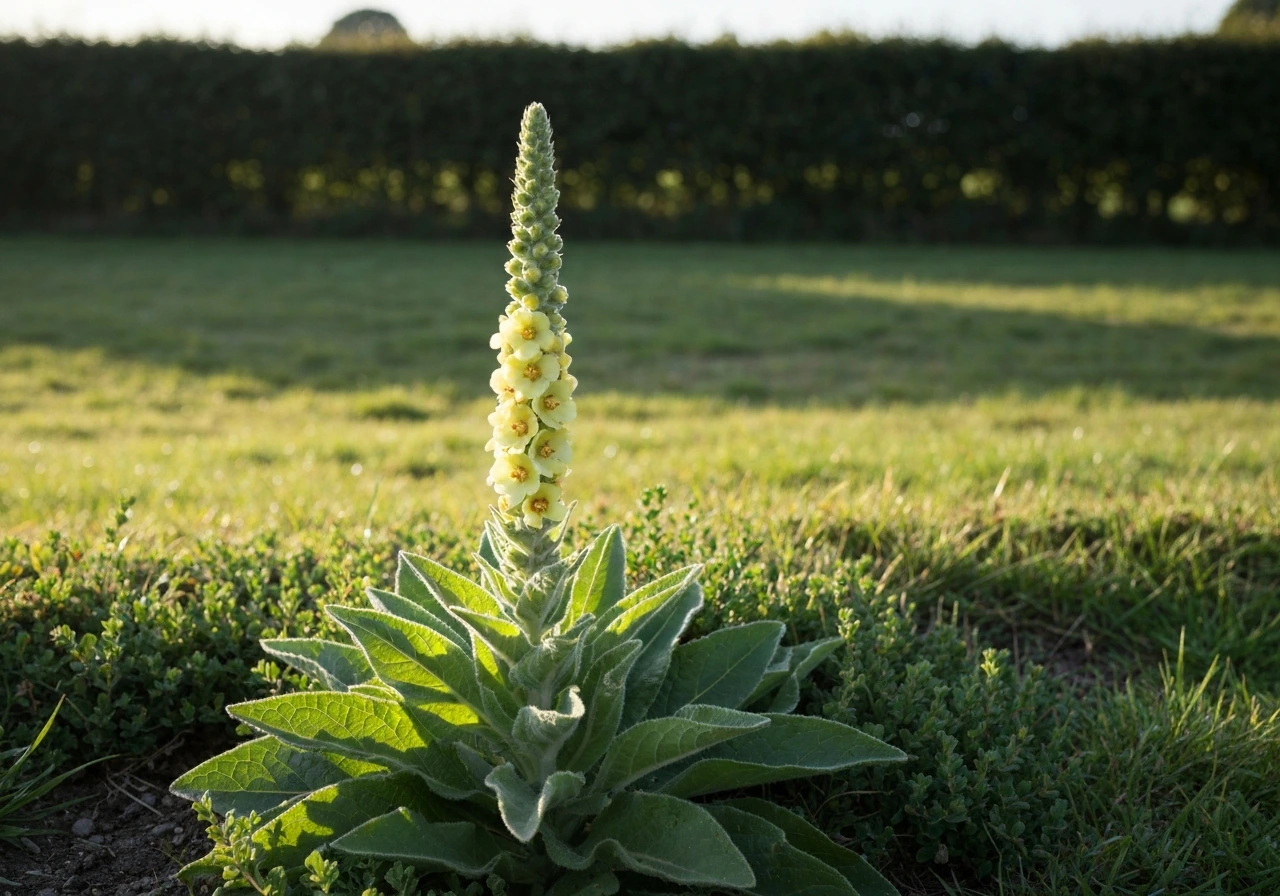
Mullein is also a warm-season plant and does not typically grow well in the UK unless you have a very sheltered spot Bermuda grass.
FAQ
If Bermuda grass “grows” in the UK, will it look like a real lawn the same year I sow it?
It can green up and spread enough to look like lawn turf within the same season if soil temperatures reach about 18°C and you sow in late May to mid-July, but expect a thin, patchy start if you sow early or use a slow-establishing seed source. Your first-year success depends more on heat and consistent establishment than on mowing or feeding.
Can I grow Bermuda grass in pots or grow bags instead of planting in the ground?
Yes, and it is often the best way to handle winter. Use a large container with free-draining, sandy growing medium, keep it in a frost-free but cool space over winter, then move it back outdoors when daytime warmth returns. This reduces the risk of losing the roots to hard frost, which is the main UK failure point.
What’s the biggest mistake people make when trying Bermuda grass in the UK?
Sowing or plugging too early. Bermuda grass establishment only really accelerates when soil temperatures are high (around 24°C), so seed laid down in April or early May often sits dormant or fails. Another common error is mowing or feeding too late into autumn, which can leave soft growth vulnerable.
How do I tell if the “Bermuda” I bought is actually Cynodon dactylon?
Check the botanical species list on the packet or plug label. UK “sports turf” mixes are frequently composed of ryegrass or fescue, and you can end up growing a different grass that looks similar when young. If the product does not explicitly list Cynodon dactylon, assume it is not Bermuda grass.
Will Bermuda grass spread into the rest of my garden like common couch grass does?
In the UK, it may spread somewhat during warm months if it survives the winter, but it is not typically capable of aggressive year-round naturalization because winter cold interrupts survival. Still, if you get a stand going, plan for creeping stolons and rhizome expansion by edging the area or containing it in a bordered bed.
Do I need to water Bermuda grass differently than a normal UK lawn?
Yes, particularly during establishment. Bermuda needs deeper, less frequent watering once it roots, allowing the soil to dry slightly between sessions, rather than constant shallow sprinkling. Also, stop watering in September to push dormancy and reduce winter susceptibility.
Should I mulch Bermuda grass in the UK for winter protection?
A light mulch can help buffer temperature swings at the surface, which may improve odds in the mildest microclimates, but it does not guarantee survival if root-zone temperatures drop into the kill range. If you mulch, do it in November and keep the plant base from staying waterlogged.
What soil type is best for Bermuda grass in the UK?
Free-draining, sandy or loamy soils that warm quickly in spring perform better than heavy clay. Drainage matters because cold plus waterlogged soil can worsen winter losses. If you have clay, consider raising the area, improving drainage, and using a sand-forward topdressing for the establishment year.
Is it worth trying Bermuda grass if I’m north of Birmingham?
Usually no, unless you are willing to accept periodic reseeding and treat it as a semi-regular experiment. The article’s practical guidance is that persistence drops off sharply away from the South, so a fine fescue or ryegrass blend is typically the lower-effort option if you want a lawn that reliably returns every spring.
If my Bermuda grass turns brown in autumn, does that mean it’s dead?
Not necessarily. Bermuda often goes dormant as temperatures fall below about 10°C, so browning from October into spring can be normal. To know whether it survived, look for fresh green shoots in late spring, and avoid over-treating the area before the soil warms.
Next Article
Does Mullein Grow in the UK? How to Grow It Step by Step
Yes, mullein grows in the UK. Learn species differences and step-by-step sowing, care, and growth timeline.