Yes, you can grow moringa (Moringa oleifera) in the UK, but not reliably outdoors as a permanent tree. The honest answer is that moringa is a tropical plant that prefers air temperatures of 25–35°C and starts struggling the moment temperatures dip below about 8°C. In most of the UK, winters will kill it to the ground or finish it off entirely unless you bring it under cover. The good news is that with a container-growing strategy and a frost-free spot to overwinter it, you can keep moringa alive year after year and still harvest plenty of leaves, which is genuinely the most realistic goal for a UK grower.
Does Moringa Grow in the UK? How to Grow It Successfully
James Hartwell
3 Jun 2026
How UK winters compare to what moringa can actually handle
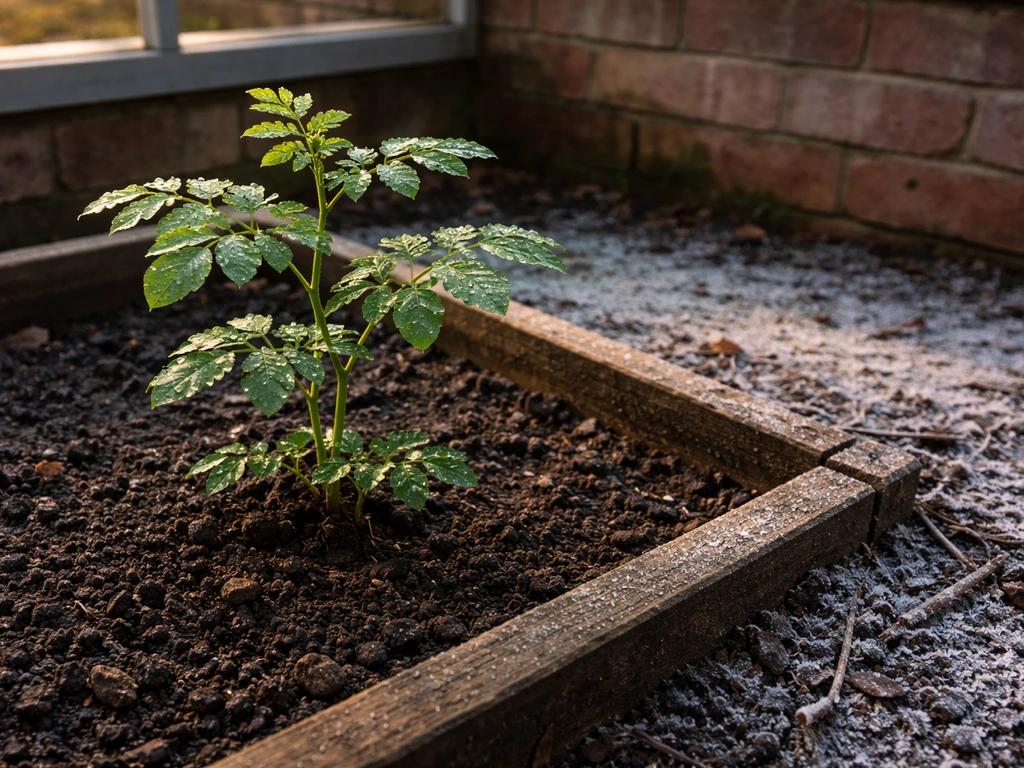
Moringa's cold tolerance is quite limited. Research places its freezing injury threshold (the point at which ice crystals form in plant tissues and cause real damage) at around 0°C, and its LT50, the temperature at which 50% of plants are killed, at approximately -2.8°C. Light frost may not kill it outright, but anything below -3°C is very likely fatal to the above-ground growth. Even before you reach freezing point, cold slows the plant down dramatically. Where average temperatures stay above 8°C, the risk of light frost is low enough that moringa might survive, but it won't be actively growing.
Now consider where that leaves the UK. In the South West and along the South Coast, average winter lows hover around 3–7°C, and hard frosts are relatively infrequent but still happen. In the Midlands, the North, and Scotland, average lows from November through March regularly sit below 0°C, and prolonged cold snaps are common. Even in the mildest parts of the UK, leaving moringa outdoors in-ground over winter is a gamble you will lose most years. The UK is simply too cold and too wet in winter for moringa to be a reliable outdoor perennial.
The best spots to plant moringa outside in summer
During the warmer months, moringa can grow surprisingly fast in a good UK microclimate. The key word there is microclimate. You want the warmest, most sheltered spot you can find: a south-facing wall or fence is ideal because it absorbs heat during the day and radiates it back at night, raising local temperatures by a couple of degrees compared to an open garden. Avoid exposed spots where wind will chill and stress the plant, and make sure the position gets as many hours of direct sun as possible from May through September.
- South or south-west facing aspect, ideally against a brick or stone wall
- Sheltered from prevailing wind, using fencing, hedges, or a building as a windbreak
- Full sun for at least 6–8 hours a day during summer
- Free-draining soil or growing medium (moringa hates sitting in wet ground)
- Urban gardens and walled kitchen gardens often offer the best microclimates
Regionally, your chances improve significantly the further south and west you are. Gardeners in Cornwall, Devon, and the Channel Islands have the best shot at pushing moringa through a mild winter with heavy protection. In contrast, trying to grow it outdoors year-round in the East Midlands, Yorkshire, or anywhere in Scotland is not realistic. The Met Office's historical climate data is worth checking for your specific area to understand your typical winter lows and frost frequency before committing to an outdoor strategy.
Container vs in-ground: which approach makes more sense?
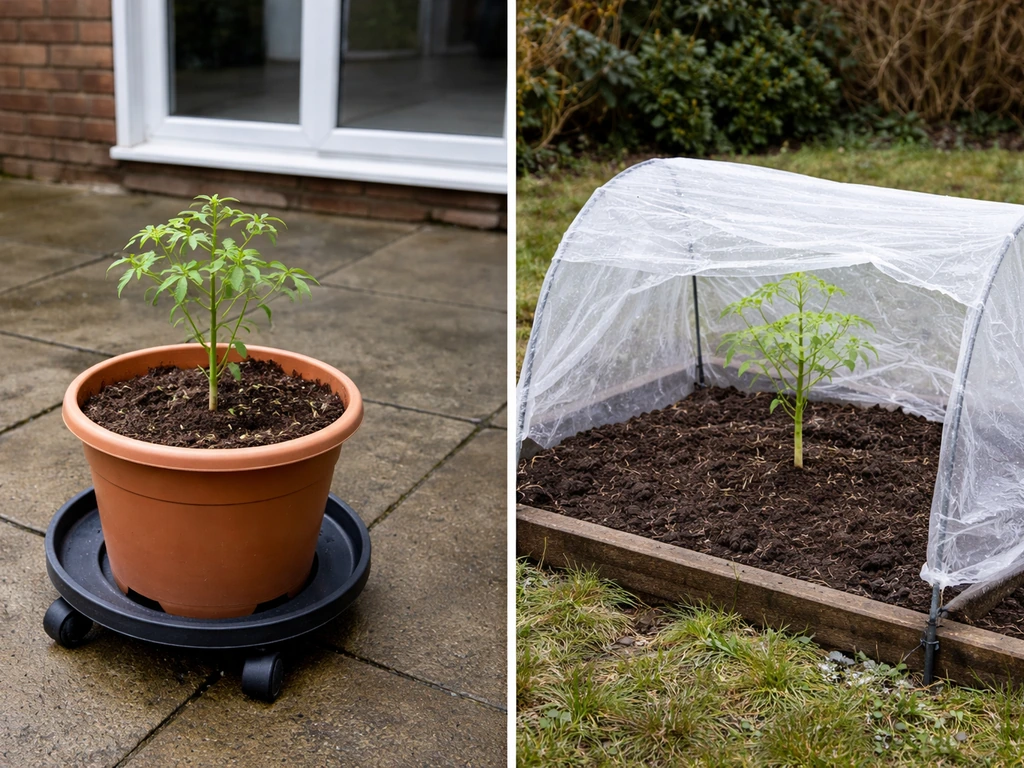
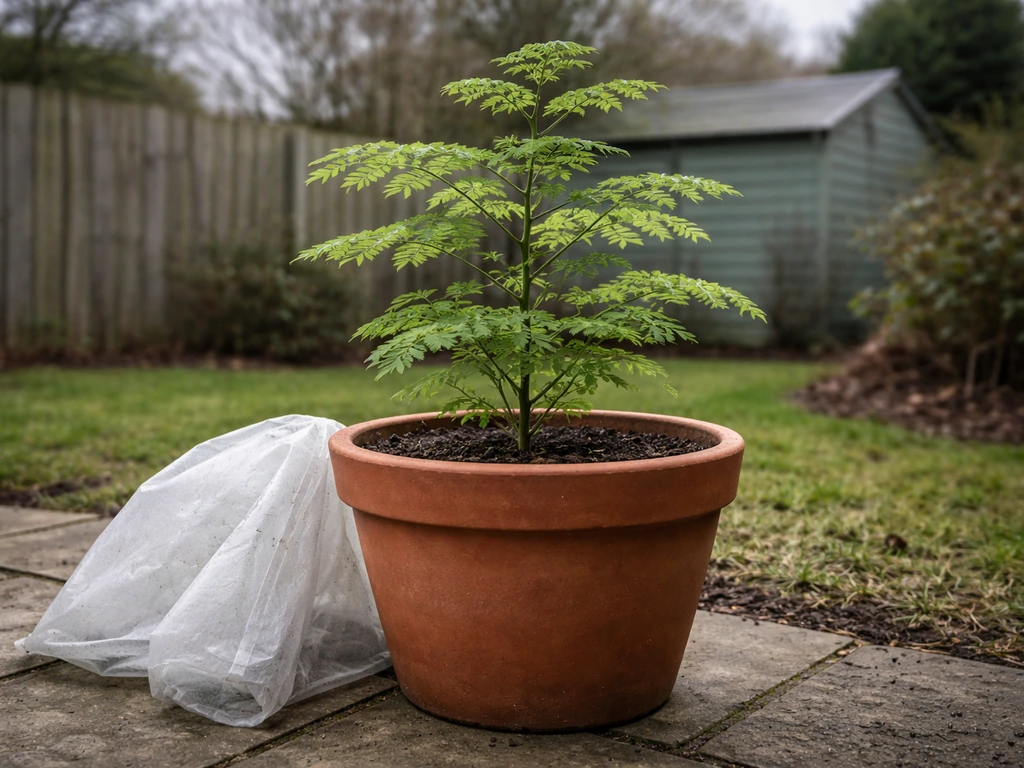
Container growing is almost always the better choice for UK growers, and not just as a fallback. Because moringa is cold sensitive, it is typically grown in containers (or as an annual) in colder climates, according to a UCCE Central Sierra Agriculture extension article. Growing moringa in a pot gives you the single most important advantage: you can move it. That means it spends summer outside in the best possible spot and comes indoors before the cold kills it. In-ground planting has appeal if you have a genuinely warm microclimate and want more root space, but once it's in the ground, you're committed, and a hard winter will wipe it out.
| Factor | Container | In-Ground |
|---|---|---|
| Winter survival | Excellent (move it indoors) | Poor to risky in most of UK |
| Root space | Limited (taproot needs depth) | Unrestricted |
| Growth potential | Good with regular repotting | Better if climate allows |
| Fruiting chance | Very low | Extremely unlikely in UK |
| Leaf harvest | Very achievable | Achievable in summer |
| Practical control | High (drainage, warmth, movement) | Low |
| Best for | Most UK gardeners | South Coast with mild winters only |
If you do go container, choose a deep pot rather than a wide, shallow one. Moringa develops a significant taproot, and research on overwintering in temperate regions shows that container depth and volume directly affect how well the root system develops and survives winter. A pot at least 40–50cm deep is a reasonable minimum for a first-year plant, moving up in size as the plant grows. Make sure it has good drainage holes and raise it on pot feet to keep the base clear of standing water.
Getting through winter: protection, temperatures, and where to keep it
The non-negotiable target is keeping your moringa above 0°C through winter, ideally above 5°C to avoid cold stress slowing it into a very poor state. The moment night temperatures start dropping toward 5°C in autumn (typically October in most of the UK), it's time to act. Don't wait for the first frost warning.
- Move the container to a frost-free location before temperatures drop below 5°C, usually by mid-October in most UK regions
- A heated conservatory or warm greenhouse (minimum 8–10°C overnight) is ideal and will keep the plant in light growth through winter
- An unheated greenhouse or polytunnel works in mild areas but watch for hard frost nights and add fleece as a second layer when very cold snaps are forecast
- Indoors near a bright south-facing window is a solid option for smaller plants, though growth will be minimal
- An unheated garage is a last resort: it stays above -3°C in most UK winters, but darkness will cause leaf drop and weaken the plant
- Wrap the pot itself with bubble wrap or hessian to protect the roots from frost coming through the container walls
- Reduce watering significantly in winter but don't let the compost dry out completely: the roots still need slight moisture
It's worth knowing that moringa can be described as root hardy in normal UK winters, meaning even if the above-ground growth is killed by frost, the roots can sometimes survive and resprout in spring if the pot hasn't frozen solid. Don't write off a plant that looks dead in February. Check the roots for firmness and give it warmth and light before giving up. That said, relying on this as a strategy is risky, and actively protecting it is always better than hoping it resurfaces.
When to sow, plant, and how to care for it through the season
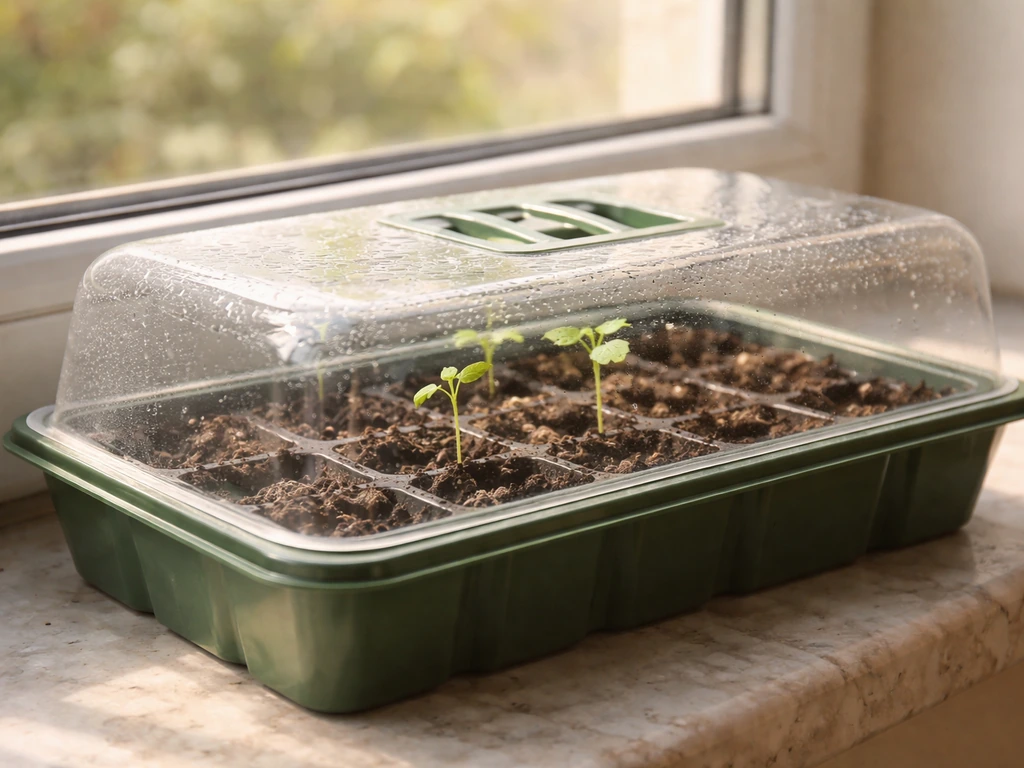
Sowing and planting schedule
Start moringa from seed indoors in March or April on a very warm windowsill or in a propagator set to around 25–30°C. Germination is usually fast (3–7 days at the right temperature) but unreliable below 20°C. Sow seeds about 2cm deep in a free-draining mix. Once seedlings are established and outdoor temperatures are consistently above 15°C during the day, usually late May to early June, you can move plants outside. Don't rush this. A cold shock to a young moringa will set it back weeks.
Watering
Moringa is drought tolerant once established, but in a container in a UK summer it still needs regular watering because pots dry out faster than open ground. Water when the top inch of compost feels dry, and always check that excess water is draining freely from the base of the pot. Poor drainage is one of the fastest ways to kill a moringa: it prefers well-drained conditions and will develop root rot in soggy compost very quickly. In winter, scale watering back to roughly once every two to three weeks just to keep the roots from desiccating completely.
Feeding
Feed with a balanced liquid fertiliser every two to three weeks during the growing season (May to September). A feed higher in nitrogen suits moringa well if you're primarily growing it for leaf production. Container plants deplete nutrients faster than in-ground plants, so don't skip feeding or you'll start to see yellowing. Ease off feeding entirely from October through to when you bring it back outside in spring.
Pruning and training
In the UK, you'll want to keep moringa compact rather than letting it race upwards. Pinching out the growing tip when the plant reaches around 50–60cm encourages bushy lateral growth and makes the plant easier to manage and bring indoors each winter. You can also cut it back hard (to about 30–40cm) in late September before bringing it inside, which reduces stress on the plant and makes overwintering more practical. Don't be afraid of hard pruning: moringa responds well to it and puts out vigorous new growth from the cut points.
Things that go wrong and how to fix them
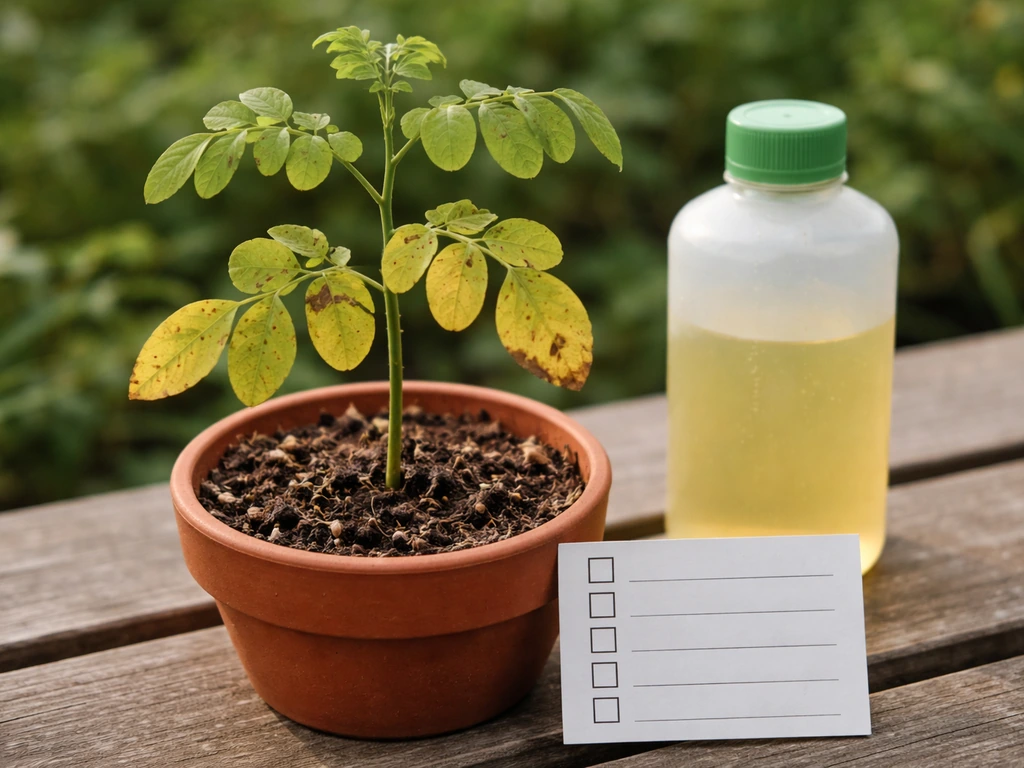
- Yellowing leaves: the most common complaint. Check for nitrogen deficiency first (general overall yellowing), or interveinal yellowing which can point to magnesium or iron deficiency, common in container plants. Feed and check your compost pH (moringa prefers neutral to slightly alkaline). Also check roots aren't waterlogged.
- Leaf drop in winter: almost always a response to cold or low light. If you've moved the plant indoors, this is normal and not necessarily fatal. Keep it warm and bright and it should recover in spring.
- Cold damage to stems: blackened, mushy stems mean frost got in. Cut back to live wood (look for green tissue under the bark). If the roots are intact, it may still resprout.
- Slow growth: in UK summers, moringa grows much more slowly than in its native tropical climate. If it's getting full sun and warmth and still seems stuck, check it isn't pot-bound, and give it a nitrogen-rich liquid feed.
- Aphids: Aphis gossypii and related species can infest moringa, especially on soft new growth. Check regularly and treat with insecticidal soap or a strong jet of water. Whitefly and spider mites can also appear on indoor-overwintered plants in low humidity.
- Root rot: caused by poor drainage or overwatering. Prevention is the key. If caught early, remove the plant from its pot, trim affected roots, dust with sulphur powder, and repot in fresh dry compost.
What success actually looks like in the UK
Be realistic about what you're aiming for. In a good UK summer, a container-grown moringa in a warm spot can put on 1–2 metres of growth from spring, produce an excellent supply of nutritious leaves, and generally look the part as a statement plant. That is genuinely achievable and worth the effort if you value moringa leaves for cooking or nutrition. What you should not expect is flowering or fruiting outdoors: moringa needs sustained heat and a long growing season that the UK simply doesn't provide. Can soursop grow in the UK? In most cases it needs a much warmer, frost-free setup than most people can provide, especially outdoors flowering or fruiting outdoors. Even in its most favourable tropical conditions it needs around 6–8 months of warm weather to fruit. Our summers aren't long or hot enough.
Outdoor in-ground growing as a perennial tree is not a realistic goal for the vast majority of UK gardens. You might get away with it against a very sheltered south-facing wall in Cornwall during a run of mild winters, but plan for losing it to cold eventually. The container-plus-overwintering approach is the only strategy with a reliable multi-year success rate in this climate.
If moringa doesn't work out, what else can you try?
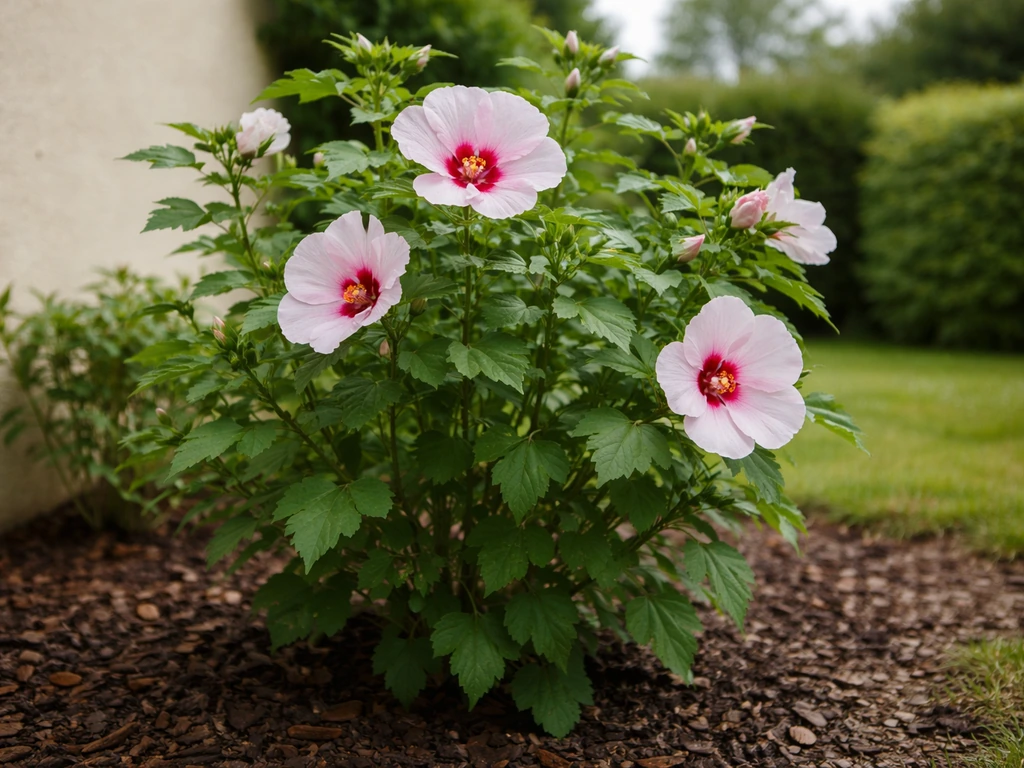
If the effort of annual overwintering sounds like too much, there are alternatives worth considering. For leaf production and nutritional value, perilla (Perilla frutescens), nasturtium, and land cress are all far less demanding and can be grown entirely outdoors as annuals. If you are looking for a similar long-term tree option, you may be wondering can you grow banyan tree in uk, but it is usually too warm-climate for the UK outdoors something long-term and low maintenance. For the novelty of growing something tropical and pushing the limits of UK growing, you might enjoy the challenge of other exotic species, and it's worth knowing that moringa isn't alone in this particular struggle: plants like hibiscus, soursop, and even neem trees share very similar limitations in British winters, needing either heavy protection or indoor overwintering to survive.
If your interest is specifically in useful multi-purpose trees that push the UK's climatic limits, mulberry trees are a much more forgiving option and can be grown outdoors as permanent trees across much of England. They're genuinely worth a look if you want something long-term and low maintenance by comparison.
Your immediate next steps
- Buy moringa seeds (widely available online) and sow indoors in March–April in a warm propagator at 25–30°C
- Source a deep container (at least 40–50cm depth) with good drainage holes, and use a free-draining compost mixed with horticultural grit
- Identify your warmest, most sheltered south-facing spot outside for summer placement
- Set a calendar reminder for mid-September to start hardening off (reducing outdoor time) and mid-October to bring it fully inside
- Decide now where it will overwinter: a heated conservatory is ideal; an unheated greenhouse or bright south-facing room works with extra care
- Plan to cut the plant back to 30–40cm before bringing it in, to make overwintering more manageable
Moringa is not a tree you plant and forget in the UK, but as a container project with a clear seasonal rhythm, it's entirely doable and rewarding. The leaf harvest alone makes it worthwhile for anyone interested in home-grown nutrition, and there's something genuinely satisfying about keeping a tropical plant alive through a British winter. Can mangroves grow in the UK? In general, they cannot because they need consistently warm, salty, waterlogged conditions. Go in with clear expectations, manage the overwintering properly, and you'll get on fine.
FAQ
What’s the minimum winter temperature moringa needs in a UK container to have a realistic chance of coming back?
Aim to keep the root ball above freezing, ideally with the whole pot consistently above 0°C. If the compost drops below 0°C for long periods, root tissue can be damaged even if the stem looks okay, so a heated, frost-free overwintering spot is safer than just sheltering it outdoors.
Can I leave my moringa outside during mild winters in the UK, even if nights get near freezing?
You can try only if your location rarely dips below freezing and your pot stays well drained and never waterlogged. In practice, near-freezing nights plus wet soil is a common failure combination, so use fleece and a sheltered position only as a last resort, not your main plan.
Should I overwinter moringa dry or keep it slightly moist?
Keep it just lightly moist. Letting the compost fully dry out can damage fine roots, but frequent watering in winter increases the risk of rot. A good rule is to check every 1 to 2 weeks, water only if the top compost dries out, and ensure excess water can run freely from the pot.
What’s the best place indoors to overwinter moringa if I do not have a heated greenhouse?
Choose the brightest area you can manage, like a conservatory window or a very sunny room, and keep it away from cold drafts. Temperature stability matters most, so avoid placing it next to an unheated window ledge at night if that area routinely drops close to freezing.
My moringa looks dead in spring. How do I check whether the roots survived?
Gently scrape or cut away a small bit of outer stem near the base. If there is green tissue and the stem is firm, it may resprout. If the stem is brown and hollow, inspect the root zone, look for firm roots, and then move the pot to warmth and light for a few weeks before discarding.
Do I need to repot moringa in the UK, and when should I do it?
Yes, eventually, because it uses nutrients quickly in containers. Repot in spring after hard frost risk has passed and the plant is actively growing, not in autumn when it’s preparing for overwintering. Increase pot size gradually, and keep the root zone in a well-draining mix.
Will moringa survive UK winters if I wrap the pot instead of moving it inside?
Pot wrapping can reduce rapid freeze-thaw, but it rarely guarantees safety because UK winters are often wet and windy. If you cannot move it indoors, use insulation around the pot plus a fully protected microclimate (like a sheltered corner and raised off the ground), and accept that survival is still uncertain.
Why does my container moringa yellow or lose leaves in summer?
Most commonly it’s either nutrient depletion or inconsistent watering. Containers need feeding during May to September, and they can also suffer if the compost stays too wet. Check drainage, then correct watering to “water when the top inch is dry,” and resume fertiliser if you have been skipping it.
What pests or diseases should UK growers watch for on moringa?
Indoors, watch for spider mites and whitefly, especially in warm, dry conditions. Outdoors in summer, aphids can appear on new growth. Early action matters, use a gentle rinse or targeted treatment, and avoid letting pests build up before you overwinter.
Can I grow moringa from store-bought leaves or cuttings in the UK?
Leaf propagation from store-bought material usually fails because those leaves are not viable for rooting. For cuttings, success depends heavily on warmth and humidity, and in the UK it is easiest to propagate in late spring to early summer when conditions are steady, then overwinter in the same controlled way as seedlings.
Is it worth aiming for flowers or fruit in the UK if I keep it warm?
Usually no. Even if you keep it alive, outdoor UK conditions do not reliably provide the long, sustained heat a moringa needs to flower and set fruit. Your best realistic payoff is leaf harvest, even when the plant reaches a decent height in summer.
Next Article
Does Hibiscus Grow in the UK? How to Grow It Successfully
Find out if hibiscus grows in the UK and get UK-specific steps for planting, overwintering, feeding, and troubleshooting