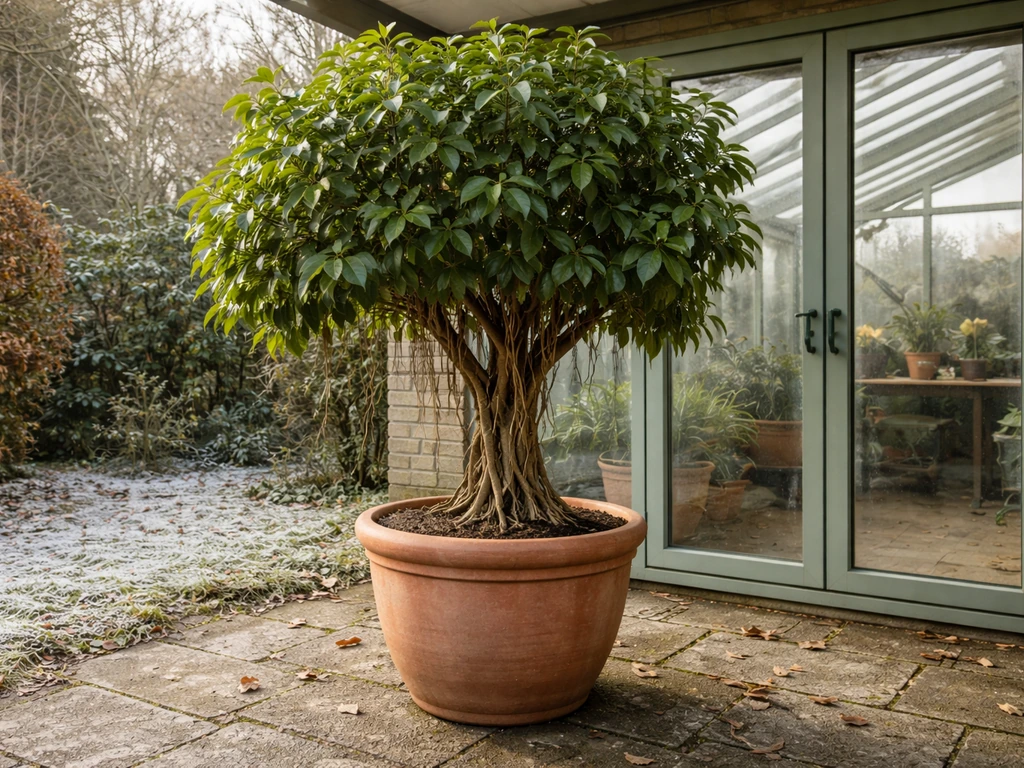
Mangroves can technically be grown in the UK, but almost certainly not outdoors and not without serious commitment. The honest answer is: if you want a living mangrove in Britain, you're looking at a heated greenhouse or a well-lit indoor setup, full stop. Outdoor survival is essentially off the table for almost every part of the country, and even in the warmest corners of Cornwall or the Isles of Scilly, a single cold winter snap would wipe them out. That said, growing mangroves in a controlled environment is genuinely achievable, and people do it successfully with aquarium-style or greenhouse rigs. Here's what you need to know before you invest any effort.
Can Mangroves Grow in the UK? Indoor and Greenhouse Guide
James Hartwell
17 May 2026
Why the UK climate is almost entirely wrong for mangroves
Mangroves are tropical and subtropical intertidal trees. They've evolved to live where air temperatures barely ever dip below 10°C, where tidal saltwater or brackish water floods their roots daily, and where humidity stays high year-round. The UK offers none of those things reliably, and the temperature issue alone is a dealbreaker outdoors.
Even the most cold-tolerant mangrove species suffer leaf damage at temperatures far above a typical UK winter. Avicennia germinans (black mangrove) is among the hardiest and still hits its leaf-damage threshold at around -6°C. Rhizophora mangle (red mangrove) and Laguncularia racemosa (white mangrove) suffer damage at -4°C. A paper compiled the minimum temperature requirements per aridity class of mangroves, including genera such as Avicennia and Rhizophora, to quantify these limits. Much of England regularly sees temperatures below -4°C in winter, and Scotland, the Midlands, and upland areas get well below that. Even if you never hit those extremes, sustained chilling well above freezing causes serious physiological stress in mangroves, suppressing photosynthesis and root function long before you see obvious damage.
Beyond temperature, mangroves need tidal inundation cycles, specific salinity conditions ranging from roughly 0.5 to 35 parts per thousand, and the kind of intense light you only get in the tropics. Britain's grey winters and short days don't come close. The FAO describes temperature as one of the core drivers limiting mangrove range globally, and that constraint couldn't be more relevant here.
Can mangroves survive outdoors in the UK?
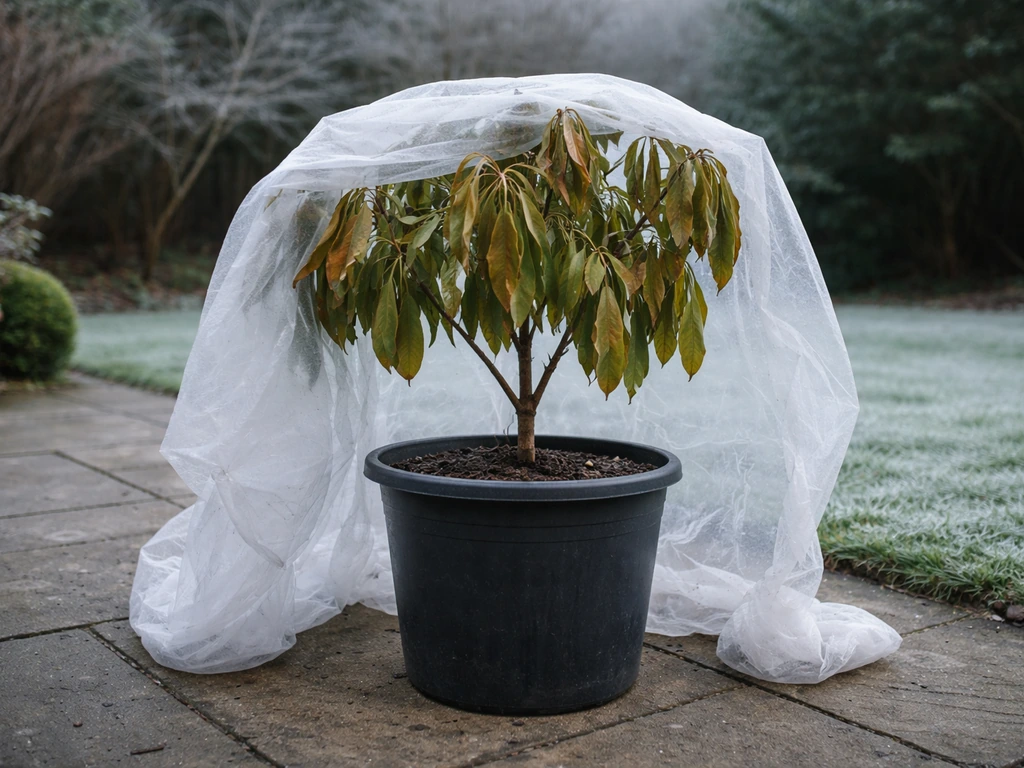
Put bluntly: no, not with any reliability. There is no part of the UK where mangroves could be planted outdoors and expected to thrive or even survive a full year without protection. The Isles of Scilly and the far south-west tip of Cornwall are the warmest, most frost-moderated parts of Britain, with winters softened by the Atlantic. Even there, hard freezes do occur, and the temperatures needed to keep a mangrove alive through December and January simply aren't guaranteed. The JNCC recognises the Isles of Scilly intertidal zone as exceptional for warm-water species, but no mangroves have established there naturally, and there's no realistic path to outdoor cultivation even in that microclimate.
If you're in southern England on a sheltered coastal site, you might be able to keep a containerised mangrove outside during the warmest weeks of a British summer (June to August), when temperatures are consistently above 15°C. But the moment nights cool in September, it needs to come back inside. Think of outdoor time as a summer holiday for the plant, not a permanent home.
In Scotland, the Midlands, or anywhere inland or elevated, don't even consider outdoor time. The temperature and light deficits are too severe, and chilling stress will cause slow decline even before a frost actually hits.
Growing mangroves indoors or in a greenhouse
This is where mangroves actually become possible in the UK. You can grow a banyan tree as a houseplant in the UK, but outdoor growth is only realistic in summer and with careful protection grow a banyan tree in the UK. The goal is to replicate the conditions of a tropical intertidal zone in miniature, which sounds ambitious but is manageable if you break it into the individual requirements: temperature, light, water, salinity, and humidity. The two setups that work best are a heated and lit greenhouse dedicated to tropical plants, or an indoor aquarium-based rig.
The aquarium or basin setup
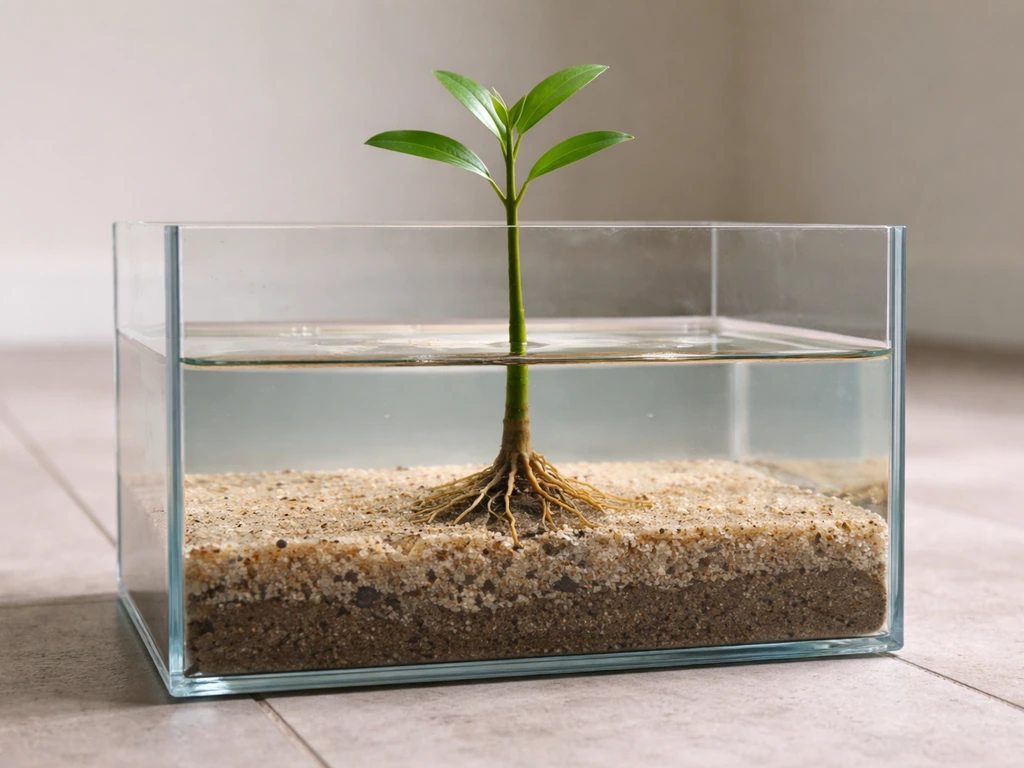
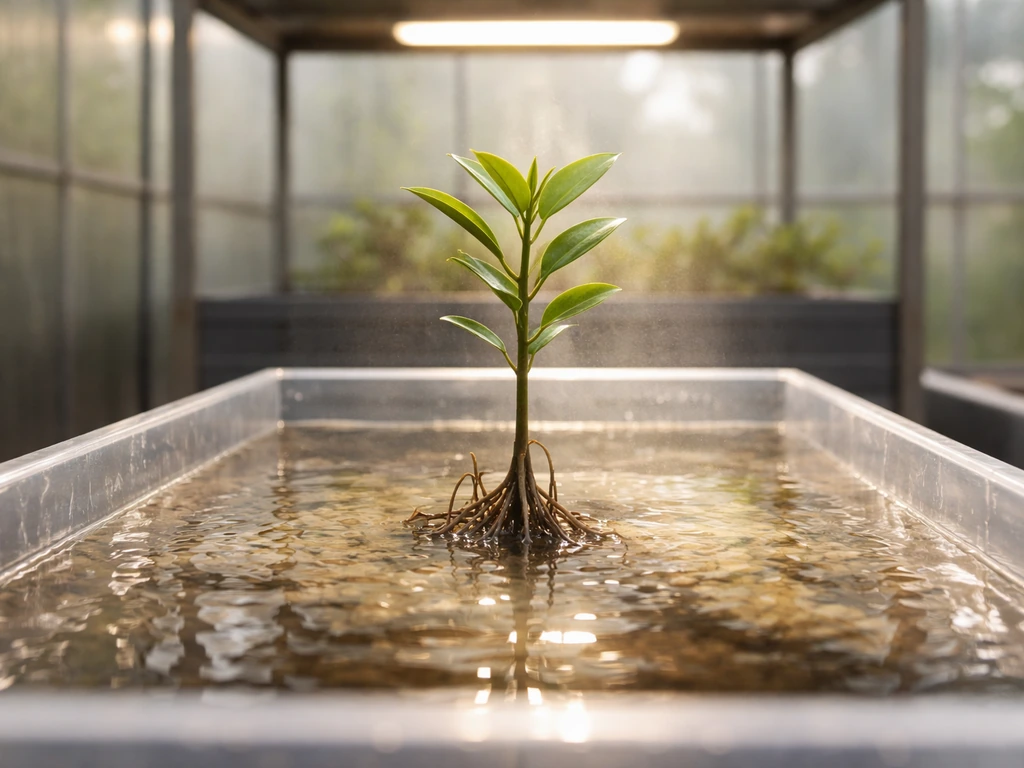
The most popular approach for UK growers is an aquarium or custom mangrove basin: a waterproof container filled with a sandy, low-nutrient substrate, flooded periodically with brackish or saltwater to simulate tidal cycles. You don't need to perfectly replicate ocean tides, but you do want the roots wet for part of the day and exposed to air for part of it.
Some enthusiasts use automatic timers with small pumps to create a basic flood-and-drain cycle, which takes most of the daily effort out of it. The Biosphere 2 mangrove mesocosm used exactly this kind of engineered approach at scale, controlling water temperature, salinity, humidity, and light to grow 542 mangrove trees in a 441 square metre space. You're working at a fraction of that scale, but the principles are the same.
For substrate, use coarse sand or a sand-mud mix rather than peat or standard potting compost. Mangroves in nature grow in anaerobic, silty sediment, but in a container you want something that doesn't compact completely and still allows some drainage between flood cycles. Avoid anything with added fertiliser: mangroves are adapted to low-nutrient conditions and can be burned by rich composts.
Greenhouse setups
A heated greenhouse works well if you can maintain a minimum night temperature of at least 15°C through winter, which means a reliable heating system and probably some insulation on the glass or polycarbonate. Position your mangrove container where it gets maximum light, ideally supplemented with grow lights during the short days from October to March. Humidity is important too: mangroves prefer 60-80% relative humidity, so a humid tropical greenhouse suits them far better than a dry one.
Light, water, salinity, and temperature: the numbers that matter
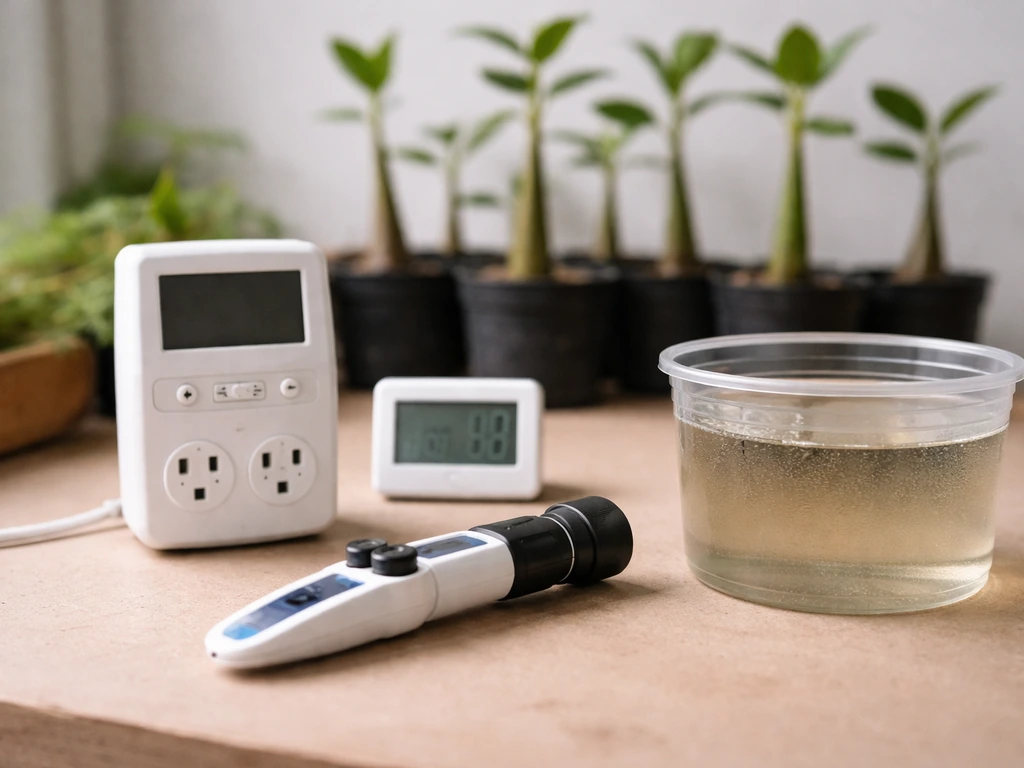
Getting these four parameters right is genuinely the difference between a thriving mangrove and a slowly dying one. Here's what to aim for.
| Parameter | Target Range | Notes for UK Growers |
|---|---|---|
| Temperature (air) | 20–30°C during the day, minimum 15°C at night | Never let it drop below 10°C; anything below 15°C consistently causes stress |
| Light (PPFD) | As high as possible; aim for 200–600 μmol m⁻² s⁻¹ | Supplement with full-spectrum grow lights October–March; Biosphere 2 recorded peaks of ~1600 μE m⁻² s⁻¹ above canopy |
| Salinity | 0.5–35 ppt depending on species; 15–25 ppt is a practical sweet spot | Avicennia marina tolerates a wide range well; start lower (SG ~1.002–1.005) and build up gradually |
| Water temperature | 15–30°C | Cold water shocks roots even if air is warm; keep water temperature stable |
| Humidity | 60–80% RH | Use a humid greenhouse or mist regularly; dry indoor air causes leaf stress |
For light, the key problem in the UK is the winter photoperiod. Even on a south-facing greenhouse, December and January light levels are nowhere near what a tropical mangrove needs. Full-spectrum LED grow lights positioned close to the canopy make a real difference and are the single most impactful investment after heating. Research on Avicennia marina shows that irradiance levels measurably affect photosynthetic output, so this isn't just about keeping the plant alive: light directly drives growth.
For salinity, use marine salt mix (the kind sold for reef aquariums) rather than table salt, which contains additives that can harm plants. Mix to your target specific gravity, check with a refractometer, and top up with fresh water to compensate for evaporation rather than adding more saltwater, as evaporation concentrates the salt. Avicennia marina in particular has been shown to maintain relatively stable leaf physiology across 5–35 ppt, making it the most forgiving species for beginners who are still dialling in their system.
Choosing the right species and where to source them
Not all mangroves are equal when it comes to tolerance of cooler temperatures and easier cultivation. For UK growers, the best options are Avicennia marina (grey mangrove) and Rhizophora mangle (red mangrove). Avicennia marina is the more cold-tolerant of the two and handles wider salinity ranges well. Rhizophora mangle is the classic prop-rooted species that most people picture when they think of mangroves, and it's widely grown in aquariums and greenhouse setups. Avicennia germinans (black mangrove) is scientifically the most freeze-resistant species but is less commonly available in the UK hobby market.
Sourcing is one of the trickier parts. Importing live plant material or propagules directly from abroad involves UK plant health regulations under the Plant Health (EU Exit) Regulations 2020, and some material requires APHA-issued permits or CITES documentation depending on origin. The UK Plant Health Information Portal explains that [scientific authorisations (previously plant health licences) are issued by APHA on behalf of Defra and the Welsh Government](https://planthealthportal. defra.
gov. uk/scientific-authorisations/scientific-authorisation-guidance-for-authorisation-holders-and-applicants/an-introduction-to-scientific-authorisations/) to allow import, keeping and movement between quarantine stations or confinement facilities for material normally prohibited under plant health legislation. The RHS advises checking import controls before ordering anything from outside Great Britain. The safest route is to buy from a UK-based specialist aquarium supplier or tropical plant nursery that already holds the necessary certifications and has legally imported the stock.
Search for reef aquarium suppliers as well as tropical plant specialists: red mangrove propagules (the torpedo-shaped seedlings) are sold fairly regularly through marine aquarium trade channels and are the easiest starting point.
If you want to grow from seed, Rhizophora propagules are the most forgiving: they're large, partially germinated structures that can be partially submerged in brackish water to begin rooting without any complex stratification. Start them in low salinity (around 5–10 ppt) and build up gradually once rooting is visible.
Practical care timeline, problems to watch for, and honest expectations
Establishment: the first six months
Rooting a new propagule or establishing a young mangrove takes patience. Rhizophora propagules typically show root development within four to eight weeks when kept in warm, low-salinity water with good light. Don't rush the salinity up: acclimate gradually over several weeks. Keep temperatures stable at 22–28°C during this phase. Any temperature fluctuation, cold draught, or sudden salinity change during establishment can stall or kill a young plant that looked perfectly healthy the week before.
Once roots are established, prop roots on Rhizophora will begin developing and leaves will grow more actively. At this stage you can slowly raise salinity toward your target range. For Avicennia, you'll start to see pneumatophores (pencil-like root structures) appearing from the substrate, which is a good sign the plant is settling in.
Ongoing care and the UK winter challenge
The first UK winter is the real test. From October onward, you need to be proactive: confirm your heating is reliable and your grow lights are on a timer giving at least 12 hours of light per day. Check water temperature weekly, not just air temperature. A mangrove can look fine on the surface while its root zone is being chilled by cold water, and the damage only becomes apparent weeks later as leaf yellowing and drop.
- Set heating to maintain a minimum of 15°C air temperature, ideally 18–20°C overnight through winter
- Run full-spectrum grow lights for 12–14 hours per day from October to March
- Check salinity weekly with a refractometer and top up with fresh water only as evaporation occurs
- Monitor water temperature in the container separately from air temperature
- Mist leaves or maintain humidity above 60% to prevent desiccation from indoor heating systems
Pests and diseases to watch for
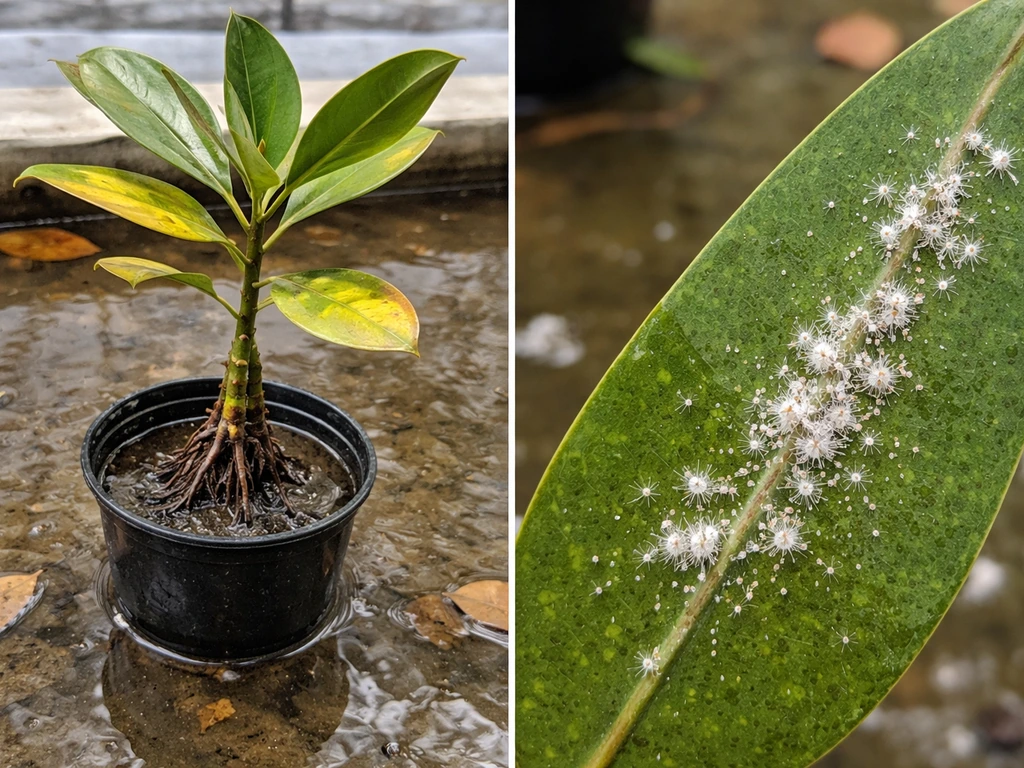
Root rot is the most common killer of container mangroves, caused by water mould pathogens like Pythium and Phytophthora. These thrive when roots sit in stagnant, poorly oxygenated water. The fix is ensuring your flood-and-drain cycle works properly and that water circulates rather than sitting still. Symptoms are soft, dark roots and sudden above-ground wilting or leaf drop that doesn't match the watering schedule.
Mealybugs are a regular problem in warm, humid greenhouse environments. They show up as fluffy white waxy patches in leaf axils and sheltered spots, and they leave a sticky honeydew residue that attracts sooty mould. Check new growth regularly and treat early with insecticidal soap or neem-based spray if you spot them. Mealybugs spread quickly in enclosed spaces and can get into the substrate as root mealybugs, which are harder to spot and cause stunting and yellowing.
Realistic expectations for UK growers
A well-maintained indoor or greenhouse mangrove in the UK will grow slowly but visibly, with new leaves and root development over months rather than weeks. You're not going to recreate a tropical mangrove forest: this is a plant that will stay relatively modest in size in a container, which is actually fine for most growers.
What you will get is a genuinely unusual, living plant that demonstrates some extraordinary adaptations, and there's real satisfaction in keeping it alive through a British winter. The failure points are almost always temperature (too cold, usually from cold water rather than cold air), inadequate winter light, or salinity mismanagement. While this article focuses on mangroves, the same kind of climate-and-setup reality check applies if you’re wondering can you grow mulberry tree in UK conditions.
Get those three things right and the rest follows.
If you're already exploring other challenging tropical plants for UK conditions, mangroves sit in a similar category to attempts at growing neem trees or moringa indoors: possible with the right setup, but demanding consistent environmental control that many simpler tropicals don't need. The commitment here is real, and you should factor in the ongoing energy cost of heating and lighting through the British winter before you start.
Your next steps before you invest
Before you order anything, run through this checklist. Hibiscus can be grown in the UK too, but it depends on the type and whether you can protect it from cold. If you can tick every box, you're genuinely ready. If any of these are a problem, sort it first.
- Can you maintain a minimum 15°C air temperature in your growing space every night from October to April, reliably, without the heating failing?
- Do you have or can you install full-spectrum grow lights capable of running 12–14 hours a day through winter?
- Do you have a waterproof container, a substrate plan, and a way to manage flood-and-drain cycles without stagnant water sitting in the container?
- Can you source marine salt mix and a refractometer to manage salinity properly?
- Have you identified a UK-based legal source for propagules or young plants to avoid import permit complications?
- Are you prepared for this to be a slow-growing, high-maintenance project rather than a quick win?
If you can say yes to all of those, go for it. Start with a Rhizophora mangle propagule from a UK reef aquarium supplier, set up your basin with low-salinity brackish water at around 10 ppt, keep temperatures at 24°C, and give it strong light from day one. Give it six months before judging. Mangroves are not quick to establish, but once they're settled and you've got your system dialled in, they're remarkably robust little trees for something so foreign to the British climate. If you mean the plant itself, moringa (Moringa oleifera) is a fast-growing tree that can struggle outdoors in the UK unless you have a very warm, sheltered spot or grow it indoors.
FAQ
Can mangroves survive UK winters in a greenhouse if I keep the air warm but the water gets cold?
Usually no. Mangroves can look fine above ground while the root zone chills, then decline weeks later. Check water temperature weekly (not just air temperature) and insulate the container or pipework so the flood-and-drain cycle does not pull water down below your target night range.
Is it better to run constant flooding or a flood-and-drain cycle for a UK mangrove basin?
Flood-and-drain is typically safer in UK setups because it improves oxygen at the root zone and reduces stagnant conditions that trigger rot. If you do flood longer, increase water circulation and ensure the substrate drains between cycles, otherwise you are creating an oxygen-poor habitat for pathogens.
What’s the most common early mistake with salinity in a first UK attempt?
Overshooting too fast. Many beginners raise salinity in one step, which can stall young plants even when the final value is correct. Acclimate gradually over several weeks, and remember evaporation concentrates salts, so topping up with fresh water helps stabilize salinity.
Do I need a specific mangrove species to grow in the UK, or will any mangrove work?
Any “any” approach is where UK growers struggle. Avicennia marina is generally more forgiving on temperature and salinity tolerance, and Rhizophora mangle is common in hobby setups. Avicennia germinans is often the most freeze-resistant on paper, but it is harder to source and still needs reliable year-round controlled conditions indoors.
How close should grow lights be, and what if my greenhouse already gets a lot of sun?
In winter, distance and duration matter more than available daylight. Place full-spectrum LEDs relatively close to the canopy (close enough to reach the plants without overheating leaves) and run them on a timer to achieve a consistent winter photoperiod, because greenhouse sun often still falls short of tropical irradiance.
Can I use tap water for my brackish mix in the UK?
It depends on your tap water. Hard water and high mineral content can throw off salinity behavior and stress plants over time. If you can, use dechlorinated water and consider testing total dissolved solids, then adjust your mixing plan so you hit your intended salinity reliably with a refractometer.
What substrate should I use if I cannot source coarse sand easily?
Avoid peat and standard potting compost, they compact and add nutrients. If you cannot find coarse sand, look for a sand-mud mix used for aquariums or build with inert grain-size sand that stays loose. The key is non-compacting structure plus some drainage between flood cycles.
Is it okay to fertilize a UK mangrove to speed growth?
Usually not. Mangroves are adapted to low-nutrient conditions, and added fertilizer can burn roots or foul the system. If growth is slow, treat the cause first (light, temperature, salinity stability, oxygenation) rather than adding nutrients.
How do I tell root rot apart from normal slow establishment?
Slow establishment is gradual and consistent, while rot often causes a sudden mismatch: above-ground wilting or leaf drop that does not align with your schedule. Soft, dark roots and a sudden collapse after a period of stagnant water are red flags. Improve circulation and confirm your flood-and-drain cycle before treating.
What preventive steps reduce mealybugs in a warm indoor or greenhouse setup?
Quarantine new plants or propagules for a couple of weeks and inspect leaf axils and new growth often. Enclosed warm environments let them spread fast, including into the substrate as root mealybugs, so early detection matters more than aggressive treatment later.
How long should I wait before judging whether my UK mangrove setup is working?
Give it at least several months, not weeks. Many mangroves grow slowly in containers, and stress responses can lag behind the triggering problem (especially cold water or insufficient winter light). Track water temperature, salinity, and photoperiod weekly so you can spot patterns before assuming the plant is failing.
Can I keep a mangrove outdoors in the UK during summer only?
You can try if you have a sheltered site and you bring it in when nights cool, but it is not a guarantee. Use outdoor time like a conditioning phase, not a permanent plan, and watch forecasts for early autumn cold snaps. In many regions, September night temperatures are the turning point.
Do I need permits to buy mangroves or propagules from outside Great Britain?
Potentially. Live plant material and propagules can fall under UK plant health rules, and some origins require APHA or CITES-related documentation. The simplest route is buying from a UK-based supplier that already holds the necessary certifications for legal import.
Next Article
Can You Grow a Banyan Tree in the UK? Realistic Guide
Learn if you can grow banyan (ficus) in the UK, with container, greenhouse, and indoor care plus winter protection tips.