
You can grow a banyan tree in the UK, but not outdoors year-round in most of the country. The most reliable method is container growing: keep it outside during summer, then bring it into a frost-free conservatory, heated greenhouse, or warm room before temperatures drop below 5°C in autumn. In the mildest coastal spots of southern England, you might push it further, but even there you're one bad winter away from losing the plant. If you go in with that understanding, it's a genuinely rewarding thing to grow.
Can You Grow a Banyan Tree in the UK? Realistic Guide

James Hartwell
5 May 2026
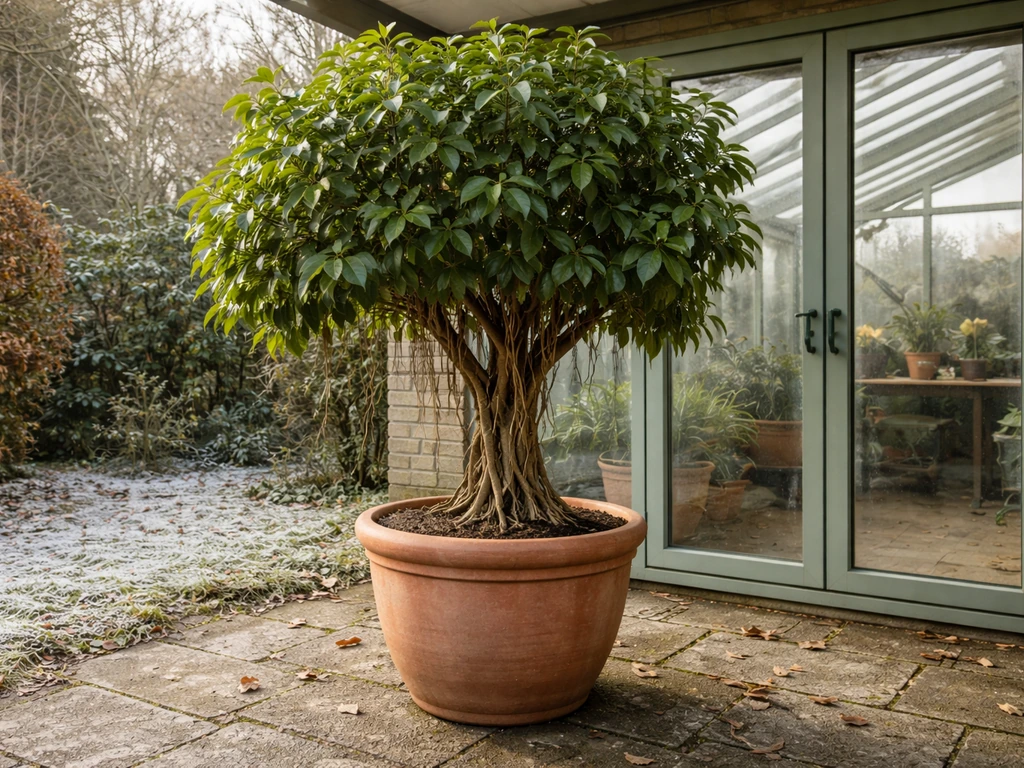
Which 'banyan tree' are we actually talking about?
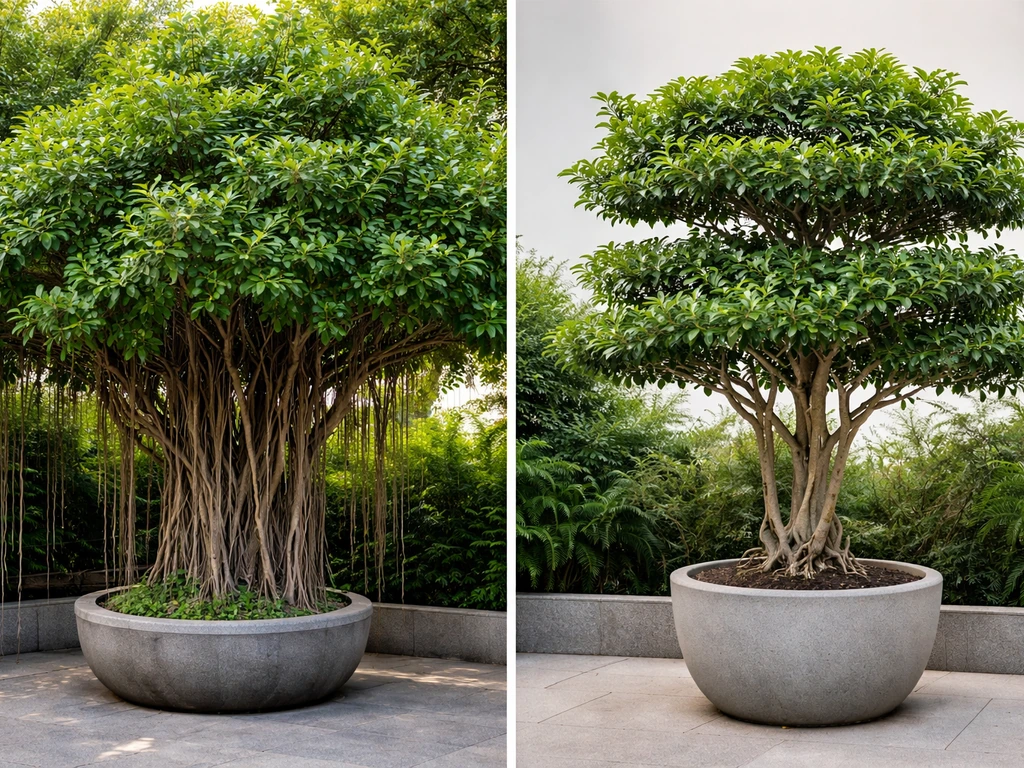
This is the first thing worth sorting out, because 'banyan' gets used loosely and covers more than one plant. The true banyan is Ficus benghalensis, the enormous strangler fig of tropical South Asia with its famous curtain of aerial roots. That's probably the image most people have in mind. But garden centres and online shops in the UK also sell Ficus microcarpa under names like 'Chinese banyan', 'Indian laurel', and 'curtain fig', and this is the species you're far more likely to find on a UK shelf. There's also Ficus elastica, the rubber plant, which is widely grown as a houseplant here and is sometimes loosely grouped in with 'banyan-type' figs.
For practical UK growing purposes, the distinction matters enormously. Ficus benghalensis needs a blank" rel="noopener noreferrer">minimum of 15°C year-round according to the RHS, which means a heated greenhouse or very warm indoor space as a permanent home. It is not a garden plant in any realistic sense in the UK. Ficus microcarpa is more tolerant, carries an RHS hardiness rating of H3 (meaning it can cope in coastal and relatively mild parts of the UK down to about -5°C), and is your best bet if you want something that can spend summer outside. If you are wondering can mangroves grow in the UK, the answer is also heavily dependent on temperature and shelter can spend summer outside. Ficus elastica is the easiest of all but stays firmly a houseplant. The rest of this guide focuses mainly on Ficus microcarpa, with notes on Ficus benghalensis where relevant.
Is a banyan tree actually compatible with the UK climate?
Honestly, not without help. Moringa can be grown in the UK, but you need to treat it as a warm-weather plant and protect it from cold moringa in the UK. The UK sits firmly outside the natural range of any Ficus species sold as a banyan. Hibiscus plants have different needs and can be grown in the UK, but it depends on the variety and whether you protect it from cold weather. Our winters are the main problem, but low light levels, cold wet soils, and unreliable summers don't do these plants any favours either. That said, UK gardeners grow tropical and subtropical plants under challenging conditions all the time. The trick is managing the gap between what the plant needs and what the climate delivers.
Regionally, the difference is significant. On the Cornish or Devonian coast, or in sheltered parts of the Isles of Scilly, you're in a genuinely different situation to someone in Manchester or Edinburgh. Southern coastal gardens regularly see mild winters where frosts are brief and light, and containerised Ficus microcarpa can sometimes get through winter outdoors with decent insulation. Inland and in the north, that's simply not realistic. Scotland, the Midlands, East Anglia, and much of the north of England get winter cold that will kill an unprotected banyan outright.
Temperature thresholds and winter risk
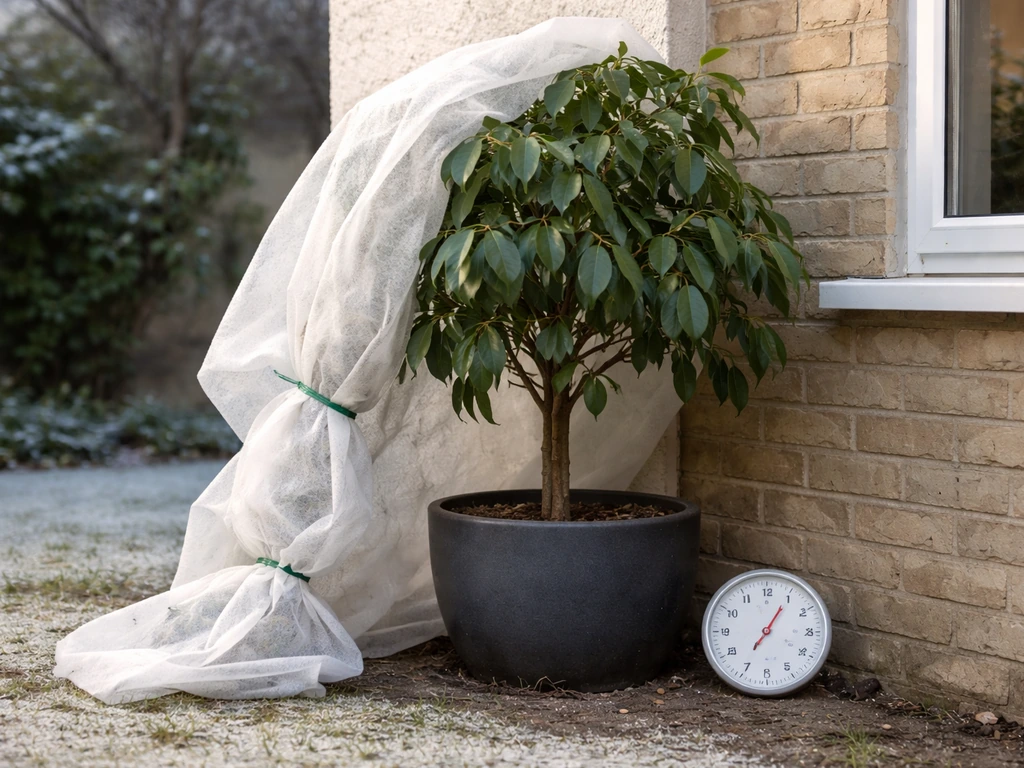
The RHS hardiness rating for Ficus microcarpa is H3, which covers plants that survive in coastal and relatively mild areas, tolerating a minimum of around -5°C to 1°C. That sounds reassuring until you realise what the rating actually means: it's the absolute minimum a plant can technically survive briefly, not a comfortable operating range. Drop to -5°C for a prolonged cold snap and you will lose the plant. Even a light frost of -2°C is enough to cause serious leaf and stem damage if the plant is fully exposed.
Ficus benghalensis requires a minimum of 15°C at all times, full stop. There is no overwintering trick that makes it garden-viable in the UK. It needs a heated glasshouse or a warm room that doesn't dip below that threshold even on the coldest January nights.
For both species, the risk isn't just about the single lowest temperature of the year. It's about duration: a week of temperatures hovering around 0°C will do more damage than a single night at -3°C. It's also about wet cold. Cold combined with waterlogged roots is often what actually kills these plants in UK winters, not the frost itself. Keeping roots dry and the air moving around the plant in winter matters as much as the temperature you're targeting.
The best ways to grow a banyan in the UK
Container growing with seasonal movement (the practical approach)
Container growing is genuinely the most sensible method for most UK gardeners. You grow the plant in a pot, move it outside after the last frost in late April or May, enjoy it on a sheltered patio or terrace through summer, and bring it back in before the first autumn frosts, usually by mid-October. This gives the plant warmth and light in the growing season while keeping it protected through the months that would kill it.
Use a pot that's large enough to give the roots room but not so oversized that compost stays waterlogged. A 30-40cm pot works well for a young plant, moving up in increments as it grows. Always use a pot with drainage holes, and raise it on feet so water drains away freely. A heavy terracotta or ceramic pot adds thermal mass outdoors, but remember you'll have to move it, so a lightweight fibreglass or plastic pot with a trolley underneath is a practical compromise.
Greenhouse and conservatory overwintering
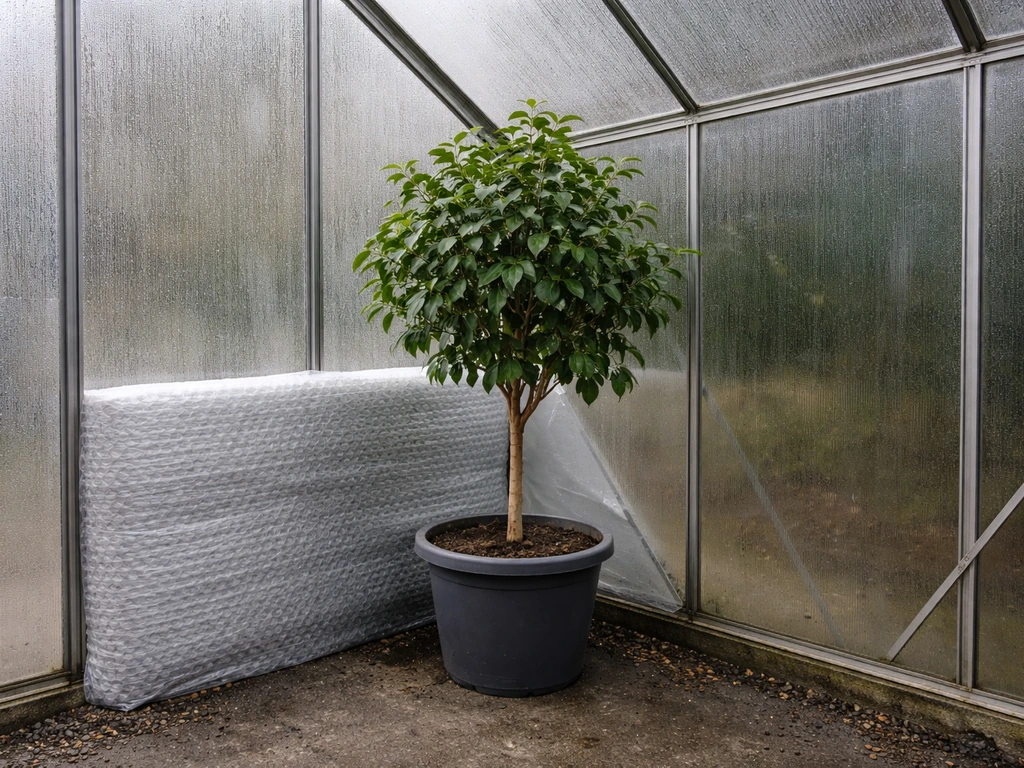
An unheated greenhouse is borderline for Ficus microcarpa in most UK winters. It reduces wind chill and keeps rain off, which helps, but won't hold much heat on a cold night. A cool conservatory that stays above 5-7°C is what the RHS recommends for overwintering tender plants from the garden, and that's a realistic minimum for Ficus microcarpa. Day temperatures of 15-20°C during the winter rest period are ideal. If your conservatory gets genuinely cold overnight, add a small electric heater on a thermostat to keep the frost away.
For Ficus benghalensis, a heated greenhouse or a very warm, bright conservatory that stays above 15°C at all times is the only viable option. That's a significant energy commitment in winter, and it's worth being honest with yourself about whether that's practical before buying the plant.
Summer outdoors on a south-facing wall
If you move your banyan outside in summer, placement matters. A south or southwest-facing wall creates a microclimate that's noticeably warmer than open ground, adds a few degrees through heat stored in the masonry, and gives the plant shelter from cold winds. This is exactly the kind of microclimate thinking that makes borderline plants work in the UK. A south-facing sheltered courtyard in Bristol or on the Kent coast is a very different environment to a north-facing open garden in Yorkshire.
Growing purely indoors
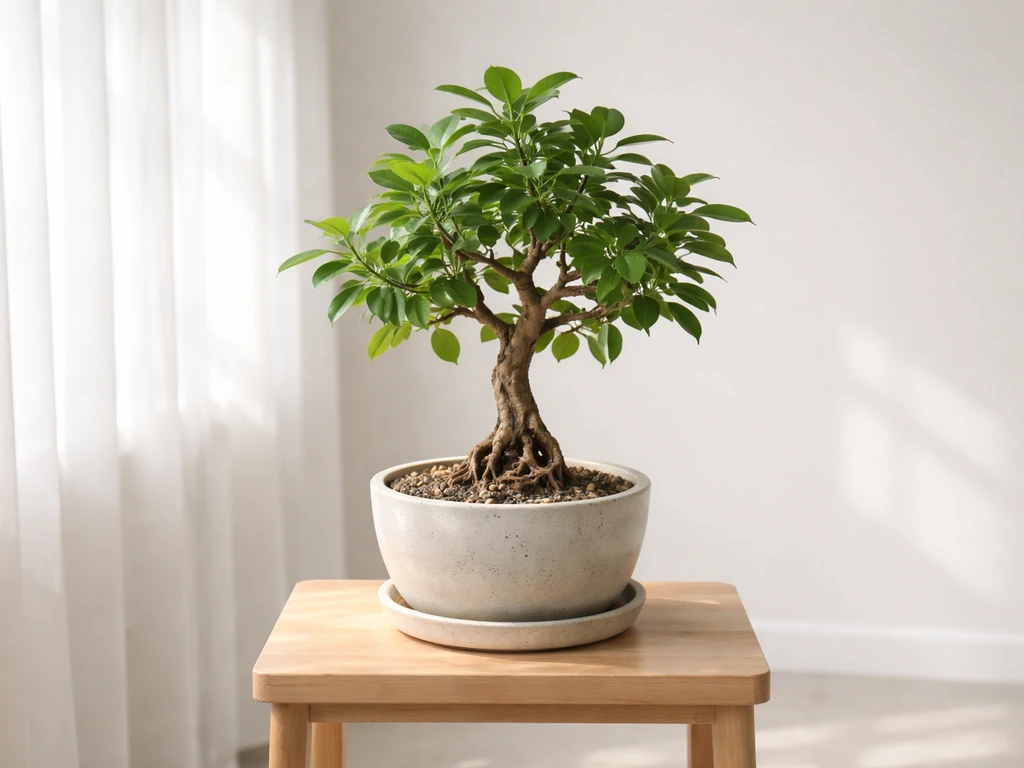
Growing a banyan as a permanent indoor plant is entirely possible. Ficus microcarpa and Ficus elastica both do well in bright indoor spots, and many people keep them year-round in living rooms or offices. The trade-off is size: indoors, without the growth stimulus of outdoor conditions, the plant tends to stay compact and develops much more slowly into anything 'tree-like'. You won't get the spreading habit or aerial roots that make the banyan so dramatic in the tropics, but you'll have an interesting, long-lived houseplant.
Light, soil, watering, and feeding in UK conditions
Light is the single biggest limiting factor indoors in the UK. Banyan figs need bright, indirect light for most of the day. A south or west-facing windowsill is ideal in winter; outside in a bright, partially shaded spot in summer. If your indoor light levels are poor, the plant will drop leaves, refuse to grow, and slowly decline. A grow light on a timer (12-14 hours a day) genuinely makes a difference during the grey months between November and February.
For potting mix, use a well-draining, open compost. A good mix for these plants is a loam-based compost like John Innes No. 2 or 3, combined with about 20-30% perlite or coarse grit to keep the drainage sharp. This mimics the free-draining, fertile soils banyan figs prefer in the wild. Avoid pure peat or coir-heavy mixes alone, which retain too much moisture and can lead to root rot in the lower light and cooler temperatures of a UK interior.
Watering needs to match the season. In summer, water when the top 2-3cm of compost feels dry, usually every 5-7 days outdoors in warm weather. In winter, cut back significantly: water just enough to stop the compost drying out completely, roughly every 2-3 weeks depending on your indoor temperature. Overwatering in winter is the most common cause of death for these plants in the UK. Cold, wet roots in low light is a combination they simply can't handle.
Feed with a balanced liquid fertiliser every 2-3 weeks from April through to the end of August. Stop feeding entirely from September through to March. The plant is either resting or barely ticking over in winter and doesn't need feeding. Using high-nitrogen feed through the growing season encourages lush, healthy foliage.
How to get a plant and propagate your own
For Ficus microcarpa, your best starting point is a specialist tropical plant nursery or a reputable online seller. Garden centres occasionally stock them, especially in spring, labelled as 'Indian laurel' or 'Chinese banyan'. Look for a plant with healthy, glossy leaves, no signs of pests, and a decent root structure. Avoid anything that looks leggy or has been sitting in a draughty, dark corner of a garden centre for months.
If you want to propagate your own, the RHS lists three methods for Ficus microcarpa: seed, leaf-bud cuttings, and semi-hardwood cuttings. Semi-hardwood cuttings taken in summer (July to August) are the most practical for UK growers. Take a cutting about 10-15cm long from healthy new growth, remove the lower leaves, dip in rooting hormone, and pot into a gritty, free-draining mix. Keep warm (ideally above 20°C) and humid, either in a propagator or under a clear plastic bag. Rooting takes several weeks. Seed is possible but slow, and you'd need fresh seed from a specialist supplier.
Getting from a small cutting to something that looks genuinely 'tree-like' takes patience: expect 3-5 years at minimum under good growing conditions. Aerial roots, if they develop at all in UK conditions, will only appear on a mature, large, well-established plant kept in consistently warm and humid conditions.
Pests, diseases, and the problems you'll actually encounter
Under glass or indoors, Ficus microcarpa is susceptible to the usual roster of houseplant pests: glasshouse red spider mite, thrips, mealybugs, and scale insects. The RHS specifically flags all four for this species. Red spider mite thrives in warm, dry conditions, so keeping humidity up around the plant (misting, or placing the pot on a tray of moist pebbles) reduces the risk. Mealybugs and scale insects cluster on stems and under leaves and are best treated early with a cotton bud dipped in rubbing alcohol or a specific systemic insecticide. Check the undersides of leaves regularly, especially in winter when the plant is indoors and air circulation is reduced.
Overwatering and root rot is, as mentioned, the most common non-pest problem. If you see yellowing leaves combined with soft, mushy lower stems, root rot is the likely culprit. Repot immediately into fresh dry compost, cut away any rotten roots, and reduce watering going forward. Cold draughts from windows, doors, or air conditioning also cause leaf drop. These plants hate sudden temperature changes.
Outdoors in summer, watch for vine weevil larvae in the pot and slug damage on new growth if the plant is at ground level. Both are manageable with standard organic or chemical treatments.
What to realistically expect: size, roots, and longevity
In tropical conditions, Ficus benghalensis becomes one of the largest trees on earth, covering hectares with its canopy and curtains of aerial roots. In a UK container, the picture is very different. Container-grown banyans grow slowly, especially indoors in winter, and a typical well-managed specimen might reach 1.5-2 metres after several years of careful cultivation. The dramatic aerial rooting that defines the wild banyan is extremely unlikely in UK conditions without very high humidity and warmth maintained year-round.
Longevity is genuinely good if you keep the plant warm and well-managed. These figs are long-lived in containers and can persist for decades as indoor or conservatory specimens. The risk of loss comes almost entirely from neglect, overwatering, or being caught out by a colder-than-expected winter.
If what you're really after is a large, architectural tropical-looking tree outdoors in the UK garden, a banyan is probably not the right choice. Other exotic-looking plants like tree ferns (Dicksonia antarctica) or large-leafed Tetrapanax are genuinely hardier and better suited to making that tropical garden statement in a UK climate. Other exotic-looking plants like tree ferns (Dicksonia antarctica) or large-leafed Tetrapanax are genuinely hardier and better suited to making that tropical garden statement in a UK climate, and you may also want to check whether can soursop grow in the uk if you're chasing a similar fruiting or tropical goal. If you're interested in other challenging tropical or subtropical trees for UK conditions, similar feasibility questions come up around neem trees, moringa, and soursop, all of which face broadly comparable winter-protection challenges in Britain.
A quick comparison of the main banyan species for UK growing
| Species | Common name | RHS hardiness | Minimum temp | Best UK method | Realistic UK size |
|---|---|---|---|---|---|
| Ficus microcarpa | Chinese banyan / Indian laurel | H3 | -5°C (briefly) | Container, overwintered at 5°C+ | Up to 2m in a large pot |
| Ficus benghalensis | True banyan / Indian banyan | Not rated for UK outdoors | 15°C minimum always | Heated greenhouse or warm indoors only | 1-1.5m indoors |
| Ficus elastica | Rubber plant | H1c (indoors only) | Above 10°C | Permanent houseplant | Up to 2-3m indoors over many years |
Your practical next steps
- Decide which species you want: Ficus microcarpa for container/conservatory growing, Ficus benghalensis only if you have a heated greenhouse that stays above 15°C.
- Source a healthy plant from a specialist tropical nursery or reputable online seller in spring.
- Pot into a free-draining mix of loam-based compost and 25% perlite, in a pot with good drainage.
- Place outside in a sheltered, south-facing spot after the last frost (usually late April to May depending on your region).
- Bring indoors before mid-October into a bright, frost-free space that stays above 5-7°C minimum (conservatory, heated greenhouse, or bright room).
- Water sparingly over winter, stop feeding entirely, and check weekly for pests.
- Resume outdoor placement and feeding in spring once night temperatures are reliably above 7-8°C.
FAQ
If I buy a “Chinese banyan” from a UK garden centre, which one am I actually growing?
In the UK it is usually Ficus microcarpa sold under names like “Chinese banyan,” “Indian laurel,” or “curtain fig.” If the label does not specify the Latin name, check the plant tag carefully, because the true banyan (Ficus benghalensis) is essentially not overwinterable in normal UK conditions.
Can you grow a banyan tree in UK outdoors all year in the mildest coastal areas?
You can try with Ficus microcarpa in sheltered coastal gardens, but it is still a gamble because the hardiness rating is a brief survival minimum, not a comfort range. Even short cold snaps around -2°C to -5°C, especially when the pot is wet, can cause serious damage or kill the plant.
What is the biggest mistake that kills banyan-type figs in UK winters?
Overwatering in low light and cold temperatures. Most deaths come from cold, wet compost and restricted root function, not from a single frost night. Let the compost dry a lot more in winter, and ensure the pot drains fast and is not sitting in runoff water.
Do I need a large heater in a conservatory to overwinter Ficus microcarpa?
Not necessarily, but you do need a plan for overnight drops. If your conservatory routinely dips below about 5 to 7°C, a small thermostat-controlled electric heater is usually more reliable than relying on insulation and venting adjustments.
How do I protect the banyan’s pot outdoors without overheating it in autumn?
Insulate the pot after nights cool down, but avoid wrapping so tightly that rain cannot drain and the compost stays constantly wet. Use pot feet or a trolley for airflow, and keep the trunk area as dry as you can during cold, rainy spells.
When should I move the banyan outside in spring, and when back indoors?
A practical approach is to wait until after the last frost before placing it outside, which is often late April or May, then bring it back before the first autumn frosts, commonly by mid-October. If you get a surprise cold snap, treat it as an emergency move back under glass or indoors.
Can banyan figs handle being near windows with drafts or air-conditioning?
They usually dislike sudden temperature shifts, so drafts from doors, single-glazed window areas, and direct blasts from air conditioning can trigger leaf drop. Keep the plant in a bright spot but away from unpredictable airflow.
Should I prune a banyan in the UK to keep it tree-shaped?
You can prune to shape, but avoid heavy pruning right before winter, because growth slows and the plant is more vulnerable to stress when light levels drop. If you want a better “tree” look, focus on training during the active season (spring to summer) and keep cuts minimal before bringing it indoors.
Why does my Ficus microcarpa drop leaves after moving it indoors for winter?
Leaf drop after relocation is usually from a combination of lower light, cooler temperatures, and occasional watering changes. Use a brighter indoor position (south or west is best), water less frequently, and avoid turning the pot weekly because the plant may shed leaves when conditions change quickly.
What indoor humidity target helps prevent spider mites on banyan figs?
Spider mites tend to worsen in dry, warm air. Instead of trying to humidify the whole room, a practical method is to keep humidity around the plant higher by using a pebble tray (not waterlogged roots) or misting lightly, and improve air movement without creating cold drafts.
How can I tell early if my banyan has root rot?
Look for yellowing leaves alongside soft, mushy tissue at the base or lower stems, and a compost that stays wet for too long. If you suspect rot, repot promptly into fresh dry, free-draining mix and remove any rotten roots, then reduce watering until the plant shows new healthy growth.
Is it possible to speed up the formation of aerial roots in the UK?
In normal UK conditions, aerial roots are unlikely because they require consistently warm temperatures and high humidity. Indoor or conservatory growing can help, but you should set expectations that aerial rooting is rare, and focus instead on healthy trunk and canopy growth first.
Can I propagate a UK banyan from cuttings if I only have a small plant?
Yes, but timing matters. Semi-hardwood cuttings from healthy summer growth (often July to August) are the most practical approach, with warmth and humidity (a propagator or clear cover). Expect slow rooting, and do not rush to move young rooted cuttings outdoors until nights are safely mild.
Next Article
Can You Grow Tiger Nuts in the UK? Practical Guide for Gardeners
Can you grow tiger nuts in the UK? Practical, regional guide with planting dates, containers, harvest & recipes.