Yes, you can grow a mulberry tree in the UK, and if you get the conditions right, you can get fruit from it too. The black mulberry (Morus nigra) is the one worth growing for eating, and it's genuinely hardy across most of England and Wales. The catch is patience: it can take five to eight years before you see a decent crop, and it really wants a warm, sheltered spot to ripen properly. In colder parts of the UK like Scotland or exposed northern sites, fruiting becomes much less reliable, though the tree itself can still survive.
Can You Grow a Mulberry Tree in the UK? Species, Care, Fruiting

James Hartwell
22 May 2026
Realistic expectations for UK growers
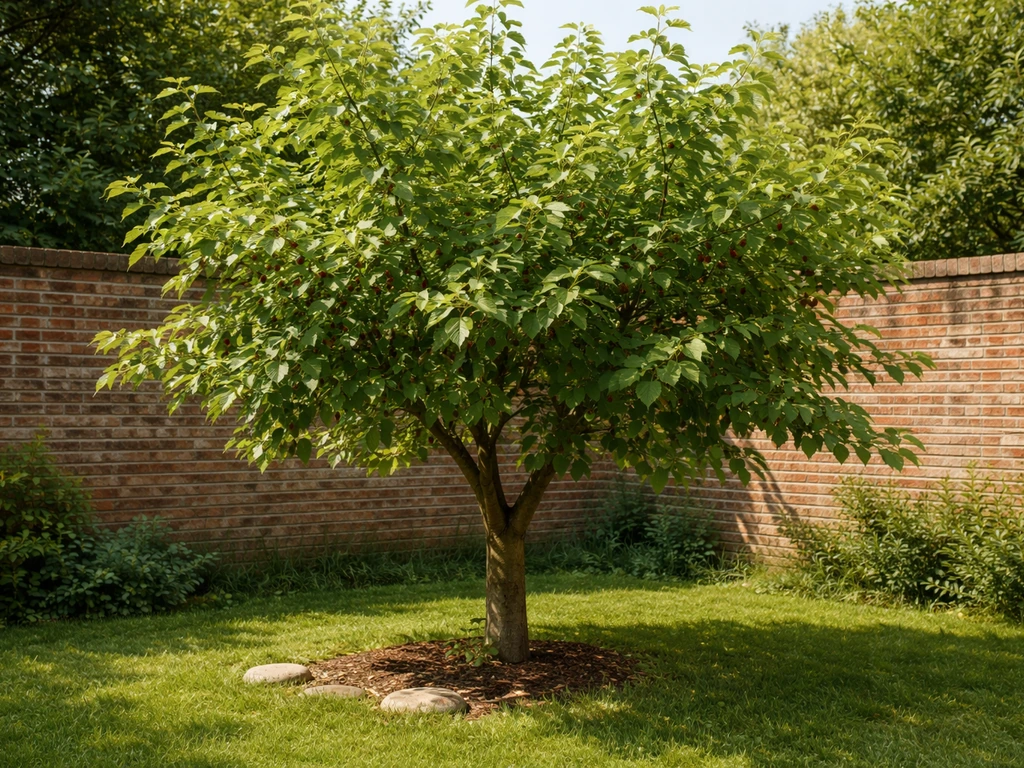
Let's be honest about what you're signing up for. A mulberry tree in the UK is a long-term commitment. You won't be picking bowls of fruit in year two or three. Most gardeners see their first real harvest somewhere between year five and eight, and that's with a well-sited, healthy tree.
In the South East, South West, and sheltered parts of the Midlands and Wales, fruiting is very achievable. As you head north or into more exposed, wet sites, the tree may grow perfectly well but struggle to ripen fruit consistently. Think of it like a fig: survivable across most of the country, but truly productive only where summer heat accumulates.
That said, even as a purely ornamental tree, a mature black mulberry is a beautiful, characterful thing with lovely lobed leaves and gnarled structure. So it's not a wasted effort if fruit is slow to come.
Which mulberry type to choose for UK conditions
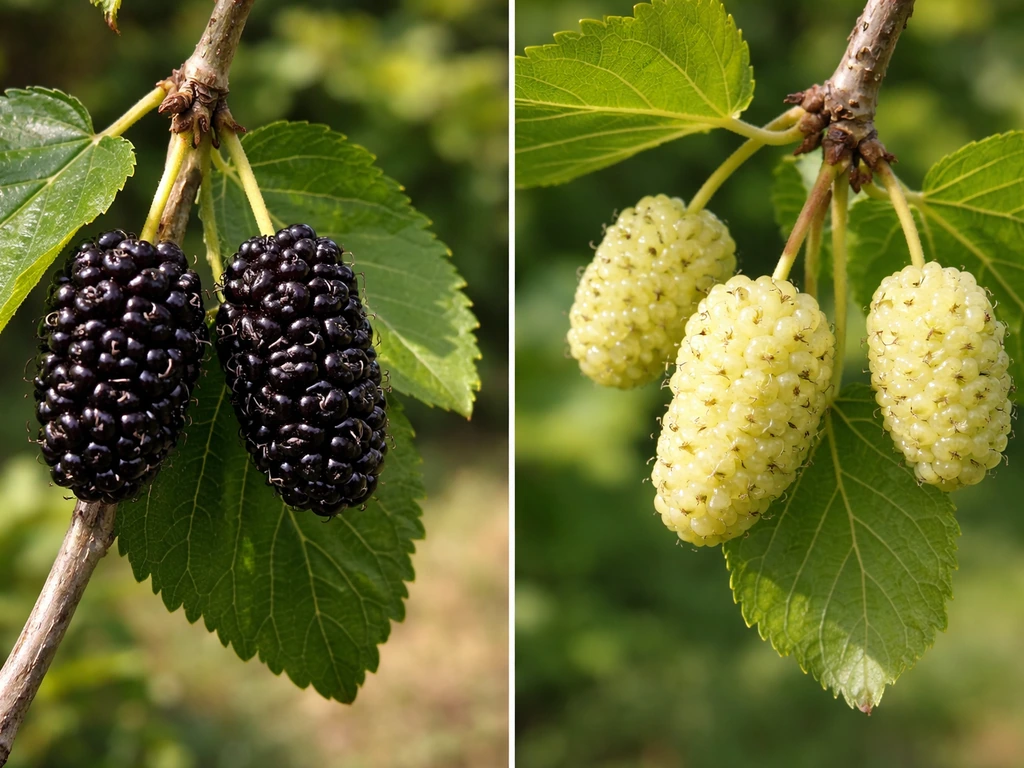
There are two main species you'll come across: black mulberry (Morus nigra) and white mulberry (Morus alba). For eating, it's black mulberry every time. The fruit is deeply flavoured, richly coloured, and far superior to white mulberry in taste. The RHS agrees: Morus nigra is the species to go for if you want best-flavoured fruit. White mulberry grows more vigorously and ripens faster, but the berries are bland and mainly grown for silkworms historically. Stick with Morus nigra.
Within black mulberry, look out for named cultivars like 'Chelsea' and 'Jerusalem', both of which have received the RHS Award of Garden Merit and carry an H6 hardiness rating. H6 in RHS terms means they can tolerate absolute minimum winter temperatures of around -20°C to -15°C, which is well beyond anything a UK winter will throw at them in all but the most extreme frost pockets. These named varieties are a safer bet than unnamed seedlings, especially if you want predictable cropping. Buy from a reputable specialist nursery rather than a garden centre, where the provenance is often unclear.
Where to plant: microclimates, soil, sun, and wind protection
Location is everything with mulberries in the UK. The tree needs full sun, and it needs shelter from cold, drying winds. A south or south-west facing wall is the ideal position, both because it catches maximum sun through the summer and because the wall radiates heat back onto the tree in the evening, which genuinely helps fruit ripen. Fan-trained trees grown against a warm wall produce heavier crops than open-grown trees for exactly this reason. If you don't have a suitable wall, a position sheltered by a hedge, fence, or building on the north and east sides will do the job.
Soil should be moist but well-drained. Mulberries genuinely dislike waterlogged ground, and sitting in wet soil over winter is one of the most reliable ways to stress or kill one. Avoid low-lying areas that pool water, heavy clay that stays saturated, or spots where frost settles and lingers. A slight slope or raised area helps drainage significantly. If your soil is heavy clay, digging in grit and well-rotted organic matter before planting makes a real difference. Mulberries aren't fussy about pH and will grow happily in most UK garden soils as long as drainage is adequate.
Planting and container vs in-ground setup
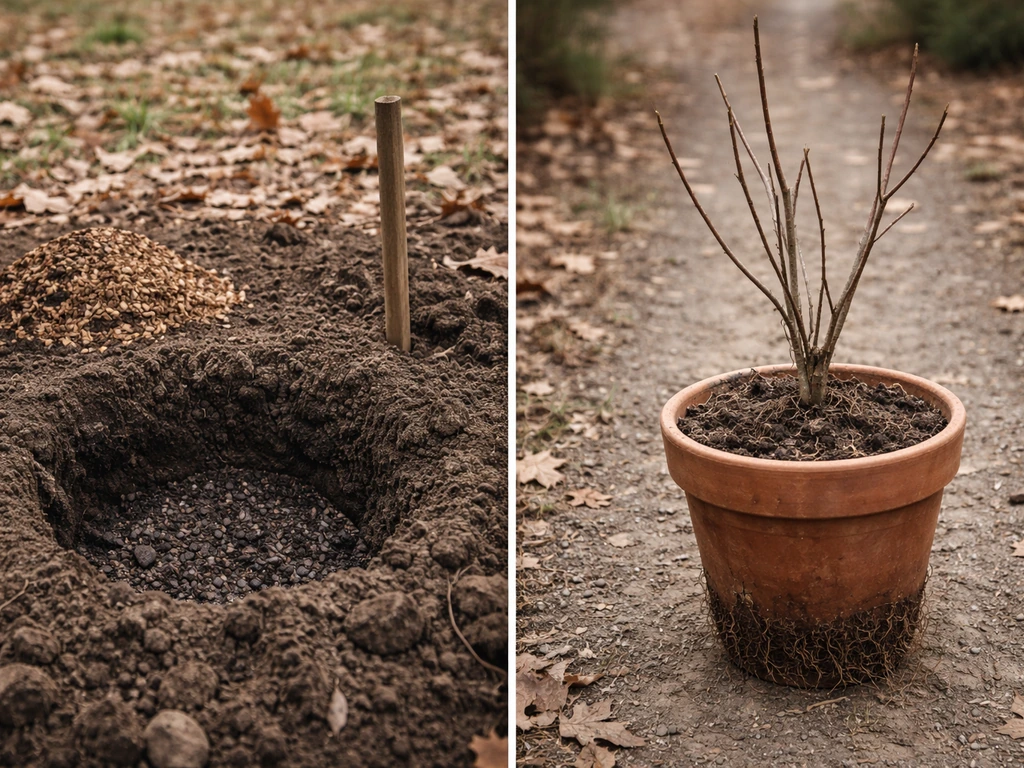
Late autumn is the best time to plant a mulberry. This gives the roots time to establish before the growing season kicks in, which means less stress on the plant through its first summer. Bare-root trees (available from specialist nurseries in the dormant season) are often better value and establish just as well as pot-grown ones.
Planting in the ground
For an in-ground mulberry, dig a hole roughly twice the width of the root ball and the same depth. Improve the soil with compost, plant at the same depth it was growing before, firm in well, water thoroughly, and mulch around the base with a 5–7 cm layer of organic material to retain moisture and suppress weeds. Stake the tree for the first couple of years to prevent wind rock while the roots establish. Keep it well watered in the first growing season, particularly during dry spells.
Growing in a container
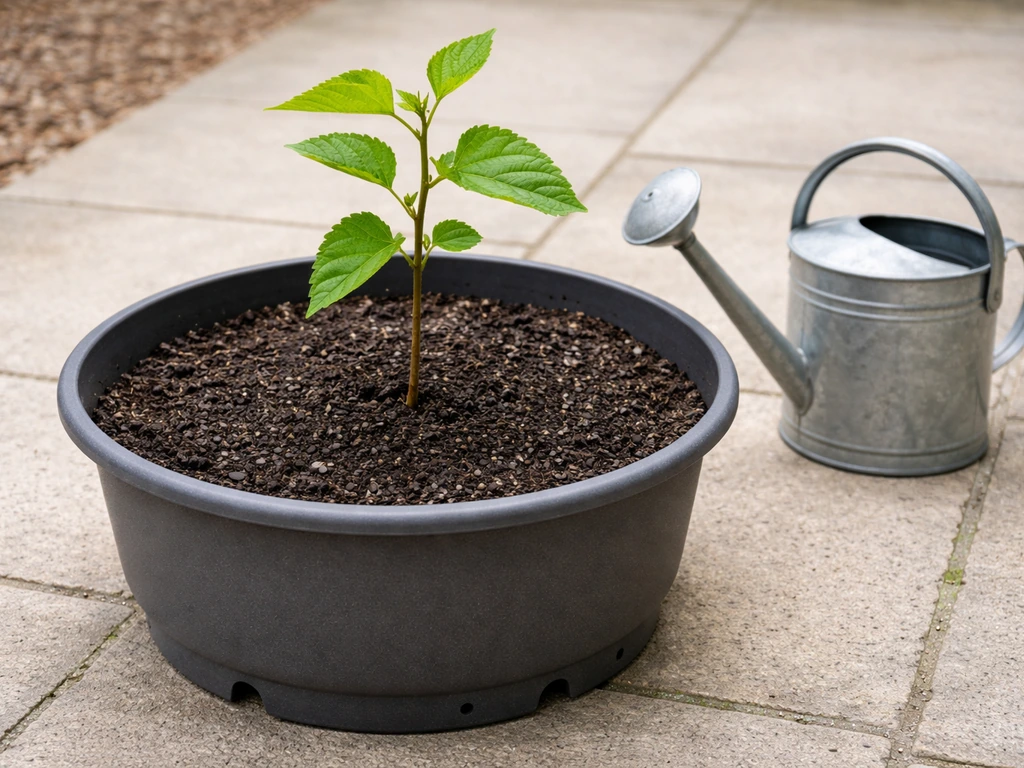
Container growing is a genuine option, especially if you're in a colder region or have limited space. Use a large pot (at least 50–60 cm across) with good drainage holes and a loam-based compost like John Innes No. 3. The key difference with containers is watering: you need to be much more attentive, as pots dry out fast in summer and can also freeze solid in winter if left exposed.
Move the pot to a sheltered spot against a south-facing wall in summer and consider wrapping the pot (not necessarily the whole tree) in bubble wrap or hessian during hard frosts. Expect slower growth and later fruiting in a container, but it's workable if you manage it carefully. One practical advantage: you can move a container tree to the warmest spot in your garden to chase ripening.
Seasonal care, pruning, and training for fruiting
Mulberries don't need or want a lot of pruning, and that's actually one of their better qualities. Heavy cutting tends to stress the tree and can cause excessive bleeding from the cuts. The general advice from nurseries and the RHS is to keep pruning light and focused: remove crossing branches, dead or diseased wood, and anything that's reducing light in the canopy. Coral spot is a fungal disease that can cause dieback of woody stems and produce coral-pink or orangey raised pustules on affected growth, so removing dead or diseased wood is especially important Notcutts garden advice. Shape gently rather than cutting hard.
Timing matters more than with most fruit trees. Always prune when the tree is fully dormant in late autumn or early winter, on a mild, dry day if possible. Pruning in late autumn or early winter reduces the risk of bleeding from cuts. Avoid pruning in spring when sap is rising, as the tree will bleed heavily from any cut and this weakens it significantly.
If you're training against a wall, the most productive approach is an espalier or fan system: a short vertical trunk with three to five pairs of horizontal branches trained outward along the wall surface. This maximises the tree's exposure to the wall's warmth and keeps fruiting wood well-lit and accessible. New growth is tied in during the growing season. Once the framework is established, ongoing pruning just means keeping the structure tidy and removing anything that's growing away from the wall.
Feeding is straightforward. A general balanced fertiliser in early spring helps, and an annual mulch of well-rotted compost or manure around the base in autumn does most of the work. Avoid over-feeding with nitrogen, which promotes leafy growth at the expense of fruit. Watering deeply during dry spells in the first few years after planting is important for establishment. Mature trees are much more drought-tolerant and largely look after themselves.
Will it fruit in the UK? Timing, ripening, and how long it takes
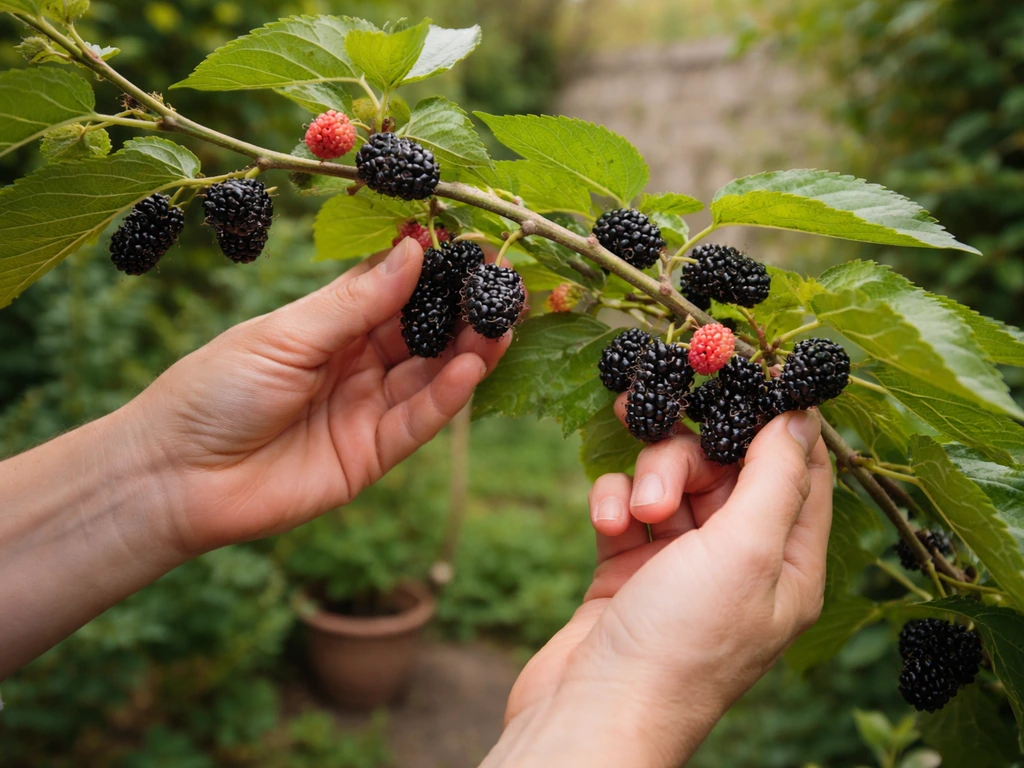
This is the question everyone actually wants answered. In a good year, in a well-sited garden in southern England, you can expect to harvest black mulberries in August and September. The fruit ripens progressively rather than all at once, so you'll be picking over several weeks. The berries go from green to red to deep purple-black when fully ripe, and they stain everything they touch, so lay something down under the tree when harvesting.
The honest timeline for fruiting: most sources agree you should expect to wait at least five years, and the RHS notes it can take around eight years. Some trees surprise you earlier, particularly if you buy a more mature specimen or a grafted tree (which tends to fruit sooner than a seedling-grown one). In colder regions, in wet summers, or in less-than-ideal positions, ripening is less reliable.
Some years the fruit will just not develop or ripen properly if summer is cool and overcast. That's the reality of growing a heat-loving fruit in the UK, and it's similar to the experience of growing a fig or a kiwi here. If you are wondering can you grow banyan tree in UK conditions, the same lesson applies: you generally need a very warm, sheltered microclimate and the right limits for cold tolerance fig or kiwi.
In Scotland, the far north, or on exposed, wet sites, treat the mulberry as primarily ornamental and consider fruiting a bonus rather than a guarantee. If you're also curious about whether another tropical fruit can soursop grow in the uk, that depends heavily on winter protection and how warm your microclimate is. If reliable fruit is the main goal and you're in a challenging location, honestly, a different fruit like a plum, cooking apple, or even a well-sited gooseberry bush will serve you better.
Common problems in UK gardens and how to prevent them
Mulberries are not trouble-free, but they're not particularly demanding either. The main issues UK gardeners encounter are fungal diseases, waterlogging, and birds.
- Mulberry leaf spot: a fungal disease that causes brown or black spots on leaves and early leaf drop. Wet summers encourage it. Improve air circulation around the tree by keeping the canopy open, and remove and bin (don't compost) affected leaves.
- Mulberry canker and dieback: canker causes sunken, dead patches on bark and branches, often linked to damage or frost entry points. Cut out affected wood cleanly back to healthy tissue, pruning during dry weather to reduce spread.
- Coral spot: produces distinctive coral-pink or orange pustules on dead or dying wood. Usually secondary to another stress or damage. Remove affected growth promptly and dispose of it away from the garden.
- Powdery mildew: appears as a white powdery coating on leaves, more likely in dry conditions with poor air circulation. Keep the tree well watered and ensure the canopy isn't overcrowded.
- Honey fungus: rare but possible, and effectively untreatable. The best defence is avoiding waterlogged conditions and planting in well-drained soil.
- Waterlogged roots: one of the most common killers of young mulberries in UK conditions. Always ensure good drainage and avoid low, wet sites.
- Birds: they love the ripe fruit. Netting is the only reliable solution if you want to get any harvest yourself.
Frost risk is relatively low for established trees given the H6 hardiness rating, but young trees in their first winter are more vulnerable, especially in pots or if planted in a frost pocket. A couple of layers of horticultural fleece can give around 2°C of protection, which is often enough to get a young tree through a cold snap. Remove the fleece once temperatures rise to prevent the tree overheating or developing fungal issues under wraps.
Quick decision guide: best options by region and what to do if it fails
| Region | Fruiting potential | Best approach | Recommendation |
|---|---|---|---|
| South East England | Excellent | In-ground, south-facing wall, fan-trained | Go for it with confidence |
| South West England | Very good | In-ground or large container, sheltered spot | Strong choice, expect fruit in 5–8 years |
| Midlands and East Anglia | Good in sheltered sites | South-facing wall position essential | Worth growing; choose named cultivar |
| Wales (lowland and coastal) | Moderate to good | Warm wall, good drainage | Feasible, microclimate matters a lot |
| North England (lowland) | Moderate; variable summers | Container against a south wall, fleece protection when young | Possible but manage expectations on fruiting |
| Scotland and Northern Exposure | Poor for fruit; ornamental only | Container, very sheltered spot, or indoors in winter | Grow for interest or choose a hardier fruit instead |
If your mulberry tree is struggling, the most common fixes are improving drainage, moving it to a warmer wall position, or (if it's in a container) sizing up the pot and feeding more consistently. A tree that's not growing at all after two seasons may simply be in too cold, wet, or shaded a spot. If you've given it the best conditions and it still isn't performing after five or six years, it's fair to accept that your microclimate isn't quite right and try something else.
For gardeners in colder or wetter regions who still want something unusual to grow, it's worth looking at what else is realistically possible. Moringa and soursop, for example, really can't be grown outdoors in UK conditions at all, and even something like hibiscus needs careful overwintering in most of the UK. Mulberry is actually one of the more achievable 'exotic' fruiting trees you can grow in a UK garden, particularly in the southern half of the country.
Mangroves, however, have very different saltwater and warm-climate requirements, so they're not something you can grow outdoors in the UK mangroves in the UK. If you're tempted by unusual trees, it's a much safer bet than most of the alternatives. However, banyan trees have very different needs, and in the UK they would only realistically be grown indoors under controlled conditions grow banyan tree in UK.
In summary: plant a named black mulberry cultivar like 'Chelsea' or 'Jerusalem' in the warmest, most sheltered spot you have, give it good drainage, be patient for several years, and you have a genuinely realistic chance of harvesting fruit in most of England and lowland Wales. If you're also wondering about neem, check whether a neem tree can cope with UK winters and what protection it would need can neem tree grow in uk. It's one of those garden trees that rewards long-term thinking, and once established, it will likely outlast you.
FAQ
Can you grow mulberry trees in the UK from seed, and will they fruit reliably?
Yes, you can grow mulberry from seed, but fruit quality and timing are less predictable than with named cultivars. Seedlings may take longer to fruit (or produce less sweet berries), so for eating fruit, it is usually better to buy a named Morus nigra type from a specialist nursery.
What if my garden is frost-prone or I do not have a south-facing wall?
If you cannot use a warm wall, choose the warmest microclimate you can manage, for example the leeward side of a building or behind a dense hedge. For young trees, add temporary fleece protection during the coldest nights, then remove it as soon as thawy daytime temperatures return.
How do I tell if poor fruiting is due to cold weather or drainage problems?
Cold usually shows up as fruit that forms but fails to ripen, berries stay small or remain red/pale without turning deep purple-black. Drainage problems show up as whole-tree weakness, yellowing leaves, dieback, or a decline that starts after wet winters. If in doubt, inspect the base for soggy soil and consider relocating only while the tree is still young and movable.
Do I need more than one mulberry tree to get fruit?
For most garden situations, you can get fruit from a single black mulberry if the tree is producing viable flowers, but fruit set can still be inconsistent in marginal sites. If you want to maximize odds, planting two different Morus nigra cultivars can improve overall chances of pollination and fruiting.
When harvesting, how can I prevent staining and make the ripening window easier to manage?
Lay a sheet, tray, or old netting under the canopy before you start, because ripe berries stain quickly. Since the fruit ripens over weeks, pick regularly when berries are fully deep purple-black to avoid losing soft fruit to birds and splitting.
Will pruning ever help mulberry fruit more, or should I avoid it completely?
Pruning can help indirectly by improving light and removing damaged wood, but avoid heavy cuts because mulberries can bleed and stress. If your goal is more fruit, focus on removing crossing branches and thinning to open the canopy rather than shortening large limbs.
Is container growing actually practical in the UK, and what are the biggest mistakes to avoid?
It is practical, especially with a moveable pot against a south-facing wall, but watering is the main challenge. Do not let pots dry out completely in summer, and do not leave the container exposed to freezing wet soil in winter. Use a large pot with excellent drainage, and wrap the pot only if hard freezes are expected.
How much watering does a mulberry tree need after planting, and when should I stop?
In the first growing season, water deeply during dry spells so roots establish, then reduce frequency as the tree settles. Once established, mulberries are generally more drought-tolerant, so the key is avoiding waterlogging rather than maintaining constant moisture.
My mulberry is growing leaves but not fruiting. What could cause that?
This often happens when the tree is getting too much nitrogen or too little sun. Check that it is in full sun at least through the summer, then avoid high-nitrogen feeding and stick to a balanced fertiliser only in early spring plus compost/mulch in autumn.
What is the best way to protect a mulberry from birds in the UK?
As berries start turning dark, use netting over the canopy rather than trying to scare birds off. Netting should be secured around the edges because birds will probe gaps, and remove netting after harvest to avoid entanglement or trapped debris.
If my tree does not fruit after 5 to 8 years, should I give up?
It depends on your site. If it is also struggling to grow, the issue may be cold exposure or drainage, and improving those can still help. If it grows strongly in sun and still never ripens, your microclimate may simply be too cool, and switching strategy (for example, choosing the warmest spot or accepting it as ornamental) is the most realistic next step.
Next Article
Can Mangroves Grow in the UK? Indoor and Greenhouse Guide
Can mangroves grow in the UK? Learn what’s realistic outdoors and how to grow them indoors or in a greenhouse.