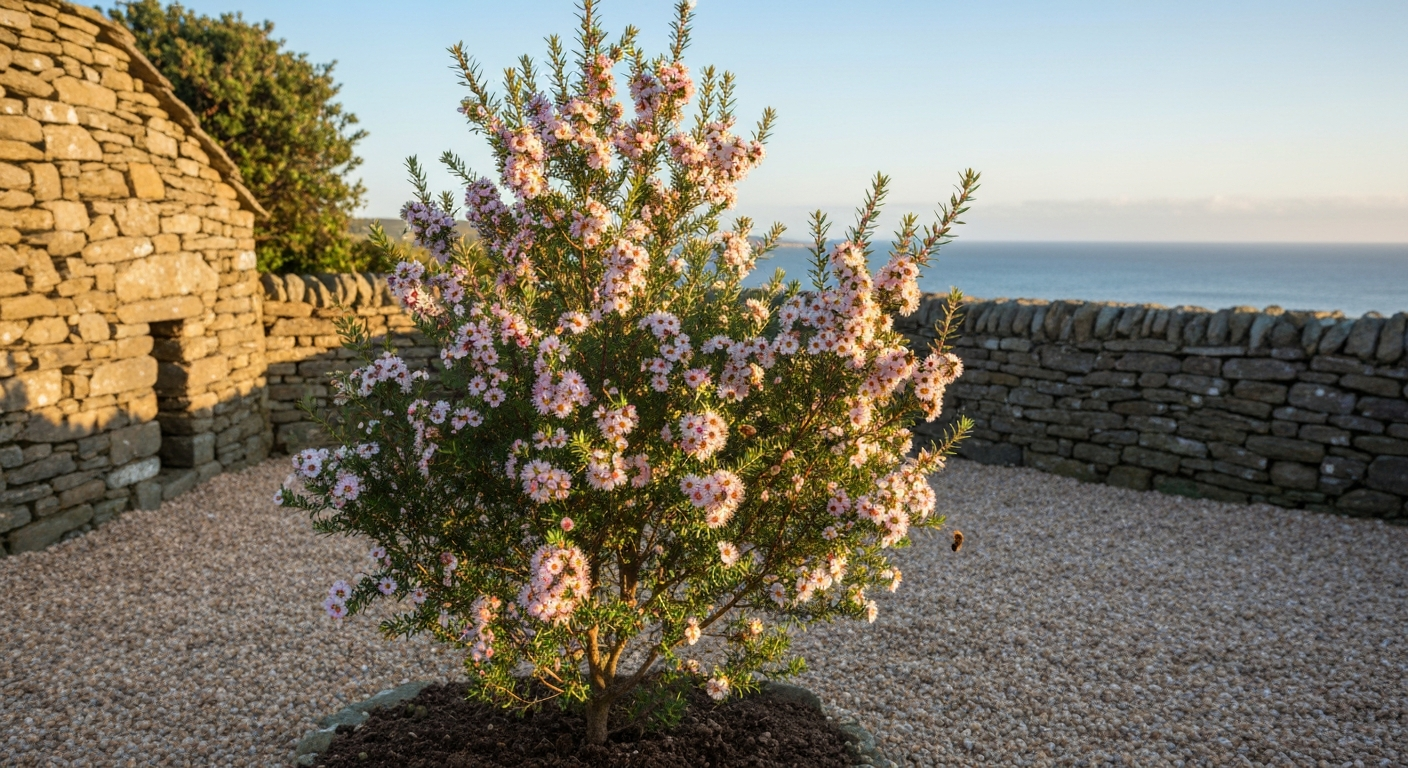
Yes, you can grow manuka (Leptospermum scoparium) in the UK, but where you live makes an enormous difference to whether it thrives, struggles, or quietly dies over winter. In the mildest coastal spots of Cornwall, Devon, west Wales and the west coast of Scotland, established plants can live outdoors for decades. In the Midlands, north of England and most of Scotland, container growing with winter protection is the sensible approach. The honest answer is: manuka is a feasible UK garden plant with the right site, but it is not a plant you stick in any border and forget.
Can You Grow Manuka Trees in the UK? Practical Guide
James Hartwell
21 Jul 2026
Short verdict: can you grow manuka in the UK?
Manuka sits at RHS hardiness rating H4, meaning it tolerates down to around -5 °C to -10 °C in ideal conditions. In practice, research on New Zealand provenances puts the lethal frost threshold for many strains somewhere between -5 °C and -8 °C, and that is for a mature, well-rooted plant in excellent drainage. Young plants, wet roots and exposed positions all push that threshold closer to the softer end. The Isles of Scilly and Tresco in particular are where manuka has naturalised most freely outdoors in the UK, which tells you something about the microclimate it actually wants. Kew Gardens, by contrast, needs a wall and sheltered site even to keep plants alive through a cold winter. That spread of outcomes is the whole story in miniature: microclimate and drainage are everything.
Who should consider growing manuka
Manuka is genuinely worth attempting if you fall into one of three groups. Coastal and south-western gardeners with free-draining, acid soil who want an ornamental evergreen shrub with attractive flowers are the best-placed candidates. Smallholders with bees on acid heathland or moorland soils in the south-west might find it a useful flowering plant to complement existing heather and gorse. And container gardeners almost anywhere in the UK can grow manuka successfully as long as they have the will to move pots under cover or into a cold greenhouse for the worst weeks of winter. If you are hoping to produce meaningful quantities of genuine monofloral manuka honey in the UK, that is a different conversation, covered below.
Where in the UK manuka is most likely to succeed
The UK is not a uniform block, and treating it as one is how gardeners end up disappointed. Here is an honest breakdown by region based on frost data and what growers have actually reported.
Coastal south and west England (Cornwall, Devon, Dorset, west Wales)
This is where manuka has the best chance of a long outdoor life. Parts of west Cornwall average fewer than 10 air frost days per year according to Met Office 1991-2020 climate data, and the Isles of Scilly experience even less frost. Established manuka plants here can form shrubs of 1.5 to 3 metres and flower reliably every spring. West-facing coastal gardens in Wales, particularly in Pembrokeshire and the Llŷn Peninsula, share a similar mild-maritime character. You still need good drainage and shelter from easterly winds, but these regions are as close to manuka's native comfort zone as the UK offers.
The Midlands and south-east England
In the Midlands and south-east, manuka can survive outdoors but needs significant help. You want a south- or south-west-facing wall for reflected heat and frost protection, excellent drainage, and ideally a sheltered town-garden microclimate rather than an open rural plot. Cold easterly winters like those of early 2018 or 2021 can cut plants back hard or kill them outright. I would not plant manuka in an open Midlands border and expect it to be there in five years. A sheltered wall position or container culture is more honest advice here.
Northern England and inland Wales
Outdoor planting in exposed positions in the north of England or inland Wales is a significant gamble. Frost days increase sharply as you move inland and north, and severe winter minimums can exceed the -8 °C threshold that many strains cannot survive. Containers moved into a frost-free cold greenhouse or polytunnel over winter are the realistic strategy here. A sheltered south-facing courtyard or walled garden in places like York or Chester might succeed, but you are managing risk rather than planting with confidence.
Scotland
Scottish outdoor cultivation of manuka is largely restricted to the west coast, particularly areas warmed by the Gulf Stream influence such as Argyll, the Isle of Arran, and parts of Dumfries and Galloway. High ground across Scotland can exceed 100 frost days per year, and exposed sites are simply not suitable. The milder west coast is a different matter: USDA-equivalent climates in places like Crarae Garden in Argyll support a surprising range of southern hemisphere plants. Everywhere else in Scotland, container growing under glass is the only reliable route.
What manuka actually needs: soil, drainage, pH and exposure
Drainage is the single most critical cultural requirement for manuka in the UK, and I cannot stress this enough. Scientific studies on Leptospermum species show measurable root damage and growth reduction under waterlogged conditions, and in a UK winter where cold and wet combine, waterlogged roots are essentially a death sentence. The plant originates from well-drained coastal and upland habitats in New Zealand and south-east Australia, and those conditions need to be replicated as closely as possible.
- Soil type: free-draining, light to medium loam or sandy soil. Clay-heavy soils need significant amendment or raised bed construction before planting.
- pH: acid to neutral, ideally pH 5.5 to 6.5. Manuka is not a plant for alkaline, chalky soils.
- Drainage: the ground must never sit wet for extended periods. A gritty, free-draining soil profile is non-negotiable.
- Exposure: full sun to very light partial shade. A south- or west-facing position gives the best light and the most shelter from cold easterlies.
- Wind shelter: some shelter from cold drying winds is beneficial, particularly for young plants, but excessive shade or enclosed damp spots are counterproductive.
- Slope: a slight slope helps water drain away naturally. Low-lying frost pockets should be avoided entirely.
Frost tolerance and how to protect plants over winter
The headline H4 hardiness rating suggests manuka can handle down to around -10 °C, but provenance research on New Zealand populations suggests many strains are closer to -5 °C to -8 °C before lethal damage occurs. Young plants are reliably less hardy than established specimens, and a plant in wet soil suffers far more from frost than the same plant in sharp drainage. For the first two or three winters in particular, active protection is worth the effort.
- Fleece: two layers of horticultural fleece around young or container-grown plants is effective for brief frost episodes down to around -5 °C.
- Mulch: a 5 to 8 cm layer of bark mulch or grit around the root zone of in-ground plants helps insulate soil and reduce freeze-thaw cycling.
- Container positioning: moving pots to a sheltered wall, into a cold greenhouse or even a frost-free shed is the simplest and most effective protection for container-grown plants.
- Avoid wrapping too early or too tightly: manuka needs air circulation; prolonged damp wrapping encourages disease more than a brief cold snap would cause damage.
- Cold frames: small plants or rooted cuttings can overwinter successfully in a cold frame with added fleece lining in severe spells.
- Do not prune in autumn: do not be tempted to tidy manuka up before winter, as this removes potential bud material and opens wound sites to cold damage.
Planting and timing: in-ground versus containers
Timing your planting correctly gives manuka the best possible start. The general principle is to plant when the soil is warm and there is enough growing season ahead for the plant to establish before its first UK winter.
| Region | Best planting window (in-ground) | Container planting | Winter risk level |
|---|---|---|---|
| Cornwall, Isles of Scilly, west Pembrokeshire | Late April to early June | Year-round with care | Low |
| Devon, Dorset, west Wales coast | May to early June | April to July | Low to moderate |
| South-east England, sheltered town gardens | Late May to June | May to July | Moderate |
| Midlands | Late May only, sheltered wall position | May to July, move under cover in winter | High |
| Northern England, inland Wales | Container only recommended | May to July | Very high |
| West Scotland coast (Argyll, Arran) | Late May to early June | May to July, move under cover | Moderate to high |
| Rest of Scotland, upland sites | Container/greenhouse only | May to June | Very high |
For in-ground planting, prepare the site thoroughly before the plant arrives. Improve drainage if needed by incorporating plenty of sharp grit or horticultural sand, and check the pH to ensure it is in the acid to neutral range. Avoid planting into dry summer heat without a reliable watering plan for the first few months: manuka tolerates drought once established but is vulnerable while settling in. Container growers should use a peat-free ericaceous compost mixed with around 20 to 30 percent perlite or horticultural grit for drainage. A pot of at least 30 to 40 cm diameter allows enough root room for a decent-sized shrub and provides some insulation against sudden temperature drops.
How to propagate manuka: seed, cuttings and buying in
From seed
Manuka seed is tiny and needs a careful approach. Fresh seed germinates more readily than stored seed, and New Zealand provenance guidance notes that seed can be collected from ripe capsules in autumn. Canopy's New Zealand native seed catalogue notes that Leptospermum scoparium seed is collected from ripe capsules in autumn and that both seed sowing and cuttings are recommended for propagation Canopy NZ seed catalogue notes that Leptospermum scoparium seed is collected from ripe capsules in autumn and both seed sowing and cuttings are recommended. For UK growers buying seed, sow in late winter to early spring on the surface of a moistened, fine, acidic seed compost. Do not cover the seed or only barely dust with vermiculite as light aids germination. Maintain a temperature of around 18 to 22 °C. Germination can be patchy and slow, taking two to four weeks or longer. Prick out seedlings carefully when they have two true leaves and pot on into acidic compost. Seed-grown plants will not necessarily replicate the characteristics of named cultivars, so cuttings are preferable if you are growing a specific selection.
Semi-ripe cuttings
This is the method recommended by the RHS and the most reliable route for named cultivars. Take semi-ripe cuttings in mid to late summer, typically July to August in the UK. Select shoots that are firm at the base but still slightly flexible at the tip, around 5 to 8 cm long. Remove the lower leaves, dip the cut end in rooting hormone powder or gel, and insert into a mix of equal parts perlite and peat-free compost. Bottom heat of around 18 to 20 °C significantly improves rooting success, so a heated propagator is genuinely useful here. Keep the cuttings in a bright, humid environment out of direct sun. Rooting typically takes four to eight weeks. Once rooted, pot on into acidic compost and overwinter the young plants under cover before planting out the following season.
Buying nursery stock
For most UK gardeners, buying a named cultivar from a reputable UK nursery is the simplest and most reliable starting point. Several UK specialist nurseries and mail-order retailers stock Leptospermum scoparium cultivars, including 'Red Damask' and 'Leonard Wilson'. When buying, check that the plant has been UK-grown or properly acclimatised, inspect for any signs of scale insects or disease, and choose a plant that is well-rooted but not pot-bound. Avoid buying bare-root manuka: this plant does not transplant well from dormancy in the way a deciduous shrub might.
Cultivars worth growing in the UK
Cultivar choice matters more than many gardeners realise. There is meaningful genetic variation across Leptospermum scoparium provenances, and some named cultivars are better suited to cooler, wetter or more exposed conditions than others. The following selections are most commonly encountered in UK trade and have reasonable reputations for ornamental value and relative cold tolerance.
| Cultivar | Flower colour | Habit | Notes for UK growers |
|---|---|---|---|
| 'Red Damask' | Deep crimson-red, double | Medium shrub to 2m+ | One of the most widely available in the UK; double flowers are long-lasting; good for mild south-west gardens |
| 'Nichollsii' | Deep red, single | Upright, to 2.5m | Bronze-red foliage adds winter interest; reasonably hardy for a named cultivar |
| 'Leonard Wilson' | White-pink, double | Medium shrub | Compact habit useful for containers; available from UK mail-order nurseries |
| 'Nanum' | Pink, single | Dwarf, under 0.6m | Very compact; well-suited to container culture; lower profile reduces wind exposure |
| 'Keatleyi' | Pale pink, large single | Upright, to 3m+ | Large flowers but reportedly less cold-hardy; best reserved for very mild sites |
| 'Wiri Kerry' | Crimson, semi-double | Compact to 1.5m | New Zealand-bred compact form; reasonable cold tolerance; worth trialling in containers |
When buying from a UK nursery, ask specifically whether the plant has been trialled or overwintered outdoors in the UK. A nursery that grows its own stock and overwinters plants in the open is giving you a plant that has already proved some degree of hardiness in British conditions.
Day-to-day care: watering, feeding and mulching
Once established in a suitable site, manuka is not a demanding plant. It tolerates drought better than many garden shrubs, and overwatering or poorly drained soils are a far greater threat to long-term health than occasional dry spells. Water newly planted specimens regularly through the first summer, then ease off as the plant settles in. Container-grown plants need more frequent watering through the growing season but should be allowed to dry slightly between waterings rather than sitting in constantly moist compost.
Feeding should be light and appropriate to acid-loving plants. Use a slow-release ericaceous fertiliser in spring, applied at the rate recommended on the packaging. Avoid high-nitrogen feeds, which push leafy growth at the expense of flowering and make plants more susceptible to frost damage. A mulch of bark chips or pine needles around the root zone helps maintain soil moisture, suppress weeds, and keep soil pH slightly acidic over time. Keep the mulch a few centimetres away from the main stem to avoid collar rot.
Pruning and keeping manuka in shape
The RHS places Leptospermum in pruning Group 8, which covers early-flowering evergreens. The rule is simple and important: tidy immediately after flowering, and never cut back into old bare wood. Manuka does not reliably regenerate from old woody stems the way a buddleja or a willow would. If you cut back hard into leafless old wood, you will most likely end up with dead branches and a significantly reduced plant. Annual light tidying immediately after the main flowering period (typically late spring to early summer in the UK) to remove spent flowering shoots and any crossing or wayward growth is all that is normally needed. This keeps the plant compact and encourages fresh growth that will carry next year's flowers. For container plants that are getting too large, you can gradually reduce the size over two or three years of careful light pruning rather than making drastic cuts all at once.
Pests and diseases in the UK
Manuka is generally a clean plant in UK conditions, but there are a few specific threats worth knowing about before you plant.
Manuka felt scale
Acanthococcus mariannae, known as manuka felt scale, has been recorded in Britain. A 2014 report co-published by the RHS and FERA documented its presence, and there are records of large infestations killing container-grown plants elsewhere in Europe. It presents as white or grey felt-like deposits on stems and leaf axils. If you spot it, treat promptly with a suitable scale-insect control or physical removal, and isolate affected plants. Regular inspection is the best defence, particularly on container plants bought in from overseas supply chains.
Myrtle rust
Austropuccinia psidii (myrtle rust) is a globally spreading fungal pathogen that attacks plants in the myrtle family, including Leptospermum. It has established in Australia, New Zealand and parts of continental Europe (France and Italy among others), though as of current UK plant health records it has not been confirmed as established in the UK. It is, however, on biosecurity watch lists. The advice for UK growers is practical and precautionary: buy from reputable UK-based nurseries, inspect plants on arrival for unusual rust-coloured or yellow-orange powdery spots on new growth, and report any suspicious symptoms to the relevant plant health authority. This is not a reason to avoid growing manuka, but it is a reason to be mindful about the supply chain for your plants.
Damp conditions and disease risk
The UK's damp climate increases the risk of fungal issues, particularly for plants in heavy or poorly drained soils. Root rot (Phytophthora and related pathogens) is the main threat and is almost entirely preventable by maintaining sharp drainage. Grey mould (Botrytis) can affect damp foliage in poorly ventilated positions, particularly on container plants kept under cover in winter. Good airflow around the plant reduces this risk significantly.
Flowering, bees and the truth about manuka honey in the UK
Manuka flowers prolifically in good conditions, typically in late spring to early summer in UK gardens, and bees are genuinely attracted to the flowers. If you keep bees and have a good planting of manuka nearby, you will get some manuka nectar in your honey. However, producing genuine monofloral manuka honey in the UK, the kind associated with high methylglyoxal (MGO) content from New Zealand commercial production, is not a realistic expectation. True monofloral manuka honey requires large areas of manuka in bloom with limited competing forage, specific climatic and bee-management conditions, and NZ-origin plant genetics that consistently produce high MGO levels. UK gardens simply cannot replicate the scale or the conditions of New Zealand's commercial manuka honey regions. What you can realistically expect is a polyfloral honey with some manuka content if your bees work the flowers. That is a pleasant bonus, not a commercial proposition, and any honey produced in your UK garden should be understood as a mixed-forage product rather than the certificated monofloral product from New Zealand.
When not to try manuka: red flags and deal-breakers
Some sites and situations are simply not suitable, and it is worth being direct about them rather than encouraging a doomed planting.
- Waterlogged or poorly drained ground: do not attempt in-ground planting on heavy clay or ground that pools water after rain. This is the single most common cause of manuka failure in the UK.
- Frost pockets: low-lying areas where cold air collects on clear nights experience more extreme frosts than surrounding ground. A frost pocket in the Midlands or north is not a suitable site for outdoor manuka.
- Exposed north or north-east-facing positions: manuka needs sun and shelter from cold winds. A north-facing border or an open hilltop site will likely kill the plant over its first winter.
- Alkaline soils: chalk or limestone soils above pH 7.0 will cause nutrient deficiencies and poor growth. If your soil effervesces when you apply dilute acid, manuka is not a practical choice without raised beds and acidic imported compost.
- Deep shade: manuka flowers and grows best in full sun. A shady garden under large deciduous trees is not a suitable home.
- If you are expecting honey yields comparable to New Zealand: this will not happen in the UK at any realistic planting scale.
Garden, container or greenhouse: a quick decision checklist
Use these questions to work out which growing approach makes most sense for your situation before you spend money on plants.
- Are you in coastal Cornwall, Devon, the Isles of Scilly, west Wales or the mild west coast of Scotland? If yes, in-ground planting in a sheltered, free-draining site is viable.
- Do you have a south- or south-west-facing wall, free-draining acid soil and a sheltered urban microclimate in the south-east or Midlands? In-ground planting with winter fleece protection for the first few years is worth trying.
- Are you in the north of England, inland Wales or Scotland away from the mild west coast? Container growing with winter protection under glass is the practical route.
- Do you have heavy clay soil that stays wet in winter, regardless of where you are? Use a container with ericaceous compost and added grit instead.
- Is your soil alkaline? Use a container with ericaceous compost or build a raised bed with acidic imported growing media.
- Do you have a cold greenhouse or frost-free polytunnel? If yes, you can grow manuka reliably almost anywhere in the UK by overwintering under cover.
- Are you mainly interested in the ornamental flowers rather than honey? Any of the above options will give you that reward if managed well.
Where to buy plants and what to try first
For a first attempt, buy a named cultivar from a UK mail-order nursery rather than chasing cheap plants of uncertain provenance. 'Red Damask' is the most widely available and well-documented UK cultivar, and it is a reasonable first choice for most southern gardens. 'Nanum' is worth considering for container culture because of its naturally compact habit. When you receive the plant, resist the urge to immediately pot it on into a much larger container: move up one pot size at a time and use ericaceous compost blended with 25 to 30 percent perlite or coarse horticultural grit for drainage.
Manuka is part of the myrtle family, which includes several other species UK growers find interesting and challenging in similar ways. If you are exploring southern hemisphere plants for mild UK gardens, eucalyptus is a closely related discussion: some species of eucalyptus are significantly hardier than manuka and better suited to exposed UK conditions. For more on related species and regional hardiness, see Does eucalyptus grow in Ireland, which discusses the suitability and hardiness of various eucalyptus species in Irish conditions. The principles of microclimate management, drainage, and shelter that apply to manuka overlap with other southern hemisphere and southern European plants that push the edges of UK hardiness. If you want to compare suitability of other trees for British gardens, see our short guide on whether maple trees grow in the UK do maple trees grow in the UK. If you're curious about other marginal fruit crops for cool maritime climates, see the short guide can you grow dates in England for practical notes on attempting date palms in the UK. Coastal gardeners in particular will find these threads connect naturally across several species. For related suitability queries about other trees in Britain, see our note on do cottonwood trees grow in the UK which discusses habitat and hardiness considerations.
Final recommendation
Manuka is a legitimate UK garden plant, not a fantasy project, but it rewards honesty about your site. If you are in the right place, a well-chosen cultivar in sharp-draining acid soil with some shelter will give you a beautiful evergreen shrub covered in flowers every late spring and a plant that bees will genuinely appreciate. If you are in the wrong place, a container with good compost, a heating mat for propagation, and a cold greenhouse for winter gives you a version of the same reward with more control. The plants to avoid are the ones in waterlogged clay in a frost pocket facing north-east, and fortunately you now know exactly why. Start with one plant, get it established, and you will learn more about your specific microclimate in one winter than any general guide can tell you.
FAQ
Can you grow manuka trees (Leptospermum scoparium) in the UK?
Short answer: Yes—manuka can be grown in the UK, but success is strongly site‑dependent. In favourable, sheltered, well‑drained, acid‑to‑neutral sites in the milder south and southwest it will often thrive; in colder, wet or exposed locations it is marginal or likely to fail without protection or container culture.
Which UK regions are most suitable — and which are risky?
Most suitable: coastal south and southwest England (Cornwall, Devon, Isles of Scilly) and sheltered lowland parts of the south and west. Possible with protection: Midlands and sheltered coastal parts of the north. Risky or generally unsuitable: exposed northern lowlands, most of Scotland (especially higher ground) and any area with long periods of ground frost or severe winter minima unless grown in a container and moved to shelter.
What site conditions does manuka need?
Key requirements: full sun to light shade, very well‑drained soil (sandy or free‑draining loams), acid to neutral pH, and a sheltered aspect (south or west facing is ideal). Avoid heavy clay, seasonal waterlogging or frost pockets. Good drainage is the single most important factor to prevent root damage.
How frost‑tolerant is manuka and how can I protect it in winter?
Typical hardy range for many strains aligns with RHS H4 (roughly −5 to −10 °C), but frost tolerance varies by provenance and cultivar. Young plants and some cultivars are killed by severe frosts. Protection options: site selection (shelter), frost‑proof microclimates (near walls), mulching roots, temporary fleece/insulation, or growing in pots that can be moved to an unheated greenhouse or sheltered spot during cold spells.
Should I plant manuka in the ground or keep it in a container?
Choose in‑ground when you have a warm, sheltered, well‑drained site with a reliable mild winter. Use containers for marginal sites, colder regions, or if you want winter mobility. Containers allow you to move plants to shelter in frosts and use ericaceous potting mixes and free‑draining media to avoid waterlogging.
When is the best time to plant and how should I do it?
Plant in spring or autumn when soils are workable and avoid planting in waterlogged or frozen ground. For in‑ground: prepare a free‑draining planting hole, mix in gritty sand or horticultural grit if needed, and use acid‑tolerant compost. For containers: use an ericaceous or ericaceous‑style peat‑free mix with good drainage and a pot large enough for root development.
Next Article
Do Maple Trees Grow in the UK? Species, Planting, Care
Find which maple species grow in the UK, how to plant and care for them, and if syrup production is realistic.