Yes, eucalyptus can grow in the UK, and in the right spot it can grow remarkably well. The most reliably hardy species, Eucalyptus gunnii (cider gum), will survive outdoors year-round across most of England and Wales, and in milder parts of Scotland and Ireland. A few other species are worth trying if you're in the south or southwest. The caveats are real though: poor drainage, severe frost, and exposed positions will kill them. Get those three things right and you're in with a genuine shot.
Does Eucalyptus Grow in the UK? How to Succeed
James Hartwell
23 May 2026
How UK climate actually suits eucalyptus
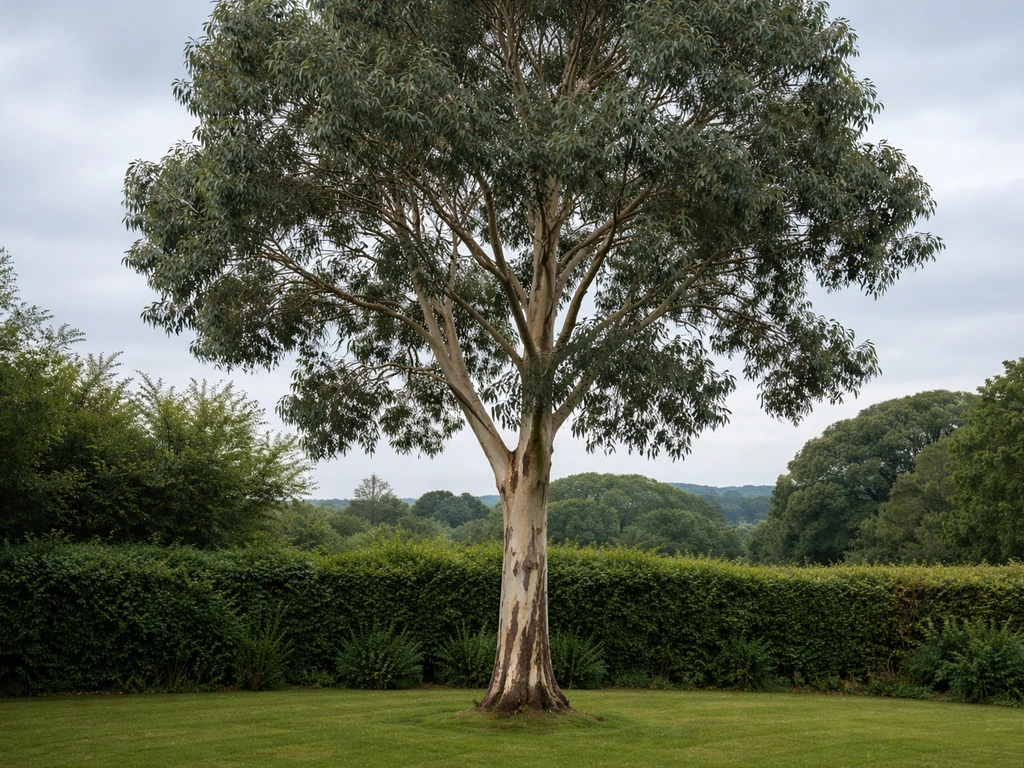
Eucalyptus comes from Australia and Tasmania, so you'd be forgiven for thinking the UK is a total mismatch. In practice, the UK's mild, maritime climate suits certain species surprisingly well. The key is that eucalyptus hates two things above all else: waterlogged soil and prolonged hard frost. Southern England, the West Country, Wales, and coastal areas tend to offer the mild, relatively frost-light winters and decent drainage that these trees need. The south coast can see winter minimum temperatures rarely dropping below -5°C, which puts it comfortably in range for the hardiest eucalypts.
The RHS hardiness rating for Eucalyptus gunnii includes H3, meaning it's considered hardy in coastal and relatively mild parts of the UK, tolerating temperatures down to around -5°C to 1°C. But here's the important nuance: that's the absolute minimum, not a nightly average. Provenance trials reported by Forest Research suggest some E. gunnii material can actually survive down to around -18°C, which tells you there's significant genetic variation in how cold-tough individual plants can be.
Forest Research also notes provenance trials for Eucalyptus gunnii suggesting some material can withstand winter cold down to about -18°C [some E. p-4s3: gunnii material can actually survive down to around -18°C](https://www. forestresearch. gov.
uk/tools-and-resources/tree-species-database/cider-gum-egu/). The further north and inland you go, the bigger the gamble. Central and northern Scotland, elevated areas of northern England, and the East Midlands in bad winters will test any eucalyptus hard.
Rainfall isn't really the limiting factor in the UK. What matters far more is where that rain ends up sitting. Heavy clay soils in low-lying areas can mean roots sit in water through winter, which is often what kills eucalyptus rather than cold alone. Think about your local drainage as much as your local temperature before committing to planting.
Which eucalyptus species give you the best chance
There are over 700 eucalyptus species, but realistically, only a handful are worth trying outdoors in the UK. Forest Research describes Eucalyptus gunnii as probably the safest eucalypt to plant in Britain at present, and I'd agree with that assessment. It's widely available, it establishes reasonably fast, and it's more tolerant of UK winters than anything else in the genus. If you're new to growing eucalyptus in the UK, start here.
| Species | Common Name | Hardiness | Best UK Regions | Notes |
|---|---|---|---|---|
| Eucalyptus gunnii | Cider gum | Down to -5°C to -18°C (provenance dependent) | Most of England, Wales, milder Scotland | The default choice; widely available; responds well to coppicing |
| Eucalyptus niphophila / pauciflora ssp. niphophila | Snow gum | Down to -15°C or below | Most of UK including colder areas | Slower growing, smaller; excellent cold tolerance; worth seeking out |
| Eucalyptus dalrympleana | Mountain gum | To around -15°C | England, Wales, sheltered lowland Scotland | Attractive bark; taller habit; less common but hardy |
| Eucalyptus coccifera | Tasmanian snow gum | To around -14°C | Sheltered spots in England and Wales | Compact; good for smaller gardens |
| Eucalyptus globulus | Tasmanian blue gum | Around -5°C only | Southwest England, coastal areas only | Fast and dramatic but tender; risky outside mild southwest |
| Eucalyptus citriodora | Lemon-scented gum | Frost sensitive | Containers only; overwinter indoors | Not viable outdoors in UK; grow in pots for summer display |
If you're in a colder or more exposed part of the country, the snow gum (E. pauciflora ssp. niphophila) is your friend. It's slower growing and smaller than E. gunnii, but it handles cold far better and looks striking with its peeling, patterned bark. It's less commonly stocked in garden centres, so you may need to seek out a specialist eucalyptus nursery. Worth the effort if you're in the Midlands, northern England, or an elevated site.
How to grow eucalyptus in the UK: site, soil, and water
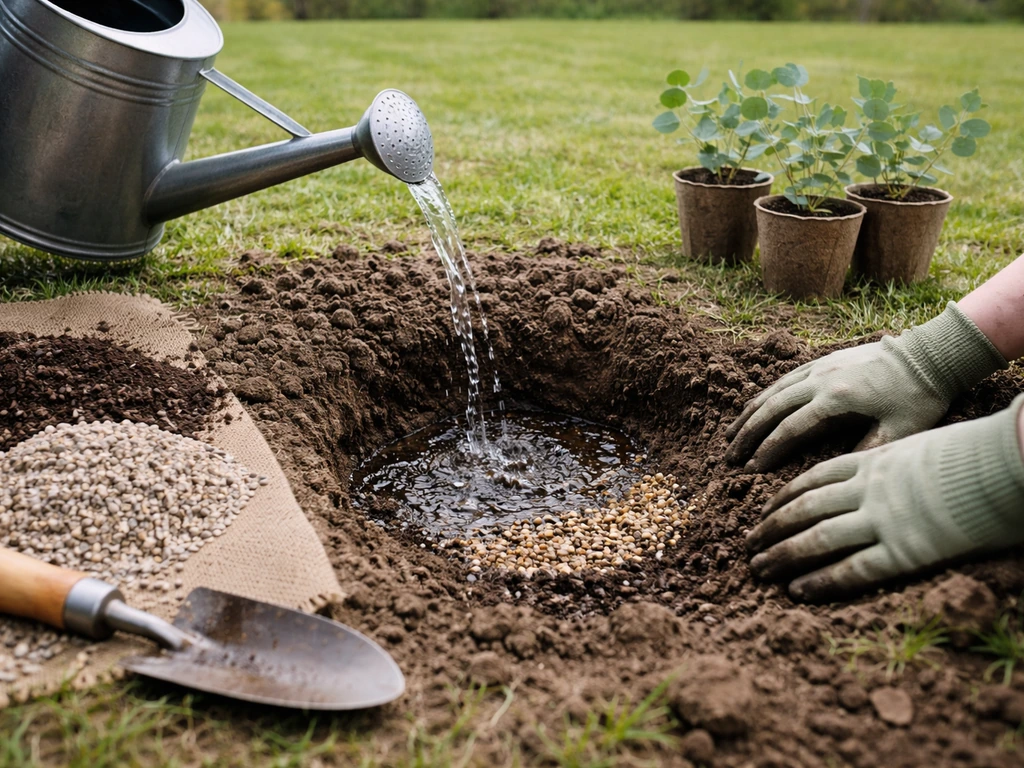
Choosing the right site
Full sun is non-negotiable. Eucalyptus really does need as much direct sunlight as you can offer, especially in its first two or three years. A south or southwest-facing position, ideally with a wall or established hedge providing wind shelter, gives young trees the microclimate boost they need while their root systems establish. Avoid frost pockets, which are low-lying areas where cold air settles on still, clear nights. Even a species rated to -10°C can be caught out by a -5°C frost pocket in a bad February.
Soil requirements
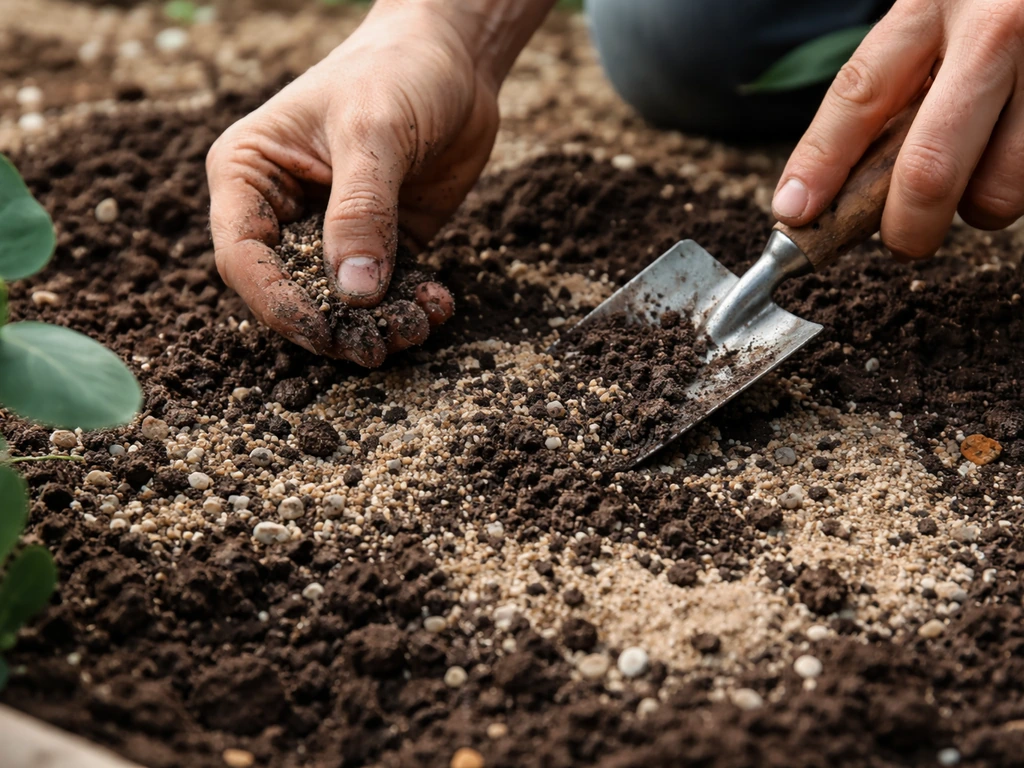
Free-draining soil is the single most important factor. Eucalyptus prefers slightly acidic conditions and performs best on soils of moderate fertility. Forest Research notes that E. gunnii does well on moderately dry to fresh soils, and explicitly warns against wet sites, peats, and very poor soils. If your garden has heavy clay, you need to either improve drainage significantly with grit and organic matter, build raised beds, or seriously consider container growing instead. Interestingly, E. gunnii shows some tolerance of alkaline soils, so chalk gardens in southeast England are not automatically a write-off, as long as drainage is good.
Watering
Newly planted eucalyptus needs consistent watering through its first growing season, especially during dry spells. Once established (usually after a full year in the ground), they become considerably more drought-tolerant. Don't be tempted to overwater established trees. In the UK's typical wetter winters, supplementary watering is rarely needed outside of summer. What you're trying to avoid is the roots sitting in saturated soil over winter. If your soil stays wet for weeks at a time, that's the danger zone.
Cold protection and getting through winter
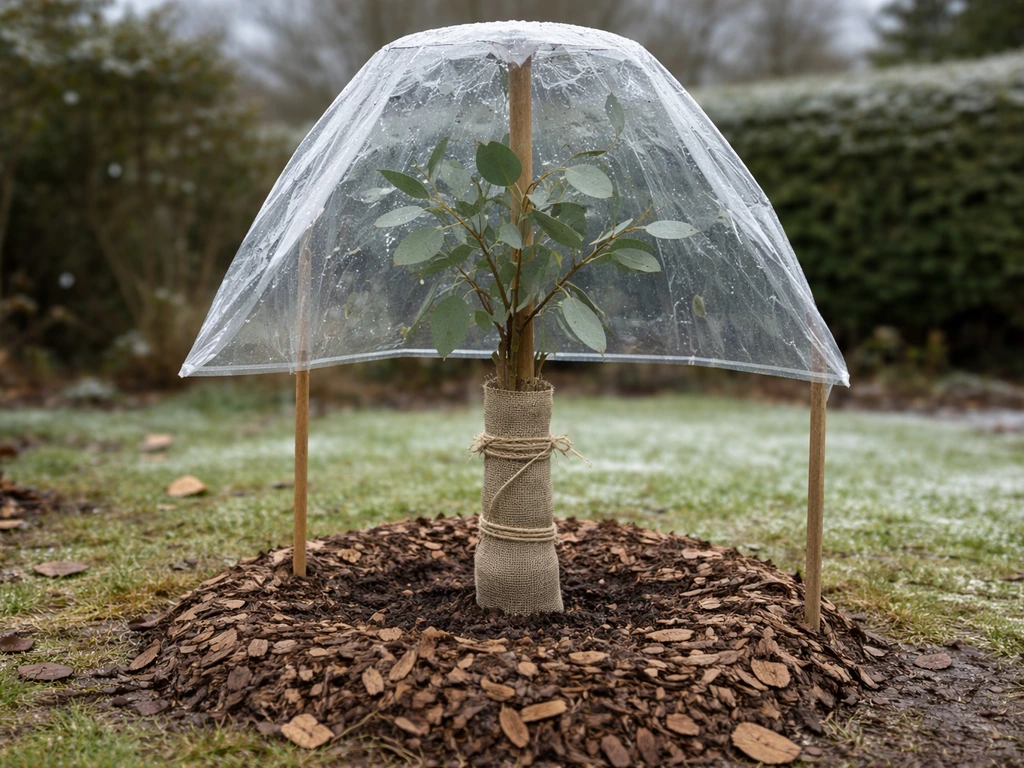
Young trees, especially in their first and second winter, are significantly more vulnerable than established ones. The first winter is always the most nerve-wracking. Here's what actually helps.
- Plant in spring (April to May) so the tree has a full growing season to establish roots before winter hits. A well-rooted tree is dramatically more cold-tolerant than a freshly planted one.
- Mulch the root zone heavily in autumn with bark chips or straw, ideally 5 to 10cm deep, keeping the mulch away from the stem itself. This protects roots from freeze-thaw cycles.
- Wrap young trunks in horticultural fleece during forecast hard frosts (below -5°C). A double layer of fleece buys meaningful protection.
- If the tree is small enough, use a fleece tent or cloche over the whole plant. Don't use plastic sheeting directly against foliage as this can cause more damage than the frost itself.
- For container-grown eucalyptus, move pots to a sheltered spot, ideally against a south-facing wall or into an unheated greenhouse or conservatory.
- Avoid pruning in autumn or early winter. Any cutting back should be done in spring, after the worst cold has passed, to avoid encouraging soft new growth that's vulnerable to late frosts.
In milder parts of the UK (the south coast, southwest England, and sheltered lowland gardens in Wales and Ireland), established E. gunnii and snow gums will typically get through winter without any intervention at all. In the Midlands, northern England, and lowland Scotland, you'll want to protect young trees for the first two winters at least and be prepared for occasional die-back on exposed growth. If the top growth dies back but the roots are alive, eucalyptus will often regenerate strongly in spring.
Container growing vs planting in the ground
Containers give you flexibility and control, but they come with real trade-offs. Eucalyptus grows fast, and a tree in a pot will need repotting regularly and more frequent watering than one in the ground. The RHS notes that most eucalypts will grow happily in a large container until the tree outgrows it. 'Large' here means genuinely large: a 45 to 60 litre pot at minimum for anything you want to keep for more than a couple of years. Use a free-draining, loam-based compost mixed with 20 to 30 percent grit or perlite. Containers dry out fast in summer, so daily watering may be needed in hot spells.
The main advantage of container growing is that you can bring tender species like E. citriodora or E. globulus indoors over winter, turning them into seasonal patio features. If you're in a colder region and want to grow a less hardy species, this is your only realistic option. For hardier species like E. gunnii or snow gum, in-ground planting is better for long-term growth and significantly less work once established.
On size: this is the thing people most underestimate. E. gunnii left to grow freely can hit 10 to 15 metres in 10 to 15 years under UK conditions. It is a genuine tree, not a large shrub. If space is limited, regular coppicing (cutting back to the base every year or two) keeps E. gunnii shrubby and actually produces the attractive juvenile round leaves that most people picture. Many UK growers deliberately manage it this way. Snow gum is naturally smaller and slower, so it's a better fit for average-sized gardens if you don't want to coppice.
Where to buy eucalyptus in the UK and when to plant
E. gunnii is stocked by many larger garden centres, particularly in spring. For snow gum, mountain gum, or other less common species, you'll get much better results buying from a specialist eucalyptus nursery. There are several UK-based suppliers that ship young plants and can advise on provenance, which genuinely matters for cold hardiness. Buying from a nursery that has grown the stock in the UK (rather than importing from warmer climates) gives you a better-adapted plant.
Timing matters. Aim to plant between April and early June. This gives the tree the maximum growing season before its first winter. Avoid autumn planting if you can, especially in colder parts of the UK. A tree planted in September in Yorkshire has little time to establish before the first frosts arrive, and the survival odds are significantly worse than a May-planted tree going into the same winter.
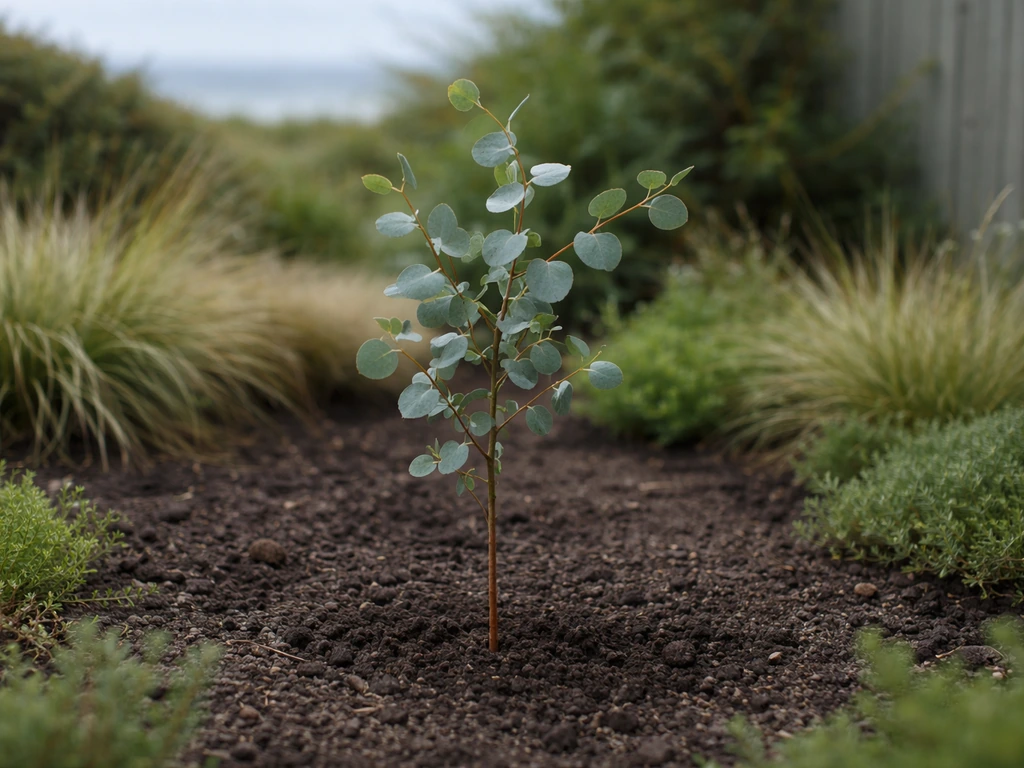
Buy the smallest plant you can find that's healthy, not the biggest one in the centre. Eucalyptus has a taproot and strongly prefers to be planted young. A 2-litre pot plant from a nursery will often overtake a 10-litre specimen within a couple of years, with far less establishment stress. Avoid plants that are pot-bound or showing yellowing lower leaves, which often signals root stress or overwatering in the nursery.
The problems you're most likely to run into
Winter damage and die-back
The most common reason eucalyptus fails in the UK is a combination of cold and wet soil, not just cold alone. If you see browning foliage after a cold spell, don't write the tree off immediately. Scratch the bark on the main stem: if it's green underneath, the tree is still alive and may push new growth in spring. Cut back to living wood once the risk of hard frost has passed, usually from late March in the south and April further north.
Waterlogged soil and root rot
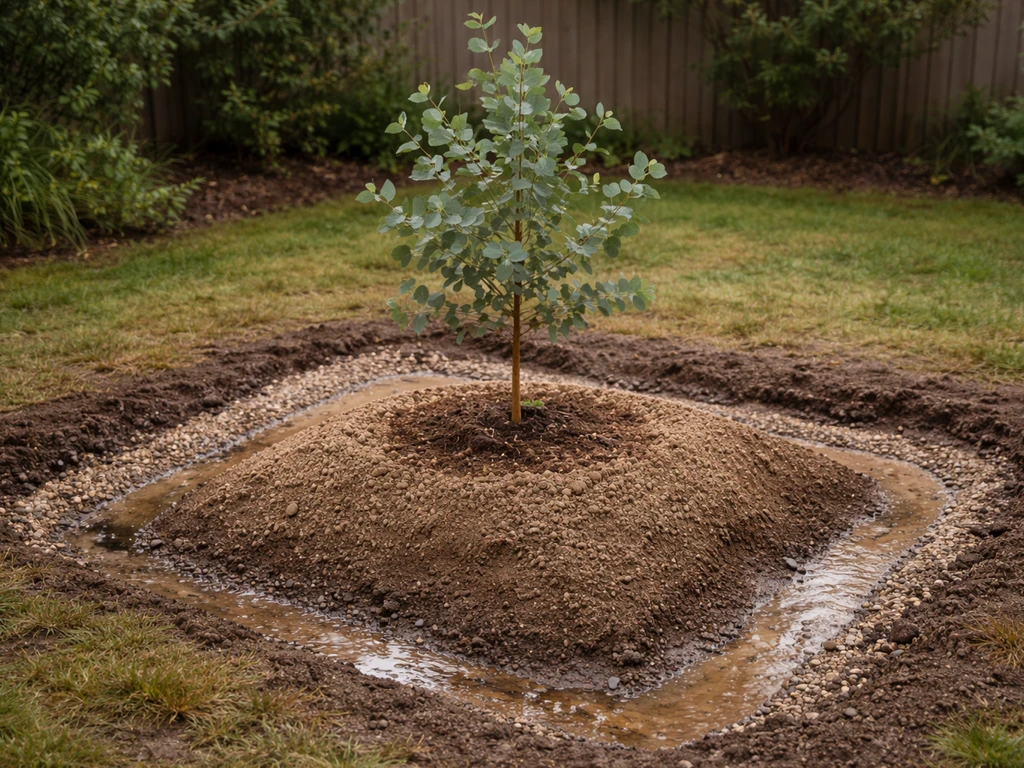
Sitting in wet soil over winter is often more damaging than the frost itself. If your garden has drainage issues, prioritise fixing those before planting. Raised beds or mounded planting positions (planting on a slight mound to improve surface drainage) can make a real difference on heavier soils.
Wind rock and poor establishment
Eucalyptus has a relatively top-heavy structure and shallow roots when young. In windy sites, the tree can rock in the soil, breaking new roots before they establish. Stake newly planted trees with a short, low stake (not a tall single stake that allows the stem to whip) and remove the stake after 18 months to two years.
Pests and disease
Eucalyptus is relatively pest-resistant in the UK compared to many ornamental trees. The main pest to watch for is eucalyptus gall wasp (Ophelimus maskelli), which has become established in parts of the UK and causes unsightly leaf galls. It's more of an aesthetic problem than a fatal one for healthy trees, but severe infestations on stressed trees can weaken them. Psyllids (sap-sucking insects) can also cause leaf distortion on young growth. There's no pesticide approved for eucalyptus gall wasp in the UK, so the best response is to keep the tree healthy and remove heavily affected growth. Fungal issues in the root zone are typically a drainage problem first and a disease problem second.
Drought stress in summer
Established eucalyptus is more drought-tolerant than most UK trees, but young trees in their first and second year can struggle during prolonged dry spells. If you're planting in spring, plan to water through summer, particularly in July and August if there's no significant rainfall for two weeks or more.
What to realistically expect
E. gunnii is a fast grower. In good conditions, expect 60 to 90cm of growth per year once established, and potentially more in warm summers. If you're coppicing it annually, you'll get vigorous multi-stemmed regrowth with the attractive round juvenile leaves. Left unchecked, it becomes a large tree within a decade. Snow gum grows considerably more slowly, perhaps 30 to 50cm per year, but has a more manageable size and stays ornamental without as much intervention.
Flowering is possible but not something to count on in the UK. Eucalyptus gunnii can produce small white flowers, but it typically only flowers when the tree matures and hasn't been coppiced. The aromatic foliage and attractive bark are the main ornamental features in UK gardens, not the flowers. Don't plant eucalyptus expecting a floral display.
The honest question to ask yourself is whether your site actually suits it. If you're in lowland England or Wales with decent drainage, a sheltered position, and reasonable sun, a cider gum or snow gum will almost certainly succeed. Cottonwood trees can grow in the UK too, but success depends heavily on getting the right site conditions do cottonwood trees grow in uk. If you're in a frost-heavy inland area, on clay, or in an exposed position without shelter, you're fighting the tree's basic requirements and you'll likely be replacing it after a bad winter. That's not pessimism, it's what the evidence from UK trials shows.
If you're interested in other unusual trees for UK gardens, there are similar feasibility questions around manuka trees, maple species, and cottonwood trees, all of which have their own regional suitability stories across Britain's varied climates. Manuka trees have similar feasibility questions in the UK, too, because climate, soil, and protection matter a lot for establishment.
If you're also wondering about other trees like maple, the answer depends on the variety and how your local conditions match its needs do maple trees grow in the UK. If you're also wondering whether do cottonwood trees grow in the UK, the answer depends heavily on your local climate and the specific variety you choose.
Eucalyptus sits firmly in the 'achievable with the right approach' category rather than the 'possible only in a greenhouse' one, which puts it in better company than many exotic species people attempt.
The bottom line: plant E. gunnii or snow gum in spring, give them full sun, free-draining soil, and some wind shelter, protect them through the first couple of winters if you're outside the mildest regions, and you have a very reasonable chance of growing a genuine eucalyptus tree in a UK garden. It's not a guaranteed win everywhere, but it's not wishful thinking either. Can you grow dates in England? That depends on whether you can recreate hot, frost-free conditions or manage them as patio or container plants.
FAQ
If eucalyptus survives the winter, does it automatically keep growing successfully in the UK?
Not always. Many trees look alive after frost, then fail later if the roots stay waterlogged. Even if top growth browns off, check that new shoots emerge in spring, then keep soil drainage as your priority during the next winter to avoid root-zone rot.
Can I grow eucalyptus in the UK if my garden has heavy clay but I improve drainage with gravel or grit?
It can work, but surface amendments alone often do not fix winter waterlogging. For heavy clay, consider raised beds or mounded planting (planting on a slight mound) so excess water can move away quickly, and aim for consistently free-draining conditions around the taproot.
What should I do if my eucalyptus looks dead after a cold snap or hard frost?
Do not remove it immediately. Scratch the main stem, if the inner tissue is still green it can regenerate, often after the worst frost has passed. Wait until the risk of hard frost is lower (late March in the south, April further north) before pruning back to living wood.
Is container growing in the UK only for tender species, or can I use it to avoid wet winters too?
You can use containers as a strategy for both cold and wet issues. However, pots dry out quickly in summer and need more frequent watering, so choose it if you can manage watering and repotting. Use a genuinely large, free-draining container setup, otherwise the tree can be stressed even if the winter is protected.
Do I need to bring any eucalyptus plants indoors over winter in the UK?
For Eucalyptus gunnii and snow gum, indoor winter protection is usually unnecessary in mild, sheltered locations. You only need to bring plants in if you are growing less hardy species, storing them somewhere frost-free, or if your site has repeated hard frosts and no shelter.
Which is more likely to cause failure in the UK, cold or wet soil?
Wet soil is usually the bigger killer, especially on heavy or low-lying ground. Frost can damage shoots, but persistent saturation over winter is what most often turns into root-zone problems. Improve drainage first, then choose a cold-tough species.
How close can eucalyptus be planted to walls, fences, or buildings?
Give it room for wind exposure and root space, even though young roots are relatively shallow. A south or southwest wall can help with wind shelter, but avoid placing it where water from gutters or downpipes will keep the root area constantly damp. If possible, keep several feet away from structures to reduce both moisture and competition.
Can I plant eucalyptus in autumn in the UK if winter is not too severe where I live?
Autumn planting increases establishment risk because the tree may not root deeply enough before cold snaps arrive. The safer approach is spring planting (roughly April to early June), giving the tree more time to establish before its first winter.
How much sun does eucalyptus really need in the UK?
Aim for full sun, not partial shade. Young trees are especially dependent on direct light to build strength over their first two or three years. A bright, south-facing spot is much more reliable than a sheltered but shaded position.
Does coppicing eucalyptus help it survive colder UK winters?
Coppicing mainly manages size and can encourage fresh juvenile regrowth, but survival still depends on soil drainage and winter cold exposure. If you coppice, avoid doing it in a way that leaves the plant vulnerable during the coldest part of winter, and keep protection focused on the root zone and sheltered placement.
What signs on leaves mean disease versus normal cold damage?
Browning after a frost spell can be cold or wind related, especially on new growth. If you see leaf issues that coincide with soggy ground, think root stress first. A quick bark check on the stem helps distinguish “recoverable dieback” from true plant loss.
Next Article
Can You Grow Dates in England? Realistic Guide
Can you grow dates in England? Learn if date palms fruit, best types, container setup, frost protection, and success odd