Yes, eucalyptus can grow in Ireland, but the honest answer comes with conditions attached. Certain cold-hardy species, particularly Eucalyptus gunnii (cider gum), can survive Irish winters and establish into decent-sized trees in sheltered, well-drained spots, especially along the milder southern and western coastal areas. For most of the country, though, you're looking at either choosing the right species carefully, managing your site well, or growing in containers with winter protection. Get those things wrong and you'll lose the plant in the first hard frost.
Does Eucalyptus Grow in Ireland? How to Succeed
James Hartwell
1 May 2026
Can eucalyptus actually survive outdoors in Ireland?
Ireland's climate is genuinely more promising for eucalyptus than people expect. It's temperate, relatively mild thanks to the Gulf Stream, and the southern coast in particular has a real climatic advantage over much of Northern Europe. Teagasc, the Irish agricultural research body, has looked seriously at eucalyptus for cut foliage production and found multiple species workable in Ireland's conditions. Teagasc’s “blank" rel="noopener noreferrer">Eucalyptus for Cut Foliage” trials reported multiple eucalyptus species performing well in Ireland for cut foliage production, including notes relevant to winter cold resistance. That's not a hobbyist experiment, that's commercially relevant research, and it tells you something useful: this isn't a plant that categorically fails in Ireland.
Where it gets complicated is inland, elevated, or frost-hollow sites, and choosing tender species that simply aren't built for cold. A species rated H3 by the RHS (hardy only to around −5°C) will get wiped out in a typical Irish midlands winter. A species rated H6 (hardy to −20°C or lower) is a completely different proposition. The difference between success and failure in Ireland is almost entirely about species selection and site, not some fundamental incompatibility with the climate.
Which eucalyptus types survive Irish winters (and which to avoid)
The RHS hardiness scale runs from H1 (tropical, needs heat) through to H7 (extremely hardy). Most eucalyptus species sit in the H3 to H4 range, meaning they can handle a few degrees of frost but won't reliably survive a proper cold snap. For Ireland, you want H5 or H6 rated species at minimum, especially if you're planting in the ground.
| Species | Common Name | RHS Hardiness | Min Temp | Ireland Suitability |
|---|---|---|---|---|
| Eucalyptus gunnii | Cider Gum | H6 | −20 to −15°C | Best choice, widely proven, good for most of Ireland |
| Eucalyptus niphophila | Snow Gum | H6 | Around −18 to −20°C | Excellent, very cold-hardy, slower growing |
| Eucalyptus parviflora | Small-leaved Gum | H5/H6 | Around −18°C | Good in sheltered sites, less common |
| Eucalyptus pauciflora | Ghost Gum | H5 | −15 to −10°C | Workable in milder Irish areas |
| Eucalyptus globulus | Blue Gum | H3 | −5 to −1°C | Risky, coastal only, not recommended inland |
| Eucalyptus citriodora | Lemon-scented Gum | H2/H3 | Near 0°C | Container only, bring inside in winter |
Eucalyptus gunnii is the go-to for Ireland. Forest Research's provenance trials back up its frost hardiness to around −18°C, and it's the species you'll most commonly find in Irish and UK nurseries. Snow gum (E. niphophila) is arguably even hardier and has a beautiful silvery bark, though it grows more slowly. If you want the best odds of a plant still standing after five Irish winters, start with one of those two. Avoid the blue gum (E. globulus) unless you're right on the southern coast in a frost-free pocket. It's a stunning tree but it will not thank you for an inland Irish winter.
Where in Ireland it's most likely to work
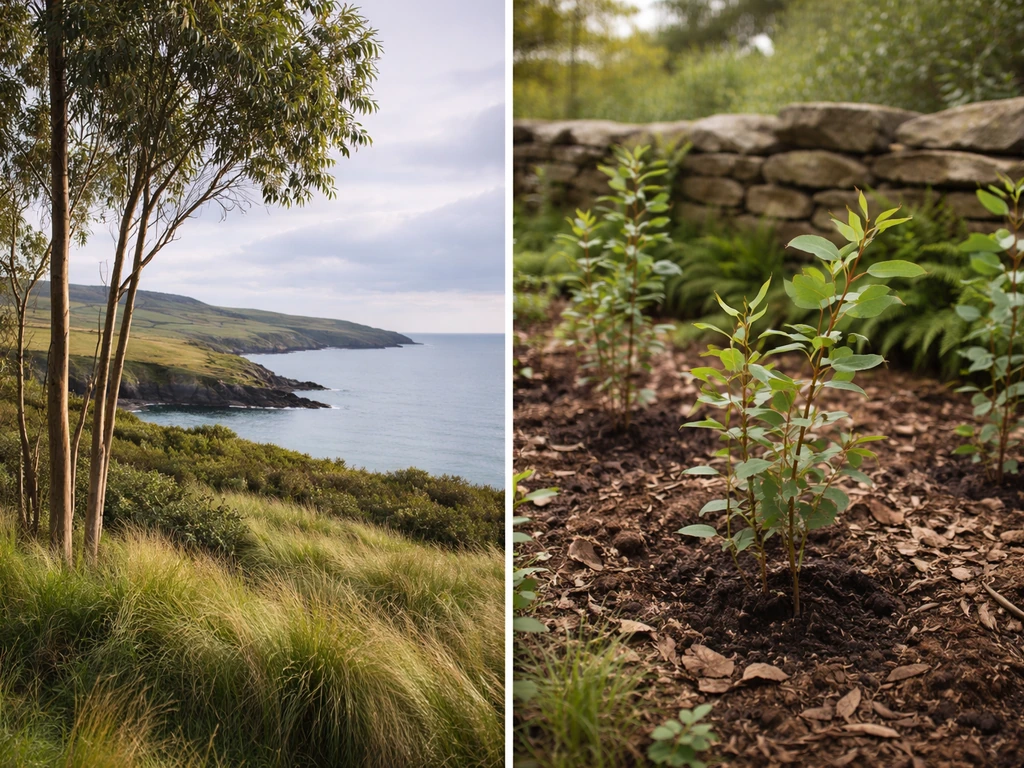
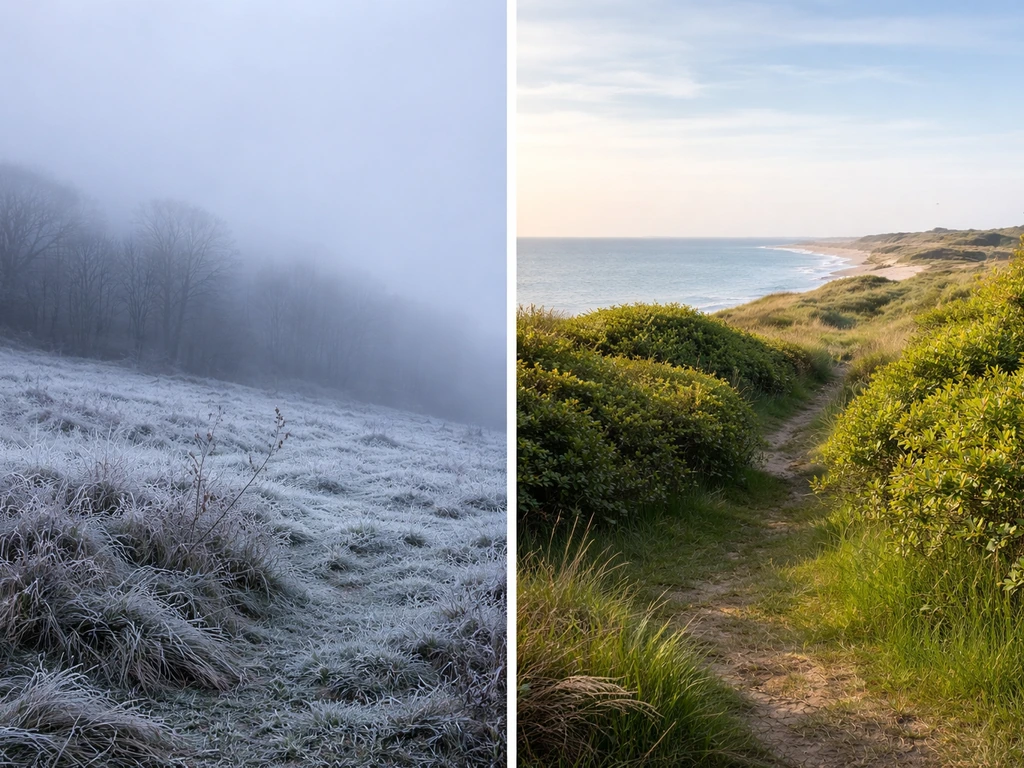
Site matters enormously. Ireland isn't one climate, it's a patchwork of microclimates, and a eucalyptus planted in the right spot in County Cork has a fundamentally different life expectancy to one planted in a frost hollow in County Roscommon. Broadly, the south and southwest coasts are your best bet: mild winters, rarely getting below −5°C in sheltered spots, and enough humidity that the plants don't dry out. Coastal areas of Clare, Galway, Kerry, and Wexford are also reasonable territory.
Inland and elevated sites are harder. Frost hollows, where cold air drains down and pools, are the worst possible location for any eucalyptus. Forest Research specifically warns against planting cider gum in frost hollows, and that advice applies directly to Ireland. If your garden sits in a valley bottom or you regularly get hard ground frosts while neighbours on higher ground don't, think carefully before planting in the ground.
Shelter from wind is critical, especially in the first few years. Young eucalyptus grow fast, and that rapid early growth means the wood hasn't fully hardened when the plant is most vulnerable. A south or southwest-facing wall, a windbreak of established trees or hedging, or a sheltered corner of a walled garden gives you a meaningful advantage. Promesse de Fleurs note that Ireland and Brittany can host good eucalyptus specimens in cooler, wetter conditions provided wind shelter is in place, and that tracks with what actually works.
Soil drainage is non-negotiable. Eucalyptus is susceptible to Phytophthora root rot (a water mould disease that kills roots in waterlogged ground), and Ireland's rainfall makes this a genuine risk. You need free-draining soil. If your soil is heavy clay or stays wet in winter, you either need to improve drainage significantly or grow in containers.
In-ground or container: which approach makes sense for you
If you're in a sheltered, mild, well-drained spot in the south or west, planting in the ground with a hardy species is the right move. You'll get faster establishment, a bigger tree, and less ongoing management. If you're anywhere else in Ireland, containers give you the flexibility to move the plant under cover during a cold snap, which significantly improves survival odds for the first three years while the root system builds up resilience.
The container approach comes with its own challenges. Avoid traditional smooth-walled pots if you ever intend to plant the tree in the ground later: they encourage circling roots that become a long-term problem. Air-pruning pots or containers specifically designed for root management are a better investment. Hardy Eucalyptus (a UK specialist supplier) recommends against grow-bags for the same reason. Use a well-drained compost mix, don't let the pot sit in a saucer of water, and go up pot sizes gradually rather than jumping to a huge container immediately.
Container plants need to come inside during serious cold, ideally somewhere well-lit, well-ventilated, and frost-free, keeping temperatures above 0°C. A cool greenhouse, polytunnel, or even a bright utility room works. Don't put them somewhere warm and dark: they need light and cool-but-frost-free conditions, not central heating.
How to plant and care for eucalyptus in Ireland
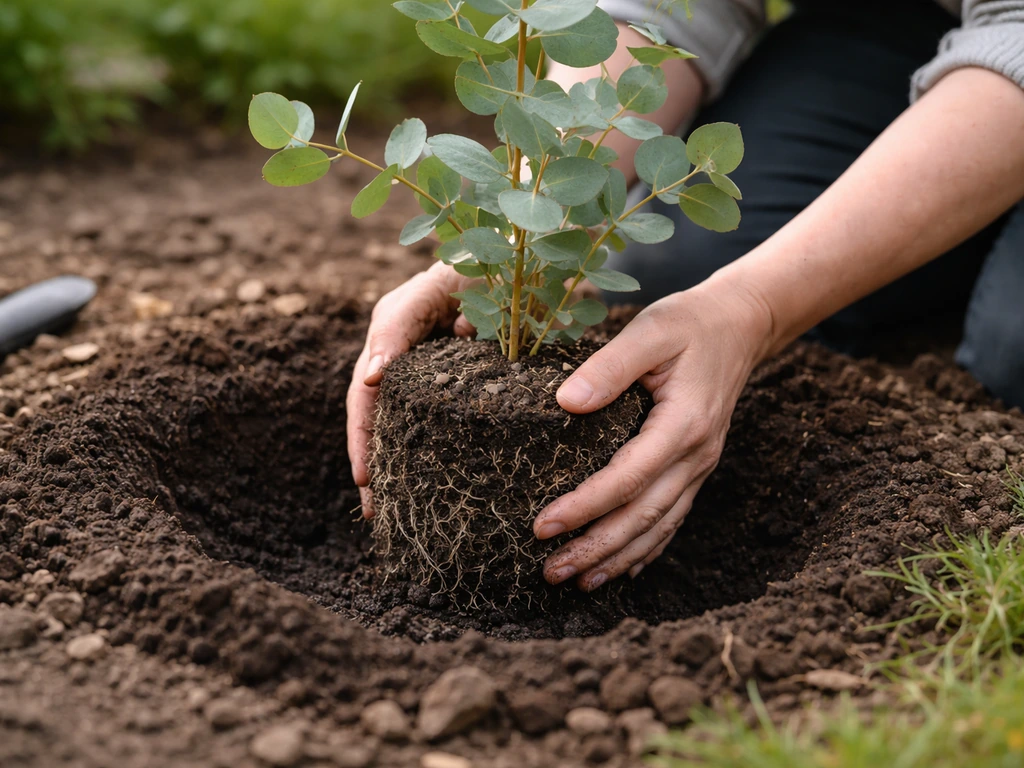
When and how to plant
Plant in early spring, from March through April, so the tree has a full growing season to establish before facing its first winter. Autumn planting is riskier in Ireland: the plant doesn't have enough time to root in before the cold arrives. If you have to plant in autumn, do it early (September) and protect well.
- Soak the root ball or container thoroughly before planting, at least an hour in water.
- Dig a hole twice the width of the root ball but no deeper than its height.
- Add grit or sharp sand to heavy or clay soil to improve drainage.
- Plant at the same depth it was in the container, not deeper.
- Firm in well and water thoroughly after planting.
- Stake young trees loosely to allow some movement, which strengthens the stem, but prevents wind rock on the roots.
Ongoing care through the year
Water regularly through the first summer, particularly during dry spells. Once established (usually after two to three years), eucalyptus is reasonably drought-tolerant, but young plants need consistent moisture without waterlogging. Keep competing weeds and grass away from the base: they compete for water and nutrients during the critical establishment phase.
Pruning is worth doing annually if you want to keep the plant manageable and encourage the attractive juvenile foliage (the round, silvery-blue leaves that eucalyptus is known for). Hard pruning, called coppicing or pollarding, involves cutting back hard each spring. This keeps plants as multi-stemmed shrubs rather than large trees, which is useful in smaller gardens and also keeps them more wind-resistant. If you want a tree form, remove competing stems and allow one strong leader to develop.
Winter protection steps
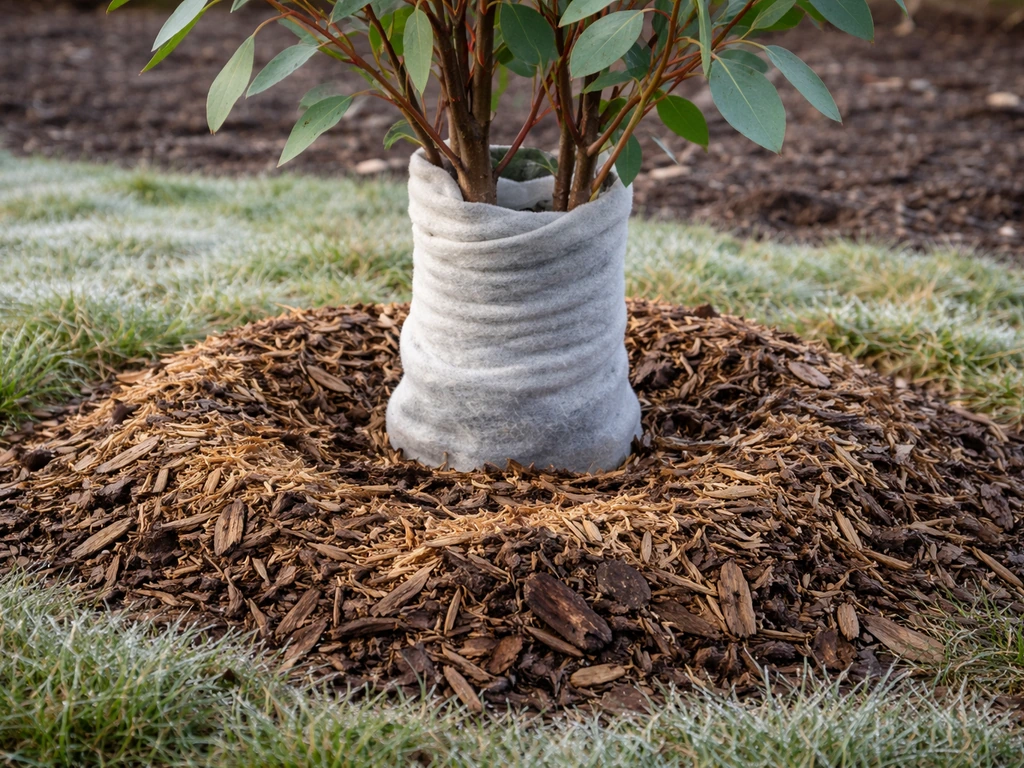
Protection should go on before the first frost, which in Ireland can be anywhere from October in exposed inland areas to December on the milder coast. Don't wait until a frost is forecast: by then it's often too late to do it properly.
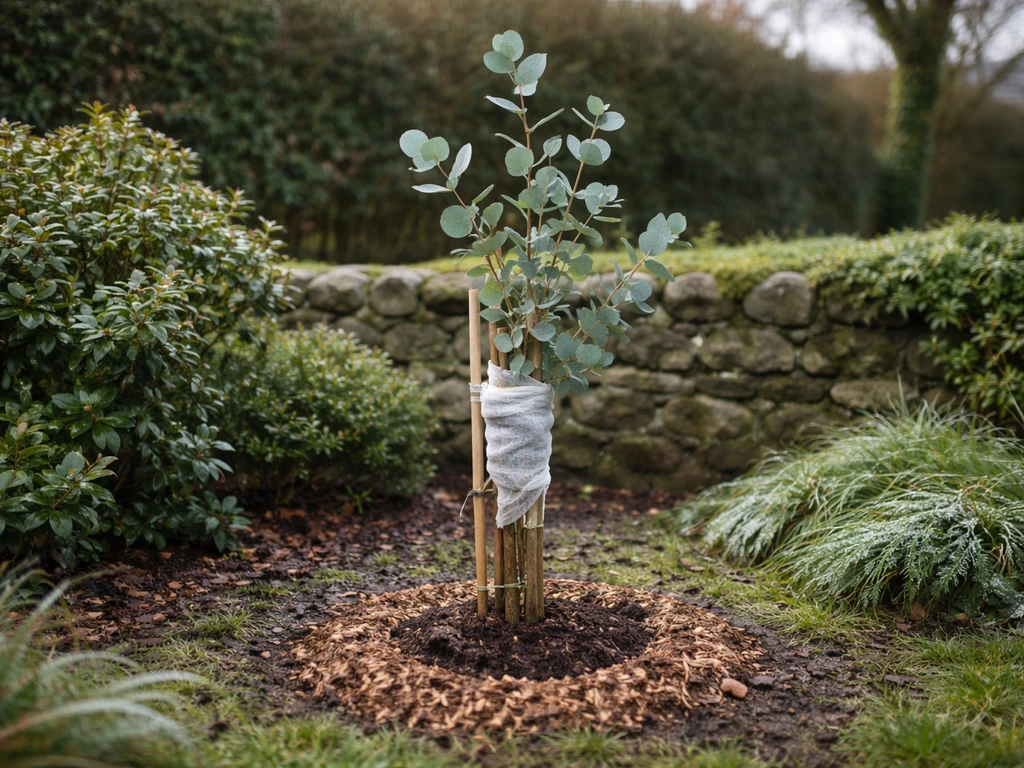
- Apply a thick mulch of bark, straw, or wood chip around the base, at least 150mm (6 inches) deep, covering the root zone out to the drip line.
- Keep mulch away from direct contact with the stem to avoid rot.
- Wrap the stem and lower branches of young or tender plants in two or three layers of horticultural fleece if a hard frost is forecast.
- For container plants, move them to a sheltered spot (against a wall or under cover) before temperatures drop below 0°C.
- In very cold snaps, cover in-ground plants with a tent of garden fleece secured loosely so it doesn't crush branches.
- Remove wrapping and heavy mulch once the risk of frost has passed, usually from March onwards in Ireland.
When things go wrong: frost damage, dieback, and drainage problems
Frost damage on eucalyptus looks dramatic but isn't always fatal. Brown, wilted, or blackened foliage after a cold snap doesn't necessarily mean the plant is dead. Wait until late spring before giving up: eucalyptus can reshoot strongly from the base or from lower on the stem even when the top looks completely dead. Cut back damaged growth to healthy wood once you're sure the frosts are done, and look for new buds breaking from the trunk or base.
Dieback that progresses even in mild weather, or a plant that fails to reshoot at all by June, is more serious. If the stem is brown and dry all the way down to soil level, the plant is likely dead. Check the root zone: if the soil is consistently wet, Phytophthora root rot may be the culprit, and there's no cure. Remove the plant, improve drainage, and start again in a better-drained spot or container.
Leaf drop can happen with cold or waterlogging and doesn't always mean death. Eucalyptus can also drop leaves in response to transplant stress, particularly if the roots were disturbed at planting. Keep watering consistently, don't overwater, and give the plant time before assuming the worst.
Wind rock is a common failure point for fast-growing young eucalyptus. If the tree is wobbling at the base, the roots aren't anchoring properly, which makes the plant vulnerable to both drought and frost. Re-firm the base, improve staking temporarily, and consider hard pruning to reduce the wind resistance of a top-heavy plant.
What to realistically expect: size, lifespan, and flowering
Eucalyptus gunnii is a genuinely fast grower. Under good conditions in the UK and Ireland, it can put on a metre or more of growth per year in its early years, which sounds exciting until you realise that a tree nobody manages can reach 25 to 30 metres in the right conditions. Do cottonwood trees grow in the UK, and how would their cold tolerance compare to eucalyptus? For most garden situations, you'll be coppicing or pollarding regularly to keep it at a manageable multi-stemmed shrub of 3 to 4 metres, and that's actually the more useful and attractive form for most people anyway.
Flowering in Ireland is unlikely for most gardeners. Eucalyptus typically needs several years of uninterrupted growth and a warm summer to flower reliably, and in Ireland's cooler, cloudier summers, most plants simply won't get the heat accumulation needed. If flowers are your goal, you'll probably be disappointed. If foliage is the goal, particularly that attractive round juvenile leaf, eucalyptus in Ireland can deliver that very effectively, especially if you keep it coppiced.
Lifespan in Ireland depends heavily on how the winters treat it. Wikipedia notes that Eucalyptus gunnii (cider gum) is known for exceptional cold tolerance, often cited around −14°C, with lower temperatures for short periods blank" rel="noopener noreferrer">Eucalyptus gunnii is known for exceptional cold tolerance. In a good sheltered spot with a hardy species, there's no reason eucalyptus can't live for decades, and established trees are significantly more cold-tolerant than young ones because the root system can support rapid recovery from frost damage. In marginal sites or with tender species, you may be replacing plants every few years after hard winters, which is frustrating but manageable if you go in with realistic expectations.
For anyone comparing eucalyptus to other borderline-hardy trees for Ireland, it sits in an interesting middle ground: more achievable than something like a date palm in a sheltered spot, but needing more care than a native maple. If you are wondering whether do maple trees grow in uk too, the answer depends on the exact species and how cold your location gets native maple.
That said, if you’re wondering can you grow dates in England, the key factors are warmth, protection, and realistic variety choice date palm. If you're exploring what unusual trees can realistically work in Irish conditions, eucalyptus with the right species choice is one of the more rewarding experiments you can run.
You may also be wondering whether manuka trees can be grown in the UK, which comes with different climate and soil requirements than eucalyptus can you grow manuka trees in the uk.
FAQ
What is the minimum eucalyptus hardiness rating I should look for in Ireland?
Aim for species rated H5 or H6 if you want the best chance of survival outdoors in most Irish winters. If you only find H3 or H4 plants, plan to grow them in a container long term or be prepared to treat them as annuals in exposed inland spots.
Can I grow eucalyptus in Ireland from seed?
It's possible but far less reliable than buying a named hardy cultivar. Seedlings are less cold-tolerant than established plants and can take several years to become large enough to judge real hardiness, so container growing with winter cover is usually the safer route for beginners.
Is eucalyptus ever a good choice for a frost hollow or valley garden?
Generally no, frost hollows are the worst locations because cold air pools near the ground. If your garden forms a low point where neighbors on higher ground stay warmer, your odds drop sharply even with hardy species, and you should strongly consider containers or raising the planting spot.
How do I protect eucalyptus during a sudden cold snap?
Use protection before temperatures fall, not after damage appears. A breathable horticultural fleece plus extra wind shielding helps, but the biggest emergency control is keeping the root zone from getting waterlogged (too-wet + cold is where problems start).
Do I need to water eucalyptus in winter in Ireland?
Usually not. In winter, focus on preventing waterlogging, especially if rainfall is high. Water only if the pot or soil has stayed dry for a prolonged period, then water thoroughly but allow complete drainage afterward.
What should I do if my eucalyptus goes brown after winter but still has some green near the base?
Don’t discard it immediately. Wait until late spring, then prune back only the dead, blackened tips to healthy wood. Look for fresh buds starting from the trunk or the base, if those appear the plant can reshoot strongly even after dramatic top dieback.
How can I tell if the problem is cold damage versus Phytophthora root rot?
Cold damage typically shows localized blackening or browning after frosts, and the plant may reshoot once it warms up. Root rot signs include persistently wet soil, collapse despite shelter, and dieback that keeps progressing even in mild weather. If the soil stays soggy, assume rot is possible and improve drainage or switch to container culture.
Should I use grow bags for eucalyptus in Ireland?
Avoid them if you plan to keep the plant and eventually move it into the ground. Grow bags often lead to poor root architecture and can promote circling, which later causes long-term stability and health issues. Better options are air-pruning containers or containers designed for root management.
What container size should I start with for eucalyptus?
Start big enough to establish healthy roots but don’t jump straight to an oversized container. Oversized pots stay wet longer in Irish conditions, raising rot risk. A gradual pot-size increase over time is usually safer, as long as drainage is excellent.
Can eucalyptus survive salt wind or coastal exposure in Ireland?
Coastal areas can be favorable for cold tolerance, but salt wind and drying wind still stress young plants. Use wind shelter and prioritize a position that gets moisture without waterlogging, and consider extra winter protection for the first few years.
Will eucalyptus flower in Ireland if I grow it successfully?
Most home gardeners should not expect reliable flowering because it needs sustained warm summers and a long period of uninterrupted growth. Even when plants survive, flowering is often the exception rather than the rule in Ireland, so plan your goals around foliage instead.
How tall can eucalyptus get in Ireland if I do not keep it in check?
If left unmanaged in good sites, it can become very large over time. For most gardens, you will likely want coppicing or pollarding to keep it to a manageable multi-stem form and reduce wind-rock risk from a top-heavy young tree.
Next Article
Can You Grow Tiger Nuts in the UK? Practical Guide for Gardeners
Can you grow tiger nuts in the UK? Practical, regional guide with planting dates, containers, harvest & recipes.