Yes, you can grow Pink Lady (Cripps Pink) apples in the UK, but it is not straightforward everywhere. In the warmest, sunniest parts of southern England you have a genuine shot at ripe, well-coloured fruit from an open-grown tree. Everywhere else, you are managing risk: a short growing season, unreliable late-summer warmth, and fruit that may ripen green and under-sweet if the conditions are not in your favour. With the right site, rootstock, and a few smart tricks, plenty of UK gardeners do pull it off, but going in with realistic expectations is the whole game.
Can You Grow Pink Lady Apples in the UK? Regional Guide
James Hartwell
28 Jul 2026
Region-by-region verdict
Pink Lady is a late-season dessert apple that needs a long, warm growing season to ripen properly. The UK's regions vary enormously in that regard, so a blanket answer does not serve you well. Here is an honest breakdown of what to expect depending on where you garden.
| Region | Verdict | Open-grown tree | Wall/Polytunnel | Key limiting factor |
|---|---|---|---|---|
| South West England | Yes | Possible in sheltered spots | Good chance of success | Wet autumns; watch for scab |
| South East England | Yes | Best UK odds outdoors | Excellent | Drought stress in dry summers |
| Midlands | Maybe | Marginal; needs warmest microclimate | Worth trying | Season too short in average years |
| East England | Maybe | Possible in warm, low-lying sites | Good with protection | Late frosts; variable heat sum |
| North England | No (without cover) | Not recommended outdoors | Polytunnel realistic option | Insufficient growing degree days |
| Wales | Maybe | Coastal south Wales only | Worth attempting | Rain, cloud cover and short season |
| Scotland | No (without cover) | Not recommended outdoors | Heated polytunnel needed | Growing season far too short |
| Northern Ireland | Maybe (barely) | Coastal lowlands only, marginal | Polytunnel recommended | Cool summers, short ripening window |
The South East consistently records the highest accumulated Growing Degree Days (GDD) in the UK, based on long-term Met Office temperature normals (1991–2020). Southern and coastal South West sites are close behind. Once you move north of the Midlands or into upland areas, the heat sum simply does not add up reliably enough for a cultivar with Cripps Pink's ripening requirements. Scotland and northern England are not impossible with a well-managed heated polytunnel, but that is a serious infrastructure commitment.
Decision checklist: is Cripps Pink right for your plot?
Before you order a tree, run through this honestly. If you find yourself ticking mostly 'no' boxes, you would be better served by an earlier-ripening UK apple variety or by growing Cripps Pink under cover.
- Are you in the South East, South West or coastal East England? (Yes = proceed; No = reconsider or plan for polytunnel)
- Does your plot get at least 6–8 hours of direct sun daily from April to October? (Essential — do not compromise on this)
- Do you have a sheltered, south-facing wall, fence, or slope available? (Strongly recommended outside the warmest counties)
- Is your soil free-draining but moisture-retentive with a pH of 6.0–6.5? (Waterlogged heavy clay is a serious problem on dwarfing rootstocks)
- Can you commit to annual formative pruning, summer pruning, and consistent irrigation in the first three years?
- Do you have or can you source a compatible pollinator variety flowering at a similar time (pollination group 3–4)?
- Are you prepared for the realistic possibility that in a cool, dull summer the fruit may not develop full red blush or peak sweetness?
- If in a marginal region, are you willing to invest in a polytunnel or train the tree against a south-facing wall with thermal mass?
What Cripps Pink actually needs from the climate
Cripps Pink was bred in Western Australia, which tells you most of what you need to know. It needs warmth, sun and a long season to ripen properly, but it also needs a genuine winter cold period to break dormancy correctly. That combination, cold winters and warm, sunny summers, is something the UK manages unevenly depending on where you are.
Chilling requirement
Using the Dynamic Model (the most reliable method for modern chill calculations), Cripps Pink requires approximately 34 chill portions to break dormancy fully. That is actually on the lower end for apple cultivars, many common varieties need 50–70 chill portions. Most UK lowland sites, including the south coast, the Midlands, and even parts of Scotland, accumulate enough winter chill to meet this requirement in most years. Chill deficiency is generally not the limiting problem for UK growers; the real challenge is summer warmth and season length.
Heat accumulation and season length
After bud break, Cripps Pink needs a long growing season with substantial heat accumulation (measured as Growing Degree Days above a base temperature of 5.5°C) to ripen in late October. Southern England's GDD totals, consistently the highest in the UK according to State of the UK Climate data, are just about sufficient in a good year. The Midlands and further north accumulate meaningfully fewer GDD, which is why the fruit often stalls at a green, under-ripe state before autumn cold sets in.
Sunlight and colour development
That signature pink-red blush is not just about variety genetics, it depends heavily on cool nights combined with sunny days in the run-up to harvest. The anthocyanin pigments that create the red colour form best when daytime temperatures are warm, nights drop noticeably, and the fruit is well-exposed to light. Pink Lady / Cripps Pink fruit colour and anthocyanin (red blush) formation are strongly promoted by good light exposure and cool night temperatures (cool nights + sunny days markedly increase anthocyanin synthesis; sustained warm pre‑harvest temperatures reduce red colour) A study in Scientia Horticulturae reported that cool nights combined with sunny days strongly promote anthocyanin (red blush) formation in Cripps Pink (Pink Lady) apples.. In a cloudy, mild UK autumn, fruit can stay pale green-yellow with very little blush even when fully ripe. This is one of the most common disappointments for UK growers of this variety, and it is worth being upfront about.
Frost risk
The RHS rates Cripps Pink as H6 (hardy across the UK)/details), so the tree itself will survive British winters without issue. The real frost threat is to the blossom in spring. Cripps Pink flowers relatively late in the season (typically mid-to-late May), which actually works in its favour compared to earlier-flowering varieties that catch late frosts more frequently. That said, a sharp late-May frost can still wipe out a blossom crop, so some frost protection is sensible in exposed northern gardens.
Microclimate strategies that genuinely help
In my experience, the difference between success and failure with Cripps Pink in the UK is almost always about choosing and creating the right microclimate. The national average climate is not good enough in most regions, but a specific corner of a specific garden often is.
South-facing walls
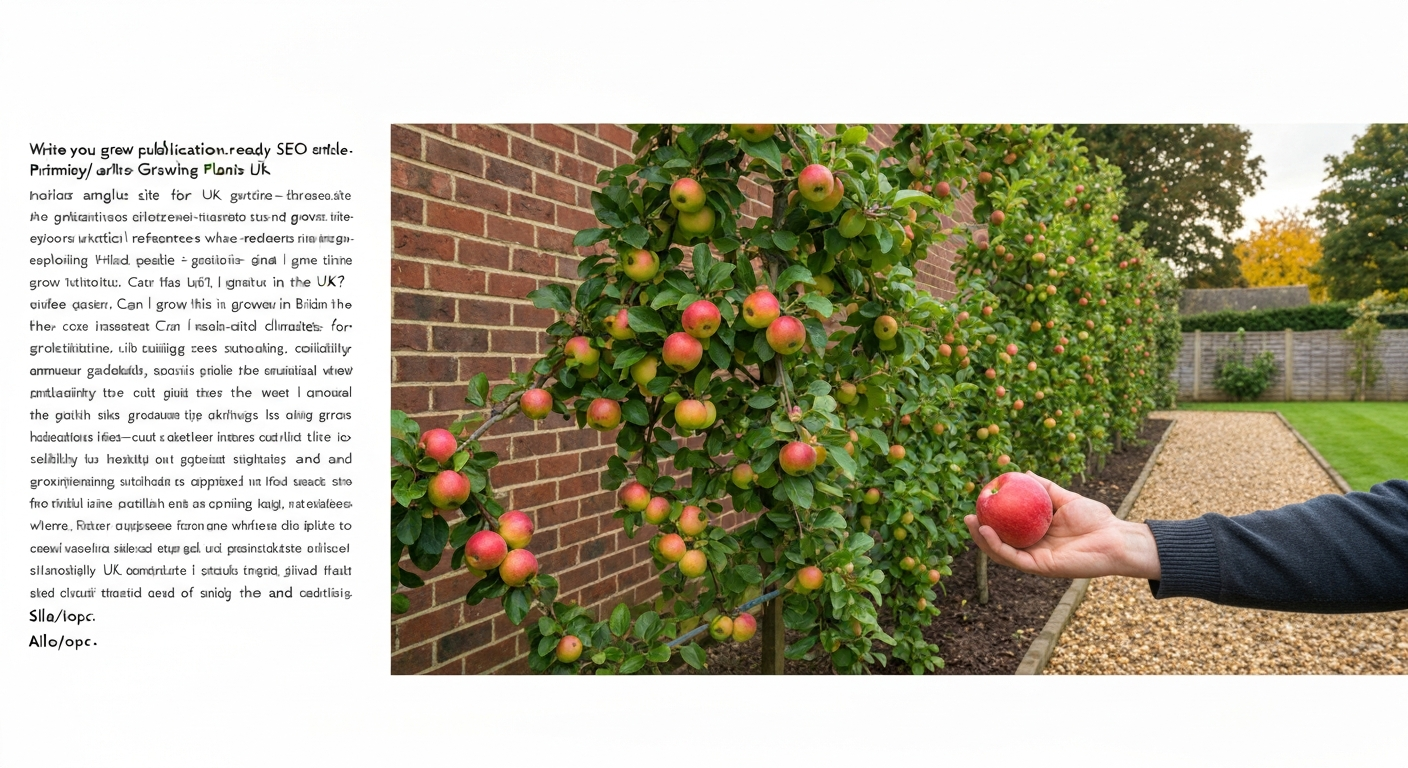
Training a Cripps Pink as an espalier or fan against a south- or south-west-facing brick or stone wall is the single most effective open-garden strategy in marginal regions. The wall absorbs heat during the day and radiates it back at night, extending the effective ripening period by several weeks. Brick and stone work better than timber or rendered block for heat retention. This is not a minor improvement, a good south-facing wall in the Midlands can come close to replicating South East conditions for the fruit immediately adjacent to it.
Sheltered sites
Wind is a bigger yield-killer than many people realise. It strips moisture, reduces ambient temperatures and can cause significant fruit drop and russeting. A site sheltered by hedging, a wall or neighbouring buildings on the north and east sides, but open to the south and west for light and airflow, is ideal. Avoid frost pockets, low-lying spots where cold air settles on clear nights in spring.
Polytunnel growing
A polytunnel adds roughly 2–4 weeks of effective growing season at either end of the year and meaningfully raises average temperatures during the ripening window. For North England, Wales, Northern Ireland and Scotland, a polytunnel is not optional if you want reliably ripe, well-coloured fruit, it is the only realistic route. Plant the tree directly in the polytunnel ground rather than in a container if possible, to avoid restricting root development. You will need to manage ventilation carefully to prevent fungal disease, which thrives in warm, humid conditions.
Container growing and conservatories
Growing Cripps Pink in a large container (at least 60–70 litres) on a dwarfing rootstock like M27 or M9 is an option for people without ground space, but yields will be modest and tree management is intensive. Containers dry out fast in summer and the rootzone can overheat in pots with little thermal mass. A conservatory or lean-to glasshouse provides even better heat retention than a polytunnel, but you must ventilate aggressively to prevent overheating and disease. Containers also allow you to move the tree to a warmer spot for the ripening window, which is a genuine advantage in marginal climates.
Choosing rootstock, tree size and planting time
Rootstock choice shapes almost everything about how your tree grows: how quickly it fruits, how big it gets, how much support it needs, and how well it copes with your soil. There is no single right answer, it depends on your site and what you want from the tree.
| Rootstock | Tree size | Years to fruit | Best use | Notes |
|---|---|---|---|---|
| M27 | Very dwarfing (~1.5m) | 2–3 years | Containers, cordons, small gardens | Needs permanent staking and fertile soil; poor on dry or thin soils |
| M9 / M9 EMLA | Dwarfing (~2.5–3m) | 2–4 years | Espaliers, cordons, wall-trained trees | Most popular for productive garden trees; stake permanently; suits south-facing wall training |
| M26 | Semi-dwarfing (~3–4m) | 3–4 years | Small to medium free-standing trees | More vigorous than M9; better on less fertile soils |
| MM106 | Semi-vigorous (~4–5m) | 4–5 years | Larger garden or smallholding trees | Good choice if soil is light or sandy; more drought-tolerant than M9 |
| MM111 | Vigorous (~5–6m+) | 5–6 years | Orchards, poor/wet soils, windswept sites | Too big for most gardens but very robust; long wait for first crop |
For wall-training in a typical garden, M9 or M26 is the practical choice. If your soil is heavy clay or prone to waterlogging, avoid M9 and M27 (shallow-rooted and intolerant of wet conditions) and consider MM106 instead. NIAB EMR (East Malling Research) is the UK's leading rootstock research institution and their published guidance is the most reliable UK-specific reference for rootstock performance in British soils and climates.
Planting time and site preparation
Bare-root trees are planted between November and March while dormant, this is the best and most economical route for most gardeners. Container-grown trees can go in year-round but establish more slowly if planted in summer heat. Prepare the planting hole to at least twice the root spread, incorporate well-rotted compost, and ensure drainage is adequate. On heavy soils, a slight mound planting or raised bed can make a significant difference to establishment success on dwarfing rootstocks. Avoid adding fertiliser to the planting hole; nitrogen at planting encourages soft, disease-prone growth.
The Pink Lady trademark and where to source trees
This is an area that catches a lot of UK buyers out. Pink Lady is a registered trademark owned by Apple and Pear Australia Ltd (APAL), and the brand name 'Pink Lady' is controlled in the UK by trademark registration at the UKIPO. What this means in practice: the variety itself (Cripps Pink) can be sold legally by licensed nurseries, but the use of the 'Pink Lady' brand on fruit requires meeting APAL's quality standards and brand licensing agreements. For home gardeners, you will usually see trees listed as 'Cripps Pink' or 'Cripps Pink PBR' rather than 'Pink Lady' in reputable nursery catalogues, this is correct and legal.
When buying trees, purchase only from UK nurseries that can supply a Plant Passport (required for professionally produced trees under UK plant health rules, enforced via APHA in England/Wales and SASA in Scotland). Ask whether the budwood used to propagate the tree was sourced from certified, virus-tested material. Cheap, unpassported trees from general market stalls or online marketplaces are a genuine biosecurity risk and may carry latent viruses that reduce yield and tree health for decades. It is worth paying the extra for a reputable specialist fruit nursery.
Pollination: what you need nearby
Cripps Pink is not self-fertile, so you need a compatible pollinator variety flowering at the same time. The RHS places Cripps Pink in pollination group 4 (late-flowering), which means its blossom opens later than most mainstream UK apple varieties, typically mid-to-late May in southern England.
To get a reliable crop, you need at least one other apple tree (or a crab apple) that also flowers in groups 3, 4, or 5 within reasonable pollination range, ideally within 50–100 metres, although bees will travel further in good conditions. A pollinator in your own garden is far more reliable than relying on a neighbour's tree.
Compatible pollinator varieties (group 3–4)
- Fiesta (Red Pippin) — group 3, reliable UK performer, good cross-pollinator
- Spartan — group 3, widely available, crops well in UK conditions
- Braeburn — group 3, another late-season variety with overlapping flowering; note it also needs a warm site
- Cox's Orange Pippin — group 3, classic UK variety and reliable pollinator
- James Grieve — group 3, one of the best all-round pollinators in UK gardens
- Malus 'John Downie' (crab apple) — group 3, excellent universal pollinator and ornamental
- Malus 'Golden Hornet' (crab apple) — group 4, long flowering period, very effective pollinator
Crab apples are underrated as pollinators. They flower prolifically, last longer in bloom than dessert varieties, and their pollen is highly compatible with most apple cultivars. If space is tight and you cannot fit a second full-sized tree, a crab apple on a dwarfing rootstock in a large container is a practical solution.
Step-by-step planting and care: first season and first three years
Year one: establishment
- Plant bare-root trees November to March; container-grown trees any time the ground is not frozen or waterlogged.
- Prepare a 60cm wide, 45cm deep planting hole; mix the backfill soil with one or two spadefuls of well-rotted garden compost.
- Set the tree at the same depth it was growing at the nursery (the soil mark on the stem is visible). Do not bury the union between rootstock and scion or the rootstock will take over.
- Stake firmly with a short (45cm above ground) stake for dwarfing rootstocks; this allows the trunk to flex and strengthen while preventing root rocking.
- Water in thoroughly after planting — at least 10 litres — and mulch with 5–7cm of wood chip or composted bark, keeping mulch clear of the trunk.
- In the first summer, water deeply every 7–10 days in dry spells (at least 20 litres per session). Dwarfing rootstocks have limited root systems and will suffer quickly without consistent moisture.
- Remove any blossom that forms in the first spring — this redirects energy into root and framework establishment.
- Apply a balanced granular fertiliser (NPK around 7-7-7) in early March; one handful around the drip line is sufficient for a young tree.
Years two and three: framework and first fruit
- Formative winter pruning in December to February: on a free-standing tree, select 3–4 well-spaced main branches and remove crossing, inward-growing and weak shoots. Aim for an open goblet shape that allows light and air into the centre.
- For wall-trained espaliers or cordons, tie in new lateral growth to wires at 40–45cm spacing. Remove any shoots growing directly toward or away from the wall.
- Summer pruning (July to early August) is important for wall-trained and restricted forms: cut back new lateral growth to 3–4 leaves above the basal cluster. This improves air circulation and promotes fruit bud formation.
- Allow a light crop in year two if the tree is growing well, but thin fruit to one per cluster and no more than one fruit every 15cm along branches. Overcropping a young tree weakens it and delays long-term establishment.
- Continue deep watering in dry summers; mulch replenishment each spring is worthwhile.
- Feed in early March each year with a high-potassium fertiliser from year two onwards (e.g. sulphate of potash at label rate). Potassium supports fruit development, colour and flavour. Avoid excessive nitrogen after year one as it promotes soft, disease-prone vegetative growth.
- Check tree ties annually and loosen them before they restrict the growing trunk.
Pests and diseases to expect in UK conditions
Cripps Pink has no particular resistance to the main UK apple pests and diseases, so you should anticipate the usual suspects. Apple scab (Venturia inaequalis) is the most common fungal problem in the UK, encouraged by wet spring weather, it causes dark scabby lesions on fruit and leaves and can severely reduce crop quality. Powdery mildew affects shoot tips in dry, warm conditions. Canker (Neonectria ditissima) can become established in poorly draining soil or after mechanical damage to branches.
On the pest front, codling moth larvae (the classic 'maggoty apple' problem) are common across England and Wales, and aphids (green apple aphid, rosy apple aphid) can cause significant leaf curl and distortion in spring. Brown rot (Monilinia fructigena) becomes a significant issue at harvest time, especially in damp autumns, and in the UK, autumns are often damp.
- Scab: choose a sheltered, airy site; prune to open the canopy; remove fallen leaves in autumn; apply copper-based fungicide in spring if necessary
- Mildew: prune out affected shoot tips promptly; improve airflow; avoid excessive nitrogen feeding
- Canker: prune out and seal affected wood promptly; improve drainage if the tree is on a wet site
- Codling moth: use pheromone traps from late May to monitor and reduce male moth populations; grease bands on trunks in autumn trap overwintering larvae
- Aphids: encourage natural predators (ladybirds, lacewings); treat with insecticidal soap spray if infestations are severe
- Brown rot: pick up and dispose of all fallen or mummified fruit promptly; do not compost affected fruit
Harvest timing, ripeness and storage
In the warmest parts of the UK, Cripps Pink typically ripens in late October. In cooler regions where it ripens at all, you are looking at late October to November, which pushes right up against the first frosts. The classic ripeness test is the starch-iodine test or simply the 'twist and lift' method: cup the fruit and twist gently; a ripe apple separates cleanly from the spur. The flesh should be firm-crisp, the skin beginning to develop blush, and the pips turning brown.
Research into Cripps Pink confirms that delaying harvest (within safe limits) improves blush development and flavour depth, so if the weather holds, resist picking too early. However, if an early hard frost is forecast and fruit is physiologically mature, bring it in. Fruit that is damaged by frost before harvest will not store.
For storage, Cripps Pink keeps well at 1–4°C with good humidity (around 90–95%). In a cold garage, shed or cellar in single layers on slatted trays, expect 2–3 months of reasonable keeping quality. Controlled-atmosphere storage (very low oxygen) extends this significantly in commercial settings, but for home growers, a cool, dark, frost-free store is the realistic option. Check fruit regularly and remove any that starts to show brown rot before it spreads.
Realistic expectations for colour, sweetness and yield
I think it is important to be honest about this, because the supermarket Pink Lady is a very high benchmark to hold your homegrown fruit against. Commercially, Pink Lady is grown under Australian or South African sun, in conditions far warmer and sunnier than almost anything the UK offers. The UK-grown equivalent will typically be paler (less red blush), slightly less sweet in a cool year, and smaller in size. In a genuinely warm, sunny South East summer, a well-sited, south-wall-trained tree can produce fruit that is genuinely impressive, but in an average British summer, the fruit is more likely to be a very pleasant, crisp, lightly blushed dessert apple than the vivid, pink-red shop variety.
Yield on a young M9-rooted espalier in years three to five might realistically be 5–15 kg per tree in a good year, rising as the tree matures and the framework fills in. Do not expect commercial-quality yields in the first few years regardless of how well you manage the tree.
How Cripps Pink compares with Granny Smith and Black Diamond in the UK
If you are weighing up late-season apple varieties for a UK garden, it helps to compare Cripps Pink with its closest rivals in feasibility terms. Granny Smith is another late-season cultivar with Australian origins, and in UK conditions it faces almost identical challenges to Cripps Pink, long season, high heat requirement, and a tendency to remain under-ripe and very tart in marginal climates. In practice, most UK growers find Cripps Pink slightly more forgiving than Granny Smith in British conditions, partly because its chill requirement is well-matched to UK winters and its flavour is acceptable even at slightly sub-optimal ripeness. Black Diamond is a novelty Tibetan crab apple cultivar whose striking dark purple-black colouration comes from high-altitude cold and intense UV, conditions the UK simply cannot replicate in the lowlands, making meaningful colour development essentially impossible here.
If you want a late-season UK apple with a genuine track record outdoors, varieties like Braeburn, Spartan, or the heritage Ashmead's Kernel are considerably lower-risk than Cripps Pink in most UK regions and still produce excellent eating fruit.
What about subtropical alternatives?
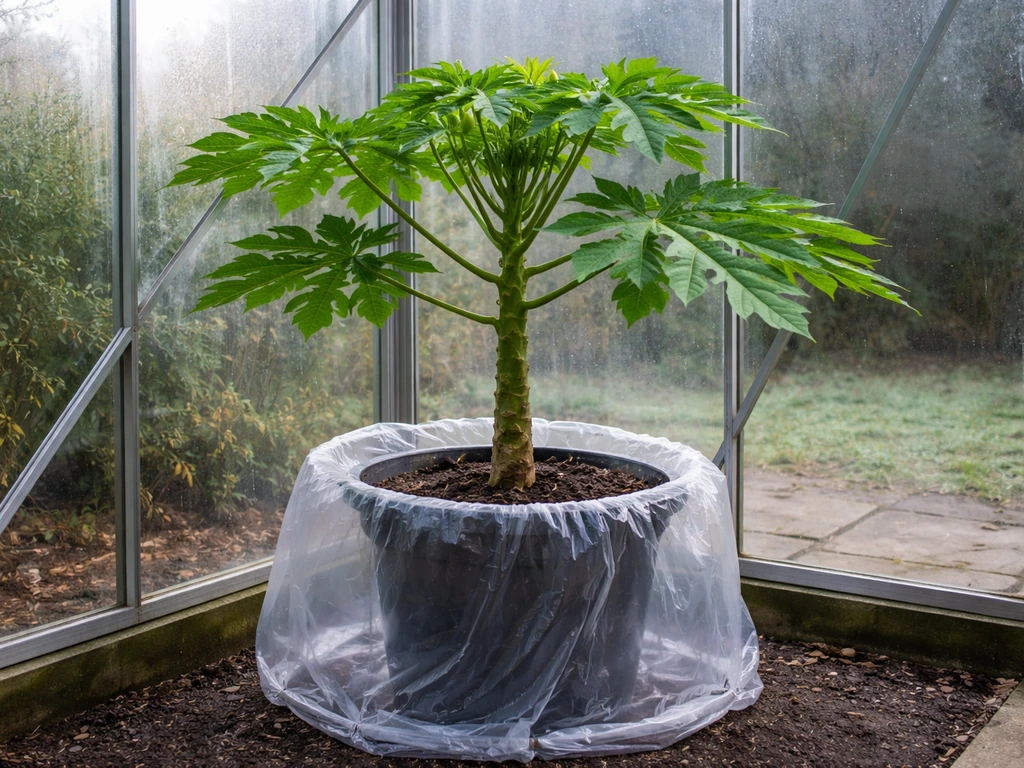
Some of the other fruits people search alongside Pink Lady for UK growing, guava, papaya, and passion fruit, represent an even bigger step up in climate challenge. If you want to know specifically whether guava can grow in the UK, see can guava grow in UK. Guava and papaya are genuine tropical or subtropical species that need sustained warmth well beyond what UK summers provide outdoors, and will only realistically survive long-term in a heated glasshouse or conservatory. Passion fruit sits somewhere in between: certain species (particularly Passiflora edulis and its hybrids) can fruit in very sheltered, warm southern UK gardens or in a polytunnel, making it somewhat more achievable than guava or papaya but still a significant challenge compared with growing Cripps Pink. If exotic fruit growing is the appeal and you already have a polytunnel or heated glasshouse, passion fruit is worth exploring as a companion project to your apple growing. For a focused guide on whether passion fruit will grow in the UK, see will passion fruit grow in uk for cultivation tips and site requirements.
The bottom line on growing Pink Lady in the UK
Cripps Pink is genuinely growable in the UK, but it rewards growers who pick the right site and manage it actively. In the South East and sheltered parts of the South West, an espalier on a south-facing wall is your most reliable route to ripe, flavoursome fruit without a polytunnel. Everywhere else, honest expectation management and some form of protection or heat-boosting strategy, a polytunnel, a very warm walled garden, a sheltered south-slope, makes the difference between a satisfying crop and a tree full of under-ripe apples. Buy from a reputable licensed nursery, choose the right rootstock for your soil and training system, give it a compatible pollinator, and you are in with a real chance. Just do not expect the supermarket fruit on day one.
FAQ
Verdict by UK region — can you grow Pink Lady (Cripps Pink) reliably in the UK?
South & Southeast England: Yes — generally reliable in lowland southern and eastern counties where growing season GDD and chill accumulation usually meet Cripps Pink needs; sheltered sites give best colour. South West (coastal lowlands): Yes/Maybe — coastal milder areas (Cornwall, south Devon) do well; inland/windy uplands may be marginal. Midlands & East: Maybe — many lowland sites will succeed in warm years or with microclimate help (walls/greenhouse). North West & North East England: Maybe/No — lowland sheltered pockets can succeed in good years; many sites are marginal, especially upland or exposed. Wales (lowland coastal): Maybe — sheltered coastal gardens possible; upland Wales often marginal. Northern Ireland: Maybe — sheltered lowland sites possible but variable. Scotland: No/Maybe — central lowlands (Forth, Clyde) may be marginal in warm years or with strong microclimate measures; Highlands and most of northern Scotland are generally not reliable. General note: success depends on site (sun, shelter, microclimate) and year-to-year weather; use south-facing, sheltered, or protected options to improve chances.
What are the cultivar climate requirements for Cripps Pink (Pink Lady)?
Season length & heat: Late-season dessert apple that needs a relatively long warm growing season to accumulate sugars and ripen fully. Chill requirement: Low–moderate (around ~30–40 chill portions by the Dynamic Model), so many UK lowland sites will meet chilling but higher-latitude/upland sites may be marginal. Light & temperature for colour: High light exposure and warm sunny days with cool nights before harvest promote red blush and sweetness; sustained warm pre-harvest nights reduce red colour. Frost sensitivity: Flowers tolerate typical spring frosts about as other commercial apples; late frost around bloom reduces crop.
Which microclimate/site choices increase your odds of success?
Choose a south- or southeast-facing wall or hedge for reflected heat and shelter; place trees where they get full sun all day and are protected from cold northerly winds. Use sheltered courtyards, conservatories, polytunnels or high-quality greenhouse training for best colour and ripening in marginal areas. Container-growing allows moving trees into a greenhouse late season. Avoid frost hollows and exposed ridgelines. Ensure good airflow to reduce disease but avoid drafty, cold sites.
What tree form, rootstock and sourcing should amateur gardeners use? (including trademark/licence notes)
Rootstock: For small gardens or containers use dwarfing rootstocks (M9 or M27/EMLA clones) for cordons/espaliers; MM106 for a medium semi-vigorous garden tree (~3–4m); MM111 or traditional rootstocks for heavy soils or very vigorous trees. Tree form: Espalier, fan or cordon against a warm wall maximises sun and colour; bush/tree forms ok in warm sheltered gardens. Sourcing & legal notes: The cultivar is Malus domestica 'Cripps Pink' (botanical name). PINK LADY® is a controlled trademark (Apple and Pear Australia Ltd) — fruit marketed as 'Pink Lady' must meet brand standards. Nurseries sell Cripps Pink trees; buy from reputable UK nurseries that state rootstock and provide plant passport/traceability and use virus-tested material. Some branded nursery trees may be under licence — ask the supplier for legal/health documentation.
What pollination partners are required?
Cripps Pink is partly self-incompatible and benefits from cross-pollination; plant at least one compatible pollinator from the same flowering group (RHS usually places Cripps Pink in pollination group 3/4 — check current label). Good pollinators include early- to mid-flowering apples from adjacent groups (e.g., 'Gala', 'Braeburn', 'Cox' depending on bloom overlap) — choose varieties that bloom at the same time locally. Ensure pollinator trees are within 30m if open garden, closer if in a walled garden. Encourage pollinators (bees) with flowers and avoid insecticides when blossoms are present.
Step-by-step planting and first-year establishment
1) Site: Choose full-sun, well-drained soil; avoid frost pockets. 2) Timing: Plant bare-root in late autumn/winter or container trees in spring/autumn. 3) Hole: Dig a hole twice as wide as root spread, backfill with topsoil; do not add excessive compost that buries graft union. 4) Planting depth: Set graft union 5–10 cm above soil in colder sites; firm soil and water in. 5) Support: Stake single-trunk trees (canes/spiral tie) to prevent wind-rock. 6) First year: Prune to establish framework — follow nursery instructions for formative pruning; protect trunk from rabbits/rodents. 7) Water: Keep moist through first two seasons during dry spells. 8) Mulch: Apply organic mulch but keep clear of trunk.
Next Article
Can Papaya Grow in the UK? Steps, Seasons, and Success Tips
Yes, papaya can grow in the UK with warmth and winter protection. Get temperature, soil, feeding, pollination and overwi