Yes, you can grow Granny Smith apples in the UK, but it is genuinely harder than growing most other apple varieties, and in many parts of Britain you will struggle to get ripe, good-quality fruit. The variety needs a long, warm growing season that most of the UK simply cannot reliably deliver. That said, if you are in southern England, have a sheltered south-facing spot, and are prepared to give the tree some extra help, it is absolutely worth trying.
Can You Grow Granny Smith Apples in the UK? Guide
James Hartwell
16 May 2026
Is the UK climate actually good enough for Granny Smith?
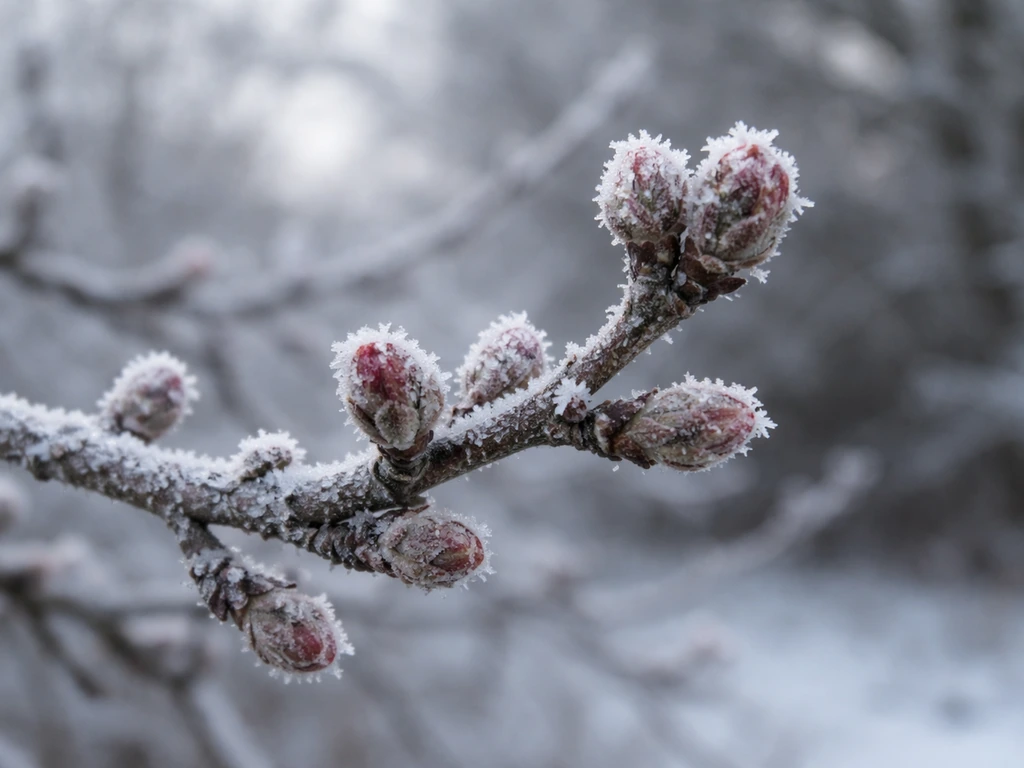
Granny Smith is what growers call a late-season, long-season cultivar. It originates from Australia and ripens very late, typically in October or November in the southern hemisphere. Translated to Britain, that means it needs summer warmth to build sugar and acidity in the fruit, plus a reliable window of winter chill to break dormancy properly in spring. Prides Corner Farms notes that Granny Smith typically needs about 400 to 600 hours of winter chill to break dormancy properly and support fruit set a reliable window of winter chill.
The winter chill requirement is around 400 to 600 hours below about 7°C (45°F). Reassuringly, most of the UK gets that fairly easily during a normal winter. Chilling hours are rarely the limiting factor here. The real problem is heat accumulation in summer. Granny Smith needs a lot of warm, sunny days from flowering through to harvest, and British summers are notoriously variable. In a cool, cloudy summer, the fruit simply will not ripen properly. You end up with hard, tart, undersize apples that taste nothing like what you buy in a supermarket.
Regulatory and horticultural sources specifically flag Granny Smith as unsuitable for northern growing areas because of this heat requirement. In practical UK terms, that warning applies across most of Scotland, Northern Ireland, northern England, and upland areas generally. Even in the Midlands and Wales, success is inconsistent. The South East, South West, and East Anglia give you the best odds by some margin.
Which parts of the UK give you the best shot?
Think of it in terms of warmth and shelter rather than just geography. The warmest, most reliable growing areas in the UK for a variety like this are the Thames Valley, Kent, Sussex, Hampshire, Wiltshire, Gloucestershire, and coastal Devon and Cornwall. The Isle of Wight is excellent. Parts of the East Anglia coast, which get dry, continental-style summers, are also worth trying.
Within those regions, microclimate matters enormously. A south-facing walled garden in Yorkshire can outperform an open field in Kent. Look for sites that catch full sun from morning to evening, are sheltered from cold north and east winds, and have good frost drainage so late spring frosts do not wipe out the blossom. Low-lying ground that collects cold air overnight (frost pockets) is a bad choice. A slight slope with good air movement is better.
If you are north of the Midlands or in an upland area, your most realistic route to decent Granny Smith fruit is a south-facing brick or stone wall, trained as a fan or espalier. The wall absorbs heat during the day and radiates it overnight, extending your effective growing season by several weeks. This is not a guarantee, but it meaningfully shifts the odds.
Genuine Granny Smith or a similar variety? Rootstocks and sourcing
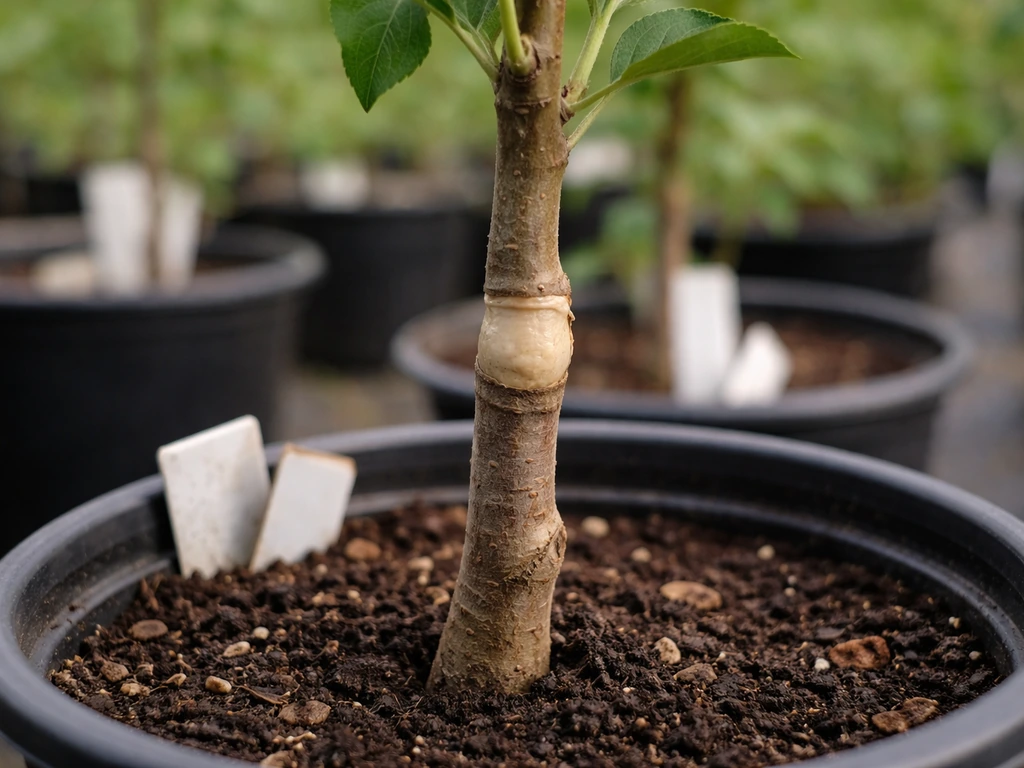
This is where a lot of people get confused. When you search for 'Granny Smith apple tree' in the UK, you will find it sold by several nurseries, and the scion (the fruiting part grafted onto the rootstock) should genuinely be the Granny Smith cultivar. Buy from a reputable UK fruit nursery rather than a general garden centre, and ask specifically that it is a certified Granny Smith scion. Reputable specialist nurseries will be able to confirm this.
Rootstock choice is critical for a UK garden. The rootstock controls the tree's final size and how vigorously it grows. For a wall-trained fan or espalier, M26 is a good choice: it gives a semi-dwarf tree that is manageable and starts fruiting in 3 to 4 years. MM106 is slightly more vigorous and suits larger fans or open-ground planting in a good site. For a small garden or a pot (not ideal but possible short-term), M9 gives a very compact tree but needs excellent soil and consistent watering. Avoid MM111 or M25 unless you have space for a large tree, as they take longer to fruit and are harder to manage.
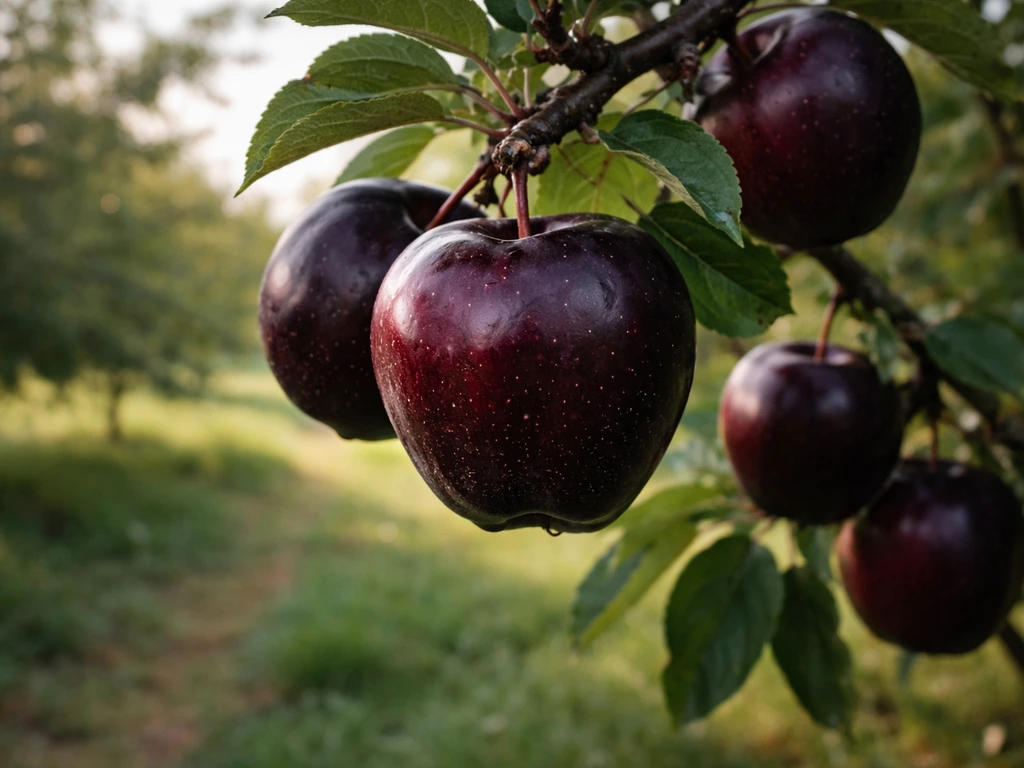
If you are comparing options, it is worth knowing that Pink Lady apples face similar late-season challenges in the UK. Granny Smith is arguably slightly more forgiving in terms of chill hours, but both demand warmth to ripen properly. Black Diamond apple is a novelty variety with its own challenges in British conditions. Granny Smith at least has a long track record in horticulture worldwide, so guidance is well established.
Planting your Granny Smith tree: site, soil, and spacing
Plant bare-root trees between November and March, while the tree is dormant. Container-grown trees can go in at any time of year, but autumn and late winter plantings give the roots time to establish before summer heat arrives. If you are planting against a wall, position the tree about 20 to 30 cm away from the base to avoid the rain shadow and allow air circulation.
Soil should be well-drained but moisture-retentive. Apples hate waterlogged roots, and poor drainage causes root rot and canker. A slightly acid to neutral pH of around 6.0 to 6.5 is ideal. Before planting, dig in well-rotted compost or farmyard manure and check that water drains freely from the planting hole: pour a bucket of water in and if it sits there for more than an hour, you need to improve drainage or build a raised bed.
Full sun is non-negotiable for Granny Smith. This variety needs as many hours of direct sunlight as you can give it. Partial shade will reduce fruit quality significantly. Aim for at least 6 hours of direct sun daily throughout summer, and ideally 8 or more. South or south-west facing is best.
Spacing depends on rootstock and training method. Wall-trained fans on M26 need about 3.5 to 4.5 metres of wall width. Espaliers need similar spacing. Freestanding trees on M26 want about 3 metres between plants. On MM106, allow 4 to 5 metres.
Ongoing care: watering, feeding, and training
Watering
Young trees need regular watering in their first two summers, especially during dry spells. Once established, apple trees are reasonably drought-tolerant, but Granny Smith benefits from consistent moisture during fruit development in July and August. Irregular watering at that stage causes fruit to split or drop early. A thick mulch of compost or wood chip around the base (kept clear of the trunk) helps retain soil moisture and suppresses weeds.
Feeding
In late February or early March, apply a balanced fertiliser around the drip line of the tree. Sulphate of potash in early spring encourages fruit ripening and disease resistance, which is particularly useful for a late-ripening variety in the UK. Avoid over-feeding with high-nitrogen fertilisers, which push leafy growth at the expense of fruit and make the tree more susceptible to mildew. A top-dressing of well-rotted compost each autumn keeps the soil biology healthy.
Pruning and training
For wall-trained trees, formative pruning in the first three years shapes the framework of branches. After that, summer pruning in late July to mid-August (the standard Lorette system for trained trees) shortens new sideshoots to three or four leaves. This opens the canopy to sunlight and air, improves fruit colour and ripening, and reduces disease pressure. Winter pruning in December or January removes dead, crossing, and congested wood. For freestanding trees, aim for an open goblet shape that lets light into the centre.
Pollination: what Granny Smith needs to actually set fruit
Granny Smith is not self-fertile, so you need at least one other compatible apple variety flowering at roughly the same time to pollinate it. Granny Smith is a late-flowering variety (typically pollination group C or D depending on the season), so you need a pollinator that also flowers late. Good UK choices include Cox's Orange Pippin, Braeburn, Sunset, or Golden Delicious. Early-flowering varieties like Discovery or Grenadier will not overlap reliably and are poor pollinators for Granny Smith.
Weather at flowering time is the biggest wildcard in the UK. Granny Smith flowers in May, and British May weather can be cold, wet, and windy, which reduces bee activity and pollen transfer. In a bad year, you can get almost no fruit set even with the right pollinator in place. To improve odds, plant pollinators close together (within about 30 metres is ideal for bees), avoid spraying anything during flowering, and consider placing a temporary windbreak around the trees if the site is exposed.
If you only have space for one tree, check whether there are compatible apple trees in neighbouring gardens. In many suburban areas there are enough apple trees around to provide pollination without you needing to plant a second tree yourself. That said, having your own pollinator tree is more reliable.
UK apple pests and diseases: what to watch for and what to do
Granny Smith is moderately susceptible to several common UK apple problems. Knowing what to expect and acting early makes a real difference.
| Problem | When it appears | Signs | What to do |
|---|---|---|---|
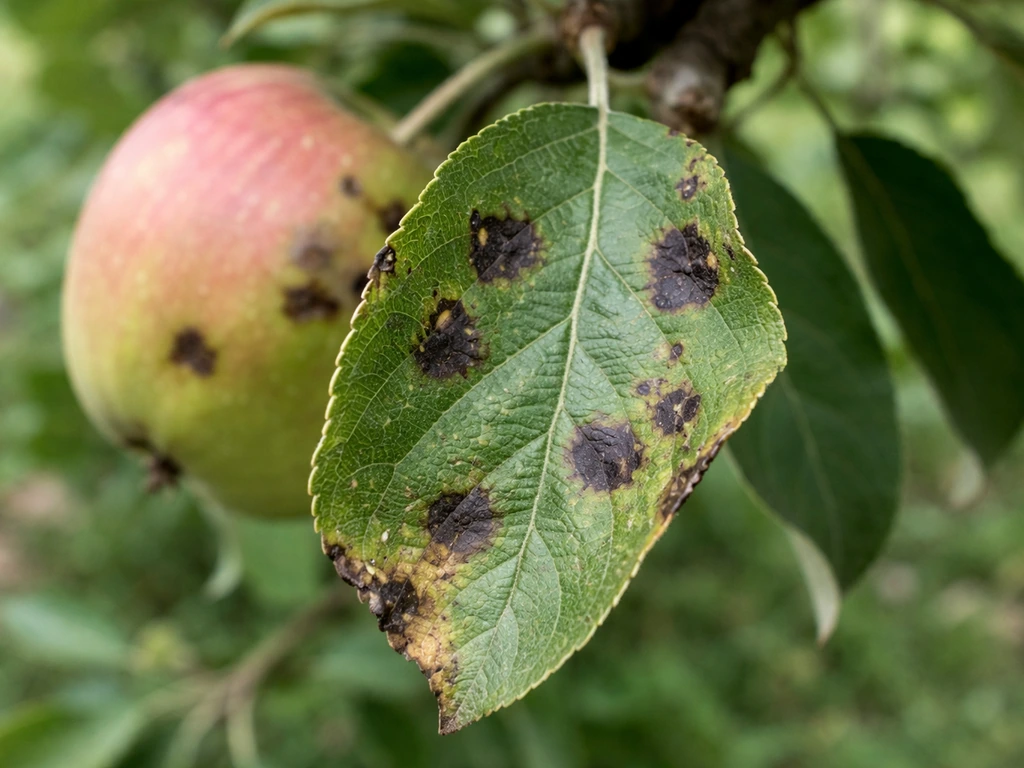
| Apple scab | Spring through summer, wet years worst | Brown-olive scabby patches on leaves and fruit skin | Remove and bin fallen leaves; use a copper-based spray preventatively in wet springs; improve air circulation through pruning |
| Powdery mildew | Spring and early summer | White powdery coating on new shoots and leaves | Remove affected shoots promptly; avoid high-nitrogen feeds; ensure good airflow |
| Codling moth | June to August | Caterpillars inside ripe or nearly-ripe fruit | Hang pheromone traps from late May; use grease bands on trunk; consider kaolin clay spray as a deterrent |
| Aphids (mainly rosy apple aphid) | April to June | Curled, distorted leaves; sticky honeydew | Encourage ladybirds and lacewings; blast with water; use insecticidal soap if severe |
| Apple canker | Year-round, worse in wet winters | Sunken, cracked, discoloured bark on branches | Cut out infected wood back to clean tissue; treat wounds with a wound sealant; improve drainage |
| Frost damage to blossom | April to May | Brown centres to open flowers (frosted embryos) | Fleece the tree on frosty nights during flowering; avoid frost-pocket sites; wall-training reduces risk |
For an organic approach, focus on prevention: good pruning for airflow, removing infected material promptly, and encouraging beneficial insects. Copper-based sprays (approved for organic use) can help against scab and canker. Pheromone traps are chemical-free and genuinely effective for codling moth monitoring. If you go conventional, follow product label instructions carefully and never spray during flowering when bees are active.
Harvest timing, storage, and what success looks like in the UK
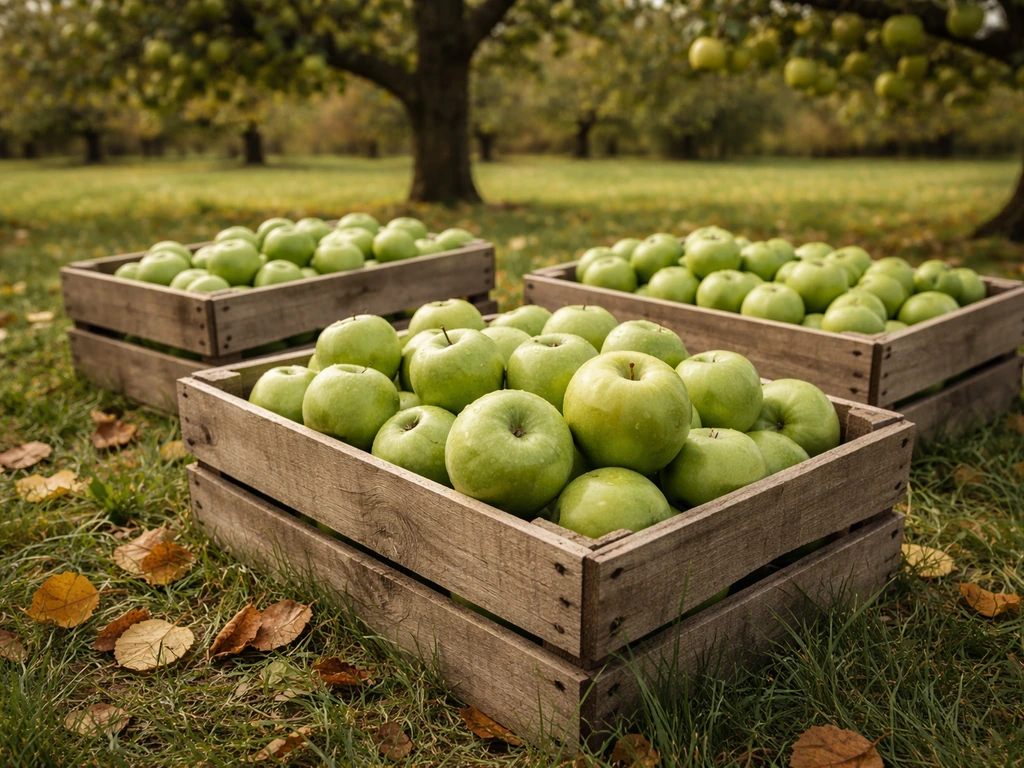
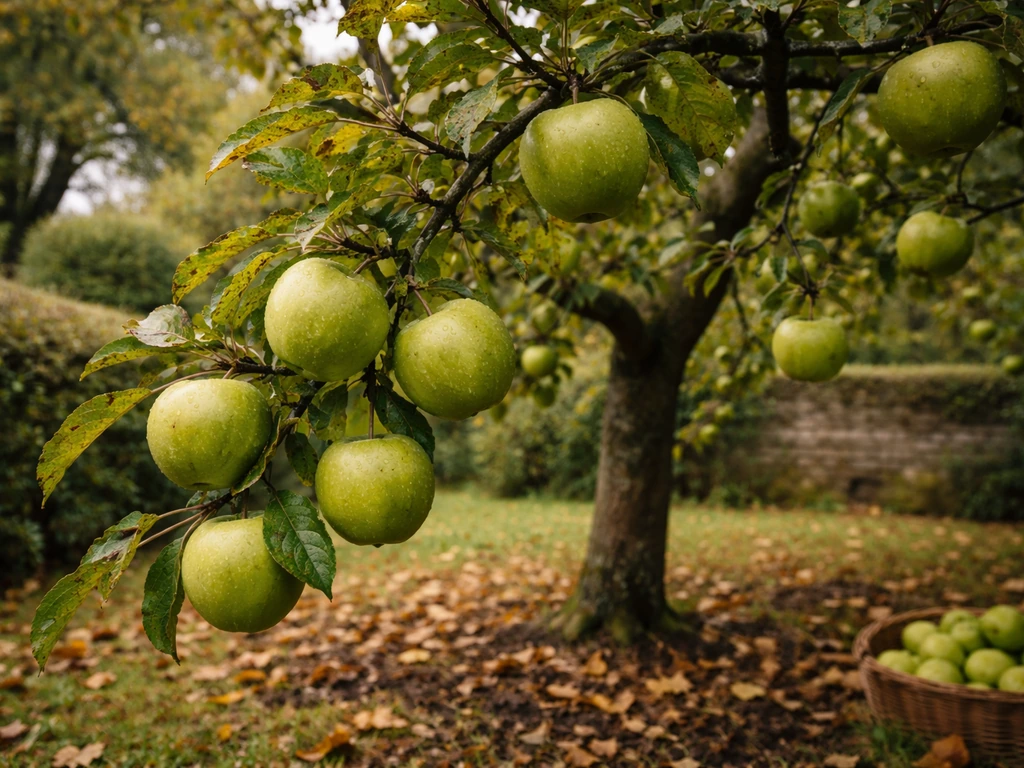
In Australia and the US (California, Pacific Northwest), Granny Smith ripens in October. In the UK, you are looking at October to November at the earliest, and in cooler years the fruit may not reach full eating quality before frosts arrive. This is the core risk. In a warm year in southern England, you can get excellent fruit: firm, tart, with that characteristic bright green skin and crisp texture. In a cool summer, you get hard, very sharp apples with poor colour and low sugar.
To check ripeness, gently lift a fruit upward on the branch: if it comes away cleanly, it is ready. The skin should have developed its full green colour (Granny Smith does not turn red or gold, so colour is less of a guide than with other varieties). The flesh should feel firm but not rock-hard, and a single fruit cut in half should show brown pips. Do not wait for the fruit to soften on the tree.
Granny Smith stores well, which is one of its genuine advantages. Kept in a cool (around 3 to 5°C), dark, humid environment, the fruit can last several months. A traditional garden shed in autumn or a garage is often good enough. Check stored fruit regularly and remove any that show rot, as one bad apple really does affect the others.
Realistic yields from a wall-trained tree in a good UK site might be 5 to 15 kg per year once the tree is established and cropping well. A freestanding tree on MM106 in a good southern site could eventually produce more. Do not expect anything close to supermarket volumes, and accept that one in three or four British summers may give you a genuinely disappointing crop. That is the honest reality of pushing a variety at the edge of its climate range.
Should you actually try it?
If you are in the right area and have the right site, absolutely yes. A south-facing walled garden in Kent or Hampshire growing a Granny Smith fan on M26 is a genuinely achievable project that can produce excellent fruit. If you are in the Midlands or further north with an open site, the odds are against you and you would probably have more success with a late-season UK heritage variety that actually suits our climate. If you are asking whether can papaya grow in UK, the answer is that it will only be possible with a warm indoor setup or heated greenhouse.
The non-negotiables are: full sun all day, a sheltered warm microclimate (ideally a south-facing wall), good drainage, the right pollinator tree nearby, and active management of late-season weather risk. Get those right and Granny Smith is a genuinely rewarding tree to grow in Britain. Get them wrong and you will spend years wondering why your apples taste like very tart golf balls.
If you enjoy the challenge of growing varieties at the edge of their climate range, you might also find it interesting to compare notes on other ambitious projects like growing Pink Lady apples or even passion fruit in the UK, where similar questions of heat accumulation and long seasons come into play. If you are also exploring whether can guava grow in UK conditions, you will want to think about warmth, shelter, and long enough temperatures for fruit to ripen.
FAQ
What should I do if my Granny Smith apples never ripen and stay hard and very tart?
If your site is reliably cool in August and September, the most effective workaround is to shift the microclimate, not the calendar. Choose a south-facing wall or brick boundary, train as a fan or espalier, and keep the canopy opened with summer pruning so sunlight reaches the fruit. If you are planting freestanding on open ground, expect much lower odds and consider switching to a late-season UK-suited variety.
How can I increase the chance of fruit set in a cold, rainy May?
Granny Smith flowers can be late and pollination can fail in a cold, wet May. In bad years, you can improve set by ensuring your pollinator is actually late-flowering, placing pollinator trees within roughly 30 m for bee activity, and avoiding anything that deters bees during flowering (including broad-spectrum sprays). Even with good setup, weather can still wipe out a crop, so it helps to plant a backup late-season variety if fruit is critical to you.
How do I make sure I’m actually buying a true Granny Smith tree in the UK?
Buying the wrong cultivar is one of the biggest real-world problems. When ordering, ask the nursery to confirm the scion is certified Granny Smith (not just a rootstock marketed with “Granny Smith style” or similar). If you buy from a general garden centre, you may get the variety wrong, which you will not notice until harvest.
Can you grow Granny Smith apples in a pot in the UK?
Yes, but not without tradeoffs. A pot can work for a short-term attempt, choose a compact rootstock like M9, use a large container for stability, and expect you will need more frequent watering because drought stress during July and August strongly increases fruit drop or splitting. Plan to move the tree to an in-ground site or wall system for better long-term ripening chances.
Is partial shade ever acceptable for Granny Smith trees in the UK?
If you do not have full sun all summer, Granny Smith quality drops fast. Aim for at least 6 hours of direct sun and ideally 8 or more, because shade reduces sugar build-up and slows late ripening. If your garden is partly shaded by trees or buildings, a trained wall can help, but it will not fully compensate for a consistently shaded position.
When is the best time to prune so the fruit ripens before autumn and frost?
Yes, but choose and time it carefully. Late-season pruning reduces canopy shading and improves ripening, but heavy winter pruning can remove productive wood and delay cropping. Focus on formative structure in early years, then do controlled summer pruning (late July to mid-August) to expose fruit while keeping enough leaves for sugar production.
Should I thin Granny Smith apples to improve ripening in the UK?
Thinning is rarely discussed, but it can help in years where the tree sets heavily and ripening is tight. If you notice lots of small fruit, remove some clustered apples early in the season so the remaining fruit can grow and ripen more evenly. Don’t thin too late, because it can reduce overall yield without meaningfully improving ripening.
What fertilising mistake most often ruins Granny Smith fruiting in the UK?
Overdoing nitrogen is a common mistake that can lead to lush leaf growth with poor fruiting and higher disease pressure. Stick to light, seasonal feeding, use a balanced fertiliser in late winter, and if you use sulphate of potash, apply it early spring and not repeatedly. In many UK gardens, compost top-dressing alone may be enough for year-to-year nutrition.
If frost is coming, should I harvest even if the apples look unripe?
Granny Smith can appear “ready” visually even when eating quality is not there, especially in cool years. Use the correct ripeness checks you described, and do not wait for softening on the tree. If nights are turning frosty before proper colour and firmness, harvest promptly and store correctly, then reassess eating quality over storage rather than relying on tree ripening.
How long do Granny Smith apples need in storage before they taste better?
Because it ripens late, storage can make the difference between “very tart” and “actually good.” Keep fruit cool, dark, and humid around 3 to 5°C, remove any rotting fruit quickly, and check regularly. Taste after a short storage period, not immediately at picking, because ripening can continue in controlled conditions.
Next Article
Can You Grow Black Diamond Apples in the UK? Feasibility Guide
Check if you can grow Black Diamond apples in the UK, including chill needs, planting, pollination, and frost-proof care