Yes, passion fruit will grow in the UK, but fruiting reliably is a different matter. If you’re also wondering can papaya grow in the UK, it comes with similar heat and shelter requirements. Passiflora edulis, the purple granadilla and the species you actually want for edible fruit, is the most realistic option for British growers. In mild, sheltered spots in southern England, it can survive outdoors against a warm wall and occasionally produce fruit after a long hot summer. Everywhere else, and for anyone who actually wants fruit rather than just a surviving vine, you need to grow it in a conservatory or frost-free greenhouse. Expect a few fruits, not a harvest. The RHS describes it as blank" rel="noopener noreferrer">'fun to try' precisely because the UK climate makes real cropping a challenge, not a guarantee. Black diamond apples are a different kind of fruit, so the best results come from choosing the right variety for your location and preparing the planting site accordingly.
Will Passion Fruit Grow in the UK? How to Grow It
How the UK climate stacks up for passion fruit
The fundamental problem is temperature, both winter cold and summer heat. Passion fruit is a tropical plant. It wants consistent warmth and strong light to set fruit, and it absolutely does not tolerate hard frosts. The RHS gives Passiflora edulis an H3 hardiness rating, which means it can handle temperatures down to around -5°C in mild coastal areas, but that's about the limit. The moment a real frost hits, the plant suffers or dies without protection.
The UK is not one climate. The South West, South East coast, and parts of Wales enjoy milder winters where an H3 plant against a south-facing wall has a genuine shot at survival. Scotland, the Midlands, northern England, and anywhere exposed to cold easterly winds is a much harder ask. Even in the South, summer temperatures rarely hit the sustained warmth that tropical fruiting requires. You need a microclimate to tip the balance.
The other edible species, Passiflora quadrangularis (giant granadilla), is even more demanding. The RHS notes it rarely sets fruit outside the tropics. Don't bother with it in the UK unless you have a heated tropical greenhouse.
Pick the right variety before you do anything else
Passiflora edulis is the one to go for. It's the most reliable of the edible species for UK protected cultivation, it's widely available as seeds or pot-grown plants from UK nurseries, and it's the only one that realistically produces fruit in British conditions. Look for named selections bred for fruiting rather than just ornamental interest. If you're buying a pot-grown plant, check the label confirms it's the fruiting species, not a purely ornamental hybrid. A 2L pot-grown plant typically takes around two years from purchase to its first crop, so factor that into your expectations before you start.
If you want the hardier ornamental passion flowers (Passiflora caerulea and its cultivars), those are genuinely easy to grow in UK gardens and will survive most winters in sheltered spots. However, their fruits are not the ones you eat. This article is focused on getting edible fruit, so we're sticking with P. edulis throughout.
Getting the site right: warmth, sun, and shelter
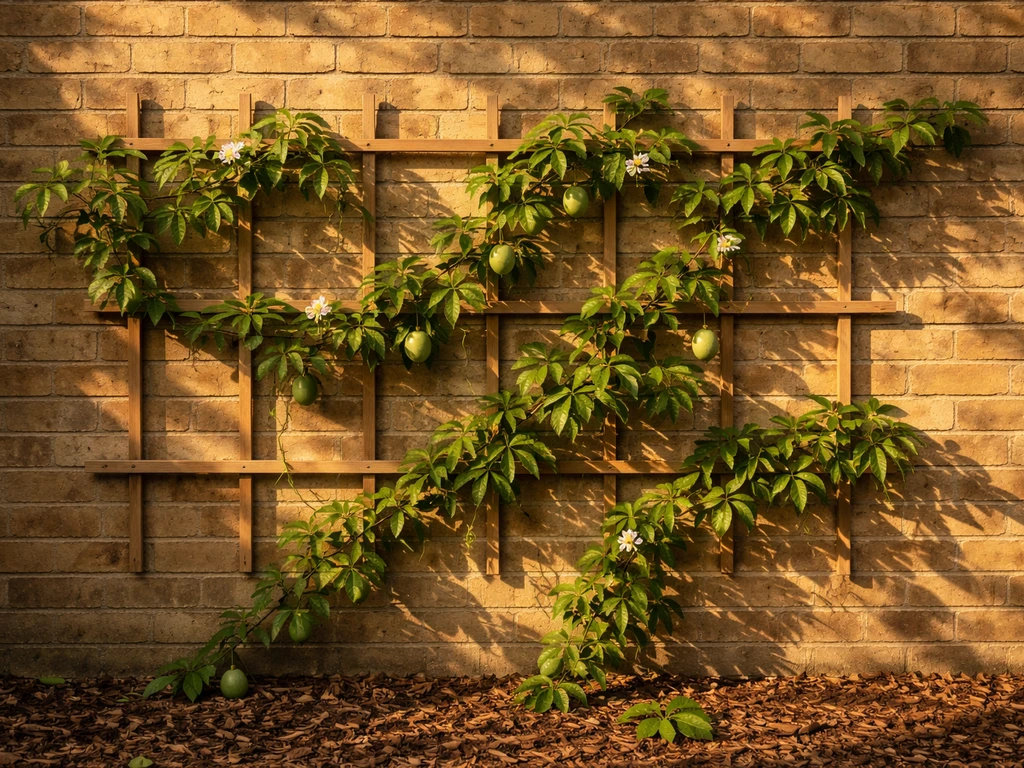
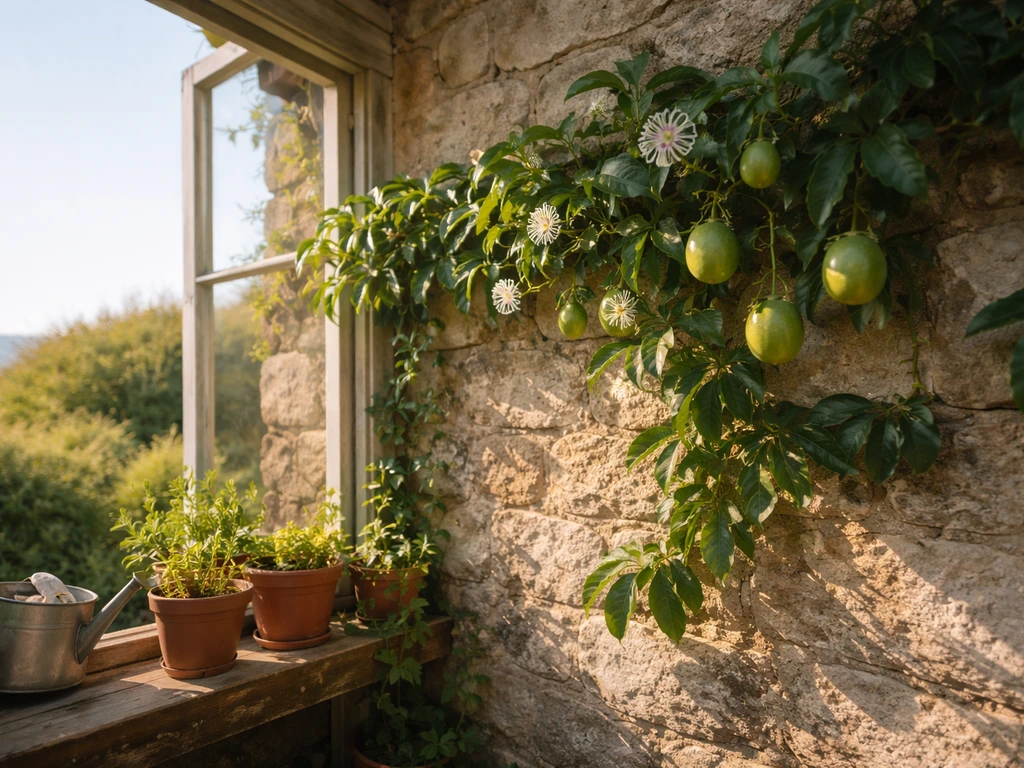
If you're attempting outdoor or semi-outdoor growing, site is everything. The classic setup is the foot of a south- or west-facing wall, ideally brick or stone, which absorbs heat during the day and radiates it back at night. This can raise the local temperature by a few degrees compared with an open bed, which is genuinely meaningful for a plant at the edge of its range. A sheltered urban garden or a walled kitchen garden is far better than an exposed rural plot.
Full sun is non-negotiable. Passion fruit needs as many hours of direct sunlight as possible during the growing season, and in the UK our summers are short enough that every hour counts. Wind is the other enemy: cold, drying wind stresses the plant and inhibits pollinator activity. A solid wall, fence, or dense hedge on the prevailing wind side makes a real difference.
In the soil, add plenty of horticultural grit to the planting hole. Passion fruit hates waterlogged roots, and the combination of UK rainfall and heavy soil is one of the most common causes of failure. Good drainage is as important as warmth.
For most UK gardeners, a conservatory or frost-free greenhouse genuinely gives the best result. Even an unheated conservatory, which typically stays above 5 to 7°C through winter, is enough to keep the plant alive and push it into productive growth earlier in spring. The extra light and warmth during summer significantly improves fruit set compared with outdoor conditions.
Planting in pots vs the ground, and how to train the vine
Containers vs in-ground
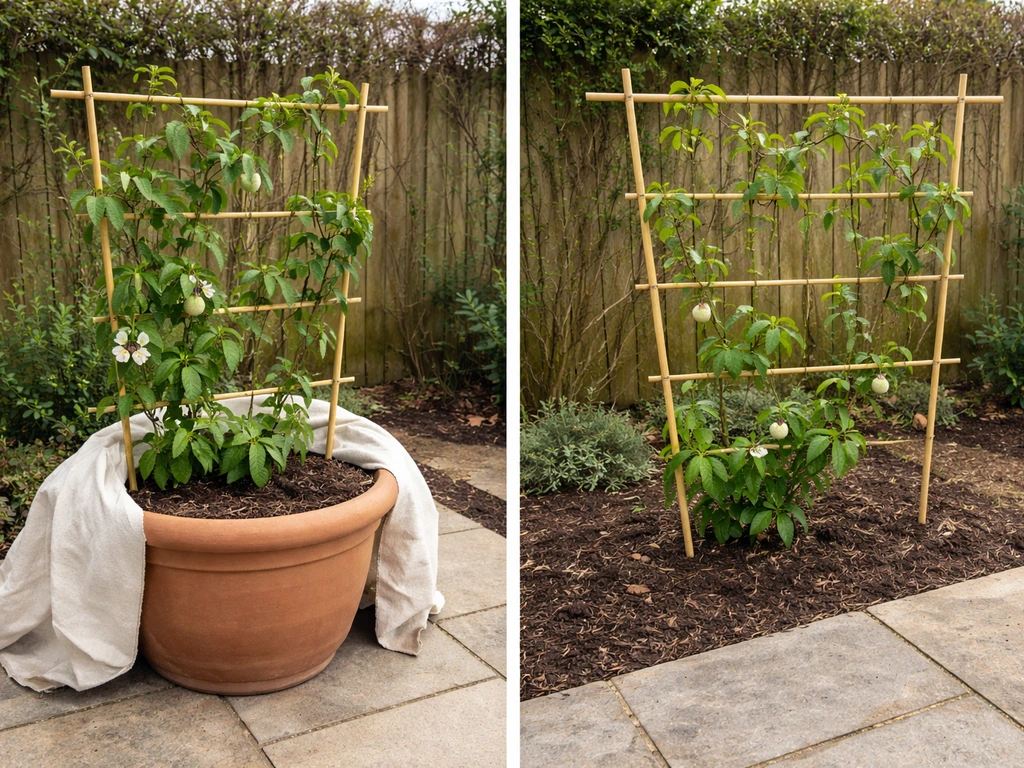
| Factor | Container growing | In-ground growing |
|---|---|---|
| Best location | Conservatory, greenhouse, or patio (moveable) | Sheltered south/west-facing wall outdoors |
| Winter protection | Move inside easily | Must wrap or hope for mild winter |
| Root warmth | Compost warms faster in spring | Slower to warm, risk of root rot in wet winters |
| Vigour | Restricted roots limit size, manageable | Stronger growth but harder to control |
| Fruiting potential | More reliable with shelter | Possible in mild UK areas after hot summers |
| Recommended for | Most UK gardeners | South Coast/South West mild microclimates only |
For most people in the UK, container growing is the smarter choice. Use a peat-free, loam-based potting compost in a pot at least 30 to 40 cm across. Loam-based compost (like John Innes No. 3) holds nutrients longer and provides better structure than peat-free multipurpose alone, which is important for a hungry, fast-growing vine. If you are in a genuinely mild coastal area and want to try in-ground planting, go ahead, but have a fleece and some protection ready for the inevitable cold snap.
Training the vine on trellis or wires
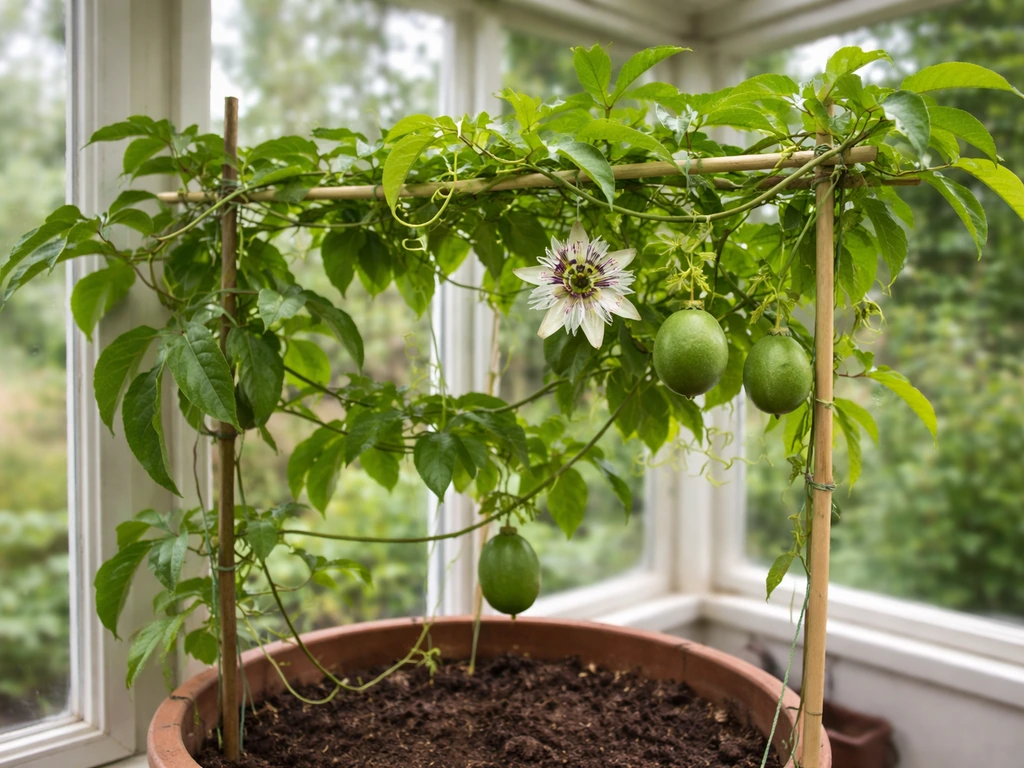
Passion fruit is a vigorous climber and needs something to scramble up. Against a wall or fence, fix horizontal wires roughly 15 cm apart and held 4 to 10 cm away from the surface so air can circulate. This also prevents moisture sitting against masonry and rotting stems. In a conservatory, a freestanding trellis or overhead wires work well and let you train the vine across the roof to maximise light exposure.
The key thing about training is that flowers are produced on new growth. This means you want to keep a strong framework of main stems and then allow new side shoots to develop each season. Remove stems that have already flowered and fruited, and keep the structure open enough for light and air to reach everything. A congested vine in low UK light is a recipe for no flowers and a lot of fungal problems.
Watering, feeding, and getting fruit set
Watering
Water freely from spring through summer while the plant is in active growth. Container-grown plants dry out quickly in warm weather and need checking every day or two in a hot spell. As growth slows in autumn and you head toward winter, reduce watering significantly. Overwatering a dormant or semi-dormant passion fruit in a cold conservatory is a fast route to root rot. In winter, water sparingly, just enough to stop the compost completely drying out.
Feeding
Feed from April through September during the growing season. Start the season with a balanced general fertiliser to push leafy growth and root establishment. From midsummer onwards, once the plant is growing strongly and starting to flower, switch to a high-potassium feed. Sulphate of potash (with an NPK of around 0-0-48) is a classic option and encourages flowering and fruit development. A liquid tomato feed works just as well and is easier to find. Stop feeding entirely from October through to March.
Pollination
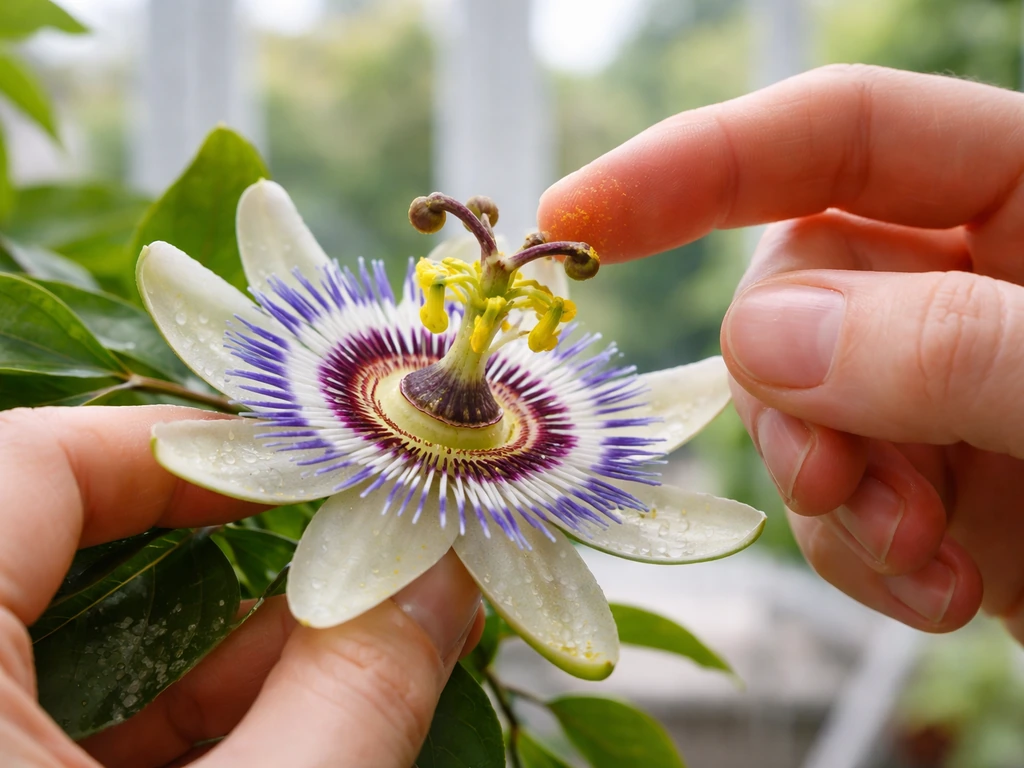
This is one of the trickiest aspects for UK growers. Outdoors, bees and other pollinators do the job, but if your plant is in a conservatory or the flowers open during cool or wet weather when insects are less active, pollination may simply not happen. Hand pollination is the reliable fix. When a flower is fully open (they only last about a day), use a clean, dry paintbrush or cotton bud to transfer pollen from the anthers (the yellow dust-covered structures) to the stigma (the three lobed tips at the top of the column in the centre of the flower). Do this on several flowers across different days to maximise your chances. It takes about two minutes and makes a dramatic difference to fruit set in UK conditions.
Seasonal care and getting through the winter
Spring (March to May) is when you get the plant moving again. Move container plants back to their warmest, sunniest spot, start watering more regularly, and resume feeding. If you pruned in late winter, new growth should emerge from the framework stems. For outdoor plants, check for frost damage and cut back any dead or blackened stems to healthy wood.
Summer (June to August) is the main growing and flowering window. Keep on top of watering, feed with high-potassium fertiliser, hand pollinate flowers as they open, and train new growth onto the support structure. This is the period that determines whether you get fruit.
Autumn (September to October) is about letting the plant wind down, ripening any fruit that has set, and beginning to reduce water and feed. In a conservatory, keep the plant in place. For outdoor plants, now is the time to think about protection.
Winter is the critical phase for survival. Container-grown plants should come inside to a frost-free conservatory or greenhouse before the first frost, typically by October in most of the UK, earlier in the North. The RHS is clear that edible passion fruit does not tolerate low winter temperatures, and even a light frost can cause serious damage. An unheated but enclosed conservatory that holds above 5°C is usually sufficient. If temperatures are set to drop very low, a horticultural fleece over the plant inside gives extra buffer.
For outdoor wall-grown plants in mild areas, wrap the base and main stems in two or three layers of horticultural fleece from November through to late March. Mulch the root zone thickly with garden compost or straw to protect the roots. Even if the top growth is killed by frost, a plant with protected roots can often regenerate from the base in spring.
Troubleshooting and what to realistically expect
Common problems and how to deal with them
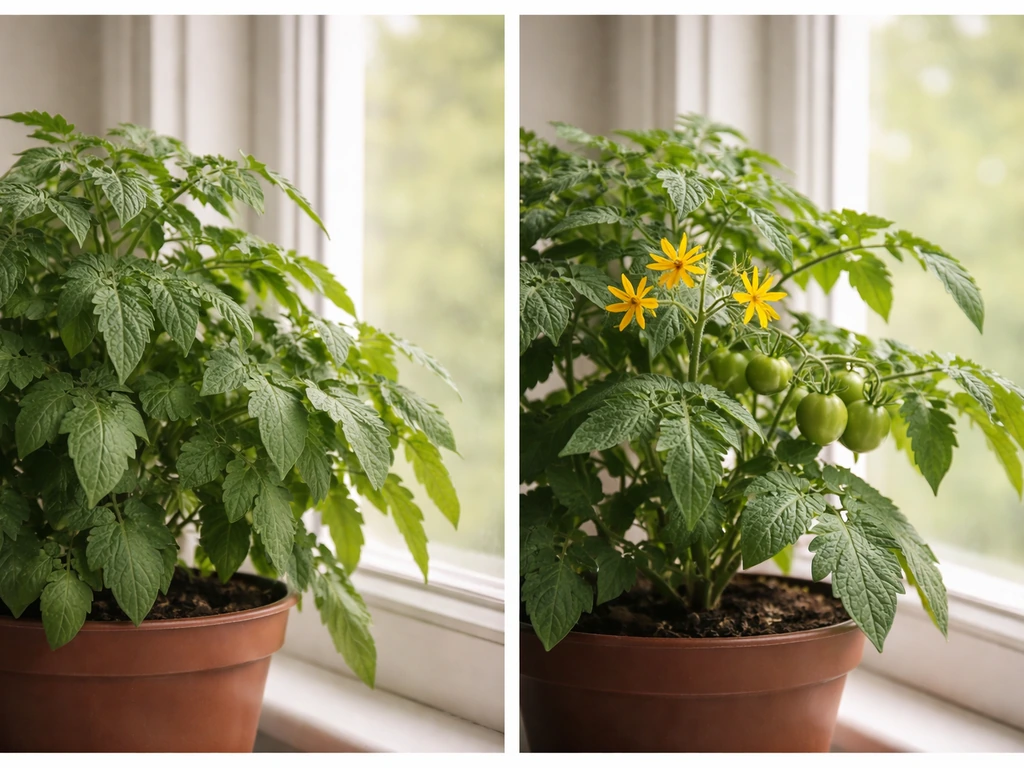
- No flowers: Almost always caused by too little light, too much nitrogen (leafy growth at the expense of flowers), or insufficient warmth. Move to a sunnier spot, switch to high-potassium feed, and be patient.
- Flowers but no fruit: Pollination failure. Start hand pollinating every flower as it opens. Also check whether temperatures are consistently below around 15°C, as cool conditions inhibit fruit set even after pollination.
- Yellowing leaves: Often overwatering, especially in winter. Let the compost dry out more between waterings and check that drainage is working properly.
- Frost damage: Cut back damaged stems to healthy tissue in spring. Don't write the plant off until you see new growth emerge from lower stems or the root zone.
- Slow or stunted growth: Check the pot isn't rootbound (if roots are circling the bottom, pot up one size), resume feeding in spring, and make sure the plant is in the warmest, brightest available spot.
- Pests: Red spider mite is the main problem on conservatory-grown plants, especially in dry conditions. Keep humidity up by misting occasionally and treat with an appropriate biological control or insecticidal soap.
- Vine dying back completely in winter: If the roots are alive, it may still regenerate in spring. Scratch the base of stems, and if you see green underneath the bark, give it more time.
Setting realistic expectations
Here's the honest picture. If you grow Passiflora edulis in a conservatory or frost-free greenhouse, keep it warm over winter, hand pollinate diligently, and give it two full growing seasons, you have a good chance of picking some fruit. If you're wondering about other fruit too, you might be asking, can you grow Granny Smith apples in the UK. A few fruits per season is a realistic expectation for UK conditions. A bumper harvest like you'd get in the tropics is not going to happen. If you're outdoors in the South Coast or South West in a very sheltered spot, the plant might fruit after a genuinely hot summer, but it's less predictable and every cold winter is a setback.
This is a different situation from something like guava, which faces even steeper odds in the UK, but it's not as straightforward as growing a dessert apple. If you're also wondering about other fruit, you may be interested in whether you can grow pink lady apples in the UK can you grow pink lady apples in the uk. Guava can be grown in the UK, but it is even more challenging and typically needs a warm, sheltered setup can guava grow in uk. Think of it as a rewarding project that combines plant cultivation with a bit of climate gambling. The flower alone is extraordinary and worth growing for its own sake. The fruit is a bonus, and when it does appear in a UK garden, it genuinely feels like an achievement.
The two-year timeline from a young plant to first fruit is worth keeping in mind. Don't give up on a plant that hasn't flowered in its first season. Get the basics right: warmth, light, high-potassium feed, careful pollination, and solid winter protection, and you give yourself the best realistic shot at success in the British climate.
FAQ
What should I do if my passion fruit grows well but never flowers in the UK?
If your passion fruit doesn’t flower, don’t assume it’s dead or “not meant for UK,” it’s usually under light and temperature stressed. In practice, aim for a consistently bright spot, keep night temperatures above about 5°C in winter, and avoid heavy nitrogen feeding late in the year. If you’re in a conservatory, make sure the plant is trained so new growth gets direct light, not shaded by older, fruiting shoots.
Does passion fruit self-pollinate in the UK, or do I always need to hand pollinate?
For edible Passiflora edulis, the flowers are typically self-pollinating only under good conditions, so in the UK they often need help. If you are growing in a warm, enclosed space, hand pollinate when the flower is fully open, that one-day window matters. Also pollinate across several days because not every flower will respond the same way, especially if temperatures swing.
Why do my passion fruit cuttings or young plants rot over winter in a conservatory?
Yes, even with winter protection, roots can suffer from cold and soggy compost. In containers, let the top few centimeters dry slightly between waterings once growth slows, use a free-draining compost mix, and ensure the pot has drainage holes. If you see blackened stems or a sour smell from wet compost, reduce watering immediately and move the plant to the warmest available position.
Why do the fruitlets drop before they mature?
It’s normal to get a few fruits, then have them drop if pollination was incomplete, temperatures were too cool during flowering, or the plant ran out of nutrients. Keep high-potassium feeding from flowering onwards, maintain even watering during active growth, and do not let the pot dry out completely in hot spells, fruitlets are especially sensitive to stress.
Can I grow passion fruit outdoors in the UK, or should I always use a conservatory or greenhouse?
Passiflora edulis can be kept outside only in very mild, sheltered situations, but “survive” is not the same as “fruit reliably.” If you are determined to try outdoors, keep it against a south or west wall, add fleece wrapping to stems and a thick root mulch, and be ready to bring it into a frost-free structure when temperatures threaten a real frost event.
How long should I wait for my purchased plant to fruit in the UK?
If you buy a young plant that hasn’t produced fruit yet, it doesn’t automatically mean you will fail. A pot-grown plant often takes around two years to reach first crop, and the first year is usually about building a strong framework. Focus on consistent light, correct pruning to keep new growth forming, and reliable hand pollination once it does flower.
When is the best time to prune passion fruit in the UK, and how aggressive should I be?
Do not over-prune just to force fruit. The key is structural training and removing stems that already flowered, while still encouraging fresh side shoots from your framework. If you prune too hard in late winter or remove too much new growth, you can delay flowering by a whole season.
My vine looks healthy but gets fungal problems, will it still fruit?
If you’re using a conservatory, check that air can circulate around the vine. Crowded growth increases fungal risk and reduces fruiting because lower flowers stay in dim light. Train on wires or a freestanding trellis, remove any congested or dead growth, and avoid watering foliage where possible.
I see flowers in my conservatory, but no fruit forms, what’s the most likely cause?
If you get flowers but no fruit in an unheated conservatory, it’s often pollination plus temperature timing. Flowers open for about a day, so pollinate promptly when the flower is fully open, and repeat on multiple flowers. Also consider moving the plant to the warmest available corner during cooler stretches so pollen and stigma work effectively.
How can I tell I’m buying the edible passion fruit type for UK growing?
Choose the edible species you can confirm on the label, Passiflora edulis for edible purple granadilla. If the label is vague or you’re unsure, don’t rely on fruit as a guide because ornamental passion flowers survive but their fruit is not the one you’re trying to eat. When in doubt, buy from UK nurseries and look specifically for fruiting varieties rather than purely ornamental selections.
Can You Grow Tiger Nuts in the UK? Practical Guide for Gardeners
Can you grow tiger nuts in the UK? Practical, regional guide with planting dates, containers, harvest & recipes.