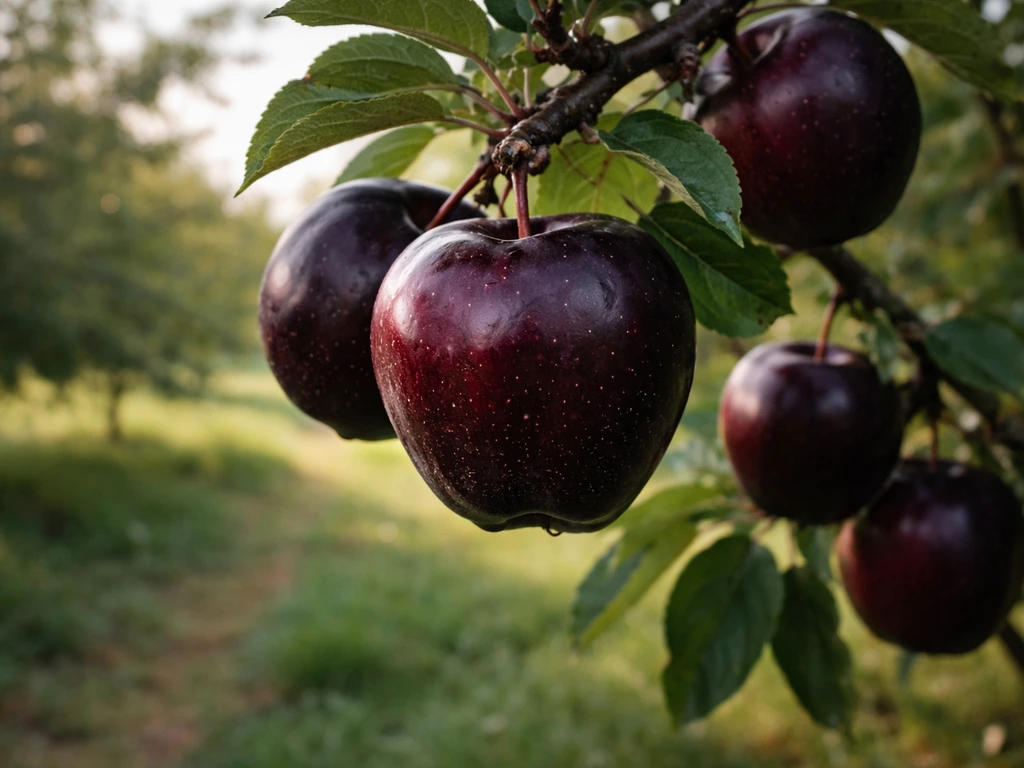
You can grow a Black Diamond apple tree in the UK, but you need to go in with honest expectations. The tree itself will survive in most British gardens with reasonable care. What you probably won't replicate is that iconic near-black skin, because that deep purple colour comes from very specific high-altitude UV intensity and cold Tibetan nights that the UK simply doesn't produce. You'll get a dark-red to purple-tinged apple, which is still genuinely beautiful, but if you're expecting the dramatic near-black fruit you've seen in photos, that's a product of Nyingchi's unique environment, not just the variety.
Can You Grow Black Diamond Apples in the UK? Feasibility Guide
James Hartwell
6 May 2026
What Black Diamond apples actually are
Black Diamond is a member of the Huaniu apple family (Malus domestica 'Huaniu'), sometimes called Chinese Red Delicious. It's grown in the Nyingchi region of Tibet at elevations above 3,500 metres, where intense UV radiation, wide day-to-night temperature swings, and cool growing seasons drive the anthocyanin production that turns the skin so dark. The flesh inside is crisp, white, and sweet, fairly typical of a Red Delicious type. The variety has a reputation for a long juvenile period before bearing, with some sources citing 7 to 8 years from a young tree to first meaningful fruit, and a short fruiting window of around two months even in its native region.
That backstory matters for UK growers because it tells you what you're working with: a cool-climate apple with high-altitude origins, naturally adapted to cold winters and short summers, but also dependent on conditions that are hard to recreate at British sea level. It's not a tropical exotic in the way that guava or papaya would be for UK growers, but it does have very specific colouring requirements that go beyond just choosing the right spot. If you mean papaya, it generally cannot grow outdoors in the UK, but it can be grown in a heated greenhouse or indoors as a container plant papaya in the UK. Guava is much less cold-tolerant than most apples, so in the UK it usually needs to be grown in a greenhouse or kept as a container plant brought indoors in winter guava in the UK.
How the UK climate measures up
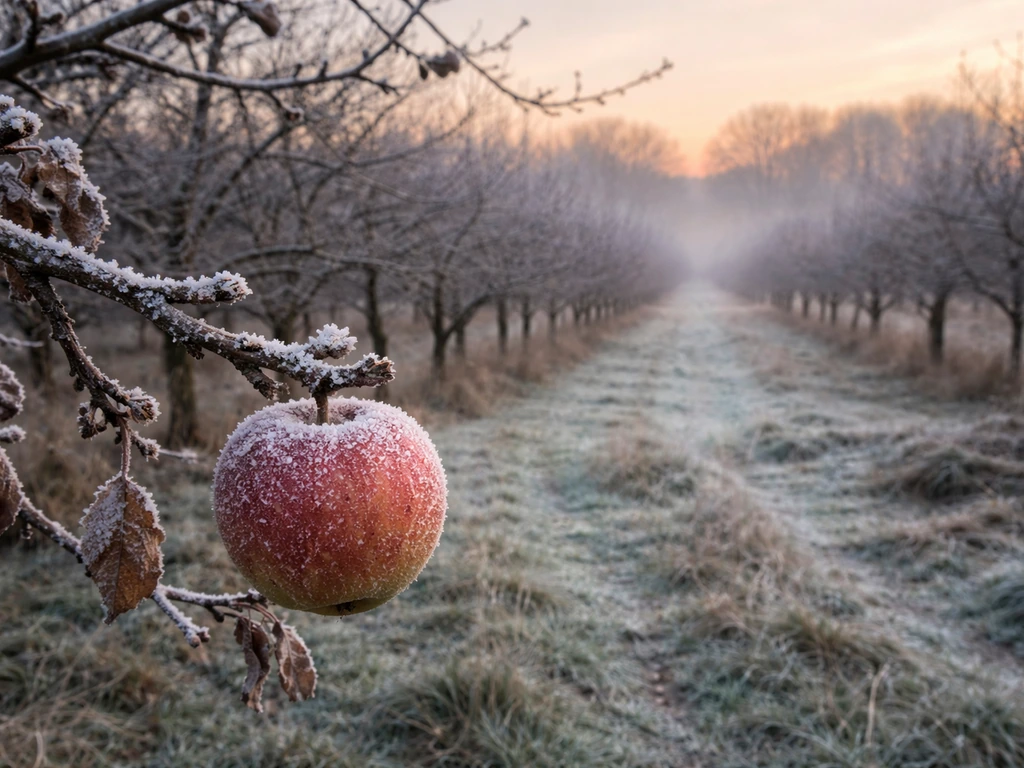
The good news is that as an apple, Black Diamond has cold-hardiness on its side. It needs a decent chill-hour accumulation over winter (temperatures between 0°C and 7°C) to break dormancy properly and set flower buds. The UK delivers this reliably across most of the country, including the warmer South Coast, which rarely gets warm enough winters to cause chill-hour deficits the way California or parts of Spain might. Inland areas of England, Wales, and most of Scotland will have no problem meeting chill requirements.
The bigger UK-specific risks are late spring frosts and low summer heat accumulation. Apple blossom is vulnerable to frost damage once it opens, typically in April to early May in the UK, and a single sharp frost at -2°C can wipe out a year's flowering. In Scotland and upland northern England this risk is higher and later in the season. The South West, sheltered coastal gardens, and areas near urban heat islands have the best natural frost timing. Summer heat is the other constraint: Nyingchi gets intense UV and warm days despite high altitude. In a cool, overcast UK summer, your fruit will colour up less dramatically, the flavour may be milder, and ripening could be marginal in the far north without a warm microclimate.
Microclimates genuinely change the picture here. A south-facing walled garden in Kent, the Thames Valley, or the Severn Vale can accumulate enough warmth to ripen the fruit well. A sheltered spot against a brick wall stores heat, advances ripening by two to three weeks, and reduces frost exposure significantly. Contrast that with an open field in Northumberland or the Scottish Borders, where even heat-demanding mainstream apple varieties struggle, and you'll understand why site choice is the single biggest variable.
Where to get trees and which rootstock to choose
This is where things get awkward. True 'Black Diamond' (Huaniu) apple trees are not widely stocked by UK nurseries. You may find them listed by specialist fruit nurseries or imported suppliers, but availability is patchy and quality can vary. Search terms like 'Huaniu apple' or 'Black Diamond apple tree' in UK nursery catalogues will sometimes return results, but verify that you're buying a grafted tree on a named rootstock rather than a seedling, which would be unreliable for fruit quality. If a deal looks suspiciously cheap or comes from a non-specialist retailer, treat it with scepticism.
Rootstock choice has a major effect on tree size, earliness of fruiting, and how well the tree copes with UK soils. For most garden situations, M26 (semi-dwarfing, reaches about 2.5 to 3.5 metres) is the most practical choice: it encourages earlier fruiting than more vigorous rootstocks and is manageable for espalier or cordon training against a wall. MM106 gives a slightly larger tree and is better suited to poorer soils. M9 is very dwarfing and fruits early, but it needs staking for life and doesn't tolerate waterlogged or shallow soils, both of which are common in parts of the UK. Avoid seedling or crab rootstocks for a garden planting as they produce large, slow-to-fruit trees.
| Rootstock | Tree Size | Years to First Fruit | Best For | UK Soil Notes |
|---|---|---|---|---|
| M9 | Very dwarf (1.8–2.5m) | 2–3 years | Intensive systems, containers, good soil | Needs free-draining, fertile soil; stake permanently |
| M26 | Semi-dwarf (2.5–3.5m) | 3–4 years | Garden walls, espaliers, most UK plots | Tolerates moderate soils; good general choice |
| MM106 | Medium (3.5–5m) | 4–5 years | Poorer soils, open positions | More drought and poor-soil tolerant than M9/M26 |
| MM111 | Large (4.5–6m+) | 5–7 years | Orchards, vigorous soils | Not ideal for small gardens; very slow to fruit |
Setting up your planting site
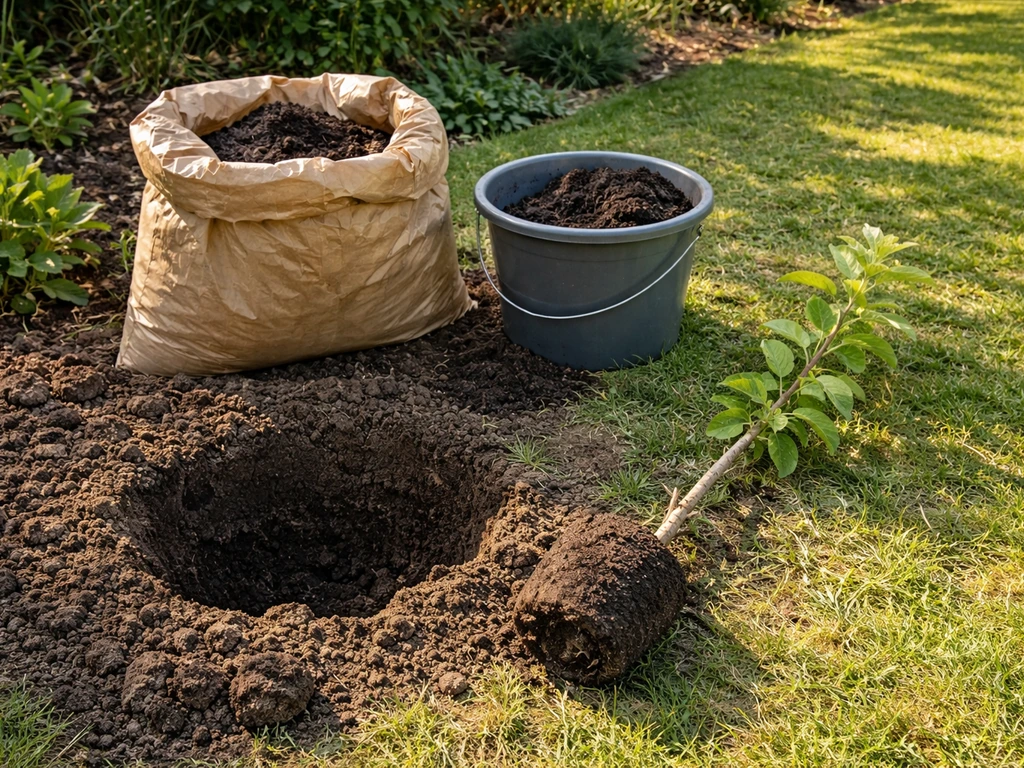
Site selection is where you can compensate most for the UK's limitations. Aim for a south or south-west facing position that gets at least six hours of direct sun on a summer day. A wall or solid fence behind the tree acts as a thermal buffer, radiating stored heat into the night and nudging the ripening window earlier in autumn. Avoid frost pockets: low-lying ground where cold air pools on still, clear nights will damage blossom reliably. If your garden slopes, plant partway up the slope rather than at the base.
Soil preparation matters more than most people give it credit for. Apple trees prefer a well-drained, moderately fertile loam with a pH between 6.0 and 6.5. Waterlogged soil is one of the fastest ways to kill a grafted apple, particularly on M9 or M26 rootstocks. If your ground holds water in winter, raise the planting area slightly, incorporate grit, or consider a raised bed system. Dig in well-rotted compost or manure before planting but don't over-fertilise with nitrogen at this stage, as it encourages sappy growth that's more vulnerable to canker and fire blight.
Spacing depends on your training method. A free-standing bush tree on M26 needs about 3 to 4 metres from neighbours. An espalier trained against a wall can be planted as close as 3 to 4 metres apart horizontally but needs only about 30 to 45 cm from the wall itself. Wind protection is particularly important in exposed UK gardens: strong winds in spring will physically damage blossom and deter pollinators. A permeable windbreak (a hedge rather than a solid wall) reduces wind speed without creating turbulence.
Pollination: the part UK growers often get wrong
Apple trees are almost never self-fertile, and Black Diamond is no exception. You need at least one other apple variety flowering at the same time to get fruit. Huaniu-type apples typically flower in mid-season (roughly equivalent to pollination group 3 or 4 in UK nursery classification), so you need a compatible partner that overlaps in bloom time. Good choices that are widely available in the UK include Cox's Orange Pippin, Egremont Russet, James Grieve, Sunset, or Discovery. Check that any variety you choose is in the same or adjacent pollination group to ensure overlap. UK growers can use the RHS pollination-group guidance in the older Fruit Tree Pollination Groups PDF to choose compatible flowering partners for cross-pollination planning pollination group to ensure overlap.
If your garden is small and you can only fit one tree, check whether neighbours within about 50 metres have apple trees. Bees will cover that distance easily and cross-pollinate between gardens. Planting a crab apple nearby is another option as crabs tend to have long flowering periods and overlap with multiple groups. In April and May when apple blossom is at its peak, native bumblebees and honeybees are the main pollinators in the UK. In a wet, cold spring where bees aren't flying much, fruit set can be poor regardless of what you've planted. This is a genuine UK climate risk, not something you can fully engineer around.
Ongoing care through the growing season
Pruning and training
Winter pruning (November to February, while the tree is dormant) shapes the tree and opens up the canopy to light and air. For a young Black Diamond tree, aim to build an open-centred goblet shape with four to six main branches and no crowded crossing growth in the middle. Light penetration matters especially for dark-skinned varieties because anthocyanin development in the fruit depends on sun reaching the skin. Summer pruning (around July for trained forms) on espaliers or cordons keeps the shape in check and redirects energy into fruit buds.
Feeding and thinning
Feed established trees in late February or early March with a balanced granular fertiliser, or apply a mulch of well-rotted compost around the base (keeping it away from the trunk). A potassium-rich feed in June supports fruit development and colour. Avoid high-nitrogen feeds in summer, which push leafy growth at the expense of fruiting. Fruit thinning in June (when the tree naturally drops some fruitlets in what's called the 'June drop') is worth following up manually: thin each cluster to one or two fruits, spaced about 15 to 20 cm apart. This improves fruit size, reduces the risk of biennial bearing (where the tree fruits heavily one year and rests the next), and helps the remaining fruit colour up better.
UK-specific problems to watch for
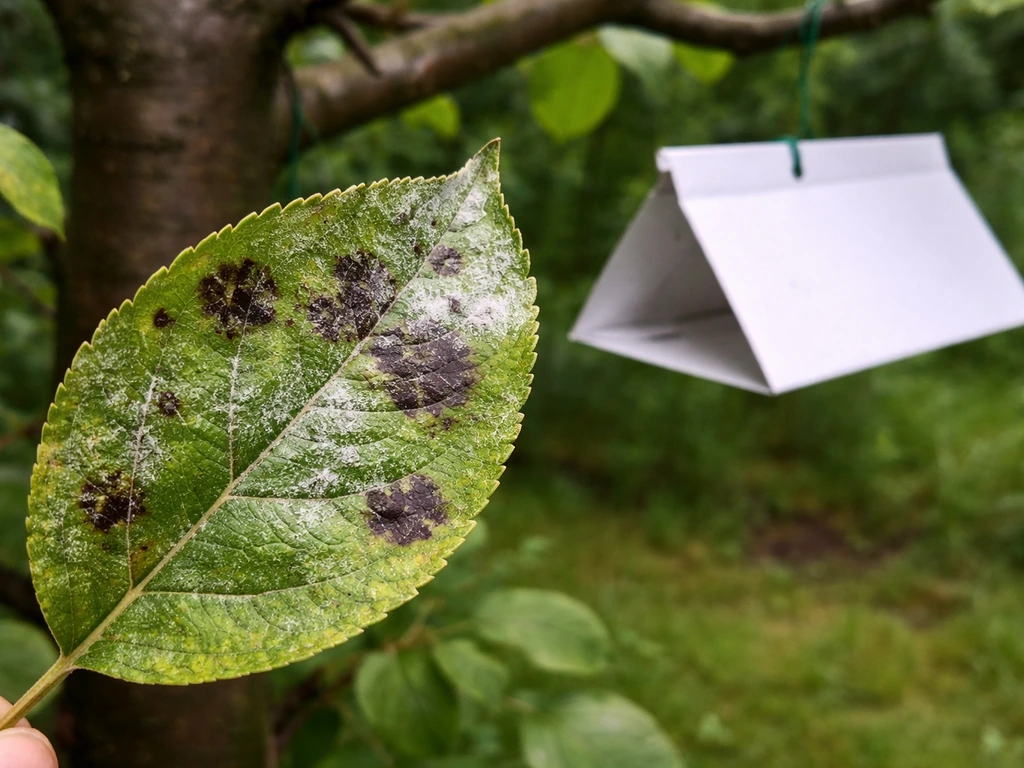
The UK's wet, mild winters create ideal conditions for apple scab (Venturia inaequalis) and powdery mildew, both of which are common and both of which can be significantly reduced by good airflow through the canopy and removing fallen leaves in autumn. Apple canker (Nectria galligena) is the other big one: it enters through wounds and pruning cuts, so keep tools clean and sharp, and paint large cuts with a wound sealant. If Huaniu-type apples have any known susceptibility ratings in UK trials, they haven't been as extensively documented as mainstream varieties, so err on the side of preventative management.
Codling moth is the pest most likely to ruin your fruit from the inside out. Hang pheromone traps in May to monitor population levels and use them to time any intervention. Woolly aphid and apple sawfly are also common in UK orchards and can be managed with targeted spraying or encouraging natural predators by keeping some rough grass and habitat near the tree. Late frosts in April and May are arguably your biggest single risk to the harvest: if a frost is forecast when blossom is open, covering a small tree with horticultural fleece overnight can genuinely save your year's crop. It sounds fussy, but it works.
Overwintering and spring frost strategy
- Mulch around the base in November to insulate roots and retain moisture through dry spells
- Don't prune after mid-February in frost-prone areas to avoid stimulating growth that gets caught by late frosts
- Keep horticultural fleece accessible from March onwards and drape over the tree if sub-zero temperatures are forecast during or after bud break
- Avoid planting in frost pockets or low ground where cold air settles on clear nights
- In Scotland and northern England, consider fan or espalier training against a south-facing wall as your most reliable strategy for reaching ripeness
When to expect fruit and how much to expect
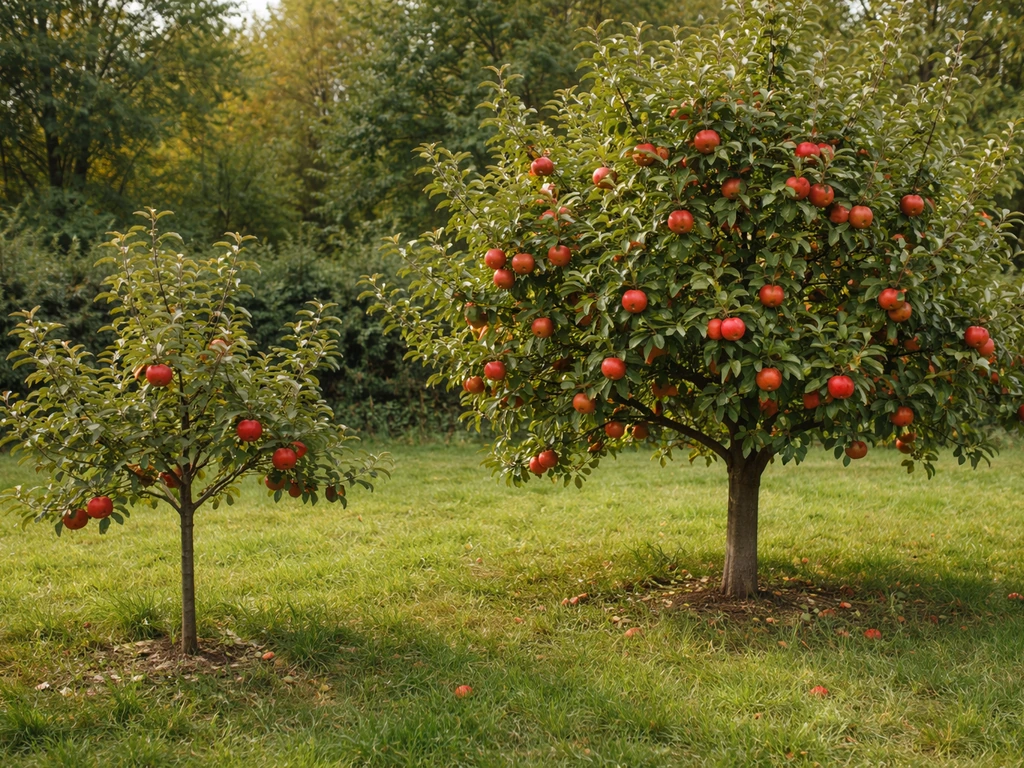
On M26 rootstock, most gardeners see a first small crop three to four years after planting a two-year-old maiden or feathered tree. Realistic first-harvest years are therefore year four or five from planting. On M9 it can be as early as year two or three, though on a very dwarfing rootstock the crop will always be smaller. The 7 to 8 year figure cited for Black Diamond trees in their native Tibetan region likely refers to seedling-grown trees rather than grafted nursery stock, so don't let that put you off if you buy a properly grafted specimen.
In terms of yield, a mature semi-dwarf apple tree in a good UK site typically produces 15 to 30 kg of fruit per season, though for a less-established variety like Black Diamond in a non-ideal climate, something closer to 10 to 20 kg in a good year is more realistic. The colouring in a UK summer will be darker red to burgundy-purple rather than near-black. Pink Lady is another apple variety with different climate and growing requirements, so it's worth checking what conditions it needs before you plan your planting in the UK. South Coast and sheltered English gardens will do better on both yield and colour than exposed northern sites. In terms of variety comparisons, if you're primarily interested in dark-skinned eating apples and are open to alternatives, there are well-established UK-available dark-red varieties that may fruit more reliably and earlier in the British climate.
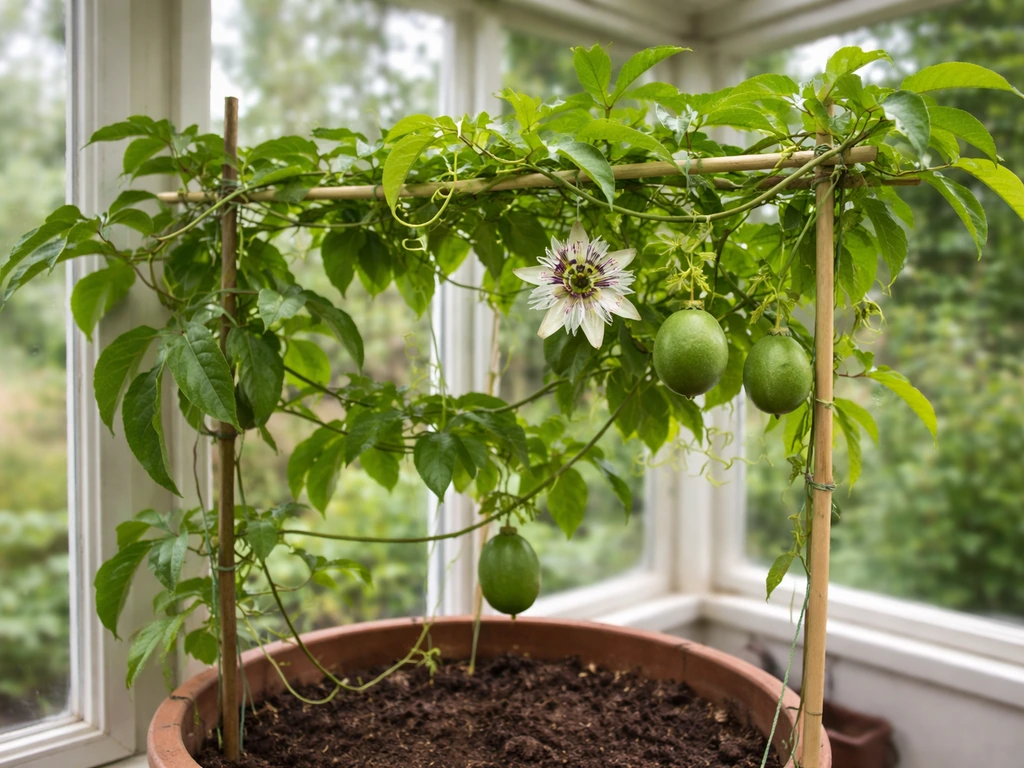
The bottom line is this: Black Diamond apple trees can be grown successfully in the UK and will produce genuinely attractive, tasty fruit in the right conditions. If you're also wondering will passion fruit grow in the UK, the answer depends heavily on warmth, sun exposure, and winter protection since it's far less cold-hardy than apples will passion fruit grow in UK. The South of England, Welsh valleys with good sun exposure, and sheltered spots in the Midlands offer the best prospects. Scotland and the far north are harder but not impossible with a south-facing wall. If you enjoy the challenge of growing something unusual and are happy with a fruit that's dark red rather than the mythically black version, it's a rewarding project. Just treat sourcing carefully, choose the right rootstock, and invest in a pollinator partner, and you'll have a tree that earns its place in the garden.
FAQ
Can you grow Black Diamond apples in the UK in a colder region like Scotland or the North of England?
Yes, but plan for higher late-spring frost risk and weaker colour if summers are cool. The best chance is a strongly sheltered south-facing site, ideally against a wall, plus frost protection over blossom nights during April to early May.
Will I get near-black apples in the UK if I pick the right variety and location?
Probably not. Even with good sun, the near-black look depends on the high-altitude UV and large day-night swings of Tibet. In UK conditions you should expect dark red to burgundy-purple rather than true near-black skin.
How do I avoid buying the wrong planting material (seedling vs grafted) when ordering online?
Buy only a grafted tree with a named rootstock on the label, such as M26, MM106, or M9. If the listing suggests it is “from seed,” “own-root,” or offers no rootstock name, quality and fruit reliability are much less predictable.
Which rootstock is safest for typical UK garden soils and beginner maintenance?
For most gardeners, M26 is a practical balance of manageable size and earlier fruiting, and it is more forgiving than M9 in many soils. If your ground is poorer or more likely to drain poorly, consider MM106 and improve drainage before planting.
What spacing do I use if I want cordons or espaliers, not a free-standing tree?
For a wall-trained espalier, you can typically keep the tree about 30 to 45 cm from the wall and space plants around 3 to 4 m along the wall. Allow more space if your wall is heavily shaded, or if you need better airflow to reduce mildew.
How close does my pollinator apple need to be, and what if I only have space for one tree?
Aim for a compatible apple variety within roughly 50 m, because bees can manage cross-pollination across that range. If you truly only want one tree, you may still get fruit from a neighbour’s apple, but you cannot rely on this without checking local bloom overlap.
Do I need to worry about bees not flying in a wet spring, even if I plant a pollinator?
Yes. In cold, wet conditions, flower visitation can drop sharply, reducing fruit set even with the correct partner variety. If you get poor set after a bad spring, don’t assume the variety is infertile, it may be weather-driven.
What’s the most effective frost protection strategy for Black Diamond blossom?
Use horticultural fleece to cover the tree overnight when blossoms are open and a frost is forecast around -2°C. Do not leave it uncovered in the day of the frost forecast, and avoid trapping warm air without ventilation, which can sometimes damage flowers.
When should I prune, and is summer pruning essential for fruit colour?
Winter pruning (while dormant) should create an open-centred structure with good light into the canopy. Summer pruning helps manage shape and directs energy into fruiting wood, which can indirectly improve colour by keeping fruit exposed to light.
How often should I thin fruit, and what happens if I skip it?
Thin in June after natural “June drop,” aiming for about one or two fruits per cluster with roughly 15 to 20 cm between fruits. Skipping thinning often leads to smaller apples, weaker colour, and a greater chance of biennial bearing.
Is there any UK-specific disease or pest risk that catches Black Diamond growers out?
Apple scab and powdery mildew are common in UK conditions, so airflow and leaf hygiene matter. Codling moth is another key one, monitor with pheromone traps from May so you can time interventions when larvae pressure is rising.
How long will it take to fruit after planting in the UK?
With properly grafted nursery trees, expect meaningful fruit around year four or five on M26 in many gardens. M9 can fruit earlier (often year two or three), but trees are more sensitive to waterlogged or shallow soils and usually require staking.
What yields are realistic in the UK, and is “10 to 20 kg” a good expectation?
That range is realistic for a less-established, climate-stressed variety, especially in cooler or exposed sites. In a good, warm microclimate, you might see higher yields, but near-black skin should not be assumed as the trade-off.
Next Article
Will Passion Fruit Grow in the UK? How to Grow It
Learn if passion fruit grows in the UK and get step by step tips for variety, warmth, watering, pollination, and frost c