Guava can grow in the UK, but not outdoors in the ground with any reliability. Common guava (Psidium guajava) is damaged at -2°C and killed at around -3°C, which puts it well outside what most UK winters will tolerate. Your realistic route is container growing: a pot you can move indoors or into a greenhouse when temperatures drop, with a sheltered sunny spot outside from late spring through early autumn. Do that, and you have a genuine chance of flowers and even fruit. You may also be wondering can papaya grow in the UK, and the same warmth and shelter constraints apply.
Can Guava Grow in the UK? Outdoor or Container Guide
James Hartwell
31 May 2026
Does guava grow outdoors in the UK?
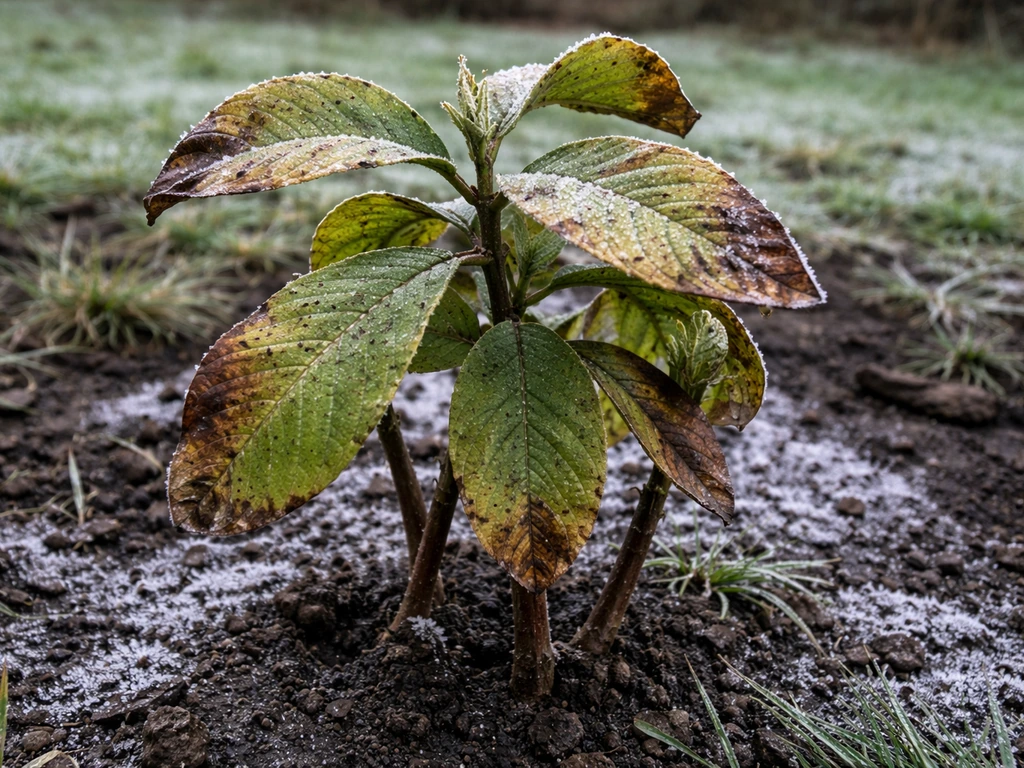
Permanently in the ground, outdoors, year-round? No, not with any consistency, even in the warmest parts of England. Common guava's foliage starts taking damage at -2°C and the plant can die at -3°C. A typical UK winter, even on the South Coast, will frequently dip below those thresholds. Scotland, the Midlands, and most of inland England are ruled out entirely for outdoor cultivation. The plant simply isn't built for it.
Strawberry guava (Psidium cattleianum) is a different matter, slightly. It can handle short periods down to around -4.4°C to -5.5°C, which puts it closer to borderline for sheltered coastal gardens in Cornwall, the Isles of Scilly, or parts of the Channel Islands. Even then, you'd be gambling on the mildest of winters and would need a very sheltered south-facing wall. Most UK gardeners are better off treating any guava species as a container plant regardless of variety.
UK climate limits: hardiness, winter temperatures, and microclimates
Guava's optimum growing temperature is 23-28°C. The UK rarely delivers that even in midsummer, which tells you something about the challenge. The plant isn't just frost-sensitive, it genuinely needs warmth to thrive and to flower reliably. A cool, grey British summer in the north will produce a green plant that doesn't do much. A warm, sunny spot in the south gives you a real shot.
Microclimates matter enormously here. A walled south-facing patio in Surrey or Devon will be several degrees warmer than an open garden just 50 metres away. Urban gardens in London or Bristol often stay a few degrees above surrounding rural areas overnight. These small differences can be the line between a plant that survives and one that doesn't. Coastal areas benefit from the thermal buffering of the sea, which is why Cornwall sees plants you'd never get away with in Derbyshire.
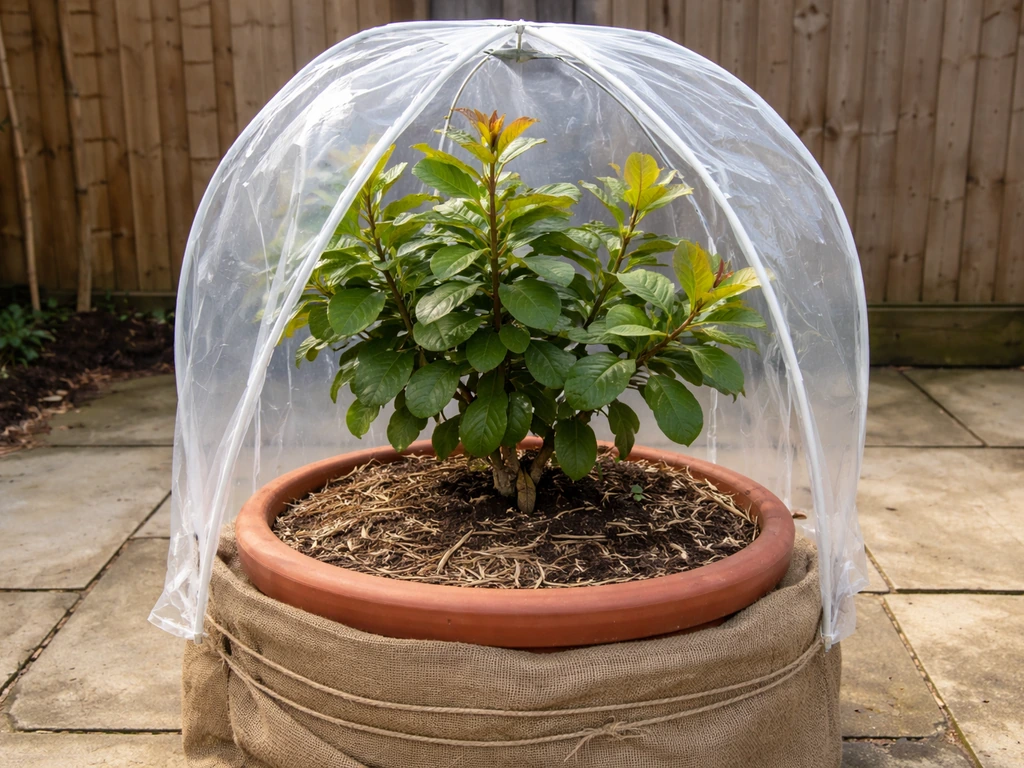
An unheated greenhouse adds roughly 5°C to overnight temperatures compared to outside, and an unheated or cool conservatory can maintain a minimum of around 5-7°C even without a heater. Both of those numbers matter a lot when you're protecting a plant that starts struggling below 0°C. Fleece will give you about 2°C of additional protection if you're caught out by an unexpected cold snap, but it's not a substitute for a proper sheltered overwintering space.
How to grow guava in the UK: container vs greenhouse vs patio
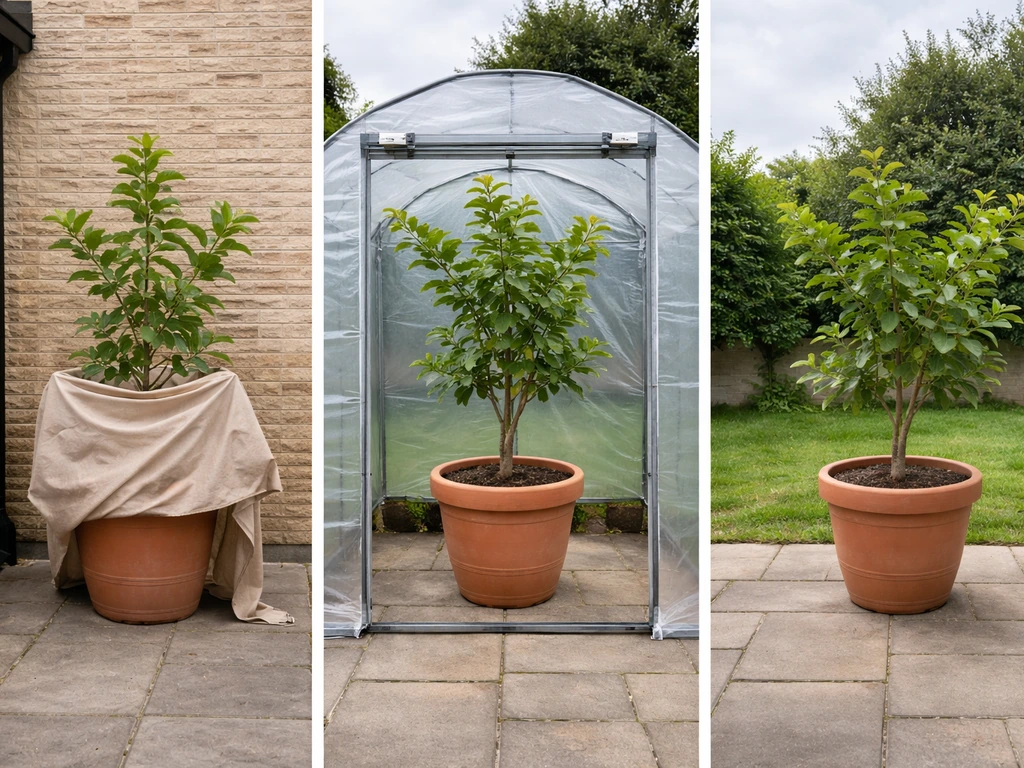
The container-on-a-patio approach is what most UK gardeners use and, honestly, it's the best fit for our climate. You pot the guava up, bring it outside from late May once frost risk has passed, enjoy it on a warm sunny patio through summer, and then move it back inside before the first frosts of autumn, usually by mid-October. It's more like managing a large houseplant than growing a tree, but it works.
| Method | Best for | Winter requirement | Fruiting potential |
|---|---|---|---|
| Container on patio (summer only) | Most UK gardeners | Move indoors or to greenhouse by October | Good if summer is warm |
| Unheated greenhouse year-round | Gardeners with a greenhouse | Stays inside all year, ventilate in summer | Moderate, consistent |
| Heated conservatory | Those with a warm conservatory | Minimum 10°C recommended | Best chance in UK |
| Outdoor in-ground (extreme south/coastal) | Very mild microclimates only, strawberry guava | Fleece and wall protection essential | Low, high-risk |
A greenhouse that you can ventilate well in summer and keep frost-free in winter is arguably the most consistent option. The RHS and academic research both support the idea that an unheated winter greenhouse can expand where guava is cultivatable. If you have a greenhouse, consider keeping the plant in there year-round and opening vents and doors fully through the warmest months to give it airflow and warmth. The downside is that a plant stuck in a shaded corner of a greenhouse won't flower as freely as one basking on a south-facing patio in July.
Choosing the right guava type and sourcing plants
For most UK growers, common guava (Psidium guajava) is what you'll find most readily and what produces the familiar large tropical fruit. It's the most cold-sensitive, but it's also the most widely available and rewarding if you get it right. Strawberry guava (Psidium cattleianum) is hardier and more compact, making it slightly easier to manage in a pot and marginally better suited to cooler conditions. Crown guava (Psidium acutangulum) is less commonly known but the UK nursery Jurassic Plants specifically notes it fruits well as a 1-2 metre shrub in a 20-50 litre pot, kept on a sunny patio in summer and in an unheated porch or greenhouse in winter. That's a useful real-world recommendation.
On the seed vs. nursery plant question: seed-grown guavas can take anywhere from 2 to 8 years to flower and fruit. A grafted or clonally propagated plant from a nursery can fruit in its first year after planting. If you want fruit in a reasonable timeframe, buy a named nursery plant rather than growing from seed. It's more expensive upfront but saves you years of patience. Look for specialist UK exotic plant nurseries (Jurassic Plants is one; others exist) rather than generic garden centres, which rarely stock guava at all.
Planting, care, and seasonal routine
Pot size and compost
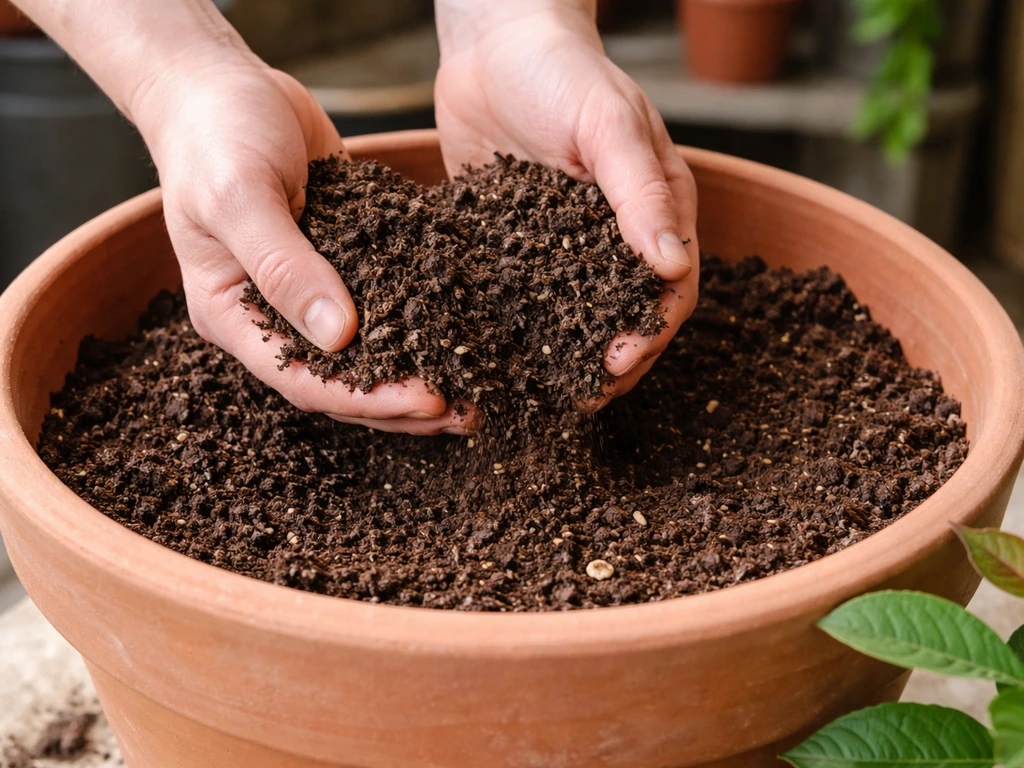
Start with one plant per pot with a diameter of around 35 cm (14 inches). As the plant grows, move up to a 20-50 litre container. The RHS recommends peat-free, loam-based compost for guavas, and good drainage is non-negotiable. Make sure the pot has adequate drainage holes and consider adding perlite or grit to the mix to prevent waterlogging. Root rot from sitting in wet compost is one of the most common ways guavas fail in UK containers.
Watering
Young plants need regular watering in their first year while they establish. After that, guavas are more drought tolerant than you'd expect for a tropical plant. In summer outdoors, water when the top few centimetres of compost dry out. In winter indoors or in an unheated greenhouse, water very sparingly, just enough to stop the compost from drying out completely. Overwatering in the cool months is a fast route to root rot.
Feeding
Feed with a balanced liquid fertiliser every two to three weeks through the growing season (May to September). A high-potassium feed (like tomato fertiliser) in midsummer can encourage flowering. Stop feeding entirely once you bring the plant indoors for winter.
Pruning
Prune once or twice a year to remove crowded branches and keep the plant to a manageable size. The good news is that guavas fruit on new growth, so pruning doesn't hurt your fruiting prospects. In fact, pruning can stimulate new shoots that will carry flowers. Aim to keep the plant to a height you can easily move, which in practice means keeping it under about 1.5 metres for a container plant you're shifting in and out of doors.
Seasonal movement
- Late May: move the plant outside to its sunniest, most sheltered spot once night temperatures are consistently above 10°C.
- June to September: full sun, regular water and feed, enjoy any flowers and developing fruit.
- Early to mid-October: bring the plant back inside before the first frosts, into a frost-free greenhouse, conservatory, or bright indoor space.
- November to April: minimal water, no feed, keep at 5°C minimum (10°C if you can manage it).
Flowering and fruiting in the UK: what to actually expect
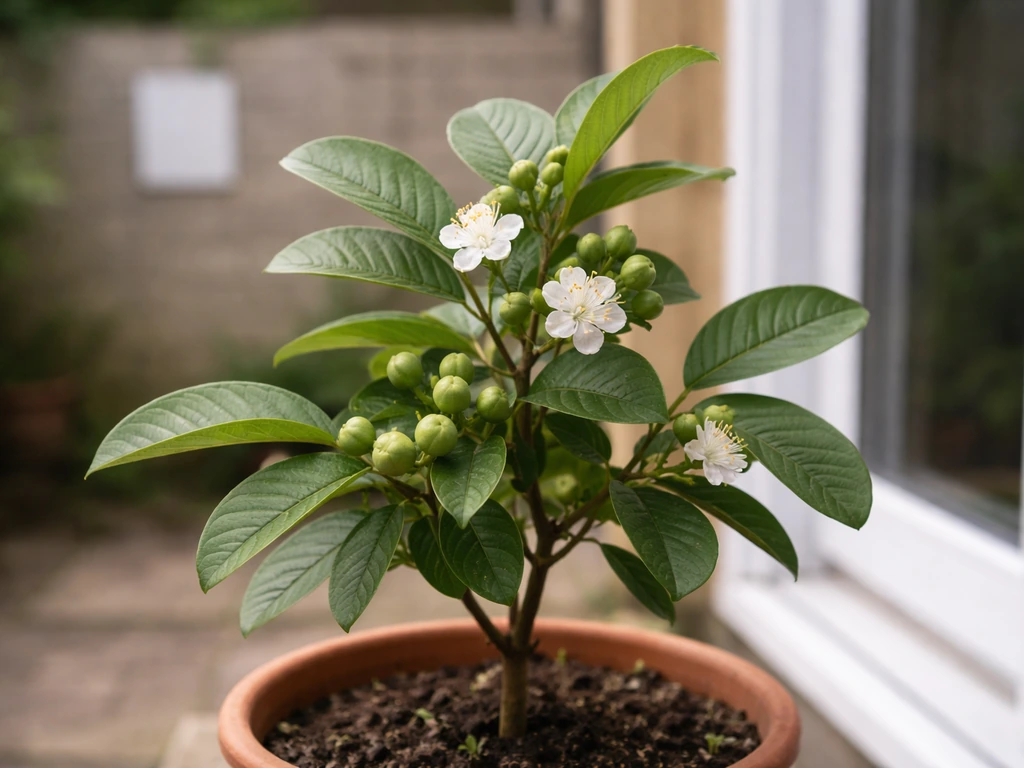
This is where UK growing gets genuinely tricky. Guava takes 20-28 weeks between flowering and fruit ripening. If your plant flowers in July, you're looking at fruit ripening somewhere between December and February, which means those fruits need to develop through the autumn and into winter, either indoors or in a heated space. If it flowers in June, you might just about hit a late-autumn ripening. Timing is everything and the UK's cool, shortened growing season makes it a close call.
Cold temperatures during flowering cause flower drop, which is the other major obstacle. If your plant pushes flowers during a cool spell in early summer or during an indoor winter flowering, many of those flowers may fail to set. The optimum for fruit development is 23-28°C, and UK summers don't always cooperate. A warm south-facing wall, a patio that stores heat, or a glass greenhouse will all improve your odds.
On pollination: guavas are primarily self-fertile, which is good news since you're unlikely to be growing a row of them. Some varieties produce more fruit with cross-pollination from a second plant, but a single plant can and does fruit. Indoors, give the open flowers a gentle shake or use a small paintbrush to transfer pollen between flowers. Outdoors, insects (including honeybees) will do the job for you.
Common problems and how to fix them
- Cold damage: leaves go brown and papery after a frost. Move the plant somewhere warmer immediately and cut back to healthy wood in spring. Prevention is far easier than recovery, so don't leave the plant outside past mid-October.
- Leaf drop in winter: some leaf drop indoors is normal and usually due to low light or a sudden temperature change when you first bring it in. Keep it near the brightest window available and avoid placing it next to a radiator that blasts dry heat.
- No flowers or fruit: most often a light problem. Guava needs full sun to flower. A shaded spot indoors or a gloomy greenhouse corner won't trigger flowering. Move it to the sunniest available position.
- Mealybugs: the most common pest on indoor container guavas. They hide in leaf axils and look like white fluffy blobs. Treat with a cotton bud dipped in rubbing alcohol for small infestations, or use a systemic insecticide for larger ones. Check every time you bring the plant in from outside.
- Scale insects and whitefly: also common on container-grown guavas, especially in greenhouse conditions. Yellow sticky traps help with whitefly; scrape scale off manually and treat with neem oil or a suitable contact insecticide.
- Root rot from overwatering: the compost should never be sodden for extended periods, especially in winter. If the plant looks wilted despite moist soil, check the roots. Repot into fresh, well-draining compost and cut away any blackened roots.
- Slow fruit development in autumn: if fruit is still green as temperatures drop, bring the plant indoors to a warm, bright spot. Guava fruit can continue to ripen off the plant in a warm room, like avocados.
Realistic next steps: your simple UK guava trial plan
If you're reading this in late spring or summer, now is the ideal time to start. Here's a straightforward trial plan that gives you the best realistic chance:
- Buy a named nursery-grown plant (not seeds) from a specialist UK exotic plant nursery. Look for Psidium guajava, Psidium cattleianum, or Psidium acutangulum. A grafted plant will fruit sooner than a seedling.
- Pot it into a 35 cm (14-inch) pot with peat-free loam-based compost mixed with 20-30% perlite for drainage. Make sure the pot has good drainage holes.
- Place it in your sunniest, most sheltered outdoor spot for the summer, ideally against a south-facing wall or on a heat-retaining patio. Leave it outside from late May to mid-October.
- Water regularly through summer when the top of the compost is dry, and feed with a liquid fertiliser every 2-3 weeks. Switch to high-potassium feed from July to encourage flowering.
- Before the first frosts (aim for early October as your deadline), move it into a frost-free greenhouse, unheated conservatory, or the brightest room in your house. Water sparingly and stop feeding.
- In the first winter, don't worry too much about fruiting. Focus on keeping the plant alive and healthy. Fruiting expectations increase after the plant is established for a full growing season.
- The following summer, prune back any leggy growth in late spring to encourage fresh shoots, which is where your flowers and fruit will come from. If the plant flowers from June onwards and sets fruit, you have a genuine chance of ripe guavas by late autumn if you can keep temperatures above 15°C as they develop.
To put it plainly: a guava in a UK garden is a project that rewards consistency more than optimism. Get the overwintering right, give it the warmest summer spot you have, and manage your expectations for the first year or two. Pink Lady apples are also usually grown as espalier or in carefully protected sites in the UK because of cold and disease pressure. The experience is similar in some ways to attempting passion fruit or papaya in the UK, where climate limits the outcome but don't completely prevent it. If you mean black diamond apples specifically, check whether you can meet their chill-hour and winter-hardiness needs in your exact UK microclimate before planning a planting. With guava, the container method genuinely works for patient growers, and when you do get fruit, it's completely worth the effort. If you are wondering can you grow granny smith apples in the UK, the key is choosing the right apple variety and giving it protection from frost and harsh winter winds.
FAQ
Can I keep guava outdoors in a container all year in the UK?
Not reliably. Even in the warmest UK summers, guava needs sustained warmth to flower and then ripen fruit, and winter cold is the limiting factor. If you want to try outdoors, the safest “middle ground” is a permanently planted shrub only in the mildest coastal microclimates, with serious protection (large thermal mass like a wall plus frost covering), but for most gardens a pot is still the practical choice.
What is the lowest temperature a container guava can handle if I protect it?
Yes, but only if you can prevent the root ball from freezing solid. Move the plant to your most protected spot (near a south-facing wall, out of wind), use a container with insulation (or wrap the pot), and keep fleece as a backup for unexpected dips. In colder years, you will still likely need to bring it fully indoors or into a frost-free greenhouse to protect flowering and fruit development.
My guava flowers, but the fruits never set. What should I check first?
If it flowers but drops lots of blooms, it usually points to cold, poor pollination conditions, or low light. In summer, give the plant a consistently warm, sunny position and avoid moving it to cooler areas once it starts blooming. Indoors, open the flowers to gentle vibration and make sure the greenhouse conservatory is well ventilated to prevent stagnant, cool conditions that can reduce fruit set.
Should I keep feeding my guava after it moves indoors in autumn?
Fertiliser timing matters. Once you bring the plant indoors for winter, stop feeding, otherwise you can get soft, weak growth that is more likely to suffer in the cooler, lower-light months. During the growing season, use a balanced fertiliser every 2 to 3 weeks, and only shift to a higher-potassium feed around midsummer if you actually have active growth.
How do I avoid root rot in UK container guava?
Root rot risk is highest when compost stays wet and cool. Make sure your pot has plenty of drainage holes, use a loam-based, peat-free compost plus perlite or grit, and water based on the top few centimetres drying rather than a fixed schedule. In winter, water very sparingly, because “more water” is the most common reason container guavas fail in UK conditions.
Is it better to buy a nursery guava or grow from seed for UK fruiting?
Start with a larger plant if you want fruit sooner. Seed-grown guavas commonly take years longer to fruit, while named nursery plants can fruit much earlier after planting. Also consider how big you can physically manage, since a larger established container plant is often easier to keep stable and warm during the seasonal moves.
Can I grow guava on a small patio in the UK, or does it need a full garden?
Yes, especially if you have limited space or a patio with one main sunny position. Choose a sheltered south-facing spot, use heat-trapping materials near the pot (like a wall or paving that absorbs daytime warmth), and avoid cold drafts from doors and extractor vents. A two-stage setup helps too, start outdoors in late spring, then bring it inside early if night temperatures start repeatedly dropping.
Is an unheated greenhouse better than a sheltered south-facing patio for guava?
If you have an unheated greenhouse, use it for consistency, not shade. Place the plant in the sunniest part of the greenhouse, ventilate on warm days, and keep it as frost-free as possible at night. A greenhouse that stays cool and dim can leave the plant alive but reluctant to flower, reducing your chance of ripening fruit.
If my guava flowers later in the summer, can the fruit still ripen in a UK home?
Yes, just plan for success based on timing and warmth. If you can keep the plant warm through autumn and into winter, the plant can ripen fruit even if flowering happens earlier. If flowering happens very late, many growers will be relying on indoor or heated-space ripening, so you need somewhere warm enough during winter months for the fruit to mature.
Next Article
Can You Grow Granny Smith Apples in the UK? Guide
Practical UK guide on growing Granny Smith apples: climate fit, site choice, planting, pollination, pest control, harves