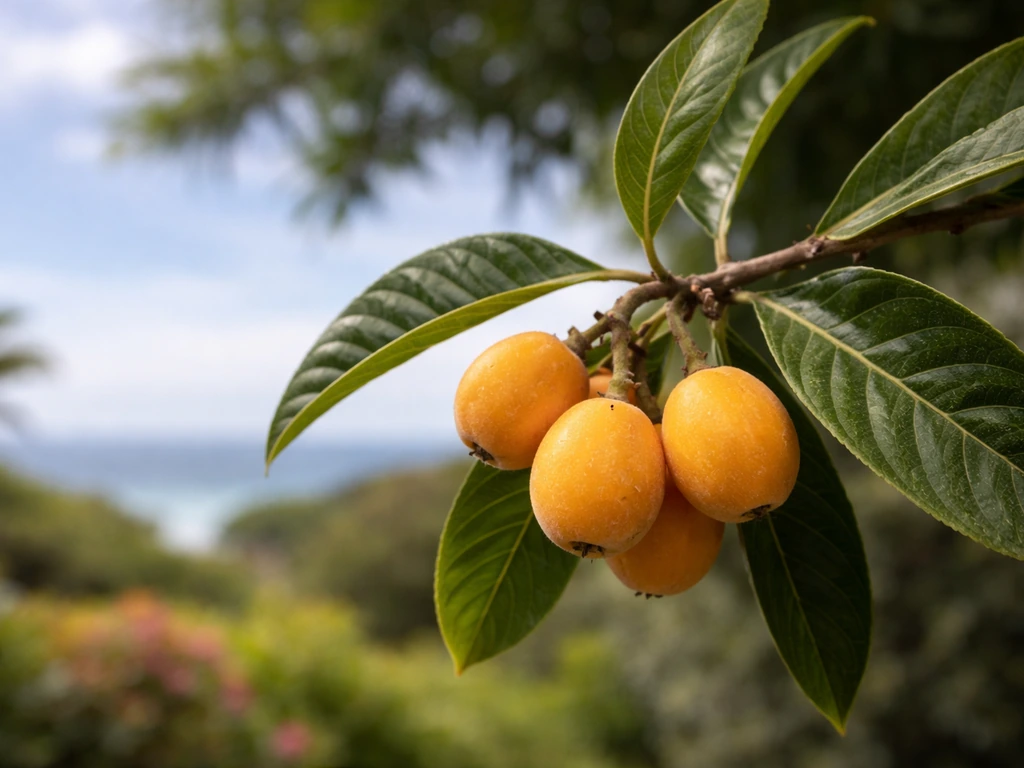
Yes, you can grow a loquat (Eriobotrya japonica) in the UK, and in mild, sheltered spots it can even fruit. But let's be honest about what that means in practice: the tree itself is reasonably tough, surviving down to around -12°C or so, but the flowers and young fruit are far more delicate. Temperatures dropping to just -3°C can wipe out an open flower, and -7°C will kill developing fruitlets outright. Since loquats flower in autumn and winter in the UK, that's exactly when our worst weather tends to arrive. So the tree will probably live. Getting fruit to ripen is the harder, less reliable part.
Can You Grow Loquat in the UK? Step-by-Step Guide
James Hartwell
11 Jul 2026
Is the UK climate actually suitable for loquat?
The RHS rates Eriobotrya japonica as H3, meaning it's considered hardy in coastal and relatively mild parts of the UK, with a survival range down to about -5°C outdoors without protection. That immediately tells you this is not a plant you can grow reliably everywhere. Inland England, the Midlands, most of Wales, and virtually all of Scotland are borderline to outright hostile for an unprotected outdoor loquat.
Where it genuinely makes sense outdoors is the south and south-west coast of England (think Cornwall, Devon, parts of Dorset), sheltered spots in the Channel Islands, and urban microclimates like central London, where the heat island effect bumps up minimum temperatures noticeably. There have been reports of loquat trees surviving and occasionally fruiting in Bristol, and a bank of them in central London shows the tree can persist in the right urban setting. But even in London, the flowers routinely freeze out in late winter, which is the core frustration for anyone hoping to harvest fruit.
If you're in the north of England, Scotland, or anywhere that regularly sees -10°C winters, the realistic goal shifts from 'fruiting tree' to 'interesting conservatory or cool greenhouse specimen'. That's not failure, it's just honest planning.
Which variety to choose and where to find one in the UK
Seedling-grown loquats are a lottery. Named, grafted cultivars give you predictable fruit quality and, crucially, better cold tolerance data to work with. Research into cultivar cold hardiness shows that 'Tanaka' tends to perform better at lower air temperatures than varieties like 'Nagasakiwase', making it the more sensible choice for UK conditions. For fruit quality and proven performance, names like 'Algerie', 'Champagne', 'Advance', and 'Victor' also come up repeatedly in cultivation guides, though availability in the UK can be patchy.
Your best sourcing options are specialist UK fruit nurseries and online retailers who import grafted stock. Todd's Botanics, specialist exotic fruit nurseries, and some of the larger online plant retailers stock grafted loquat trees. Avoid buying an unnamed seedling from a garden centre unless you're purely after the ornamental foliage and aren't bothered about fruit. A grafted tree on a dwarfing rootstock is also ideal if you plan to grow in a container, since it keeps the plant to a manageable size and usually brings it into fruit earlier.
Choosing the right spot and preparing the site
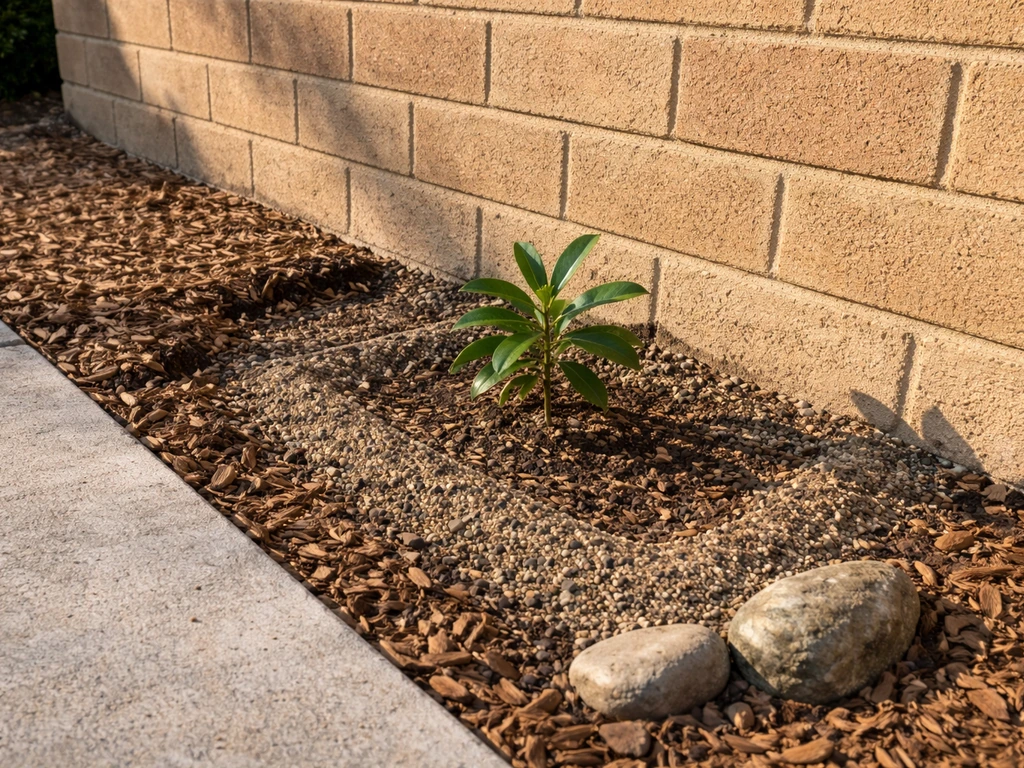
A south or south-west facing wall is not just preferable, it's almost essential for outdoor planting in the UK. The wall absorbs heat during the day and radiates it back at night, creating exactly the kind of microclimate a loquat needs to push through a British winter. RHS Wisley themselves use this principle, noting that frost rolls downhill and collects in low points, while warmer air sits higher up near walls. Plant at the top of any natural slope if you can, not in a frost pocket.
Soil preparation matters too. Loquat needs free-draining conditions and a slightly acidic to neutral soil pH in the range of 6 to 7. Heavy clay that sits wet over winter will rot the roots and weaken the tree's cold resistance. If your soil is heavy, dig in plenty of grit and organic matter before planting, or raise the bed slightly. Plant at the same depth as the tree was in its original pot, firm the backfill well to remove air pockets, and water in thoroughly.
A windbreak or solid fence behind the tree does double duty: it reduces wind chill (which can make mild temperatures feel far colder and desiccate winter foliage) and helps retain the wall's radiated warmth around the plant. If you can give the tree all three, south-facing wall, good drainage, and wind shelter, you've done the hard work of site selection.
Container growing vs planting in open ground
This is the central practical decision for most UK growers, and both approaches have genuine merits depending on your location and how much effort you're willing to put in. If you want to know the best approach for your exact location, including can you grow loofah in the UK, it helps to match the growing method to your winter temperatures.
Growing in a container
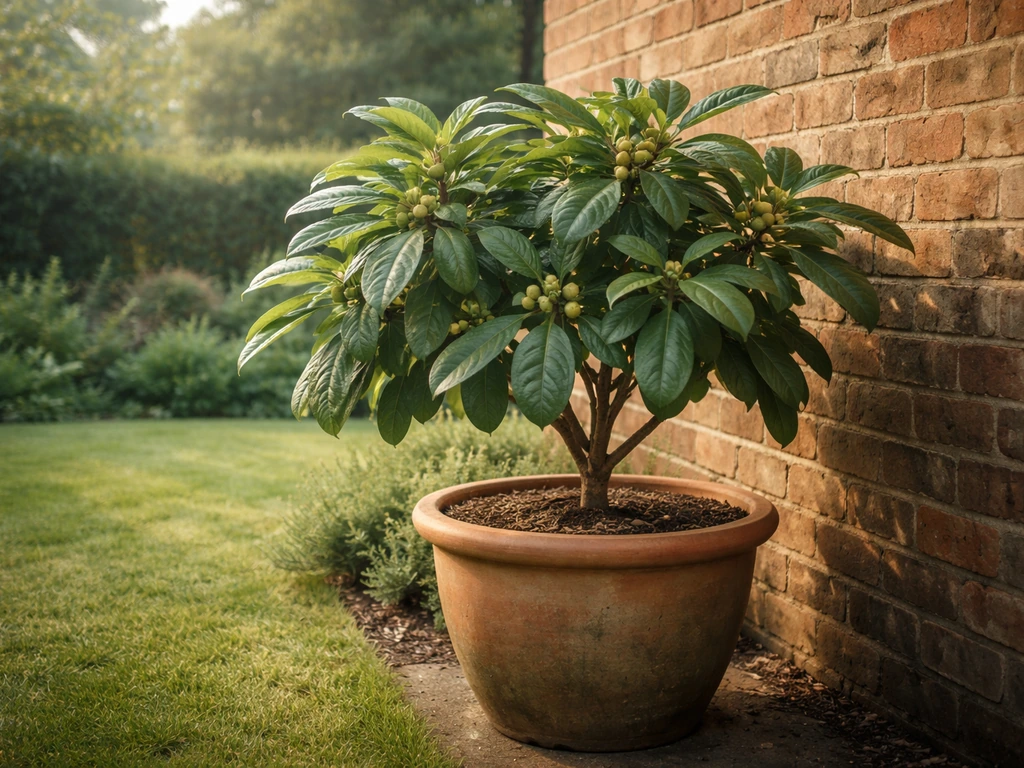
Container growing gives you the single biggest advantage: you can move the tree. Bring it under cover (an unheated greenhouse, a cool conservatory, or even a sheltered porch) during the worst of winter when temperatures are forecast to drop below -3°C, and you protect the flowers and fruit without needing to wrap the whole tree in situ. This flexibility makes containers the sensible choice for anyone in the Midlands and north, or anyone who wants a real shot at fruit rather than just survival.
The RHS recommends potting up gradually rather than starting in a huge pot, and finishing in a container of at least 45cm (18 inches) in diameter. Use a free-draining, loam-based compost such as John Innes No. 3, and add broken terracotta crocks to the base to stop compost washing out of drainage holes. In terracotta pots especially, the compost can dry out fast in summer, so check soil moisture regularly through the growing season as the roots can't search for water the way they would in the ground. Every other year, root-prune lightly and refresh around 30% of the compost to stop the tree becoming pot-bound and stressed.
The downside of containers is that frozen compost can damage or kill roots far more easily than frozen ground would. A container offers almost no insulation compared to the thermal mass of open soil. So even for a tree that could tolerate -12°C in the ground, its roots in a pot can be killed by a sustained frost of -5°C. Either move the pot or insulate it (more on that below).
Planting in open ground
Open-ground planting makes sense in the mildest UK regions, specifically coastal south and south-west England, where winters rarely push below -5°C and where you can provide that south-facing wall. The tree grows bigger, roots more deeply, and becomes more drought-tolerant and self-sufficient over time. The trade-off is that you can't move it when a cold snap threatens, so protecting flowers in situ is the challenge.
| Factor | Container growing | Open ground |
|---|---|---|
| Best for | Midlands, north, anywhere cold | South coast, mild coastal regions |
| Frost protection | Move indoors during cold snaps | Fleece in situ, wall microclimate essential |
| Fruiting potential | Good if overwintered carefully | Good in mild zones, poor elsewhere |
| Tree size | Kept manageable by pot restriction | Can reach 5–8m without pruning |
| Effort level | Higher (watering, repotting, moving) | Lower once established |
| Root cold risk | High (frozen compost kills roots) | Low (soil insulates roots well) |
Getting through winter: protection, pruning, and basic care
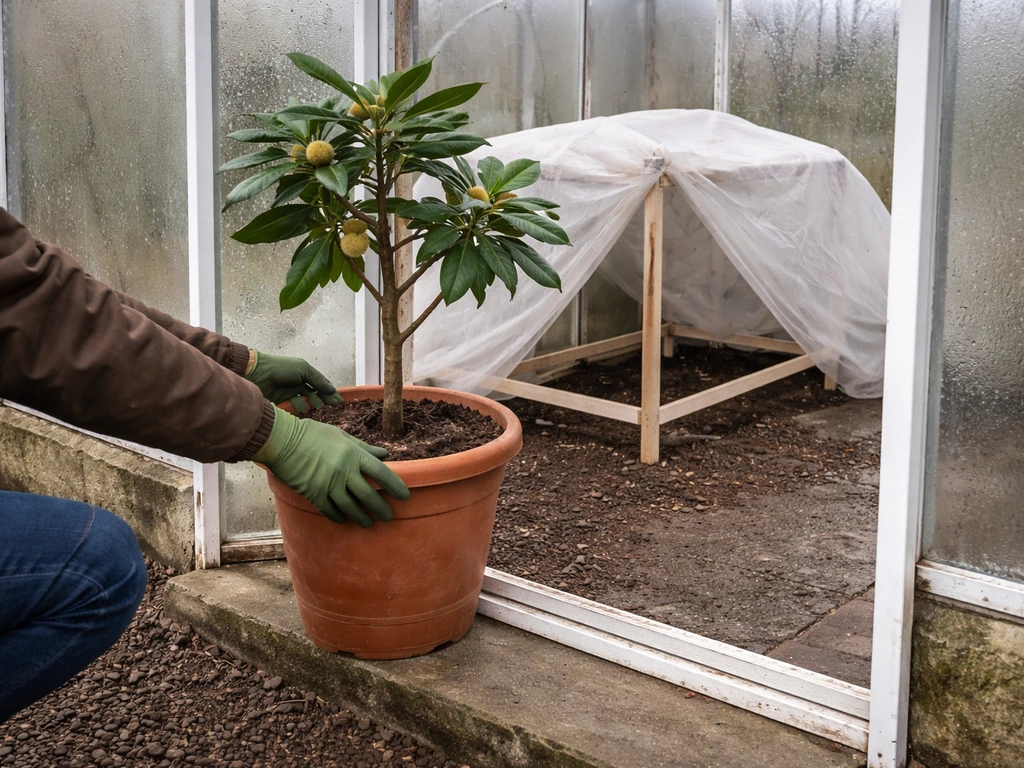
Winter protection
For container plants, the simplest solution is to move the pot into a frost-free or cool greenhouse, conservatory, or sheltered shed when temperatures are forecast to hit -3°C or below. You don't need tropical warmth, just freedom from hard frost. If you can't move the pot, wrap it in bubble wrap or hessian to insulate the root zone, raise it on pot feet or bricks to prevent it sitting in icy water, and push it against a warm wall.
For open-ground trees in flower or carrying young fruit, use horticultural fleece stretched over a frame of canes so the fleece doesn't touch the blossom directly. This matters: fleece that rests on flowers conducts cold straight through to the petals and defeats the purpose. The RHS recommends maintaining this protection for around two weeks after flowering if hard frosts are still possible. Given that loquats flower in autumn and winter in the UK, that could mean protecting the flowers repeatedly from October right through to February.
Watering and feeding
Through the growing season, water moderately and apply a balanced liquid fertiliser monthly. In winter, ease right back and keep the compost or soil just barely moist. Overwatering a loquat in cold, wet winter conditions is one of the fastest ways to lose it. If it's in a pot outdoors, make sure the drainage holes aren't blocked and water can escape freely.
Pruning
Loquats flower on the current season's growth, so heavy pruning at the wrong time can remove potential fruiting wood. The safest approach is to prune lightly after fruiting (or after the fruiting window has passed in spring), removing crossing branches, dead wood, and any shoots that are spoiling the shape. For container plants, more aggressive pruning can be used to keep the tree to a manageable size, but always do this after you've had your chance at fruit for that year.
What to expect from flowering and fruiting in the UK
Here's where you need to be realistic. This is why many people ask whether lantana can grow in the UK, because its suitability depends heavily on how cold your winters get. Loquats flower in autumn and early winter, which is exactly when British weather is most likely to crash below the critical thresholds. Mature flowers are killed by temperatures around -3°C. Flower buds have a slightly wider tolerance, surviving down to around -7°C, but young developing fruit is just as vulnerable as open flowers. Research shows fruitlets turn brown and abort when temperatures drop to -5 to -7°C. In most UK regions, several nights a winter will hit those temperatures without protection.
BBC Gardeners' World puts it plainly: blank" rel="noopener noreferrer">producing fruit is possible in the UK, but getting it to ripen is the difficult step. If you also meant lychees, the UK climate is far tougher for them, so the answer is different from growing loquat can you grow lychees in the uk. A warm, sheltered spot on the south coast, combined with active winter protection during cold snaps, gives you the best chance. Anecdotal reports from Bristol and London suggest fruit set does occasionally happen in UK gardens, so it's not impossible, just inconsistent.
On pollination: most loquats are self-fertile, meaning a single tree can set fruit without a second plant nearby. Research on self-compatible cultivars shows decent fruit and seed set from spontaneous self-pollination. That said, cross-pollination with a second cultivar can improve both the quantity and quality of fruit. Given that loquats flower in winter when bees and other pollinators are largely absent in the UK, hand pollination with a small soft brush is worth doing if you can see open flowers. It takes five minutes and can make a real difference to fruit set.
When things go wrong: UK-specific problems and what to do
Flower and fruit loss to frost
This is by far the most common failure in UK loquat growing. Oleander is much less forgiving than loquat in cool, wet UK winters, so it usually needs a sheltered, frost-protected setup or container growing UK loquat growing. The tree looks fine in spring, perhaps even has done well all winter, but there's no fruit because the flowers were hit by a few nights of -3°C or colder in December or January. The fix is either more aggressive frost protection (fleece tent, moving the pot indoors) or accepting that your climate is not suitable for reliable fruiting and growing the tree for its striking ornamental value instead. The large, leathery, evergreen leaves are genuinely attractive year-round.
Winter dieback on the tree
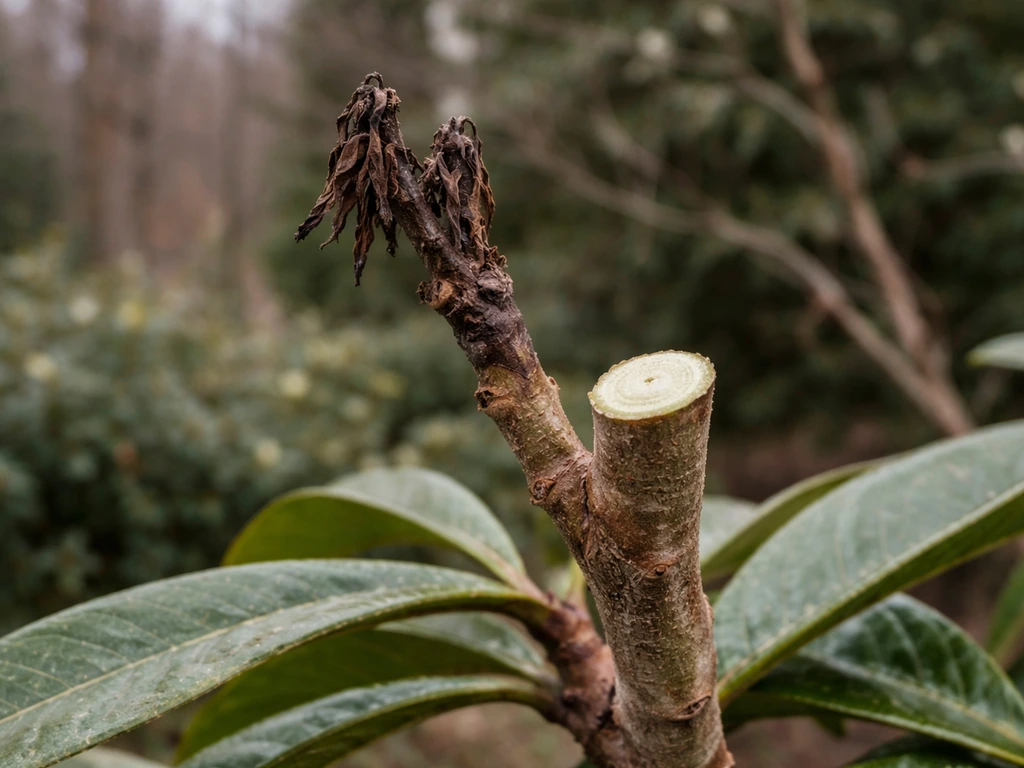
If the tree itself suffers frost damage, branch tips will turn brown and die back. Cut these back to healthy wood in spring once the risk of frost has passed. The tree will usually reshoot from lower down. Repeated severe dieback year after year means the site is too exposed and you need to rethink the location or move the pot to a more sheltered position.
Pot-bound stress and root problems
Container loquats that haven't been repotted or root-pruned for several years will become stressed: growth slows, leaves yellow, and fruiting drops off. Refresh the compost, trim the roots, and pot up if the root ball is completely circling the container. In winter, remember that a waterlogged, frozen pot can damage or kill the root system even if the top growth is fine.
Not enough warmth to ripen fruit
Even if flowers survive the winter, the fruit needs a long enough warm spell to ripen fully, which can be a problem in cooler UK summers. If you are wondering about other sub-tropical flowers, you can also ask can you grow lisianthus in the UK for a warmer-season alternative. If fruitlets form but don't ripen before autumn arrives, a cloche or glass over the fruiting branches can extend the effective season slightly. This is genuinely difficult to solve in the north of England and Scotland without a glasshouse.
Alternatives and honest next steps
If you're in a region where outdoor loquat fruiting is just too unreliable, a heated or frost-free greenhouse gives you full control over winter temperatures and makes fruiting achievable almost anywhere in the UK. If you want a similar ornamental effect in an open garden, consider whether a large-leaved evergreen shrub might suit your plot better. If it's exotic fruiting you're after and you want something more reliably achievable outdoors in mild UK areas, it's worth comparing notes on what else can be pushed in marginal climates, from sumac to other sub-tropical fruit experiments. If you are curious about other marginal crops, you can also look at whether you can grow sumac in the UK can you grow sumac in the uk. Lychees, for context, are significantly harder to grow in the UK than loquat, so if you've managed a loquat to fruit, you're already doing well.
One final note on safety: loquat seeds contain toxic compounds, so keep children and pets away from the fruit stones. The flesh itself is edible and delicious, but the seeds are not for eating.
FAQ
If my loquat tree has survived winter, why did it not fruit the next season?
The tree can tolerate cold while the flowers or young fruitlets do not. A few nights around -3°C to -5°C during the autumn to winter bloom window often eliminate fruit even when leaves look fine. Also check that the tree was not pruned heavily right before the fruiting wood was set.
Do I need to hand-pollinate a loquat in the UK?
You can often rely on self-fertile cultivars, but winter pollination is unreliable because insect activity is low. If you see open flowers, hand pollinating with a small soft brush can improve fruit set, especially in sheltered, urban spots where airflow is limited and flowers may not get much natural movement.
What fleece should I use for protecting flowers, and can it touch the blossoms?
Use horticultural fleece on a frame so it shelters the canopy without direct contact with blossoms. If fleece rests on petals, it can transfer cold straight through and reduce the benefit, defeating the whole purpose of the protection.
Can I grow loquat from seed in the UK, and will it fruit?
Seedlings are a gamble. Fruit quality, timing, and cold tolerance vary widely, so you cannot assume a seed-grown tree will fruit reliably. If you want consistent harvesting chances, choose a named grafted cultivar.
What is the best loquat variety for UK conditions, assuming I want a real chance at fruit?
Cultivars vary in cold performance, 'Tanaka' is often cited as doing better at lower air temperatures than some alternatives. Others you may see recommended include 'Algerie', 'Champagne', 'Advance', and 'Victor', but availability can be inconsistent, so plan sourcing early.
Is a south-facing wall enough if I’m still inland?
A wall helps a lot, but it does not fully cancel inland winter lows. Even with excellent wall microclimates, blossoms can freeze out in frequent cold snaps. If your area regularly drops below the mid-minus ranges, prioritize a container you can move or use an unheated greenhouse during forecasts.
How do I prevent loquat rot or winter dieback in heavy clay?
Aim for consistently free-draining conditions, raised beds if needed, and improve the whole planting zone with grit and organic matter rather than only amending the surface. Also avoid late-season watering, because water trapped in cold soil increases the risk of root damage.
Should I put my loquat in a large container from day one?
No, start smaller and pot up gradually. Large volumes can stay wet too long, which raises the chance of cold, waterlogged compost. Finish at around the recommended size for maturity, and ensure drainage holes are clear.
If my pot freezes, is wrapping it enough to save the roots?
Wrapping helps, but root protection is mostly about stopping prolonged root-zone freezing and waterlogging. Raise the pot on pot feet to prevent icy pooling, insulate around the root mass, and if temperatures are forecast to drop hard, move the pot into a frost-free or cool greenhouse when possible.
My loquat is rootbound and seems stressed, what should I do and when?
In spring or early growing season, refresh the compost, lightly trim roots, and repot only when the root ball is circling or clearly compacted. Do not disturb roots in deep winter, and remember that an overwatered frozen pot in winter can cause damage even if the top growth looks okay.
When is the safest time to prune a UK loquat?
Prune lightly after the fruiting window has passed, and avoid heavy pruning right before you expect the next cycle of fruiting wood. If you prune too aggressively at the wrong time, you can remove potential fruiting branches.
Are loquat stones safe around children and pets?
No. The seeds contain toxic compounds, so keep children and pets away from the stones, even though the flesh is edible. A common mistake is leaving pits within reach after eating or snacking.
Next Article
Will Lantana Grow in the UK? How to Succeed in Pots
Lantana in the UK explained: grow it in pots, beat frost, boost flowering, and overwinter to prevent die-back.