Yes, you can grow loofah in the UK, but you need to be realistic about what that takes. Loofah (Luffa) is a tropical vining crop that needs a long, warm season of at least 90 to 130 days of genuine heat to produce usable fibrous sponges. The UK's growing season is borderline at best, which means your chances of success depend almost entirely on growing under cover in a polytunnel or large greenhouse, starting seeds early indoors, and doing everything you can to maximise warmth from day one. The UK's growing season is borderline at best, which means your chances of success depend almost entirely on growing under cover in a polytunnel or large greenhouse, starting seeds early indoors, and doing everything you can to maximise warmth from day one. In a similar way, if you're wondering can oleander grow in uk, you will also need strong protection from cold and wind. Outdoors on a British summer? You'll get a vine, probably some flowers, and possibly nothing else. But with the right setup, it absolutely works.
Can You Grow Loofah in the UK? How to Grow From Seed
Can you realistically grow loofah in the UK?
The honest answer is: yes, but only with active heat management. Luffa is native to tropical and subtropical regions, and it behaves accordingly. It needs soil temperatures consistently at or above 21°C (70°F) just to grow properly, and it wants 90 to 110 days of warm conditions to develop fruit to the fibrous, sponge-ready stage. Compare that to the average UK frost-free window (roughly May to October at best, and often shorter in Scotland or the Midlands), and you can see the problem immediately.
The South Coast, parts of the Southwest, and sheltered spots in East Anglia give you the longest warm windows, and a well-managed polytunnel in these areas can genuinely produce harvestable sponges. In Scotland or the North, you're fighting harder and you'll need a heated greenhouse or a very warm conservatory to have any realistic chance. Treating the UK as one climate zone here would be misleading: what works in Cornwall in a polytunnel is not the same experiment as trying the same thing in Inverness.
Garden Organic's UK guidance is clear that for sponge production you generally need a protected growing setup. This isn't just a recommendation for nervous beginners: it's the practical reality of our climate. Outside, UK summers rarely stay warm enough for long enough, and cold nights in September will kill off a fruit that needs several more weeks to mature. Go in expecting to grow this as a greenhouse or polytunnel crop and you'll be set up for success.
Choosing the right loofah
There are two main species you'll encounter when shopping for seeds. Luffa aegyptiaca (also sold as sponge gourd) is the primary one grown for fibrous sponges and is the species most commonly referenced in crop guides. The RHS also lists Luffa cylindrica, known as the dish-cloth gourd or loofah, which is essentially the same plant under an older synonym. For practical purposes, if you're buying seeds labelled as loofah, sponge gourd, or luffa, you're almost certainly getting the right thing. What matters more than the exact species name on the packet is where you buy the seed.
Source seeds from a reputable supplier who sells fresh stock. Old loofah seeds lose viability quickly, and germination rates drop sharply. Aim for seeds from the current or previous season where possible. UK-based seed suppliers occasionally stock luffa, and specialist gourd or unusual vegetable seed companies are your best bet. Buying from a supplier who has actual stock in hand (rather than drop-shipping from overseas) means your seeds arrive in better condition and you can get growing on time.
Sowing loofah seeds: get the timing right
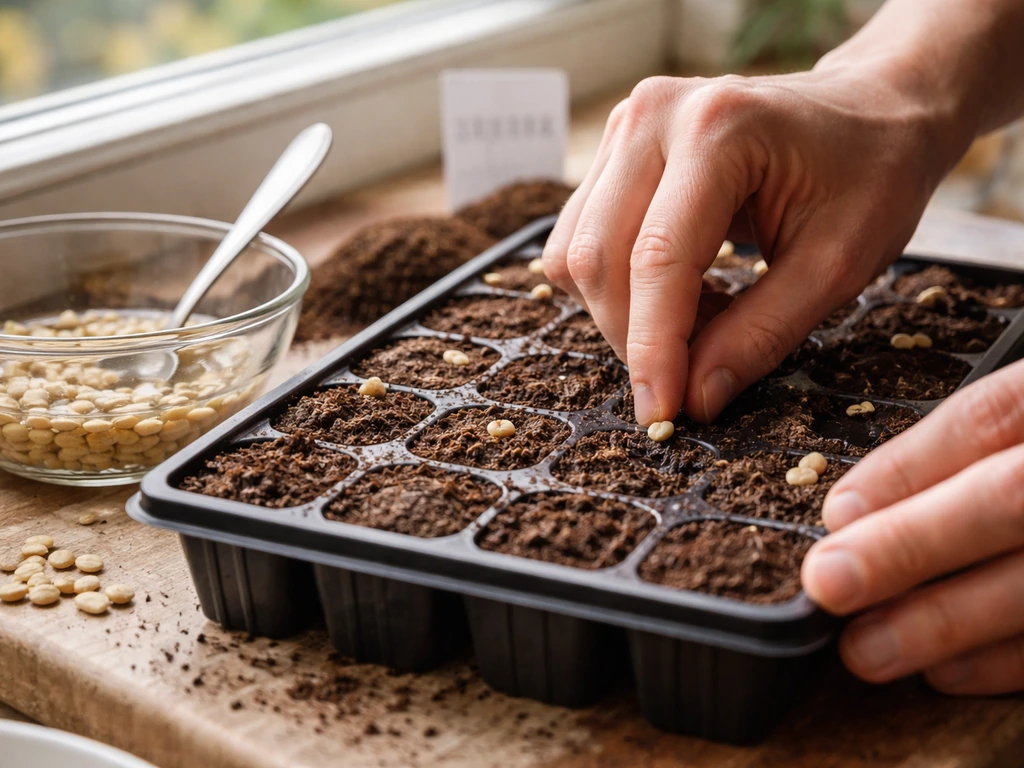
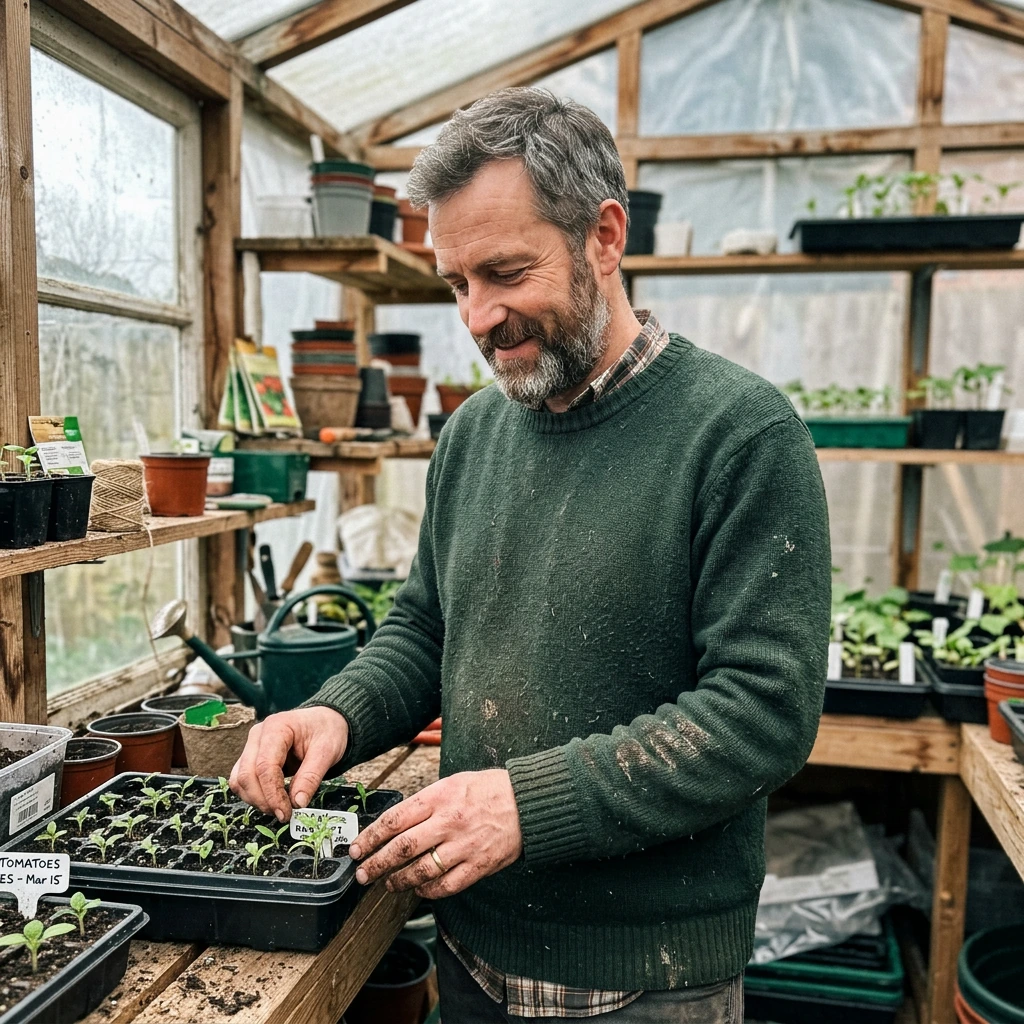
Timing is the single most critical factor for UK loofah growing. You need to start seeds early enough to give the plants maximum growing time, but you can't rush them outside before the heat is there. In the UK, aim to sow seeds indoors in late March to early April. This gives seedlings 6 to 8 weeks of indoor growing before they move into a greenhouse or polytunnel in May.
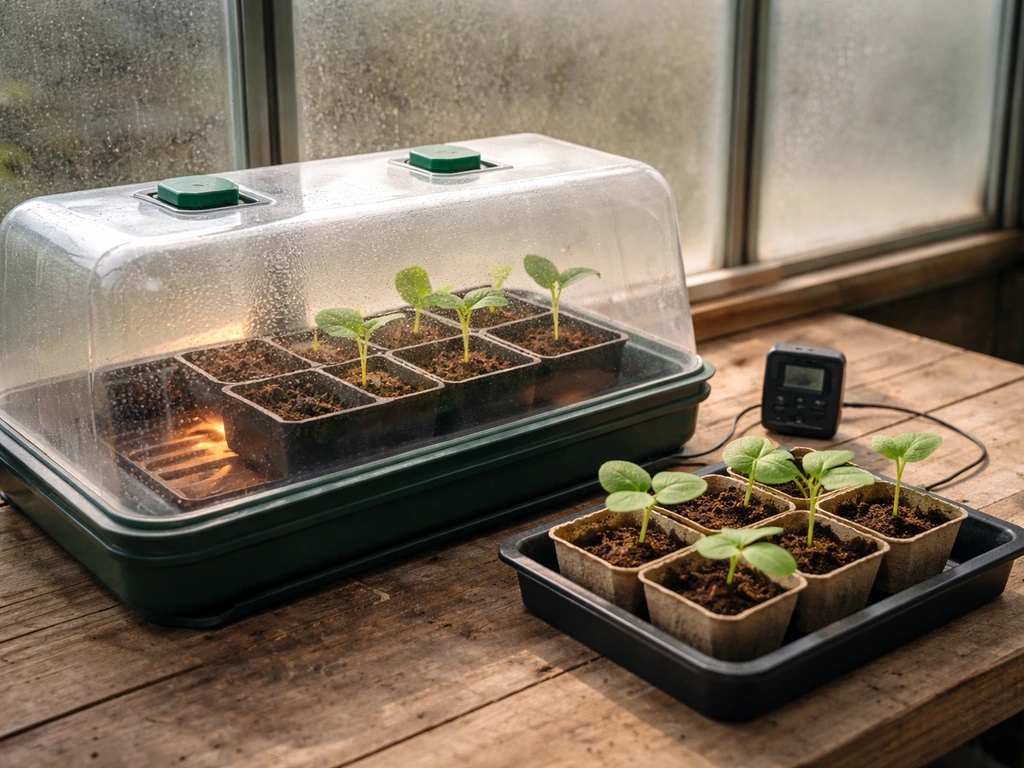
Before sowing, blank" rel="noopener noreferrer">soak seeds in warm water for 24 hours. This softens the hard seed coat and dramatically improves germination speed and rate. blank" rel="noopener noreferrer">After soaking, sow one seed per small pot (8–10cm works well) in a good quality seed-starting compost, about 2.5cm (1 inch) deep. Then comes the critical part: heat. Loofah seeds need soil temperatures of 24–30°C (75–85°F) to germinate reliably. A heated propagator or a seedling heat mat under the pots is not optional here, it's essential. On a warm windowsill alone, germination will be patchy and slow.
With consistent heat and moisture (not waterlogged, just evenly moist), you should see germination within 7 to 14 days. If nothing has appeared after 3 weeks with good heat, the seeds were likely too old or too cold. Keep the seedlings in the warmest, brightest spot you have: a south-facing window with the heat mat still on, or a heated propagator under grow lights if you have them. These are subtropical plants and they sulk the moment temperatures dip.
Temperature, light, feeding, and watering
Once germinated, keep seedlings above 18°C at all times. They'll tolerate brief dips, but sustained cold stunts growth badly and sets the whole season back. Ideally, keep them at 20–25°C during the day and no lower than 15°C at night. South-facing windowsills work but can be too cold on cloudy April days, so check temperatures actively rather than assuming. A heated greenhouse or conservatory is genuinely better at this stage.
Light is almost as important as heat. Loofah is a sun-hungry tropical plant and it will stretch and weaken in low light. If you're growing on a windowsill, rotate pots daily so plants don't lean. Under proper grow lights or in a bright greenhouse, growth is noticeably faster and sturdier. Aim for as much direct light as possible, especially in April and May when UK days are still building.
For watering, keep the compost consistently moist but never waterlogged. These plants hate sitting in cold wet soil, which leads to root rot. Water with room-temperature water (cold tap water can shock the roots) and let the surface dry slightly between waterings. Once plants are actively vining and in flower, watering needs increase significantly, especially in a hot polytunnel in July and August where pots can dry out fast.
Feeding matters once the plants start flowering. Garden Organic recommends weekly feeding with comfrey liquid when the first small yellow flowers appear. Comfrey is high in potassium, which supports flowering and fruiting rather than pushing leafy growth. A liquid seaweed feed or a high-potash tomato feed works equally well. Before flowering, a balanced feed every two weeks is plenty. Don't over-feed with nitrogen or you'll get a spectacular vine with very little fruit.
Transplanting and training the vine
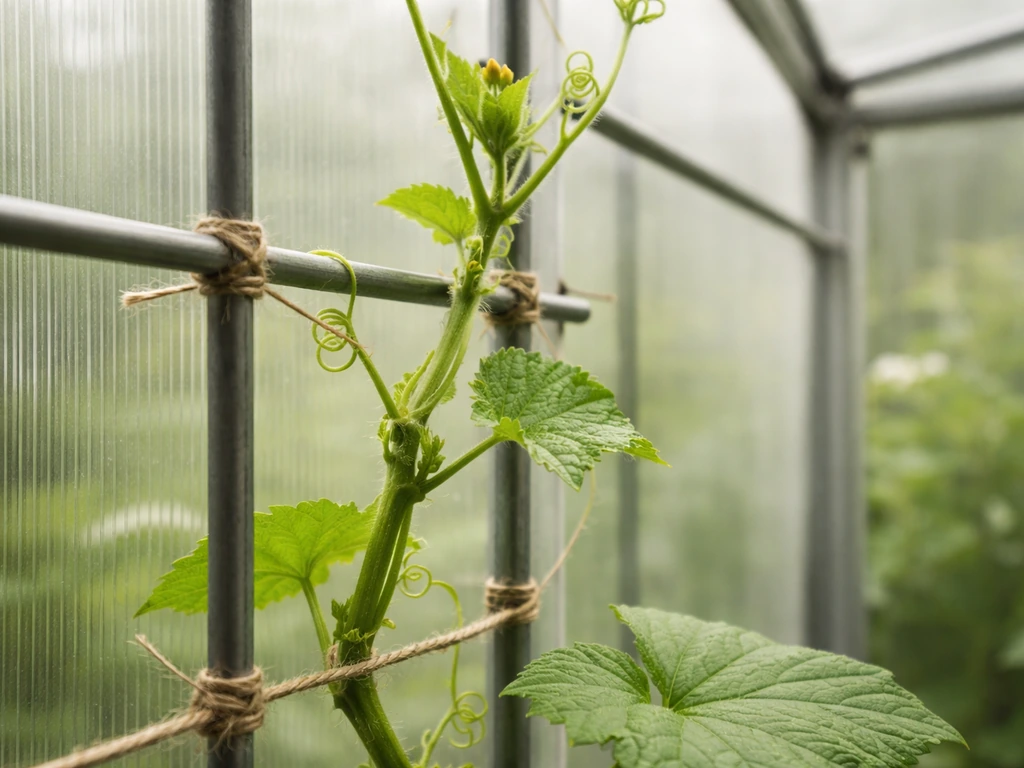
Move plants into their final growing position once the greenhouse or polytunnel is consistently warm, typically from mid-May in the South, late May or early June in the Midlands and North. Don't rush this. A cold check at transplanting time wastes weeks of growing season. Soil temperature should be at least 18–21°C before transplanting.
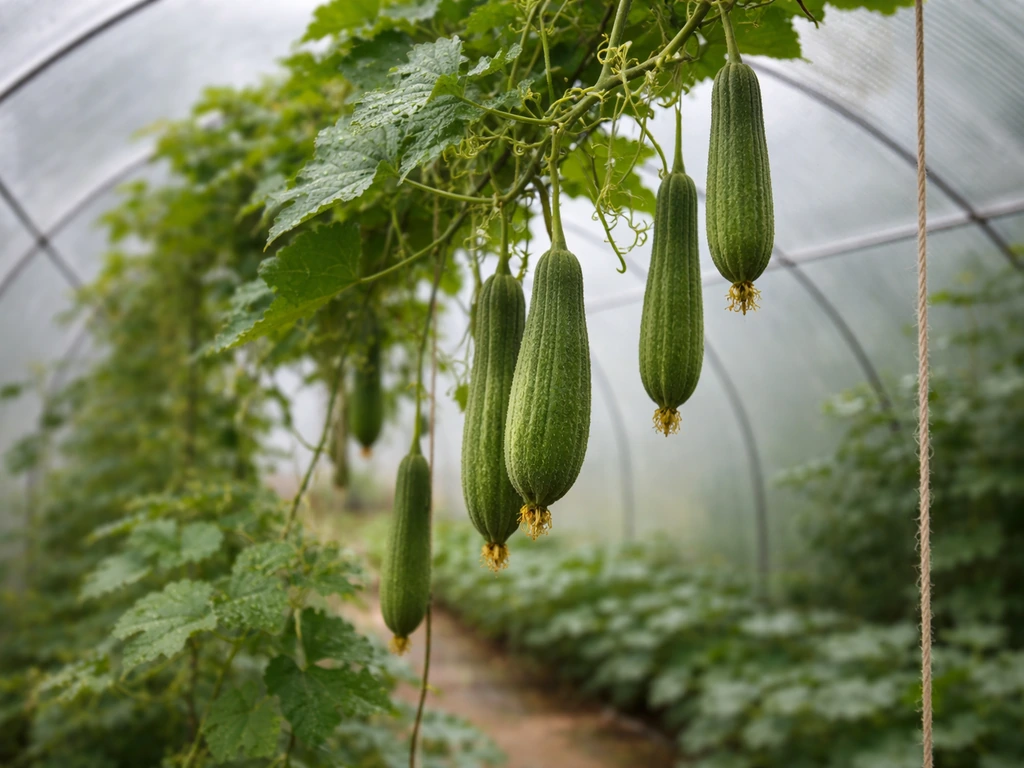
Loofah is a vigorous climber and the vines will easily reach 3 to 5 metres in a season. They need a proper structure to climb: a trellis, wire frame, or string system running vertically up the inside of your greenhouse works well. Horizontal growing wastes vertical space and makes fruit harder to spot and harvest. Attach growing tips loosely to the frame as the plant establishes, and it will quickly start to self-cling using its tendrils.
If you're growing in the ground rather than large containers, space plants at least 60cm to 1 metre apart. They're heavy feeders and competitive, so don't crowd them. In containers, choose the largest pot you can manage (at least 30–40 litres) and expect to water more frequently. For pollination purposes, growing at least two or three plants close together is strongly recommended, as this improves fruit set.
Getting the flowers to set fruit
Luffa produces separate male and female flowers on the same plant. Male flowers appear first, in clusters along a raceme (a stem with several flowers). Female flowers come later and appear singly at leaf axils. You can identify female flowers easily because there's a tiny swollen proto-fruit at the base of the flower before it even opens. Male flowers have a simple stem with no swelling.
In a greenhouse or polytunnel, you won't have the natural insect traffic that outdoor crops rely on. This means you need to think about pollination actively. The simplest method is hand pollination: in the morning when flowers are freshly open, take a small paintbrush or just snap off a male flower, peel back its petals, and touch the pollen-covered centre directly onto the centre of an open female flower. Do this on dry days when the pollen is not damp, and ideally in the morning when pollen viability is highest.
If you have side vents and bees visiting on warm days, you may get natural pollination without intervening. But don't rely on it in a closed structure. Growing several plants close together improves the odds considerably, since you have more male flowers available at any given time. You don't need to hand-pollinate every single female blossom, but hitting 3 or 4 per plant in a good flowering week will give you enough fruit to work with.
Cold snaps, heavy rain, and overcast days all reduce fruit set even when flowers are present. If you're having a poor UK July, don't be disheartened. Keep the greenhouse warm, keep hand pollinating on any decent day, and the fruit will start to form when conditions improve.
Harvesting and curing your loofahs
This is where patience separates success from failure. From fruit set to harvest-ready takes roughly 90 to 110 days in warm conditions, which is why sowing early and growing warm matters so much. In UK conditions under glass, you're aiming for fruits set in June or July to be ready by September or October.
For sponge use specifically, you want to harvest at the right moment. Garden Organic recommends waiting until the skin is hard and just turning pale. At this stage, the outer skin separates from the fibre inside and you can feel a loosening when you squeeze the fruit lightly. Leave it too long and the skin becomes brittle and breaks off in chunks during peeling rather than coming off cleanly. If the fruit has turned fully brown and crunchy on the vine, it's past the ideal window.
Once harvested, the curing process is straightforward but takes time. Soak the fruit in cold water for around a week. The remaining flesh rots away during this time and can then be squeezed and washed out completely. After soaking, rinse the fibre under running water, shake out any remaining seeds (save these for next year), and leave the sponge to dry thoroughly in a warm spot. This can take another week or two. Once fully dried, the sponge is ready to use. The finished loofah should feel light, firm, and completely dry inside, with no mould risk.
UK problems and how to fix them
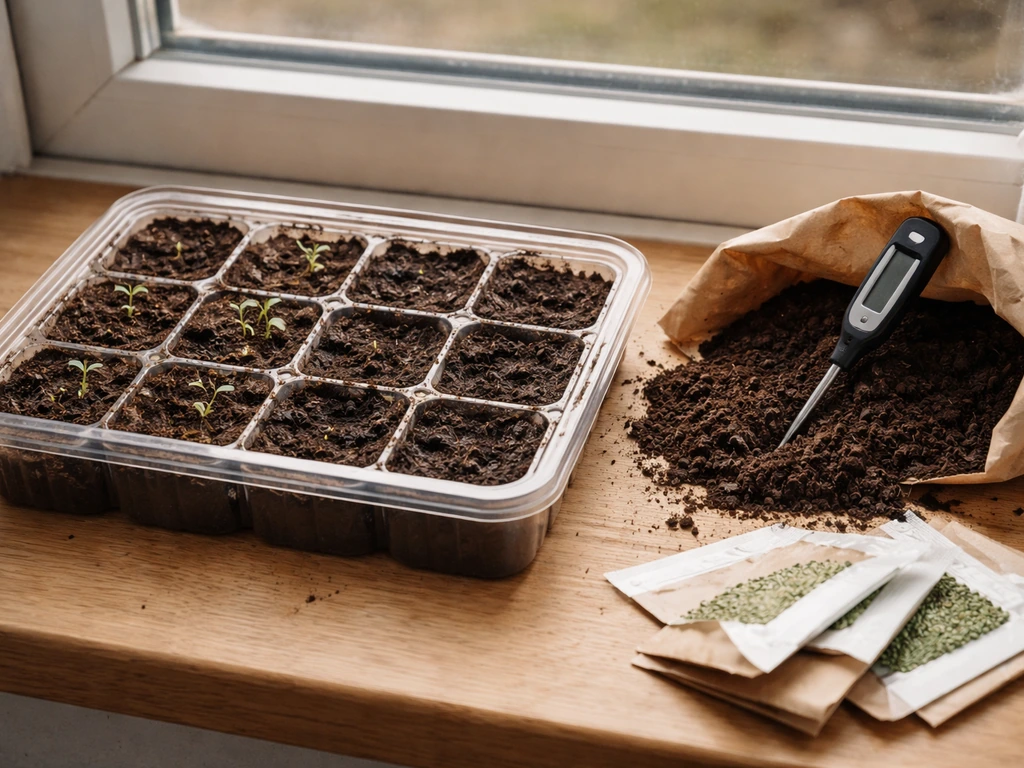
If you're hitting problems mid-season, here's a quick guide to what's likely going wrong and what to do about it.
| Problem | Likely cause | What to do |
|---|---|---|
| Seeds not germinating | Soil too cold or seeds too old | Check soil temp is 24–30°C with a thermometer; try fresh seeds next time |
| Seedlings growing slowly or going yellow | Cold temperatures or low light | Move to a warmer, brighter spot; check nighttime temps aren't dipping below 15°C |
| Vine is lush but no fruit forming | Too much nitrogen, poor pollination, or too cold | Switch to high-potash feed; hand-pollinate morning flowers; check greenhouse temps |
| Flowers dropping without fruit setting | Cold nights or lack of pollination | Hand-pollinate; insulate greenhouse overnight if temps drop below 15°C |
| Fruit forming but not maturing before autumn | Season started too late or not warm enough | Sow earlier next year (late March); maximise greenhouse heat in September |
| Cold damage or plant collapse | Frost or sudden temperature drop | Never grow outside unprotected; use fleece inside the greenhouse on cold nights in May or September |
The most common UK failure pattern is starting seeds too late (May or June) and then running out of warm season before the fruits mature. If you've done that this year, use the plant as a learning experience, note how the vines grow and flower, and commit to a late March sowing next season. With that extra month of growing time and a warm protected environment, the difference in results is significant.
Loofah is genuinely one of the more challenging exotic crops to grow in the UK, sitting in similar territory to lychees or loquats where our climate is simply on the wrong side of the line without active intervention. If you’re wondering can you grow sumac in the UK, the main factors are finding the right hardy variety and giving it a bright, well-drained spot. If you're also wondering can you grow loquat in uk, the same idea applies: without careful protection and warmth, success is unlikely loquats. But unlike truly tropical fruit trees, loofah is an annual, which means each growing season is a fresh attempt with no long-term plant investment at risk. Get the heat, the timing, and the pollination right, and you will get sponges. It just takes a properly warm setup and a commitment to starting early. You can get similar results with lisianthus in the UK, but it also needs the right timing and protection from cold wet weather can you grow lisianthus in the uk.
FAQ
Can you grow loofah in the UK outdoors, without a polytunnel or greenhouse?
Yes, but only if you can maintain warmth at the root zone and protect vines from damp cold. In the UK, “outdoors” usually means you will get flowering and possibly small fruit, but late-summer cold and September nights prevent fibre development. A practical alternative is to grow in a polytunnel, and if you do containers, move pots back under cover at the first sign of consistently cool nights.
How do you know if your loofah seeds are still viable in the UK?
Use fresh-looking seeds and treat viability as the biggest risk. If seeds are older, they may still germinate eventually, but uneven emergence is common, and late plants will miss the warm window for sponge-ready fruit. If you are unsure, run a small “test sow” by soaking 5 to 10 seeds and trying them on your heat mat before committing to a full tray.
Is it okay to transplant loofah once the days are warm but nights are still cool?
Don’t transplant just because air temperatures look mild. What matters is soil temperature in the growing position. If the greenhouse or polytunnel warms the air but beds or pots stay cool, roots stall and fruit set suffers. Use a soil thermometer if you have one, and only move plants when the base heat is consistently around 18 to 21°C.
Can you start loofah earlier than late March in the UK to improve your odds?
Yes, and it can reduce transplant shock, but only if the propagator and lighting keep seedlings sturdy. Loofah sulks in cool, dim conditions, so if you try to “slow it down” with less heat, you usually trade early weakness for later failure. Keep seedlings above roughly 20°C by day under glass and ensure bright light, not just a sunny window.
What causes stretched, weak loofah seedlings in UK conditions?
If you see long, weak stems and leaves that look pale, it is usually a light issue, not a watering issue. Rotate pots daily, and if you are relying on a windowsill, consider grow lights because cloudy April days can keep light too low even when temperatures are fine. Stretch also happens when heat is present but seedlings are not getting enough usable daylight.
My loofah seeds have not sprouted after two weeks, what should I check first?
If your seedlings do not emerge, the most common causes are cold soil and old seed. Make sure the pots actually sit on the heat source, not just near it, and check soil temperature rather than room temperature. If you still have no germination after about 3 weeks with adequate warmth, assume the batch is unlikely to perform and replace before spending more time.
How many female flowers should I hand-pollinate, and when is the best time of day?
Yes, but only once plants are warm and flowering, and preferably in a dry, bright part of the greenhouse. Damp pollen can reduce success, and hand pollinating in cold conditions delays fruit set. Aim for the morning when flowers are fresh, and you can repeat on the next decent day rather than expecting one attempt to do all the work.
What watering mistake most often ruins loofah plants under UK glass?
Root rot risk is high when compost stays cold and waterlogged, especially under benches or in shaded corners of a polytunnel. Water at the base only, use well-draining compost, and let the top layer dry slightly before watering again. If plants are wilting while the compost is wet, that often points to poor roots rather than underwatering.
How do I know the exact time to harvest loofah for sponges in the UK?
If you want sponge-ready fruit, timing is everything. Harvest too early and the fibre may not develop, harvest too late and the skin turns brittle and peels in chunks. Target fruit when the skin is hard and has started to pale, then peel cleanly. If they turn fully brown and crunchy on the vine, they are usually past the best window for clean separation.
What is the proper curing and drying routine to avoid mould on loofah sponges?
Loofah curing is not fast, and skipping the soak usually leaves residue and makes fibre smellier. Soak until the remaining flesh has fully rotted away, then rinse, shake out seeds, and dry in warm, airy conditions. If you see mould inside before drying is complete, it often means the fibre is not fully dried, so extend drying time before storing.
Can I grow loofah in the UK with only one plant, or do I need multiple?
You can, but you will often get fewer fruits because only the warmest, most protected flowers set reliably. If you have only one plant, you may still get some fruit, but growing at least two to three plants increases the number of male flowers available at the same time. For small spaces, consider hand pollinating more heavily to compensate.
Can You Grow Lychees in the UK? Practical Guide
Yes, but only with warm, frost-free conditions: grow lychees in containers with greenhouse and care for flowering.