Yes, you can grow lychees in the UK, but fruiting them is genuinely difficult and requires a specific setup. Most UK growers will end up with an attractive container tree that stays indoors or in a greenhouse for much of the year. Getting actual fruit is possible but demands patience, the right microclimate, and a willingness to manage the plant carefully through every season. If your goal is simply to grow the tree as a novelty or houseplant, it's very achievable. If you want a bowl of homegrown lychees, that's a longer game and you need to go in with honest expectations.
Can You Grow Lychees in the UK? Practical Guide
James Hartwell
2 May 2026
What the UK climate means for lychees
Lychee (Litchi chinensis) is a subtropical tree from southern China, and it has fairly precise climate needs that the UK only partially meets. It wants frost-free winters, but with enough cool weather to trigger flowering. It wants long, hot, humid summers to swell fruit. Britain delivers cool winters, but they're often too cold and damp rather than the dry, mild cool that lychee actually prefers.
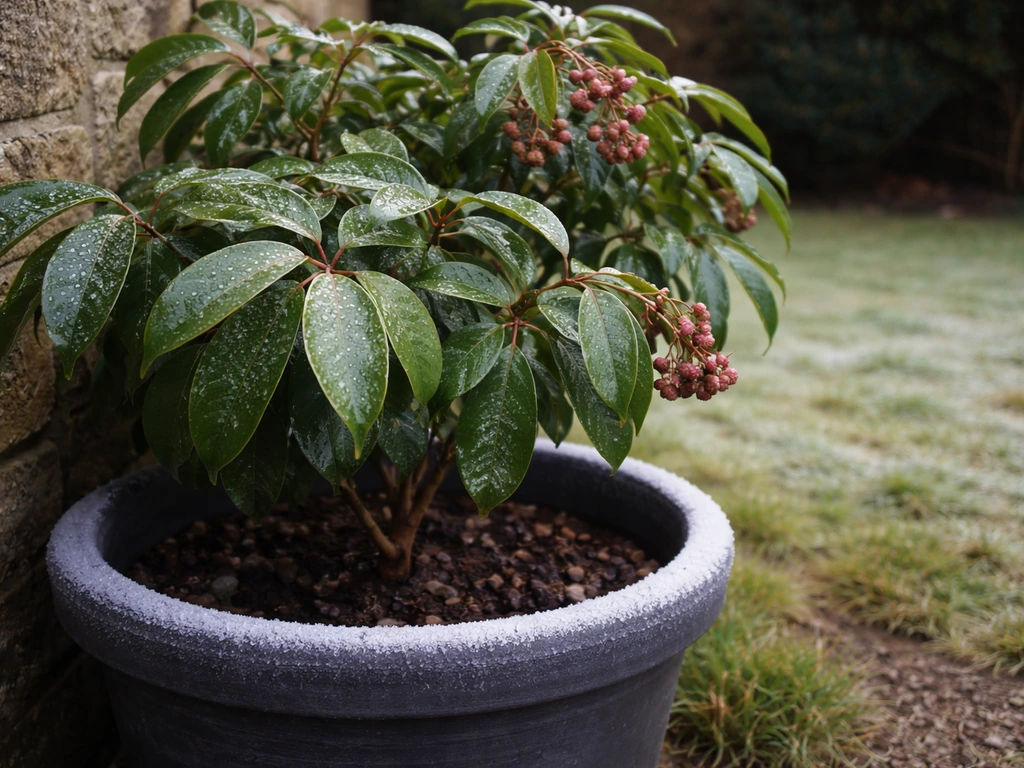
The frost issue is the main hurdle. Lychee trees can handle brief dips near freezing but take serious damage below around -3°C to -4°C, and young trees or any open flowers are killed at those temperatures. Historical records from Florida show that trees about 6 feet tall were killed outright at around -3.3°C. In most of the UK, especially north of the Midlands, winter temperatures regularly fall well below that without any protection. Even on the south coast of England, where winters are mildest, a cold snap can cause damage. Scotland, northern England, and exposed upland areas are essentially non-starters for any outdoor attempt.
The other climate issue is summer heat. Lychees need sustained warmth to ripen fruit properly, and UK summers, even good ones in the South East, rarely provide the consistent temperatures that subtropical fruiting requires. You can push the conditions with the right setup, but you're always working against the baseline. That said, the UK climate does provide one thing lychee actually needs: a cool winter period. Lychee requires roughly 100 to 200 hours of chilling below 20°C mean daily temperature to set fruit, and more specifically around 100 to 200 hours between 0°C and 7.2°C. Britain reliably delivers that. The trick is providing those cool hours without letting temperatures drop into killing frost territory.
The setup that actually works: containers, glass, and microclimates
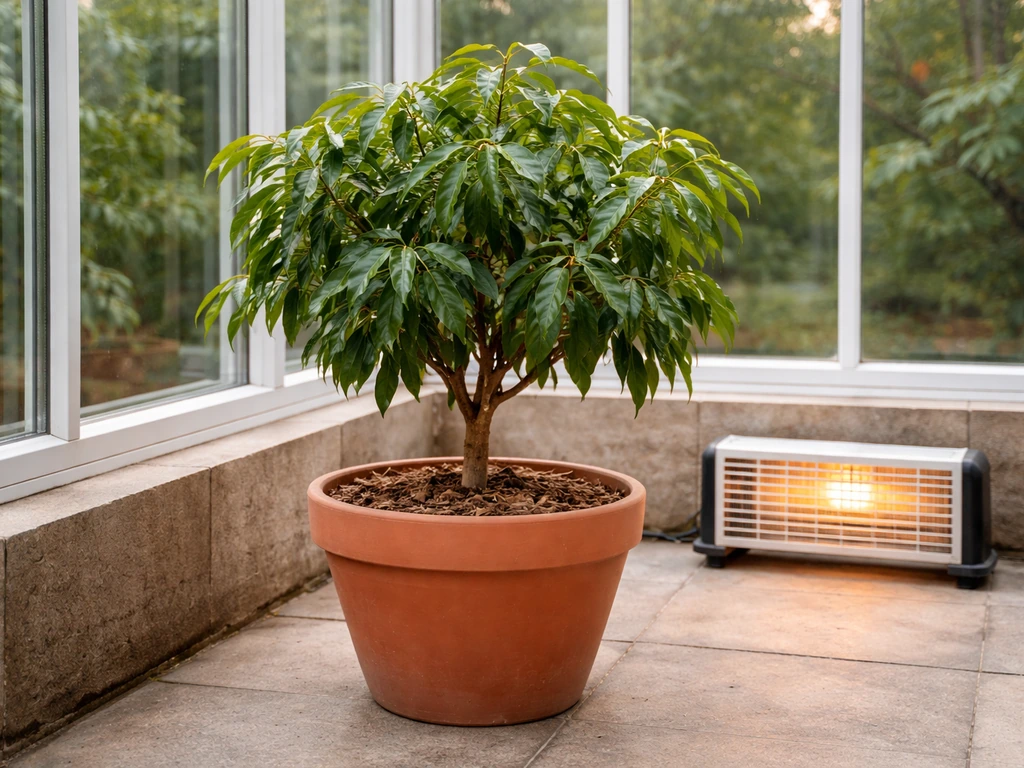
The only realistic way to grow lychee in the UK is in a container, with access to a frost-free protected environment for at least five to six months of the year. That means a heated greenhouse, a polytunnel with supplemental heat, a large conservatory, or a bright south-facing room that doesn't drop below around 3°C to 5°C in winter. A cold greenhouse alone, where temperatures track close to outside in January and February, isn't safe enough.
Container growing is actually not a disadvantage here. Lychees grown in containers tend to fruit earlier than open-ground trees because the root restriction can encourage flowering. Use a large pot, at least 30 to 40 litres once the tree is established, in a free-draining ericaceous or slightly acidic compost mix (lychees prefer pH 5.5 to 6.5). A loam-based compost like John Innes No. 3 mixed with perlite works well and gives stability to what will become a sizeable, top-heavy plant.
During summer, from late May through to September in a good year, move the container outside onto a warm, sheltered patio, ideally south or southwest facing and backed by a wall that absorbs heat. This extra warmth matters. In mild parts of the UK, particularly the South West, Channel Islands, and sheltered spots along the south coast, outdoor summer placement genuinely helps growth and can encourage better flower initiation the following year. Bring the tree back under glass before the first frosts in October.
Microclimate matters enormously. A grower in a sheltered urban garden in Bristol or a south-facing walled courtyard in Kent is in a fundamentally different situation from someone on an exposed site in Yorkshire. If you can identify and exploit your warmest microclimate, you'll meaningfully improve your chances.
Varieties, sourcing, and the pollination question
Seeds versus grafted plants
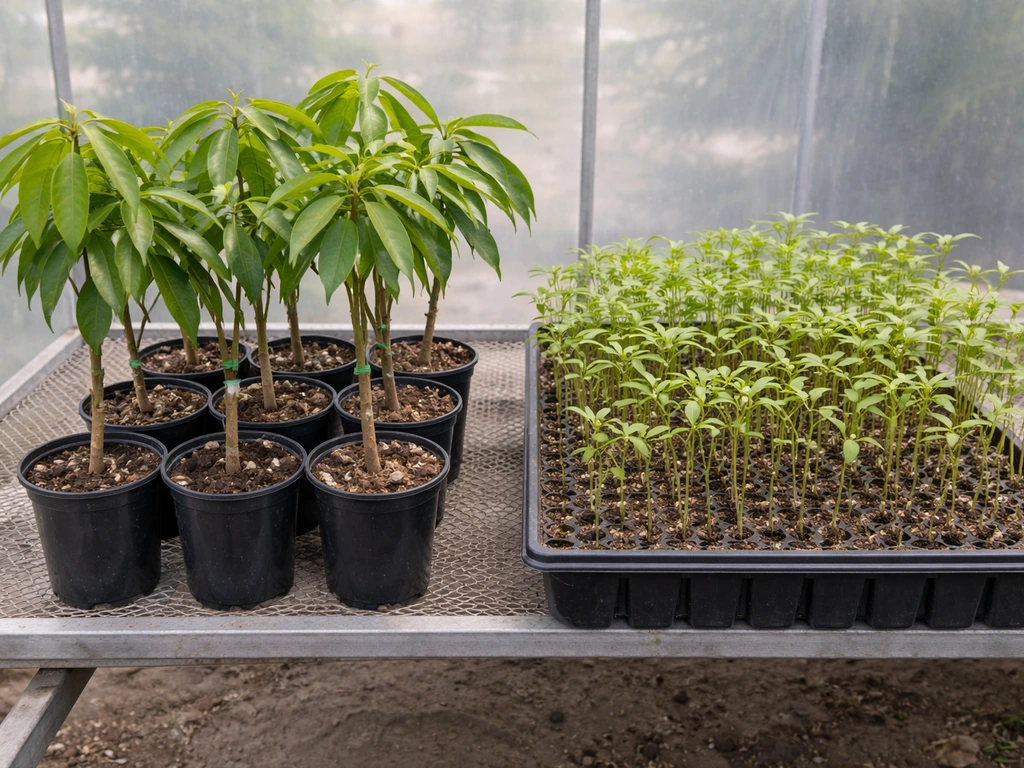
Start with a grafted plant if you can find one, not a seed-grown tree. Lychee seeds germinate readily and it's tempting to pop a seed from a supermarket fruit, but seed-grown trees can take 10 to 25 years to fruit, and even then the fruit quality is unpredictable. Grafted trees from known varieties typically fruit within 3 to 5 years under good conditions. That's still a long wait, but it's a realistic one.
Sourcing is genuinely tricky in the UK. Specialist tropical fruit nurseries and a handful of online suppliers do stock grafted lychee plants, but availability is patchy. Check specialist UK tropical plant nurseries and import suppliers who deal in subtropical fruit trees. Avoid buying unnamed seedlings marketed vaguely as 'lychee tree' at garden centres, as these are almost always seed-grown and not worth the long wait.
Which varieties to consider
In the UK context, variety choice is limited by what you can actually source, but if you have options, look for varieties with lower heat requirements and a proven track record in subtropical rather than strictly tropical climates. 'Brewster', 'Mauritius', and 'Sweet Cliff' are among the more commonly mentioned varieties for container and marginal cultivation. 'Mauritius' is particularly noted for being a reliable fruiter under constrained conditions. Yu He Bao is a variety that has been studied for its chilling and flowering responses, and research suggests its floral induction requires substantial accumulated chill hours, so varieties suited to cooler winters may actually perform better in a UK-managed environment.
Pollination in the UK
Lychee flowers are small and numerous, and the tree produces both male and female flowers on the same panicle, though not always simultaneously. They are pollinated primarily by insects, especially bees and flies. If your tree is flowering indoors or under glass in early spring, which is the most likely scenario in the UK, pollination can be a problem because insect activity is low. Hand pollination with a soft paintbrush, gently transferring pollen between flowers within the same panicle and across panicles, significantly improves fruit set. On warm days when the tree is in flower, opening windows or greenhouse vents to let insects in helps. Having two trees improves pollination odds slightly, though a single lychee can self-pollinate.
Looking after your lychee through the year
Temperature and overwintering
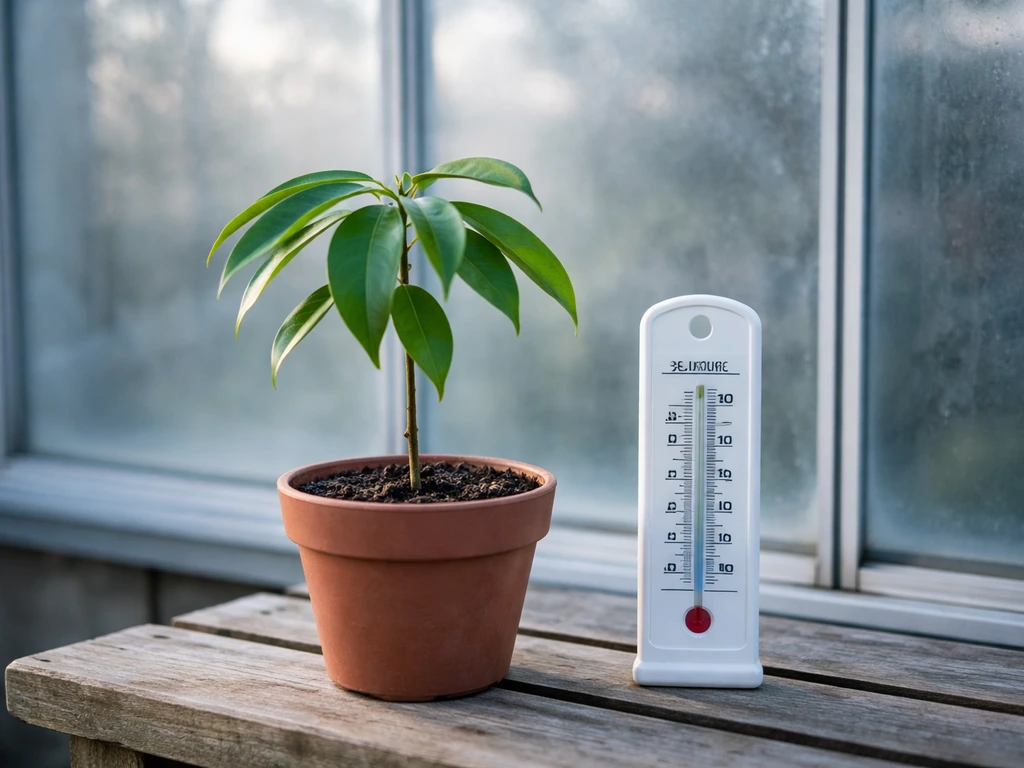
Keep the tree above 5°C through winter, ideally between 5°C and 12°C in a frost-free greenhouse or cool conservatory. This cool but frost-free period is actually what lychee wants. It satisfies the chilling requirement without killing the tree or its buds. Avoid heating the space to room temperature in winter, as too much warmth will prevent flower induction entirely. Think of a cool greenhouse at around 7°C to 10°C as close to ideal for the November to February period.
Light
Lychee is a full-sun tree and needs as much light as you can give it. UK winters are short on light hours and intensity, which is one of the hardest constraints to work around. Position the tree in the sunniest spot in your greenhouse or conservatory, ideally with unobstructed southern exposure. In winter, supplemental grow lighting can help maintain the tree's vigour, particularly for young plants. From April onwards, increasing natural light is usually sufficient, and moving the pot outside in late May dramatically improves light quality compared to glass-filtered greenhouse conditions.
Watering
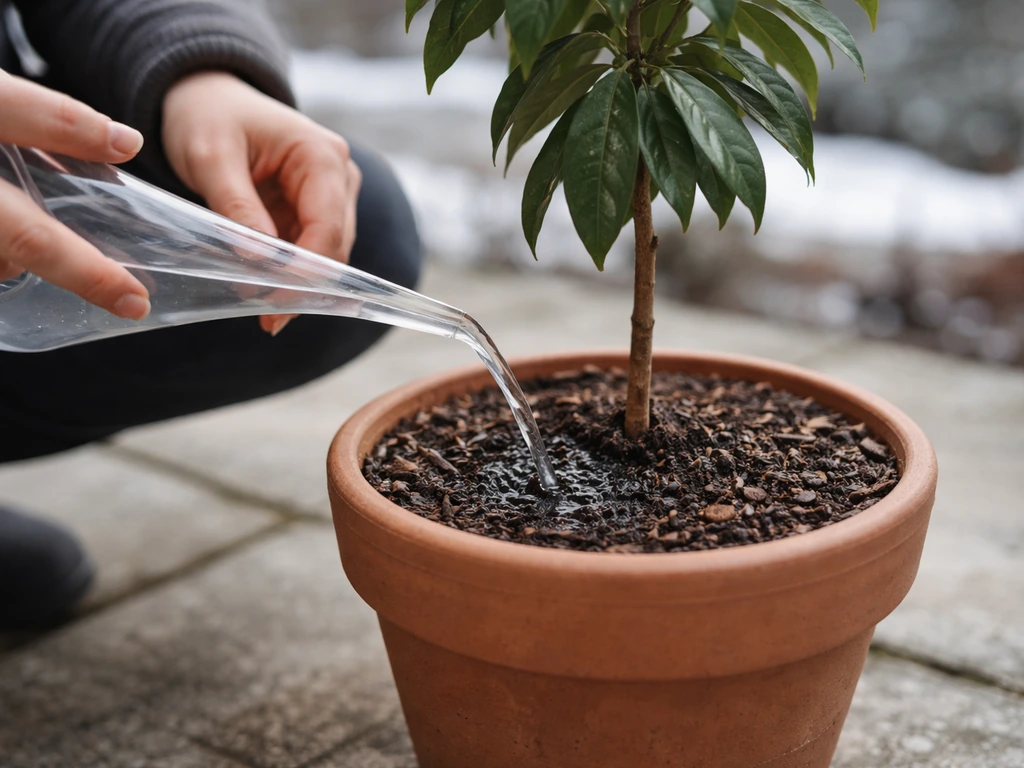
Water lightly and infrequently during winter while the tree is cool and not actively growing. Overwatering in winter is one of the most common ways to lose a lychee. In spring and summer, as growth picks up, increase watering but always allow the compost to partly dry between waterings. Lychee does not tolerate waterlogged roots. Use rainwater where possible, as lychee can be sensitive to the alkalinity of tap water over time, which also gradually raises soil pH above what the plant prefers.
Feeding
Feed with a balanced liquid fertiliser through the growing season from April to August, switching to a lower-nitrogen feed in late summer to help harden off growth before winter. A fertiliser formulated for citrus or acid-loving plants works well. Avoid feeding in winter. Lychees can show yellowing leaves if the pH drifts too high or if magnesium is deficient; a dose of Epsom salts diluted in water at around 2g per litre occasionally addresses yellowing between the leaf veins.
Flowers and fruit: what to expect and when
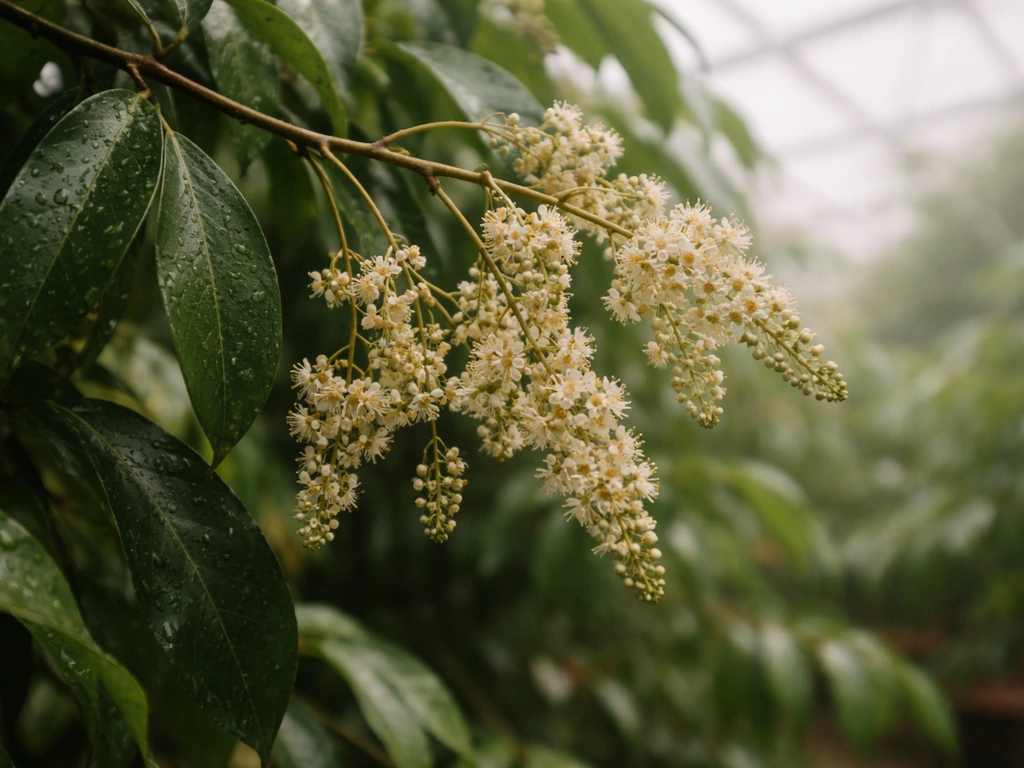
Lychee flowers in late winter to early spring, typically February to April in the UK depending on your growing conditions and the previous autumn's chilling. The panicles (flower clusters) emerge at branch tips and can be impressive, with hundreds of small flowers. Whether your tree reaches this stage depends heavily on whether it received adequate chilling the previous winter. Research into lychee flowering shows that floral induction requires a substantial accumulation of chill hours, and that the process is not optional: without that chilling, the tree simply will not initiate flowers. This is actually one area where UK winters, managed correctly under glass, can work in your favour.
If flowers appear and set, the fruit takes around 70 to 140 days to ripen depending on variety and temperature. In a UK context, this means fruit could theoretically ripen from June to August if flowering was successful in March or April. In practice, UK summers often lack the sustained heat to bring a full fruit crop to maturity, and partial crops or small fruits are more likely than the impressive yields you'd see in subtropical regions.
Patience is non-negotiable. Even with a grafted tree and good conditions, expect two to four years before flowering begins, and longer before fruit set becomes reliable. The tree needs to reach a mature size and undergo several successful cooling and warming cycles before it produces consistently.
Troubleshooting flowering failures
- No flowers after several years: the tree has likely not received enough chilling. Try keeping it cooler in winter, ideally between 7°C and 12°C without supplemental heat from October to February.
- Flowers appear but drop without setting fruit: poor pollination is the most common cause. Hand pollinate daily while flowers are open and ensure ventilation for insect access.
- Tree flowers but fruit never swells: insufficient summer heat is usually to blame. Move the tree to the warmest outdoor position you have in summer and ensure maximum sun exposure.
- Flowers appear very late (May or June): the tree has been kept too warm in winter. Earlier and cooler dormancy the following year should shift flowering to an earlier, more useful time.
Problems to watch for in UK growing conditions
Cold damage
If the temperature drops below -3°C to -4°C, you will see leaf scorch, tip die-back, and potentially branch loss. If it happens, don't prune immediately. Wait until spring, when you can clearly see which growth is viable. Cut back to live wood only once new growth begins. Young trees are more vulnerable than established ones. If you lose the top of the tree, the rootstock often reshoot, so don't discard a pot with apparently dead top-growth until you've waited a full season.
Poor growth in low light
Lychee in a dim conservatory or north-facing greenhouse will grow slowly and produce weak, pale growth that is more susceptible to pests and disease. If growth is very slow or leaves are yellowing and small, inadequate light is often the cause rather than nutrient deficiency. Repositioning the plant and adding a grow light in winter makes a real difference to vigour in the following spring.
Pests
Under glass, lychees can be hit by red spider mite, scale insects, and mealybug. Red spider mite is particularly common in warm, dry greenhouse conditions. Increase humidity around the plant (but not in the compost) to discourage mites, and check the undersides of leaves regularly. Scale insects cluster on stems and leaf midribs and can weaken the tree considerably if left unchecked. Use a neem oil spray or a soft soap insecticide and repeat at 7 to 10 day intervals. Biological controls like Phytoseiulus persimilis work well for red spider mite in a greenhouse setting.
Root problems
Overwatering in winter leads to root rot, which can kill a lychee silently before you notice anything wrong above ground. If you see sudden wilting or leaf drop in winter despite the compost appearing moist, suspect root rot. Unpot the tree, inspect the roots, cut away any black or mushy material, dust with sulphur or a fungicide, and repot into fresh well-draining compost. Let the compost dry significantly before watering again.
Realistic expectations and how to start today
Here's the honest summary. If you are deciding between subtropical options, can oleander grow in uk is another useful related question to check before you invest in a protected setup. Growing a lychee tree in the UK is achievable and it will be an interesting, attractive plant. If you're also wondering about other subtropical plants, you may find answers about can you grow sumac in the uk helpful when comparing what different species can handle outdoors. If you are wondering will lantana grow in the UK, the answer is usually no outdoors, though certain sheltered conditions and containers may help some plants survive. If you're wondering about loofah, the key question is whether you can grow the heat-loving plant in UK conditions or start it indoors first. Getting it to fruit reliably is much harder and will take several years of careful management. Your chances of a reasonable fruit crop are best if you are in the warmer parts of southern England with access to a heated greenhouse or large heated conservatory, and if you start with a grafted tree from a named variety. A seed-grown tree from a supermarket lychee is a long-term experiment, not a practical route to fruit. If you also want a comparison point for another subtropical garden option, can you grow lisianthus in the UK is a useful related question to explore for how UK conditions affect flowering plants. The experience is more comparable to other exotic fruit attempts, like growing loquats or figs in marginal UK conditions, where a good microclimate and consistent care get you much further than the climate alone would suggest.
If your expectations are set around enjoying the tree as a striking subtropical specimen with the possibility of occasional fruit, you'll have a genuinely rewarding experience. If you're expecting a productive fruiting tree within two to three years without specialist kit, it's likely to disappoint.
Next steps: your starting checklist
- Source a grafted lychee tree from a reputable UK specialist tropical nursery or import supplier. Prioritise named varieties like 'Mauritius' or 'Brewster' over unnamed seedlings.
- Pot into a large container (at least 20 to 30 litres to start) using a well-draining, slightly acidic mix: John Innes No. 3 combined with around 20 to 30 percent perlite.
- Find the warmest, sunniest spot in your greenhouse, conservatory, or sheltered outdoor microclimate for summer placement. Identify where you will store it safely above 5°C in winter.
- Plan your winter cooling: aim for 7°C to 12°C in the November to February period. Avoid heating the space to room temperature, as this prevents the chilling needed for flower induction.
- From late May, move the pot to its warmest outdoor position to maximise summer growth and heat accumulation.
- Water sparingly in winter, more freely in summer, always with good drainage. Use rainwater if tap water in your area is hard.
- Feed monthly from April to August with a balanced or citrus fertiliser, stopping entirely from September to March.
- When flowering occurs, hand pollinate with a soft brush daily while flowers are open, and ventilate the greenhouse to allow insect access on warm days.
- Be patient. Expect two to four years minimum before flowering begins with a grafted tree.
The good news is that starting is straightforward and the costs are manageable. A grafted tree, a large pot, some ericaceous compost, and a frost-free space are all you need to begin. From there, it's about consistency across the seasons and resisting the urge to keep the tree too warm in winter. That cool period is where the flowering potential is built, and getting that balance right is the single most important thing a UK grower can do.
FAQ
Can I grow a lychee outdoors in the UK at all, or does it have to be under glass?
Outdoor growing is only realistic in the warmest, most sheltered sites if you can guarantee frost avoidance, even during cold snaps. In most of the UK, temperatures can drop far enough to kill buds or damage young wood. If you try outdoors, you still need a plan for rapid protection, typically a large insulated frost cover plus a way to shelter the root zone, but reliable fruiting is very unlikely without a frost-free protected structure.
What temperature should my lychee be kept at during winter to get flowers, and what’s too warm?
Aim for cool but frost-free conditions, roughly in the 5°C to 12°C range. If you keep it warm indoors at typical room temperatures, the chilling signal can be missed and the tree may stay vegetative instead of initiating flowers. If you have a greenhouse, try to keep the winter environment stable rather than letting it swing widely.
Do I need two lychee trees in the UK to get fruit?
No, a single tree can self-pollinate, but fruit set is still more reliable with two. Under glass in early spring, insect activity can be low, so hand pollination becomes more important than having a second tree. If you only have one, make hand pollination part of your routine during peak flowering.
When should I start hand pollinating, and how do I tell when flowers are ready?
Hand pollination is most useful once panicles are fully open and moving pollen is possible, usually during the flowering window when blooms look fresh and active. Use a soft brush to transfer pollen between flowers within the same panicle and across panicles, and repeat over a few warm days, since not every flower will be receptive at the same moment.
Is it better to buy a grafted lychee or should I start from a seed from a shop-bought lychee?
For UK fruiting goals, grafted plants are the practical choice. Seed-grown trees can take a very long time to fruit and often produce unpredictable fruit quality. Even grafted trees commonly need several years before reliable flowering, but they shorten the timeline and reduce the risk of ending up with a non-fruiting or low-quality cultivar.
What pot size and compost do I need once the tree is established?
Use a large, stable container, at least 30 to 40 litres once established, because lychees become top-heavy. Choose a slightly acidic, free-draining mix, often ericaceous compost with added perlite for structure. Avoid mixes that stay wet for long periods, because waterlogged roots are a major cause of winter failure.
How often should I water in winter, and what’s the mistake most people make?
Water sparingly during cool winter months, letting the compost partly dry between waterings. The common mistake is keeping the roots constantly wet because the plant is sheltered and grows slowly. If the tree wilts or drops leaves in winter despite moist-looking compost, suspect root rot rather than simple thirst.
My lychee leaves are yellow, but I’m feeding, what could it mean?
Yellowing can be caused by pH drifting too high or magnesium deficiency, especially if alkalinity from tap water gradually raises soil pH. If you’re using hard water, consider switching to rainwater. If veins stay greener or the pattern suggests magnesium issues, an occasional Epsom salts dose can help, but check water quality and compost acidity first.
Can I keep my lychee in a warm conservatory year-round to simplify care?
Generally, no. A warm conservatory through winter can prevent proper chilling and reduce or eliminate flower initiation. It’s better to create a cool, frost-free winter zone, even if it means lower light and slower growth, then gradually transition to warmer conditions as spring approaches.
What if my lychee flowers but drops the flowers or doesn’t set fruit?
Common causes in UK setups are insufficient pollination (especially under glass), poor winter chilling, and stress from temperature swings or low light. Increase pollination efforts with hand pollination and try to keep the winter environment consistent. Also avoid letting the tree get too cold during the flowering period or too dry, since both can disrupt set.
How much light does a UK lychee really need, and will grow lights replace winter sun?
Lychees want full sun and strong light, and winter light levels are often too low under UK conditions. Grow lights can help maintain vigour for young or struggling plants, especially in dim conservatories or north-facing greenhouses, but position and exposure still matter. If growth is pale, small, or very slow in winter, boosting light often improves spring performance more than extra fertiliser.
What pests are most likely under UK greenhouse conditions, and what’s the first thing to check?
Red spider mite is especially common in warm, dry greenhouse conditions, and scale insects and mealybugs can also appear. The first practical step is routine inspections, including checking leaf undersides and stems for early signs. If mites are present, boosting local humidity helps, but avoid making the compost soggy.
If my lychee suffers cold damage, should I prune it immediately?
Don’t prune right away. If cold injury occurs, wait until spring to see which shoots are truly dead versus temporarily scorched. Cut back to live wood only once new growth starts, since premature pruning can remove tissue that might still recover.
How long will it take before I see flowers and, if everything goes well, fruit?
Even with a grafted tree, expect at least two to four years before flowering becomes reliable, because the tree needs to reach maturity and experience several good cooling and warming cycles. If you do get flowers, fruit ripening typically takes additional months and depends heavily on whether the summer heat is sustained enough for maturity.
What’s the best way to choose a lychee variety for the UK if I can’t find many options?
Prioritise varieties that have a reputation for performing under marginal, subtropical conditions and that tolerate lower heat requirements. If you can find information about chilling and floral induction behaviour, it can matter more than marketing claims. Where options are limited, “more reliable fruiter under constrained conditions” is usually the most useful criterion, not just taste or appearance.
Next Article
Can You Grow Gardenias in the UK? Practical Guide
Learn if you can grow gardenias in the UK and how to succeed indoors or in a greenhouse with acid soil care.