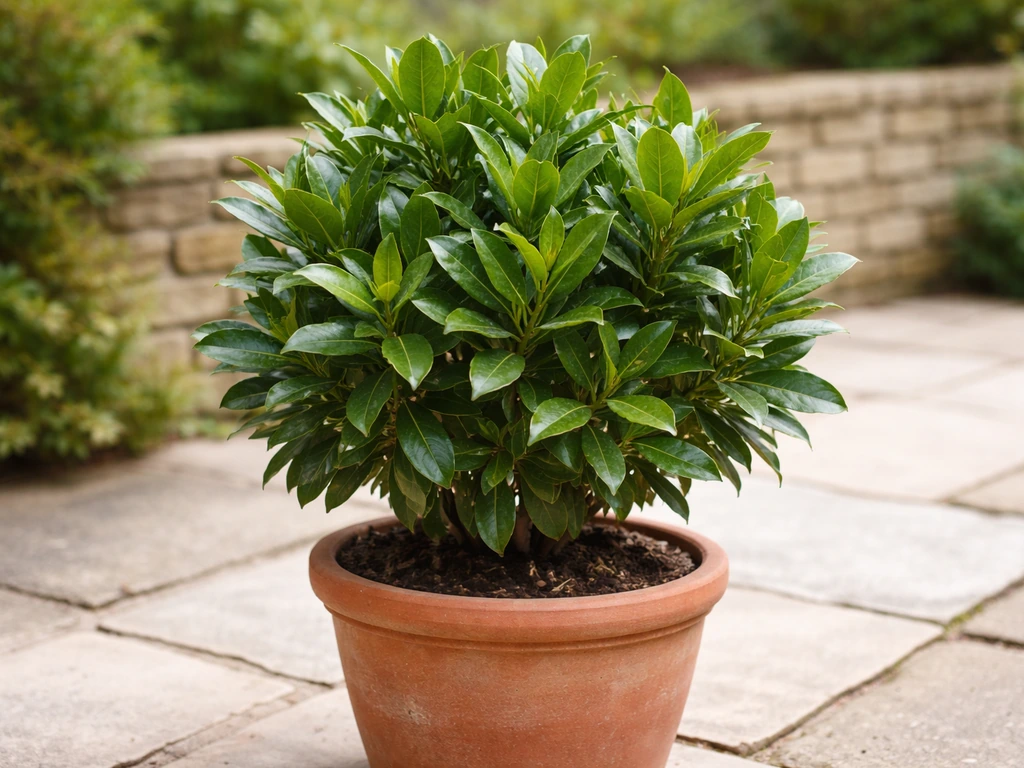
Yes, you can grow scotch bonnet peppers in the UK and ripen them to a proper harvest, but you need to be honest about one thing upfront: they are not outdoor plants in Britain. Bay leaves are a different plant from chillies, but you can still grow them in the UK by keeping them warm and well protected or in containers can you grow bay leaves in uk. Scotch bonnets (Capsicum chinense) are slow-growing tropical chillis that need a long, warm season to fruit. In the UK, that means growing them under cover, starting seeds in January or early February, and keeping temperatures consistently warm throughout. Get that right and you will have ripe, fragrant, fiercely hot scotch bonnets by late summer or early autumn. Skimp on warmth or start too late and you will be staring at green fruits when the nights turn cold in September.
Can You Grow Scotch Bonnet in the UK? How to Do It
What to realistically expect in the UK
The UK's growing season is simply too short and too cool to ripen scotch bonnets without some intervention. Saffron is different from chillis, but the UK’s cool, short growing season can still make it tricky without the right conditions can you grow saffron in the uk. Our summers average 18–22°C in the south on a good day, and nights regularly drop below the 15°C minimum these plants prefer. The RHS classifies scotch bonnet (Capsicum chinense 'Scotch Bonnet') as a tender crop, and that is the most important fact to hold onto. Outdoors in most of the UK, you will get flowers, you might get small green fruits, but ripening to red without shelter is a lottery, especially north of the Midlands. Community growers on UK forums report consistently that without a greenhouse or polytunnel, ripening chinense-type chillis is a genuine struggle, particularly as days shorten from August onwards.
In the south of England, in a sunny sheltered spot or a warm conservatory, you can get results with containers on a south-facing wall. In Scotland or the north of England, a heated greenhouse or polytunnel is not optional, it is the difference between ripe fruit and none at all. Set your expectations accordingly, but do not be put off. With the right setup, scotch bonnets are absolutely growable in the UK, and the fruit quality, that distinctive floral heat, makes the effort genuinely worthwhile. If you want to know whether you can grow cloves in the UK, the same idea applies: check your climate and give the plants the right warmth and growing conditions can you grow cloves in the uk.
What scotch bonnets actually need to thrive
Scotch bonnets are tropical plants, and they behave like it. To germinate well, seeds want a soil temperature of around 30°C (86°F). Once growing, the plants need night temperatures consistently above 15°C to grow strongly, though they can cope with 12°C at a stretch. Drop below around 10°C and growth stalls; go below 5°C and you risk killing the plant outright. Day temperatures of 21–24°C are ideal for steady growth and fruit set. Night temperatures below 15°C (60°F) are one of the main reasons UK growers see flower drop, small fruit, and very slow ripening. They also need a minimum of six to eight hours of direct sunlight daily, which is another constraint in the British climate, particularly from October onwards when day length collapses.
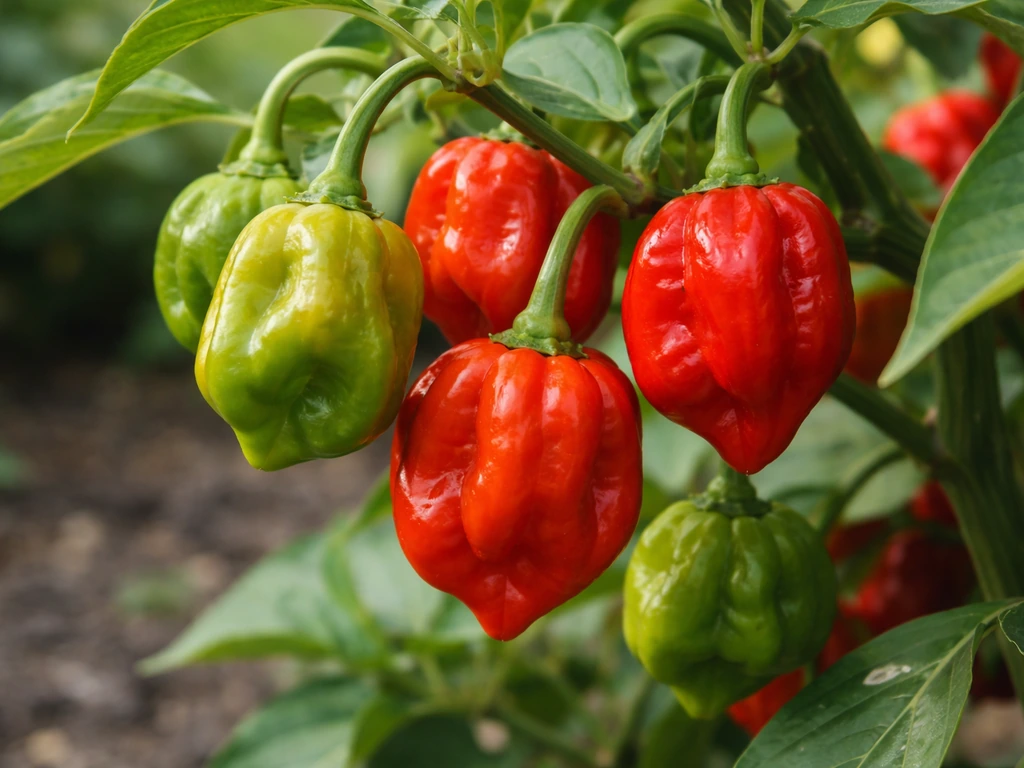
Fruits are small, typically 2.5–4cm across, and ripen from green to red (or yellow or orange depending on the variety). The seed-to-ripe-fruit timeline is roughly 4 months from sowing, though 80–90 days from transplant to harvest is also quoted commercially. In UK conditions, it often stretches longer. That long growing requirement is the core challenge: you simply cannot sow in spring and expect ripe fruit before autumn frosts.
The best UK setup for scotch bonnets
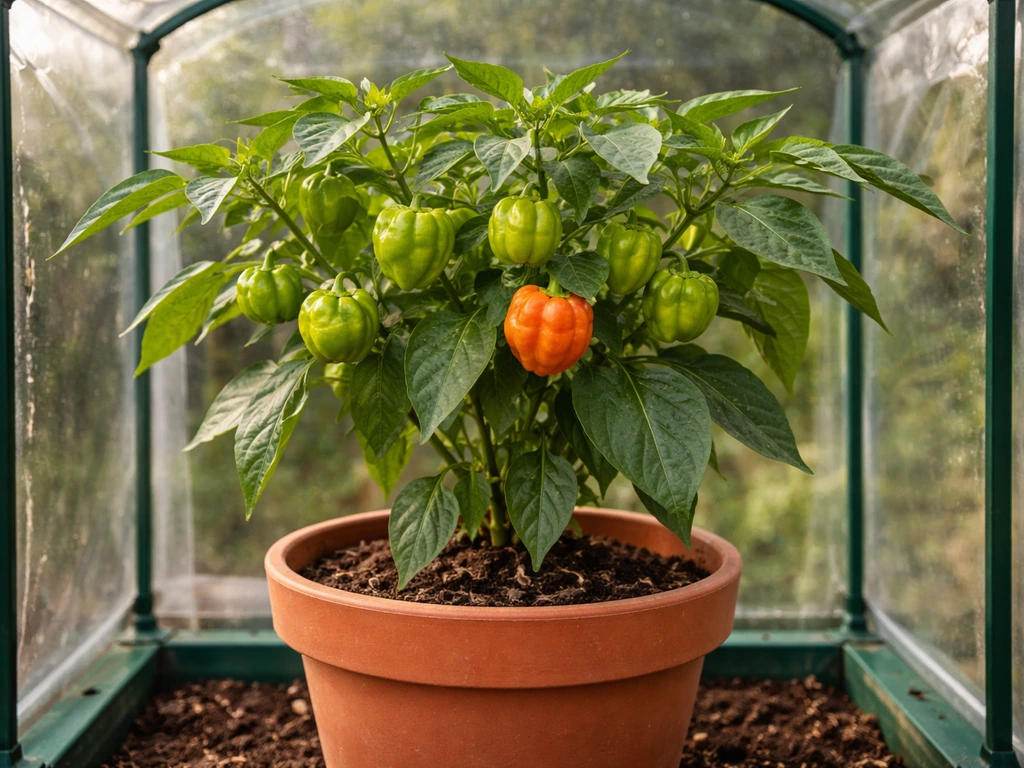
A heated greenhouse or polytunnel is the gold standard for UK scotch bonnet growing. It lets you extend the warm season at both ends, protecting plants from late frosts in spring and early cold snaps in September and October. A polytunnel stays appreciably warmer than outside on sunny days and gives you control that open ground simply cannot match. If you do not have either, a conservatory, south-facing porch, or a large bright windowsill can work for the early stages, but you will want somewhere warmer to grow the plants on through summer.
Containers are almost always the right choice for UK scotch bonnet growing, even inside a greenhouse. They let you move plants if a cold snap hits, and importantly, black plastic pots absorb heat and can raise the root-zone temperature by 2–3°C compared to pale-coloured containers. Use pots of at least 10–12 litres for mature plants. A warm south-facing wall or fence outside (in southern England, during summer) can work as a microclimate growing spot, but you are still taking a risk on ripening time.
| Setup | Suitability | Key limitation |
|---|---|---|
| Heated greenhouse | Excellent, all UK regions | Initial cost/heating bills |
| Unheated polytunnel | Very good, south/midlands | Early spring cold nights |
| Conservatory/south porch | Good, south of England | Space, may overheat in July |
| South-facing sheltered wall (outdoors) | Marginal, southern UK only | Ripening not guaranteed |
| Indoor windowsill only | Poor for full season | Insufficient light and heat |
| Open garden bed (unprotected) | Not recommended in UK | Too cold, too short a season |
When to sow, grow on, and transplant in the UK
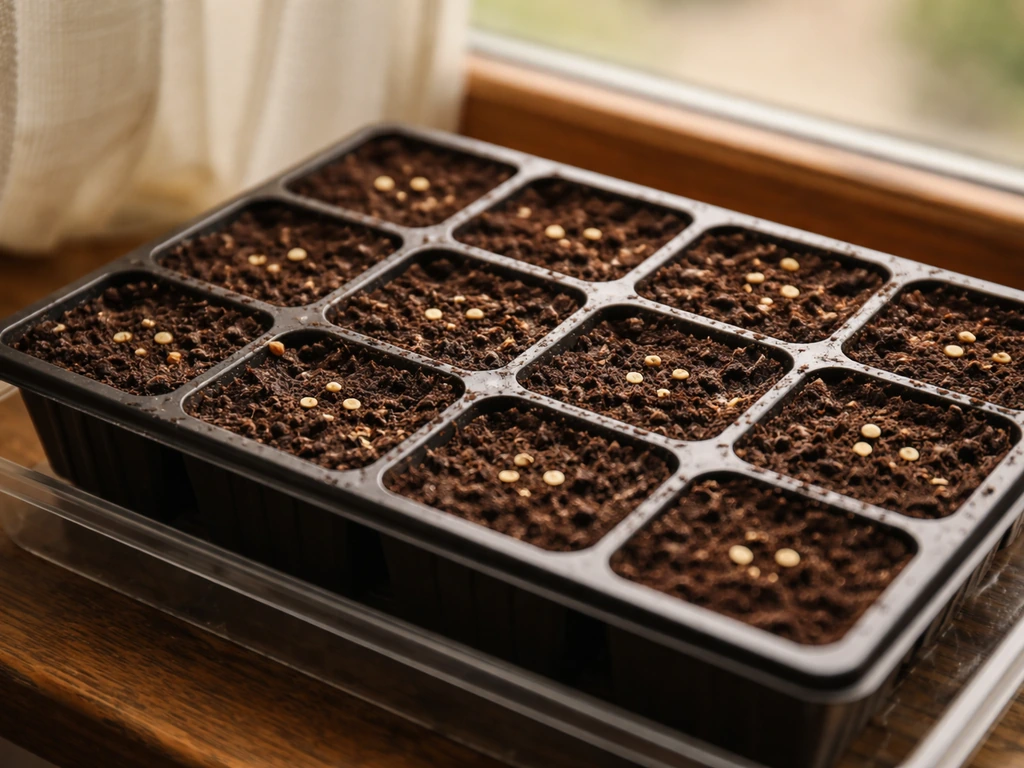
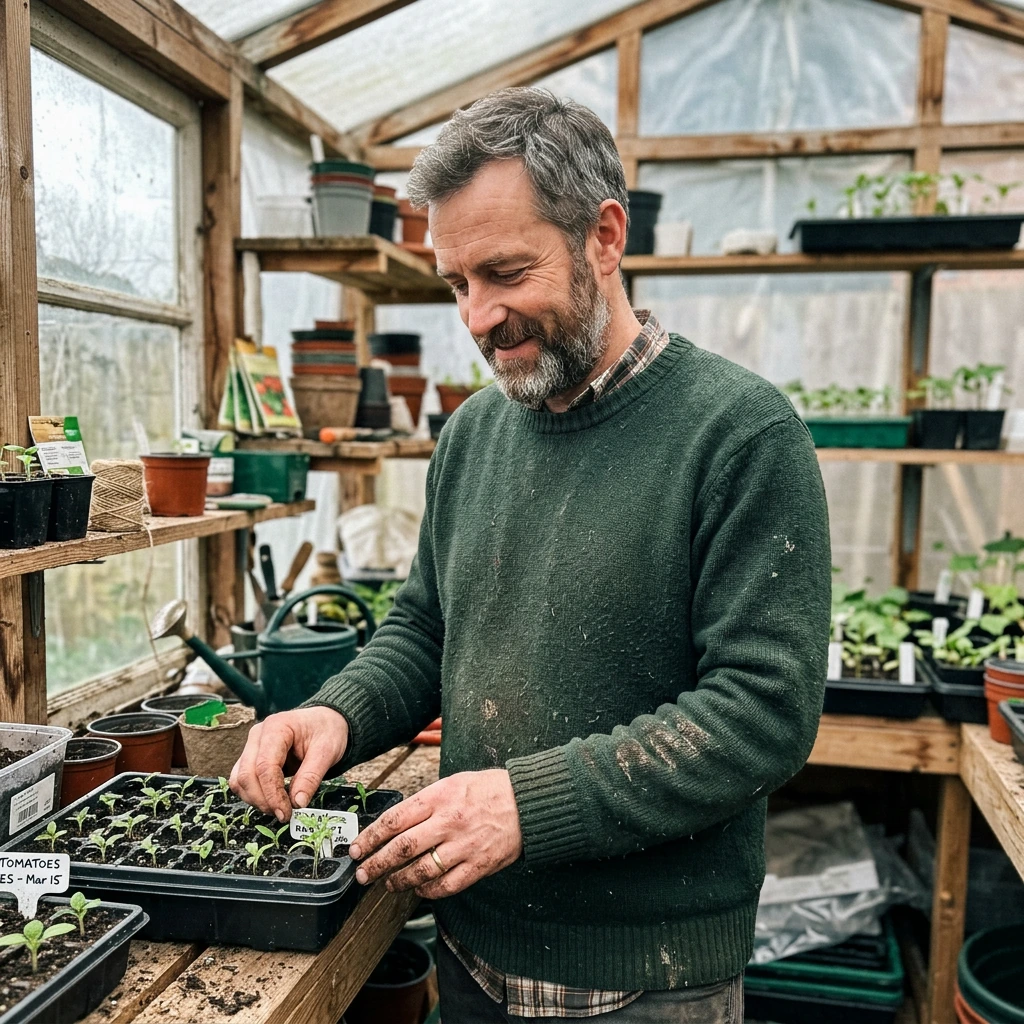
This is where most UK growers go wrong: they start too late. For best results, Vital Seeds UK notes that starting chili seeds with gentle heat helps, and that a warm airing cupboard or radiator shelf around 20, 30°C for at least a few hours each day can work too a warm airing cupboard or radiator shelf around 20–30°C. For scotch bonnets, sow seeds in January or at the very latest the first week of February. Yes, that feels absurdly early, but these plants have a long growing season and every week counts. The RHS recommends sowing sweet and chilli peppers under cover from mid-February, but for slow-maturing chinense types like scotch bonnet, the earlier end of that window, or even before it, gives you a much better shot at ripe fruit before the season closes.
- Sow seeds in January to early February into small cells or modules filled with a fine seed compost. Plant two seeds per cell at about 5mm depth.
- Place the tray on a heated propagator set to 28–30°C. Without a propagator, a warm airing cupboard or a shelf above a radiator that stays at 20–30°C for most of the day will also work. Germination can take 2–4 weeks.
- Once seedlings emerge, move them immediately to the brightest spot you have, a heated greenhouse bench or a south-facing windowsill. They need light from day one or they go leggy quickly.
- Pot on into 7–9cm pots when the first true leaves appear and roots start showing at the base. Keep them at 18–20°C minimum at this stage.
- Pot on again into 1–2 litre pots in March/April as growth increases. Feed with a dilute balanced liquid fertiliser every fortnight.
- Harden off plants if moving to an unheated polytunnel or outdoor sheltered spot. This takes 10–14 days: put plants outside in a sheltered spot during the day and bring them in at night. Do not start hardening off until after your local last frost date.
- For the Midlands, average last frost is late April; for Scottish lowlands, early May. Add two weeks to those dates before plants go outside permanently.
- Transplant into final containers (10–12 litres minimum) once night temperatures are reliably above 12°C, ideally above 15°C. Under cover, this can be March or April. Outdoors in southern England, late May to early June.
Watering, feeding, and keeping plants healthy through summer
Scotch bonnets in pots need consistent watering, but they hate sitting in soggy compost. The practical rule is to check the top inch (about 2.5cm) of compost: if it is dry, water thoroughly; if it is still moist, leave it. Inconsistent watering, swinging between too dry and waterlogged, is a key trigger for flower and fruit drop. In a greenhouse in summer, you may need to water daily. In cooler spells, every two or three days is often enough.
For feeding, use a balanced liquid fertiliser every two weeks during the vegetative stage. Once flower buds start forming, switch to a feed higher in potassium and phosphorus to support fruit set. Avoid going heavy on nitrogen once plants are flowering: too much pushes leafy growth at the expense of fruit. For container plants, a tomato-type feed (high K) works well once fruiting begins. If you want to get more precise about it, a fertiliser profile similar to a high-potassium formulation used in professional pepper production keeps plants fruiting strongly.
Pinching out the growing tip when plants are about 20–25cm tall encourages branching and a bushier plant with more flowering sites. You do not need to do heavy pruning beyond that, but removing any yellowing lower leaves improves airflow and reduces disease risk, which matters in the humid environment of a UK greenhouse.
Getting flowers to set and fruits to actually ripen
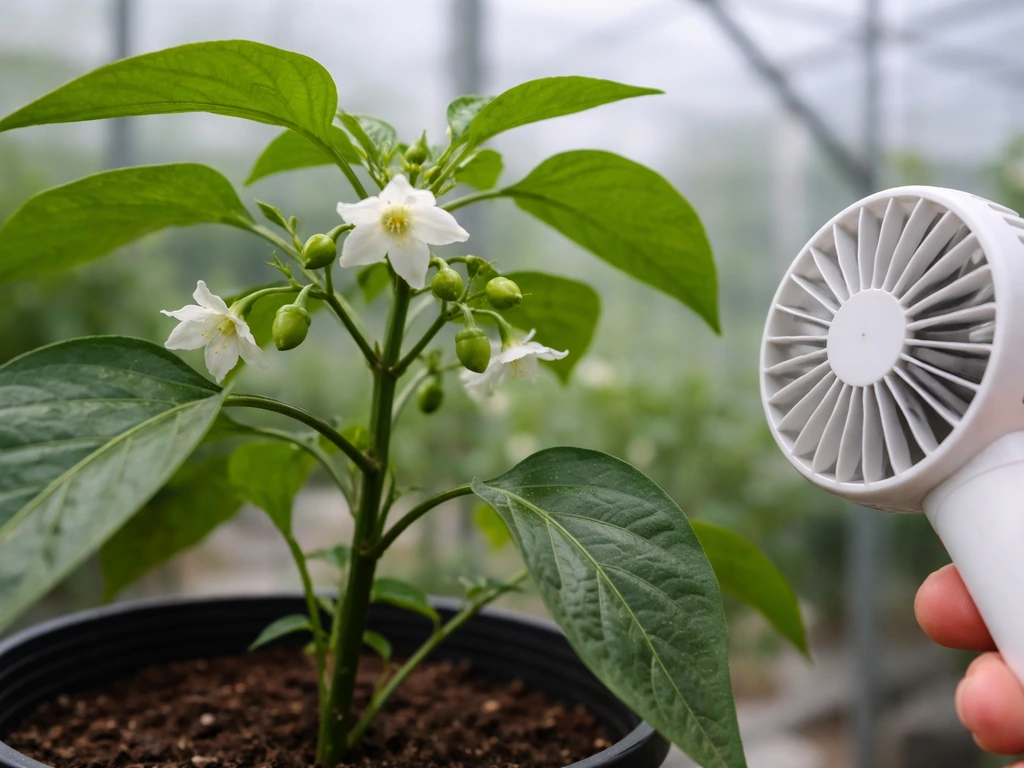
This is the part where UK growers most often struggle, and temperature is almost always the culprit. Pepper flowers drop when night temperatures fall below about 15°C (60°F). Johnny’s Selected Seeds recommends greenhouse peppers maintain night temperatures around 68°F (20°C) to support proper growth in containers. In a polytunnel or greenhouse in early summer, this is very common in the UK. The fix is either to heat the space at night or to wait until the weather genuinely warms before transplanting plants to their final position. Do not rush plants into a cold polytunnel in April thinking the structure alone will be enough.
Pollination under cover is worth thinking about. Outside, bees and other insects do the job. In a closed greenhouse, you may need to help things along, especially in cool or overcast weather when insects are less active. Gently shaking plants when flowers are open or using a small paintbrush to transfer pollen between flowers is enough. Just do it on sunny days when the flowers are fully open, usually around midday.
Ripening from green to red takes time and, critically, warmth and light. In the UK, this often means fruits that set in July may not ripen until September. To speed ripening in late season, remove any new flowers or small unformed fruits once you are in late August, so the plant concentrates its energy on ripening what it already has. If you are growing outdoors in southern England and nights are cooling in September, moving containers inside to a warm windowsill or conservatory to finish ripening is a completely valid strategy.
Common problems UK growers run into
Slow or stalled growth
If your scotch bonnet plant looks like it has stopped growing, cold nights are the most likely cause. Check your minimum overnight temperature with a min/max thermometer. Below 12°C, these plants essentially pause. Bring them somewhere warmer, even temporarily, and you will often see new growth within a week.
Flower and bud drop
Dropping flowers before they set is incredibly common in UK conditions. Temperature swings (especially cold nights), uneven watering, excessive nitrogen, or too much shade all trigger it. Keep temperatures steady above 15°C at night, water consistently, and make sure the plant is getting as much direct sun as possible.
Fruit not ripening before autumn
If fruits are still green in September, prioritise: remove new flowers, reduce watering slightly, and move plants to the warmest spot available. Green scotch bonnets are still usable in cooking, but they will not have the full heat and flavour of ripe red ones.
Pests and diseases
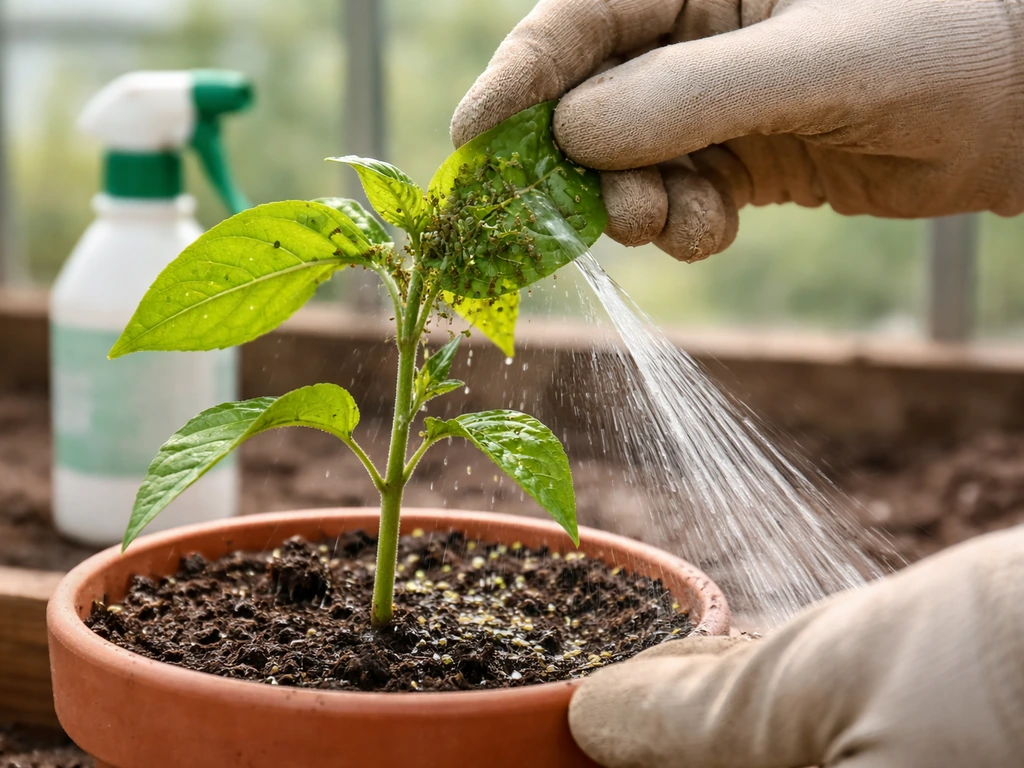
- Aphids: very common on young growth and under leaves in greenhouses. Check regularly and squash by hand, use a jet of water, or apply insecticidal soap. Biological controls (Aphidius wasps) work well in enclosed spaces.
- Spider mites: thrive in hot, dry greenhouse conditions. The first sign is fine webbing on the underside of leaves and a mottled appearance. Increase humidity by misting, and use biological controls like Phytoseiulus predatory mites if infestations take hold.
- Powdery mildew: more likely in late season when nights cool and ventilation drops. Improve airflow, avoid wetting leaves when watering, and remove affected leaves promptly.
- Whitefly: another greenhouse classic. Yellow sticky traps help monitor numbers. Encarsia formosa (parasitic wasp) is an effective biological control under cover.
- Legginess and poor leaf colour: usually a combination of insufficient light and over-feeding with nitrogen. Move to a brighter spot and cut back on nitrogen feed.
Harvesting, storing, and saving seed
Scotch bonnets are ready to pick when fully coloured, typically red, though some varieties go orange or yellow. The fruits are small, around 2.5–4cm, and you should feel a slight give when gently squeezed. Pick with scissors or a sharp knife rather than pulling, which can damage the plant and dislodge other developing fruits. Harvesting ripe fruits encourages the plant to produce more, so do not leave them on the plant once they are ready.
Fresh scotch bonnets will keep for only about 2–5 days at room temperature, so plan ahead. For longer storage, freeze whole (they freeze very well and retain heat and flavour), dry them in a low oven or dehydrator, or make sauces and chutneys. Dried and stored in an airtight jar in a cool dark place, they last for months.
For seed saving, let a few fruits ripen fully on the plant, well past the point you would normally pick. Cut open the ripe fruits and scrape the seeds onto a plate or piece of kitchen paper. Allow them to air dry completely, for at least a week in a warm dry spot. Note that Capsicum chinense (the species scotch bonnet belongs to) can be tricky to air dry fully, so take your time and make sure seeds are genuinely dry and brittle before storing them. Store in a labelled paper envelope inside an airtight container in the fridge. Properly dried and stored pepper seeds remain viable for 2–4 years. Scotch bonnets will cross-pollinate with other Capsicum chinense varieties grown nearby (like other habanero types), so if you want true-to-type seeds, grow only one chinense variety per season or isolate flowering plants.
If you enjoy the challenge of pushing tropical plants to their limits in British conditions, scotch bonnets are not the only one worth trying. The heat requirements and growing approach are very similar to Carolina reapers, which push the challenge even further. Carolina reapers have similarly demanding warmth requirements, so in the UK they are usually only realistic in a heated greenhouse or polytunnel. On the softer end of the spectrum, bay and saffron represent very different levels of UK feasibility. Scotch bonnets sit in a realistic middle ground: genuinely achievable in a UK greenhouse or polytunnel, with a little planning and a willingness to start seeds in the depths of January.
FAQ
Can I grow scotch bonnet on a windowsill in the UK and get ripe peppers?
Yes, but only as a “windowsill starter” or for short periods. If your nights drop below about 12–15°C, the plant will pause and flower drop increases, so you will still need a consistently warm spot (heated greenhouse, heated conservatory, or moving containers indoors at night).
Why are my scotch bonnet plants growing slowly even though they get some sun?
A simple way to check is to look at the root-zone temperature, not just the air. If the soil is under about 15°C at night, growth stalls even if the daytime air feels warm, so consider insulating pot stands and using black pots (or even a cloche) to reduce overnight cooling.
What is the latest I can sow scotch bonnet seeds in the UK and still get red peppers?
Start seeds in mid to late January if you are aiming for outdoor-in-the-south experiments, because the real constraint is the time from transplant to sustained warm nights. If you sow after the first week of February, it is much more common to end with only green fruit by September.
Can scotch bonnet plants survive UK winters, or do I need to replant every year?
You can overwinter them, but only if you keep them warm and bright. In a greenhouse or conservatory, reduce watering slightly, keep away from cold drafts, and expect a slower winter growth, then restart feeding when new growth appears in spring.
Do scotch bonnet plants need pollination help in a greenhouse or polytunnel?
Yes, but pollination help is most important when nights are cool and airflow is low. On sunny days around midday, gently shake the plant or dab pollen between open flowers, and avoid misting because damp greenhouse conditions can worsen fungal issues.
Is it better to start scotch bonnet seeds in their final pot size?
Not exactly. If you pot up too early into a large container, compost can stay wet too long, which can reduce oxygen around roots. A good approach is to grow seedlings in smaller pots first, then move to 10–12 litre containers only when plants are actively growing and roots are established.
My plants are leafy but not fruiting, what should I change?
If you fertilise too high in nitrogen after flowering starts, you will often see lots of leaves and fewer pods. Switch to a higher potassium and phosphorus feed once buds form, and keep feed at regular intervals rather than heavy single doses.
What should I do if my scotch bonnet peppers are still green in September?
If peppers are green in September, do three things early: remove new flowers, reduce watering slightly (keep soil from drying out completely), and move containers to the warmest available indoor spot if nights are cooling. This can turn late-set green fruit into usable ripe peppers.
Is it ever okay to pick scotch bonnets before they turn red?
For most UK setups, do not harvest until the fruit is fully coloured and has a slight give when gently squeezed, because flavour and heat intensity increase with ripening. You can still cook with green fruit, but it is typically milder and less fragrant.
What is the best way to store scotch bonnet peppers for months?
Freeze whole peppers, then use them straight from frozen in cooking. For best quality, avoid repeated thaw-freeze cycles by freezing in portion bags or freezer-safe containers you only open once.
Can I save seeds from my UK-grown scotch bonnets and expect the same heat and shape next year?
Seed saving is doable but can be unpredictable. Scotch bonnet (Capsicum chinense) can cross with other chinense types, so to keep true-to-type, isolate plants from other chinense varieties or use physical barriers like fine mesh bags during flowering.
Can You Grow Bay Leaves in the UK How to Succeed
Learn if you can grow bay laurel in the UK, plus container care, overwintering steps, timing, and troubleshooting.