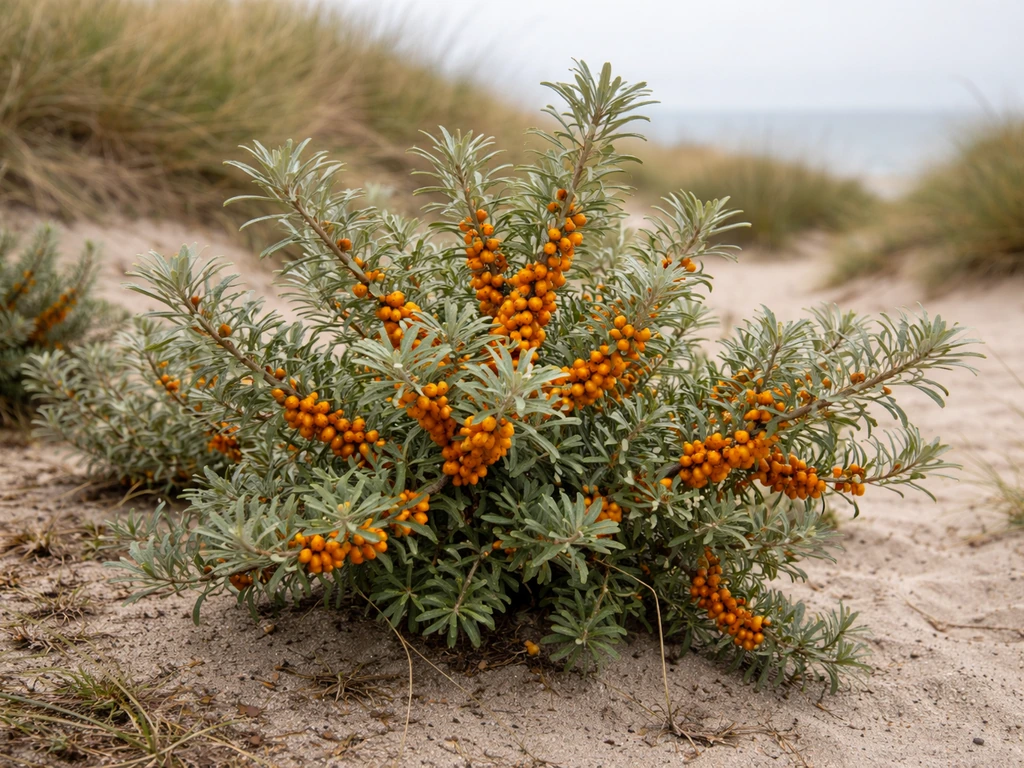
Yes, you absolutely can grow raspberries in the UK, and honestly they're one of the most reliable soft fruits you can plant here. If you are also wondering can you grow hops in the UK, the same general idea applies: choose a suitable spot and match the plants to your conditions. The climate suits them well, the soil conditions are easy to replicate, and a well-maintained row of canes can fruit for up to ten years. Whether you have a full vegetable plot or a decent-sized container on a patio, there's a variety and setup that will work for you. You might also be wondering, does sea buckthorn grow in the UK, and whether it can thrive in similar garden conditions.
Can You Grow Raspberries in the UK? Easy Guide

James Hartwell
10 Jun 2026
Why the UK climate suits raspberries so well
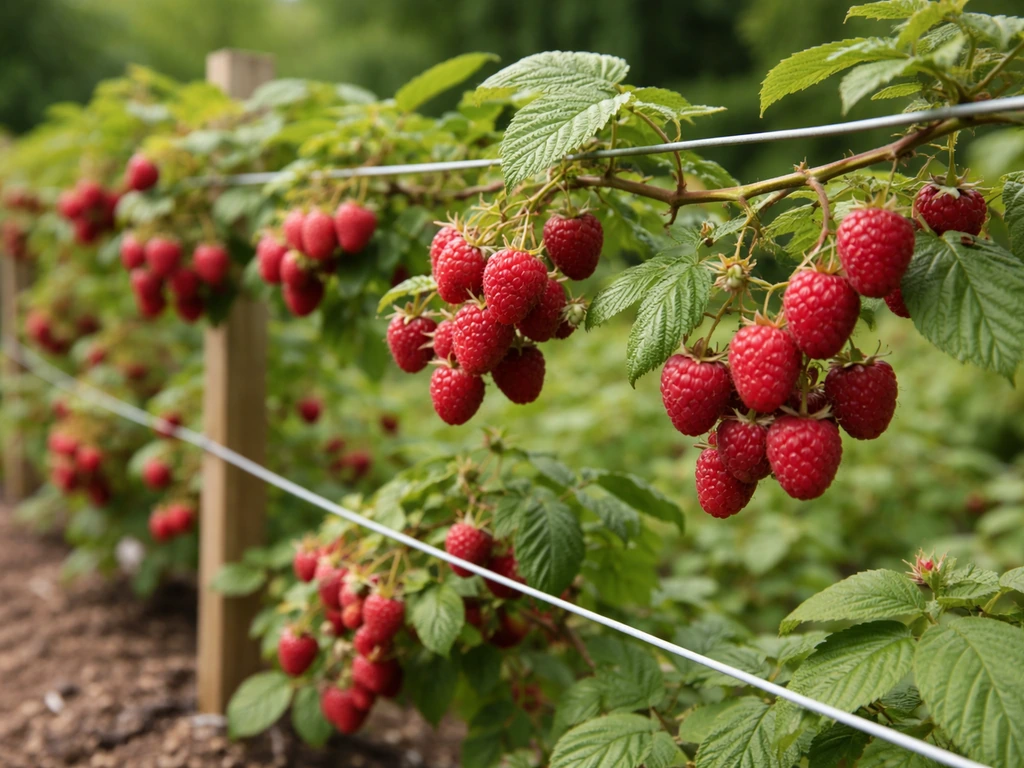
Raspberries are native to cool, temperate regions, and the UK is almost ideal for them. They love mild summers, consistent moisture, and a proper dormant winter period, which is exactly what most of the country delivers. The RHS classifies Rubus idaeus (the common raspberry) as H3 on the hardiness scale, which means it's reliably hardy in coastal and relatively mild parts of the UK. In practice though, established raspberry canes handle the winters of most UK regions without any trouble at all.
There are regional differences worth knowing about. In Scotland and northern England, summers are shorter and cooler, which means summer-fruiting varieties need to be chosen carefully to ensure they ripen before the season ends. On the south coast and in sheltered lowland gardens, you have more flexibility and autumn-fruiting types will extend your harvest well into October. In all regions, the key risks are late spring frosts hitting new shoots and waterlogged soil sitting on the roots over winter, both of which are avoidable with sensible site selection.
Raspberries grow wild here, and that tells you a lot
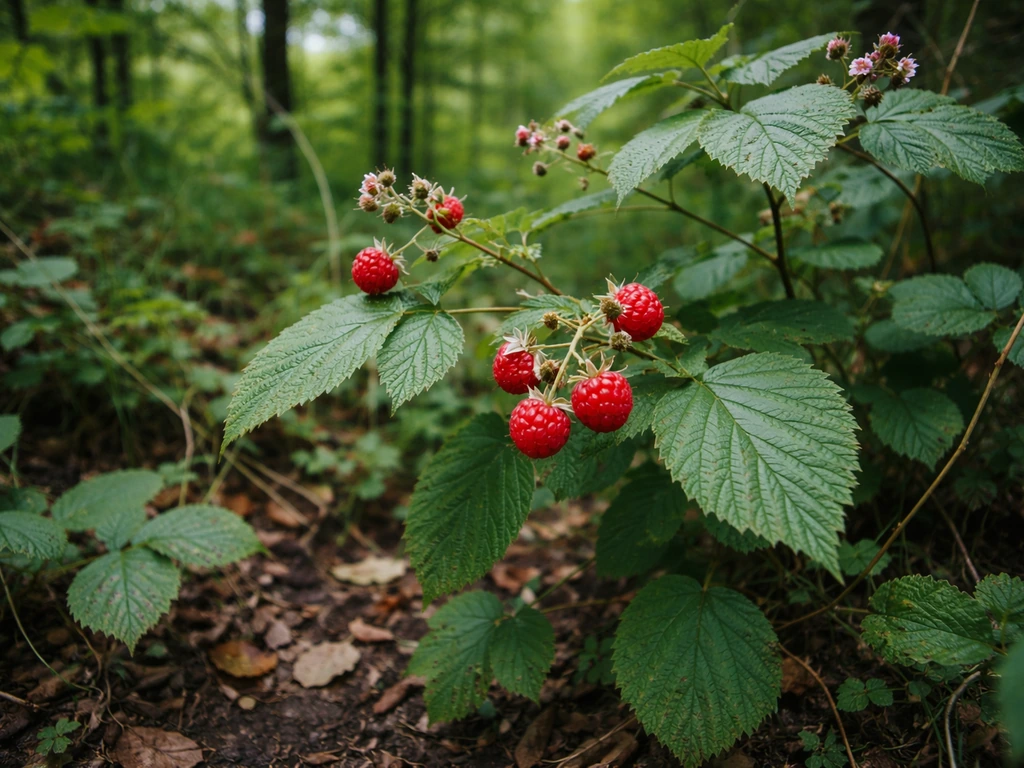
One of the most reassuring things about growing raspberries in the UK is that they already grow here without any help from us. Wild raspberries are found in scrubland, woodland edges, hedgerows, and parks across the country, often as garden escapes that have naturalised into the landscape. If a plant can establish and fruit without irrigation, feeding, or pruning in British conditions, that's a strong indicator it will thrive in a garden setting with proper care.
What the wild plants tell you about habitat preferences is useful. They tend to grow in partial shade to full sun, in slightly acidic, free-draining soil with reasonable organic matter content. They don't like sitting in water, and they don't thrive in compacted, heavy clay without amendment. Replicate those conditions in your garden and you're already most of the way there.
Picking the right type and variety
The most important decision you'll make is whether to go with summer-fruiting or autumn-fruiting raspberries, because they fruit at different times, need different pruning, and have different strengths in UK conditions.
Summer-fruiting vs autumn-fruiting
| Feature | Summer-fruiting | Autumn-fruiting |
|---|---|---|
| Harvest period | June to August | August to October (or later) |
| Fruiting canes | Two-year-old canes (floricanes) | New season's canes (primocanes) |
| Pruning timing | After fruiting in summer | Late winter, cut all to ground |
| Best for northern UK | Choose varieties carefully | Generally easier and more reliable |
| Support needed | Yes, wire framework essential | Yes, still benefits from support |
| Example varieties | Glen Ample, Tulameen, Malling Jewel | Autumn Bliss, Polka, Autumn Treasure |
For most UK home gardeners, autumn-fruiting varieties are the lower-maintenance starting point. The pruning is simple (everything to the ground in late winter), and varieties like Polka and Autumn Bliss are consistently productive across a wide range of UK conditions. For autumn-fruiting raspberries, Suttons recommends cutting all canes down to ground level during winter (no later than February) in following years blank" rel="noopener noreferrer">cutting all canes to ground level during winter (no later than February). Polka in particular holds an RHS Award of Garden Merit and is rated H6, meaning it's hardy across almost all of the UK. For example, the RHS AGM fruit list includes raspberry 'Polka' as an autumn-cropping primocane raspberry, and it is marked as H6 in the RHS AGM material blank" rel="noopener noreferrer">Polka and Autumn Bliss are consistently productive across a wide range of UK conditions. If you're in Scotland or a colder part of northern England, autumn-fruiting types are especially worth prioritising since they won't leave you hoping for a long warm summer to finish ripening.
If you want a longer season overall, plant both types. A couple of summer-fruiting canes alongside autumn-fruiting ones can give you raspberries from late June right through to the first hard frosts.
Choosing a site, sorting the soil, and deciding on containers vs ground
Where to plant
Raspberries prefer a sunny, sheltered spot with at least six hours of direct sun daily for the best yields, though they'll tolerate partial shade better than most fruit crops. Avoid frost pockets, which are low-lying areas where cold air settles on still nights, since late frosts in April and May can damage the new shoots just as they're getting going. Some shelter from strong winds is helpful too, both to protect the canes and to keep pollinating insects happy when the flowers are open.
Soil preparation
Raspberries want slightly acidic, fertile, free-draining soil. A pH around 6.0 to 6.5 is ideal. They won't perform well in alkaline conditions, and they genuinely struggle in waterlogged ground, so if your soil holds water in winter, either raise the bed or improve drainage with plenty of organic matter before planting. Fork over the area, remove perennial weeds thoroughly (they'll cause trouble for years if you don't), and work in well-rotted garden compost or leaf mould. Avoid mushroom compost, which is alkaline and will push the pH in the wrong direction.
Container growing
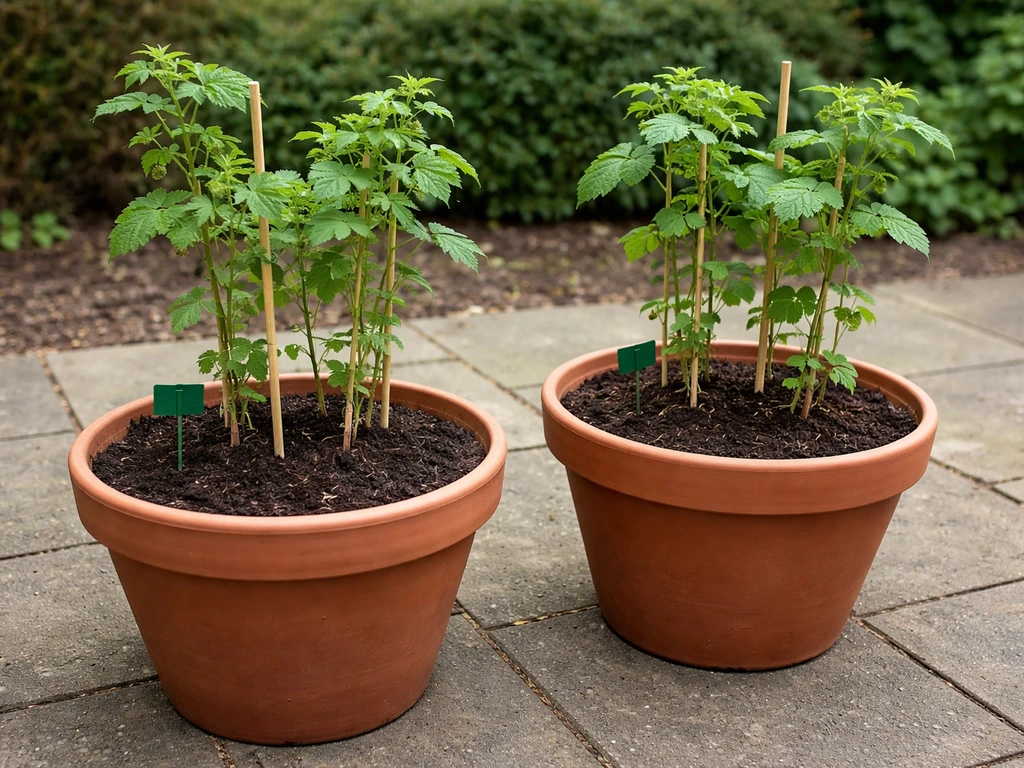
Container growing is a genuine option, not just a workaround. Compact varieties work well in large pots (at least 40cm diameter) filled with ericaceous or general-purpose compost. The main differences in care are that containers dry out faster and need more attention to watering and feeding. Use rainwater from a butt where you can, especially in hard water areas, and water in the morning rather than the heat of the day. Container plants need a monthly liquid feed with a general-purpose fertiliser throughout the growing season, whereas ground-planted raspberries in well-mulched soil generally won't need supplementary feeding at all.
Seasonal care through the year
Late winter and early spring
This is your main maintenance window before the season kicks off. Apply a 5 to 7.5cm layer of well-rotted garden compost or similar organic mulch around the base of the canes, keeping it clear of the stems themselves. This retains moisture, suppresses weeds, and slowly feeds the soil as it breaks down. If your autumn-fruiting canes haven't been pruned yet, do it now before growth starts, cutting everything to ground level. The RHS suggests completing this by the end of March at the latest.
Spring and early summer
New shoots will start pushing through from the base. On summer-fruiting plants, thin out weaker new canes so the strongest ones have space and airflow. Keep the area around the base weed-free, as raspberries don't compete well with established weeds. Watering during dry spells in spring matters, especially for newly planted canes still establishing their root systems. If you have containers, start your monthly feeding routine once active growth is visible.
Summer
Water consistently during dry spells, especially as fruits are swelling. Irregular watering at this stage can lead to uneven ripening or split fruit. For ground-planted canes that were properly mulched in late winter, the mulch layer does a lot of the moisture-retention work for you. Summer-fruiting varieties will be cropping from June, and you'll be pruning the canes that have just fruited (floricanes) down to ground level once they're finished, while leaving the new green canes in place for next year.
Autumn and winter
Autumn-fruiting raspberries are still producing into October in many UK gardens. Once they've finished, you can either leave the canes standing until late winter (they offer some structure and help mark where the plants are) or cut them down straight away. Either way, late winter pruning before growth resumes is the key task. Remove any weak, damaged, or diseased canes from summer-fruiting plants too, thinning to leave the best five or six new canes per plant tied into your support structure.
Pruning and training: getting it right for UK crops
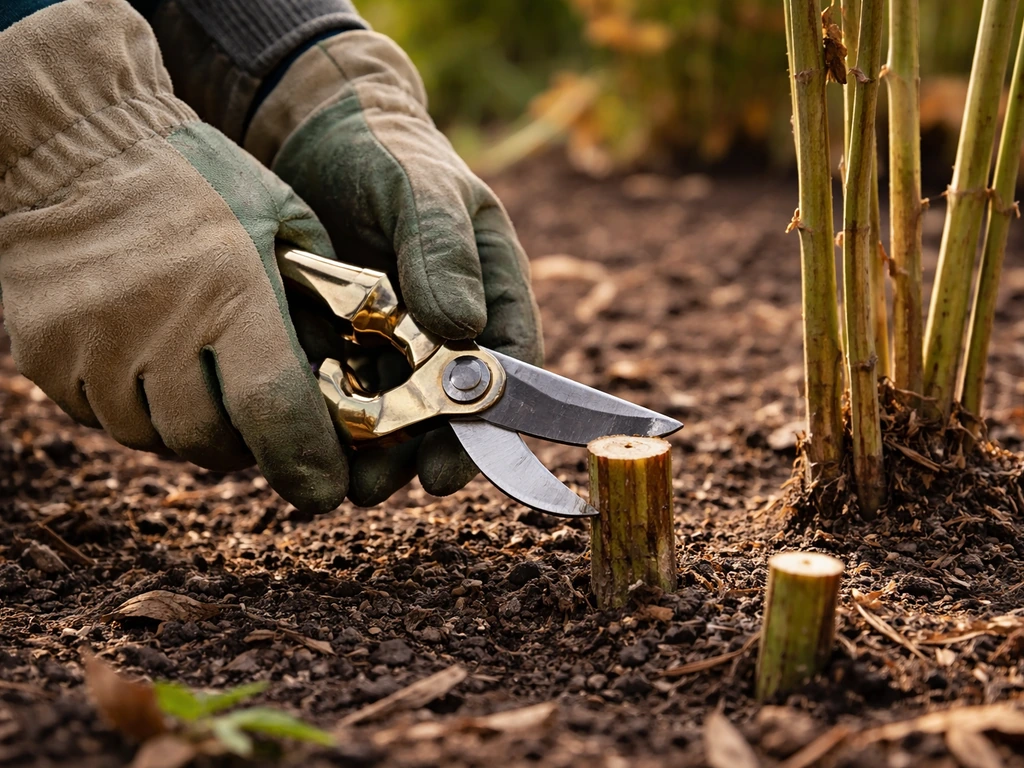
Pruning is where a lot of people go wrong, mainly because the two types of raspberry are pruned completely differently. Get this right and yields improve dramatically.
Autumn-fruiting raspberries
These are the easy ones. Autumn-fruiting (primocane) varieties produce fruit on the current year's new growth. So in late winter, while the plants are completely dormant and leafless, cut every single cane to the ground. It feels drastic but it's exactly right. The plant will push up fresh canes in spring, and those canes will fruit in the same year's autumn. No need to identify old canes from new ones, just cut everything down and let it regrow.
Summer-fruiting raspberries
Summer-fruiting varieties fruit on two-year-old wood (floricanes), so the pruning is a two-step process across the season. Immediately after the current summer's harvest, cut the canes that have just fruited down to the ground. They'll have a slightly woody, darker appearance compared to the fresh green canes that grew this year. Those new green canes are next year's fruiting wood, so tie them into your support wires and keep them. In late winter, go through again and remove any weak or damaged new canes, leaving around five to eight strong canes per plant tied in at roughly 10cm spacings.
Support structures
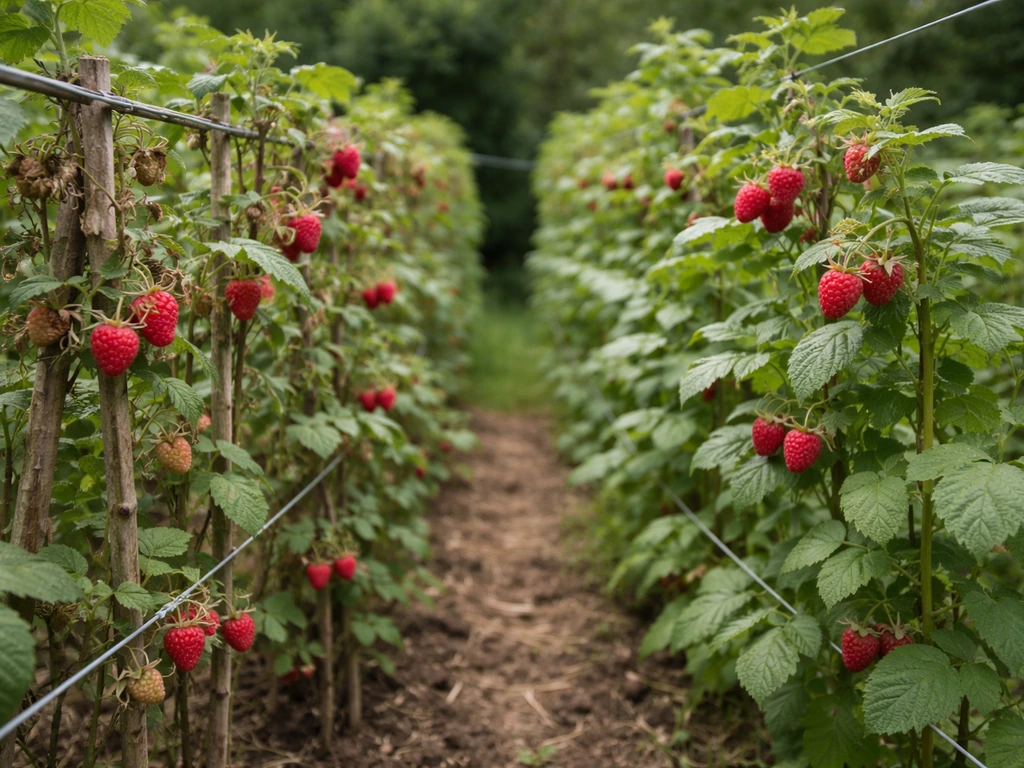
Raspberries need support. The simplest system is two or three horizontal wires strung between posts at roughly 60cm, 90cm, and 120cm height. Tie the canes loosely to the wires as they grow. Without support, tall canes flop over, fruit gets muddy, and airflow is reduced, which increases disease risk.
Pests, diseases, and what to do about them
Raspberries have a few specific problems worth knowing about before they catch you off guard. The good news is that most of them are manageable with some basic vigilance.
Raspberry beetle
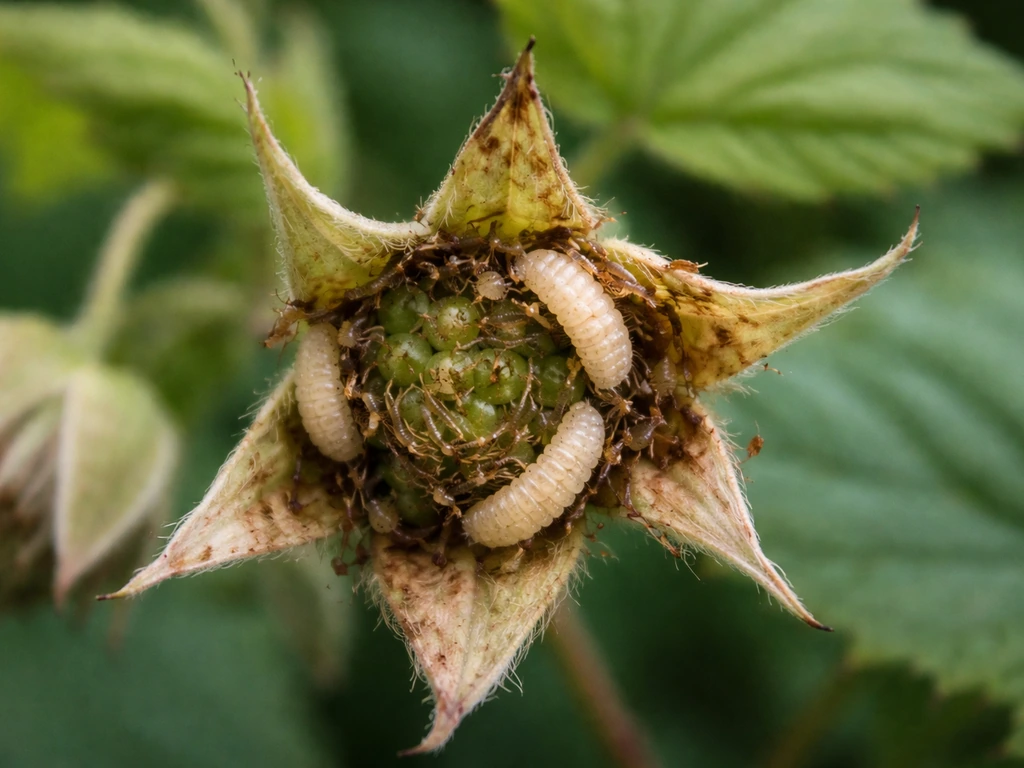
The raspberry beetle (Byturus tomentosus) is the most common frustration for UK growers. The adult beetles lay eggs in the flowers, and the larvae (small creamy-white grubs) develop inside the fruits, which is what you find when you bite into an infested raspberry. The timing of the adult beetles' activity coincides with flowering, so keeping an eye out in late spring and early summer is worthwhile. For smaller gardens, there's limited chemical control available to home growers, but encouraging natural predators like ground beetles and birds helps, as does removing any remaining infested fruit at the end of the season.
Aphids and virus spread
Several aphid species can target raspberries, sucking sap from leaves, shoot tips, and flower stalks. The direct damage from aphids is often minor, but the bigger problem is that aphids act as vectors for raspberry viruses, including raspberry necrosis virus. A plant infected with a persistent virus will decline in productivity over time and eventually need replacing. This is one reason to start with certified virus-free canes from a reputable supplier, and to remove any plants showing persistent mosaic, mottling, or distortion on the leaves.
Raspberry cane midge and midge blight
Raspberry cane midge is a more specialist UK problem that can cause serious damage. The adult midge lays eggs in cracks or splits in the cane bark in spring. The larvae create entry points that allow fungal pathogens to enter and cause 'midge blight', a condition that kills sections of cane and can significantly reduce yields. The James Hutton Institute, which researches UK soft fruit diseases, notes that control strategies in commercial settings focus on insecticide applications timed to when egg-laying begins in spring. For home growers, the practical approach is to monitor new canes for splitting bark or discoloured patches, remove and bin (not compost) affected canes promptly, and maintain good airflow around the plants.
Cane diseases: spur blight and cane blight
Spur blight causes dark purple or brown patches around the buds on the lower parts of canes, and can significantly reduce yield on red raspberries. Cane blight causes sudden wilting and death of canes during the growing season. Both diseases are fungal and spread in wet conditions. Good pruning hygiene is your best defence: cut out and remove affected material, disinfect your secateurs between cuts, and ensure canes are thinned enough to allow air to circulate freely. Overly dense planting and wet, humid summers are when these problems are most likely to flare up.
Common troubleshooting
- Canes dying mid-season: check for cane blight or cane midge damage, remove affected canes immediately and bin them
- Poor fruit set: could be frost hitting the flowers, poor pollinator activity, or insufficient sun, check site conditions
- Small or sparse fruits: likely a nutrition or watering issue, or plants need thinning to reduce competition
- Mottled or distorted leaves that don't improve: suspect virus, consider replacing with certified virus-free stock
- Grubs inside fruits: raspberry beetle larvae, clear up old fruit at season end and consider timing of any insecticide use to protect pollinators
- Yellowing leaves in well-watered plants: could indicate alkaline soil, test pH and adjust if needed with sulphur chips or acidic mulch
When to harvest and what year-on-year maintenance looks like
Raspberries are ready to pick when they come away from the plug (the central white core) with the gentlest pull. If you have to tug, give them another day or two. Summer-fruiting varieties typically crop from late June through August depending on variety and region, while autumn-fruiting types run from August into October. Pick every couple of days during the main season to keep the plants productive and to catch fruits before they go over or attract pests.
In terms of ongoing year-on-year maintenance, the routine is genuinely straightforward once you understand it. Late winter pruning (cutting autumn-fruiting types to the ground, tidying and tying in summer-fruiting new canes), an annual mulch in late winter or early spring, watering during dry spells, and keeping on top of weeds. The RHS notes that well-maintained raspberry plants can fruit reliably for up to ten years, so a bit of care now really does pay off over the long term.
Every few years, you may want to replace older canes that are showing declining productivity or signs of persistent virus. When you do, replant on a fresh patch of ground rather than back into the same spot, since replanting into old raspberry soil can introduce soil-borne problems to the new canes. Starting again with certified virus-free stock keeps your plants productive for as long as possible.
Your next steps if you're planting this season
If it's June and you're reading this now, you're at an interesting point in the calendar. Bare-root canes are planted in winter and early spring, but container-grown raspberries can go in the ground through the growing season if you keep them watered well. Check your local garden centre or order from a specialist supplier for container-grown plants. Pick an autumn-fruiting variety like Polka or Autumn Bliss for your first planting if you want simplicity and reliability, prepare a sunny, sheltered spot with well-drained, slightly acidic soil, set up a basic wire support frame, and mulch after planting. Then let them establish and you should see a proper crop this autumn and every year after.
Raspberries are genuinely one of the most satisfying UK soft fruits to grow. If you are also wondering about juniper, it can be grown in the UK, but the main thing is choosing a suitable variety and well-drained soil does juniper grow in the uk. Unlike something more marginal like trying to establish cranberries or coaxing lingonberries into production, raspberries will reward even a fairly casual level of attention with decent yields. Get the pruning right, keep the soil healthy, and you'll have a patch that looks after itself for years. Get the pruning right, keep the soil healthy, and you'll have a patch that looks after itself for years best gooseberries to grow uk. While raspberries are the easiest to start with, you can also ask if you can grow cranberries in the UK, since their needs are quite different can you grow cranberries in the uk.
FAQ
Can you grow raspberries in the UK in a small garden or patio container?
Yes, but only if you match the variety to your space and commit to consistent care. In small back gardens, choose autumn-fruiting types (they fruit on new canes and are easy to prune) and keep canes to a single row in a large container (about 40 cm diameter) or a narrow bed. Plan on regular watering in dry spells, because containers dry out faster than ground planting, and you will need monthly liquid feeding during the growing season.
I do not know whether my raspberries are summer-fruiting or autumn-fruiting, how should I prune?
The easiest way is to focus on the pruning calendar, not the cane labels. For autumn-fruiting raspberries, cut every cane to the ground in late winter (no need to identify old wood). For summer-fruiting types, cut out the canes that produced fruit immediately after harvest, then later in late winter remove weak or damaged new canes and thin to the strongest ones.
What if my UK garden soil is heavy clay and stays wet in winter, can I still grow raspberries?
You can grow them, but it is not ideal if water sits around the roots over winter. Raspberries need free-draining conditions, so if your soil is heavy and wet, raise the bed (or build a mound), then improve drainage with plenty of organic matter before planting. If you see puddling after rain, treat that as a sign to add height and drainage rather than simply adding compost on the surface.
Can I grow raspberries in colder parts of the UK without losing them to late frost?
Yes, but be realistic about the risk. Late frosts can damage new shoots in April and May, especially in low areas where cold air collects. If you have any frost pocket, avoid planting there, even if it is sunny. Choose a slightly elevated, sheltered spot, and if you are establishing new canes, consider temporary protection (such as horticultural fleece) during forecasted frosty nights.
Do raspberries need full sun, or can I plant them under or near trees?
Growing raspberries near tall trees can cause light and root-competition issues. They can tolerate partial shade, but yields drop when they get too little direct sun, and dry tree roots can steal moisture. If you must site near large plants, keep raspberries as far away as possible and ensure the area still gets at least several hours of direct sun.
Why are my raspberry canes growing leaves but not fruiting (or fruiting very poorly)?
If you are seeing lots of leafy growth but few or no berries, check the basics first. Common causes are pruning the wrong type at the wrong time (especially mixing up summer versus autumn pruning), planting too densely so airflow is poor, and insufficient sunlight. Also review watering at fruit swelling time, because irregular moisture can reduce fruiting quality and harvest.
Should I replant raspberries in the same place when old plants decline?
Yes, and it can even help manage pests and disease, but do not replant into exhausted raspberry soil. If you are replacing plants, move to a fresh patch of ground where raspberries or other cane fruits have not grown recently. Using certified virus-free canes reduces the chance of persistent viruses that can slowly cut productivity over time.
Do raspberries need pollinators in the UK, and should I spray anything during flowering?
Raspberries are not self-pollinating enough to rely on no pollinators. They mostly depend on insects, so avoid spraying broad-spectrum insecticides during flowering. You can also support pollinators by keeping weeds down around the base (so raspberries are not competing) while leaving some flowering plants nearby to attract bees.
Can I cut my raspberries back whenever I want, or does timing matter?
It helps a lot to think in terms of cane types. Autumn-fruiting raspberries fruit on the current year’s new canes, so you remove everything in late winter. Summer-fruiting raspberries fruit on two-year-old wood, so do not cut them to the ground after harvest; instead, remove only the canes that have finished cropping, then thin and tie the new canes for next year.
How often should you pick raspberries during the UK growing season?
Not usually. The berries will taste better and ripen more evenly if you pick frequently during the main season, every couple of days rather than once a week. If you leave them, they can go over and become more attractive to pests, and the plant will divert effort from producing new fruit.
Next Article
Does Sea Buckthorn Grow in the UK? UK Growing Guide
Yes, sea buckthorn can grow in the UK, with guidance on UK climates, site, soil, shelter, and winter survival.