Yes, you can absolutely grow hops in the UK. If you’re curious about other fruiting plants, you may also be wondering do lingonberries grow in the UK, and the answer depends on your climate and soil. You can also grow raspberries in the UK, but they need the right variety and care to cope with local conditions can you grow raspberries in the UK. You may also be wondering can you grow cranberries in the UK, and the answer depends mainly on getting the right type of soil and moisture. Juniper can be grown successfully in the UK, but it does best in the right light and soil conditions does juniper grow in the UK. In fact, Britain has a long commercial hop-growing history, particularly across Kent, Herefordshire, and Worcestershire, and the climate here suits hops remarkably well. They're hardy perennials that survive most UK winters without much fuss, they thrive in our long summer days, and with the right variety and a decent bit of sun you can get proper cone harvests within two or three years of planting. The main things that trip people up are not variety choice or winter cold, it's usually poor site selection, underestimating how much vertical space is needed, and not being prepared for fungal disease in our damp summers.
Can You Grow Hops in the UK? How to Grow Step by Step
How the UK climate suits hops
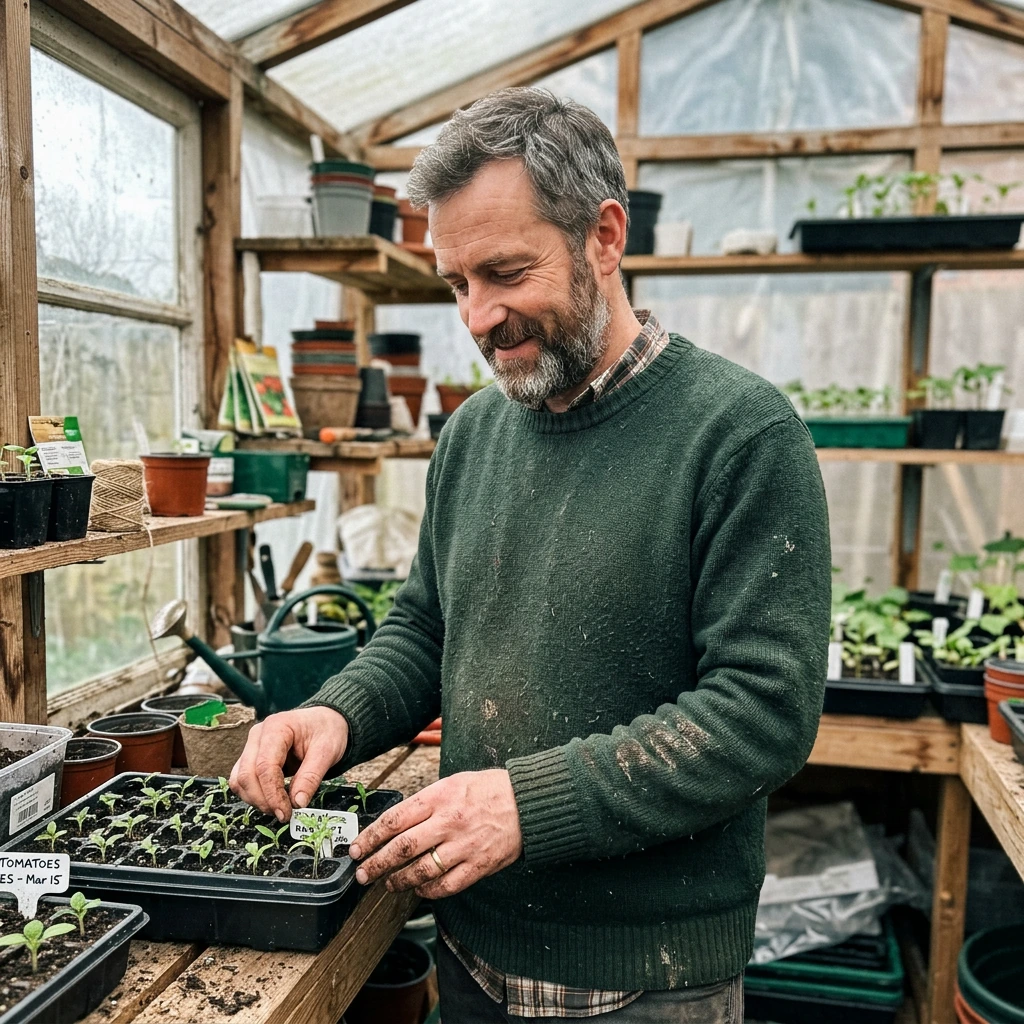
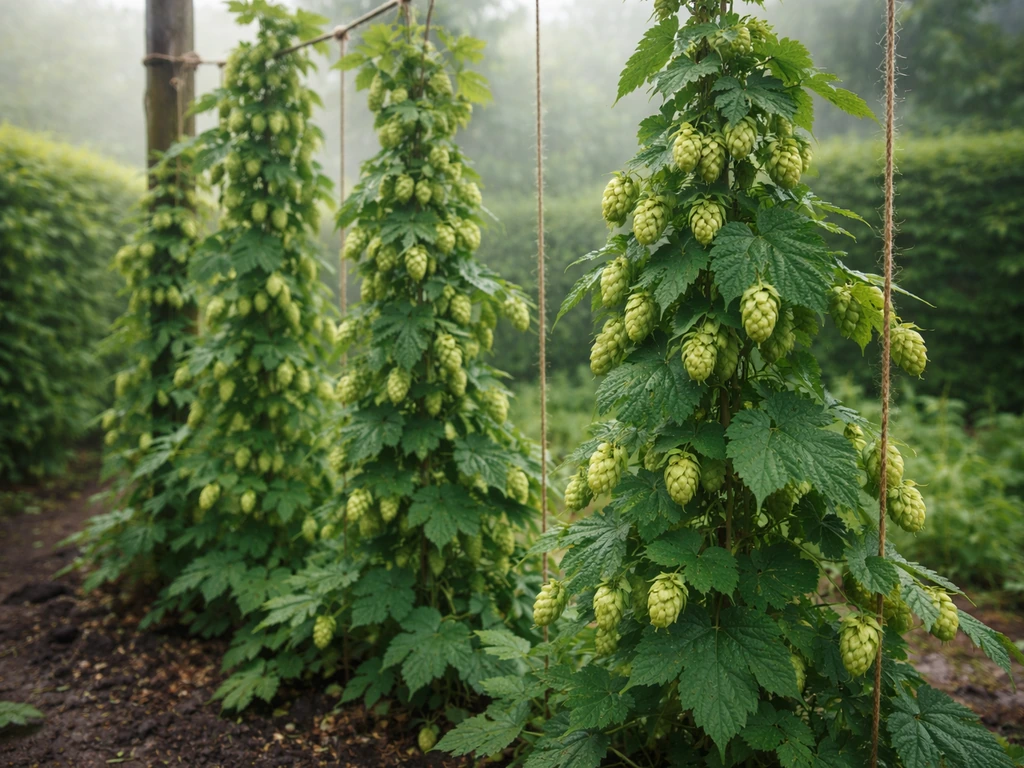
Hops are genuinely well matched to the British climate. They need a clear seasonal cycle with cold winters (to trigger dormancy) and long, warm summers to produce cones, and the UK delivers both. The critical daylight trigger is the summer solstice: hops climb vertically until the longest day in June, then switch to producing the lateral shoots that eventually form cones. Our day-length pattern fits this biology neatly.
Where things get more complicated is regional variation. In the South East and West Midlands, conditions are close to ideal: warmer summers, reasonable sunshine hours, and the fertile, well-drained soils that traditional UK hop gardens were built on. As you move north and into Scotland, summers are cooler and shorter, which can reduce yields and slow cone development. It's not impossible further north, but you need to work harder on microclimate: a south-facing wall, a sheltered spot, and a variety chosen for earlier maturity. Coastal areas in the south and south-west can be surprisingly good if you manage the salt wind.
The bigger climate challenge in the UK isn't cold, it's wet. Our humid summers create near-perfect conditions for downy mildew and powdery mildew, which are the two diseases that can genuinely devastate a hop crop. Good airflow, correct spacing, and variety selection matter a lot here. More on that shortly.
Choosing the right hop variety for UK conditions
Traditional British varieties are the safest starting point. If you're also interested in fruiting bushes, check out the best gooseberries to grow in the UK for reliable yields best gooseberries to grow UK. Fuggle and Goldings are both well suited to UK soils and weather, and there's a reason they've been grown here for centuries. They're robust, disease-tolerant by comparison to many modern varieties, and produce cones with classic earthy, floral flavour profiles that work brilliantly in British ales. For a first-time grower, I'd pick one of these before experimenting with American or continental types.
That said, other varieties do perform well in UK gardens. Sea buckthorn is another edible shrub people often wonder about for the UK, but the key is whether your conditions match its needs UK gardens. Cascade is popular with home brewers and grows reasonably well in the south, though it can be more susceptible to mildew. First Gold is a compact, disease-tolerant UK-bred variety that suits lower trellis systems. Challenger and Target are both used commercially in the UK and are solid performers. If you're in the north or Scotland, look for earlier-ripening varieties so cones have time to develop fully before autumn sets in.
| Variety | Origin | UK Suitability | Disease Tolerance | Notes |
|---|---|---|---|---|
| Fuggle | UK | Excellent across most regions | Good | Classic earthy profile, ideal first choice |
| Goldings | UK | Excellent, especially South East | Good | Floral and spicy, traditional British ale hop |
| First Gold | UK | Very good, compact growth | Very good | Works well on lower trellis systems |
| Challenger | UK | Very good | Good | Used commercially in UK, reliable yields |
| Target | UK | Very good | Good | High alpha, strong grower |
| Cascade | US | Good in southern regions | Moderate | Popular with home brewers, watch for mildew |
| Chinook | US | Moderate | Moderate | Better in sheltered southern sites |
Picking the right spot: sun, wind, soil, and drainage
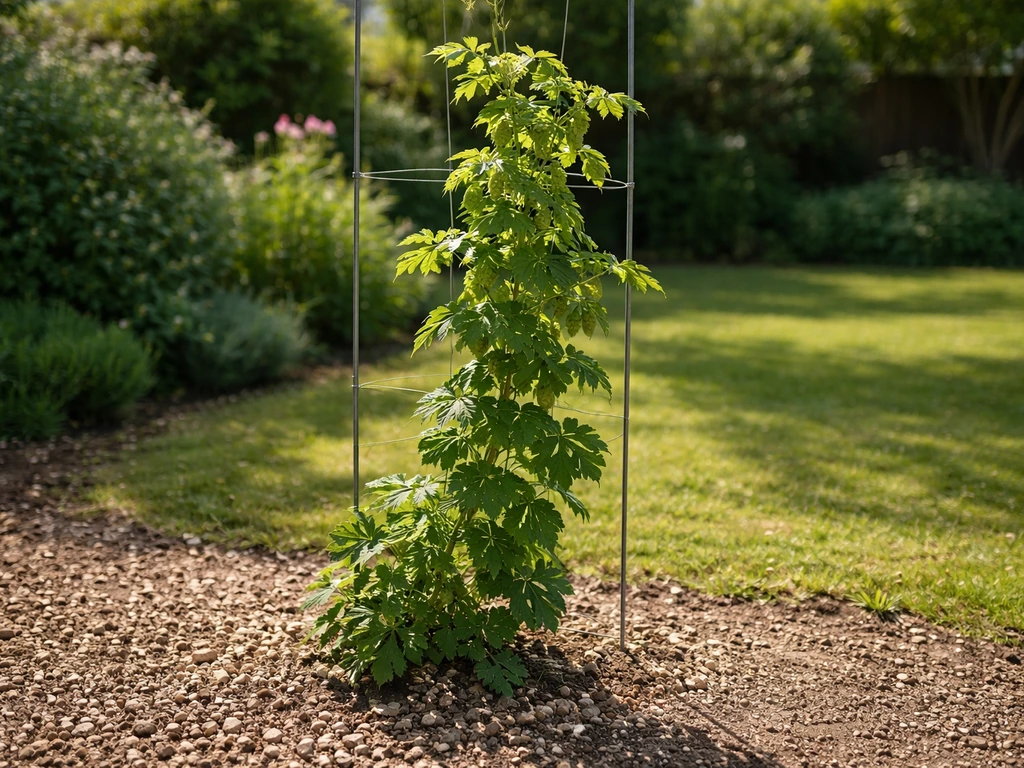
Hops want as much sun as you can give them. A south or south-west facing position is ideal. They'll tolerate some partial shade but cone yields drop off noticeably in shadier spots. If you're working with a north-facing garden or heavy shade from buildings and trees, hops are going to disappoint you.
Airflow is just as important as sunlight, and this is where a lot of UK growers go wrong. Dense, still corners of the garden trap humidity around the foliage and that's an open invitation to mildew. You want air to move through the plant canopy, but you don't want a fully exposed, wind-lashed site either as that will damage the bines and make training difficult. A semi-sheltered position with good through-airflow is the sweet spot.
Soil-wise, hops prefer a pH of 6.0 to 6.5, which is mildly acidic and covers most UK garden soils reasonably well. They like a deep, fertile, free-draining loam. Waterlogged soil is one of the quickest ways to kill a hop plant, as standing water causes root rot and makes the plant miserable. If your soil is clay-heavy and poorly drained, raise the bed or work in plenty of organic matter and grit before planting. Space plants at least 3 feet apart to keep air moving between them.
Planting and seasonal care: a UK calendar
Hops are planted as rhizomes (root cuttings) or as bare-root sets. In the UK, spring is the time to plant, and the guidance from specialist suppliers is clear: get them in no later than mid-April. Earlier is fine once the ground isn't frozen. Bare-root hop sets often look deceptively small when they arrive, but don't be fooled. These are two-year-old plants with established root systems and they grow fast once settled in. Plant rhizomes horizontally about 5 to 8cm deep, or follow supplier instructions for bare-root sets.
- February to March: Check soil drainage and pH, amend if needed. Order rhizomes or hop sets early, as popular varieties sell out.
- March to mid-April: Plant rhizomes or sets once the ground is workable. Set up your trellis or string system before growth begins.
- April to May: First shoots emerge. Select 2 to 3 of the strongest bines per plant and tie them to your strings or trellis. Remove weaker shoots.
- May to June: Bines climb fast, sometimes 30cm or more per week in warm weather. Keep training them onto their supports. Water during dry spells. Apply a balanced fertiliser.
- Late June: After the solstice, vertical growth slows and lateral shoots appear. These laterals are where your cones will form. Don't remove them.
- July to August: Monitor closely for mildew and pests. Water at the base, avoid wetting foliage. The plants need little intervention now beyond vigilance.
- Late August to early September: Harvest cones (see below for ripeness cues). This is the most labour-intensive week of the hop year.
- September to October: After harvest, cut bines back to about 60cm above ground. Begin reducing water.
- November: Cut plants down to ground level. Apply a thick mulch of straw or bark over the crown to protect it over winter.
- December to February: Dormancy. The plant looks dead but isn't. Resist digging it up.
Setting up your trellis and training the bines
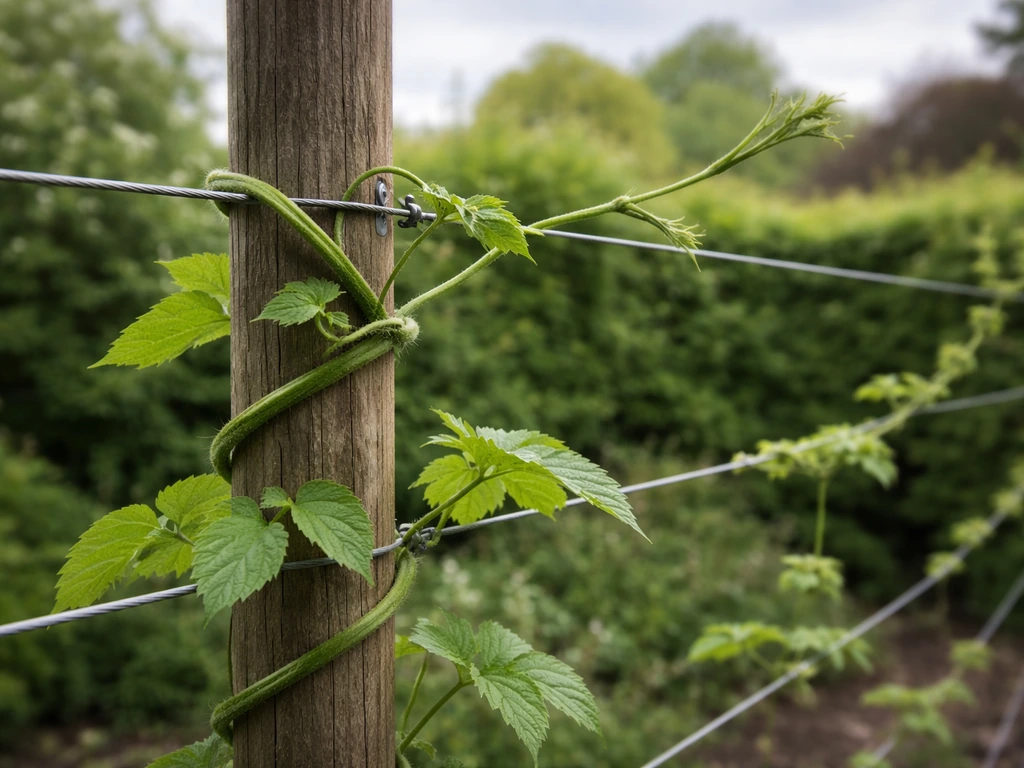
Traditional commercial hop gardens in the UK used tall trellises reaching 5 to 6 metres, which is what most people picture. That works brilliantly if you have the space and height, but it's not the only option. The British Hop Association has actually developed a low trellis growing system that's now being adopted internationally, and this is very practical for garden and smallholder scale. A low trellis of around 2 to 3 metres is manageable, easier to harvest, and still produces a decent yield.
For most UK home growers, the simplest approach is a sturdy post-and-wire system with coir or jute strings running from a ground anchor up to a wire stretched between posts. Fix your top wire at whatever height you're working with, then tie strings down to pegs or hooks near each plant. Hops climb anticlockwise in the UK (it's not random, it's instinctive to the plant), so always train your bines in that direction from the start. Use soft ties or simply tuck the bine around the string and it will follow naturally.
Posts need to be sturdy. A fully loaded hop bine in August, heavy with cones and foliage, catches the wind like a sail. Fence posts concreted into the ground are appropriate. The whole structure needs to handle the weight of multiple bines per plant without leaning or failing in a summer storm. Don't cut corners here.
Pests, diseases, and what to do about them in UK conditions
Mildew: the main threat in UK summers
Downy mildew and powdery mildew are the diseases you'll spend the most time thinking about. Downy mildew appears on the foliage and spreads via airborne spores, thriving in the wet, cool conditions our springs often deliver. Powdery mildew typically starts as white powdery patches, often on the undersides of leaves first before spreading to the top surface, and it loves warm, humid conditions. Susceptible varieties may need frequent fungicide applications to keep either disease under control, which is one reason choosing a tolerant variety matters so much. Good airflow, correct spacing, and avoiding overhead watering are your first lines of defence. Cornell Hops' IPM guidance recommends scouting during the growing season (at least weekly) and using that to guide a spray plan for managing hop diseases and pests a spray plan accordingly.
Verticillium wilt: a soil problem with no easy fix
Verticillium wilt is a soil-borne fungal disease that causes wilting, yellowing, and dieback, and it's a serious concern for UK hop growers. RHS notes that Verticillium wilt is a soil-borne fungal disease that enters plants through the roots and can be spread by contaminated soil, for example via tools or muddy boots, so good hygiene matters soil-borne fungal disease that causes wilting, yellowing, and dieback. The honest truth here is that chemical treatments are not practical once it's present, which means prevention is everything. Don't plant hops where potatoes, tomatoes, or strawberries have recently grown (all susceptible to the same pathogen). If you suspect wilt in an established plant, the best response is removing and destroying affected material and not replanting hops in the same spot.
Red spider mite and aphids
Spider mites are more of a problem in hot, dry summers, which does happen even in the UK. Keeping the area clear of debris and watering the base of plants during dry spells discourages them. If mites take hold, predatory mites such as Amblyseius andersoni or Amblyseius cucumeris are an effective biological control and work well on hop plants. Aphids are usually manageable by encouraging natural predators like lacewings and ladybirds into the garden. A dilute soapy water spray can also knock aphid numbers back without leaving chemical residue on cones you're planning to use for brewing.
Poor early growth and root issues
If a newly planted hop seems to do nothing for several weeks, don't panic immediately, but do investigate. Root attack from beetle larvae or vine weevil grubs can cause exactly this symptom in the first season. Check the root zone carefully if growth is very slow. Healthy new plants should show shoots within a few weeks of planting. If you see nothing by late May, it's worth gently investigating what's happening below ground.
Harvesting your hop cones
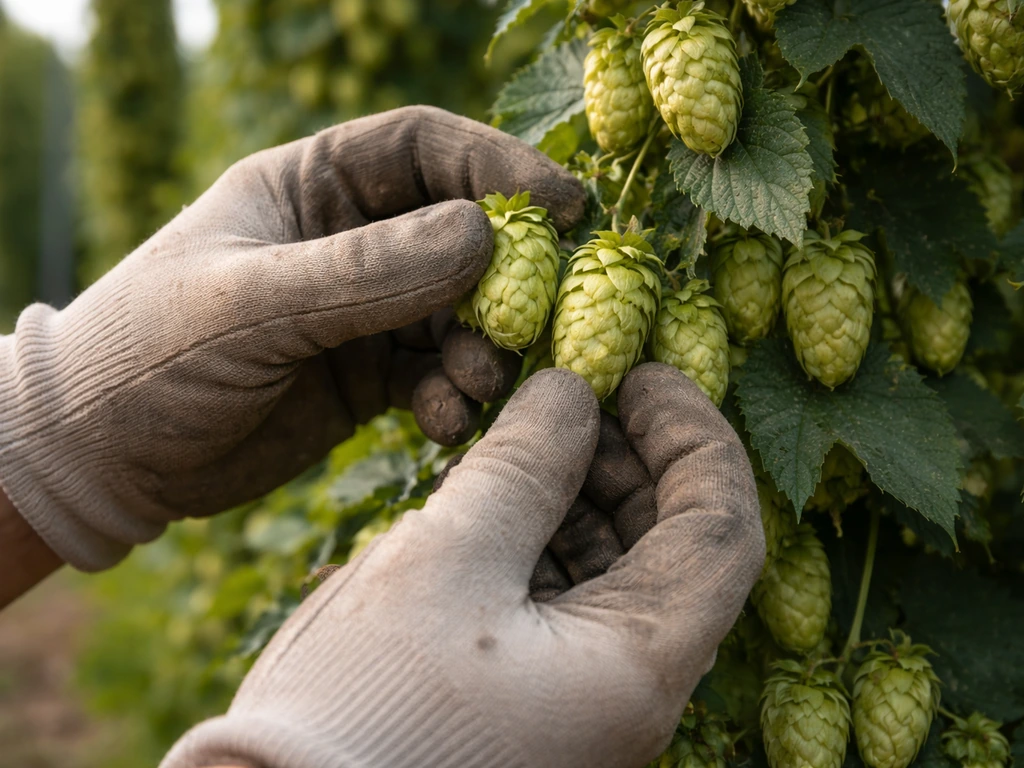
In most parts of the UK, harvest falls in late August to early September. Don't rush it. Picking too early gives you immature cones with less aroma and fewer brewing compounds. The ripeness cues are physical: a ripe cone feels dry and slightly papery rather than damp and soft, it springs back when you squeeze and release it, and the lupulin (the yellow powdery resin inside) is richly fragrant and golden. If you crush a cone between your fingers and it smells intensely of the characteristic aroma for that variety, you're there. Unripe cones smell grassy rather than aromatic.
Harvest is best done on a dry day. Pick by hand, working from the bottom of the bine upward. For home growing quantities, this usually means a few hours of picking. Check cones throughout the plant as ripeness can be uneven, especially in cooler northern sites where the top of the bine may ripen slightly later than lower cones.
Drying and storing your harvest
Fresh hops have a high water content and will go mouldy within days if not dried. Spread them in a single layer on a fine mesh or hessian sheet in a warm, dry, airy place out of direct strong sunlight. A warm loft, a well-ventilated outbuilding, or even a sunny garden in dry weather works. The cones are dry enough when they feel papery and the central stem (the strigo) snaps rather than bends. This typically takes several days to a week depending on conditions.
Once dry, vacuum-seal the cones in bags, squeeze out as much air as possible, and store in the freezer. Hops oxidise and lose their aromatic compounds quickly when exposed to air at room temperature. Frozen, well-sealed hops can hold their quality for a year or more. If you're brewing with them fresh (wet hopping), use them within 24 hours of picking.
What yield to realistically expect and how to improve it
Year one is almost always a disappointment in terms of cones, and that's completely normal. The first season is about root establishment. You might get a handful of cones, or none at all. Year two is better, often producing a noticeable harvest. By year three and beyond, a well-established hop plant in a good UK site can produce between 300g and 1kg of dried cones per plant annually, sometimes more with high-yielding varieties and ideal conditions. Commercial UK hop gardens obviously scale this dramatically, but for home growing those numbers are realistic and genuinely useful quantities for home brewing.
If you're in Scotland or northern England and finding yields disappointing, prioritise variety choice above everything else. Earlier-ripening varieties give cones more time to develop before the light goes. A south-facing wall that absorbs heat and extends the effective growing season can make a meaningful difference. Mulching well before winter also helps ensure the crown comes back vigorously the following spring.
Before you buy rhizomes or hop sets, check a few things: does the supplier ship to your area? Is the variety suited to your region? Does your chosen site actually get enough sun for at least six hours per day through summer? Starting with one or two plants rather than a full row lets you learn the crop without a big investment, and it's much easier to manage disease on a small scale while you work out the best approach for your conditions. Hops are long-lived perennials, with plants often producing well for ten to twenty years, so the time you spend choosing the right site and variety upfront pays back for a long time.
FAQ
Can you grow hops in the UK if you only have a small garden or limited height?
Yes, but you will need to scale the trellis and planting. A low trellis system (about 2 to 3 metres) works well for garden and smallholder setups, and you can start with one or two plants. If you choose a tall trellis, check that posts can withstand wind loads in late summer, because a fully loaded bine behaves like a sail and can pull over weak supports.
What UK climate areas are best for hop growing, and how does Scotland compare?
The UK Midlands and South East tend to give the most consistent yields, because summers are warmer and longer. Further north, the main issue is time for cones to fully mature, not winter hardiness. To improve your chances in Scotland or northern England, prioritise earlier-ripening varieties and use microclimates such as sheltered south-facing walls, because that can extend heat and cone development before autumn.
How much sun do hops really need in the UK?
Aim for at least six hours of direct sun through the summer season. Partial shade is sometimes survivable, but yields drop, and disease pressure can rise because foliage stays wetter for longer. If your garden gets dappled shade, reassess airflow too, because shade plus humidity is a common mildew combination.
Can you grow hops in heavy clay soil without replacing it?
Sometimes, but drainage is the deciding factor. Hops dislike waterlogged ground because root rot quickly follows. If you have clay-heavy soil, raise the planting area or create a raised bed, then improve structure with plenty of organic matter and grit before planting. Also avoid planting in the lowest part of the yard where runoff collects.
Do hops need to be fertilised heavily in the UK?
Not automatically, and overdoing nitrogen can increase soft, mildew-prone growth. Instead, focus on starting with fertile, free-draining soil and, if you fertilise, do it modestly and at the right time so growth is vigorous without staying lush and damp. If you see lots of leafy growth but few cones, reduce nitrogen and review spacing and airflow before adding more feed.
How do you prevent downy mildew and powdery mildew in UK conditions?
Start with prevention steps: space plants so air can move, avoid overhead watering, and choose a semi-sheltered site that still has through-flow of air. Many growers also treat by watching early signs and acting quickly, because mildew can spread fast in humid weeks. If a variety is known to be more susceptible, it may require tighter monitoring than tougher types even if your site is good.
What should I do if my hop plant is not growing after planting?
Don’t assume it is dead, but do investigate the root zone if you see no shoots by late May. In the UK, slow or stalled growth can come from hidden root pests such as vine weevil grubs or beetle larvae. Gently check around the crown area and ensure the soil is not waterlogged, then correct any drainage or spacing issues immediately.
How do you know when hops are ready to harvest?
Use physical and sensory cues rather than just timing. Ripe cones feel dry and slightly papery, should spring back when squeezed, and the lupulin should smell strongly aromatic and golden. If cones smell grassy and the texture is damp or soft, they are usually not ready, even if the calendar says otherwise.
Can you harvest on a wet day and still dry the hops properly?
It is better to harvest on a dry day because wet cones can mould quickly during handling. If you must pick in damp weather, dry them immediately in a warm, airy space with good ventilation, and spread cones in a single layer to speed moisture loss. Avoid strong direct sun that can overheat cones and degrade aroma.
How long do dried hops last in the freezer, and can you store them at room temperature?
For best aroma, freeze vacuum-sealed cones and keep exposure to air to a minimum. Room temperature storage leads to faster oxidation and loss of hop character, even if cones are properly dried. If you plan to use hops regularly, portion them into smaller freezer bags so you open each bag less often.
Do hops climb the same direction everywhere, and how important is training?
In the UK, hops climb anticlockwise, and it matters to train bines in that direction from the start. Training late can lead to tangling and makes it harder to manage airflow through the canopy. Use soft ties or allow the bine to wrap the string naturally, then keep it guided as it lengthens.
Can hops be grown as an edible garden crop alongside other common plants?
Yes, but plan the bed location carefully if you want to avoid soil-borne problems like Verticillium wilt. A key prevention step is not planting hops where potatoes, tomatoes, or strawberries have recently grown, because they share susceptibility to the same pathogen. If you are starting new, choose the spot as if it will be occupied for many years, since hops can produce for a decade or more.
Can You Grow Tiger Nuts in the UK? Practical Guide for Gardeners
Can you grow tiger nuts in the UK? Practical, regional guide with planting dates, containers, harvest & recipes.