Yes, juniper absolutely grows in the UK. Juniperus communis (common juniper) is actually one of only three native conifers in Britain, so it is genuinely at home here rather than something you are coaxing into an alien climate. The bigger question most people are really asking is whether it will produce berries, and the honest answer is: it can, but you need both a male and a female plant, the right variety, decent sunlight, and a bit of patience because the 'berries' (which are technically modified cones) take up to 18 months to ripen.
Does Juniper Grow in the UK and Do Juniper Berries?
James Hartwell
25 Apr 2026
Do juniper berries actually grow in the UK?
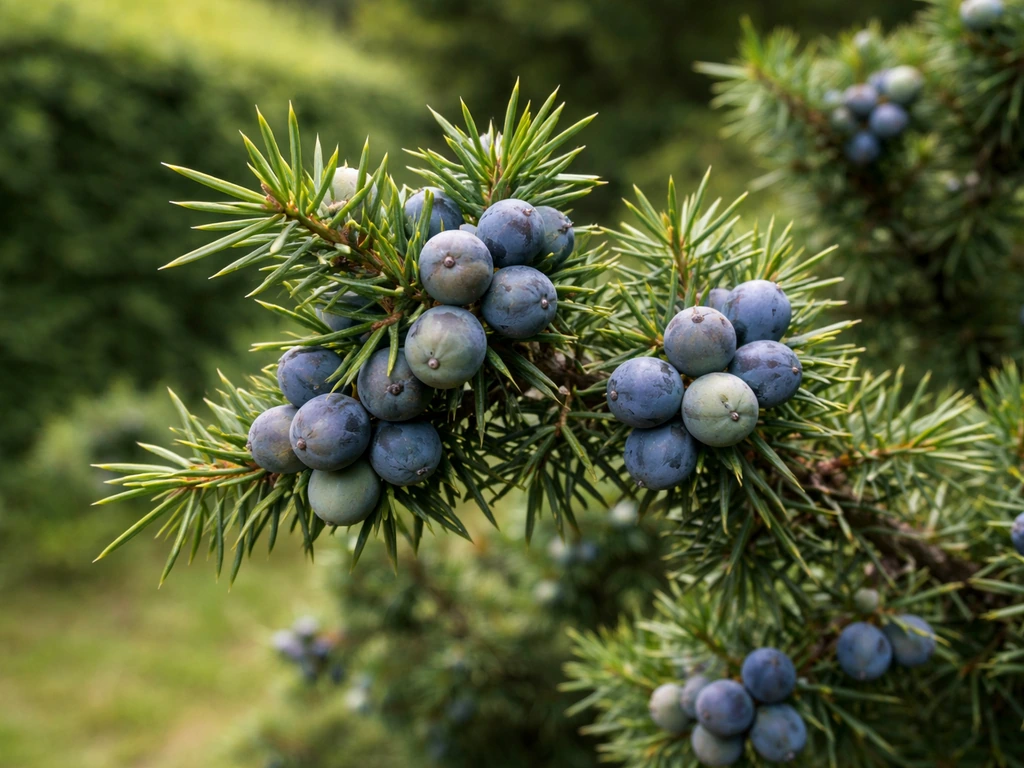
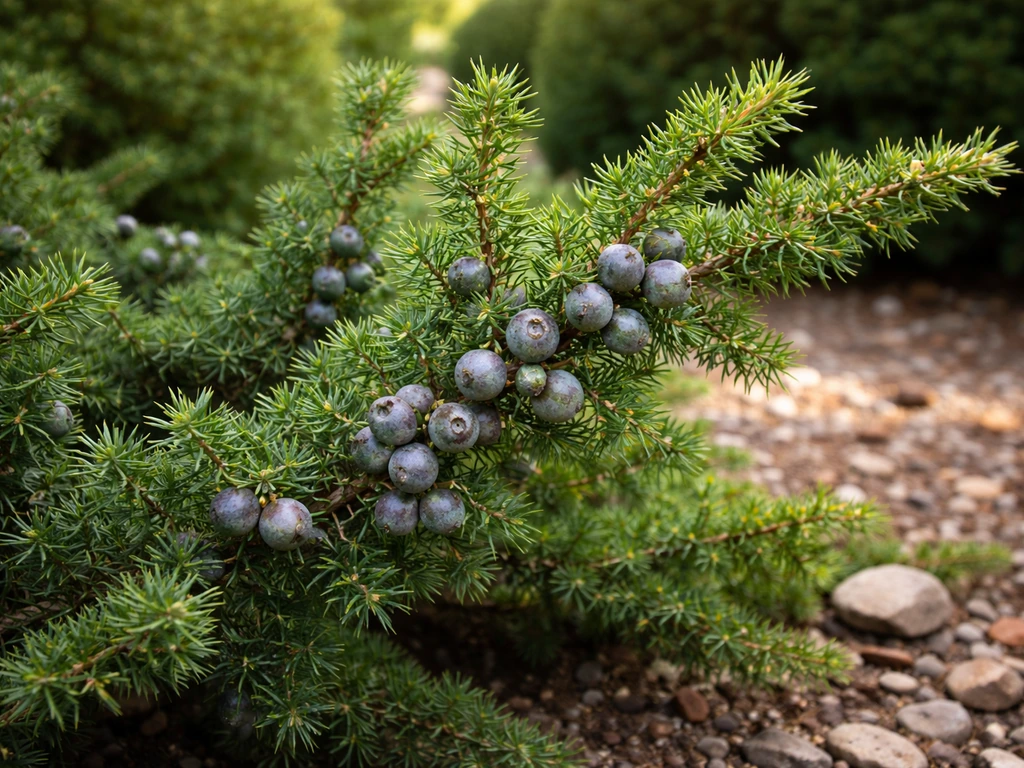
They do, though the term 'juniper berry' is a slight botanical fib. What you are looking at is a fleshy seed cone, not a true berry. That said, they look and behave enough like berries that the name has stuck, and they are the same thing used in gin production and cooking. On a female plant in good conditions, these cones start green and slowly ripen over roughly 18 months to a deep purple-black with a distinctive blue waxy bloom. Because the ripening takes so long, you will often see cones at different stages on the same plant at the same time, which can be confusing if you are waiting for a single harvest moment. There is not really one.
Whether your plant will fruit comes down to a few specific factors. First and most importantly: juniper is dioecious, meaning individual plants are either male or female, never both (with some minor exceptions in Juniperus sabina). Juniperus communis is dioecious, meaning male and female reproductive parts are on separate plants, so you need both sexes for berry-like cones to form blank" rel="noopener noreferrer">juniper is dioecious. Only female plants produce cones. If you have bought a single unnamed juniper from a garden centre without knowing its sex, there is a real chance it is male or that it has no partner nearby for pollination. This is the number one reason UK gardeners end up with a healthy, bushy juniper that never produces a single berry.
Which juniper varieties do well in British gardens?
Common juniper (Juniperus communis) is the obvious starting point because it is native and completely unbothered by the British climate, whether you are in the sheltered South Coast or the windswept Scottish uplands. It grows naturally on heathland, calcareous grassland, and open scrub, which tells you a lot about its preferences: free-draining, often poor soils, and plenty of exposure. Several named cultivars are sold in UK nurseries, including the upright golden 'Gold Cone' and the more compact 'Compressa'. Both are female and capable of producing berries if pollinated.
Beyond communis, a couple of other species are worth knowing about. Juniperus sabina and its cultivar 'Tamariscifolia' (the spreading fan juniper) is widely grown in the UK as ground cover and does produce small globose seed cones. Interestingly, J. sabina is described as largely but not strictly dioecious, meaning some individual plants can carry both male and female parts, which slightly improves your odds of berry production even from a single plant. Juniperus chinensis varieties are also commonly sold in UK garden centres and are generally hardy, though they are usually strictly dioecious. For actual edible culinary berries, stick with Juniperus communis.
| Species/Cultivar | Habit | Berry Potential | Notes for UK Growers |
|---|---|---|---|
| Juniperus communis | Variable (upright to spreading) | High (female plants) | Fully native; best for culinary berries |
| J. communis 'Gold Cone' | Narrow upright column | Yes (female cultivar) | Good for smaller gardens; needs a male nearby |
| J. communis 'Compressa' | Dwarf upright | Yes (female cultivar) | Slow growing; suits rockeries and containers |
| J. sabina 'Tamariscifolia' | Low spreading | Moderate | Sometimes carries both sexes; small ornamental cones |
| Juniperus chinensis varieties | Variable | Yes (female plants only) | Ornamental; strictly dioecious; not culinary |
Where to grow juniper in the UK: climate, soil, sun, and exposure
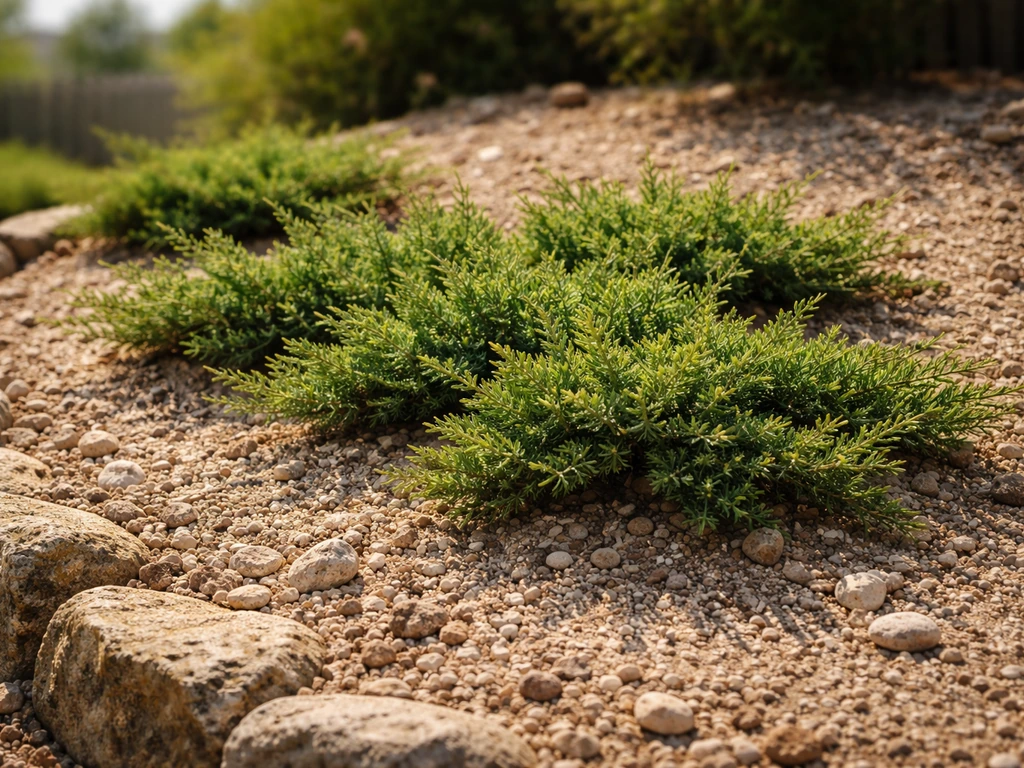
Juniper is one of the less demanding plants you can put in a UK garden, but it does have one firm requirement: good drainage. The RHS is clear that it grows best in dry chalky or sandy, well-drained soil in full sun or light dappled shade. Waterlogged soil will cause root rot fairly quickly, particularly in Juniperus sabina varieties. If your garden sits on heavy clay, you will need to either raise the bed or work in serious amounts of grit before planting.
Sunlight matters more than most people realise. Juniper will tolerate a bit of shade but tends to become loose and straggly, and berry production on female plants drops noticeably in shadier spots. For reliable fruiting, aim for a spot that gets at least five to six hours of direct sun on a summer day. South or west-facing aspects on well-drained slopes are ideal, which mirrors the kind of chalk downland and heathland habitat where you find wild juniper in the UK.
Regionally, juniper is genuinely unfussy. It grows wild in Scotland, northern England, Wales, and across the south of England. It handles frost without complaint, copes with coastal exposure, and tolerates cold winds better than most ornamental shrubs. That said, if you are in a particularly wet part of the UK (western Scotland, parts of Wales, the Lake District), drainage becomes even more critical, and you should be especially careful about soil preparation. In drier, sunnier areas like the South East or the East Midlands, juniper often establishes with very little fuss.
How to actually get berries: male and female plants, pollination, and timing
This is where most people go wrong, and it is worth being blunt about it. Juniper is dioecious. That means you need at least one male plant and at least one female plant within wind-pollination range of each other. A single female sitting in your garden with no male nearby will not fruit, no matter how healthy it looks. Pollen is carried by wind in spring, when male cones release it. The female plant then develops its seed cones, and those cones slowly ripen over the following 12 to 18 months, sometimes as long as two to three years depending on the source and conditions.
The challenge at nursery level is that young juniper plants are often not sexed or labelled, and you cannot easily tell male from female by looking at the foliage. The best approach is to buy from a specialist who can confirm the sex of what you are buying, or to buy multiple plants from the same batch and wait to see which develop cones (male cones are small, yellowish, and appear in spring; female cones stay on the plant and develop into the berry-like structures). If you already have a mature female plant that has never fruited, check whether there is a male plant anywhere nearby, including in neighbouring gardens, as wind will carry pollen surprisingly well.
Plant age also matters. Young junipers rarely fruit in their first few years regardless of conditions. Give a newly planted juniper at least three to five years before you worry seriously about a lack of berries. Patience is genuinely part of the process here.
Planting and care basics to give you the best shot at a fruiting plant
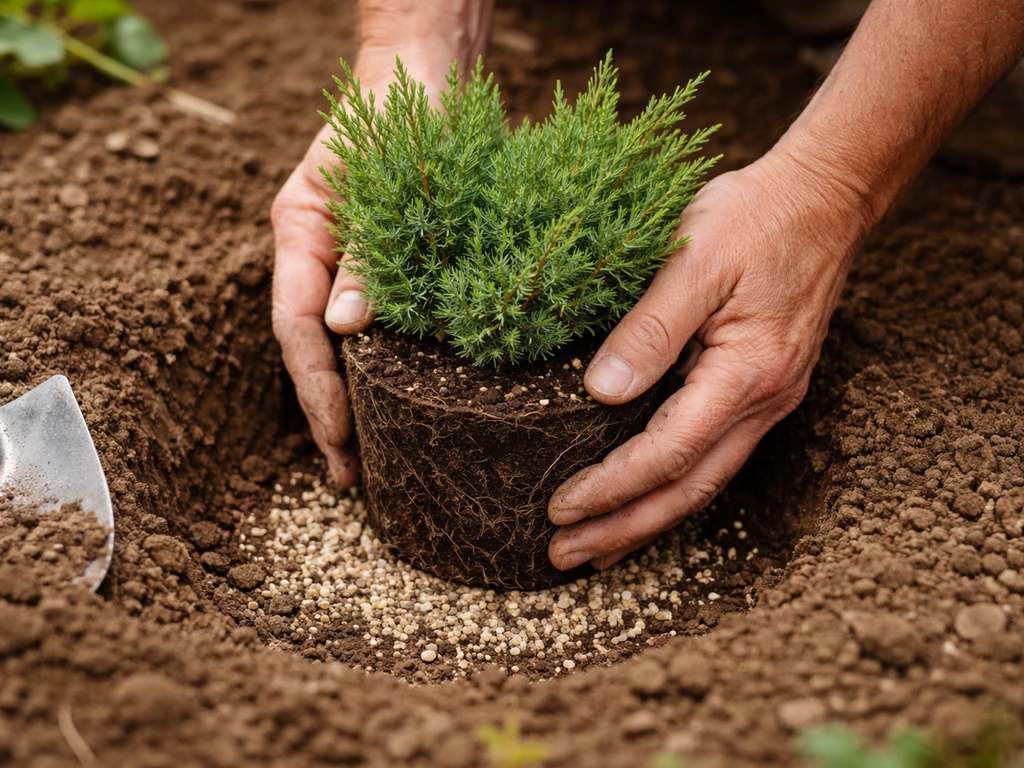
Plant in autumn or spring into well-drained soil, ideally with some grit worked into the planting hole if your soil is at all heavy. Junipers grown in the UK rarely need feeding; in fact, overly rich fertile soil tends to produce lush soft growth that is less hardy and less productive. A light mulch of gravel or grit around the base helps with drainage and keeps the crown dry. Avoid organic mulches pushed right up against the stem, as these can hold moisture and encourage rot at the base.
- Plant in full sun where possible, with south or west-facing aspects preferred for maximum berry production on female plants
- Ensure excellent drainage before planting, especially on clay-heavy soils in wetter regions
- Buy at least one confirmed male and one confirmed female plant if your goal is berries
- Space plants so that wind can move between them freely, which aids natural pollination
- Water regularly in the first year after planting, then leave them largely to their own devices
- Avoid heavy pruning, which can remove the developing seed cones on female plants
- Do not feed with nitrogen-heavy fertilisers, which encourage soft leafy growth at the expense of cone production
Juniper is genuinely low maintenance once established. It does not need regular pruning beyond tidying dead material, and it is largely pest and disease free in UK conditions. The main ongoing task is simply checking that drainage remains good, particularly after wet winters.
Why your juniper isn't fruiting (and what to do about it)
If you have a juniper that should be old enough to fruit but simply isn't, run through this checklist before concluding it is a lost cause. Most non-fruiting problems have a straightforward explanation.
- You only have one plant, or all your plants are the same sex. This is by far the most common cause. You need both a male and a female, and you need to be reasonably confident which is which. A male juniper will never produce berries, full stop.
- The plant is too young. Junipers typically need several years to reach sexual maturity. If yours is under four or five years old, give it more time before drawing conclusions.
- There is not enough sunlight. A juniper in shade or partial shade may grow fine but will rarely fruit well. If the spot gets less than five hours of direct sun in summer, consider moving the plant or removing whatever is casting shade.
- The soil is waterlogged or poorly drained. Root stress from wet conditions suppresses cone production even when the plant looks superficially healthy above ground.
- There is no male plant within range. Wind pollination can work across reasonable distances, but an isolated female in a walled garden or surrounded by other plants on all sides may not be receiving enough pollen. Try to establish a male plant within ten to fifteen metres if possible.
- You have been pruning too hard or at the wrong time. Pruning in late spring or summer can remove developing female cones before you even notice them. Keep pruning to a minimum and do it in late winter if at all.
If you have addressed all of the above and still get nothing after five or six years, it is worth questioning whether your plant is actually female. Some retailers sell unnamed junipers without sexing them at all, and you may simply have ended up with a male. At that point, your best option is to add a confirmed female plant rather than wait indefinitely. Specialist native plant nurseries and some online suppliers now label the sex of their juniper stock, which makes the whole process much more straightforward.
The bottom line for UK gardeners
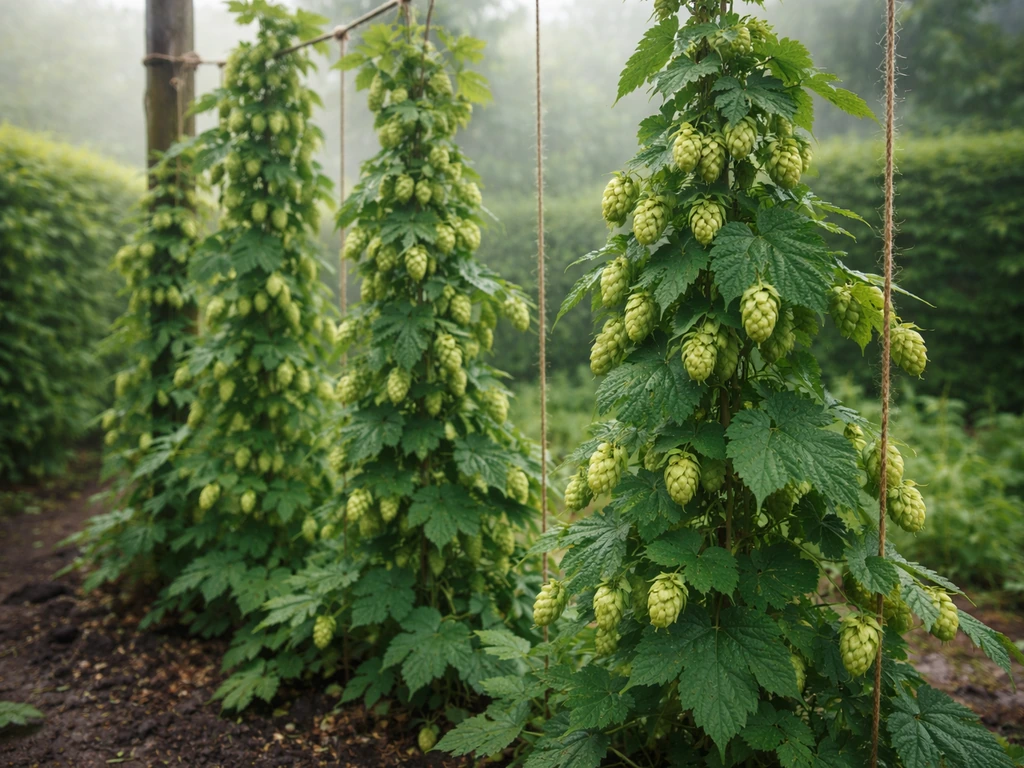
Juniper is one of the most genuinely suited plants you can grow in a UK garden, because for common juniper, Britain is its home. Growing it is easy. Getting berries requires a bit more planning, specifically buying both sexes, choosing a sunny well-drained spot, and being prepared to wait a few years for the plants to establish and the slow-ripening cones to develop. You can also grow raspberries in the UK, but they need a different set of conditions than juniper berries can you grow raspberries in the uk. Yes, if you are trying to answer can you grow cranberries in the UK, the key is matching their need for acidic, bog-like conditions with the right setup. Lingonberries can grow in the UK too, but they need very specific acidic conditions to do well. Once you have those pieces in place, a healthy female Juniperus communis in a UK garden will reliably produce its distinctive blue-black berries year after year with very little input from you. For anyone interested in homegrown botanicals for cooking or home gin production, it is one of the most rewarding low-effort fruiting shrubs you can plant. If you are also wondering about sea buckthorn, it does not grow as reliably in the UK as common juniper does, so it helps to check the variety and provide the right conditions sea buckthorn in the UK. Can you grow hops in the UK? Yes, and the key is choosing a suitable variety and giving plants strong sun and support. If you are specifically looking for gooseberries, see our guide to the best gooseberry varieties to grow in the UK.
FAQ
How far apart do male and female junipers need to be in the UK to get berries?
There is no exact distance, because wind is doing the work, but closer is better. In practice, aim to have the male within the same garden or nearby hedge line, ideally not separated by a lot of open space or tall obstructions. If you cannot place a male plant, the most reliable solution is to plant a confirmed female and a confirmed male in your own space rather than hoping neighbouring gardens will provide pollen.
Can my existing juniper start producing berries after I add a male plant later?
Yes, if the plant is already female and mature enough, it can begin fruiting once pollination happens. New cones still take a long time to ripen, so you may not see results immediately, expect at least a year and often 12 to 24 months from successful pollination, depending on conditions.
What if I only have room for one juniper, is there any workaround to get “juniper berries”?
With most junipers, you need both sexes because they are dioecious. The only real workaround is choosing a species or cultivar that is more likely to carry both male and female parts (like the largely but not strictly dioecious Juniperus sabina), or planting two plants from the start (one confirmed male and one confirmed female). Buying just one unnamed plant is the most common reason people wait for years without ever getting cones.
Do juniper berries ripen all at once, and when should I harvest?
They do not ripen in a single, predictable window. Because cones can start and ripen at different times on the same plant, you typically harvest gradually when fruits turn deep purple-black and develop the dusty blue bloom. If you harvest too early, they will be greener and less useful for cooking or gin-style flavour.
My juniper makes lots of seed cones but they drop early, what could be wrong?
Early dropping often points to stress, commonly poor drainage or a period of waterlogging followed by drying. Check for standing water after rain, and make sure the soil is well-draining. Also consider insufficient sun, because shadier spots can lead to weak fruit set even if cones appear initially.
Will feeding my juniper help it fruit more?
Usually not. Overly fertile soil can encourage soft, lush growth that is less hardy and may reduce fruiting performance. If you are going to do anything, keep it minimal, focus on drainage and sun, and avoid high-nitrogen fertilisers.
Is it safe to eat juniper “berries” from my UK garden?
For culinary use, stick to Juniperus communis, because its fruits are the ones traditionally used for gin and flavouring. If your plant is a different juniper species or a nursery label is unclear, do not assume the fruits are suitable. When in doubt, confirm the plant identity before tasting.
How can I tell whether my juniper is male or female without waiting for berries?
In many cases you cannot reliably tell from foliage alone. Male cones are typically small and yellowish and appear in spring, while female seed cones develop and stay on the plant, slowly turning from green to purple-black over time. If your plant is young or you never get cones, the best option is to buy from a specialist that can confirm sex at purchase.
Will pruning or transplanting affect my chances of getting berries?
Yes. If you prune heavily or move a plant, it may take several years to settle and rebuild the growth needed for fruiting. For established plants, avoid aggressive cutting back into old wood, and remember that berry development takes time even after pollination.
What’s the biggest mistake UK gardeners make when trying to grow juniper for berries?
Buying a single unnamed juniper and expecting it to fruit. Because it is dioecious, fruiting depends on having a confirmed female plus a male nearby for wind pollination. The second most common issue is planting in soil that stays wet, which can prevent healthy establishment and reduce fruiting over time.
Next Article
Can You Grow Hops in the UK? How to Grow Step by Step
Yes, you can grow hops in the UK. Step-by-step guide for site, varieties, training, care, pests, harvest and storage.