The short answer: thyme, chives, mint, oregano, rosemary, and parsley are the most reliable herbs you can grow outdoors in the UK. If you're wondering what can you grow in Portugal, similar culinary herbs can work well, but you'll want to match them to Portugal's warmer, drier conditions. Most will survive a British winter with minimal fuss, and several of them will just get on with it year after year without much help from you. Whether you've got a sunny border, a raised bed, or a couple of pots on a north-facing balcony, there's a combination here that will work. Let's get into the specifics.
Best Herbs to Grow Outdoors in the UK: Easy Guide
James Hartwell
24 Mar 2026
The easiest outdoor herbs for UK gardens
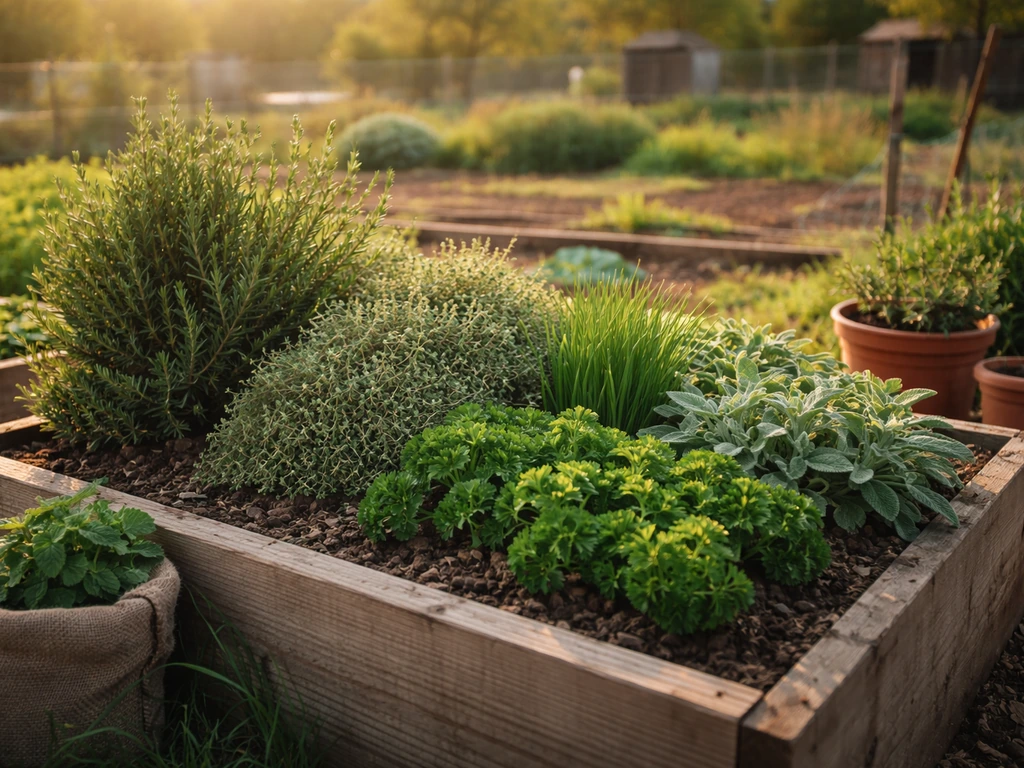
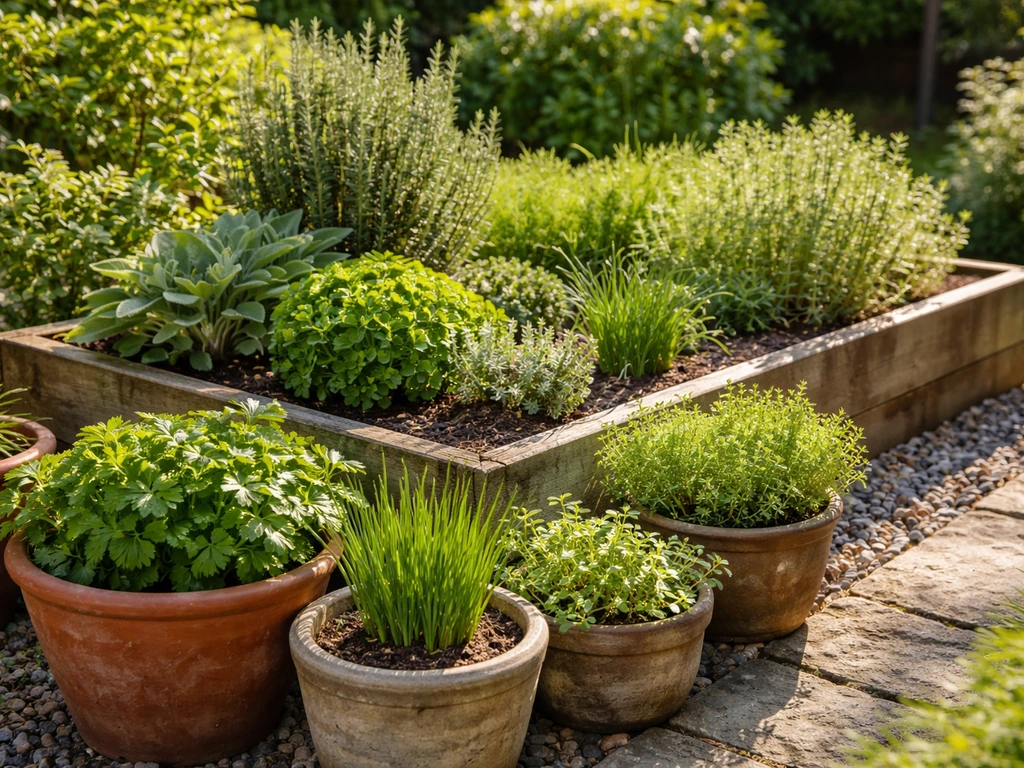
The RHS is pretty clear that a solid range of culinary herbs can be grown outdoors in the UK year-round, either in traditional herb gardens, raised beds, containers, or tucked into borders. The trick is matching the herb to your conditions rather than just planting whatever looks good at the garden centre in April.
Here are the herbs that consistently deliver in British outdoor conditions, even when the weather doesn't cooperate:
- Thyme: drought tolerant, loves free-draining soil and full sun, rarely needs watering once established, and handles UK winters well as long as it's not sitting in waterlogged ground.
- Oregano: compact, low-maintenance, genuinely drought tolerant, and perennial, so it comes back every year. Plant it in sun with good drainage and largely leave it alone.
- Chives: one of the most forgiving herbs you can grow. Happy in sun or partial shade, thrives in containers and in-ground, and the more you harvest the more it produces.
- Rosemary: woody, evergreen, and surprisingly tough once established. Needs sun and good drainage but will live for years in the right spot.
- Mint: spreads aggressively so it's best contained (more on that below), but it's almost impossible to kill and tolerates partial shade better than most herbs.
- Parsley: technically a biennial, grows as an annual in most UK gardens. Flat-leaf types do particularly well in rich, slightly damp soil in partial shade. Germination is slow, so be patient.
- Sage: aromatic, perennial, and long-lived in sunny, well-drained spots. It dislikes damp conditions and low winter light, so siting is everything with sage.
If you're starting from scratch, thyme, chives, and oregano are the easiest trio to begin with. They're low-maintenance, productive, and genuinely hardy. Rosemary and sage are just behind them in terms of effort. Parsley and mint need a bit more thought about placement, but both are very achievable outdoors in the UK.
Best herbs for pots outside in the UK
Growing herbs in outdoor pots is a very practical option in the UK, whether you're working with a patio, a balcony, a doorstep, or just want to keep things manageable. Most culinary herbs do well in containers, but a few are specifically well-suited to pot life.
Mint is the classic example of a herb that actively benefits from being grown in a pot. It spreads by underground runners and will colonise a whole border if you plant it directly in the ground. A pot keeps it contained and you can still harvest generously. The RHS runs a specific mint-in-pots trial at RHS Bridgewater using spearmint and peppermint varieties, which tells you a lot about how seriously they take container mint growing.
Chives are another excellent pot herb. You can pick up small plants in 9cm pots from most garden centres and supermarkets, pot them up, and have a productive clump going within weeks. They're happy outdoors in pots all year, and if you want to extend your winter harvest, just bring a clump inside onto a sunny windowsill in October.
Thyme is well-suited to pots too, especially if your in-ground soil is heavy or poorly drained. Use a gritty, free-draining compost mix and site the pot in full sun. The one thing to stay on top of: water during hot, dry spells in summer, but back right off in autumn and winter to avoid root rot. If you're growing thyme in a container, a weekly liquid seaweed feed from March through May gives it a good seasonal boost.
Parsley grows well in pots and has the advantage of being moveable when autumn arrives. Once temperatures drop in late October, you can shift the pot into a greenhouse, cold frame, or sheltered porch and keep harvesting through winter rather than watching it die down completely outdoors.
A few practical tips for outdoor pots in the UK:
- Use terracotta or heavy ceramic pots for Mediterranean herbs like thyme, rosemary, and oregano. They breathe better and help prevent waterlogging.
- For parsley, chives, and mint, standard plastic or glazed pots work fine and retain moisture better, which suits these herbs.
- Always use pots with drainage holes. This is non-negotiable in the UK where rainfall is rarely your limiting factor.
- Group pots together in a sheltered spot to reduce wind exposure and help with moisture retention in summer.
- Raise pots off the ground on feet or bricks in winter to prevent the base sitting in standing water.
Hardy perennials and cut-and-come-again herbs
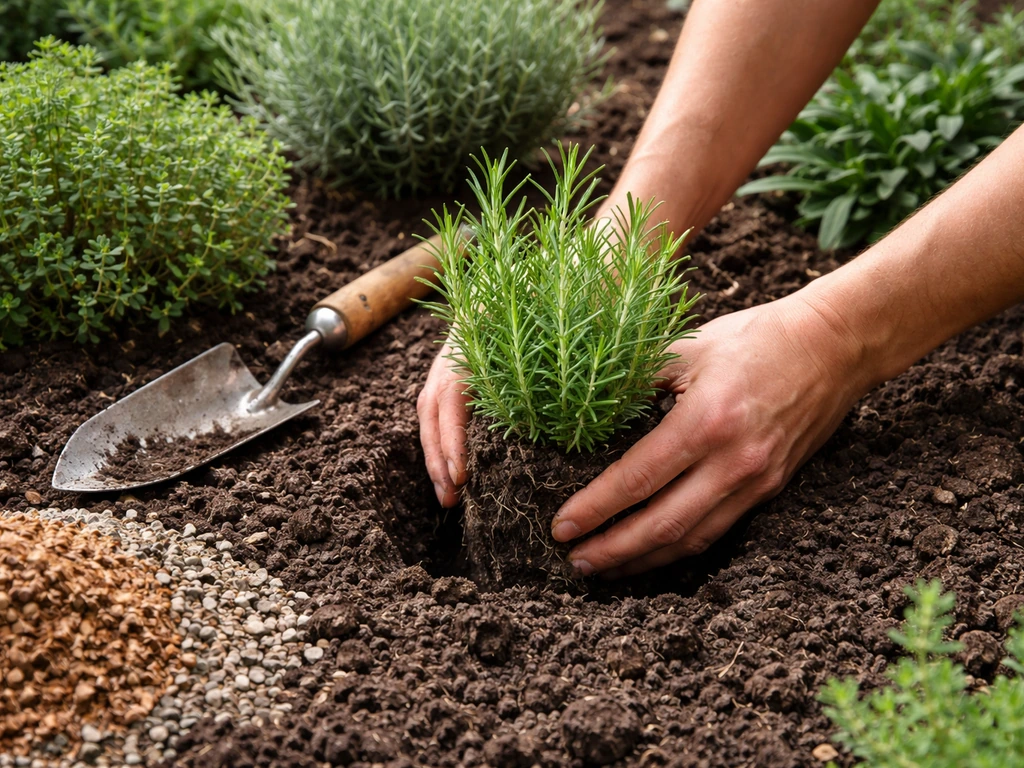
One of the best things you can do in a UK herb garden is establish a core of perennial herbs that come back every year. These are the workhorses: plant them once, manage them sensibly, and they'll give you years of harvests.
Thyme, oregano, rosemary, chives, sage, and mint are all perennials in UK conditions. Each has slightly different needs, but the common thread is that they all benefit from regular harvesting. With chives in particular, cutting leaves regularly is genuinely what keeps the plant productive. Don't let it sit uncut or the older leaves get tough. The RHS recommends cutting back old leaves and deadheading the flowers if you want to keep growth coming.
Woody perennials like rosemary, sage, and thyme sometimes take a hit from hard winters, especially in Scotland, the Pennines, or anywhere that gets sustained cold and wet. The RHS recommends pruning any frost-damaged or dead branches in late spring, once you can clearly see what's live and what isn't. Don't be tempted to do this in February because you risk cutting into tissue that was protecting healthy growth. Wait until after the last frosts, typically late April to mid-May depending on where you are in the UK.
Thompson and Morgan also make a useful point about autumn preparation: leave the dead foliage on evergreen herbs like rosemary, sage, and thyme through winter as it provides some insulation. But for low-growing herbs like thyme and lavender, clear any debris that accumulates around the base to prevent fungal issues in damp conditions.
Cut-and-come-again herbs (herbs that regrow after cutting) include chives, mint, and parsley. These are especially satisfying to grow because the more you use them, the more they produce. Chives will send up new shoots within days of being cut back. Mint regrows vigorously from its root system. With parsley, harvesting outer leaves while leaving the centre intact keeps the plant productive for months. BBC Gardeners' World recommends starting to harvest parsley around three months after sowing and keeping up regular picking to prevent the leaves going coarse.
A simple UK seasonal growing calendar
The UK's growing season is shaped by late frosts (April in the north, March in the south) and a fairly compressed warm period from May to September. Here's how to work with that rather than against it.
| Month | What to do |
|---|---|
| February | Sow parsley and chives indoors on a warm windowsill. Don't rush outdoor sowing; soil is still too cold. |
| March | Start thyme, oregano, and sage seeds indoors if growing from seed. Buy young plants from garden centres as a shortcut. Begin weekly liquid seaweed feeds for any herbs already in containers. |
| April | Plant out young herbs once frost risk eases (mid to late April in the south, late April to early May in northern England and Scotland). Harden off seedlings first. Prune any winter-damaged woody herbs once new growth is visible. |
| May | Main outdoor planting month for most herbs. Sow basil outdoors only after all frost risk has passed (usually May in the south). Direct sow parsley outdoors; expect germination to take 4-6 weeks. |
| June–August | Peak harvest season. Pick regularly to keep plants producing. Water container herbs in dry spells. Keep mint contained if in-ground. |
| September | Begin tapering off harvesting of woody herbs like rosemary and sage to allow them to harden before winter. Keep harvesting chives, parsley, and mint. |
| October | Move parsley pots under cover for winter harvesting. Pot up a chive clump for indoor windowsill use. Leave dead foliage on evergreen herbs for frost protection. |
| November–January | Minimal activity outdoors. Keep containers sheltered and raised. Harvest chives and mint sparingly if they're still growing in mild areas. |
If you're gardening in Scotland or at high altitude, push every date in this calendar back by two to four weeks. If you're on the south coast or in a sheltered urban microclimate, you can often push ahead slightly. The article on what you can grow in Scotland covers those regional differences in more depth. If you want a region-specific list, check out what can you grow in Scotland for the best matches to Scotland's conditions.
Site, soil, and watering basics
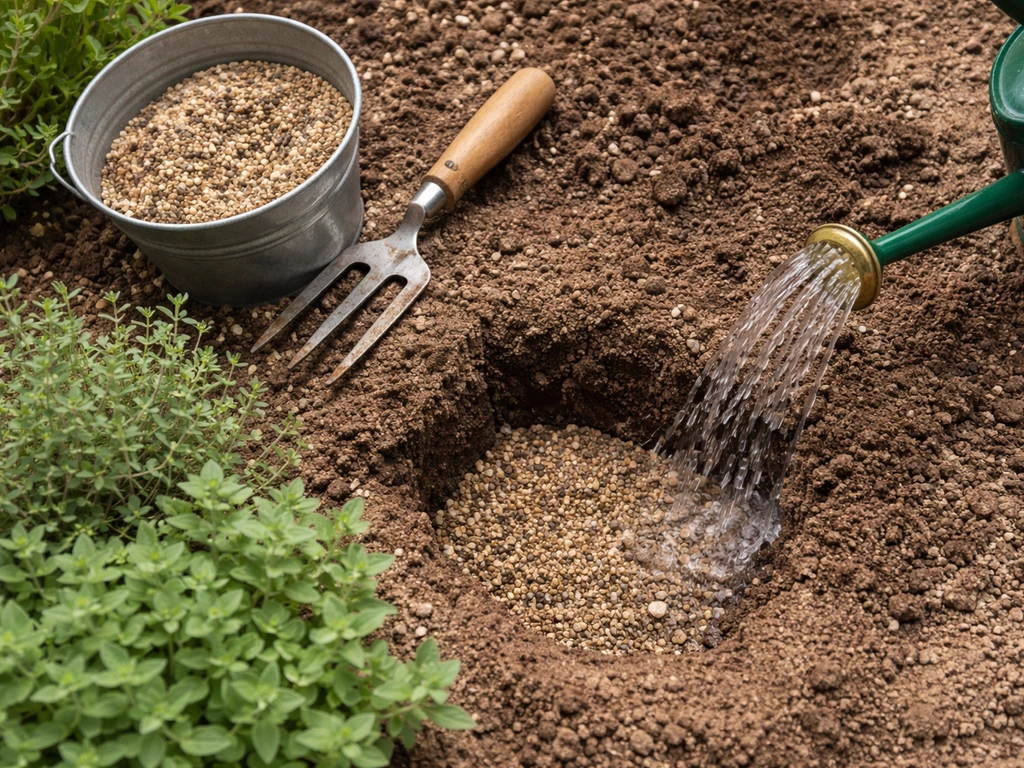
Most herbs described as Mediterranean (thyme, oregano, rosemary, sage) share the same basic needs: full sun, well-drained to dry soil, and minimal fuss. The RHS is very direct about this: successful sites for these herbs are well-drained to dry in full sun. UK soils are often the opposite of this, especially in wetter regions, so improving drainage before you plant is worth the effort.
For heavy clay soils, work in grit and horticultural sand before planting Mediterranean herbs in-ground. A raised bed is often a better option and gives you full control over the growing medium. For containers, use a specialist herb compost or mix standard multi-purpose compost with about 20-30% perlite or horticultural grit.
Herbs like chives, parsley, and mint are more flexible about soil moisture and will handle slightly heavier, richer ground. Flat-leaf parsley in particular does well in rich, slightly damp soil in partial shade, which is actually quite easy to achieve in a typical UK garden.
Watering is the area where most people go wrong. The rule for established thyme and oregano is simple: barely water them. The RHS is explicit that thyme rarely needs watering once it's established, except in containers during hot, dry weather. The bigger risk is overwatering, which causes root rot, particularly in winter. Once your thyme is in and settled (after about 6-8 weeks), reduce watering significantly and stop almost entirely from October to March unless conditions are unusually dry.
Microclimate tips for the UK
The UK is not one growing zone. A south-facing wall in Bristol creates genuinely Mediterranean conditions. An exposed hillside in the Peak District will kill tender herbs without a second thought. Understanding your microclimate is one of the highest-value things you can do as a UK gardener.
- South or southwest-facing walls and fences absorb heat through the day and radiate it at night, raising the temperature by several degrees. Use these spots for rosemary, sage, and thyme for best results.
- Frost pockets (low-lying areas, valley bottoms, corners where cold air collects) will kill tender herbs earlier in autumn and delay growth in spring. Avoid planting mint or parsley in these spots without protection.
- Urban gardens are consistently warmer than rural ones due to the heat island effect. London gardeners can often grow herbs year-round outdoors that northern gardeners would need to bring inside.
- Coastal gardens (particularly in Cornwall, west Wales, and the Western Isles) benefit from mild winters but often have strong, salt-laden winds. Use windbreaks or sheltered corners for herbs, and expect rosemary and thyme to do well while more delicate herbs struggle in exposed beds.
Matching herbs to your growing conditions
Not every garden is sunny and sheltered, and that's fine. Here's how to match herbs to what you've actually got rather than what the ideal scenario looks like.
| Condition | Best herbs | Notes |
|---|---|---|
| Full sun, well-drained soil | Thyme, oregano, rosemary, sage | Ideal for Mediterranean herbs. Minimal watering once established. |
| Partial shade | Chives, parsley (flat-leaf), mint | Parsley actively prefers some shade in summer. Chives tolerate up to half a day of shade. |
| Exposed/windy site | Thyme, chives | Low-growing thyme shrugs off wind. Use pot groupings as windbreaks for taller herbs. |
| Heavy or moist soil | Mint, chives, parsley | Avoid planting thyme, rosemary, or sage here without significant drainage improvement. |
| Sheltered, warm microclimate | Rosemary, sage, bay, basil (summer only) | A south-facing wall unlocks herbs that would struggle in more exposed UK sites. |
| Shaded, north-facing spot | Mint | Mint is the most shade-tolerant of the commonly grown culinary herbs. Manages with a few hours of indirect light. |
If you're working with a mostly shaded garden, don't feel locked out of growing herbs. Mint, chives, and parsley can all produce well with limited sun. The Mediterranean herbs (thyme, rosemary, oregano, sage) genuinely do need sun though, and performing what amounts to a full resit on that requirement by planting them in shade tends to result in weak, leggy, disease-prone plants.
Common mistakes and what to avoid
A few things trip people up repeatedly with outdoor herb growing in the UK, and they're all very fixable once you know what to watch for.
Overwatering Mediterranean herbs
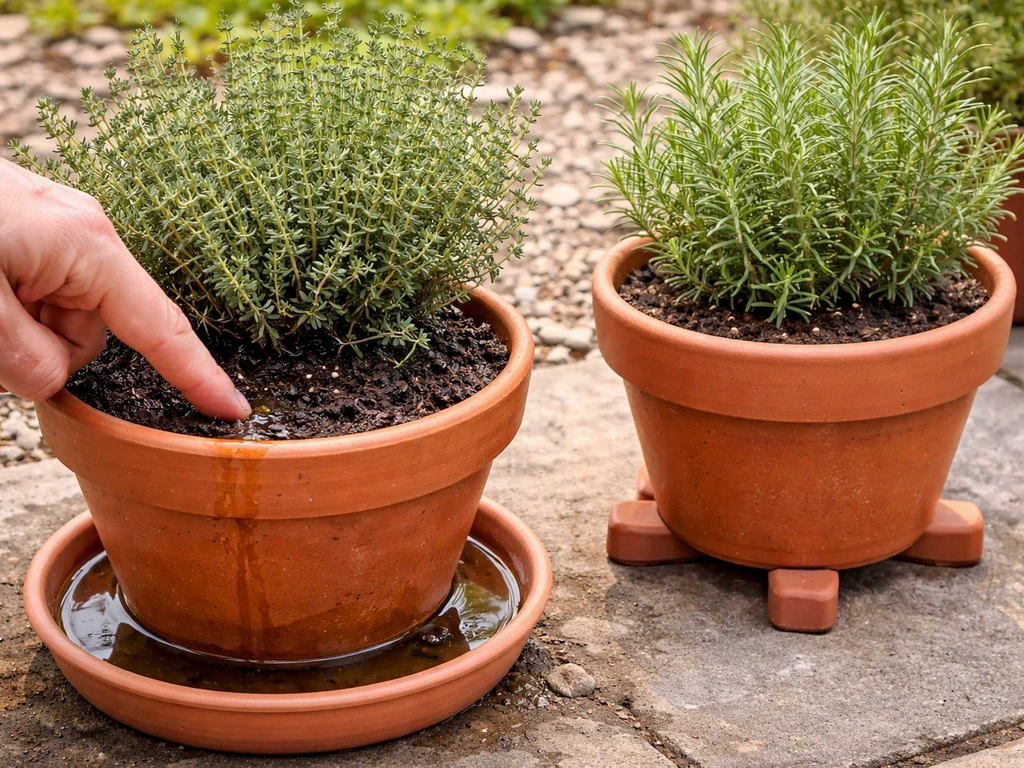
This is the single most common way to kill thyme, oregano, sage, and rosemary in the UK. People see dry-looking soil and water instinctively. But these plants evolved in climates where summer is hot and dry and soils are fast-draining. They hate sitting in moisture. If yours is in a container, make sure there's grit in the compost and that the pot drains freely. If it's in the ground and the soil is clay-heavy, it needs improving before you plant. A plant that looks yellowing and limp in wet conditions is almost certainly suffering from overwatering, not underwatering.
Giving up on parsley too early
Parsley is slow. The RHS says seeds can take a month or more to germinate, and many gardeners assume they've done something wrong and give up or sow again. Then they get two lots of parsley in July. Sow it, keep the compost moist, and wait. It will appear. Once it does, it's a generous and long-lasting plant. Just remember it dies back outdoors in winter, so if you want year-round parsley, move a pot under cover in October. If you want to focus on perennials, you can also follow a simple plan for the best perennials to grow from seed UK.
Planting mint directly in the ground
Mint spreads by underground stolons and will take over a bed with impressive speed. The standard approach is to grow it in a container (even if that container is sunk into the ground with just the rim showing). This contains it without preventing access to soil moisture. If you do plant it directly, be prepared for it to colonise neighbouring plants within a season or two.
Not pruning woody herbs after winter
Rosemary, thyme, and sage can all look dead or at least very sad in early spring after a harsh winter. The instinct is to bin them. The correct move is to wait until late April or May, when you can clearly see what's producing new growth and what's genuinely dead. Then prune out the dead wood and give the plant a light overall trim to encourage fresh growth. Many apparently dead woody herbs recover well from this treatment.
Using containers that dry out too fast
Small terracotta pots in full sun in July will need watering once or even twice a day for herbs like chives and parsley. This is genuinely difficult to keep up with. Either use larger pots (which hold more moisture and are more stable in temperature), add water-retaining granules to the compost for moisture-loving herbs, or group pots together to reduce evaporation. For Mediterranean herbs this matters less, but for parsley and chives in containers, drying out quickly is a real problem in hot spells.
Growing basil outdoors too early
Basil is not a reliable outdoor herb in most of the UK. It's tender, it hates cold nights, and it sulks at temperatures below about 10°C. Even in the south, outdoor basil is a summer-only crop that needs to wait until all frost risk has passed and night temperatures are consistently mild. In Scotland or the north of England, it's honestly more trouble than it's worth outdoors and does much better in a greenhouse or on a sunny indoor windowsill. If your heart is set on outdoor basil, wait until late May in southern England and be prepared for it to bolt or blacken at the first cool night.
The herbs that consistently reward UK outdoor growers are the ones that have adapted to variable, cool, and often wet conditions: thyme, oregano, chives, mint, rosemary, sage, and parsley. Start with these, get your drainage and siting right, match each herb to your available conditions using the table above, and you'll have a productive outdoor herb garden that's genuinely usable from spring through to the first hard frosts do people in your country grow plants at home. With a little winter management, several of them will carry on far beyond that. what do uk farmers grow
FAQ
What are the best herbs to grow outdoors UK if my garden gets only a few hours of sun?
Choose chives, parsley, and mint, then add them to the sun you do get. For shade-tolerant parsley, flat-leaf types usually cope better in partial shade. If you want rosemary, thyme, oregano, or sage, put them in your sunniest spot, for example a south-facing wall or the hottest part of a border, otherwise you will likely end up with weak growth.
Can I grow these herbs outdoors in the UK without a greenhouse or cold frame?
Yes, if you accept winter slow-down rather than year-round harvest. A practical approach is to keep hardy perennials outdoors (thyme, oregano, rosemary, sage, chives, mint) and only bring inside what you actually need continuously, typically parsley if you want leaves through winter. For movable containers, a sheltered porch or unheated shed can also extend harvesting by a few weeks.
How do I stop Mediterranean herbs like thyme and oregano from rotting in winter?
Prioritize drainage over watering habits. Make sure the planting site is well-drained or dry out quickly after rain, and improve heavy soil with grit or switch to a raised bed. In containers, use a gritty, free-draining mix and never let pots sit in a saucer of water. The key is to avoid consistently wet compost between autumn and spring.
Is it okay to plant mint in a raised bed instead of a pot?
Yes, as long as you create a proper root barrier. Mint will still spread upward and sideways using underground runners, so a raised bed needs a sunk container or a lined barrier that blocks stolons across the bed area. If you cannot fit a barrier, grow mint in a dedicated pot and keep it separate from other herbs.
When should I harvest chives, and how low can I cut them outdoors in the UK?
Harvest regularly to keep them productive, cutting leaves close to the base without damaging the growing points. If growth slows in winter, expect less frequent cutting until spring. Don’t wait for leaves to become old and tough, because regular cutting helps them stay mild and tender.
Why is my parsley not coming up, and should I re-sow?
Parsley commonly takes a month or more to germinate outdoors, and impatience is the main reason gardeners end up sowing twice. Keep the surface evenly moist (not waterlogged) and give it time. If nothing appears after a long wait, then consider re-sowing, but check that the area has not dried out completely.
Which herbs are best for pots outdoors in the UK, and what size pot should I use?
Chives, thyme, parsley, and mint all work well in pots. For best results, use larger pots than the typical small terracotta starter size, especially for chives and parsley, because small volumes dry out quickly and stress plants. Mint should always be contained, and a wider pot helps the roots stabilize and reduces tipping in wind.
How can I tell the difference between frost damage and a herb that is actually dead?
Don’t remove plants immediately after a harsh winter, especially with woody herbs like rosemary, sage, and thyme. Wait until late April to mid-May to see fresh shoots. If stems are hard and snapping is consistent, they may be dead, but many woody herbs recover once you prune back to living tissue and encourage new growth.
What’s the correct watering routine for established thyme and oregano in the UK?
After the initial establishment period, water sparingly. In-ground thyme and oregano often need little to no watering outside containers, and overwatering is the bigger risk. For containers, water during prolonged hot dry spells, but stop back significantly from autumn, so the compost can dry out between rains.
Is basil really not worth growing outdoors in the UK?
Outdoor basil is generally unreliable because cold nights suppress it and can cause blackening or bolt behavior. If you want to try anyway, treat it as a summer crop only, protect it from cool nights, and wait until frost risk is over. In most of the UK, basil performs better on a sunny windowsill or in a greenhouse where temperatures stay consistently mild.
What herbs should I start with if I want the easiest, most dependable outdoor results?
A reliable starting trio is thyme, chives, and oregano, then add rosemary or sage for a slightly higher effort level. For a “hands-off” mix that still tastes great, keep mint and parsley well placed for their needs, with mint contained and parsley positioned for enough light. This combination gives you both hardy perennials and productive cut-and-come-again herbs.
Next Article
Can You Grow Gardenias in the UK? Practical Guide
Learn if you can grow gardenias in the UK and how to succeed indoors or in a greenhouse with acid soil care.