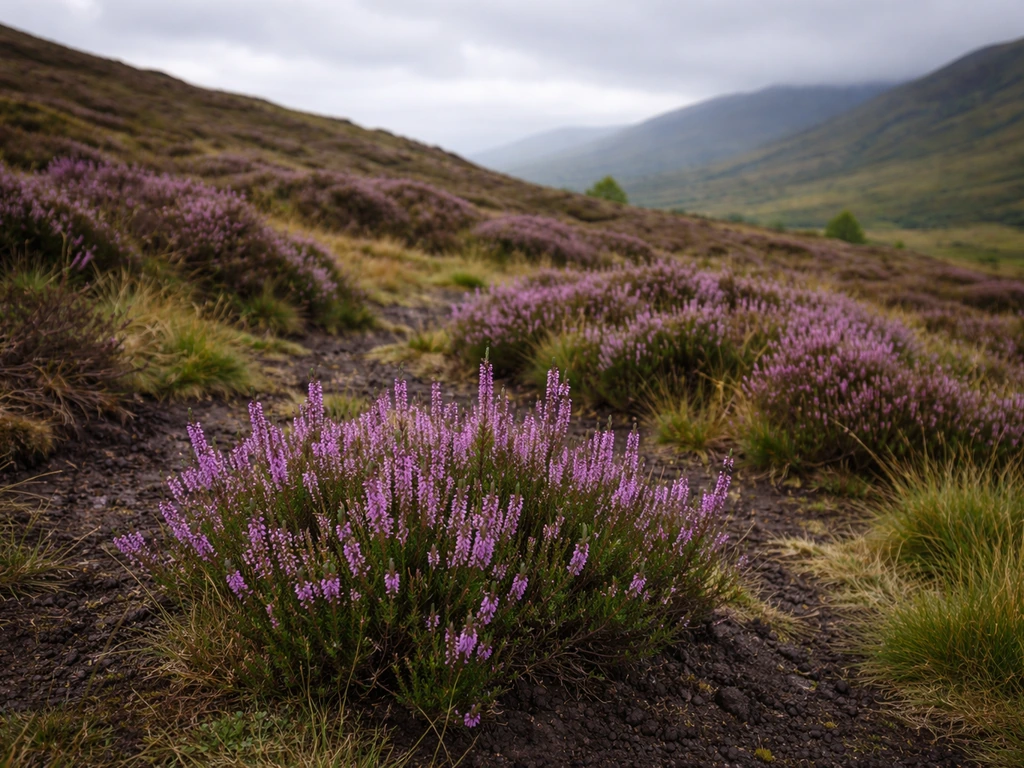
UK farmers grow a huge range of crops, but the backbone of British agriculture comes down to a fairly tight list: wheat, barley, oilseed rape, potatoes, sugar beet, field vegetables, soft fruit, and orchard fruit. Layered on top of that are protected crops like tomatoes, cucumbers, and peppers, which are grown commercially in greenhouses and polytunnels year-round. What gets grown where depends almost entirely on climate, rainfall, soil type, and the infrastructure a farm has invested in.
What Do UK Farmers Grow? Crops by Season and Region
James Hartwell
24 Mar 2026
For home growers and smallholders, the commercial farming picture is genuinely useful because it tells you what actually works in British conditions, so you can pick the best squash to grow in UK gardens rather than what looks good on a seed packet. best perennials to grow from seed uk
UK crops by category: the big picture
The UK's utilised agricultural area sits at around 16.8 million hectares. The lion's share of that is permanent grassland used for livestock, but the arable and horticultural land tells the crop story most clearly. Defra's land-use categories break commercial cropping into cereals, oilseeds, other arable crops (which includes potatoes, sugar beet, and pulses), and horticulture (covering both open-ground vegetables and fruit, and glasshouse production). Each category has a distinct set of climate and soil requirements, and understanding them helps you map your own growing conditions against what actually works commercially in Britain.
| Category | Main crops | Typical growing method |
|---|---|---|
| Cereals | Wheat, barley, oats, rye | Open field, drilled autumn or spring |
| Oilseeds | Oilseed rape, linseed | Open field, autumn or spring sown |
| Roots and pulses | Potatoes, sugar beet, field beans, peas | Open field, spring planted or drilled |
| Horticulture (open ground) | Brassicas, leeks, carrots, onions, salad leaves, strawberries, raspberries | Field-scale beds, seasonal |
| Horticulture (protected) | Tomatoes, cucumbers, peppers, lettuce, herbs | Glasshouse or polytunnel, year-round or extended season |
| Orchards | Apples, pears, cherries, plums | Open ground, occasionally with overhead netting or covers |
England vs Scotland vs Wales vs Northern Ireland: not one UK
If you treat the UK as a single growing zone, you'll make bad decisions. The four nations have very different climates, soils, and farming traditions, and what dominates commercially in each one reflects that honestly.
England
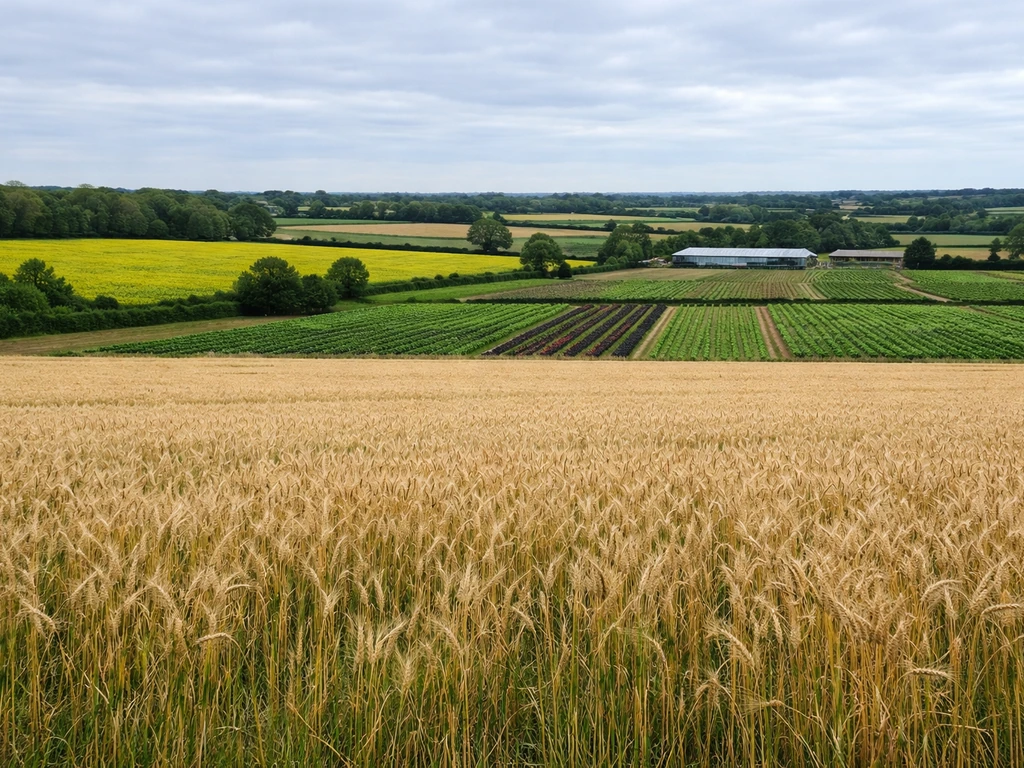
England carries the heaviest arable burden in the UK. The eastern counties, particularly East Anglia, Lincolnshire, and the East Midlands, are where most of the cereals, oilseeds, sugar beet, and field vegetables are produced. These areas have the right combination of lower rainfall (often below 650mm annually), high sunshine hours, and deep fertile soils. The south and southeast grow a lot of salad crops, soft fruit, and top fruit (apples and pears), partly because of the warmer summers and partly because of the infrastructure investment that's been made there over decades. The north of England and the upland areas shift toward livestock and grassland, with arable cropping much less dominant.
Scotland
Scotland's farming is dominated by livestock and grassland, particularly in the Highlands and uplands. But the eastern lowlands, especially Angus, Perthshire, and the Lothians, have a surprisingly productive arable belt. Spring barley is the standout cereal crop here, largely because the wet winters make autumn drilling risky. Scotland is also notable for seed potato production, where the cooler climate and blank" rel="noopener noreferrer">lower aphid pressure (aphids spread potato viruses) make it ideal. Soft fruit, particularly raspberries and strawberries in Perthshire, is a genuine commercial success story. If you want more detail on <what can you grow in scotland> that's worth exploring in its own right. what can you grow in scotland
Wales
Wales is predominantly a livestock and grassland country. According to the June 2024 agricultural survey for Wales, arable crops account for only around 6% of agricultural land. In Wales’ June 2024 Survey of Agriculture and Horticulture, Wales reports arable crops at about 107,800 hectares [arable crops account for only around 6% of agricultural land](https://www. gov.
wales/node/64976). The high rainfall and predominantly upland terrain mean cereals and field vegetables are limited to the more sheltered valleys and the coastal margins of the south and north. Horticulture in Wales includes both open-ground vegetables and fruit, and glasshouse production, though at a much smaller scale than England.
For home growers, the message is clear: embrace what the climate does well (brassicas, roots, salads, and soft fruit) rather than fighting for the heat-hungry crops that need long dry summers.
Northern Ireland
Northern Ireland is similarly livestock-heavy, with a wet, mild Atlantic climate that suits grass-based farming very well. Potatoes are the most significant arable crop, and there's a notable tradition of vegetable growing including brassicas, leeks, and turnips. The mild winters mean frosts are rarely severe, but the lack of summer heat and high rainfall limit the range of warmth-loving crops that can succeed in open ground. Protected cropping is the way to extend the season and grow anything that needs real warmth.
Field crops: cereals, oilseeds, roots, and pulses
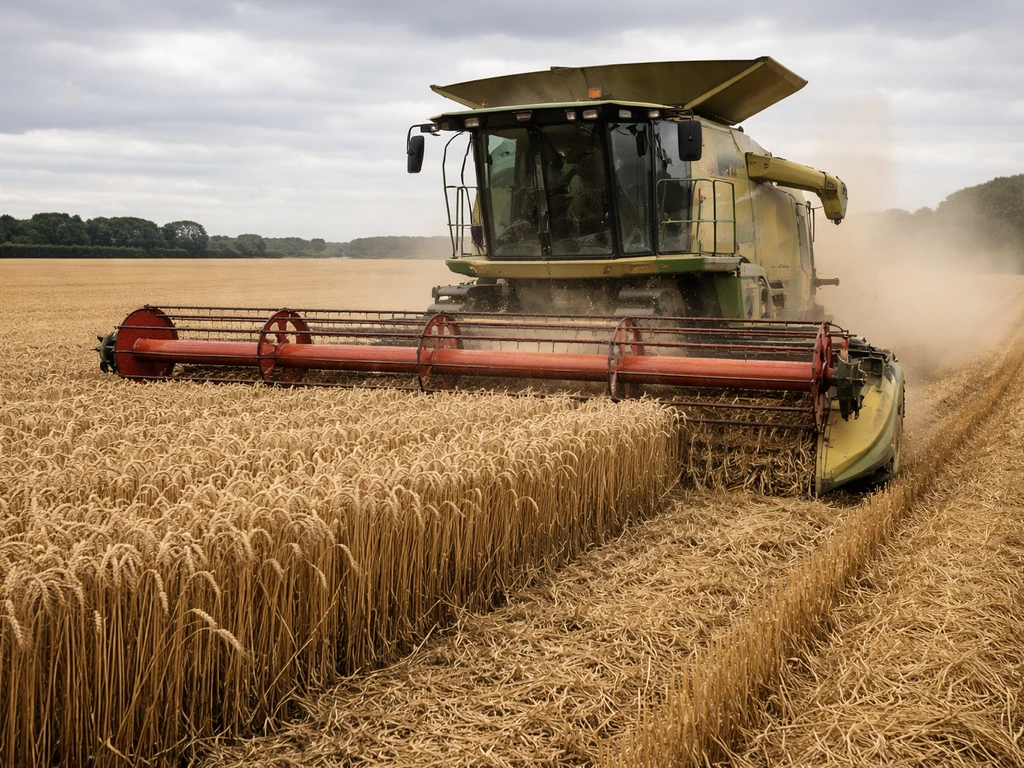
These are the bread-and-butter crops of UK arable farming, and understanding their seasonality is directly useful even if you're growing on a fraction of the scale.
Cereals
Wheat is the UK's biggest arable crop by area. Winter wheat is drilled from September to November and harvested in August. It needs well-drained soil and reasonable sunshine during grain fill in June and July. Barley comes in two forms: winter barley (drilled autumn, harvested July) and spring barley (drilled March to April, harvested August).
Oats are hardier and more tolerant of wetter soils, which is why they historically dominated Scotland, Wales, and Ireland. For a home grower, cereals are rarely worth the space unless you have a large plot, but knowing their seasons helps you understand soil rotation and the timing of cover cropping. If you are wondering whether people in your country grow plants at home, this same logic helps you choose crops that fit your local conditions home grower.
Oilseeds
Oilseed rape (canola) is the UK's main break crop in cereal rotations. It's drilled in late August and harvested in July, making it a dominant feature of the English lowland landscape. Linseed is also grown for oil, sown in spring. Neither is a realistic home-growing crop, but knowing that rape thrives in similar conditions to Brussels sprouts (same Brassica family) is a useful soil and disease-planning note.
Roots and pulses
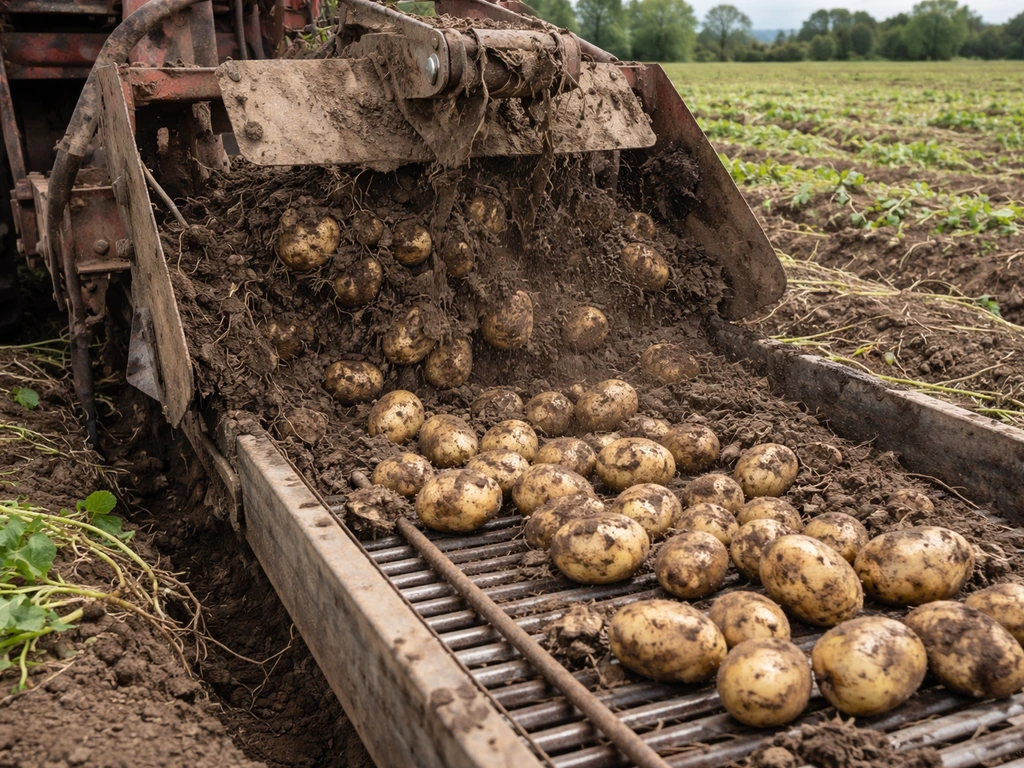
Potatoes are planted from March to May and harvested July through October depending on whether they're first earlies, second earlies, or maincrop varieties. They need frost-free conditions at planting and do best in deep, well-drained, slightly acidic soil. Sugar beet is drilled in March and April in eastern England and harvested October through February, and it's largely irrelevant to home growers. Field beans and peas are sown in February to April and harvested in August, and both are very achievable at garden scale, adding nitrogen to soil and producing a useful crop.
Horticulture: vegetables, salads, and soft fruit
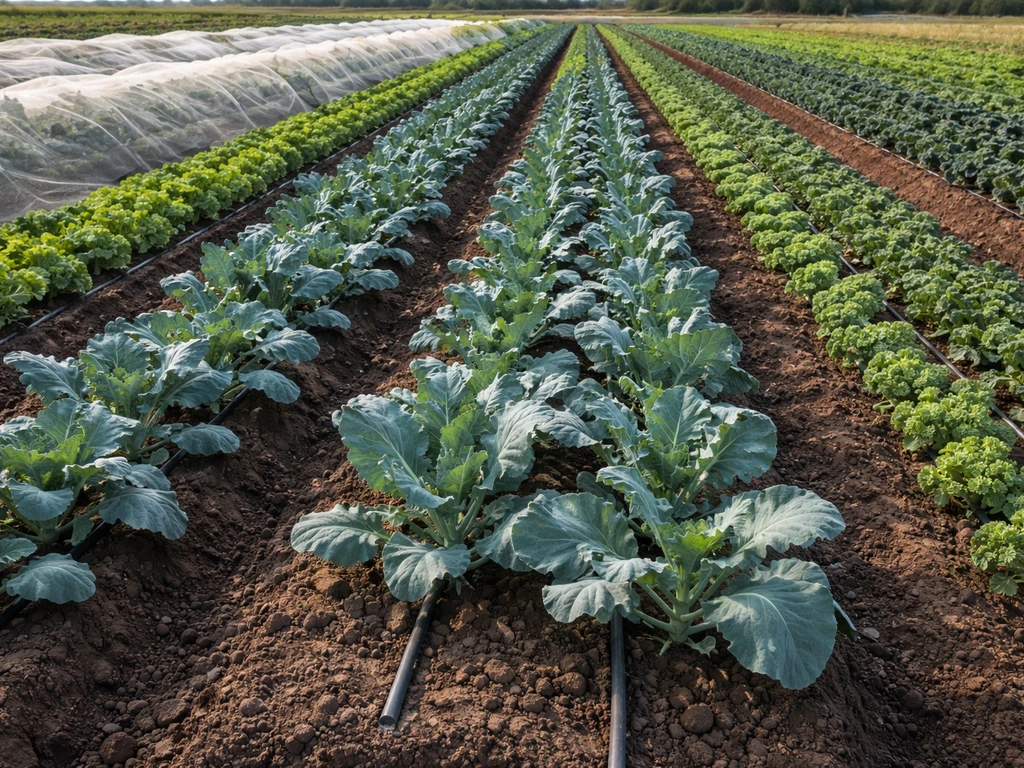
Commercial horticulture in the UK is geographically concentrated. The majority of field vegetables come from Lincolnshire, the Fens, Lancashire, and the Vale of Evesham. These areas combine the right soils (often peaty or silty for vegetables, good drainage), a long growing season, and the irrigation infrastructure to manage dry spells. The crops that dominate commercially are direct translations of what works best in UK conditions.
- Brassicas: broccoli, cauliflower, cabbages, Brussels sprouts, and kale are major commercial crops, drilled or transplanted from April through June, harvested from July through March. They suit the cool, moist UK climate almost perfectly.
- Root vegetables: carrots, parsnips, and beetroot are drilled from March to June in deep, stone-free soils. Lincolnshire and the Fens are the main carrot-growing areas due to the sandy, deep soils.
- Leeks: sown in February under cover, transplanted May to June, harvested October through March. One of the most cold-hardy commercial vegetables and genuinely straightforward at garden scale.
- Onions and garlic: planted autumn (overwintered) or sets planted March to April, harvested July to August. Need dry conditions during ripening, which suits eastern England better than the west.
- Salad crops: lettuce, spinach, rocket, and mixed leaves are grown year-round under protection and outdoors from April through October. Lincolnshire, Hampshire, and the Vale of Evesham are major production areas.
- Strawberries: the UK's biggest soft-fruit crop by value. Grown on raised beds under polythene or in tabletop systems in polytunnels, allowing harvests from May through October.
- Raspberries and blackcurrants: predominantly grown in Scotland and northern England, where the cooler climate suits their chilling requirements and reduces some fungal disease pressure.
Orchards and fruiting crops: apples, pears, and berries
The UK's orchard industry is heavily concentrated in Kent, Herefordshire, Worcestershire, and parts of the South West. Kent and Herefordshire have the right combination of warm summers, well-drained soils, and reliable (but not excessive) rainfall that top fruit needs. Commercially, most dessert apples and pears are now grown under overhead netting or bird-protection systems, and some operations use rain covers to reduce scab disease pressure.
This is worth noting for home growers because it signals a real challenge: apples and pears can fruit well in most of England and even lowland Scotland and Wales, but disease management (particularly apple scab and pear rust) needs to be factored in. Choosing resistant varieties like 'Scrumptious', 'Topaz', or 'Fiesta' for apples reduces that headache significantly.
Soft fruit at commercial scale is increasingly grown under protection. Strawberries in polytunnels now dominate the market because it extends the season and protects against rain damage at harvest. Blueberries are grown in peat-free acidic media in polytunnels, with production concentrated in Scotland and southern England. Raspberries tolerate open-ground production well in Scotland and northern England but benefit from some overhead cover in wetter western areas.
For home growers, the rule of thumb from commercial practice is straightforward: if you're in the wetter west or north, put soft fruit under a polytunnel if you want reliable crops. If you're in the drier east or south, open ground with good drainage works well for most berries, so if you're wondering what can you grow in the UK, start by focusing on the UK conditions that match this rule of thumb.
Protected cropping: what goes in the greenhouse
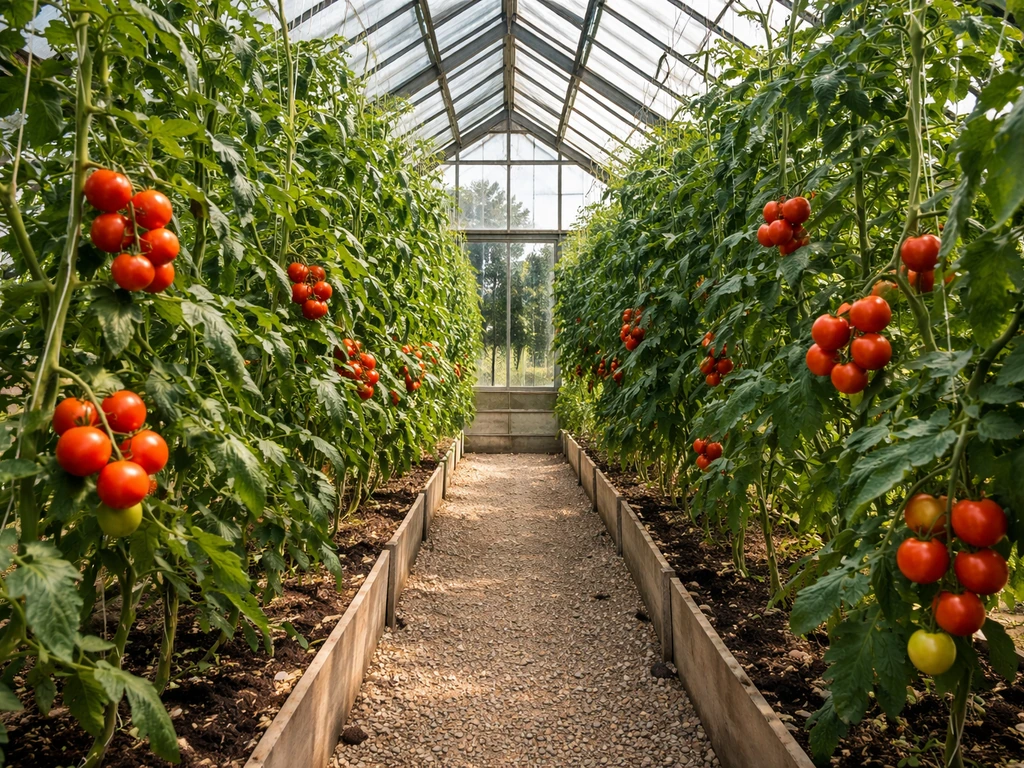
Commercially, UK glasshouses produce tomatoes, cucumbers, peppers, aubergines, lettuce, herbs, and strawberries. The Lea Valley in Hertfordshire was historically the UK's glasshouse centre, but production has spread significantly across the country, including large operations in Yorkshire, Lincolnshire, and Scotland. Modern commercial glasshouses are heated, CO2-enriched, and lit with supplementary LED lighting, which means they can produce year-round in a way that's quite different from what's achievable in a home greenhouse.
For home growers, the relevant takeaway is about which crops genuinely need protection in the UK and which just benefit from it. Tomatoes, cucumbers, and peppers are the clearest cases. Commercially, these are almost always grown under glass because the UK's summer is rarely warm enough for long enough to ripen a full crop reliably outdoors, particularly north of the Midlands.
Tomatoes grown outdoors in southern England can do well in a hot summer, but you're taking a gamble every year. A polytunnel eliminates most of that risk and extends the season by six to eight weeks at both ends. A polytunnel eliminates most of that risk and extends the season by six to eight weeks at both ends, but if you want the best herbs to grow outdoors uk, you can still rely on open-ground varieties when conditions suit.
Cucumbers need more heat than tomatoes and really do belong under glass or in a polytunnel. Peppers are even more heat-demanding and struggle to fruit outdoors in most of the UK.
| Crop | Open ground (UK) | Polytunnel | Heated greenhouse |
|---|---|---|---|
| Tomatoes | Possible in south England, risky elsewhere | Reliable UK-wide | Year-round possible |
| Cucumbers | Not reliable outdoors in UK | Good results | Year-round possible |
| Peppers | Rarely productive outdoors | Adequate in summer | Best results |
| Aubergines | Not reliable outdoors | Possible with long season | Good results |
| Salad leaves | April to October outdoors | Near year-round | Year-round |
| Strawberries | Seasonal, weather-dependent | Extended season, May to Oct | Can force early crops |
| Basil | Summer only, dislikes cold | Better results | Reliable all year |
Turning farmer knowledge into your own growing plan
The most useful thing you can take from commercial farming data is validation. If farmers in your region grow a crop at scale, it works in your climate. If they don't, there's usually a good reason rooted in temperature, rainfall, season length, or disease pressure, and you'll face the same challenges they decided weren't worth it.
Start by identifying your broad growing region. Are you in the wet, cool west or the drier, warmer east? Are you in Scotland, Wales, or Northern Ireland where the commercial crop list is narrower but still useful? Your region sets the baseline for what can realistically go in open ground in Portugal, too, so use local conditions to guide your choices. Then think about what you have available: open beds, raised beds, a polytunnel, or a greenhouse. Each step toward protection increases the range of crops you can attempt.
- Match crops to your climate first: if commercial farms in your region grow it outdoors, you can too. Brassicas, leeks, root vegetables, potatoes, oats, and soft fruit are realistic for most of the UK in open ground.
- Use commercial variety choices as a shortcut: farmers select varieties for disease resistance, yield, and climate suitability, and those decisions are well-documented. For potatoes, look at varieties suited to your region (seed potatoes from Scottish-grown stock are worth seeking out). For apples, choose scab-resistant varieties if you're in a high-rainfall area.
- Respect what the season actually delivers: check your last and first frost dates for your specific location, not a regional average. The UK has enormous microclimate variation, and your garden may be significantly warmer or colder than the nearest weather station suggests.
- Invest in a polytunnel if you want to grow tomatoes, cucumbers, or peppers reliably: a basic unheated polytunnel extends your season by six to eight weeks and dramatically improves success with heat-loving crops anywhere in the UK, not just the south.
- Focus on what commercial growers know works: brassicas, salad leaves, leeks, potatoes, field beans, soft fruit, and orchard fruit are all proven in UK conditions. These are your lowest-risk, highest-reward starting points.
- Layer in protected crops as a second tier: once you have open-ground basics producing well, a polytunnel or cold greenhouse lets you add tomatoes, cucumbers, peppers, and extended salad production without fighting your climate.
One thing commercial farming makes obvious is that the UK's climate is genuinely diverse. What grows in Lincolnshire without a second thought requires a polytunnel in Argyll. What ripens perfectly in Kent needs a warm south-facing wall in Yorkshire. The trick is not to wish for a different climate but to be precise about the one you actually have, and to choose crops that match it.
The good news is that the range of crops that genuinely work across most of the UK in open ground is substantial, and with even basic protection, that range expands considerably. For more on what specific regions can realistically support, it's worth looking at detailed guides for Scotland and Wales separately, where the constraints and opportunities are quite distinct from the English lowland picture.
FAQ
What if I live in the UK but my weather is very different from the region listed in the article?
Use the county or nearest weather region, not just “England vs Scotland.” For example, coastal and upland microclimates can shift the practical growing window by weeks, which changes whether crops like salads, potatoes, or outdoor tomatoes reliably finish.
Which of the glasshouse crops (tomatoes, cucumbers, peppers) should a home grower prioritize first?
Take the protection advice as a decision rule: tomatoes need it mainly for consistent ripening time, cucumbers need it for basic fruit set and heat demand, peppers need it for sustained warmth. If you can only offer one, prioritize tomatoes in the south and cucumbers in the midlands, not peppers outdoors.
Do the commercial field-vegetable regions matter if I do not have irrigation?
If you do not have irrigation, avoid aiming for “commercial field vegetable” crops that depend on long dry spells being managed. At garden scale, that usually means choosing varieties with shorter maturity times and improving water capture (mulch, compost, and a reliable watering plan) before assuming you can grow them.
If I do not grow cereals, how can I still use the cereal season information for better garden planning?
Yes, rotation logic still matters even though cereals are rarely worth space. For small plots, use the timing of big crops as a guide for cover cropping windows, soil rest, and when to plan for nitrogen addition (field beans and peas) to reduce the need for fertilizers.
What common mistake do gardeners make when trying to copy the UK cereal planting schedule?
The biggest mistake is treating “spring” and “winter” cereals as interchangeable. Winter wheat and winter barley require autumn establishment and then rely on winter survival, while spring barley depends on early drilling and tends to be favored where autumn sowing is risky due to wet winters.
How should I adjust potato planting dates if I get late frosts in my area?
Plant potatoes according to frost risk rather than a strict calendar, especially in low-lying areas where cold settles. Deep, well-drained soil helps most, but the frost timing at planting is the usual make-or-break factor for healthy establishment.
Is it worth growing apples and pears outdoors in the UK, and what is the real risk I should plan for?
In open ground, aim for “reliable” disease management rather than hoping climate alone will prevent problems. If you choose apples and pears, plan for scab and rust monitoring and pick resistant varieties to reduce spray pressure and crop loss during wet spells.
When growing soft fruit, what does a polytunnel actually improve most, yield or disease?
For soft fruit in wetter regions, protection is often about reducing rain exposure during critical harvest and wet-weather disease periods. Polytunnels are particularly useful for strawberries to prevent rain-splash damage at picking time and for more consistent season length.
How do I choose between upgrading site conditions (like a south wall) versus using a polytunnel?
If your goal is fruiting, prioritize warmth-demanding crops for the best-placed sites (sunny walls, sheltered courtyards, or the warmest part of your garden). If you cannot reliably provide that microclimate, choose crops that match the UK’s cooler outdoor reality instead of trying to “out-wish” the seasons.
What does it mean in practice if farmers in my region do not grow a particular crop at scale?
For many crops, the market success is a proxy for risk management, not just soil suitability. If farmers in your area do not grow a crop, it often reflects predictable problems like heat shortage, wet establishment, or pest and disease pressure, so you should expect similar constraints in your garden.
Can I grow blueberries in the UK by following the same approach as other soft fruits?
Blueberries are a good example where the growth medium matters more than the general climate message. They need acidic conditions, so at home you typically must use suitable peat-free acidic media and manage watering carefully, not just “copy the UK region pattern.”
Next Article
Does Heather Grow in Scotland? Planting and Care Guide
Learn whether heather grows in Scotland, plus step-by-step planting, site tips, care, troubleshooting, and propagation o