Yes, you can grow cranberries in the UK, and they're actually hardier than most people expect. If you're wondering about other fruits like raspberries, the process is different, so it's worth checking the specific growing conditions for raspberries in the UK can you grow raspberries in the UK. Yes, though hops are a very different crop from cranberries and have their own climate and growing requirements in the UK grow hops in the UK. Both the native European bog cranberry (Vaccinium oxycoccos) and the larger American cranberry (Vaccinium macrocarpon) are fully cold-hardy here, surviving down to -20°C. The catch isn't temperature: it's soil. Cranberries need extremely acidic, consistently wet, low-nutrient conditions that most UK garden soils simply don't provide. Get those conditions right, and you'll have healthy plants almost anywhere in Britain. Get them wrong, and no amount of effort will save you.
Can You Grow Cranberries in the UK? How to Succeed
Where cranberries naturally grow (and why it matters for the UK)
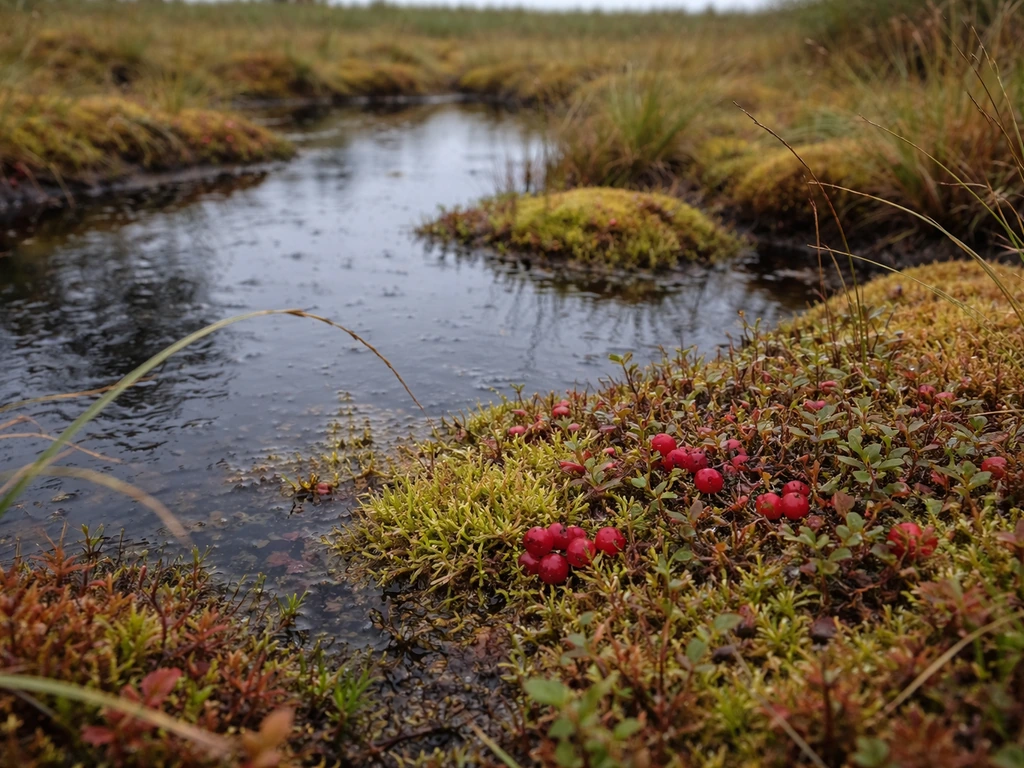
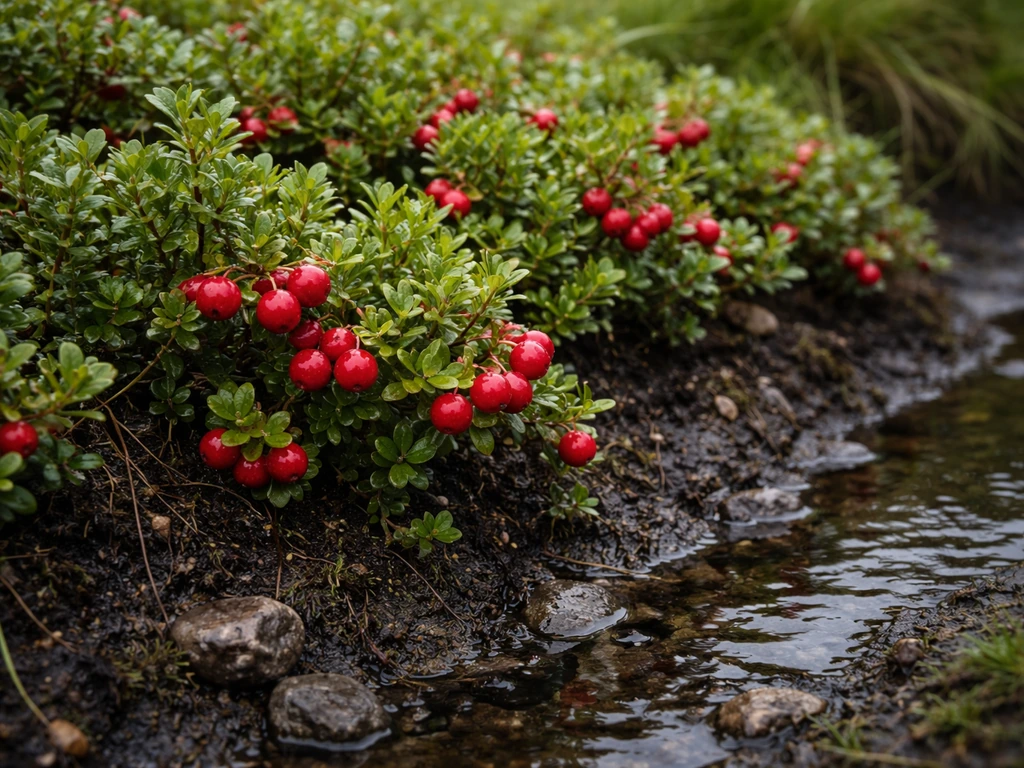
Cranberries are bog plants. In the wild, Vaccinium oxycoccos grows across northern and central Europe on raised bogs and wet heathland, often rooted directly into Sphagnum moss over waterlogged peat. The soil in these habitats is brutally acidic, with pH readings as low as 2.9 and rarely above 4.7. Mineral content is almost nothing. The water table sits just below or at the surface for much of the year. This isn't a plant that tolerates occasional waterlogging: it evolved in it.
The American cranberry (Vaccinium macrocarpon), which is the species behind virtually all commercial fruit production and the varieties you're most likely to want to grow for a decent harvest, comes from the same kind of environment in North America: wet, peaty, acidic bogs along the Atlantic coast and into the Great Lakes region. These are places with cold winters, mild summers, high rainfall, and soil chemistry that most gardeners would consider extreme. Parts of Scotland, Wales, and the English uplands actually share some of those characteristics naturally. The south and east of England, broadly speaking, do not.
Can cranberries actually grow in the UK? England vs Scotland
The honest answer is yes across the whole of the UK, but the ease of doing it varies significantly by region. The RHS rates both Vaccinium oxycoccos and Vaccinium macrocarpon as H6 hardy, meaning they can handle -20°C to -15°C without winter protection. That covers even the coldest corners of Scotland. Cold winters are not the limiting factor.
Where Scotland has an advantage is in natural soil acidity, higher rainfall, and a generally cooler, damper growing environment that more closely mirrors cranberry habitat. If you're gardening on peaty, acidic ground in the Scottish Highlands or upland areas of Wales and northern England, there's a real chance you could grow cranberries in the open ground with relatively little intervention. Some growers in these areas already do.
In England, particularly the south and east, you're fighting the soil more than the climate. Chalky, loamy, or clay-heavy soils with a neutral or alkaline pH are the norm, and cranberries planted directly into these will develop chlorosis (yellowing from iron and manganese deficiency) and slowly decline. Rainfall is also lower and less reliable in many English regions during summer. That said, with containers or purpose-built bog beds, growing cranberries in England is entirely achievable. I'd frame it as more of a managed project than a plant-and-forget situation.
Late frosts are worth mentioning as a regional concern. Even though the plants themselves survive cold winters, flowers and young growth in spring are vulnerable to sudden frosts, and a sharp April or May frost can wipe out your fruiting potential for the year. This is a bigger concern in northern and upland areas than on the south coast. It's the same problem that catches growers of other Vaccinium family members like blueberries and lingonberries off guard in colder regions. If you are also thinking about other acid-loving plants for similar UK conditions, blueberries and lingonberries face the same kind of frost risk.
The three things cranberries need you to get right
Soil acidity
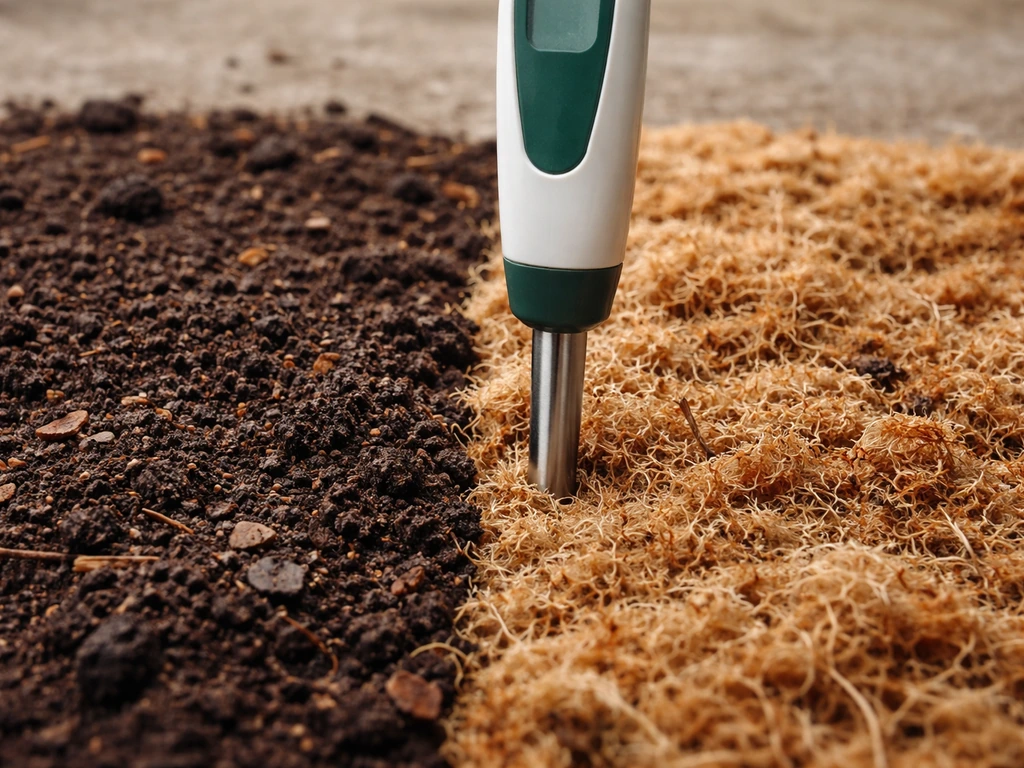
This is the biggest one. Cranberries need a pH of 4.0 to 5.5, with the sweet spot around 4.2 to 4.5. Most UK garden soils sit between pH 6 and 7.5. Even slightly elevated pH blocks the plant's ability to absorb iron and manganese, causing leaves to yellow and growth to stall. Tap water in many parts of the UK is also alkaline, and repeated use of it can gradually raise the pH of your growing medium. Use rainwater wherever possible, and if you're testing your tap water and finding it hard, that's a warning sign to collect and store rainwater before it becomes a problem.
Consistent moisture
Cranberries don't like drying out, even briefly. Even 48 hours without water in warm summer weather can damage the root system of a container-grown plant. In the ground, you're aiming for consistently moist but not stagnant conditions: think bog-edge rather than flooded ditch. In containers, many growers stand the pot in a shallow saucer of water during summer to maintain constant moisture without having to water twice a day.
Low fertility
This one surprises people. Cranberries are adapted to nutrient-poor environments and don't want rich compost or regular feeding with general fertilisers. Overfeeding promotes leafy growth at the expense of fruit and can actually harm the plant. The ericaceous compost you use should be low in nutrients, and any feeding should be with a specialist ericaceous or acidic plant fertiliser, used sparingly.
Container growing vs outdoor bog beds: which works better in the UK?
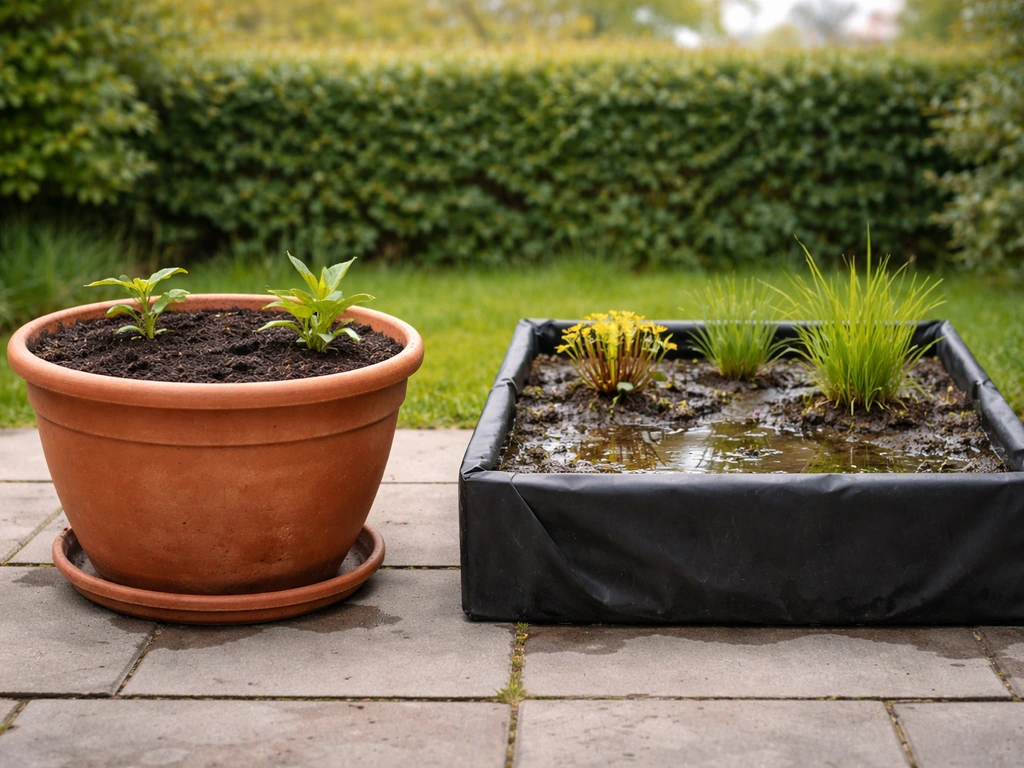
For most UK gardeners, containers are the more reliable starting point. They let you control pH, moisture, and growing media precisely, without having to battle or dramatically amend your native soil. A wide, shallow container (cranberries are surface-rooting and spread horizontally) filled with ericaceous compost and stood in a saucer of rainwater gives you close to ideal conditions in almost any UK garden.
Outdoor bog beds are worth considering if you have the space and want to grow more plants, or if your native soil is already acidic and free-draining over peat. The approach involves lining a shallow bed or sunken area with polythene to retain moisture, filling with a mix of ericaceous compost and sharp sand or composted bark, and maintaining consistent irrigation. The advantage over containers is that larger plantings produce more fruit and are less prone to drying out during hot spells. The disadvantage is that you lose some pH control, especially if your surrounding soil or water source is alkaline.
| Method | Best for | pH control | Moisture control | Space needed | Difficulty |
|---|---|---|---|---|---|
| Container (wide, shallow pot) | Most UK gardeners, alkaline soil areas, smaller gardens | Excellent | Good with saucer method | Minimal | Low |
| Raised bed (ericaceous compost) | Bigger harvests, moderate space, neutral-soil gardens | Good | Moderate (needs irrigation) | Medium | Medium |
| In-ground bog bed (lined) | Acidic-soil areas, Scotland/uplands, larger plots | Moderate | High if well-designed | Large | Medium-High |
| Direct in-ground planting | Already acidic peaty soils only (pH 4–5.5 native) | Low (site dependent) | Variable | Any | High in most UK gardens |
My recommendation for most readers: start with containers. A wide terracotta or plastic trough, at least 40cm across and 20–25cm deep, filled with ericaceous compost and watered exclusively with rainwater, will grow a perfectly productive cranberry plant with minimal fuss. Once you've seen how the plant behaves and what it needs, scaling up to a bog bed makes much more sense.
Choosing a variety and sourcing plants
For fruit production, you want Vaccinium macrocarpon, the American cranberry. The RHS recommends several varieties that perform well in UK conditions: 'Early Black', 'Pilgrim', 'Redstar', and 'Stevens' are all good choices. 'Early Black' ripens two to three weeks earlier than 'Pilgrim', which makes it particularly useful in Scotland or cooler northern English gardens where the growing season is shorter and late-season frosts can arrive before slower-maturing berries are ready. 'Stevens' is a vigorous grower and tends to crop reliably. For a first planting, 'Early Black' or 'Stevens' are sensible picks.
You can also grow the native European cranberry (Vaccinium oxycoccos) as an ornamental or wildlife plant, but the fruit is small and the flavour very sharp. It's a beautiful trailing plant for a peat bog garden, but if you want berries worth cooking with, stick to the American species and its named cultivars.
Plants are most commonly sold as small potted specimens or bare-root plants, often through specialist fruit nurseries and online growers. Avoid supermarket cranberry plants sold around Christmas as these are often American varieties not suited to outdoor UK cultivation. When buying bare-root, plant at the same depth as they were grown in the nursery, and get them in the ground or into containers promptly. Growing from seed is possible but slow: seeds need 60 to 90 days of cold stratification at around 5°C before they'll germinate, and you won't see fruit for several years.
Season-by-season care
Spring (March to May)
As growth resumes and buds break, keep moisture levels consistent and switch to using stored rainwater if you haven't already. This is the most frost-sensitive period: flowers and new shoots are vulnerable to late frosts. In northern regions, keep an eye on the forecast in April and May. You can drape fleece over container plants overnight if a frost is predicted. Commercial growers use sprinklers to coat buds with a continuous film of water during frost events, which releases heat as it freezes and keeps tissue temperatures just above damaging levels, but for home gardeners, fleece is more practical.
Summer (June to August)
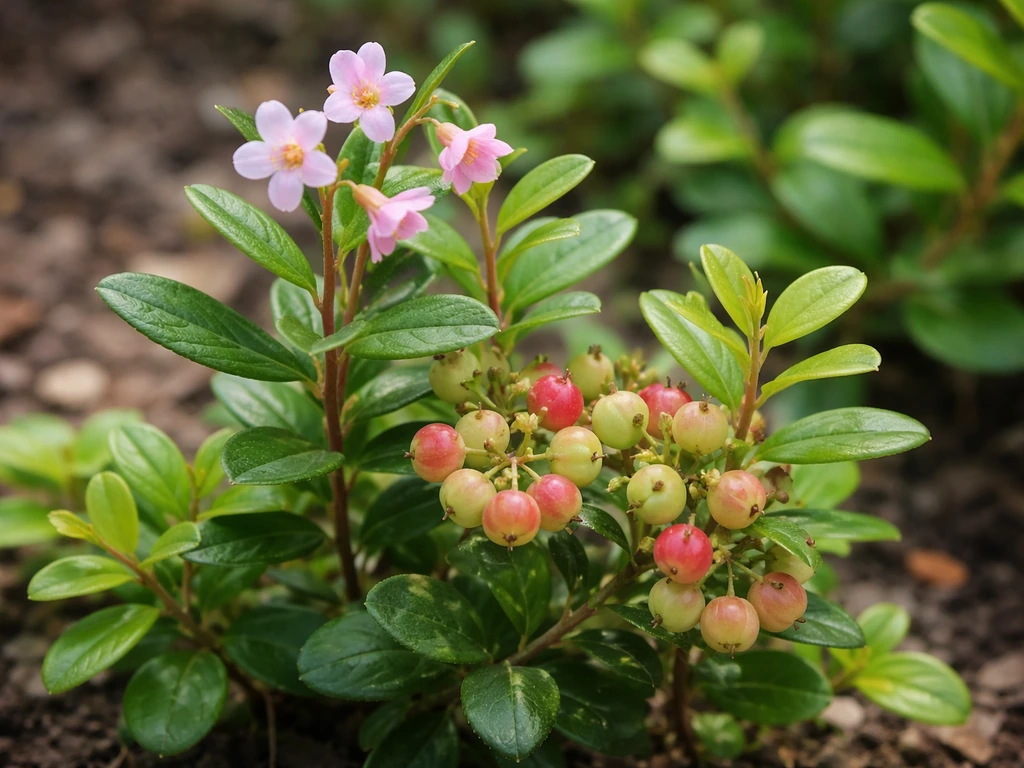
Flowering happens in early summer, with small pink flowers that need pollination, usually by bees. Plant in a sunny position and encourage pollinators. This is also when moisture management becomes critical: do not let containers dry out. Stand pots in saucers of rainwater and top them up regularly. If you're growing in a bog bed, check moisture levels every few days during dry spells. Avoid feeding with general-purpose fertilisers. If the foliage looks pale or yellowing, suspect pH rather than nutrient deficiency first, and test your compost or growing medium.
Autumn (September to November)
Berries ripen from September onwards, turning deep red when fully ripe. Harvest when berries are firm and fully coloured. Early varieties like 'Early Black' will be ready in September; later varieties push into October and November. Watch for early frosts in northern regions, especially in October, which can damage ripe fruit still on the plant. After harvest, the RHS recommends pruning the plants lightly to remove any straggly or dead growth and to stimulate vigorous upright shoots that will carry next year's fruit.
Winter (December to February)
Cranberries are evergreen and fully hardy, so they don't need winter protection in most UK situations. Keep the growing medium moist but not waterlogged over winter. Container plants are at more risk than in-ground plants during prolonged hard frosts because the roots in above-ground containers can freeze more severely than roots in the ground. Moving containers against a sheltered wall or into an unheated greenhouse during extended cold snaps is sensible precaution, though rarely necessary in most of the UK.
When things go wrong: common problems and fixes
Yellow leaves (chlorosis)
This is the most common problem and almost always comes back to pH. If your leaves are yellowing, especially between the veins while the veins stay green, the soil or compost pH has probably crept up above 5.5. Test it. If you've been using tap water, switch to rainwater immediately. You can temporarily acidify the growing medium with a solution of sulphate of iron or a proprietary ericaceous plant tonic, but the longer-term fix is addressing the water source and potentially refreshing the compost.
Poor fruit set
If your plant flowers but produces little or no fruit, the likely causes are insufficient pollinator activity or a late frost damaging the flowers. Cranberry flowers are not especially attractive to bees, so planting near other pollinator-friendly plants and growing more than one plant to cross-pollinate can help. A single plant can be self-fertile but tends to set more fruit with a companion. Growing two different varieties improves your chances significantly.
Root rot and fungal issues
Paradoxically for a bog plant, cranberries can suffer from root rot if water becomes truly stagnant rather than consistently moist. The distinction matters: cranberries want constant moisture with some oxygen in the root zone, not anaerobic mud. Ensure containers have drainage holes and that bog beds have some structure to prevent complete stagnation. If you see plants collapsing suddenly with darkened roots, root rot is likely the cause. Remove affected plants, refresh the compost, and review your drainage setup.
Weeds
Cranberries are low-growing and slow to establish, which makes them poor competitors against weeds in the early years. Hand-weed carefully around the base of plants, as the roots are shallow and easily disturbed. Once established, the trailing stems form a dense mat that suppresses most weeds naturally. In bog beds, avoid using bark mulch that hasn't fully composted, as it can raise pH slightly as it breaks down.
Winter survival concerns
The plants themselves are tough, but freeze-thaw cycles in early spring can physically heave shallow-rooted plants out of the ground or compost. If you're in an area with repeated freeze-thaw during late winter and early spring, a loose mulch of Sphagnum moss or pine bark over the root zone helps stabilise soil temperature. Check plants after hard frosts and press any lifted roots back into the compost.
Is it worth the effort?
If you already grow blueberries, lingonberries, or other ericaceous fruit successfully, cranberries fit naturally into the same management approach and the same acidic growing conditions. The main additional demand is moisture: cranberries need more consistent watering than blueberries. If you're new to acid-loving plants and growing on neutral or alkaline soil, expect a learning curve, mostly around pH and water management. If you like the idea of growing hardy fruit shrubs, you might also be wondering does sea buckthorn grow in the uk. The fruit yield from a home planting won't rival commercial production, but a few well-grown container plants will give you enough berries for sauces, preserves, and baking by October.
The most practical next step is straightforward: buy two small plants of a UK-recommended variety like 'Early Black' or 'Stevens', pot them into wide ericaceous compost containers, start collecting rainwater now if you aren't already, and place them in full sun. From there it's mostly a matter of not letting them dry out and watching the pH. Done right, these are long-lived, low-maintenance plants that will produce reliably for many years. If you're searching for the best gooseberries to grow in the UK, the same kind of attention to soil and sunlight will make a big difference best gooseberries to grow uk.
FAQ
Can I grow cranberries in the ground on normal UK soil if I add peat and fertilizer?
Not in the way you can with many fruit plants. If your beds or containers ever sit at pH above about 5.5, you risk yellowing and weak growth even if temperatures are fine. Before planting, measure pH of your compost or soil and also test your irrigation water if you are using tap water.
What’s the best watering method for cranberries in containers in hot UK summers?
Yes, but only if you set it up to keep the root zone consistently moist and acidic. A typical garden hose schedule usually leads to dry spells, and tap water can slowly push pH up. The easiest approach is a wide, shallow container with a rainwater saucer, so the medium stays wet without repeated top-ups that raise alkalinity.
Is it possible to grow cranberries from seed in the UK, and how long until you get berries?
You can, but it’s slow and you may not get fruit for several years. If you try seed, plan on 60 to 90 days of cold stratification around 5°C, then expect the seedlings to be weak at first. For most gardeners aiming for berries by early autumn, buying established plants is more reliable.
My cranberry leaves are yellow. How do I tell if it’s pH or a nutrient problem?
Most issues that look like “crisis” are pH first. If leaves yellow (especially between veins), test the medium before feeding. If pH is already high, adding general fertilizer will not fix it, it can worsen leafy growth without restoring iron uptake.
Do I need to cover cranberry plants during winter or spring frosts in the UK?
Yes, but treat it as a frost management decision. In late spring, fleece can protect the plant overnight, but avoid leaving it on permanently in sunny weather. If you routinely get damaging April or May frosts, consider a sheltered position (wall or corner) and be ready to cover only when forecasts are harsh.
How can I tell the difference between normal cranberry moisture needs and root-rot risk?
Root rot is usually caused by waterlogging with no oxygen, not by being wet. Make sure containers have drainage holes, and that any bog bed has some structure so water does not become stagnant mud. Sudden collapse with darkened roots is a sign to remove affected plants and refresh the compost.
Will cranberries choke out weeds, or do I need to weed them often?
They are not aggressive enough to handle competition early on. In the first year, weed carefully by hand close to the plant because roots are shallow and easy to disturb. Once plants trail and form a dense mat, weeds become much less of a problem.
My cranberry flowers, but I’m not getting many berries. What should I check first?
Pollination can be a limiting factor, especially with only one plant. While one plant may set some fruit, using two different varieties improves results. If you live somewhere with fewer bees or your garden is very sheltered, placement near other pollinator-friendly flowers can help.
When is the right time to prune cranberries in the UK, and how much should I cut back?
If you prune for next season, do it lightly after harvest. Heavy pruning can reduce next year’s fruiting wood and delay recovery. Aim to remove straggly or dead growth, and focus on keeping the plant tidy rather than cutting back hard.
How often should I refresh or replace the ericaceous compost in a cranberry container?
If you’re struggling in an alkaline area, refresh often enough to regain control of pH. Container media can drift upward over time, especially if any tap water gets used. Consider repotting or refreshing the ericaceous compost if you see recurring yellowing despite switching fully to rainwater.
Does Juniper Grow in the UK and Do Juniper Berries?
Find out if juniper grows in the UK and when and where it produces berries, plus how to choose and care for the right ty