You can grow a nutmeg tree (Myristica fragrans) in the UK, but only as a heated greenhouse or indoor plant, and the chances of actually harvesting your own spice are slim to none for most growers. The Eden Project is widely cited as the only place in the UK to have fruited one. That should set the tone. If you want a fascinating tropical specimen to grow and learn from, absolutely go for it. If your goal is a jar of homegrown nutmeg on the spice rack, you need to know what you're really getting into.
Can You Grow Nutmeg in the UK? Practical Guide
James Hartwell
4 Jul 2026
UK climate reality check for nutmeg
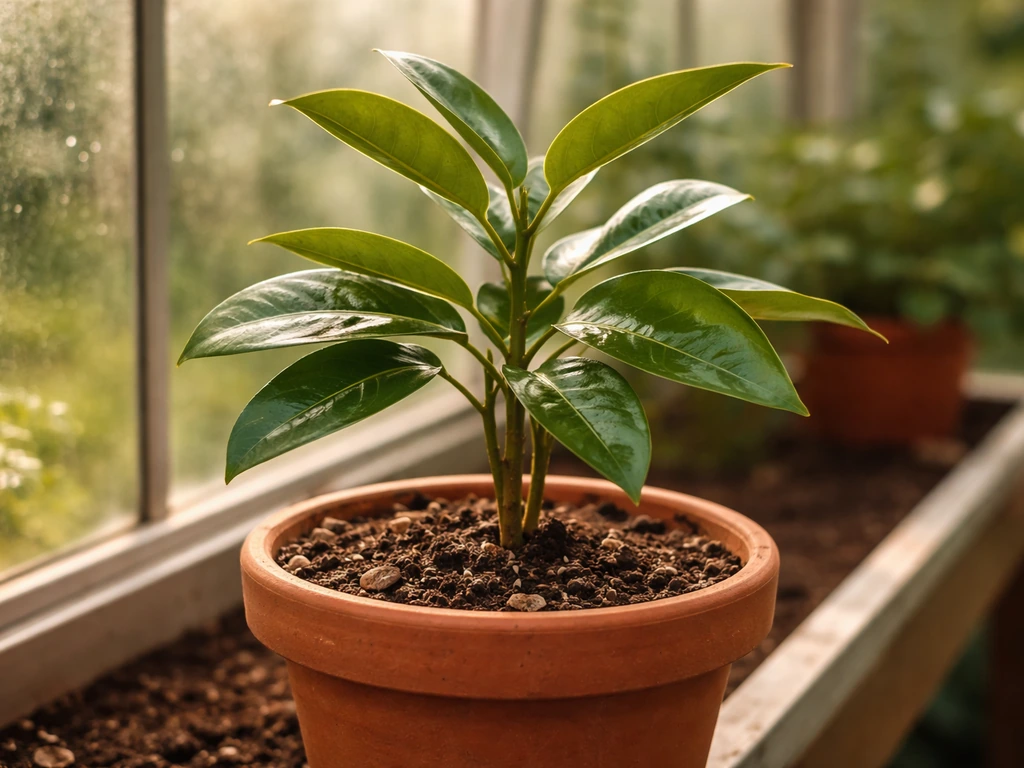
Myristica fragrans is a tropical rainforest tree native to the Banda Islands in Indonesia. It evolved in a belt around the equator where temperatures sit between roughly 20°C and 30°C year-round, humidity stays high, and frost is simply not part of the vocabulary. The UK is about as far from that as you can get without actually visiting the Arctic.
Even in the warmest corners of the UK, the Isles of Scilly and sheltered spots on the Cornish and Devon coast, winter nights regularly drop below 10°C, and frost is possible almost everywhere. Nutmeg is not frost-tolerant at all. Any exposure to near-freezing temperatures will damage or kill the plant. The idea of growing it outdoors year-round in Britain, even in a sheltered southern microclimate, is not realistic. This isn't a case of picking the right wall or piling on mulch. The baseline climate just doesn't have enough warmth or sustained humidity.
The UK is also significantly further north than nutmeg's natural range, which means winter light levels are extremely low from October through to March. Tropical plants that have adapted to near-equatorial day lengths can really struggle with UK winters, even when temperature is managed artificially. So managing warmth is only part of the challenge.
What a nutmeg tree actually needs to grow
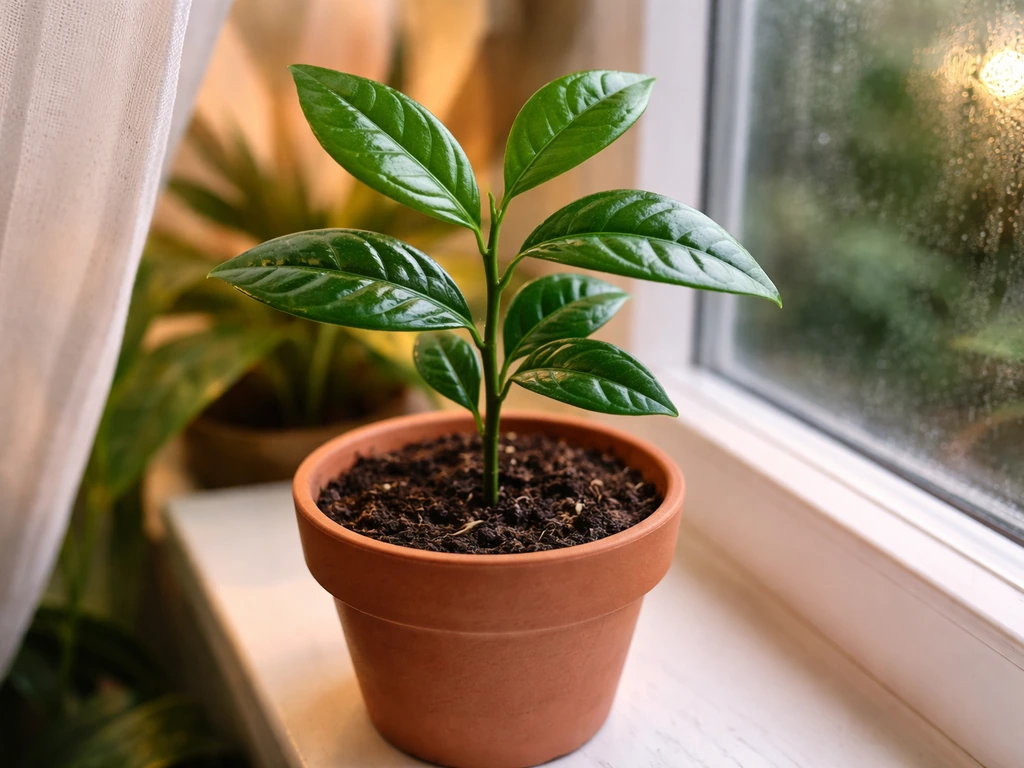
Understanding the requirements upfront saves a lot of wasted effort. Here's what Myristica fragrans needs to thrive, and how each factor plays out in a UK setting.
| Requirement | What it needs | UK reality |
|---|---|---|
| Minimum temperature | Never below 10°C, ideally 20–30°C | Needs heated greenhouse or indoor growing all year |
| Frost tolerance | None whatsoever | Frost possible almost everywhere in the UK outdoors |
| Light | High intensity, long hours | Very low winter light; supplemental lighting helpful Nov–Feb |
| Humidity | High, tropical levels (60–80%+) | UK indoor air is dry; misting or humidifier needed |
| Soil pH | 5.5–7.5 | Achievable with a well-prepared container mix |
| Drainage | Good drainage, tolerates dry spells | Avoid waterlogged containers; raised mix helps |
| Space | Can reach 10–20m in the wild; containers restrict size | Manageable in large pots for years |
The humidity requirement is one people often underestimate. UK homes and heated greenhouses tend to be drier than nutmeg prefers, especially in winter when central heating or greenhouse heaters are running. You'll want to either mist the plant regularly, place it on a tray of damp gravel, or use a small humidifier nearby. A Reddit thread from growers attempting nutmeg in temperate settings specifically flags this: high humidity is non-negotiable for healthy growth.
How to start nutmeg in the UK
Getting hold of seed or plants
Nutmeg seed viability drops fast after harvest, which makes sourcing a real challenge in the UK. Research confirms that seeds stored at room temperature lose germination ability quickly, while storage at 5°C in sealed polythene packs slows that decline. If you're buying seeds online, look for a specialist tropical seed supplier who harvests to order or stores correctly. Avoid dried spice-grade nutmeg from the supermarket shelf as seed, as these will not germinate. You need fresh, viable seed or a young rooted plant.
Young nutmeg plants occasionally appear from specialist tropical plant nurseries and online retailers. If you can find a small established plant rather than starting from seed, that's worth considering given the sourcing and germination challenges.
Sowing seed
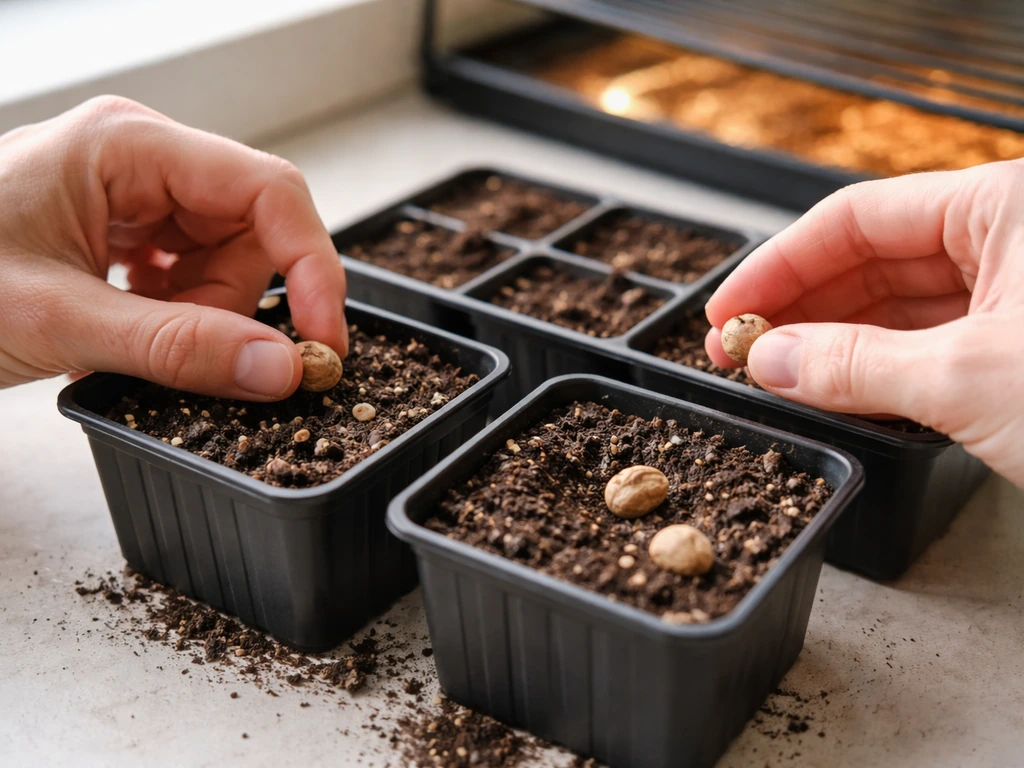
Plant seeds as soon as possible after receiving them. Germination typically takes 4 to 10 weeks under good conditions. Sow into a free-draining tropical mix: a combination of peat-free compost, perlite, and coarse sand works well. Bury the seed about 2–3cm deep and keep the container at a consistent 25–28°C. A heated propagator is ideal. Keep the compost moist but never waterlogged, and cover the container loosely to retain humidity.
Best timing in the UK for starting seeds is late February through April, when you can begin providing warmth and light is improving. Avoid starting in the depths of winter unless you have good supplemental lighting, because germinated seedlings that emerge into very low-light conditions in December or January will struggle.
Container setup and ongoing care
Use a container with good drainage holes and a mix that hits the preferred soil pH of around 5.5 to 7.0. A tropical potting mix with added perlite (roughly 30% perlite to 70% compost) drains well and avoids the waterlogging that causes root rot. Start in a 15–20cm pot and repot every two to three years as the plant grows. Water regularly during the growing season (spring through autumn) but reduce in winter, letting the top layer of compost dry slightly between waterings. Feed with a balanced liquid fertiliser every three to four weeks from April to September.
Growing outdoors vs indoors or in a greenhouse
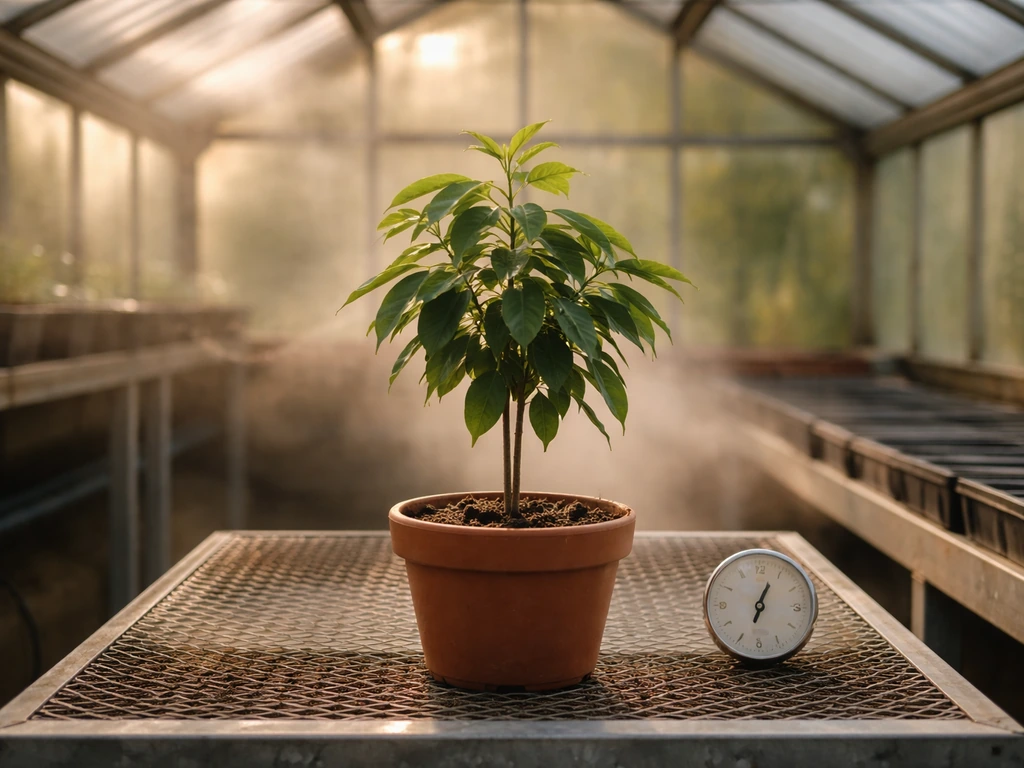
For the vast majority of UK growers, the choice is heated greenhouse or a warm indoor space, not outdoors. With sandalwood, the same kind of constraints apply in the UK, so you typically need very controlled growing conditions if you want any real chance at success heated greenhouse or a warm indoor space. Here's how each option stacks up.
Heated greenhouse
A heated greenhouse is the best realistic option if you have one. can you grow white sage in the uk. You can maintain the minimum temperature of 15°C overnight through winter (aim for 18–20°C if budget allows), manage humidity more easily with trays of water or a misting system, and provide a more consistent environment than a living room. A tropical or warm greenhouse with good insulation and a thermostatically controlled heater is the setup to aim for. This is essentially what the Eden Project's Rainforest Biome replicates, albeit on a vastly larger scale.
Indoor growing
A warm, bright room works for smaller plants. A south or west-facing windowsill or conservatory that stays above 15°C in winter is suitable for the first few years. The main challenge indoors is low humidity and limited light in winter. A grow light (full-spectrum LED, running 12–14 hours a day) makes a real difference from November to March. Keep the plant away from cold draughts and radiators simultaneously, which is sometimes harder than it sounds in UK homes.
Outdoors in the UK
Outdoors is not a viable year-round option anywhere in the UK. You might put a potted nutmeg outside in a sheltered, sunny spot from June through early September in the mildest southern regions, which gives it a boost of natural light and warmth during the warmest months. But it needs to come back inside well before any risk of cold nights. Think of the outdoor period as a holiday for the plant, not a permanent home.
Pollination, fruiting timelines, and whether you'll actually get nutmeg
This is where you need to be brutally honest with yourself. Nutmeg is dioecious, meaning individual trees are either male or female. You cannot tell which sex a seedling is until it flowers. To produce fruit, you need at least one male and one female tree. In commercial plantations, blank" rel="noopener noreferrer">a ratio of roughly one male to ten female trees is used. That means if you grow from seed, you need multiple plants and then you need to wait years to find out what sex they are. To produce fruit in plantations, the SAGE paper reports that once sex is known, a practical male to female ratio of about 1 male to roughly 10 female trees is used, with males culled blank" rel="noopener noreferrer">Pollination of Myristica and Other Nutmegs in Natural Populations.
First flowering typically occurs somewhere between 6 and 10 years after germination under cultivation, with some sources putting the range at 5 to 9 years depending on conditions. Once flowering does occur, pollination in the wild is carried out by insects, particularly moths, which are active during anthesis in the very early hours of the morning (around 3 to 5am). Replicating this in a UK greenhouse is genuinely difficult. Hand pollination using a fine brush is possible if you catch both male and female flowers open at the same time, but the window is narrow.
If pollination is successful, fruit development takes around 6 to 9 months. So the realistic timeline from seed to harvesting a nutmeg in the UK is a minimum of 6 to 10 years, requiring multiple plants, careful management of sex ratios, hand pollination, and a fair bit of luck. The Eden Project achieving fruiting is genuinely notable precisely because it is so rare.
The honest takeaway: growing a healthy nutmeg tree as a specimen plant in the UK is achievable with effort. Growing it to produce harvestable spice is an extremely long-term, high-effort project with a low probability of success for most amateur growers.
Common problems and how to deal with them
Pests
In heated greenhouse and indoor environments, the most common pest problems are scale insects and mealybugs, both of which thrive in warm, sheltered conditions. Scale appears as brown or cream-coloured bumps on stems and leaves and can be missed until populations are well-established. Check the undersides of leaves and stem joints regularly. Mealybugs show as white fluffy clusters. Both can be treated with a cotton bud dipped in isopropyl alcohol for small infestations, or with a horticultural oil or insecticidal soap spray for larger ones. Spider mites also become a problem when humidity drops too low, which is another reason to keep humidity up.
Fungal diseases
Leaf spot, leaf blight, and powdery mildew are the main fungal problems reported in nutmeg nurseries. In UK growing conditions, the risk increases in cool, humid winters where airflow is poor. Leaf spot caused by pathogens like Neofusicoccum parvum shows as brown or dark lesions on leaves. Powdery mildew produces a grey-white dusty coating. Prevention is mostly about airflow: don't crowd the plant, open greenhouse vents during mild days even in winter, and avoid wetting the foliage when temperatures are low. If you're attempting fruiting, Colletotrichum horii can cause fruit rot, which is worth knowing about even if you're unlikely to reach that stage.
Slow growth and yellowing leaves
Nutmeg is naturally a slow-growing tree, so don't panic if progress seems minimal. However, yellowing leaves usually point to one of three things: overwatering and root stress, insufficient light (particularly in winter), or nutrient deficiency. Check the roots when repotting for any rot. If the plant is just sitting doing very little in winter, that's normal. Warm it up, give it more light, and it should pick up again in spring.
Harvesting, curing, and using nutmeg (and what to expect in the UK)

On the tiny chance that you do get fruit, here's how harvesting and processing works. A ripe nutmeg fruit splits open to reveal the seed surrounded by a bright red net-like aril. The aril is mace, and the seed inside is the nutmeg. In commercial settings, ripe fruits fall to the ground; the fruit is picked up within a day or two of falling. The aril (mace) is peeled away and dried separately. The seed is then dried: traditional curing involves sun-drying the seed in its shell, turning it daily, for anywhere from 15 to 30 weeks. You'll know it's ready when the kernel rattles inside the shell. The shell is then cracked open to reveal the nutmeg kernel, which is your spice.
In the UK without reliable sun-drying conditions, you can replicate this slowly in a warm room or a low-temperature oven set to around 35–40°C, checking regularly over weeks. The goal is gradual moisture reduction without cooking the spice. Store the dried kernel whole and grate as needed for the freshest flavour.
Your next steps as a UK grower
If you want to give this a proper go, here's a practical checklist for getting started today: If you are also wondering about growing ashwagandha in the UK, it has very different requirements from nutmeg can you grow ashwagandha in UK.
- Source fresh seed from a reputable tropical seed supplier (not supermarket spice nutmeg), or find a young rooted plant from a specialist tropical nursery. Ask explicitly about freshness and storage conditions for seed.
- Set up your growing space: a heated greenhouse kept above 15°C overnight in winter is ideal; a warm conservatory or south-facing indoor space with a grow light works as a backup.
- Prepare a free-draining tropical compost mix (70% peat-free compost, 30% perlite) in a pot with good drainage. Aim for a soil pH of 5.5 to 7.0.
- Sow seeds immediately on receipt, at 25–28°C in a covered propagator. Expect germination in 4 to 10 weeks.
- Plan your heating strategy for winter. Thermostatically controlled greenhouse heater, good insulation, and a target minimum of 15°C overnight. Calculate running costs now.
- Grow at least three to five seedlings from seed if you're serious about fruiting, to improve your odds of getting at least one male and one female tree.
- Manage humidity actively: misting, damp gravel trays, or a small humidifier near the plant.
- Be patient. This is a multi-year project. Enjoy it as a specimen plant and treat any fruit as a bonus rather than the point.
If you're interested in other challenging tropical and subtropical plants in the same spirit, the same honest approach applies to things like sandalwood and white sage, both of which face their own set of UK climate constraints. However, does salvia grow in the UK is another great example of how to check whether a plant’s climate needs match local conditions. Growing unusual species in the UK is always about understanding the gap between natural habitat and what you can realistically replicate, and nutmeg is one of the more demanding examples of that gap.
FAQ
Can you grow nutmeg outdoors in the UK for only the summer months?
Yes, you can move a potted nutmeg outside only during the warmest window (often roughly June to early September in mild southern areas). Bring it back indoors before nights cool down, because even brief cold snaps can injure leaves and growth tips. Keep it in dappled light at first to avoid leaf scorch, and protect from wind, since tropical foliage bruises easily.
Is it possible to produce nutmeg spice in the UK without growing multiple trees?
Practically, no. Nutmeg trees are dioecious (separate male and female), so one tree cannot produce fruit. If you only have one plant, you can aim for a living specimen, but for spice you need multiple plants, space for them, and enough time to identify sex and attempt pollination when flowering begins.
How do I know whether my nutmeg seedlings are alive or just slow-growing in winter?
Look for root viability and new growth, not just visible leaf activity. Slow growth and leaf drop can happen in low light periods, but persistent yellowing plus soft roots usually signals overwatering or rot. During winter, reduce watering, keep it warm and bright (use supplemental light indoors), and check roots at repotting for early rot.
What temperature and humidity setup works best for an indoor nutmeg tree?
Aim to keep the plant above about 15°C in winter, with a stronger target around 18 to 20°C if possible. Humidity is the limiting factor indoors, so pair a humidifier or regular misting with airflow control, such as gentle fan circulation, to avoid fungal issues. Avoid wetting foliage at night when temperatures drop, since that increases leaf spot risk.
Can I start with supermarket nutmeg, or is it always impossible to germinate?
Supermarket nutmeg is intended as dried spice and is not a reliable seed source. Even if some kernels look intact, they are typically too dried to germinate. For best results, buy fresh, viable seed from a specialist supplier, or purchase a young rooted plant from a tropical nursery when available.
How should I handle pollination if I only have one greenhouse or indoor setup?
If you have both male and female plants, timing is the challenge, flowers may be receptive only briefly in early morning. You may need to monitor daily around the flowering period and hand-pollinate with a fine brush when both sexes have open blooms. If flowering timing is off between trees, you might need to wait for the next flush rather than forcing a match.
What are the most common causes of leaf yellowing on nutmeg in UK conditions?
The most frequent causes are insufficient winter light, overwatering leading to root stress, or a nutrient imbalance. Rule out water first by checking the top couple of centimeters of compost and inspecting roots during repotting. If roots are healthy, increase light exposure or extend grow light hours during winter and then adjust feeding rather than changing multiple variables at once.
How can I reduce fungal problems like leaf spot and mildew indoors or in a greenhouse?
Increase airflow and avoid keeping foliage wet when temperatures are lower. Don’t crowd the plant, use ventilation on milder days, and position it so leaves have space to dry quickly. If mildew appears, address humidity and airflow immediately, because treatment alone often fails if conditions stay damp and stagnant.
When should I repot nutmeg, and what potting mix is safest for beginners?
Repot slowly because nutmeg does not like constant root disturbance. A common approach is to repot every two to three years into a free-draining mix with plenty of perlite, and ensure the pot has reliable drainage holes. After repotting, keep temperatures stable and avoid heavy feeding until new growth resumes.
If I manage to get fruit, can I process it indoors without sun drying?
Yes, but plan for long curing time and steady, gentle heat. You can dry mace and nutmeg separately, using a warm room or a low oven around the mid to high 30s Celsius (checked frequently). The key is gradual moisture loss without “cooking” the kernel, and then storing the dried nutmeg whole to preserve flavour.
Next Article
Can You Grow Tiger Nuts in the UK? Practical Guide for Gardeners
Can you grow tiger nuts in the UK? Practical, regional guide with planting dates, containers, harvest & recipes.