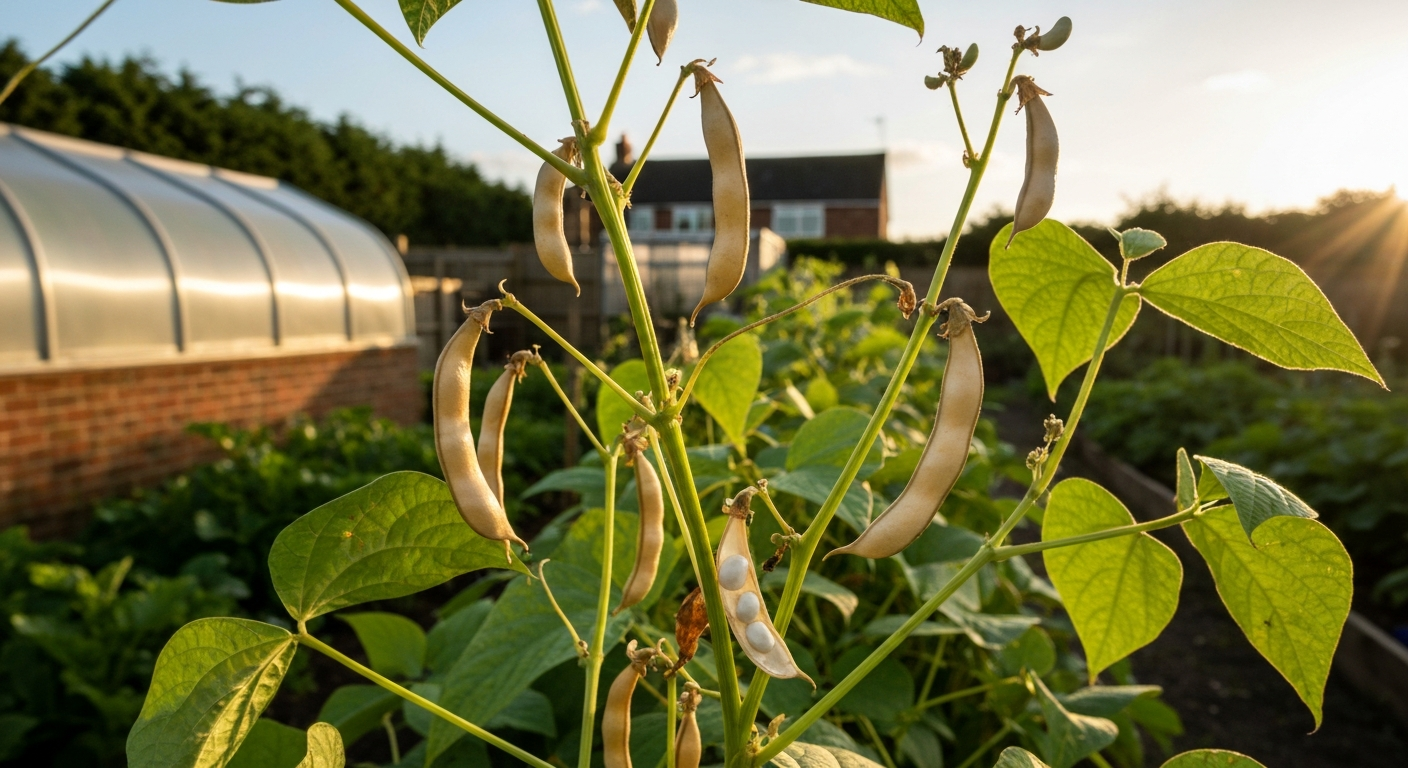
Yes, you can grow butter beans in the UK, but you need to go in with realistic expectations. In the warmest parts of England, think the South Coast, London, East Anglia, and sheltered urban gardens, outdoor growing is genuinely possible in a good summer. Further north, in Scotland, Northern England, or anywhere with a short, cool growing season, you'll get far more consistent results under glass or inside a polytunnel. Butter beans are warm-season legumes that need more heat than most UK summers reliably deliver, so location and technique matter enormously.
Can You Grow Butter Beans in the UK? Regional How-to Plan
James Hartwell
20 Jul 2026
Quick verdict: can you grow butter beans in the UK?
Butter beans (Phaseolus lunatus, also called lima beans) sit firmly in the 'possible but demanding' category for UK gardeners. They are frost-tender, heat-hungry, and need a long warm summer to set pods reliably. The UK's cool, often wet summers are genuinely borderline for this crop, which is worth acknowledging upfront rather than glossing over. That said, UK growing degree days have been rising over recent decades, and growers in favourable spots report decent harvests most years if they use the right techniques.
| UK Region | Outdoor Feasibility | Best Approach |
|---|---|---|
| South Coast / Channel Islands | Good in warm years | Outdoor with fleece, south-facing site |
| London / urban South East | Good to moderate | Outdoor or container against a sunny wall |
| East Anglia / East Midlands | Moderate | Outdoor with cloche start, sheltered position |
| Wales / West England | Moderate to poor (wet) | Polytunnel or greenhouse strongly advised |
| North England | Poor outdoors | Polytunnel or greenhouse recommended |
| Scotland / Northern Ireland / Highlands | Very poor outdoors | Heated greenhouse or polytunnel only |
Microclimates shift this picture significantly. A south-facing walled garden in Yorkshire can outperform an exposed open plot in Kent. Urban heat islands add a meaningful buffer. If you're gardening in a warm spot with shelter from north and east winds, move yourself up a row in that table.
How butter beans grow through the UK seasons
Butter beans germinate best in soil around 24–29°C, significantly warmer than a typical UK May soil temperature, which hovers around 10–14°C in southern England. Sowing into cold, wet soil doesn't just slow germination; it actively injures the seed during the critical imbibition stage (when the seed first absorbs water), and you can lose most of a sowing that way. This is the single biggest practical obstacle for outdoor growing in the UK.
Once established, plants grow through June and July, flowering in mid-summer and setting pods from July onwards under good conditions. They need ambient daytime temperatures of around 21–27°C to perform well. UK summers average 17–22°C in the south and considerably less further north, meaning pod set can be patchy in cooler years. The varieties we can source in the UK typically mature in 60–90 days from transplanting under warm conditions, but expect this to stretch by 2–3 weeks in a cool British summer. From a practical standpoint, you're working with a window of roughly late May to early October in the south, and that's tight.
Varieties worth growing and where to get seed
Variety choice matters more for butter beans than for most UK vegetables because you want the fastest-maturing, most heat-efficient option you can find. Bush (dwarf) types are generally more practical for UK conditions, they're quicker to maturity and easier to protect under cloches or fleece than tall climbing types.
- Fordhook 242: a classic large-seeded bush variety, around 85 days to maturity. Widely available from US seed suppliers and some UK specialist seed merchants. Reliable under tunnel conditions.
- Henderson's Bush (Baby Lima): smaller seed, shorter season (around 65 days), making it a better bet for outdoor UK growing in the south.
- King of the Garden: a tall pole type with large white seeds — best reserved for polytunnel growing in the UK given its long season.
- Dixie Butterpea: a smaller-seeded bush type, faster than Fordhook 242 and a good option if you want to attempt outdoor growing in a warm spot.
For seed sourcing, try The Real Seed Catalogue, Chiltern Seeds, and Seeds of Italy, all based in the UK and stocking at least one or two butter bean or lima bean varieties. For a wider selection, US suppliers like Johnny's Selected Seeds ship to the UK, though factor in import costs. Always check that seed is fresh (germination rates decline quickly with lima beans) and buy from a source that stores seed properly.
Step-by-step growing plan
Sowing dates and seed treatment
Start seeds indoors or in a heated propagator in late April to mid-May, aiming for soil/compost temperatures of at least 20–24°C at seed depth. Don't direct sow outdoors, UK soil in April and early May is simply too cold, and even in June the risk of a poor germination isn't worth it. Soak seeds in lukewarm water for 4–6 hours before sowing to kickstart germination, but avoid soaking more than 8 hours as this can cause splitting. If your soil has no history of growing lima beans or related legumes, consider using a Phaseolus-specific Rhizobium inoculant on the seeds before planting out, this supports nitrogen fixation and can improve plant vigour, particularly in soils with low organic matter. Extension guidance (Beans, Lima, Oregon State University extension (inoculation note)) notes that Phaseolus‑specific Rhizobium inoculants can help where compatible strains are absent, though effectiveness depends on soil history and the inoculant strain Beans, Lima — Oregon State University extension (inoculation note).
Depth, spacing and transplanting
Sow seeds 2.5–4 cm deep, one seed per small pot or module. Transplant outside only after all frost risk has passed and nights are consistently above 10°C, typically late May in the south, mid-June in northern England, and potentially July (under protection) in Scotland. Space bush varieties 15–20 cm apart in rows 45–60 cm apart. Pole types need 20–25 cm between plants in rows at least 60 cm apart, with supports in place before transplanting. Handle the roots carefully, butter beans resent root disturbance.
| Task | South England (approx.) | Midlands / North England (approx.) | Scotland (approx.) |
|---|---|---|---|
| Start seeds indoors | Late April | Early May | Mid May |
| Harden off | Early to mid May | Mid to late May | Early June |
| Transplant outdoors | Late May | Early June | Mid June (tunnel only) |
| Expect first pods | Late July to August | August to September | September (tunnel) |
| Last harvest | September to October | September | October (tunnel) |
Climbers, bush types, and getting your supports right
Butter beans come in two growth habits: bush (dwarf) types that reach around 45–60 cm and need little or no support, and pole (climbing) types that can reach 2–2.5 m and need a strong trellis or cane framework. For most UK outdoor growers, bush varieties are the smarter choice, they mature faster, stay low enough to cover with fleece or cloches in cold snaps, and are easier to manage in a typical UK summer that doesn't go on forever.
If you're growing in a polytunnel or a tall greenhouse, pole types like King of the Garden become more practical. Set up a wigwam of 2.4 m canes or a horizontal wire system along the tunnel ridge before transplanting. For outdoor bush types, short pea sticks or a simple ring of string around each plant is usually enough to stop them flopping after rain. Don't overcomplicate the support structure, the plant itself is fairly sturdy if not overcrowded.
Soil, feeding and watering
Getting the soil right
Butter beans prefer a well-drained, fertile soil with a pH of 6.0–6.8. They'll struggle in heavy, waterlogged clay, and UK soils prone to sitting wet in summer can cause root rot and poor nitrogen fixation. Before planting, dig in well-rotted compost to improve drainage and structure. Avoid adding high-nitrogen fertiliser at planting; like all legumes, butter beans fix their own nitrogen once established, and excessive nitrogen pushes leafy growth at the expense of pods.
Feeding
Once plants are flowering, a fortnightly liquid feed with a high-potash feed (like tomato fertiliser) encourages pod development. Before flowering, plants should largely fend for themselves if the soil is reasonably fertile. If you've used a Rhizobium inoculant, resist the temptation to add nitrogen feed, it counteracts the nitrogen-fixing relationship you've set up.
Watering schedule
Butter beans need consistent moisture but hate waterlogged roots. Water regularly at soil level (avoid wetting foliage) during dry spells, roughly every 2–3 days in a warm dry summer, or as needed to keep soil moist but not soggy. The most critical watering windows are just after transplanting (to establish roots) and during flowering and pod fill. Irregular watering during pod development causes pods to abort or beans to be misshapen. A 5 cm mulch of garden compost around the base helps retain moisture and reduces watering frequency in dry periods.
Frost management and hardening off
This is non-negotiable: a single frost will kill butter bean plants outright. The UK's last spring frost dates vary dramatically, southern England typically sees the last frost in March or April, but in northern England last frosts can fall in May, and in Scottish uplands well into June. Even in southern England, clear calm nights in May can push temperatures below freezing under a radiation frost, so don't trust a calendar date alone. Check your local Met Office frost probability data and watch the forecast.
Harden off transplants over 10–14 days before planting out: start by putting pots outside in a sheltered spot during the day, bringing them back in at night. Gradually extend outdoor exposure over two weeks. If a late frost is forecast after you've planted out, cover plants with a double layer of horticultural fleece overnight, this typically adds 2–3°C of protection. Have fleece on hand all through May and into early June regardless of where you garden.
Extending the season: tunnels, greenhouses, containers and cloches
Season extension is arguably the most important tool in the UK butter bean grower's kit. Practical UK guidance (Butter Bean Growing Guide | GrowVeg) recommends growing lima/butter beans in the warmest, sheltered sites, starting them under cover or in pots and transplanting after the risk of frost has passed, or using polytunnels/greenhouses for reliable cropping. Here's how each option plays out in practice:
Polytunnel
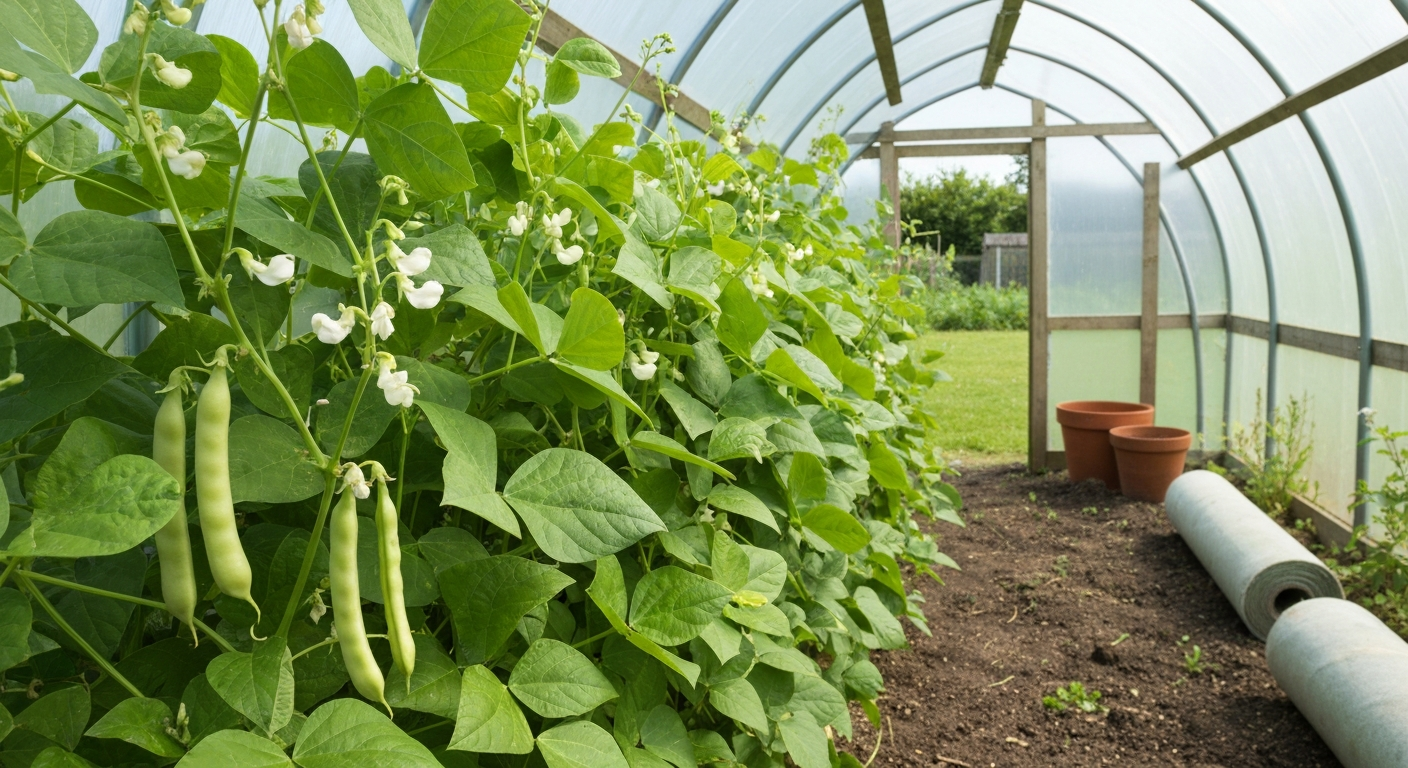
A polytunnel is the best all-round option for UK butter bean growing. It adds 4–6°C of ambient warmth, extends the growing season by 4–6 weeks at both ends, and keeps rain off the foliage (important for disease prevention). You can plant out 2–3 weeks earlier than outdoors and keep cropping well into October. If you grow any heat-hungry crops regularly, a polytunnel pays for itself quickly, butter beans, peppers, aubergines, and outdoor tomatoes all benefit from the same environment.
Greenhouse
An unheated greenhouse works similarly to a polytunnel for butter beans. The main limitation is space, pole types need height, and in a small greenhouse you may be better off sticking to bush varieties. A heated greenhouse (maintaining a minimum of 10°C at night) removes the frost risk entirely and is the most reliable option in Scotland or Northern Ireland, giving you a genuinely viable crop in regions where outdoor growing simply doesn't work.
Containers
Bush varieties grow well in large containers (at least 30–40 cm diameter, 30 cm deep). The key advantage is mobility: you can keep pots on a warm patio against a south-facing wall, move them under cover during cold snaps, and start them earlier than fixed outdoor beds. Use a peat-free multi-purpose compost mixed with a third grit or perlite for drainage. Water more frequently than border plants, containers dry out fast in warm weather.
Cloches and fleece
Glass or polycarbonate cloches placed over newly transplanted seedlings buy 1–3 weeks of extra warmth in spring. Remove or ventilate cloches on sunny days once temperatures climb, butter beans don't need high humidity and poor ventilation encourages fungal problems. Fleece tunnels (twin-layer if possible) are cheaper and more flexible, and can be left in place during cold nights well into May. Neither cloches nor fleece alone is sufficient to grow butter beans reliably in the North without additional protection.
What to expect at harvest and how to store them
Pick pods when they feel plump and the beans inside are fully developed but before the pod turns yellow and papery. Fresh butter beans have a creamy, slightly nutty flavour that's quite different from the tinned variety, worth the effort if you get a good crop. Expect yields to vary significantly year to year; in a warm UK summer with tunnel protection, a 3 m row of bush varieties might give you 1–2 kg of shelled beans. In a cool, dull summer without protection, the same plants might produce almost nothing.
If you leave pods to dry fully on the plant (and your autumn is dry enough to allow this), you can harvest dried beans for storage. Dried butter beans keep well in an airtight container for 1–2 years. Fresh beans can be blanched and frozen. Culinary uses are broad: they work in soups, stews, salads, and as a side dish, and they hold their shape well in slow-cooked dishes far better than many other beans.
Pests, diseases and common problems
Slugs and snails
Young transplants are highly vulnerable. Use copper tape around containers, apply organic slug pellets (ferric phosphate-based), and check plants after rain. Getting plants past the first two weeks after transplanting is the critical window, larger plants are much less vulnerable.
Blackfly (black bean aphid)
A classic UK bean problem. Check growing tips and undersides of leaves weekly from June onwards. Pinch out the growing tips of bush varieties once they reach full height, this removes the softest tissue that blackfly prefer. A sharp spray of water dislodges colonies; insecticidal soap is effective if colonies are heavy. Encourage ladybirds and lacewings by planting companion flowers nearby.
Bean rust and fungal diseases
Rust (orange-brown pustules on leaves) is common in wet UK summers. Improve airflow by spacing plants correctly and avoid overhead watering. Remove and bin (don't compost) affected leaves. In a polytunnel, ventilate well during humid conditions. Rotate your legume growing area each year to reduce soil-borne disease pressure.
Troubleshooting poor germination and pod drop
- Seeds not germinating: almost always caused by cold, wet compost or soil. Check your propagator or growing medium temperature — it needs to be at least 20°C consistently.
- Flowers dropping without setting pods: usually a sign of temperature stress (too cold at night or too hot and dry). Improve watering consistency and consider moving pot-grown plants to a warmer spot.
- Yellow leaves: check for waterlogging first, then consider a potassium or magnesium deficiency if the pattern is interveinal yellowing.
- Leggy, pale seedlings: insufficient light during indoor raising. Move to a brighter windowsill or use a grow light until transplanting.
How butter beans compare to other beans for UK growing
If you're weighing up whether butter beans are worth the effort compared to other legumes, here's an honest comparison. French beans (climbing and dwarf) are significantly easier in the UK, faster to maturity, less heat-hungry, and far more productive in a typical British summer. For a quick guide to what performs most reliably, see our roundup of the best beans to grow in the UK. Runner beans are arguably the UK's most reliable home-grown legume and need far less coddling. Cannellini beans are a closer comparison to butter beans in terms of heat requirement and growing approach, both need a warm season and protection in northern areas. Chickpeas and soya beans push into even harder territory than butter beans for UK outdoor growing. The bottom line is that butter beans sit in the middle of the difficulty spectrum for UK legumes: more demanding than French or runner beans, but more realistic than chickpeas or soya as an outdoor crop in the south.
| Bean Type | UK Outdoor Viability | Heat Demand | Relative Difficulty |
|---|---|---|---|
| Runner bean | Excellent across most of UK | Low-moderate | Easy |
| French bean (dwarf) | Very good in most of England | Moderate | Easy |
| Climbing French bean | Good in England and Wales | Moderate | Easy-moderate |
| Butter / Lima bean | South England only, with care | High | Moderate-hard |
| Cannellini bean | South England, warm sites | High | Moderate-hard |
| Soya bean | Specialist/tunnel only | Very high | Hard |
| Chickpea | Tunnel/greenhouse only | Very high | Very hard |
If you're exploring other legumes for the UK garden, cannellini beans follow a very similar growing approach to butter beans and are worth comparing directly. For detailed guidance on whether you can grow cannellini beans in the UK, see our dedicated guide can you grow cannellini beans in the UK. Chickpeas and soya beans are even more challenging in British conditions and tend to suit tunnel growing more than outdoor beds.
Is it worth trying butter beans in your garden?
If you're in southern England with a warm, sheltered garden, yes, absolutely. Start seeds indoors in late April, use a cloche or fleece to bridge the transition, and pick a fast-maturing bush variety. Accept that yields will vary year to year depending on summer weather. If you have a polytunnel, butter beans become a much more reliable prospect even in the Midlands or North Wales. If you're in Scotland or Northern England without undercover growing space, I'd be honest with you: the odds are against a satisfying harvest most years, and you'll get far more from French beans or runner beans with the same effort.
The experiment is genuinely rewarding when it works, fresh butter beans are a treat, and growing your own dried beans for winter storage has a real satisfaction to it. Go in knowing the odds, choose the right variety, and use every season-extension trick available to you. That's the realistic path to success with butter beans in the UK.
FAQ
Can you grow butter beans (lima beans) in the UK at all?
Yes — but with caveats. Butter/lima beans (Phaseolus lunatus) are warm‑season, frost‑tender legumes that need warm soil and air to germinate and set pods. In the UK they are most reliable in southern and lowland England, sheltered urban microclimates and under protection (greenhouse, polytunnel, cloche). In cooler areas (northern England, Scotland, uplands) they are riskier outdoors and usually require season extension or container/polytunnel growing to produce a useful crop.
Feasibility by UK region and microclimate — where are outdoor crops realistic?
Practical verdict by region: - South & SE England (including Kent, Sussex, Surrey, London): Generally feasible outdoors in a warm, sheltered, south‑facing spot in most years; protection recommended early/late. - SW England (Devon, Cornwall): Feasible in many sites, coastal sites warmer; choose the sunniest, sheltered site. - Midlands & East England: Possible in warm summers and sheltered locations; expect variable results. - North England & Northern Ireland: Marginal — some seasons OK in sheltered sites; use protection for reliability. - Scotland & highlands: Generally not reliable outdoors; grow under polytunnel/greenhouse or in containers moved to warm sites. Microclimates that improve success: south‑facing walls, urban heat islands, well‑drained warm soils, sites sheltered from wind and late frosts.
Which butter bean varieties work best in UK conditions?
Recommended variety types and examples: - Bush types (earlier, easier for containers): 'Seibold' (baby lima type), 'Baby Lima' mixes. - Pole/pole climbers (higher yield if given warmth/support): 'Fordhook 242' (classic large‑seed Fordhook bush/pole — widely recommended), 'Jackson Wonder' (pole type). - Dwarf/compact types for containers: look for labelled 'dwarf' or 'bush' lima cultivars. Choose early‑maturing or 'baby' lima types if your site is cool. Buy seed from reputable suppliers selling UK‑tested lines (e.g., Thompson & Morgan, Suttons, Marshalls, or specialist heritage seed suppliers; also consider reputable international suppliers for named varieties but check suitability).
Where to buy seed / seed sources for the UK?
Seed sources: UK garden seed suppliers (Thompson & Morgan, Suttons, Marshalls, Kings Seeds), independent specialist seed firms (Seedaholic, Real Seeds), and larger mail‑order/online suppliers. If importing US varieties, choose reliable sellers (Johnny's, Seed Savers) but expect later maturity and ensure variety suits shorter seasons or plan to grow under cover. Check packet maturity days and opt for earlier types for cooler areas.
Step‑by‑step growing plan — sowing dates and seed treatment
Sowing strategy: - Start indoors/under cover: Sow seeds in 7–10 cm pots or seed trays about 2–4 weeks before final outdoor transplant date when soil temps are rising. For most of England: sow under cover in late April–May; transplant late May–June after frost risk passes. In Scotland/north: sow under cover in May–June and keep under protection until summer warmed. - Direct sow outdoors only when soil at seed depth is consistently warm (ideally ≥18–20°C; 21–24°C optimal). This is often late May–July depending on region. - Seed treatment: no special chemical treatment needed. Consider pre‑soaking for 12 hours if quick germination wanted, but avoid prolonged soaking if soil remains cool. In fields/new soils, inoculate seed with a compatible Rhizobium inoculant for Phaseolus if recommended by supplier.
Seed depth, spacing and support
Planting details: - Depth: 2.5–4 cm (1–1.5 in). - Spacing (bush types): 15–25 cm (6–10 in) between plants, 45–60 cm (18–24 in) between rows. - Spacing (pole types): 30–45 cm (12–18 in) between plants with 60–100 cm (24–39 in) between rows or plant up trellis/strings at 30–45 cm spacing. - Supports: provide sturdy canes, netting or twine for pole varieties; bush types need no permanent support but benefit from staking if wind or heavy rain.
Next Article
Can you grow cannellini beans in the UK? Practical guide
Can you grow cannellini beans in the UK? Regional advice, sowing dates, varieties, yields & harvesting tips.