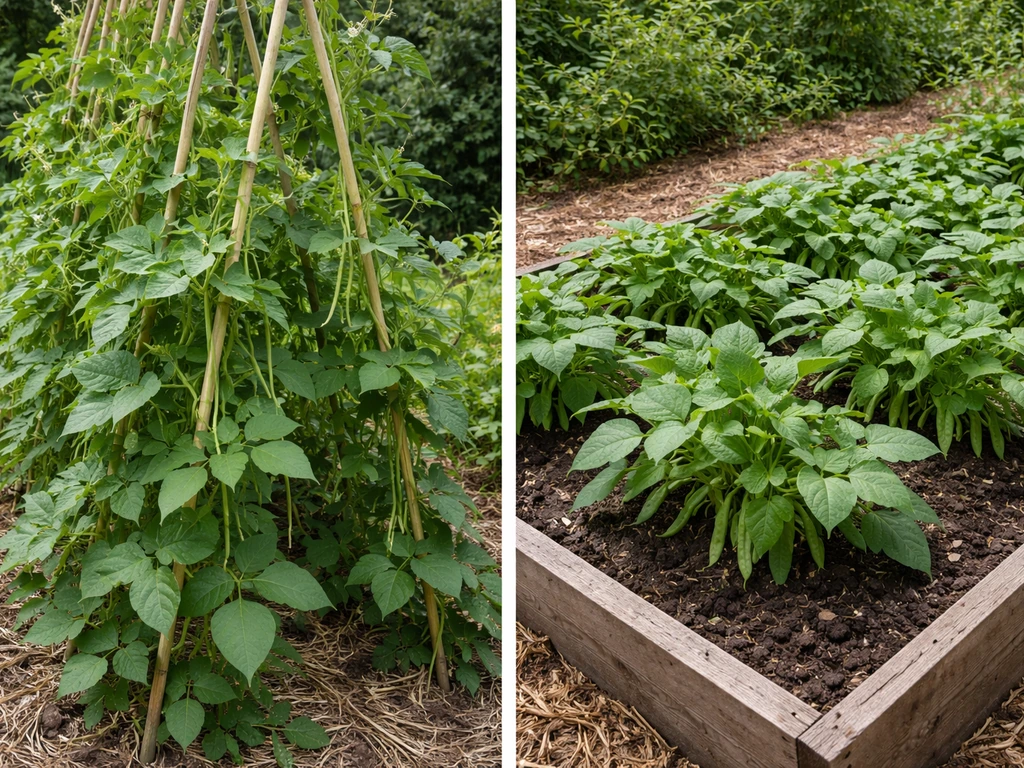
Yes, you can grow cannellini beans in the UK, but how reliably depends almost entirely on where you live and whether you are willing to start them under cover. In southern England they will ripen outdoors in most decent summers. In the Midlands and lowland North, you can do it but a poor summer will leave you with plump green pods and no dry beans. In Scotland, upland areas, and most of northern and western Ireland, growing them outdoors to full dry-seed maturity is genuinely difficult and a polytunnel or greenhouse is not optional, it is the whole plan.
Can you grow cannellini beans in the UK? Practical guide
James Hartwell
14 Jul 2026
Verdict by region and microclimate
Cannellini beans need roughly 80 to 110 days to reach dry-seed maturity from transplanting. That is a long ask for a British summer, and the regional heat map is unforgiving. The south-east and East Anglia accumulate the most growing degree days and have the longest frost-free windows, making them the most reliably suitable areas for outdoor dry-bean production. The south-west can work well too, especially in sheltered coastal gardens, though autumn dampness can be a problem during pod drying.
Move north into the Midlands and lowland Yorkshire and you are in marginal territory. Warm years (think 2022 or 2018) will get you there. A wet, grey summer will not. The further north and higher up you go, the more the odds stack against you. The Scottish Highlands and most upland areas across Wales and northern England simply do not accumulate enough heat units in a typical outdoor season, and commercial attempts to grow navy and white-kidney beans (the same market class as cannellini) as field crops in the UK have historically run into exactly this problem. Historic UK applied research (Processors & Growers Research Organisation / ADAS) reported attempts to grow navy/white‑kidney beans commercially were constrained by the short growing season and cool temperatures, supporting the conclusion that some UK regions are marginal for reliable outdoor dry‑bean production; see Peas and Beans, advisory/technical monograph (ADAS/PGRO material) Peas and Beans — advisory/technical monograph (ADAS/PGRO material).
| Region | Outdoor feasibility | Realistic approach |
|---|---|---|
| South-East England | Good most years | Sow indoors mid-April, plant out late May |
| South-West England | Good, watch autumn damp | Sow indoors mid-April, harvest before October rains |
| East Anglia | Good most years | Sow indoors mid-April, plant out late May |
| Midlands | Marginal, warm summers only | Start under cover, consider polytunnel insurance |
| Lowland North England | Marginal to poor | Polytunnel strongly recommended |
| Upland North/Wales | Poor outdoors | Polytunnel or greenhouse only |
| Scotland (lowland) | Poor to marginal outdoors | Polytunnel needed for reliable crop |
| Scotland (upland/Highland) | Not practical outdoors | Polytunnel or greenhouse only |
| Northern Ireland | Marginal outdoors | Polytunnel recommended |
Microclimates matter enormously and I cannot stress this enough. A south-facing walled garden in Northumberland will outperform an exposed, north-facing plot in Kent. If you have a warm sheltered spot, brick wall behind the bed, sloping south, good drainage, you can push one zone further north than the table above suggests. If you are exposed to Atlantic winds and sitting in a frost pocket, subtract a zone.
Cannellini biology and seasonal requirements
Cannellini beans are a white-seeded form of Phaseolus vulgaris, the common bean, the same species as French beans, borlotti, and black beans. They are a warm-season annual with zero frost tolerance, and that single fact shapes everything about growing them in the UK. A light frost at any stage will kill the plant outright. No negotiation.
Germination needs soil temperatures of at least 10°C, with the real sweet spot between 20 and 30°C. Below 10°C seeds rot rather than sprout, which is why direct outdoor sowing before late May is largely a waste of seed. Pre-flowering growth is happiest around 20 to 24°C, perfectly achievable in a UK summer. Where things get interesting is at the top end: sustained daytime temperatures above about 30°C cause flower and pod drop, so cannellini can actually suffer during a heatwave. In practice, UK summers rarely cook long enough to cause that problem, though south-facing polytunnels in August can get surprisingly hot.
For fresh shell beans (the stage where seeds are swollen and creamy but not yet dry), maturity arrives around 60 to 80 days from transplanting. For fully dried seeds, the cannellini you want for stews and soups, add another three to four weeks, putting you at 80 to 110 days or more. In southern England, transplanting in late May and hoping for harvest in September is realistic. In Edinburgh, that same calculation lands you well into October outdoors, which is where the plan falls apart.
Bush vs climbing cannellini: which to grow in the UK
Both bush (dwarf) and climbing (pole) forms of cannellini exist, and the choice matters more than you might think in a UK context. Bush types are compact, typically 40 to 60 cm tall, and need no support. They also tend to mature their pods more uniformly and slightly earlier than climbers, which is genuinely useful when you are racing the autumn. 'Silver Cloud Cannellini' is one of the better-known bush types and regularly turns up in UK seed catalogues. Days to dry seed tend to run around 80 to 90 days for good bush cannellini varieties.
Climbing types like 'Cannellini Lingot' grow to 1.8 to 2 metres and will need a wigwam, cane frame, or trellis. They typically yield more per plant over a longer season, which suits gardeners with protected growing space. In a polytunnel where you can plant earlier and harvest later, a climbing cannellini makes excellent use of vertical space. Outdoors in a marginal northern region, the extra time a climber needs to mature is a real risk.
| Type | Height | Support needed | Days to dry seed (approx) | Best for |
|---|---|---|---|---|
| Bush (e.g. Silver Cloud Cannellini) | 40–60 cm | No | 80–90 days | Outdoor growing, marginal areas, early harvest |
| Climbing (e.g. Cannellini Lingot) | Up to 2 m | Yes (1.8–2.5 m) | 90–110 days | Polytunnels, sheltered south gardens, higher yields |
My recommendation for most UK gardeners is to start with a good bush variety. You save two to three weeks of growing time compared to a climbing type, you avoid the faff of building a big support structure, and you can grow a useful number of plants in a smaller bed. If you have a polytunnel and want to maximise yield, go for a climber, they will reward the extra space and warmth.
When to sow and how far apart: dates and spacing by UK region
The core rule is simple: never sow cannellini beans outdoors until both the air and the soil are reliably above 10°C, and all risk of frost has passed. In practice that means late May for most of England and Wales, and June for Scotland and Northern Ireland. But if you only sow outdoors, you are throwing away four to six weeks of potential growing season. For any serious attempt at dry-bean maturity, especially anywhere north of Birmingham, you need to start plants indoors first.
| Region | Indoor sow (under cover) | Transplant outdoors | Direct sow outdoors | Protected culture sow |
|---|---|---|---|---|
| South-East England | Mid-April | Late May | Late May | Late March–early April |
| South-West England | Mid-April | Late May | Late May–early June | Late March–early April |
| East Anglia | Mid-April | Late May | Late May | Late March–early April |
| Midlands | Late April | Late May–early June | Early June | Early-mid April |
| Lowland North England | Late April–early May | Early June | Mid June (risky) | Mid April |
| Scotland (lowland) | Early May | Early–mid June | Not recommended | Late March–April (tunnel only) |
| Scotland (upland/Highland) | Not worth it outdoors | Not recommended outdoors | Not recommended | Late March–April (tunnel only) |
| Northern Ireland | Early May | Early June | Mid June (marginal) | Mid April |
For spacing, sow seeds 5 cm deep. Bush varieties should be spaced about 15 cm apart within rows, with rows 45 cm apart. Climbing varieties need 20 to 25 cm between plants at the base of their support. In blocks rather than rows (which I prefer for beans as it improves pollination and makes better use of bed space), aim for a 15 cm grid for bush types and 20 to 25 cm for climbers. Do not crowd them, good airflow reduces the risk of fungal problems.
Soil and site preparation
Cannellini beans are not demanding plants but they will punish a poorly prepared site. Get the basics right before you put a single seed in the ground and you will have far fewer problems downstream.
Soil pH should be between 6.0 and 7.0. Below 6.0 you risk nutrient lockout (particularly molybdenum, which beans need for nitrogen fixation); above 7.5 and manganese and iron become less available. If you are on an acid soil, lime it the previous autumn, do not try to adjust pH right before sowing.
Drainage is critical. Common beans hate waterlogged roots. If your soil holds water for more than a day or two after heavy rain, either raise your beds (even 10 to 15 cm of raised bed makes a big difference) or work in plenty of grit and organic matter. Heavy clay soils are workable but need real effort: dig in compost or well-rotted manure the autumn before and consider a raised bed.
Beans fix their own nitrogen through root nodules, so you do not need to add nitrogen-rich fertiliser to the bed before planting. In fact, over-feeding with nitrogen encourages leafy growth at the expense of pods. Instead, work in general-purpose compost or well-rotted manure for moisture retention and texture, then leave the nitrogen alone. A handful of blood, fish and bone raked in before transplanting is more than enough. Phosphorus and potassium are more useful, a pre-plant application of organic pellet fertiliser or bone meal supports root development and flowering.
- Target pH: 6.0 to 7.0 (use a cheap pH test kit — it is worth knowing before you start)
- Dig in compost or well-rotted manure the autumn before planting
- Avoid fresh manure — it encourages leafy growth and can harbour disease
- Work in grit on heavy clay soils to improve drainage
- Choose a south or south-west facing spot with at least six hours of direct sun per day
- Avoid frost pockets and exposed windy sites — use a windbreak if necessary
- Do not plant where beans have grown in the previous two years (rotation reduces disease buildup)
Growing cannellini outdoors: step by step
This is the approach for gardeners in southern and central England, and for anyone in a favoured microclimate further north. Start plants indoors to give them a head start, direct sowing outdoors is workable in the south but you will always get a more reliable result from transplants.
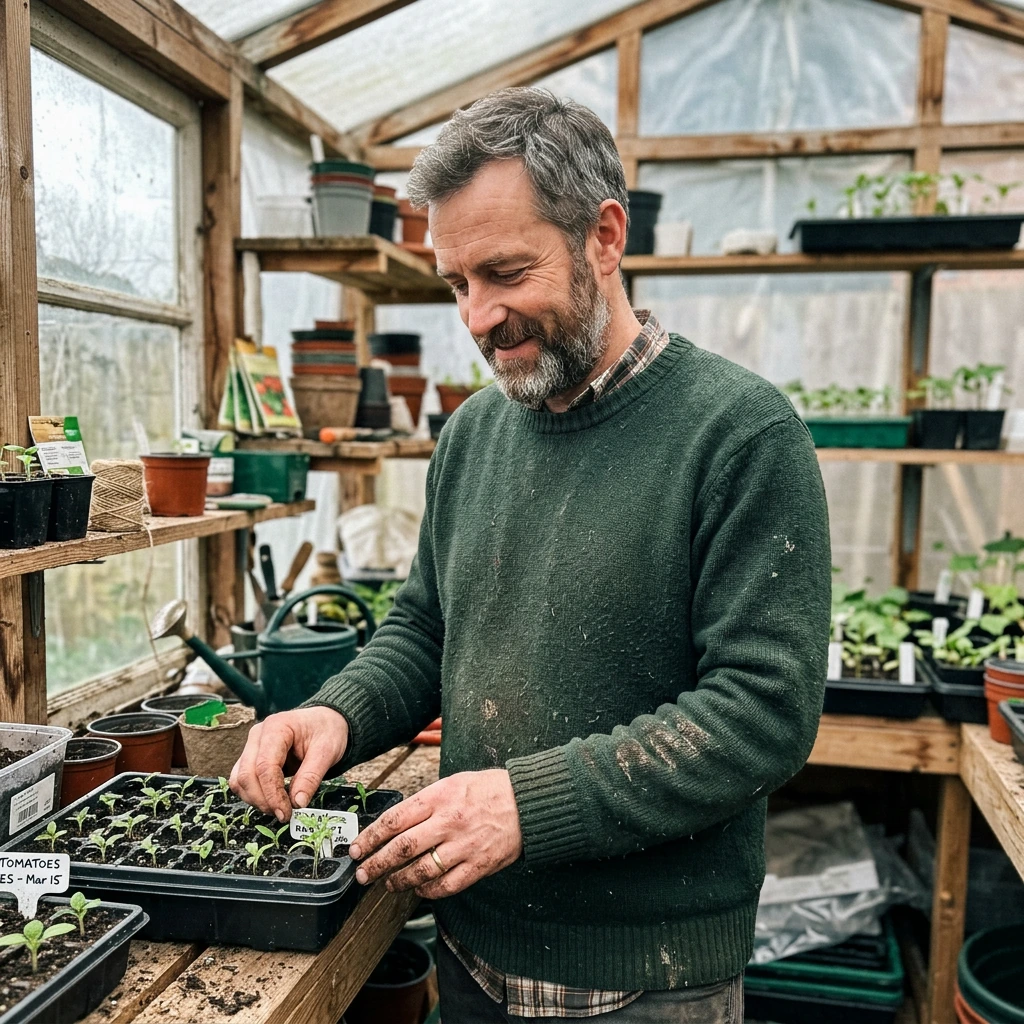
- Sow indoors in mid to late April: use 7 cm or 9 cm individual pots filled with seed compost. Sow one seed per pot, 5 cm deep. Keep at 18 to 20°C — a warm windowsill or propagator works well. Germination takes 7 to 14 days at these temperatures.
- Harden off from early May: move pots outside during the day when temperatures are above 12°C and bring back in at night. Do this for 10 to 14 days before transplanting.
- Transplant after last frost (late May for most of England): plant into prepared beds at 15 cm spacing for bush types or 20 to 25 cm for climbers. Water in well. If a late frost is forecast, cover with fleece overnight.
- Put up supports immediately for climbing types: canes at least 1.8 m tall in a wigwam or row structure. Beans grow fast once warm weather arrives and they will scramble up anything available — better to have the structure in place before they need it.
- Water regularly but not excessively: beans need consistent moisture especially from flowering onwards. Irregular watering (drought followed by a deluge) causes pod drop and splitting. Water at the base, not the leaves.
- Feed lightly once flowering begins: a liquid potassium-rich feed (tomato fertiliser works well) every two weeks once pods are setting. This supports pod fill rather than leafy growth.
- Watch for blackfly (black bean aphid): they cluster on growing tips and leaf undersides from June onwards. Pinch out the tips of climbing plants once they reach the top of their support — this reduces the tender new growth that aphids love. Squash colonies by hand or use a soap spray.
- Leave pods on the plant as long as possible: for dry beans you want the pods to turn papery and the seeds to rattle inside. In a good southern summer this will happen naturally in September. If the weather turns wet in late summer before pods have dried on the plant, harvest whole plants and hang them upside down in a dry shed or garage to finish drying.
- Thresh and store: once pods are fully dry and brittle, shell the beans and spread on trays to air-dry for another two weeks indoors before storing in airtight jars.
Expected timeline from transplanting outdoors: fresh shell beans in around 60 to 80 days (roughly August for a late-May transplant in the south), dry beans at 80 to 110+ days (September to October). A typical 3-metre double row of bush cannellini will yield somewhere between 500 g and 1.5 kg of dried beans in a decent summer, not enormous, but enough for a good few hearty meals.
Growing cannellini in containers
Container growing is genuinely viable for cannellini, particularly the bush types, and it opens up options for urban gardeners with patios, flat-dwellers with south-facing balconies, or anyone who wants to move plants to the warmest spot available. The main things containers give you are mobility and the ability to use a free-draining, warm compost mix, both helpful for beans.
For bush cannellini, use pots at least 30 to 45 cm wide and at least 30 cm deep. A single large pot in that size range can comfortably hold three to four plants at 15 cm spacing. For climbing types, you need a container at least 75 cm wide and 45 cm deep to accommodate a wigwam structure 2 to 2.5 metres tall, a large half-barrel planter works well.
- Fill containers with a 50: 50 mix of peat-free multi-purpose compost and John Innes No. 3 (the loam-based compost adds weight and improves moisture retention without waterlogging). Add a handful of perlite per pot to improve drainage.
- Sow seeds 5 cm deep directly into the container in mid to late May (outdoors) or four to six weeks earlier if the container will stay in a warm greenhouse or conservatory until planting time.
- Position in the sunniest, most sheltered spot available — a south-facing wall is ideal. Move containers closer to walls or under an overhang if late frost is forecast.
- Water consistently: containers dry out much faster than open ground, especially in warm weather. Check daily from June onwards and water whenever the top 2 to 3 cm of compost feels dry. In hot weather this may mean daily watering.
- Feed every 10 to 14 days once flowering starts using a liquid potassium-rich feed (diluted tomato feed at the recommended rate). Container plants are entirely dependent on you for nutrients so do not skip this.
- Erect supports for climbing types before seeds germinate — building a wigwam inside an already-planted pot risks root damage.
- Harvest and dry exactly as for outdoor plants — if anything, container plants may ripen slightly faster in a warm exposed spot than plants in open ground.
Growing cannellini under cover: polytunnel and greenhouse
If you are serious about growing cannellini to dry-seed stage anywhere in the Midlands or further north, a polytunnel or unheated greenhouse is the single most effective upgrade you can make. Protected culture adds four to six weeks to your effective growing season, takes frost off the table, and keeps the warmth in the soil during cool June nights that would otherwise stall outdoor plants. For gardeners in Scotland and the north, this is the only realistic path to a meaningful dried-bean harvest.
- Sow from late March to early April under cover in a heated propagator or warm greenhouse (minimum night temperature 15°C). Sow in individual 7–9 cm pots, 5 cm deep. This gives you plants ready to go into the tunnel or greenhouse bed by late April to early May — five to six weeks ahead of outdoor transplanting.
- Prepare the tunnel or greenhouse bed as you would outdoors: well-drained, compost-improved soil at pH 6.0 to 7.0, no fresh manure. Raised beds inside a polytunnel are ideal.
- Transplant when plants are 8 to 12 cm tall with their first true leaves showing (usually three to four weeks after germination). Space as per outdoor guidance — 15 cm for bush, 20 to 25 cm for climbers.
- Erect supports for climbing types immediately. Inside a polytunnel, you can run horizontal wires along the length and tie canes to them — very efficient use of space.
- Ventilate on hot days: polytunnels can exceed 35°C in July and August on sunny days, which will cause flower drop. Keep doors and vents fully open from mid-morning on warm days. This is one of the few times UK growers need to worry about heat stress rather than cold.
- Water carefully under cover: rain does not reach tunnel plants so you are entirely responsible for irrigation. Drip irrigation or soaker hoses work well. Consistent moisture from flowering through pod fill is critical.
- Watch for red spider mite in polytunnels: the warm dry conditions are perfect for it. Damp the paths down on hot days to raise humidity and inspect leaf undersides weekly. Introduce biological controls (Phytoseiulus persimilis) early if you see any mite activity.
- Harvest: tunnel plants sown in late March should reach fresh shell-bean stage by late July and dry-bean stage by September — weeks ahead of outdoor equivalents. This is the key advantage for northern growers.
- If growing in an unheated greenhouse, the same approach applies but be aware that glazed glass structures can overheat even more dramatically than polytunnels. Shade cloth and ventilation are essential in summer.
Feeding and watering through the season
Beans are relatively undemanding until they hit the flowering and pod-filling stage, at which point consistent moisture and a modest potassium feed make a real difference to yield. The most common mistake I see is overwatering early in the season (which encourages disease) followed by neglect during pod fill (which causes pods to drop or seeds to be poorly filled). Soak the ground at transplanting, then hold back until plants are established and the weather is genuinely warm. From first flower onwards, water regularly at the base, aim to keep the soil consistently moist but never waterlogged.
Pests, diseases and what to watch for
- Black bean aphid (blackfly): the main pest. Clusters on growing tips and undershoots from June. Pinch out tips of climbing plants once they top their supports, squash colonies by hand, or use insecticidal soap. Avoid high-nitrogen feeds which encourage the soft growth aphids prefer.
- Slugs and snails: most damaging at germination and seedling stage. Use copper tape around containers, grit mulch around outdoor plants, or go out at night and pick them off manually. Slug pellets work but are less necessary if seedlings are hardened off properly before transplanting.
- Halo blight (Pseudomonas syringae pv. phaseolicola): a bacterial disease causing brown spots with yellow halos on leaves. It spreads in wet cool conditions. Avoid overhead watering, improve airflow by spacing plants correctly, and destroy infected plant material. Do not save seed from infected plants.
- Bean mosaic virus: causes mottled, distorted leaves. Spread by aphids — controlling aphids is the best prevention. No cure once infected; remove and destroy affected plants.
- Botrytis (grey mould): affects pods in damp autumns, especially if you leave pods on the plant too long. Harvest whole plants and dry under cover as soon as pods start to look papery.
- Red spider mite: mainly a polytunnel/greenhouse problem (see above). Check leaf undersides for fine webbing and tiny mites. Raise humidity and use biological controls.
- Mice and pigeons: mice love bean seeds in the soil and will find newly sown rows with impressive efficiency. Sow in pots indoors and transplant, or protect outdoor seed with horticultural fleece laid flat until germination. Pigeons peck at seedlings — netting helps.
Harvesting and preserving your cannellini
You have three harvest options with cannellini, and which one you choose depends on when you pick and how long your season was. Fresh shell beans (harvested when pods are full and green, seeds creamy and swollen) are absolutely delicious, sweet, nutty, and nothing like the dried version. They can be eaten immediately, refrigerated for a week, or blanched and frozen for up to a year. This is a great fallback if your summer was not quite long enough to ripen dry seeds.
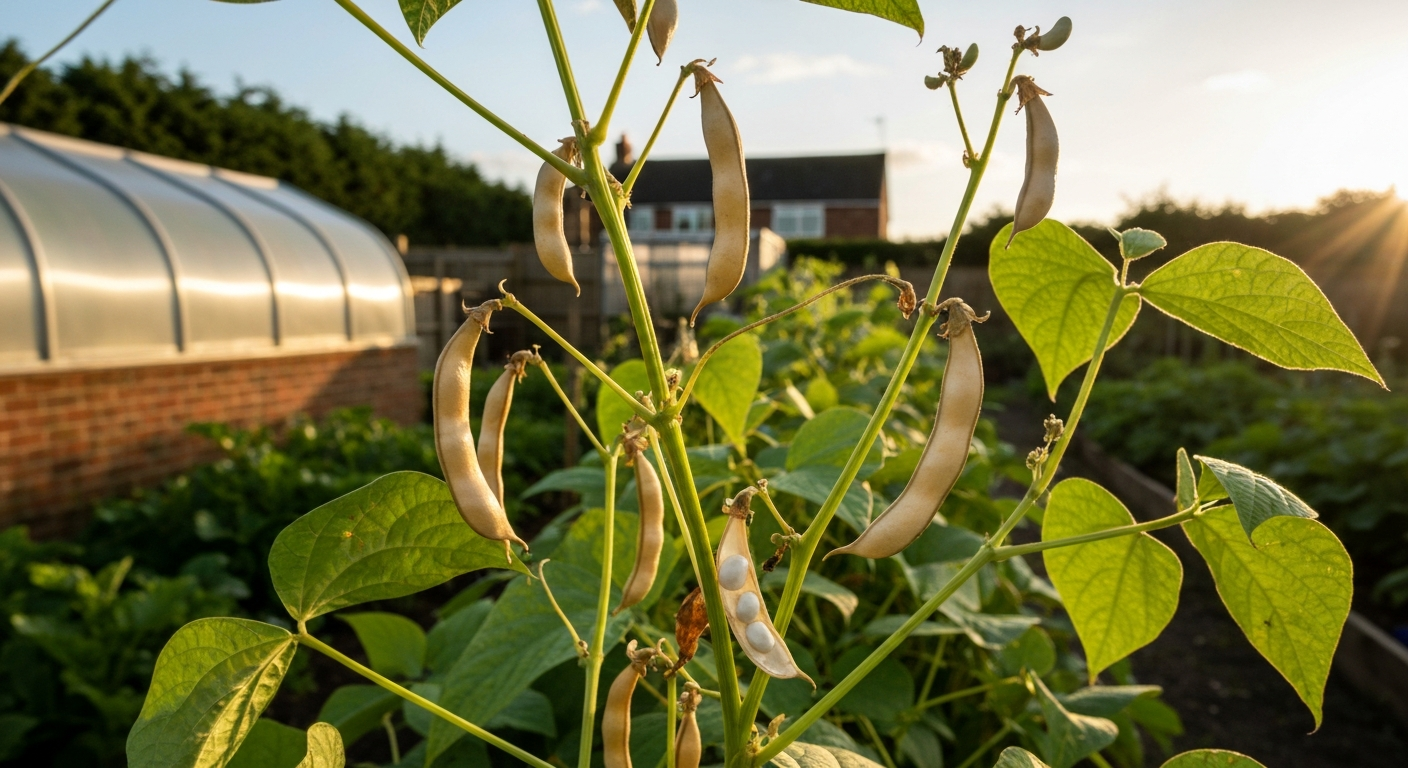
For dried cannellini, the classic pantry staple, wait until pods are fully papery and the seeds rattle inside. If autumn weather closes in before this point (very common in the north and Midlands), pull up whole plants and hang them upside down in a dry, airy shed for two to four weeks. The seeds will continue to ripen and dry. Once fully dry, shell the beans, spread on a tray for another week or two, then store in sealed glass jars in a cool dark place. Properly dried cannellini will keep for a year or more.
Freezing is the simplest preservation route for fresh shell beans: blanch for two minutes in boiling water, drain, cool in iced water, then freeze in portions. Canning at home is possible but requires a pressure canner for low-acid foods like beans, a regular water bath canner does not achieve the temperatures needed to make home-canned beans safe. If you want to can them, invest in a proper pressure canner or use commercially canned cannellini as your benchmark.
What to do in a marginal summer
If August arrives and your beans are full and green but not drying down, do not panic. Pull whole plants before the first autumn frost, late September for most of England, earlier in the north, and hang them in a warm dry space indoors. A garage, shed, or spare room with good airflow will work. The pods will continue to dry over several weeks. This is normal practice in northern France and the Low Countries, where cannellini and borlotti are traditional crops but autumn weather is similarly unreliable.
If your pods are still plump and green with no sign of drying by mid-September, harvest at the fresh shell-bean stage and freeze them rather than risk losing the crop to frost or mould. A harvest of frozen shell beans is far better than a bucket of rotted pods.
How cannellini compare to other beans worth growing in the UK
Cannellini are not the easiest bean to grow in the UK, and it is worth knowing how they stack up against alternatives before you commit your growing space. For a wider guide to varieties and regional suitability, see our article on the best beans to grow in the UK. French beans (the same species, but harvested young as green pods rather than dried) are far easier and more reliable across all UK regions, they mature in 50 to 60 days and need none of the long season that dried cannellini demands. Borlotti beans are similar in growing requirements to cannellini and are a strong alternative if you want a drying bean with a slightly better flavour profile when cooked fresh. Runner beans are probably the most reliable pod bean for UK gardeners from the south to lowland Scotland.
Butter beans (also called lima beans, Phaseolus lunatus) are even more demanding than cannellini in terms of season length and warmth, they are genuinely difficult in the UK outside of a polytunnel, and only the smallest-seeded 'baby lima' types are realistic even in the south. For detailed guidance, see the brief guide titled "can you grow butter beans in the UK" (destination id 79ed3c42-0617-4df0-9c00-c339c4c75487) which covers suitable varieties and whether a polytunnel is essential. Chickpeas and soya beans are another step up in difficulty again: both need very long warm seasons and consistently dry conditions that the UK rarely provides outdoors. If you wonder whether chickpeas will grow in the UK, see can chickpeas grow in the UK for a focused look at their climatic and seasonal needs. If you are curious about any of these, they each deserve their own careful look before you commit seed-growing space to them.
For most UK gardeners asking 'which drying bean should I grow?', cannellini is a reasonable choice in the south, but you might find borlotti more forgiving because of its slightly shorter season and its dual use as a beautiful fresh shell bean. If you just want a reliable, high-yielding bean crop with minimal faff, climbing French beans or a heritage runner bean will serve you far better in most British gardens.
FAQ
Can you grow cannellini beans (Phaseolus vulgaris) in the UK?
Yes — cannellini are common beans (Phaseolus vulgaris) and can be grown in the UK, but success depends on region, season length and whether you use protection. Southern and south‑west England (including coastal SE and parts of the south‑west) are the most reliable for outdoor drying/mature seed. Midlands and lowland northern England can produce good crops in warm summers but are more marginal. Upland and much of Scotland, and cool/wet western areas, usually need a polytunnel/greenhouse or a very sheltered warm microclimate to reliably produce mature dry beans.
Should I try growing cannellini outdoors this year or use protected culture?
Decision points: if you live in southern England with a warm, sheltered garden — try outdoors. If you are in the Midlands or north — consider using a polytunnel/greenhouse or sow under cover and plant out only if the forecast is warm. If you live in Scotland, upland areas, or have a short cool season — use a tunnel/greenhouse or choose a quicker alternative. When in doubt, sow early under cover (late April) and plant out after last frost; protection gives the best chance of reliably reaching dry seed.
Which varieties should I choose — bush or climbing (pole) types?
Both exist. Bush (dwarf) cannellini are easier for containers and small plots, faster to manage and harvest; choose bush if space or supports are limited. Climbing (pole) types yield more per plant and suit vertical systems and polytunnels but need strong supports (canes, wigwams, netting) and more work to harvest. Pick named varieties from reputable suppliers and check the supplier’s days‑to‑maturity (many list 70–100+ days to dry seed). For marginal climates, choose the earliest‑maturing entries to improve chance of drying.
When should I sow cannellini beans in the UK (by region and method)?
General guidance: sow under cover (indoors/polytunnel) mid‑April to early May for early start. Sow outdoors only after the risk of frost is passed and soil is warm (soil ≈10 °C or more) — typically late May to June in much of the UK. Regional summary: South England: direct sow late May; Midlands/North: prefer sow under cover and plant out late May–June if warm; Scotland/upland: sow in pots under cover and grow in tunnel or wait until reliably warm (often too risky outdoors). Depth 5 cm; spacing: dwarf ~15 cm between plants, climbers 20–30 cm with rows 45–60 cm apart.
What soil and site preparation is best?
Choose a warm, sheltered, sunny site with free‑draining soil and pH ~6–7. Work in well‑rotted compost or farmyard manure the previous autumn or spring to improve structure. Avoid heavy wet soils or waterlogged low spots. Beans are nitrogen‑fixing but still benefit from a balanced feed — add a general organic fertilizer or potash‑rich fertilizer when planting if soil is very poor. Avoid fresh high‑nitrogen manure that encourages foliage over pods.
How should I grow cannellini in containers or small gardens?
Use at least 30–45 cm wide pots for dwarf beans; for climbers use large containers (minimum 75 cm wide × 45 cm deep) with sturdy 2–2.5 m supports. Use a free‑draining, high‑quality compost with added grit or perlite and a slow‑release balanced feed. Sow 1–2 seeds per small pot (thin to strongest seedling) or 3–4 per larger container. Water regularly but avoid waterlogging. Position containers in the warmest, sunniest spot and protect from wind.
Next Article
Best Beans to Grow in the UK: Varieties and How-To
Best beans to grow UK: top varieties plus UK sowing, spacing, care, and fixes for frost, pests, and poor harvests.