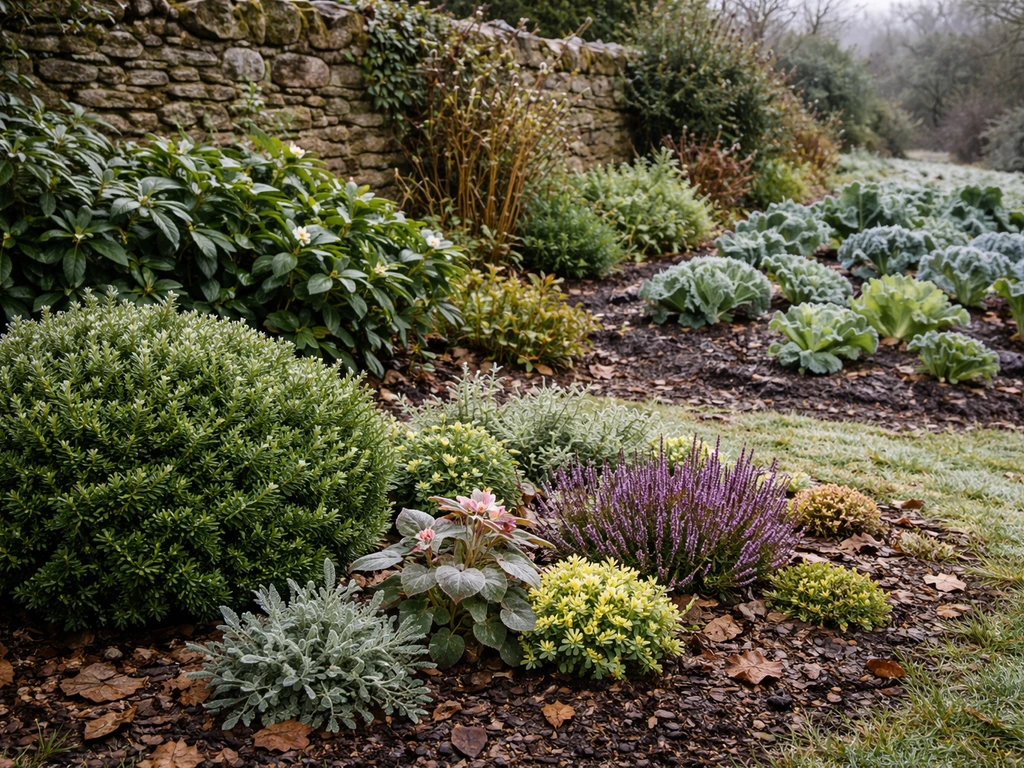
Areca palm can grow outside in the UK, but only in very specific conditions and only for part of the year in most regions. In milder coastal spots like Cornwall, South Devon, or sheltered parts of the Scilly Isles, a mature Dypsis lutescens (the butterfly or areca palm most gardeners are working with) can survive outdoors in a container through a mild winter with protection. In-ground planting outdoors year-round is not realistic for most of the UK. That is the honest answer, and the rest of this guide is about making the best of what is actually possible.
Can Areca Palm Grow Outside UK? Practical Guide
James Hartwell
8 Jul 2026
The quick verdict: is it worth trying outside?
Dypsis lutescens sits at RHS hardiness rating H3, which means it is rated as hardy in coastal and relatively mild parts of the UK, surviving down to around minus 5 degrees Celsius at the lower end and preferring conditions above 1 degree Celsius. Some sources push it toward H4 (hardy through most of the UK, down to about minus 10 degrees Celsius), but that is optimistic for areca palms in practice. In the ground, in a typical British winter, most areca palms will die or be severely damaged. In a container on a warm, south-facing, sheltered patio from May through September, they thrive. That container strategy is the realistic middle ground for most UK gardeners, and it is where this plant actually earns its place outdoors.
If you are in the South West, coastal Wales, or a sheltered urban microclimate in London or the South East, you have the best shot at outdoor success. If you are in the Midlands, Yorkshire, Scotland, or anywhere that regularly sees hard frosts below minus 5 degrees Celsius, growing areca palm outside is a summer-only affair. Compare this to something like a yucca, which is genuinely much more cold-tolerant and can stay in the ground year-round across most of Britain. Areca palm is simply not in that league.
UK climate limits: what the cold actually does to areca palm
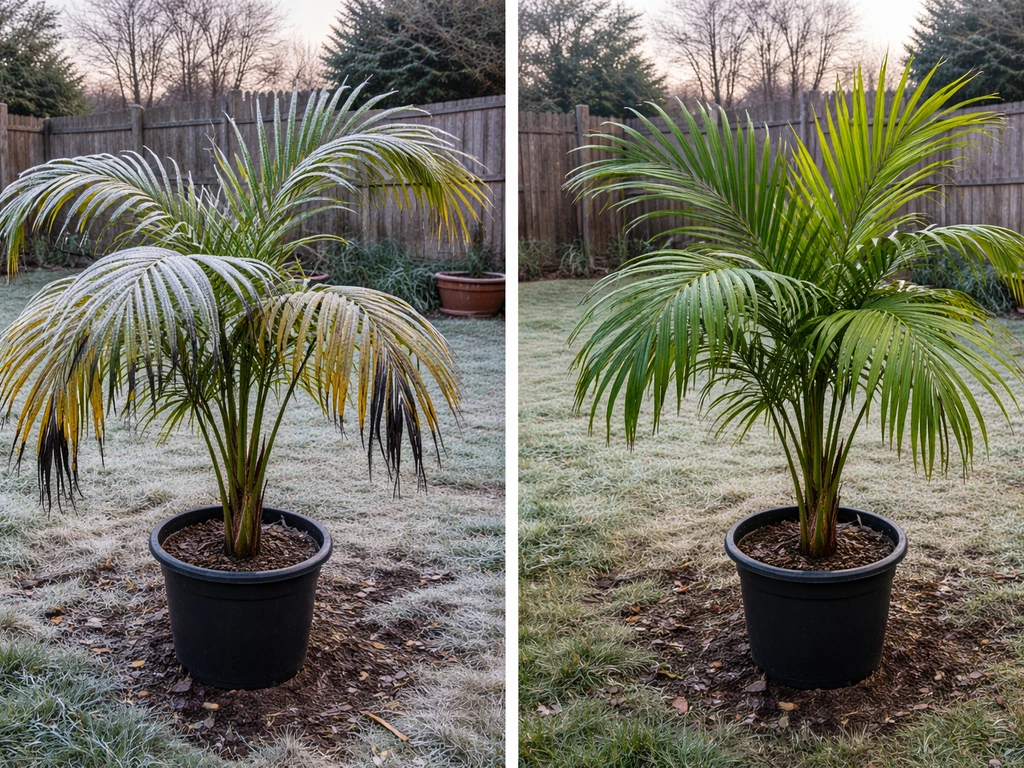
The key temperature thresholds to know are these: areca palm starts showing cold stress below about 10 degrees Celsius, begins to suffer leaf damage around 5 degrees, and experiences serious crown damage or death approaching minus 3 to minus 5 degrees Celsius. The RHS hardiness rating of H3 tells you the plant can technically survive brief dips to around minus 5 degrees Celsius in the mildest UK locations, but that is with a mature, established plant in ideal conditions, not a young specimen in a wet clay pot on an exposed patio.
UK winters kill areca palms in two ways: direct frost damage to the crown and growing point, and the combination of cold plus wet. Unlike some palms, areca does not tolerate sitting in waterlogged, cold soil. A frost-free but perpetually damp winter will rot the root system just as effectively as a hard freeze. Wind chill matters too. A sheltered south-facing spot in Brighton is a completely different environment from an open garden in Shropshire, even if both record the same air temperature on a thermometer.
The practical minimum growing temperature outdoors is around 12 degrees Celsius for active growth. Below that, the plant essentially stalls. That means in most UK regions, genuine outdoor growth happens between late May and early September, around 14 to 16 weeks at best. In Cornwall or the Channel Islands, you might get a few weeks either side of that window.
Choosing your site and setting it up right
If you are going to grow areca palm outside in the UK, site selection is probably the single biggest factor in whether it works. If you also meant money plants, the outdoor answer depends on the same factors like warmth, frost risk, and how you protect the plant in winter can money plants grow outside in the UK. You want a spot that is south or south-west facing, sheltered from wind on at least two sides, and ideally backed by a wall or fence that absorbs heat during the day and radiates it back at night. A warm wall microclimate can raise the effective overnight low temperature by 2 to 4 degrees Celsius, which for a plant with this much cold sensitivity is genuinely significant.
- South or south-west facing aspect, ideally against a brick or stone wall
- Shelter from north and east winds, which are the most damaging cold winds in the UK
- Good overhead air circulation to reduce humidity and fungal risk, but not exposed to gusts
- Free-draining ground or a well-draining container, never sitting in standing water
- Full sun for at least six hours a day during summer for healthy growth
For container growing outdoors (which is the recommended approach for most of the UK), use a pot with generous drainage holes and a loam-based compost like John Innes No.3 mixed with around 20 to 30 percent horticultural grit or perlite. Areca palms dislike both waterlogging and drought, so the goal is a mix that drains freely but holds moderate moisture. A pot that is too small will dry out rapidly in summer heat and restrict root growth; aim for a container at least 40 centimetres in diameter for a plant of any reasonable size.
Light, watering, and feeding outdoors
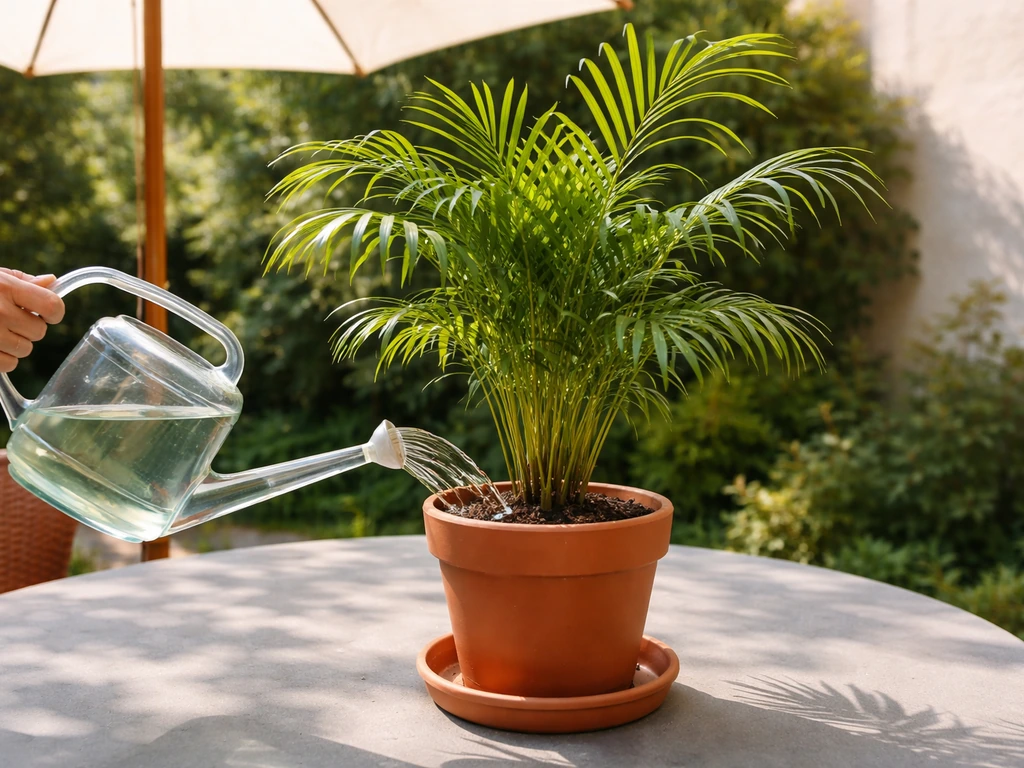
Outside in UK summers, areca palm actually prefers bright indirect light rather than harsh direct midday sun, particularly in the first season after being moved outdoors. Direct afternoon sun in June and July can scorch the fronds if the plant has been growing indoors. Once acclimatised over a few weeks, it handles full sun well in most UK summer conditions, which are rarely as intense as the Mediterranean climates this palm is native to.
Watering outdoors depends heavily on the weather. In a warm, dry UK summer, a large container may need watering every two to three days. Rainfall often handles things in wetter summers, but check the soil rather than relying on the sky. The rule is simple: water when the top inch of compost is dry, and always let the pot drain fully. During cooler spells or cloudy stretches, reduce watering significantly to avoid root rot.
Feed from late April through to late August with a liquid fertiliser formulated for palms or a balanced feed with added potassium. Fortnightly feeding during the active growing season is about right. Stop feeding in September as the plant starts preparing for cooler temperatures, and do not feed at all during winter.
Season-by-season: when to move it out and how to acclimatise
Getting the timing right matters more than most people expect. Moving an areca palm from a warm conservatory or living room directly into a cool April garden is a recipe for shock and leaf damage. The acclimatisation process takes about two to three weeks and is worth doing properly.
- Late April to early May: Start moving the pot to a sheltered outdoor spot for a few hours each day, choosing mild days above 12 degrees Celsius. Bring it back inside each evening.
- Mid May: Leave the plant outside during warm days but still bring it in or into a porch at night if temperatures are forecast to drop below 10 degrees Celsius.
- Late May to early June: Once nighttime temperatures are consistently above 12 degrees Celsius, the plant can stay outside around the clock in a sheltered spot.
- June, July, August: Full outdoor growing season. Water regularly, feed fortnightly, and enjoy the tropical effect.
- Early September: Begin the reverse process. Start bringing the plant in at night or on cold nights as temperatures start to drop. Watch forecasts carefully.
- By mid to late September: The plant should be back under cover in most UK regions, or certainly by the time nighttime lows are regularly dropping to single figures.
New fronds that unfurl during the outdoor season will be conditioned to outdoor light levels. Fronds that grew indoors during winter may look bleached or tired outdoors at first. That is normal. The plant is not failing; it is adjusting. By midsummer it should be producing new, healthy growth if conditions are right.
Overwintering: containers vs leaving it in the ground
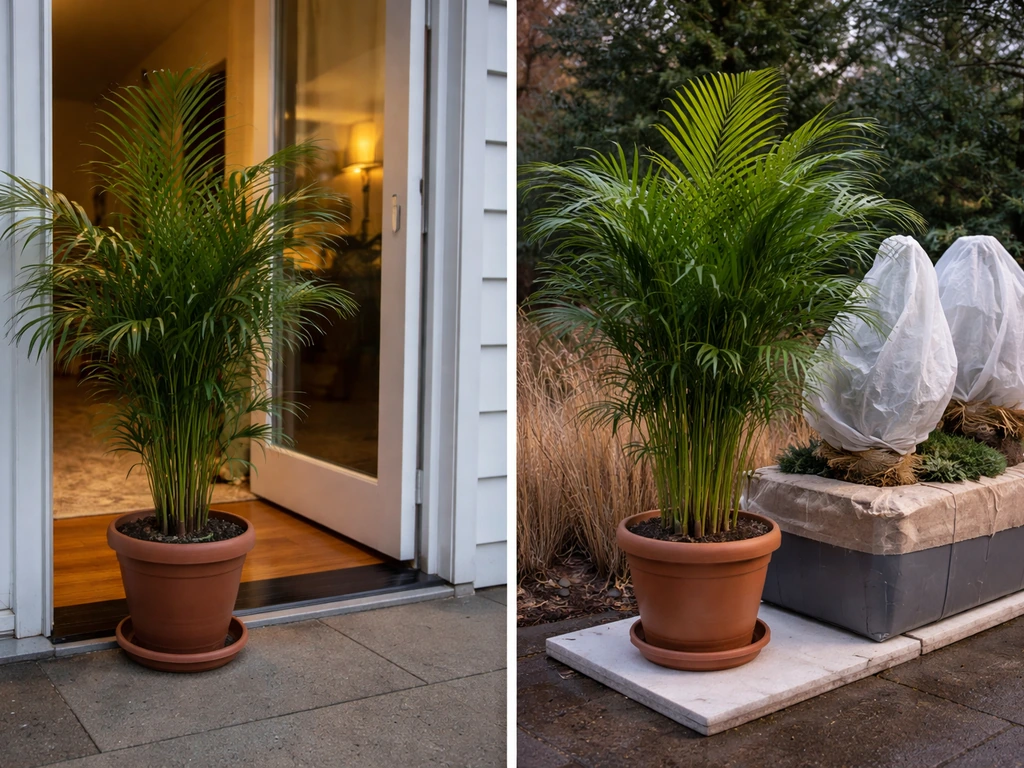
This is where the container strategy pays for itself. A potted areca palm can simply be moved indoors before the first frost, which in most UK regions means sometime between mid-September and mid-October depending on your location. The plant overwinters in a cool but frost-free indoor space, a conservatory, heated greenhouse, or a bright spare room kept above about 10 degrees Celsius. It will not grow much, but it will survive and be ready to go back out the following spring.
If for any reason the plant cannot be moved (it is very large, or you are attempting in-ground growing in a very mild spot), your options are outdoor protection measures. These are second-best to simply bringing the plant inside, but they can work through mild UK winters.
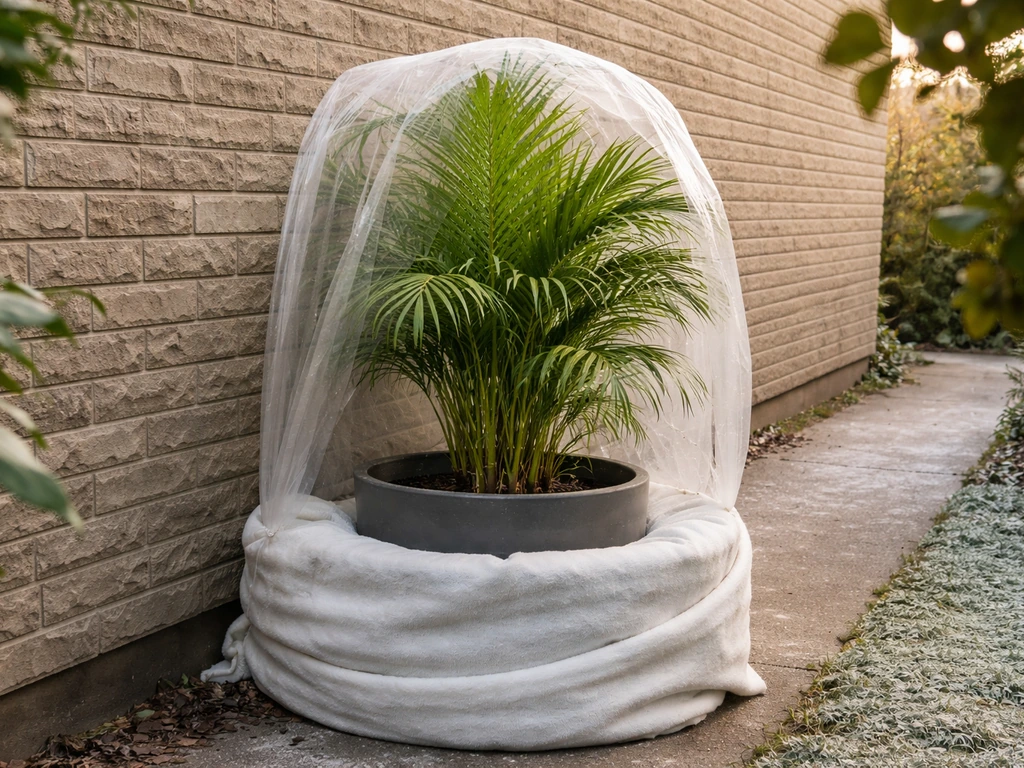
- Wrap the crown and stem with several layers of horticultural fleece from November through to March, making sure the growing tip is covered
- Mulch the base heavily with bark, straw, or bracken to insulate roots against ground frost
- Erect a temporary windbreak or polycarbonate shelter on the coldest sides to cut wind chill
- For in-ground plants in exposed spots, consider wrapping the whole canopy in a breathable frost protection bag rated to at least minus 5 degrees Celsius
- Remove wrapping gradually in spring once nighttime temperatures are consistently above 5 degrees Celsius to prevent mould and humidity damage under the covers
- Never wrap with non-breathable plastic, as trapped moisture combined with cold kills areca palm faster than frost alone
In genuinely mild UK spots like the Isles of Scilly, coastal Cornwall, or a very sheltered garden in South Devon or the Channel Islands, a large, established areca palm in the ground with good drainage and a warm wall behind it has a realistic chance of surviving a mild British winter without heavy wrapping. But even here, you are betting on the winter being mild. A bad winter in those same locations will still cause serious damage or kill the plant outright. The honest advice: unless you are growing in a genuinely exceptional microclimate, container growing with an indoor overwinter is the only reliable approach.
Comparing the two overwintering approaches
| Approach | Best for | Cold protection level | Risk level | Effort |
|---|---|---|---|---|
| Container, moved indoors | Most UK gardeners | Full frost protection | Low | Moderate (moving large pots) |
| In-ground with fleece and mulch | Mild coastal microclimates only | Down to about minus 3 to minus 5°C if done well | High in cold winters | High (ongoing monitoring needed) |
| In-ground with heated mat or cable | Exceptional sheltered spots, dedicated growers | Down to about minus 5°C with supplemental heat | Medium in mild winters | Very high (cost and management) |
| In-ground, unprotected | Not recommended for the UK | None | Very high | Low (but almost certain failure) |
Problems to watch for: pests, leaf damage, and cold stress
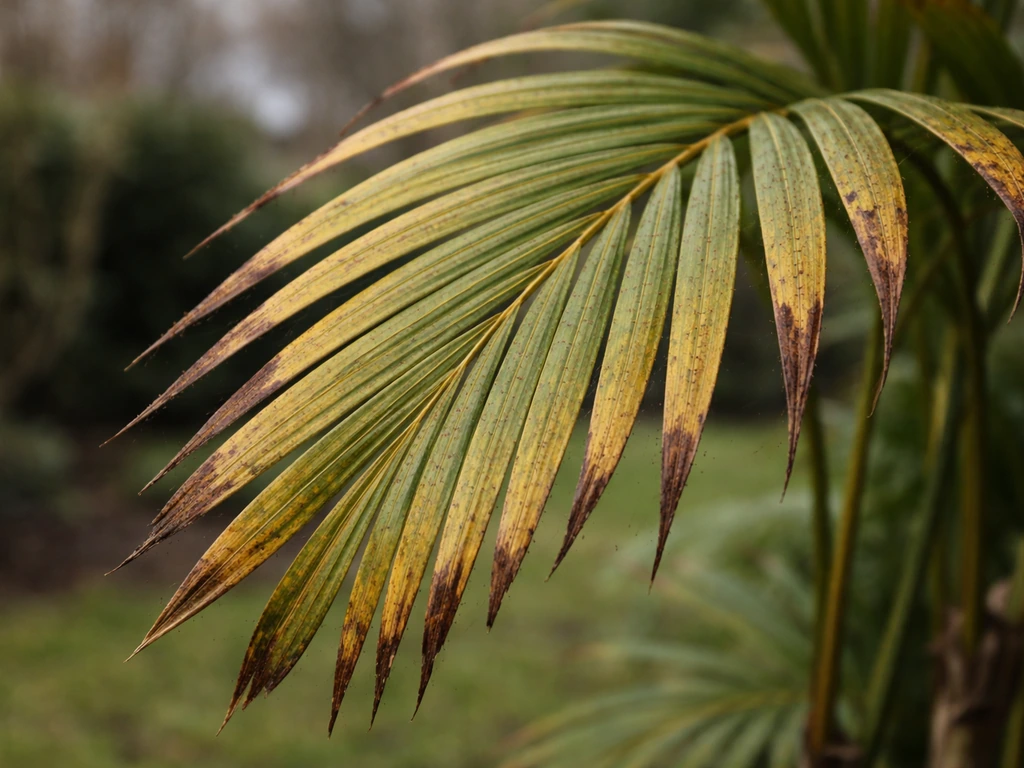
Areca palms grown outdoors in the UK face a slightly different set of problems from their indoor counterparts. Cold stress is the most common issue and shows up as yellowing or browning fronds, particularly on older outer leaves, after a cold spell. If only the outer fronds are affected and the growing tip is still green and firm, the plant is likely to recover as temperatures rise. If the crown itself is mushy or brown, that is a much more serious sign that the plant may not pull through.
Red spider mite is the main pest to watch for, particularly when plants are moved outdoors into dry, warm conditions in early summer. Check the undersides of fronds regularly for fine webbing and tiny mites. Treat early with a natural predator (Phytoseiulus persimilis works well) or a suitable insecticide, as mite populations can explode fast in warm weather. Scale insects can also be an issue on plants that have spent winter indoors and then moved outside.
Leaf scorch is common in the first few weeks outside if acclimatisation was rushed or if the plant is exposed to strong afternoon sun before it has adjusted. The affected fronds will not recover, but new growth coming through should be fine once the plant has settled. Remove badly scorched fronds cleanly at the base to keep the plant tidy and reduce fungal risk.
Root rot is the other serious risk, almost always caused by poor drainage combined with overwatering or heavy summer rainfall. If the plant wilts despite moist soil, pull it from the pot and check the roots. Healthy roots are white or pale yellow; rotten roots are brown, mushy, and often smell bad. Trim off affected roots, dust the cuts with a fungicide powder, repot into fresh dry compost, and ease off watering significantly.
- Yellowing outer fronds in autumn or after cold nights: cold stress, likely recoverable if the crown is intact
- Almost white or very pale new fronds: a sign the plant has experienced cold stress during the winter, common in UK conditions, usually improves with warmth
- Fine webbing on frond undersides: red spider mite, treat immediately
- Brown crusty bumps on stems or fronds: scale insects, remove manually and treat with neem oil or insecticide
- Wilting despite moist soil: suspect root rot, check roots urgently
- Brown leaf tips: most commonly low humidity, underwatering, or wind scorch in UK outdoor conditions
When to grow it outside vs keeping it as a houseplant
The decision really comes down to what you want from the plant and what your outdoor space can offer. If you have a genuinely sheltered, warm, south-facing spot and you are prepared to monitor it through the summer, move it back inside in September, and keep it in a frost-free space through winter, the outdoor summer approach is completely worthwhile. Areca palms grow noticeably faster outdoors in a good UK summer than they do inside, the fronds are more robust, and the plant benefits from the humidity fluctuations and natural light cycles.
If your garden is exposed, your winters are harsh, or you simply do not want the faff of a seasonal plant-moving routine, keep it as a houseplant. It is genuinely one of the better indoor palms for UK homes and does not need to go outside to thrive. The outdoor experiment is for growers who enjoy pushing boundaries and are happy to accept that some winters will cause setbacks. If you are looking beyond one palm, you may also want to compare this approach with plants that will grow anywhere UK.
There are some plants where outdoor UK cultivation is simply unrealistic regardless of effort. Areca palm is not quite in that category, but it is close. It sits alongside other tropical species that can work in the UK with the right setup, but it demands more management than genuinely cold-tolerant exotics. If you want to explore what other tropical plants can realistically be grown in the UK, or which plants are genuinely tough enough to survive almost anywhere British, areca palm is a useful benchmark for understanding where the limits are. Some UK rules about what you can grow cover more than climate, so it is worth checking whether any plant is restricted or banned before you buy or sow seeds what other tropical plants can realistically be grown in the UK.
Quick decision guide
| Your situation | Recommended approach |
|---|---|
| Cornwall, Devon coast, Channel Islands, sheltered urban London garden | Container outside May to September, mild winters may allow longer; overwinter indoors or with heavy protection |
| South East, East Anglia, South Wales, mild Midlands | Container outside late May to early September only; always bring inside before first frost |
| Northern England, Scotland, exposed or inland sites | Summer patio plant only, maximum 3 months outside; indoor plant for the other 9 months |
| No sheltered outdoor spot available | Keep as a houseplant year-round; do not attempt outdoor cultivation |
| Large, immovable in-ground plant in a mild microclimate | Heavy fleece wrapping, deep mulch, and windbreak every winter; accept some annual leaf damage as normal |
Success with areca palm outdoors in the UK looks like this: healthy, glossy fronds through the summer months, noticeable new growth, and a plant that comes back inside in autumn in reasonable condition and overwinters without losing more than a few outer fronds. It is not a plant that will establish itself permanently in a British border the way a yucca or many other exotics can. But as a summer container specimen on a warm terrace, it is genuinely one of the most striking tropical plants you can grow in this country, and that is worth something.
FAQ
Can areca palm grow outside in the UK if it’s a small or young plant?
Yes, but expect a slower and riskier first year. Young areca palms have less-developed root systems, so they are far more likely to suffer root rot in winter wet or crown damage from brief cold snaps. If you start outdoors at all, keep the plant in a larger pot than you think you need, acclimatise over a few weeks, and plan for indoor overwinter.
How do I know when to water areca palm outdoors in the UK?
Use a simple check, not the weather forecast. If the compost surface feels dry about 2.5 cm down, water thoroughly until it drains from the bottom, then empty the saucer. In cooler periods, wait longer, because slow-draining compost combined with low temperatures is what usually triggers rot.
When should I bring my areca palm back indoors from autumn?
Move it indoors as soon as frost becomes likely, even if you have not seen it yet. For most UK locations, that usually means mid-September to mid-October, but in exposed gardens you may need to earlier. If nighttime temperatures drop below about 10 degrees Celsius, growth stalls and the plant becomes more vulnerable to cold stress.
Should I give my areca palm full sun outside in the UK, or keep it in shade?
Bright shade to mild sun is best during the first season. Start with bright indirect light or morning sun only, then gradually introduce more light over 2 to 3 weeks. The goal is to avoid scorching fronds, which often shows up as brown patches that do not recover.
What potting setup prevents root rot for areca palm grown outdoors in UK summers?
A pot is the safer route, and the compost must drain quickly. Stick to loam-based potting compost plus grit or perlite, and make sure the pot has generous drainage holes. If the container has limited drainage or sits in a decorative outer pot without emptying the runoff, root rot risk increases sharply.
How cold can the overwintering location be, and how should I care for it indoors?
Overwintering should be cool but frost-free, not warm and still. Aim for a bright spot indoors around 10 to 16 degrees Celsius, reduce watering until the compost is just lightly moist, and avoid fertiliser. Too much warmth plus damp conditions often leads to weak growth and pest problems when you move it back outside.
How can I tell whether cold damage to my areca palm will recover?
It depends on what you mean by “damage.” Yellowing older outer fronds after cold spells is often survivable if the growing tip stays green and firm. If the crown or growing point becomes mushy or brown, that indicates the plant is failing and recovery is unlikely, even if you warm it up.
What pest problems should I expect when moving areca palm outside for the summer?
Yes, red spider mites are the main issue, especially after moving outdoors in warm, dry weather. Check undersides of fronds weekly, and act early at the first sign of fine webbing or stippling. If you use sprays, target the undersides and repeat as directed, because eggs and young mites can survive the first treatment.
What are my options if I can’t bring an outdoor areca palm inside?
If you cannot move the plant indoors, increase protection but accept it’s still a gamble. Combine multiple layers, for example a large frost cloth or horticultural fleece plus a sheltered microclimate against a wall, and ensure drainage is excellent. Keep the crown and growing point protected from direct frost, not just the leaves.
Do I need special fertiliser for areca palm outdoors, and when should I stop feeding?
Generally, avoid fertilising in winter and in the first weeks after moving outdoors. Feed only when it is actively growing, roughly late April to late August, and stop in September as temperatures fall. For potassium-focused fertiliser, follow label rates, because excess salts in containers can burn the fronds and stress the root system.
Why do my areca palm fronds look bleached or scorched after moving outside?
Yes, and it’s often the most noticeable early issue. If it was kept indoors and you rush it outdoors, fronds may bleach or scorch, especially from strong afternoon sun. Those damaged fronds cannot be repaired, but new growth usually normalises once the plant acclimatises and the light conditions settle.
Next Article
Plants That Will Grow Anywhere in the UK: 50 Resilient Picks
50 resilient UK plants for tough microclimates, with tips on soil, drainage, frost, wind, and shade-sun growing success.