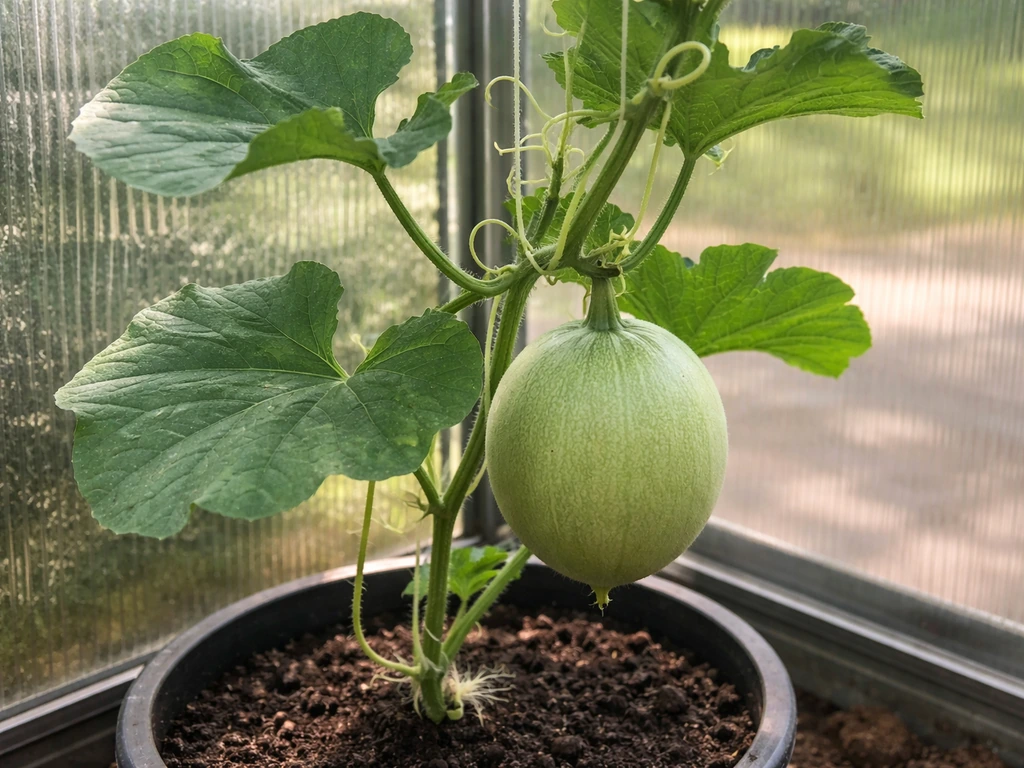
Yes, you can grow cantaloupe in the UK, but you need a greenhouse or polytunnel in most parts of the country to reliably ripen fruit before autumn. Outdoors, with warm-season protection like cloches or fleece, you might get away with it in the south of England during a good summer, but it's a gamble. Under glass or polythene, with the right varieties and a sensible timing plan, you have a genuinely realistic shot at harvesting sweet, aromatic melons between August and September.
Can You Grow Cantaloupe in the UK? Yes But How
James Hartwell
14 Jun 2026
Is the UK climate actually suitable for cantaloupe?
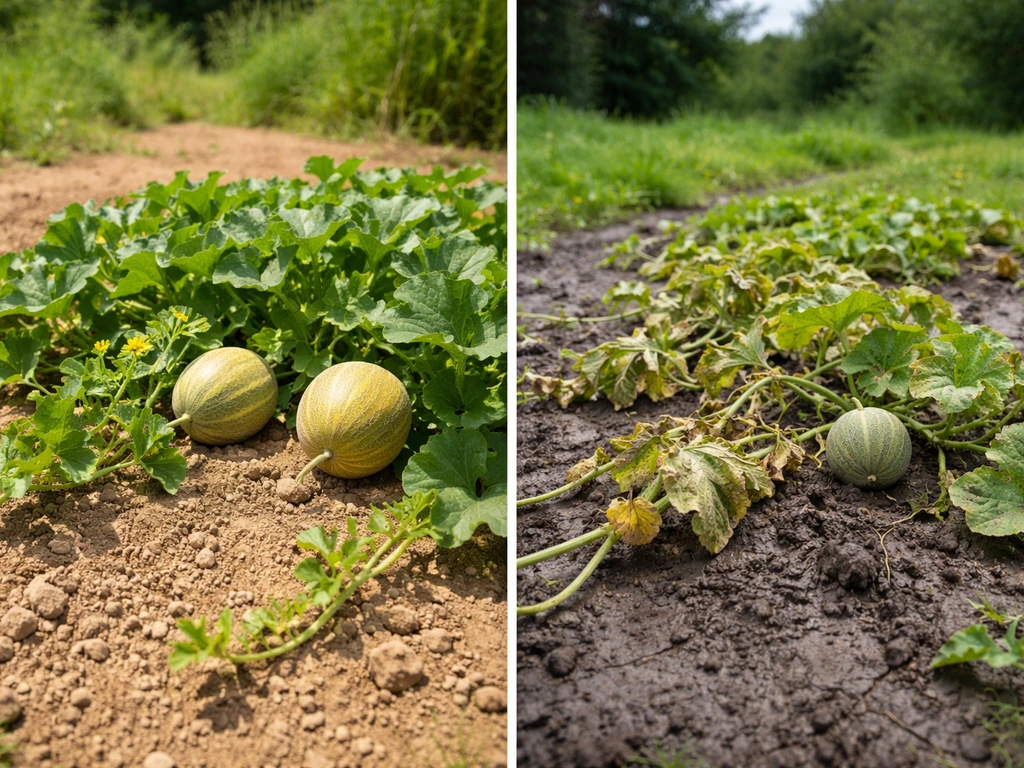
Cantaloupe (Cucumis melo var. cantalupensis), also sold as muskmelon, is a warm-season crop that evolved in hot, dry conditions. It wants long summers with consistent heat, plenty of sun, and low humidity at fruit maturity. The UK gives you roughly the opposite: short summers, frequently cloudy skies, high humidity, and unpredictable rain. So the honest answer is that the British climate is marginal for cantaloupe, not impossible.
Where you are in the UK matters enormously. In the south of England, particularly in Kent, Sussex, Hampshire, or the Isles of Scilly, you get the longest, warmest summers and the best chance of ripening fruit outdoors with protection. Move north into the Midlands, Yorkshire, or Scotland, and outdoor success becomes increasingly unlikely. For growers in northern England, Wales, and Scotland, a greenhouse or polytunnel isn't just helpful, it's essentially mandatory. Even then, Scotland can be challenging without supplemental heat in spring and autumn.
The key threshold to understand is that cantaloupe needs sustained daytime temperatures above 25°C (77°F) for good fruit development, and night temperatures should not drop below 12°C (54°F) once plants are established outdoors. In most UK summers, those conditions are only consistently met inside a greenhouse or polytunnel, which is why that setup is the default recommendation for most British growers.
Best varieties for UK conditions and where to find seed
Variety selection is probably the single biggest factor in UK cantaloupe success. Standard supermarket-style melons bred for hot climates won't ripen in time. You need compact-season, cool-climate-tolerant varieties that can mature fruit in a shorter, cooler growing window.
Emir F1 is the standout variety for UK growers. The RHS specifically describes it as a cold-tolerant cantaloupe cultivar well suited to duller UK summer weather, which is as close to an official endorsement as you'll get. The RHS describes melon ’Emir’ as a [cold-tolerant cantaloupe cultivar well suited to duller UK summer weather](https://www. rhs.
org. uk/plants/293236/cucumis-melo-emir-melon-emir/details), and notes it is not frost-surviving (plants do not survive freezing). Sweetheart F1 is another proven performer, specifically bred for cooler climates and capable of ripening fully under glass between August and September. Both are widely available from UK seed suppliers including Thompson and Morgan, Suttons Seeds, and the RHS online shop.
Other varieties worth trying include Alvaro F1, Blenheim Orange (an older heritage variety with a devoted following), and Outdoor Wonder if you're attempting a sheltered, south-facing outdoor position in the south.
Stick to F1 hybrids if you want the most reliable results. They tend to have stronger, more uniform growth and better disease resistance, which matters a lot in the UK's humid summers. Save the heirloom experimentation for once you've had a successful first harvest.
When to sow and transplant: the UK timing plan
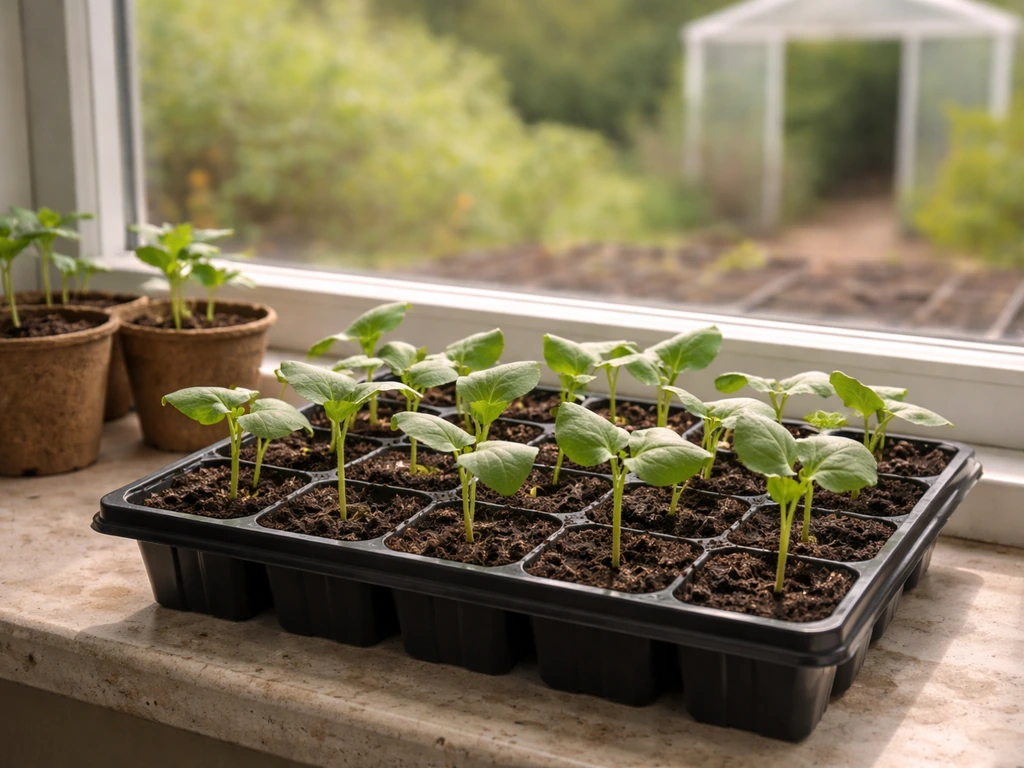
Getting the timing right is critical. Cantaloupe needs a long growing season, so you want to start seeds as early as practical indoors without producing oversized plants that sit waiting for conditions to catch up.
- Sow seed indoors from late March to mid-April. Use small pots or modules, one seed per pot, sown on their side or flat to reduce rot risk. Keep the compost at 18–24°C (65–75°F) using a heated propagator or a warm windowsill above a radiator. Germination usually takes 5–10 days.
- Once seedlings emerge, keep them in a bright, warm spot. A south-facing windowsill works, but a heated greenhouse bench is better. Pot on into 9cm or 1-litre pots once the first true leaf appears.
- Harden off plants from mid-May, gradually exposing them to outdoor conditions over 10–14 days if they're destined for an unheated greenhouse or polytunnel.
- Transplant into their final position from late May to early June, once night temperatures are reliably above 12–15°C (54–59°F). For unheated structures, check overnight lows carefully before planting out. For outdoors in the south, wait until June and use cloches as backup.
If you miss the April sowing window, you can still sow in early May, but you'll be relying on a warm, extended autumn to finish ripening, which is not something the UK reliably delivers. Earlier is genuinely better.
Setting up to grow: greenhouse vs outdoor, containers vs ground, and training vines
Greenhouse or polytunnel vs protected outdoor growing
For most of the UK, a greenhouse or polytunnel is the best setup. Both trap heat, protect against rain splash (which spreads disease), and extend your effective growing season by several weeks at each end. A polytunnel is often better for cantaloupe than a glass greenhouse because it tends to run slightly cooler in peak summer (avoiding leaf scorch) and generates more humid conditions, though you'll still need to ventilate well.
If you're in the south of England and want to try outdoors, a sheltered, south-facing position backed by a wall or fence is your best bet. Use a crop cover or cloche over young plants until June, and remove it on warm days to allow pollinator access. Be prepared for the real possibility that a cold or wet August will mean unripe fruit.
Containers vs growing in the ground
In a greenhouse, you can grow cantaloupe either directly in the border soil or in large containers. Greenhouse border soil warms up faster and holds moisture well, which melons love. Containers give you more control over compost quality and drainage. If you go the container route, use at least a 30–40 litre pot (a 12-inch pot is really the minimum, bigger is better) filled with a rich, free-draining compost. Growbags work but tend to dry out quickly and need frequent watering. Outdoors, in-ground growing in a raised bed or against a south wall is preferable to containers, which dry out very fast in warm weather.
Training and supporting the vines
Cantaloupe plants are vigorous climbers and sprawlers. In a greenhouse, training them up canes or wire supports not only saves space but improves air circulation and sun exposure. Pinch out the growing tip of the main stem once it reaches about 1.5 metres (5 feet) tall or when it hits the roof, to encourage sideshoots where the female flowers appear. You'll also need to support individual fruits in small net bags or old tights tied to the frame, otherwise the weight of a ripening melon can snap the vine. Each plant typically supports two to four fruits in a UK summer. Letting too many set will mean none of them fully ripen.
Getting fruit to set: pollination under cover
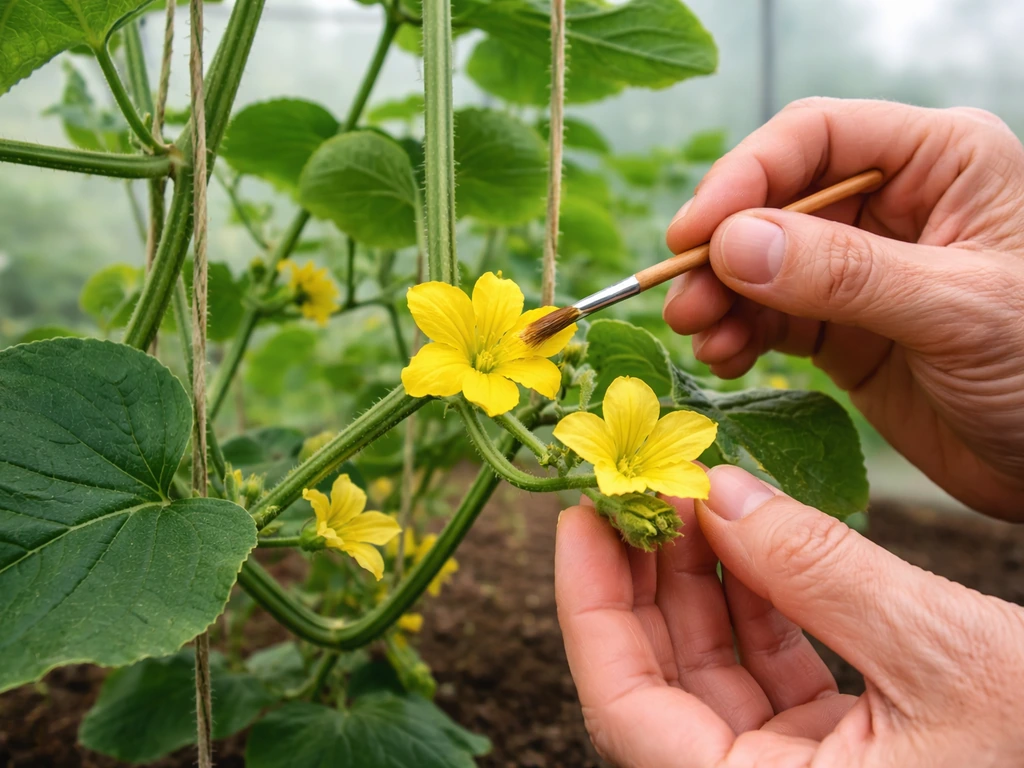
This is where many UK cantaloupe growers hit their first real problem. Cantaloupe produces separate male and female flowers on the same plant (the female flower has a tiny embryonic fruit at its base). Under cover, pollinators don't always get in to do the job, and even outdoors in a wet summer there may not be enough bee activity at the right moment.
The RHS recommends opening greenhouse doors and vents during the day to allow pollinating insects access. This is worth doing whenever it's warm enough, but you shouldn't rely on it alone. Hand pollination is the more reliable approach. When you can see both male and female flowers open at the same time (usually mid-morning on a warm day), pick a fully open male flower, peel back the petals, and gently brush it directly against the centre of the open female flower. Do this to several flowers over a few days to maximise your chances. Once pollinated, the small fruit behind the female flower begins to swell noticeably within a few days. If it shrivels and drops, pollination didn't take.
Plants that have been stressed by cold, drought, or nutrient imbalance often produce male flowers only, or drop female flowers before they open. Keep conditions stable and warm during flowering for the best results.
Day-to-day care: heat, water, food, and keeping problems at bay
Temperature management
Cantaloupe is heat-hungry. Aim for daytime temperatures of 25–30°C (77–86°F) inside a greenhouse or polytunnel, and don't let nights fall below 15°C (59°F) during fruiting if you can help it. Open vents and doors on hot days to prevent temperatures spiking above 35°C (95°F), which causes flower drop and stress. Early and late in the season, you may need fleece or a small heater to keep overnight temps up.
Watering
Melons need consistent moisture, especially while flowering and fruiting, but they do not like waterlogged roots. Irregular watering is one of the main causes of fruit cracking and blossom end problems. Water deeply and regularly, letting the top centimetre of compost dry out slightly between waterings. Once fruit is close to maturity (skins start to colour and the blossom end gives slightly under pressure), reduce watering to concentrate sugars and avoid skin splitting.
Feeding
Start with a balanced fertiliser (high nitrogen) to establish strong plant growth, then switch to a high-potassium feed (tomato feed works well) once the first flowers appear. Feed once a week throughout the growing season. Don't overfeed with nitrogen once flowers show, or you'll get lush foliage at the expense of fruit.
Pests, disease, and common problems
Powdery mildew is the UK cantaloupe grower's most persistent enemy. It typically appears as white dusty patches on the leaves in late summer, particularly in humid, poorly ventilated growing spaces. Improve airflow, remove affected leaves early, and consider a preventative spray of diluted milk (a 1:9 milk-to-water ratio has reasonable evidence behind it as a foliar treatment). Some varieties, including Emir F1, have improved mildew resistance.
Botrytis (grey mould) can affect stems and fruit in damp conditions: reduce humidity, ventilate more, and avoid wetting leaves when you water. Red spider mite is common in hot, dry greenhouses: mist the undersides of leaves or introduce biological controls like Phytoseiulus persimilis. Aphids can cluster on growing tips; blast off with water or use an organic insecticidal soap.
How to tell when your cantaloupe is ripe
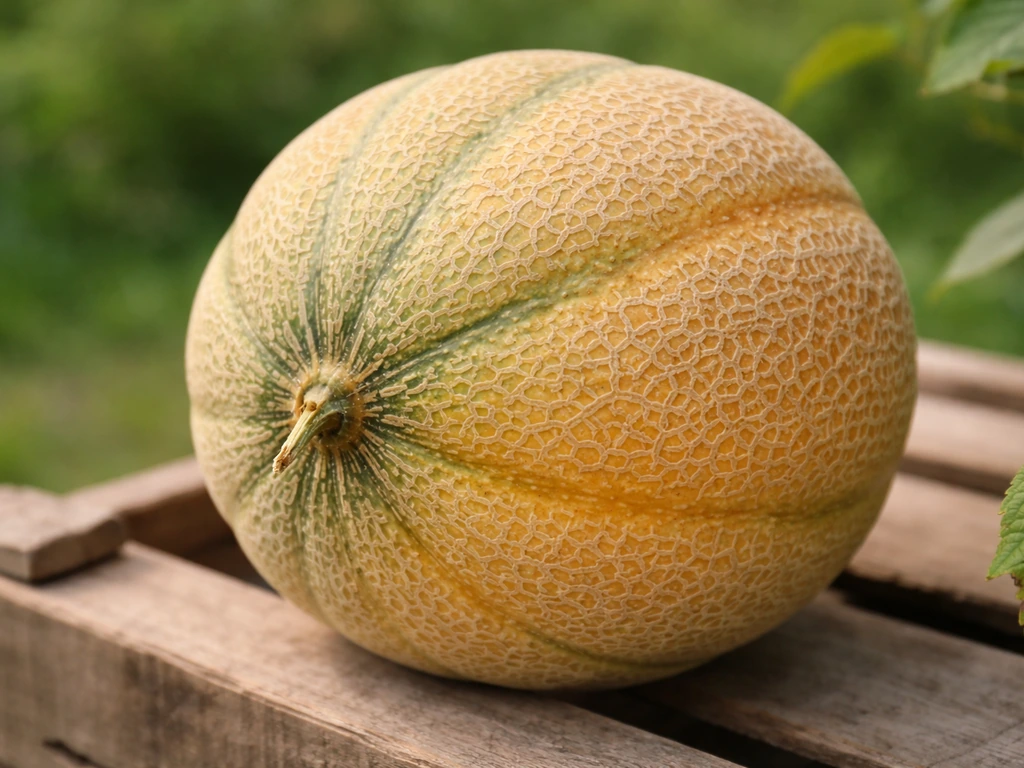
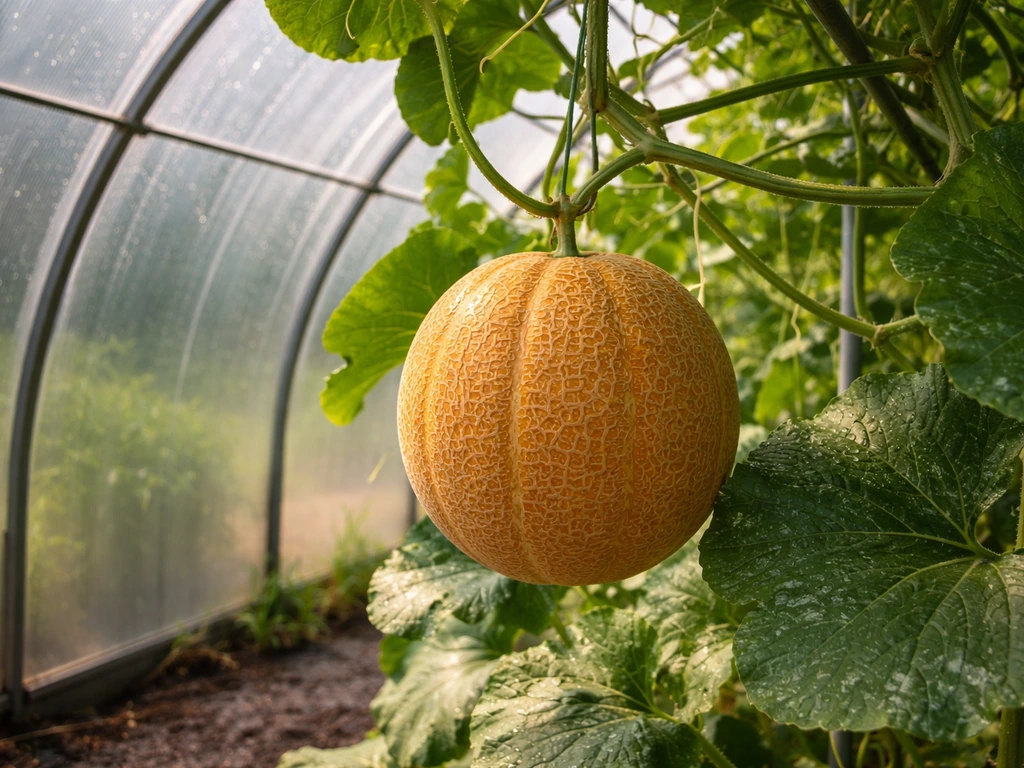
UK-grown cantaloupe is usually ready to harvest between August and September, depending on variety, location, and growing conditions. Don't rely on the calendar alone, use the fruit itself to judge ripeness.
- Skin colour shifts from green to yellow, buff, or golden, depending on variety.
- The netting on the skin (the rough, corky texture) becomes more pronounced and raised.
- The blossom end (opposite the stem) gives very slightly when pressed with your thumb, similar to a ripe peach.
- A sweet, musky fragrance becomes obvious when you hold the fruit close and sniff near the stem end.
- On fully ripe fruit, the stem may begin to crack or the fruit separates easily from the vine with a gentle twist ('slip' is the term for this in muskmelon growing).
Once harvested, cantaloupe keeps at room temperature for a few days and up to one to two weeks in the fridge. It doesn't store long, so eat it quickly. Unlike some fruits, cantaloupe doesn't ripen significantly further once cut from the vine, so picking slightly underripe will disappoint you.
Realistic expectations and how to fix common UK failures
Let's be straight: cantaloupe is not an easy win in the UK. If you're wondering about cucumbers instead, the UK approach is different and depends heavily on temperature and protection can you grow cucumbers in the uk. Even experienced growers in the south have years where the fruit simply doesn't ripen before the first cold nights of September. That said, failure is almost always traceable to specific causes you can fix.
| Problem | Likely cause | What to do |
|---|---|---|
| No flowers appearing | Sown too late, or plants too cold and stressed | Sow by mid-April; keep temps above 18°C day and night during early growth |
| Flowers dropping without setting fruit | Poor pollination or temperature stress | Hand-pollinate; stabilise temperatures; avoid cold nights during flowering |
| Fruit forming but not ripening before autumn | Wrong variety, or too much fruit per plant | Use Emir F1 or Sweetheart F1; limit to 2–3 fruits per plant; consider heated greenhouse |
| Small fruit with poor flavour | Overwatering late in season, or too many fruits competing | Reduce water as fruit matures; thin to 2 fruits per plant; switch to high-K feed |
| Powdery mildew taking over | Poor ventilation and humid conditions | Open vents daily; remove affected leaves; choose mildew-resistant varieties |
| Fruit rotting on the vine | Fruit sitting on wet soil or excessive humidity | Support fruit in nets; improve airflow; reduce overhead watering |
For context, if you're also growing cucumbers, cucamelons, or piccolo tomatoes under cover, cantaloupe can share the same polytunnel space happily and has similar care requirements. It's a step up in difficulty from tomatoes but not an entirely different level of commitment. Honeydew melons are generally considered even more demanding in UK conditions than cantaloupe, so if you're starting out with melons, cantaloupe is the smarter first attempt. Honeydew melons can be grown successfully in the UK too, but they usually require the same kind of protected setup and warm, consistent conditions.
If you're in northern England, Wales, or Scotland, don't let this put you off entirely, but do invest in the best setup you can: a polytunnel with decent thermal mass, a thermometer so you're not guessing overnight lows, and a variety like Emir F1 that's been bred with your kind of summer in mind.
Start seeds in a heated propagator in late March, get plants into a warm polytunnel by early June, hand-pollinate religiously, and limit each plant to two or three fruits. The RHS guide also says you should plant melons into their final position in [late May or June](https://www. rhs. org.
uk/fruit/melons/grow-your-own? type=f) once night temperatures are reliably above 12, 15°C. Do those things and you've genuinely got a fighting chance of eating your own cantaloupe by September.
FAQ
If my cantaloupe is underripe in August, can I ripen it indoors?
Yes, but not all methods work the same. Cantaloupe usually will not ripen well once cut, so the safest approach is to grow for full maturity on the vine. If you must pick early, harvest when the skin has started to color and the fruit detaches from the vine easily, then give it a warm room with good airflow for a few days, but expect only partial improvement.
What temperature should I aim for before I transplant cantaloupe into a UK greenhouse or polytunnel?
Use the soil or compost temperature, not just the air temperature, as your main guide. In a greenhouse, you still want the root zone warm, ideally with daytime air above about 20 to 25°C and nights not dropping far below roughly 15°C once fruiting starts. If nights are cold or sunny heat is low, delay setting plants out until conditions stabilize, otherwise you often get male flowers only and poor fruit set.
How many stems and how much pruning should I do in a UK greenhouse?
For most UK setups, limit training to one or two main stems and keep the plant open to airflow. After pinching, ensure sideshoots are spaced so leaves do not form a dense canopy, and remove any leaves blocking airflow around developing fruit. Overcrowding increases powdery mildew risk, especially once plants start to overlap in August.
How do I know if my hand-pollination worked, and when should I do it again?
Hand pollination can help a lot, especially under glass in cloudy or wet periods. A practical rule is to pollinate only when both male and female flowers are open at the same time, usually mid-morning on warm days, and repeat on multiple flowers over several days. If the female fruit shrivels within about a week, that pollination cycle likely failed.
What’s the best way to water cantaloupe in a polytunnel to prevent cracking?
Watering frequency should be steady, but the method matters. If you water from overhead, you increase disease pressure, so use watering at the base or a drip line where possible. Also avoid letting compost dry out completely and then flooding, that swing is a common trigger for cracking and blossom-end type problems.
Can I use the same fertiliser all season, and what should I switch to after flowering?
Tomato feed is a good fit during flowering and fruiting, but watch the nitrogen level. If you keep feeding high-nitrogen too long, you get lots of leaves and fewer mature fruits. Once you see flowers starting, shift promptly to a higher-potassium feed and keep to about weekly feeding rather than heavy doses.
How can I catch powdery mildew early and stop it spreading in a humid greenhouse?
Powdery mildew often looks like a dry white dust, but early stages can be subtle on lower leaves and shaded parts. Remove affected leaves promptly, improve airflow with vents and spacing, and consider a preventative milk spray early in the late-summer window rather than waiting for a full outbreak. If mildew is already widespread, expect you will still need to combine cultural control and regular monitoring.
Can I grow cantaloupe in a small greenhouse or tunnel, and how should I adjust fruit number?
Yes, but you need the right pollination plan and fruit limits. In small spaces, train and prune aggressively to keep plants manageable, then support fruit from the moment it starts swelling. Also, cap the number of fruits per plant more strictly, often two fruits for smaller frames, because fewer fruits help the plant put energy into ripening before cold nights.
What causes botrytis in melon crops, and how do I reduce grey mould risk under cover?
Moisture management is key in UK conditions. Aim for compost that stays evenly moist but never soggy, and ventilate regularly to avoid high humidity around the crop. Grey mould risk drops when you keep leaves and fruit dry, remove any badly affected bits, and avoid watering in a way that splashes soil onto stems.
Next Article
Can You Grow Honeydew Melons in the UK? How-To Guide
Yes, grow honeydew in the UK with UK timing, containers or greenhouse tips, plus pollination, pests, ripeness and harves