Burdock grows throughout the UK, and if you've spent time walking along roadsides, hedgerows, field margins, or waste ground, you've almost certainly walked past it without knowing. It's a big, bold plant that naturalises freely across England and Wales, is widespread in lowland Scotland, and turns up almost anywhere the soil has been disturbed and left alone for a season or two. You can grow it deliberately in a garden too, and it's genuinely easy to establish once you understand what it wants.
Where Does Burdock Grow in the UK and How to Grow It
James Hartwell
6 Jul 2026
Which burdock are we actually talking about?
There are two burdock species you'll encounter in the UK, and people often mix them up. Greater burdock (Arctium lappa) is the one most commonly grown for food and traditionally used in herbal medicine. It's larger in almost every dimension: bigger leaves, taller stems (easily reaching 2 metres), and flower heads with those distinctive shiny golden-green bracts. Lesser burdock (Arctium minus) is more widely distributed across the UK and turns up in more varied habitats, but it's smaller overall and has hollow basal leaf petioles rather than the solid ones of Greater burdock. When people ask about growing burdock in a UK garden, or about foraging the root, they usually mean Arctium lappa. That's what most of this article focuses on, though the two species behave similarly enough in the garden that most of the practical advice applies to both.
The BSBI Plant Atlas 2020 classifies Arctium lappa as an archaeophyte with a Eurosiberian Temperate origin that is now widely naturalised across Britain. Kew’s Plants of the World Online (POWO) lists Arctium lappa and gives its broader native-range context as temperate Eurasia, which helps explain its UK naturalization blank" rel="noopener noreferrer">global/native-range context (temperate Eurasia). In plain language: it arrived here a long time ago (probably via medieval trade and cultivation), and it's been part of the British flora long enough to behave like a native. You're not dealing with a tender exotic or a plant at the edge of its range. This is a plant completely at home in the UK climate. Mandrake has different habitat and growing requirements than burdock, so it is not typically grown or found as a casual UK plant does mandrake grow in the UK.
Where burdock grows wild in the UK
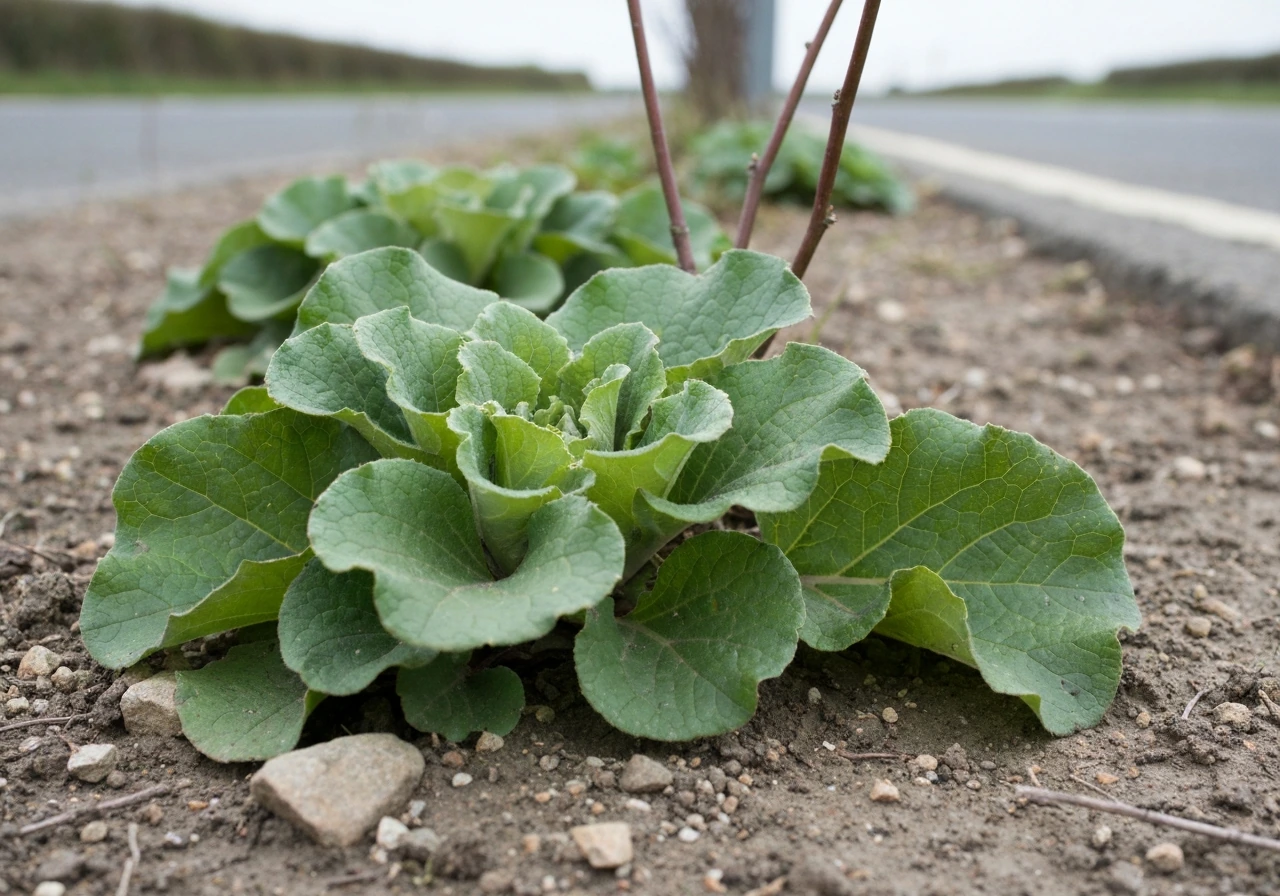
The short version: disturbed ground near human activity. Greater burdock is most reliably found along roadside verges, waysides and tracks, the edges of fields and hedgerows, streamsides and riverbanks, and on waste ground and rough grassy places. It isn't a woodland plant or a moorland plant. It wants light, it wants nutrient-rich soil, and it wants ground that has been turned over or disturbed at some point. That's why you see it clustering along the edges of paths, around the back of car parks, beside drainage ditches, and on any rough patch of ground left to go wild for a few years.
Geographically, Greater burdock is widely recorded across lowland England and Wales. It's particularly common in the Midlands, southern and eastern England, and throughout much of Wales. It thins out as you move north and into upland areas, though it's present in lowland Scotland too. Lesser burdock has a broader reach and turns up further north and in slightly more marginal habitats. If you're in the Scottish Highlands or on exposed upland moorland, you're much less likely to encounter either species growing wild.
Why the UK climate suits it so well
Burdock is a monocarpic perennial, which means it spends its first year as a low rosette of leaves building a deep taproot, then flowers, sets seed, and dies in its second year. That lifecycle fits neatly into a UK growing season: mild enough winters to survive without dying back completely, warm enough summers to flower and set seed, and enough moisture to support those enormous leaves. The RHS recommends moist soil in full sun or partial shade, and that description maps almost perfectly onto the kind of verge or hedgerow base where burdock thrives naturally. It doesn't need hot summers or dry conditions, and it isn't fussy about soil pH as long as there's reasonable fertility and some moisture.
The key ecological driver is soil disturbance combined with nitrogen enrichment. Burdock thrives in humus-rich, nitrogen-rich ground. That's why it loves roadsides (where run-off from farmland and verge management keeps nutrients cycling), riverbanks (regular flooding deposits organic material), and waste ground (especially anywhere with old compost, rubble, or previous cultivation). If you can offer it similar conditions in a garden, it will establish without much encouragement.
Regional and microclimate reality across the UK
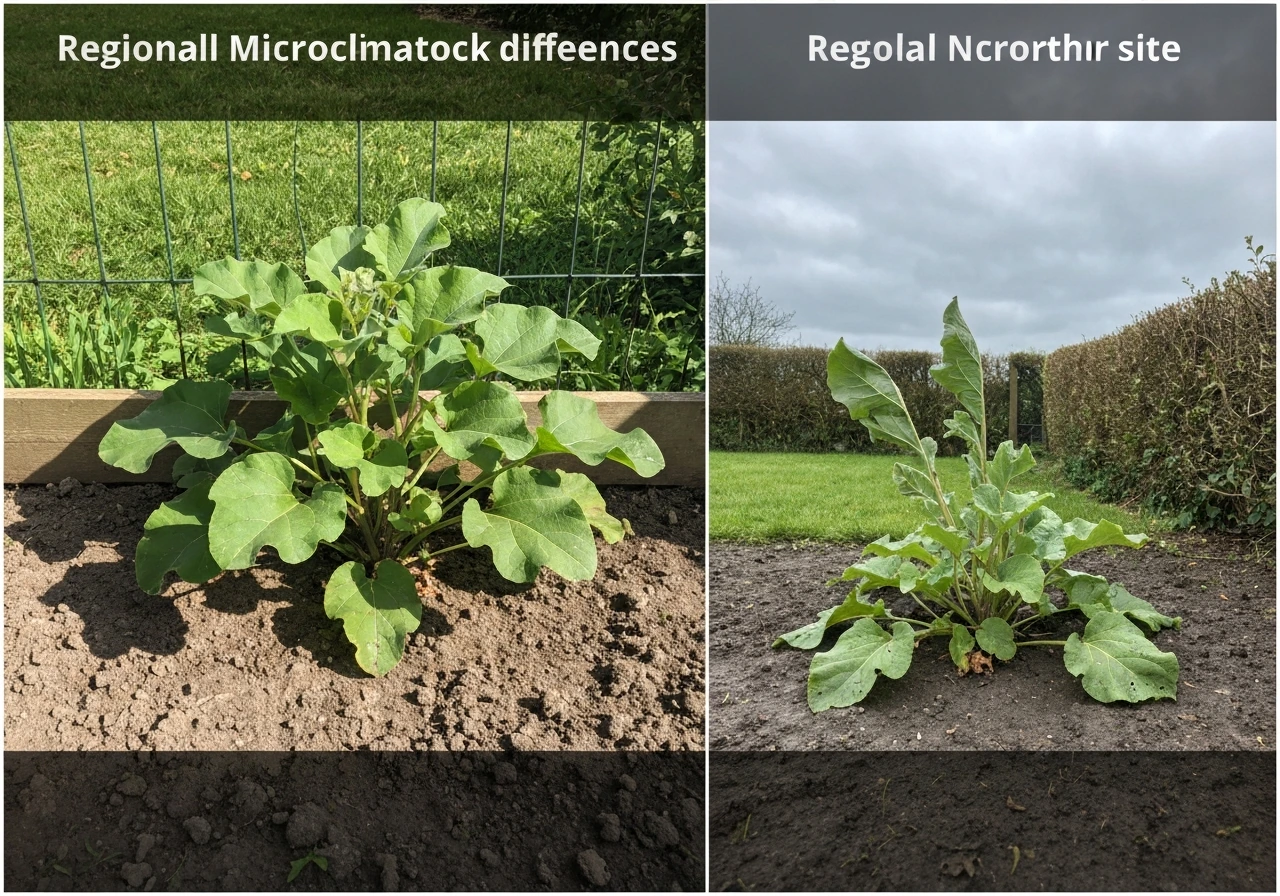
The UK isn't one growing environment, and where you are affects how freely burdock establishes and how vigorously it grows. Here's a practical regional breakdown:
| Region / Condition | Burdock Performance | Notes |
|---|---|---|
| Southern England (South Coast, Home Counties) | Excellent | Warm summers, reliable moisture, good fertility — burdock is abundant wild and thrives in gardens |
| Midlands and East Anglia | Very good | Widely naturalised; drier summers in the east may slow growth on sandy soils without irrigation |
| Wales and the West Country | Very good | Higher rainfall suits it well; can be very vigorous on rich lowland soils |
| Northern England (Yorkshire, Lancashire, Northumberland) | Good in lowlands | Common in lowland and valley areas; upland sites above ~300m are less reliable |
| Lowland Scotland | Moderate to good | Present and naturalised; shorter growing season means smaller plants and later flowering |
| Scottish Highlands / Exposed Uplands | Poor | Rarely found wild; cooler, wetter, shorter seasons limit establishment |
| Coastal sites (exposed) | Variable | Salt wind and poor sandy soils can limit it; sheltered coastal gardens are fine |
Microclimates matter more than the broad region in many cases. A sunny, sheltered south-facing bank with decent soil in Northumberland will grow burdock more reliably than a cold, shaded, waterlogged corner in Kent. The key microclimate factors are: sufficient light (at least half a day of direct sun), decent soil depth (the taproot can go 30cm or more), reasonable moisture without waterlogging, and some shelter from strong persistent winds that would batter those enormous leaves.
How to identify burdock in the field
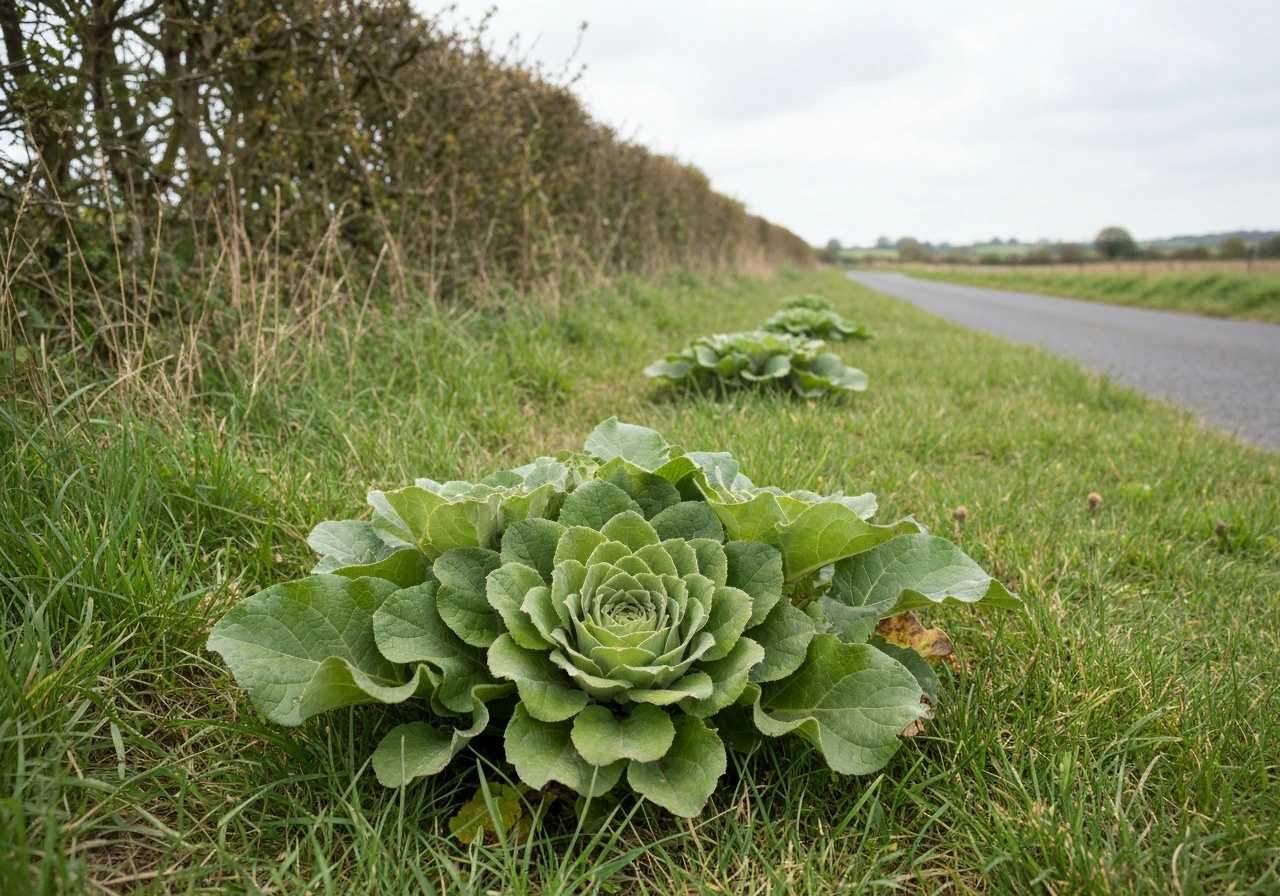
Once you know what to look for, burdock is hard to miss. In its first year it produces a rosette of very large, heart-shaped leaves, sometimes reaching 50cm or more across. The undersides are pale and covered in woolly white hairs, giving them a felt-like texture that's very distinctive. The top surface is darker green and relatively smooth. The leaf stalks of Greater burdock are solid, which is the main difference from Lesser burdock's hollow stalks.
In its second year (July to September in the UK) it sends up tall, branching flower stems that can reach 2 metres. The flower heads are small, purple, and thistle-like, enclosed in those spiky, burr-like structures covered in hooked bracts. On Greater burdock the bracts have a shiny golden-green tone. When the burrs are ripe, they catch on clothing, fur, and anything that brushes past them, which is exactly how the seeds disperse so effectively. If you find a plant with enormous basal leaves in spring, check back later in summer to confirm the flower stem and burr heads.
- First-year plant: rosette of very large heart-shaped leaves, woolly white underside, solid petioles (Greater burdock)
- Leaf size: often 30 to 50cm across, much larger than most surrounding vegetation
- Second-year plant: tall branching stems to 2m, small purple thistle-like flowers, July to September
- Burr heads: round, covered in stiff hooked spines that cling to fabric and fur
- Bract colour: shiny golden-green on Greater burdock, less shiny on Lesser burdock
- Habitat clue: disturbed soil, verges, hedgerow bases, waste ground, near water
One practical note for anyone foraging rather than just identifying: the root is only really worth harvesting from first-year plants before they put up a flower stem. Second-year plants redirect their energy into flowering and the root becomes woody and unpalatable. This is a genuine source of confusion for foragers, and it's worth knowing whether you're looking at a first-year rosette or a second-year plant that's already starting to bolt.
Growing burdock deliberately in your UK garden
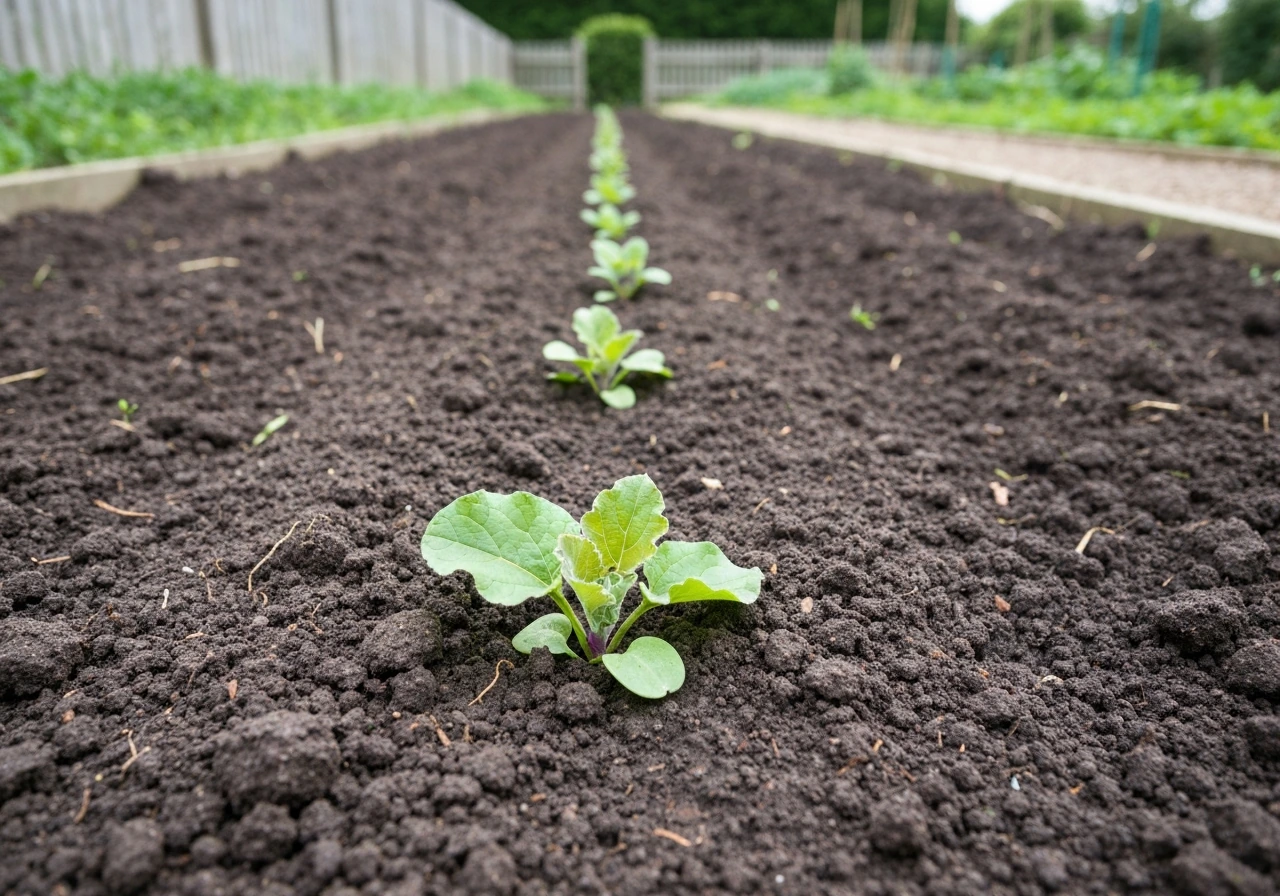
The good news is that burdock is not a difficult plant to grow. If you are instead trying to grow a different plant such as weed, the rules and practical setup in the UK can be very different burdock is not a difficult plant to grow. The challenging part is giving it what it needs for a useful harvest, which is mostly about soil depth and fertility. Here's how to approach it:
Starting from seed
Burdock is most easily started from seed, which germinates readily without special treatment. Sow directly into a prepared bed in spring (April to May in most UK regions) or in autumn. Autumn sowing often produces stronger plants the following year. You can collect seed from wild plants in late summer and autumn once the burrs are dry and sticky, or buy seed from a few UK herb and specialist vegetable suppliers. Thin seedlings to at least 50cm apart if you want good root development.
What the soil needs to look like
This is where most people run into trouble. Burdock produces a very deep taproot, commonly 30cm or more, and on compacted or stony soil it forks and becomes almost impossible to harvest cleanly. If you want usable roots, you need to prepare a deep, loose, fertile bed. The traditional Japanese method (burdock is widely cultivated as gobo in Japan) involves digging or drilling deep channels and filling them with loose, compost-enriched soil. In a UK garden, raised beds with deeply dug, stone-free soil work well. Moist, humus-rich, nitrogen-rich soil in a sunny or lightly shaded spot is the ideal. Heavy clay will produce gnarled, stunted roots unless it's been seriously improved.
Spacing and site
These are big plants. Even in their first year the leaf rosette can take up a metre of space in every direction. Plan for that. A couple of plants in a well-prepared deep bed will give you more root than most households know what to do with. Site them in full sun or partial shade, away from other plants they might shade out. They'll be fine in most UK rainfall conditions without supplementary watering once established, though a dry site in East Anglia during a hot summer will benefit from occasional irrigation.
Harvest timing
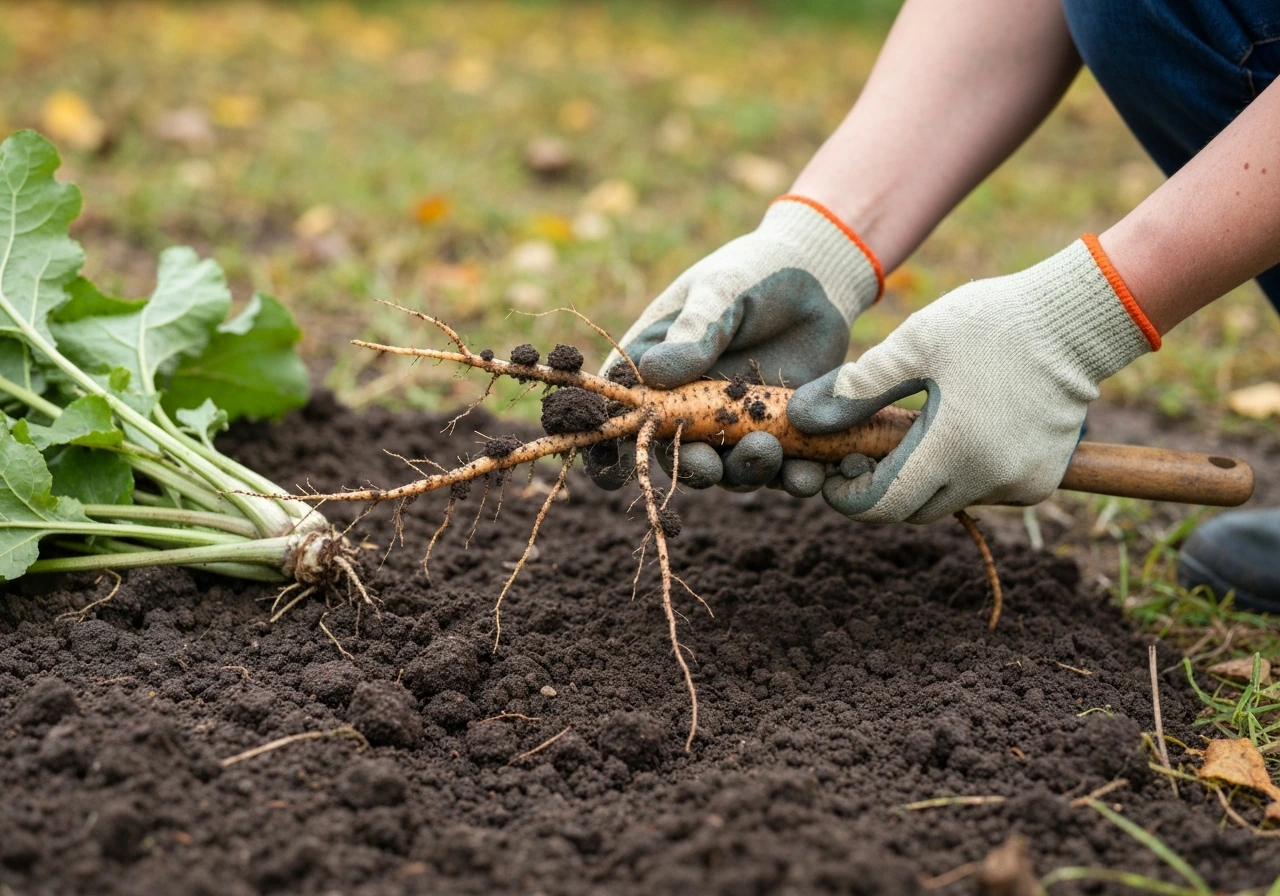
Harvest the roots in autumn of the first year, before the plant bolts in its second year. Roots are at their best before flowering. If you leave them until spring of the second year you risk the plant bolting quickly in warmer weather and the root becoming woody. Autumn harvest (October to November) from a spring-sown plant is the standard approach. Digging the roots is hard work given their depth. Some gardeners use a fork to loosen the soil very deeply on either side before pulling, and reports from growers suggest that using a hose to soften the surrounding soil first makes extraction much easier.
Challenges and honest expectations
Burdock has a few characteristics that make it a plant to go into with your eyes open. If you are wondering when do liberty caps grow in the UK, timing matters because they are tied closely to cool, damp conditions and the local season when do liberty caps grow uk. None of them are dealbreakers, but they're worth knowing:
- It self-seeds aggressively. Those hooked burrs are evolved for exactly that purpose, and if you let a plant reach maturity it will distribute seeds across a wide area. Deadhead or remove second-year plants before the burrs fully ripen if you don't want it spreading.
- The taproot is genuinely very deep and difficult to remove completely once established. If burdock seeds into a bed you don't want it in, removing it as a young seedling is much easier than digging out an established root.
- First-year vs second-year confusion is real. If you're growing it for the root or foraging from wild plants, being confident about whether you're looking at a first or second-year plant matters a lot for harvest quality.
- The leaf size is enormous and will shade out smaller neighbouring plants. This isn't a problem in a dedicated bed, but it's worth knowing if you're planting near other crops.
- RHS notes it as generally pest-free and disease-free, which is genuinely helpful: you're not managing a demanding crop. The difficulty is cultivation (soil preparation, root extraction) rather than plant health.
- In wetter, cooler regions like northern England and Scotland, plants may be smaller and take longer to develop good roots. Expectations should be adjusted accordingly.
The realistic picture is this: in most of England and Wales, burdock is an easy, low-maintenance plant that will establish and spread with minimal effort on your part. The BSBI Distribution Database aggregates county recorder and expert records and provides a searchable platform for UK distribution data, including species by grid square and vice-county queries BSBI’s Distribution Database aggregates county recorder and expert records. The challenge is managing it rather than getting it to grow. In Scotland and colder northern regions it's still viable in sheltered lowland gardens, but it will be a more modest plant. If you're primarily interested in harvesting roots, put your effort into soil preparation rather than anything else, because that's the single biggest factor in whether your harvest is worthwhile.
If burdock's wild, weed-like vigour appeals to you and you're interested in other plants that grow freely in British landscapes, it's worth noting that several other plants often grouped with burdock in hedgerow and foraging contexts, from wolfsbane to lesser-known hedgerow herbs, have very different cultivation profiles. Wolfsbane has its own distinct UK distribution, so it helps to know where it grows best in the UK from wolfsbane. Burdock stands out as one of the most genuinely UK-adapted and straightforward of the lot.
FAQ
How can I tell if burdock is a first-year plant before digging the root?
Start by checking whether the plant is a true first-year rosette. You can often tell because first-year plants have no tall flower stem base, and their leaves form a tight low crown that you can lift and see the taproot emerging. If you see any signs of bolting (a visible central stem or hardening crown), expect the root to be woody and less suitable for eating.
What’s the best way to stop burdock from taking over my garden?
Burdock readily self-seeds because ripe burrs stick to fur and clothing. If you are trying to keep it from spreading, remove flower stems as soon as they appear in the second year, before the burrs dry. Wear gloves when handling burrs, because the hooked bracts cling firmly.
Can I grow burdock in heavy clay or stony soil?
Yes, but it must be deep and loose. If your soil is compacted, stony, or shallow, burdock roots commonly fork and become hard to cleanly harvest. The simplest fix is a raised bed or a dedicated deep channel bed, with compost mixed in thoroughly and stones removed from at least the top 30 to 40 cm.
Does burdock need watering in the UK, and how often?
Burdock usually establishes in typical UK rainfall, but in very dry spells it can stall and produce smaller roots. If your summer is hot and rain is scarce, water deeply once or twice a week rather than light daily watering, aiming to keep the top 20 to 30 cm consistently moist without creating waterlogged conditions.
What soil conditions matter most for burdock root quality?
For taproot crops, pH is rarely the main issue, but nitrogen availability is. If your bed is poor, add well-rotted compost or manure before sowing and avoid fresh high-nitrogen feeds close to planting, which can encourage weak, leafy growth. Mulch is helpful for moisture, but keep it away from the seed line so seedlings can emerge.
Is autumn sowing better than spring sowing for burdock in the UK, and what should I do differently?
Yes, and autumn sowing can be advantageous, but protect young seedlings from slug damage and crusting. In winter and early spring, cover exposed beds with a light mulch or cloche and keep an eye on gaps where seedlings fail to emerge, then re-sow quickly while soil conditions are still favorable.
What happens if I harvest burdock later, into winter or the second year?
If you leave it too long, the plant shifts energy to flowering and the root becomes tougher. For a home garden, harvest in autumn of the first year (roughly October to November) or after the leaves have matured, then clean-dry and store as soon as possible. For late harvests, expect a sharper, more bitter, woody root.
Can I transplant burdock seedlings instead of direct sowing?
Burdock can be grown from seed, and self-sown seedlings often appear where soil has been disturbed, so replanting is usually unnecessary. If you do transplant, expect reduced root straightness because you cannot lift and move a deep taproot intact. Direct sowing is the most reliable method if you want clean, harvestable roots.
Will burdock grow in partial shade, and what light level do I need?
If you can offer at least half a day of direct sun and keep the bed fertile and moist but not waterlogged, it will still grow in partial shade. Deep shade slows growth and may prevent a useful root from developing, so if you are choosing a site, prioritize light and soil depth over shelter from sun.
My burdock leaves are healthy, but the roots are small. What are the most common causes?
In the UK, the biggest practical risks are soil conditions and timing rather than pests. Compacted soil causes forking, and allowing it to flower makes roots woody, so focus on deep preparation and harvesting at the right stage. If your plants look thriving but roots are small, the usual cause is shallow soil or too much competition because plants were not thinned.
Next Article
Can You Grow 1 Weed Plant in the UK? Feasibility Guide
Can you grow one weed plant in the UK? UK climate and legal realities, plus a practical indoor or outdoor 1-plant plan.