Yes, you can grow one cannabis plant in the UK, and yes, it is realistically possible to get a harvest from it, indoors or outdoors. But before anything else: cultivating cannabis in the UK is illegal without a Home Office licence. That is the law, and no amount of 'it's just one plant' reasoning changes it. This article gives you the full picture, both the legal reality and the practical growing knowledge, so you can make an informed decision.
Can You Grow 1 Weed Plant in the UK? Feasibility Guide
James Hartwell
19 Apr 2026
Is it actually feasible in the UK?
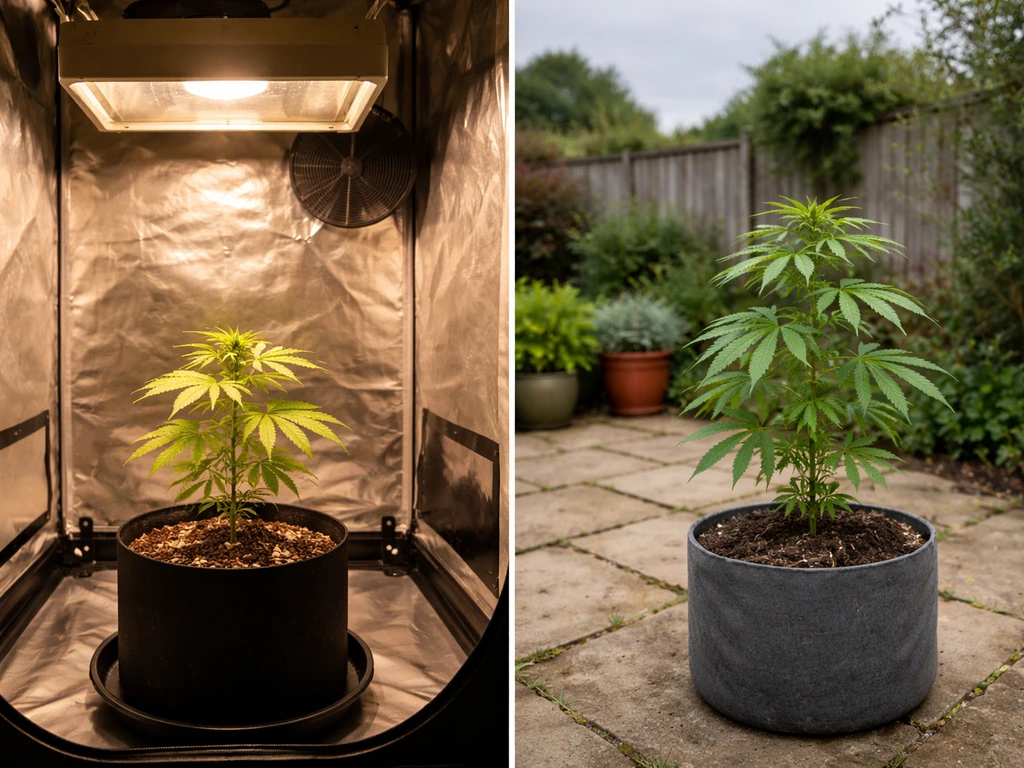
The UK is not an ideal climate for cannabis, but it is workable, especially if you are only trying to manage one plant. Indoors, feasibility is high: you control the environment, and one plant does not demand a huge setup. Outdoors, it is a genuine challenge. The UK growing season is short, late summer humidity can hit 90% in August (a figure that should alarm any grower thinking about bud rot), and cold nights arrive earlier than most beginners expect.
That said, growers from the South Coast and sheltered parts of Wales and England do get results outdoors every year. Scotland and exposed northern regions are significantly harder, with a compressed season and heavier autumn rainfall that stacks the odds against a late-finishing plant.
The single-plant scenario actually plays in your favour. One plant is manageable, cheap to run, and easy to keep an eye on. You can give it attention that a larger operation never gets, and early problems, whether that is overwatering, pest pressure, or a mould spot on a bud, are spotted and dealt with fast. For a beginner in the UK, starting with one plant is genuinely the right call.
The legal position: what you need to know
Cannabis is a Class B controlled drug under the Misuse of Drugs Act 1971. Section 37(1) of that Act defines what counts as a cannabis plant for the purposes of the law, and the definition does not hinge on how many plants you have. Growing one plant is treated the same way as growing a hundred in terms of whether the offence applies. GOV.UK's drug licensing factsheet is explicit: it is unlawful to cultivate cannabis plants without the requisite Home Office licence. There is no personal-use exemption, no small-quantity threshold, and no grey area around growing 'for yourself.'
The two routes that do exist for legal cultivation are very narrow. A Home Office controlled drug cultivation licence allows research or medical production at a licensed site, and an industrial hemp licence covers growing approved low-THC varieties (at or below 0.2% THC) outdoors, for seed and fibre only. Crucially, under the hemp licence the controlled parts of the plant, meaning the flowers and leaves, cannot be harvested or used without a separate controlled-drug licence. Neither of these routes applies to a hobby grower wanting a personal harvest. If you are reading this as someone interested in growing for personal use, be clear-eyed: it is currently illegal in the UK to do so, regardless of quantity.
Indoor vs outdoor: picking the right setup for one plant
For a single plant in the UK, the choice between indoor and outdoor comes down to how much control you want and what your space and budget allow. Outdoor growing is free in terms of running costs, but you are at the mercy of British weather. Indoor growing costs money to run but gives you full control over light, temperature, and humidity, which is what separates a successful UK harvest from a mouldy disappointment.
Indoor: small tent, big control
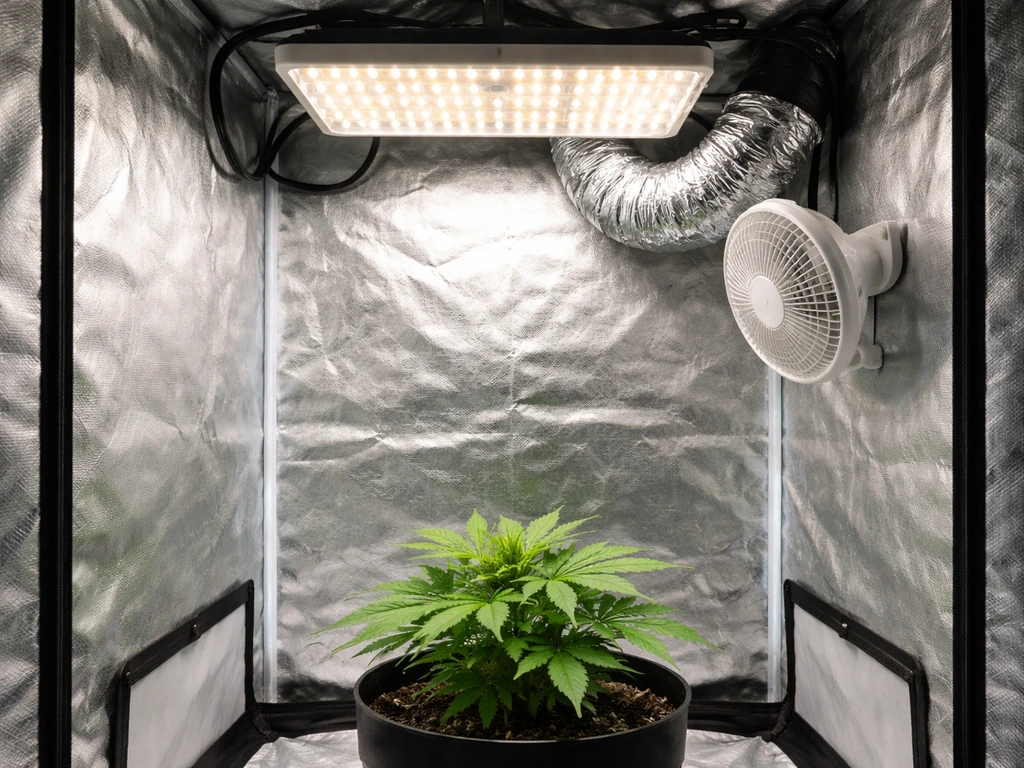
For one plant, a small grow tent in the 60x60cm to 80x80cm range is plenty. Anything larger and you are wasting electricity heating empty space. A basic setup for a single plant needs: a tent, a LED grow light (100-200W actual draw is fine for one plant), an inline fan and carbon filter for odour control, a small oscillating fan for airflow, a thermometer and hygrometer, and a timer.
The humidity target you want to hit during flowering is around 40-50% RH. Go above that for extended periods and you are inviting botrytis, which can collapse a bud from the inside in days. A small dehumidifier or a properly sized exhaust fan will handle this in a tight space. Temperature during flowering should sit between roughly 18-24°C.
Most UK homes stay in that range without much intervention, which is one reason indoor growing suits the UK well.
Outdoor: picking your spot carefully
If you go outdoors, microclimate matters enormously. A south-facing spot sheltered from prevailing westerly winds, against a brick wall that retains heat, in a garden in Somerset is a very different proposition to an exposed raised bed in Aberdeenshire. Cannabis needs warmth and light, and the UK's outdoor season from mid-May to late September is short but workable in the right location.
If you are specifically wondering about when liberty caps grow in the UK, timing is everything for finding the right flushes when do liberty caps grow. Rain is the constant enemy. You will need to be prepared to cover or shelter your plant during prolonged wet spells in late summer and early autumn, and you need to harvest before the first significant cold snap hits, which in many parts of the UK can arrive as early as late September.
Wolfsbane (monkshood) is generally found in the wild in parts of the UK, especially in damp, shady woodland areas and along stream banks Wolfsbane (monkshood) in the UK.
| Factor | Indoor (grow tent) | Outdoor (garden/balcony) |
|---|---|---|
| Setup cost | £150-£400 for a basic single-plant kit | Minimal (pot, soil, feed) |
| Running cost | Ongoing electricity (LED, fan, timer) | Near zero |
| Humidity control | Full control with fan/dehumidifier | Weather-dependent, high risk in UK autumn |
| Light control | Full control, can run autos or flip photoperiods | Dependent on UK day length and season |
| Mould risk | Low if managed | High in wet UK summers and autumn |
| Season length | Year-round, not season-limited | Mid-May to September in most of UK |
| Best for | Maximum control, predictable results | Low cost, natural environment, warmer UK regions |
My honest recommendation: if you are a beginner in the UK and you want the best chance of a successful harvest from one plant, go indoor. The investment in a small tent and light pays back in control, and control is exactly what you lack outdoors in a British autumn.
Choosing a strain that actually suits UK conditions
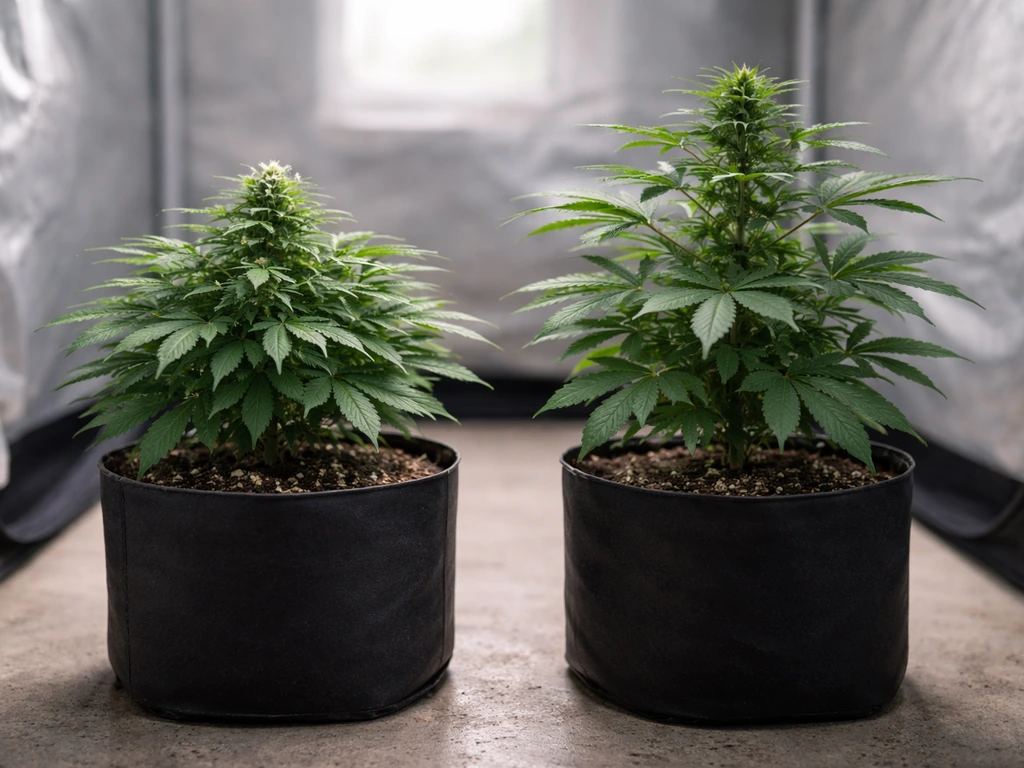
Strain choice is one of the biggest levers you have as a UK grower, and it is one most beginners get wrong by picking something impressive on paper that is completely unsuited to a damp island growing season.
Autoflowers vs photoperiod strains
Photoperiod strains flower in response to day length: they switch to flowering when light drops below roughly 15 hours per day, which in the UK typically happens in mid-July outdoors. That means a photoperiod plant put out in May starts flowering in mid-July and needs another 8-10 weeks to finish, landing your harvest in September or October. That is possible in the south of England, but you are rolling the dice on autumn weather.
Autoflowering strains flower based on age rather than light, typically going from seed to harvest in 70-90 days regardless of the season. Planted in May, an auto can be done by late July or August, before the worst of the UK's late-summer humidity spike. For outdoor UK growing, autos planted between May and July are the safer choice for most growers.
What to look for in a UK-friendly strain
- Mould and bud rot resistance: look for strains bred with Ruderalis genetics or specifically marketed as resistant to high humidity and botrytis
- Short flowering time: anything under 9 weeks flower time gives you a better chance of finishing before cold and wet close in
- Compact structure: a shorter, bushier plant is easier to manage in a small space and dries out faster after rain than a tall, dense cola
- Indica-dominant or hybrid: pure sativas have very long flowering times and are poorly suited to UK latitudes
- For indoor: almost any well-reviewed strain will work if your environment is dialled in, but beginners should still favour faster-finishing strains to reduce time and cost
Timing your outdoor planting
For outdoor growing, do not put seedlings out before mid-May. Cold nights before then will stress the plant and can cause it to hermaphrodite or stall. Autos should go out between May and early July at the latest: any later and you risk finishing in cold, wet September conditions. Photoperiod plants can go out from late May, but factor in that they will flower from mid-July and need to finish before autumn arrives. Dutch Passion and other breeders who know the northern European market are clear that late-finishing strains in wet early autumn conditions are a botrytis risk, and a plant you lose to mould three weeks before harvest is the most demoralising experience in growing.
Growing one plant from seed to harvest: what actually happens
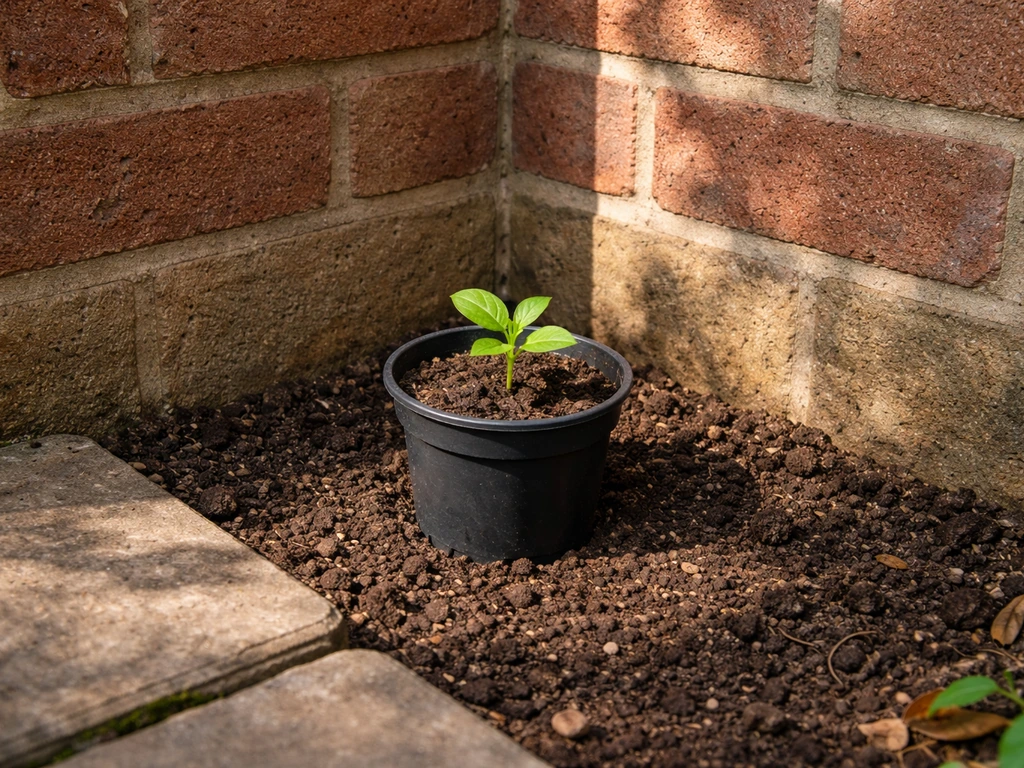
Here is the honest walkthrough of what growing one plant from seed to harvest looks like in the UK, without the fluff.
- Germination (days 1-5): Put your seed in a damp paper towel or directly into a small pot of moist seedling compost. Keep it warm, around 22-25°C. Most viable seeds crack and show a taproot within 48-72 hours. Do not overwater at this stage; more seedlings are killed by wet, cold compost than anything else.
- Seedling stage (weeks 1-3): Once the seed has sprouted and first leaves appear, it needs light immediately. Indoors, 18 hours of light per day is standard. Outdoors, natural light is fine from mid-May onward. Keep the seedling in a small pot initially (a 0.5-1L pot is fine) and water only when the top inch of soil is dry. Humidity can be higher at this stage, 60-70% RH is fine for seedlings.
- Vegetative stage (weeks 3-8 for photoperiods, shorter for autos): The plant is growing structure now. For photoperiods indoors, you keep it on 18/6 light schedule until you are ready to flower. For autos, veg blends into flower automatically. Repot into your final container (a 10-15L pot is suitable for one plant) around week 3-4. Feed a nitrogen-forward nutrient at this stage and keep RH between 50-70%.
- Flowering stage (weeks 8-16 depending on strain): For photoperiod indoors, switch to a 12/12 light schedule to trigger flowering. Outdoors, mid-July triggers it naturally. This is where UK humidity becomes your biggest risk. Drop RH to 40-50% during early to mid flower. As buds develop and density increases, push RH toward 40% or below in the last 2-3 weeks to prevent botrytis. Temperature should stay in the 18-24°C range.
- Late flower and harvest (final 2-3 weeks): Watch trichomes with a jeweller's loupe or USB microscope. Clear trichomes mean not ready; cloudy trichomes mean peak THC; amber trichomes mean degrading THC and increasing sedative effect. Most beginners harvest too early. For outdoor plants, watch the forecast and harvest before a sustained wet spell arrives rather than waiting for perfection.
- Drying and curing: Hang the plant or individual branches upside down in a dark, ventilated space at around 18-21°C and 50% RH for 7-14 days until small stems snap rather than bend. Then jar the dried buds and burp the jars daily for 2-4 weeks. This step is what separates mediocre weed from good weed and is skipped by most beginners to their regret.
What to expect: yield, cost, and where it goes wrong
Realistic yield from one plant
A single plant grown well indoors under a decent LED can yield anywhere from 30g to 100g of dried bud, depending on strain, pot size, training techniques, and how well you manage the environment. Beginners usually land in the 20-50g range for their first attempt, and that is fine. Outdoors in the UK, a healthy autoflower in a good summer might give you 30-80g. A photoperiod outdoors in the south of England, given good weather and a sheltered spot, could produce more, but the mould risk in late-season wet weather often takes a bite out of potential yield before harvest.
What a basic indoor setup costs
A starter kit for one plant (tent, LED light, fan, filter, timer, hygrometer) will cost roughly £150-£300 depending on quality. Add soil, pots, seeds, and nutrients and you are looking at £200-£400 all in for the first run. Electricity for a small LED and fans over a 12-week grow adds maybe £20-£40 to your bill depending on your tariff. The cost comes down significantly on subsequent grows once you have the equipment.
The most common ways it goes wrong in the UK
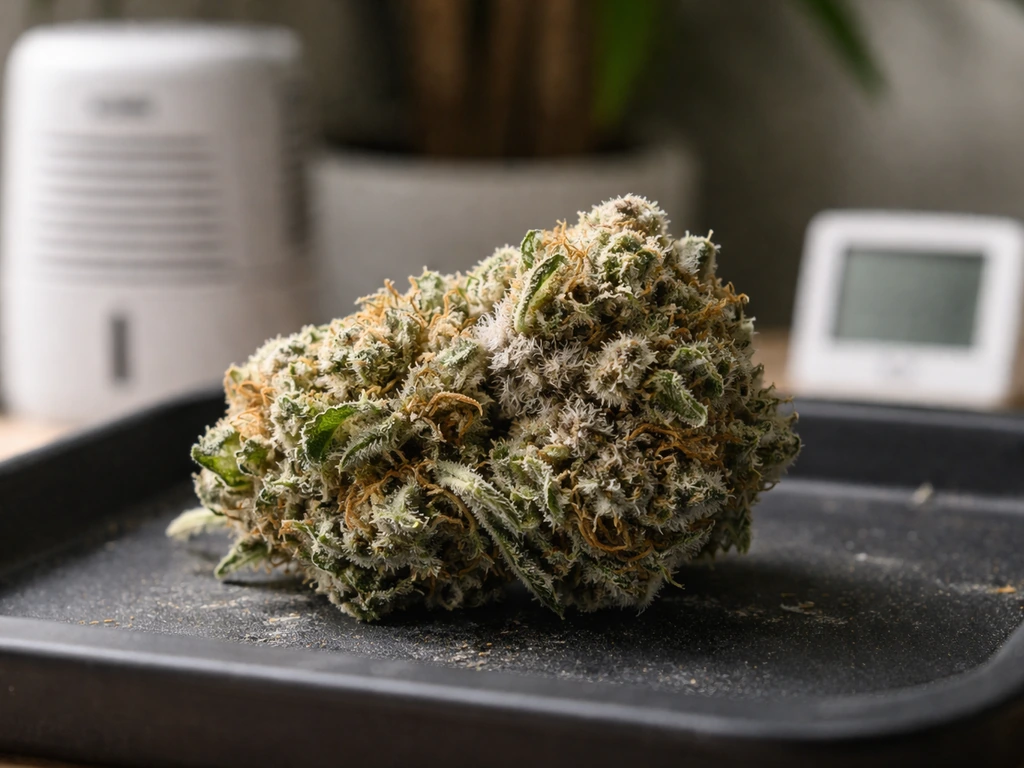
- Bud rot (botrytis): The number one UK outdoor killer and a serious indoor risk if RH is not managed. It starts inside dense buds and is invisible until it is too late. Manage humidity obsessively in late flower.
- Overwatering: Beginners water too often. Cannabis roots need oxygen. Water only when the top inch of soil is dry, or lift the pot and water only when it feels light.
- Insufficient light indoors: A single cheap blurple LED is often not enough to produce dense buds. Invest in a quality LED; for one plant in a 60x60cm tent, look for something with at least 100W actual draw from the wall.
- Planting outdoors too early or too late: Too early and cold nights shock or kill seedlings. Too late and you are racing autumn rain and frost with a plant that has not finished.
- Wrong strain for the season: Picking a long-flowering photoperiod strain for an outdoor UK grow is a common beginner mistake that ends with an unfinished, mouldy plant in October.
- Harvesting too early: Beginners are impatient. Trichomes will tell you when the plant is ready. Do not guess.
- Skipping the cure: Wet, hastily dried bud tastes harsh and loses potency. The drying and curing step is not optional.
The UK is not the easiest place to grow cannabis, but it is far from impossible, especially with just one plant where you can give it your full attention. For burdock specifically, it tends to grow in the wild in temperate parts of the UK, especially in fields, wasteland, and along hedgerows where does burdock grow UK. The climate challenges are real: the humidity, the short season, the unpredictable autumn.
But those are solvable problems if you pick the right setup, the right strain, and the right timing. Just make sure you go in with your eyes open on the legal side, because in the UK, growing cannabis remains illegal without a Home Office licence, and no practical guide can change that. Mandrake is a plant people sometimes discuss for growing outdoors, and if you are wondering about it specifically, it is worth checking local conditions in the UK.
FAQ
If I only grow one plant for personal use, is it treated differently under UK law?
In the UK, growing a cannabis plant without a Home Office controlled drug cultivation licence is illegal regardless of how many plants you have. There is also no “small personal use” exception, and having just one plant still falls under the same offence risk as larger grows.
Can I stay legal by growing low-THC hemp for just one plant?
If you are considering the “industrial hemp” route, it only covers approved low-THC varieties grown for seed and fibre. You cannot legally use or harvest the flowering tops or leaves under that hemp licence without a separate controlled-drug licence.
What happens if my one-plant tent is too small or I let the plant get too bushy?
The 60x60 to 80x80cm tent size guidance assumes you will manage training and keep the plant compact. If you let the canopy grow wide, light will be uneven and you will increase mould risk during flowering, because dense growth traps humidity.
Is temperature or humidity the bigger problem indoors in the UK?
For indoor single-plant grows, RH control is usually more important than minor temperature tweaks. Aim for a stable 40 to 50% RH during flowering, and if you see RH staying high overnight, your strategy should be improving exhaust or adding dehumidification before spending more on upgrades.
How do I make sure my carbon filter and inline fan actually control smell for a one-plant setup?
A carbon filter only works well if air moves through it consistently. If your fan speed is too low, the odour reduction drops, and if it is too high for the filter size you can get poor filtration and noise issues, so match fan and filter capacity to your tent volume.
What is the most common outdoor failure for one plant in the UK, and how do I prevent it?
For outdoor, your main legal and practical risk is not just rain, it is bud rot in late flowering. Even with a good microclimate, prolonged wet spells require an active shelter plan (moveable cover or cloche systems that still allow airflow) rather than hoping the weather passes.
How late is too late to start a photoperiod plant outdoors in the UK?
Photoperiod plants can finish, but the timeline is tight. If you start too late outdoors, you may hit flowering near mid-July and not complete before cold, wet autumn conditions set in, which increases botrytis probability.
Do autoflowers remove all UK outdoor timing problems?
Autos are generally safer for the UK outdoor window, but they still need protection from cold nights. If you plant in early summer and get a cold snap, autos can slow down and end up finishing later than expected, so have a plan to shelter during sudden temperature drops.
What is the most common single-plant mistake beginners make with watering in UK conditions?
Beginners often overwater because the UK is humid. If the pot feels light or the surface is staying wet for days, adjust watering frequency and check drainage, because constantly wet roots increase mould risk later by weakening the plant.
If I spot mould on one bud, should I try to save it or remove it?
If a bud shows early mould, the fastest mitigation is careful removal and disposal of the affected material, then improving airflow and RH immediately. Waiting can spread spores within the plant, and once rot is inside dense buds, recovery is rarely possible.
Should I train a one-plant grow, or is that only for advanced growers?
Training can be helpful for one plant, but the goal is to create even light distribution and airflow, not to over-stress a plant already coping with UK weather. In indoor grows, moderate training plus a stable RH target usually beats aggressive manipulation when you are learning.
Where does a one-plant indoor grow most often underperform, despite having the starter equipment?
A typical first run can fit a small LED and basic controls, but you should budget for variability in outcomes. If you get less than expected results, it is usually due to environment management (light intensity, airflow, or RH drift) rather than the absence of an expensive nutrient line.
Next Article
Can You Grow Tiger Nuts in the UK? Practical Guide for Gardeners
Can you grow tiger nuts in the UK? Practical, regional guide with planting dates, containers, harvest & recipes.