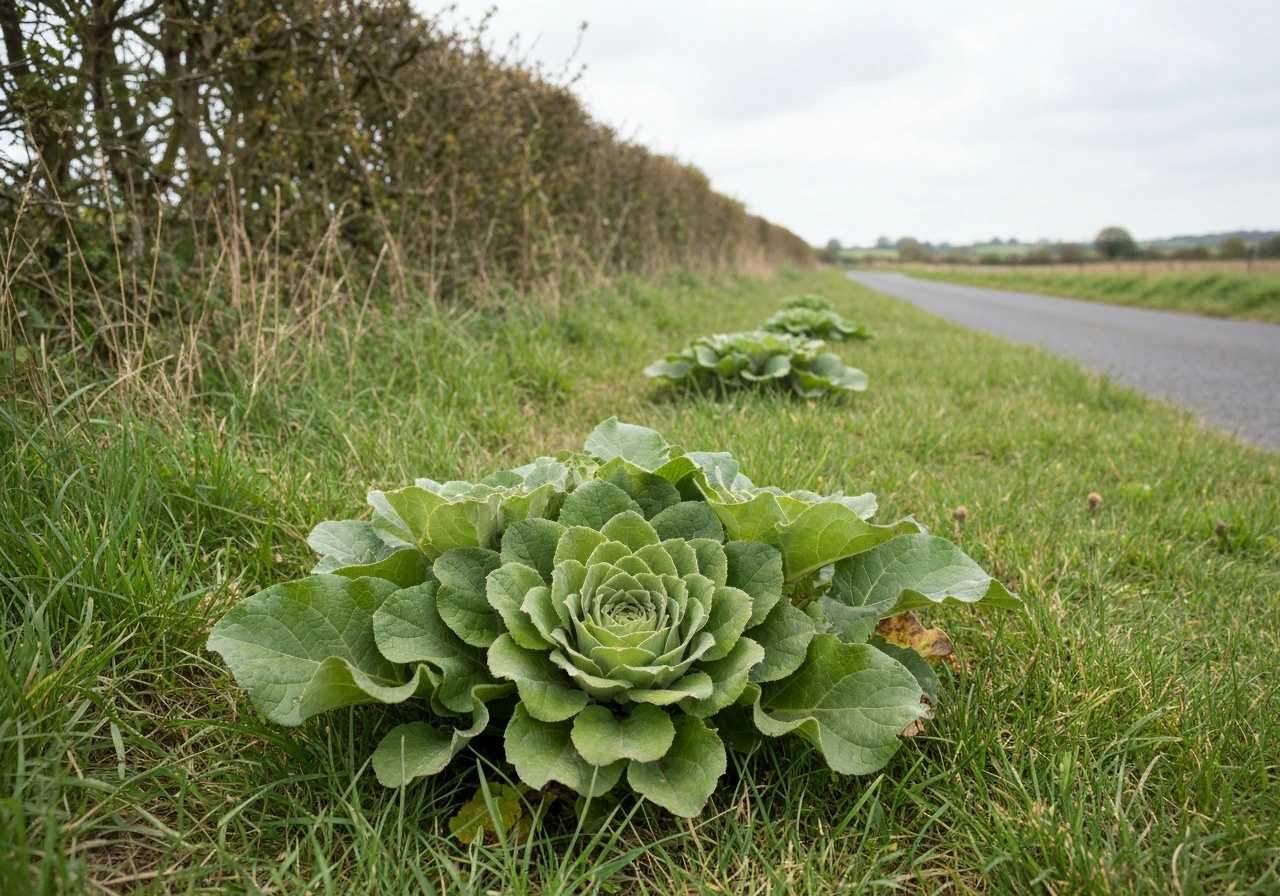
Yes, mandrake (true Mandragora) can be grown in the UK, but it is not easy and it is definitely not native. With the right site, well-drained soil, and a bit of shelter, gardeners in the south of England and other mild spots have successfully cultivated it outdoors. Further north, or on wet heavy soils, you are better off growing it in a container or under glass. It will not establish itself in the wild here, and it never really did.
Does mandrake grow in the UK? Practical cultivation, ID & safety
James Hartwell
17 Jul 2026
What exactly is mandrake? Sorting out a very confused common name
The word 'mandrake' has been applied to several unrelated plants over the centuries, which causes a lot of confusion when people go looking for information. True mandrake refers to plants in the genus Mandragora, a small group within the Solanaceae (nightshade) family. Plants of the World Online at Kew currently accepts four species: Mandragora autumnalis (autumn mandrake), M. officinarum (common mandrake), M. caulescens (Himalayan mandrake), and M. turcomanica. Their native range stretches from the Mediterranean and North Africa east through Turkey and Central Asia to the Himalayas and parts of southern China. None of them are British plants.
The confusion in Britain runs deep because for centuries the name 'mandrake' was routinely applied to white bryony (Bryonia dioica), a climbing hedgerow plant that actually is native to England and Wales. Herbalists sold bryony roots as a cheaper substitute for the real thing, and it earned the unofficial name 'English mandrake' or 'false mandrake.' You will still see it referred to that way in RHS profiles and ethnobotanical writing. The RHS plant profile for Bryonia dioica lists the common name 'English mandrake' Bryonia dioica (white bryony) | RHS Plant Profile (common name 'English mandrake'). So if someone tells you they found mandrake growing in a British hedgerow, they almost certainly found white bryony, not Mandragora.
A few other plants carry the mandrake label in various traditions. American mandrake or mayapple (Podophyllum peltatum) is occasionally grown in UK gardens and is a different genus entirely. Wild garlic is sometimes called bear's garlic or 'forest mandrake' in folklore. None of these are the Mediterranean Mandragora of myth and historical herbal medicine. Whenever you are reading about cultivation or toxicity, always check which plant is actually meant.
Has mandrake ever grown wild in Britain?
The short answer is: almost certainly not as a true native. Medieval English herbals are full of references to mandrake, and the plant carried enormous cultural weight throughout the Middle Ages. But modern scholarship and botanical surveys have found no reliable archaeological or wild occurrence records for Mandragora growing in pre-conquest England. GBIF occurrence records show no verified wild UK dataset entries for Mediterranean Mandragora species at all. The absence is telling, given how thoroughly British botany has been documented.
The historical references in English sources most likely describe imported dried roots from Mediterranean trade routes, or they describe the white bryony substitute that was widely used because Mandragora was expensive to obtain. Ethnobotanical scholarship on the subject is fairly consistent on this point: 'mandrake' in English vernacular usage almost always meant bryony when sourced domestically. There is no credible evidence of naturalised Mandragora populations anywhere in Britain.
The four Mandragora species and what climate they actually come from
Understanding the native climate of each species is the most important thing you can do before trying to grow one. They are not all the same, and lumping them together leads to failed growing attempts.
| Species | Native Range | Habitat | Altitude | Climate relevance for UK |
|---|---|---|---|---|
| M. officinarum | Italy, W. Mediterranean | Disturbed ground, olive groves, ruins | Sea level to ~1,000 m | Most commonly cultivated in UK; needs warm, sheltered, well-drained site |
| M. autumnalis | S. Spain, N. Africa, E. Mediterranean | Open ruderal/fallow ground | Sea level to ~800 m | Similar needs to M. officinarum; slightly more drought-tolerant |
| M. caulescens | Himalayas, SW China | Stony subalpine/alpine slopes | 2,200–4,900 m | Tolerates cold but needs sharp drainage; rarely cultivated in UK |
| M. turcomanica | Central Asia (Turkmenistan area) | Semi-arid stony steppe | Lower elevations | Very rarely cultivated; driest requirements, poorly suited to UK rainfall |
For most UK gardeners, M. officinarum is the target species. It is the one stocked by specialist UK nurseries and grown in botanic garden collections including Chelsea Physic Garden and Kew. M. autumnalis is sometimes available and behaves similarly in cultivation. The Himalayan M. caulescens is botanically interesting because it tolerates genuine cold, but its requirement for very sharp, stony drainage makes it difficult in our wet winters. The research literature by Ungricht, Knapp and Press (1998) in the Natural History Museum's Botany Bulletin remains the key taxonomic revision if you want to go deeper on species boundaries.
What UK climate conditions mandrake actually needs
Mandrake is a Mediterranean plant at heart. It evolved in a climate with dry, hot summers and mild, wet winters. The UK gives it more or less the opposite: cool, damp summers and cold, wet winters. That is the core challenge. The good news is that M. officinarum is hardier than many people expect. The RHS rates it around H4 (hardy down to about -10°C in short spells), which means most of the UK can technically keep it alive in a sheltered spot, provided the killer variable (winter waterlogging) is managed.
- Drainage is non-negotiable: boggy or clay-heavy soils will kill mandrake faster than frost will. It needs free-draining, gritty or sandy soil that does not sit wet over winter.
- Full sun: it wants a south or south-west facing position, ideally backed by a wall that reflects heat and keeps the base dry.
- Shelter from cold, drying winds: this matters more than extreme cold alone. East and north-east winds in February and March are particularly damaging.
- Soil pH: it does best in neutral to slightly alkaline soil (around pH 6.5–7.5). Chalk and loam-based soils suit it well. Acidic, peaty soils are not ideal.
- Frost tolerance: established plants can handle short frosts down to around -10°C if drainage is good and the crown is not sitting in wet soil. Young plants and seedlings are far more vulnerable.
- Summer moisture: it needs occasional watering in prolonged dry UK summers but should never be waterlogged. Reduce watering significantly in autumn.
The one thing every experienced grower of mandrake agrees on is that once it is established, you should not move it. Mandragora develops a very long, carrot-like taproot that goes down 30–60 cm or more in good soil. Disturbing this root sets the plant back severely and often kills it. Pick your spot carefully before planting, because you are committing to it for years.
Where in the UK is it most realistic to grow mandrake?
The UK is not one climate. A gardener on the south coast of Cornwall has meaningfully different options to someone in the Scottish Borders, and pretending otherwise just sets people up for disappointment. Here is an honest regional picture.
Southern and South-East England
This is where outdoor cultivation of M. officinarum is most realistic without major intervention. The Met Office's ongoing climate monitoring (including the 2025/2026 State of the UK Climate) documents a clear warming trend in southern England, and sheltered urban gardens in London, the Home Counties, Kent, and along the south coast increasingly support Mediterranean plants that would have struggled here twenty years ago. A south-facing raised bed against a brick wall, filled with gritty, free-draining mix, gives you a genuinely viable shot. I have spoken with gardeners in Sussex who have had mandrake in the ground for eight or nine years without losing it.
South-West England and the Channel Islands
Cornwall, Devon, and the Isles of Scilly benefit from the warming influence of the Atlantic and rarely see extreme frost. Winter wet is the bigger problem here. If you can get the drainage right (raised bed, gravel mulch, lean gritty mix), these areas may actually suit mandrake better than anywhere else in the UK in terms of temperature. The Channel Islands get even closer to a mild Mediterranean climate in frost terms.
Midlands and East Anglia
Increasingly viable with good microclimate management. East Anglia is drier than the south-west, which actually helps with drainage, but cold north-easterly winds in late winter are more of a risk. A sheltered south-facing spot with fleece protection ready for cold snaps should see most established plants through. Young plants and seedlings are a different matter and benefit from polytunnel overwintering in their first year.
Wales
Coastal South Wales (Pembrokeshire, the Vale of Glamorgan) is broadly comparable to South-West England in temperature terms but often wetter. Drainage management is critical here. Inland Wales and upland areas are too cold and wet for reliable outdoor cultivation. Container growing or a polytunnel is the realistic option outside of favoured coastal sites.
Northern England
Outdoor cultivation becomes increasingly marginal north of the Midlands. Sheltered city gardens in Manchester, Sheffield, and York can pull it off with good microclimate management and reliable winter protection. Beyond that, you are really looking at container growing with indoor overwintering or a heated greenhouse.
Scotland and Northern Ireland
Outdoor cultivation without protection is not realistic for most of Scotland or Northern Ireland. The combination of lower summer temperatures, higher rainfall, and colder, longer winters works against mandrake at every stage. Coastal spots in western Scotland (parts of Argyll, the inner Hebrides) have mild winters due to the Gulf Stream influence, and container growing in these areas is worth experimenting with. For everyone else north of the central belt, greenhouse or polytunnel cultivation is the practical answer.
Ground planting, containers, or under glass: which approach fits your situation?
There is no universally right answer here. Each method has real trade-offs that depend on where you live and how much you want to manage the plant.
| Approach | Best for | Key advantages | Key disadvantages |
|---|---|---|---|
| Ground planting (outdoor) | South-facing sheltered sites in S. England, S. Wales, S. West England | Plant establishes fully; taproot develops properly; less intervention needed long-term | Waterlogging risk in wet winters; not suitable north of Midlands without microclimate advantage; cannot be moved once established |
| Container growing | Northern England, Scotland, NI, anywhere with heavy/wet soil | Drainage fully controllable; can be moved under cover for winter; good for experimenting | Taproot is restricted; plant rarely reaches full size; needs more frequent watering and feeding; pot must be deep (at least 45–60 cm) |
| Greenhouse or polytunnel | Any UK region; most reliable for consistent results | Warmth and dryness controllable year-round; best germination and early growth rates; extends season | Costs involved; ventilation essential in summer to avoid overheating; plants may miss natural cold period needed for dormancy |
If you are in southern England with a good sheltered spot, ground planting is the most satisfying approach and gives the plant the best chance of behaving as it naturally would. If you are anywhere else, start in a container and see how it performs over a full year before committing to a permanent outdoor spot. For overwintering young plants or seedlings in their first season, a frost-free greenhouse or even a cool windowsill indoors is worth the trouble regardless of region.
One practical tip for container growing: use a tall, narrow pot rather than a wide shallow one. A long tom pot, or even a section of large-diameter drainage pipe filled with gritty compost, gives the taproot somewhere to go. Standard round planters will frustrate it.
How to actually grow mandrake through the UK calendar
Sourcing seed and plants
Mandrake is not sold at garden centres, but it is available from specialist herb and unusual plant nurseries in the UK, and occasionally through seed swaps and the Hardy Plant Society. Buy from a reputable source that can confirm species identity. Fresh seed germinates more reliably than old dried seed; if buying seed, ask when it was harvested. Bare-root plants or pot-grown specimens are preferable to seed if you want to save a year or two of establishment time.
Soil preparation
Whether you are planting in the ground or in a container, drainage is what you are solving for. For ground planting, dig the site to at least 50–60 cm deep (the taproot will go that far and more over time) and work in a generous amount of coarse horticultural grit, roughly one part grit to two parts existing soil for a heavy soil, less if you already have sandy loam. Slightly alkaline conditions suit mandrake better than acid, so if your soil is below pH 6.5, apply ground limestone to raise it. A raised bed that lifts the crown 20–30 cm above ground level is worth building in wetter areas. For containers, use a mix of approximately 60% loam-based compost (John Innes No. 3), 30% horticultural grit, and 10% perlite.
Sowing seed: timing and stratification
Mandrake seed has genuine dormancy and needs help to break it. Research on Mandragora autumnalis found that cold stratification at around 4–5°C combined with gibberellic acid (GA3) treatment dramatically improved germination rates, reaching around 96% under optimal lab conditions. Research such as 'Seed dormancy and germination of Solanaceae from a phylogenetic and world‑vegetation perspective (Seed Science Research)' reports that cold stratification combined with gibberellic acid (GA3) commonly breaks dormancy and improves germination in many Solanaceae seeds, including Mandragora. You cannot easily replicate those exact conditions at home, but you can do a practical version: sow fresh seed in autumn (September to October) in a gritty seed compost, water lightly, and place the pot in a cold frame or unheated greenhouse over winter. This gives natural cold stratification through the UK winter. Alternatively, if sowing in late winter, cold-stratify seed in the fridge at 4–5°C for 6–8 weeks before sowing in early spring. GA3 is available from horticultural suppliers and a soak in a dilute solution (typically around 100 mg/L for a few hours before sowing) improves germination further, though it is not essential if your seed is fresh.
- September to October: Sow fresh seed in deep pots (at least 15 cm) of gritty, free-draining compost. Place in an unheated cold frame or cool greenhouse. Keep just barely moist, not wet.
- November to January: Leave pots in natural cold conditions. Do not let them freeze solid but do not bring them into warmth. This cold period is what shifts dormancy.
- February to March: Germination may begin as temperatures start to lift. Seedlings are small and slow. Do not rush them into heat.
- April to May: Pot on carefully once seedlings have developed two or three true leaves, handling the root as little as possible. Use deep pots. Keep under glass or in a sheltered cold frame.
- May to June (following year, or later the same year in milder areas): Plant out into the prepared outdoor site after the last frost risk has passed. Water in well and then allow to dry somewhat between waterings.
- Summer: Water sparingly during dry spells. Do not feed heavily; a light application of a balanced fertiliser (low nitrogen) in late spring is sufficient. Too much nitrogen produces lush leaf growth at the expense of root establishment.
- Autumn: Reduce watering significantly as the plant enters its natural dormancy period. The leaves will die back; this is normal. Mark the planting position clearly so you do not accidentally disturb the root.
- Winter: Established outdoor plants need no active care beyond ensuring drainage is not blocked. Young plants or container specimens should be moved to a frost-free location.
Propagation by root cuttings
The RHS notes root cuttings in winter as an alternative propagation method. This involves carefully removing a section of the lateral root in late autumn or early winter when the plant is dormant, cutting it into sections about 5–8 cm long, and inserting them vertically into deep pots of gritty compost in a cool greenhouse. The survival rate is variable and the process unavoidably disturbs the parent plant, so most growers use seed propagation unless they have a large, well-established specimen to work from.
Pests and problems in the UK garden
Mandrake has relatively few pest problems. Its toxicity (which we come to below) deters most browsing animals. Slugs can damage young seedlings and newly emerging spring foliage; use copper tape around pots or grit mulch around outdoor crowns. Root rot from waterlogging is by far the most common killer in UK conditions. Aphids occasionally colonise the leaves but rarely cause serious damage on established plants. Under glass, red spider mite can be a problem in hot dry summers; ventilate well.
Toxicity, safety, and legal position in the UK
This section matters. Mandragora species are genuinely toxic and contain high concentrations of tropane alkaloids including hyoscine (scopolamine), hyoscyamine, and atropine. All parts of the plant are poisonous: roots, leaves, and berries. Ingestion can cause hallucinations, severe anticholinergic symptoms (dry mouth, dilated pupils, rapid heartbeat, confusion), and in sufficient quantities, coma or death. If you're wondering when liberty caps grow in the UK, consult when do liberty caps grow in the UK for seasonal timing. Historical poisoning cases are documented in the medical literature.
In practical garden terms, this means wearing gloves when handling the plant, keeping it away from children and pets, and never mistaking the small yellowish-orange berries for anything edible. The berries are sometimes described as smelling pleasantly sweet, which makes them a risk for curious children. If ingestion is suspected, contact the NHS Poisons Information Service (111 or via TOXBASE) immediately. Do not attempt to induce vomiting.
Legally in the UK, growing mandrake is perfectly lawful. It is not a controlled substance, not listed under the Misuse of Drugs Act, and not subject to any specific cultivation restriction. It is worth noting that other unusual plants people research alongside mandrake are in quite different legal positions: growing cannabis is controlled under the Misuse of Drugs Act regardless of quantity, which puts it in a completely different legal category. For practical information on the legality of cultivating a single cannabis plant in the UK, see can you grow 1 weed plant uk. Mandrake carries no such legal restriction; the concern is purely a safety one.
Identification: mandrake, its look-alikes, and how to tell them apart
In the UK you are more likely to encounter plants misidentified as mandrake than the real thing. The following table covers the most relevant confusions.
| Plant | Common confusion | Key identification features | Toxic? |
|---|---|---|---|
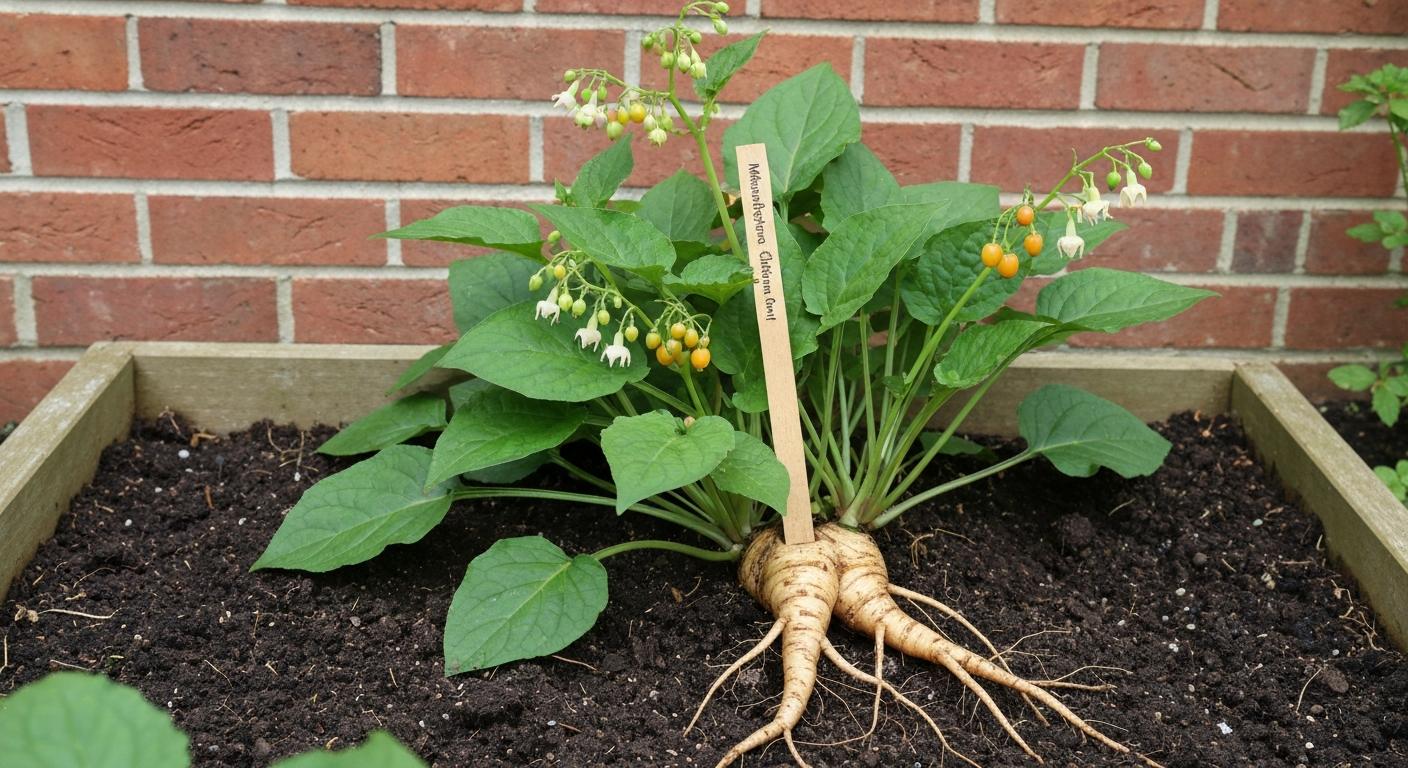
| Mandragora officinarum (true mandrake) | Confused with several native plants | Rosette of large, crinkled, dark green leaves lying flat to the ground; no stem; large fleshy taproot; small purplish-white flowers in spring; small yellowish berries in autumn | Yes, highly toxic throughout |
| Bryonia dioica (white bryony, 'English mandrake') | Sold as or confused with Mandragora historically and occasionally today | Climbing, branching stem with tendrils; lobed leaves; very different growth habit from Mandragora; large white tuberous root; red berries | Yes, very toxic |
| Burdock (Arctium lappa/minus) | Large leaves sometimes confused with young mandrake foliage | Very large, heart-shaped leaves (underside woolly/grey); upright stems growing to 1–2 m; distinctive hooked burr seedheads; biennial | No, edible root |
| Wolfsbane/monkshood (Aconitum spp.) | Occasionally named as a companion toxic plant, not a direct look-alike | Deeply divided, palmate leaves; distinctive hooded purple/blue flowers; upright stems; very different from mandrake in all features | Yes, extremely toxic |
| Podophyllum peltatum (American mandrake/mayapple) | Named 'mandrake' causes confusion; sometimes stocked in UK nurseries | Umbrella-like lobed leaves on upright stems; white flowers; yellow apple-like fruit; woodland creeping habit; completely different from Mandragora | Partially (roots and unripe fruit toxic) |
If you are foraging or wild-gathering anything, burdock (which also has a large edible taproot) and true mandrake do not really look alike once you know both plants, but the sheer rarity of Mandragora in the UK means that any plant you are calling mandrake in a British hedgerow or field margin is almost certainly something else. Burdock is genuinely common across Britain and is worth learning to identify properly. For details on where burdock grows in the UK, see where does burdock grow uk. Wolfsbane is another plant with a strong toxic reputation and deep folkloric associations in the UK; like mandrake it is legally cultivatable but demands careful handling.
Easier alternatives if mandrake feels like too much work
Mandrake is a commitment: it is slow to establish, intolerant of disturbance, and needs careful site selection. If you are drawn to it primarily for its historical, ethnobotanical, or ornamental appeal but want something more reliably rewarding in a British garden, a few alternatives are worth considering.
- Henbane (Hyoscyamus niger): A British native annual/biennial Solanaceae with similar historical associations and genuinely striking pale flowers with purple veining. Hardy, tolerates poor dry soils, and much easier to establish from seed. Equally toxic, so the same safety rules apply.
- Deadly nightshade (Atropa belladonna): Native to calcareous soils in southern England; a close relative with overlapping alkaloid chemistry. Grows vigorously once established and is historically significant in the same way as mandrake. Extremely toxic.
- Podophyllum (mayapple): If you want a plant called 'mandrake' that is genuinely easier to grow in the UK, American mayapple is far more accommodating. It is a woodland perennial that tolerates shade and UK rainfall without complaint.
- White bryony (Bryonia dioica): The original 'English mandrake' is a vigorous native climber found in hedgerows across England and Wales. It will grow enthusiastically without any help from you.
None of these are low-risk plants to grow around children or pets, but they give you the historical atmosphere and botanical interest of the mandrake world without the same cultivation challenge. If the goal is specifically to grow true Mandragora, though, there is no substitute, and the effort does pay off when you eventually see that strange, flat-rosette plant sitting against a warm south wall doing exactly what it has done around Mediterranean ruins for thousands of years.
Where mandrake fits in the bigger picture for UK growers
Mandrake sits in an interesting space in British horticulture: legally unproblematic, botanically fascinating, historically significant, and just difficult enough to be genuinely rewarding when you pull it off. The UK's warming trend is genuinely making plants like this more accessible in southern regions. Specialist UK nurseries, botanic gardens (Chelsea Physic Garden has cultivated it for centuries), and active seed-sharing communities mean sourcing is more realistic than it used to be.
The key decisions are: know exactly which Mandragora species you are working with; solve the drainage problem before you plant anything; match your ambition to your region (container or greenhouse if you are in Scotland, outdoor border if you are in Kent with a south-facing wall); and handle the plant with appropriate respect for its toxicity. Get those four things right and mandrake is a perfectly achievable project for a UK grower with a bit of patience and the right site.
FAQ
Quick answer: does mandrake grow in the UK?
Short answer: True Mandragora (the Mediterranean 'mandrake') is not native to Britain and is not recorded as wild there, but it can be grown in the UK with care. In southern and sheltered parts of the UK, and under glass or in containers, Mandragora species (e.g. M. officinarum / M. autumnalis) will usually survive if given a warm, very well‑drained site or winter protection.
What plants are called 'mandrake' — which species does the name refer to?
'Mandrake' properly refers to species in the genus Mandragora (accepted species include M. officinarum, M. autumnalis, M. caulescens and M. turcomanica). In vernacular UK use the name has also been applied to unrelated plants such as Bryonia spp. ('English mandrake' or 'false mandrake'). Many historical/folk references are to substitutes rather than true Mandragora.
Does true mandrake occur wild in Britain?
No reliable modern botanical records show Mandragora species as native or established wild in Great Britain or Ireland. Global occurrence datasets (e.g. GBIF) and British floras show its native range as Mediterranean to parts of central/south Asia. Historical English sources mentioning 'mandrake' generally refer to substitutes like bryony.
Is it realistic to cultivate Mandragora in UK gardens?
Yes, but with realistic limits. Mandragora is best treated as a tender Mediterranean plant in the UK. It is most reliably grown in southern England in very sheltered, warm, well‑drained sites or in containers/greenhouse where you can control winter wet and exposure. Northern and exposed regions face higher risk of winter loss unless grown under glass or fully protected.
Region‑by‑region feasibility and overwintering options
General guidance by region: - South and southeast England (mildest): highest chance of successful outdoor cultivation in sheltered, sunny sites with sharp drainage; still avoid waterlogging. - Midlands: possible in very sheltered microclimates and free‑draining soils; containers or cold greenhouse preferred. - Wales, northern England, Scotland, Northern Ireland: outdoor success unlikely except in the warmest sheltered coastal spots; use containers, alpine house or heated greenhouse and bring plants under cover for winter. Overwintering options: leave in ground only where soil is very free‑draining and sheltered; otherwise keep in large pots and move to frost‑free/stone‑filled cold greenhouse or unheated conservatory; mulching can help but avoid prolonged wet.
Climate and microclimate requirements
Mandragora needs: - Warm summer sun or strong light; tolerates partial shade but flowers/roots best in sun. - Very well‑drained soil (chalk, loam or gritty sand). - Low to moderate fertility; often found on disturbed, nitrogen‑rich ruderal soils in its native range but does not like heavy clay or winter waterlogging. - Protection from cold, wet winters and cold drying winds; favourable microclimates are south‑facing walls, rock gardens with drainage, or sheltered courtyards.
Next Article
Where Does Burdock Grow in the UK and How to Grow It
Find where burdock grows in the UK, habitats and climates, then grow common burdock with UK soil and care tips.