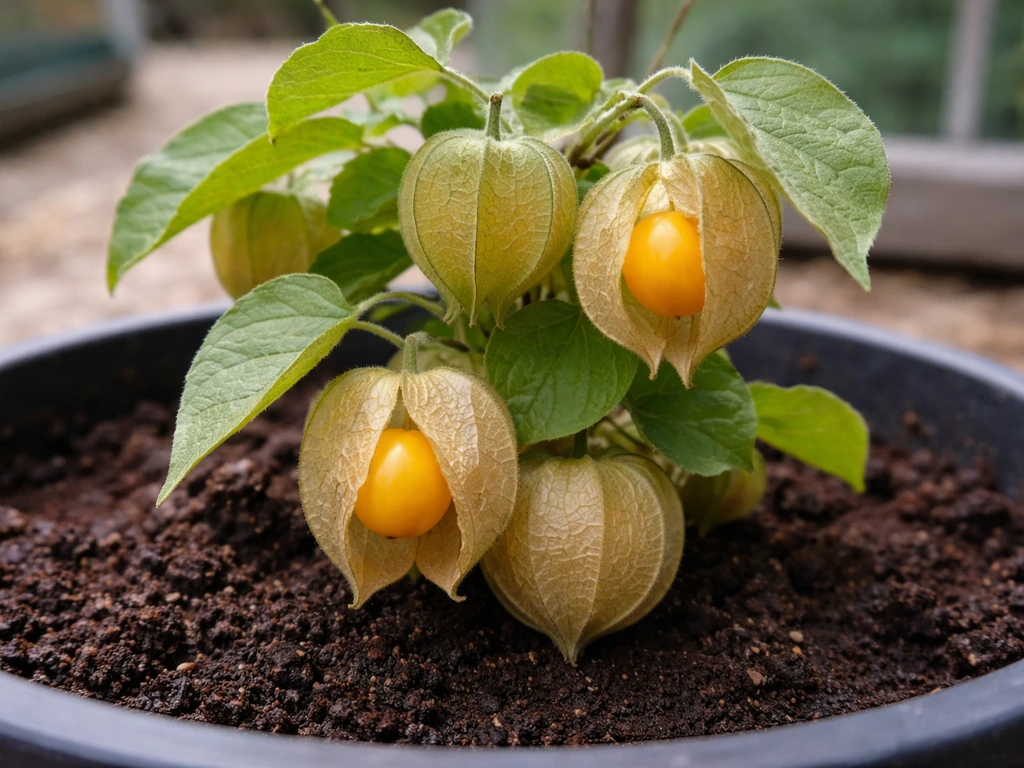
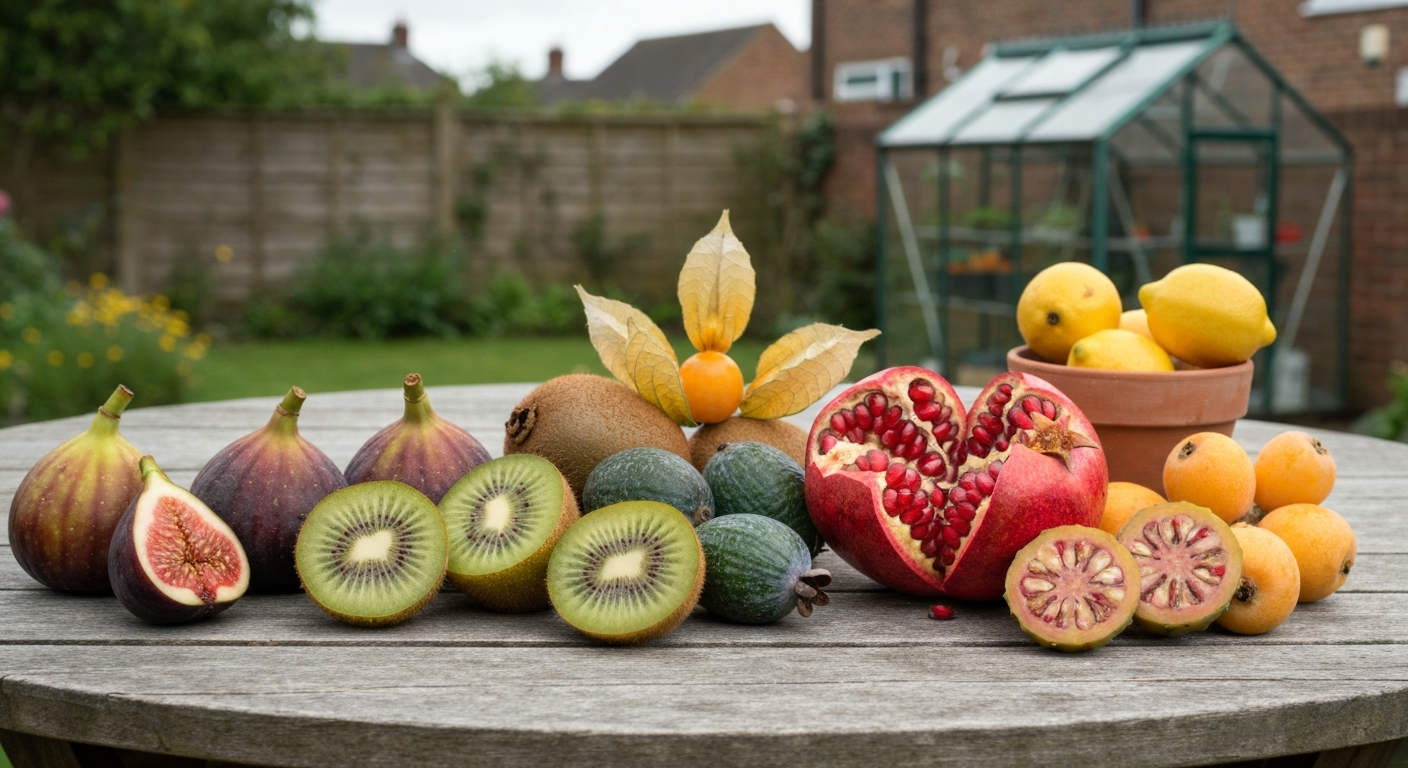
Yes, you can grow a surprising range of exotic fruits in the UK, but the honest answer depends heavily on where you live, what you're prepared to build or buy, and how much you enjoy nursing tender plants through a British winter. Grow Fruit in Pots and Containers | Garden UK notes that Practical microclimate advice (south-facing wall/thermal mass) used in UK practice: south walls store daytime heat and reduce night minima, this common horticultural technique is repeatedly cited in UK guides as a primary method to extend the range of warm-climate fruit. Figs, hardy kiwi, feijoa, physalis, pomegranate, persimmon, loquat, prickly pear, passionfruit and even citrus and plantain-type bananas are all being grown by UK gardeners right now. Some will thrive against a south-facing wall in Cornwall with minimal fuss. Others will need a heated greenhouse in Surrey, and a few are genuinely only worth attempting in a conservatory anywhere north of the Midlands. This guide tells you which is which, region by region, so you can make a genuinely informed decision rather than losing a winter to wishful thinking.
Exotic fruits you can grow in the UK: Practical guide & tips
Can I grow exotic fruits in the UK? Who this guide is for
This article is aimed at amateur gardeners, smallholders and plant enthusiasts who want a clear, practical answer to a deceptively simple question. It covers every commonly attempted exotic fruit in the UK, what conditions each one needs, which cultivars are most likely to succeed, and how to protect them when November arrives. If you already grow standard soft fruit and apples and want to push further, this is your starting point. If you're new and just want to know whether that fig tree you spotted at the garden centre is going to die before spring, this will help you too. I've organised the guide so you can either read it straight through or skip directly to the quick-reference tables if you just want a fast answer for a specific fruit.
How UK climate actually affects your chances
The UK is not one climate. The Met Office's State of the UK Climate data (1991–2020 averages) shows that annual air-frost days range from more than 100 on high Scottish ground down to fewer than 10 in parts of west Cornwall. That is not a small difference. It is the difference between a fig tree that produces a heavy crop every August and one that dies to the roots in January. The UKCP land projection maps, freely available from the Met Office, let you look up temperature ranges, minimum winter temperatures and frost-day frequency for your specific region, which is well worth doing before you spend serious money on a lemon tree.
Beyond raw climate data, microclimates matter enormously. A sheltered, south-facing wall in a walled garden in Hampshire can be a zone or more warmer than an open field half a mile away. Urban gardens, particularly in central London, Birmingham or Bristol, benefit from the heat-island effect, pushing minimum winter temperatures noticeably higher than surrounding countryside. Coastal sites on the south-west peninsula, the Scilly Isles and parts of the west coast of Wales and Scotland are influenced by the Atlantic and rarely see prolonged hard frosts. If you have any of these going for you, your options expand considerably.
RHS hardiness ratings explained
The Royal Horticultural Society uses a hardiness rating from H1 (frost-tender, heated glasshouse only) through to H7 (fully hardy anywhere in the UK). Most exotic fruits fall between H2 and H4. H2 means the plant needs frost-free conditions at all times: conservatory or heated greenhouse. H3 means it can cope with short periods down to around -5°C, which covers coastal and mild urban sites outdoors with some protection. H4 plants are generally fine in most of the UK with winter protection in colder areas. When I mention hardiness in the sections below, I'll use these ratings so you can cross-reference against your own site.
Outdoor, greenhouse or container: picking the right approach
Before buying any exotic fruit plant, work through this short decision process. It sounds obvious but it saves real money and disappointment.
- Check your last frost date and average winter minimum temperature for your postcode area using Met Office UKCP data or a local weather station record over several years.
- Identify whether you have a sheltered south-facing wall, a lean-to or free-standing greenhouse, a conservatory, or just open garden space.
- Decide whether you can realistically move containers under cover each autumn and back out in spring, as many exotic fruit growers in the UK rely on this annual migration.
- Be honest about heating: an unheated greenhouse in the Midlands will still drop to -5°C or below in a hard winter, which kills most citrus. A heated house kept above 3–5°C changes the picture entirely.
- Consider pot size and longevity: some exotics (fig, feijoa, pomegranate) can stay in large pots for years. Others (banana, passionfruit) grow fast and need space or annual replanting.
- Check import and biosecurity rules if you plan to source plants from outside the UK. APHA/DEFRA phytosanitary controls apply to many fruit plants and plant material brought in from abroad. UK-registered nurseries are the straightforward route.
Quick-reference tables: which exotic fruits suit which UK regions
The table below gives a realistic summary for the most commonly attempted exotic fruits in the UK. 'Outdoor south' means south-facing wall or sheltered garden in southern England or the mild south-west. 'Outdoor mild' includes coastal west Wales, mild urban sites, and sheltered Cornwall/Devon. 'Greenhouse' means unheated or cold glasshouse. 'Heated' means a minimum of 3–5°C maintained through winter.
| Fruit | RHS Hardiness | Outdoor (south/mild) | Unheated greenhouse | Heated glasshouse/conservatory | Container suitable | Recommended UK cultivar(s) | Difficulty |
|---|---|---|---|---|---|---|---|
| Fig | H4–H5 | Yes, south-facing wall | Yes | Yes | Yes | Brown Turkey, Brunswick | Easy |
| Hardy kiwi (Actinidia arguta) | H5–H6 | Yes, sheltered wall | Yes | Yes | Limited (large plant) | Issai (self-fertile), Jenny | Moderate |
| Standard kiwi (A. deliciosa) | H3–H4 | South/coastal only | Yes | Yes | Yes (large) | Hayward + male pollinator | Moderate |
| Feijoa (pineapple guava) | H3–H4 | South/coastal wall | Yes | Yes | Yes | Unique, Apollo | Moderate |
| Pomegranate | H3–H4 | South wall, mild coast | Yes | Yes | Yes | Wonderful, Mollar de Elche | Moderate |
| Persimmon (Diospyros kaki) | H4–H5 | South England, sheltered | Yes | Yes | Yes | Hachiya, Fuyu (astringent vs non-astringent) | Moderate |
| Loquat (Eriobotrya japonica) | H3–H4 | South/coastal wall | Yes | Yes | Yes | Advance, Tanaka | Moderate |
| Physalis (cape gooseberry) | H2–H3 | Summer annual only | Yes | Yes | Yes | Goldie, Giant | Easy |
| Citrus (lemon, lime, orange) | H2 | No (except very mild) | Marginal (frost-free winters only) | Yes | Yes | Lemon: Quatre Saisons; Calamondin | Moderate–Hard |
| Prickly pear (Opuntia) | H3–H6 (species dependent) | Yes (hardy spp.) | Yes | Yes | Yes | O. humifusa, O. phaeacantha | Easy–Moderate |
| Passionfruit (Passiflora edulis) | H2–H3 | South wall, short season | Yes | Yes | Yes | Passiflora edulis, P. caerulea (hardier) | Moderate–Hard |
| Grapefruit | H1–H2 | No | Marginal | Yes | Yes | Marsh (seedless) | Hard |
| Plantain / Edible banana | H2–H3 | Mild coastal only (basjoo) | Yes | Yes | Yes | Musa basjoo (ornamental/marginal edible) | Hard |
A note on that last column: 'difficulty' here means difficulty of getting actual fruit, not just keeping the plant alive. A prickly pear is easy to keep alive; getting it to produce edible fruit reliably takes more effort and the right site. Physalis is genuinely easy and rewarding as a first exotic fruit attempt for any UK gardener.
Regional suitability summary
| UK Region | Best options outdoors | Options with unheated glass | Needs heated glass |
|---|---|---|---|
| South-west England (Cornwall, Devon) | Fig, feijoa, hardy kiwi, pomegranate, prickly pear, loquat, physalis (summer) | Citrus, passionfruit, persimmon | Grapefruit, edible banana |
| South-east England (London, Kent, Sussex) | Fig, hardy kiwi, physalis, pomegranate (wall) | Feijoa, loquat, passionfruit, persimmon | Citrus (frost-free winters needed), grapefruit |
| Midlands | Fig (south wall), hardy kiwi, physalis | Pomegranate, loquat, feijoa, passionfruit | Citrus, grapefruit, banana |
| Wales (mild coastal) | Fig, hardy kiwi, prickly pear (sheltered) | Feijoa, pomegranate, loquat | Citrus, banana |
| Northern England | Fig (south wall, fleece), hardy kiwi | Loquat, pomegranate, physalis | Citrus, feijoa, banana |
| Scotland (lowland/coastal) | Hardy kiwi (sheltered), fig (south wall) | Physalis, pomegranate, loquat | Most other exotics |
| Scotland (highland) | Hardy kiwi only (marginal) | Physalis, fig (in glass) | Almost all exotics |
Fruit by fruit: what you need to know
Fig
Figs are arguably the most accessible exotic fruit for UK growers. For a focused answer and practical tips on growing figs in Britain, see Can figs grow in the UK Can figs grow in the UK?. Brown Turkey is the RHS Award of Garden Merit cultivar and the one I'd recommend to almost everyone starting out. Fan-train it against a south- or south-west-facing wall, restrict the roots (plant in a buried container or brick pit roughly 60cm square) to encourage fruit rather than foliage, and you'll get a decent crop in most of southern England most years. Figs produce two embryo crops a year in the UK: the pea-sized fruitlets that overwinter on the branch tips and swell to ripen in late summer are what you're aiming for. The larger figs that form in spring rarely ripen in the UK climate. Prune in spring after the last hard frost, pack branches loosely with straw or bracken through winter, and keep it well watered in summer. In Scotland and northern England, a lean-to or cold greenhouse extends your options considerably.
Hardy kiwi
Actinidia arguta, the hardy kiwi, is properly hardy in most of the UK (H5–H6) and produces small, smooth-skinned fruit you eat whole, peel and all. The self-fertile cultivar Issai is widely sold and the easiest starting point. Standard kiwifruit (Actinidia deliciosa, the supermarket variety) is less hardy and needs a male and female plant unless you choose a self-fertile cultivar. Both need a warm, sunny wall, sturdy support and a long growing season to ripen fruit. Hardy kiwi is genuinely one of the most underrated fruits for UK gardens: the plants are vigorous, the fruit is genuinely good, and you don't need a greenhouse. Expect first fruits around year 3 to 5.
Feijoa (pineapple guava)
Feijoa sellowiana is a tough, drought-tolerant shrub from South America that produces oval green fruit with a flavour somewhere between pineapple, guava and mint. It's H3–H4: survive short frosts to around -8°C in sheltered spots, making it viable against a south-facing wall across much of southern England and mild coastal Wales. You need two plants for reliable pollination unless you get a self-fertile cultivar like Unique. It flowers late spring and fruits in late autumn, which means in colder parts of the UK the fruit may not fully ripen before the first hard frosts. Grow it in a large pot and bring it under cover for the winter in colder areas.
Pomegranate
Pomegranates (Punica granatum) are more cold-tolerant than most people think, surviving brief dips to around -10°C in some forms, which puts them in H4 territory in a sheltered spot. They need long, hot summers to ripen properly, which is the real limiting factor in the UK. Against a south-facing wall in London, Kent or the south-west, you have a reasonable chance of a small crop in good years. In pots, you can push the season by starting them warm in spring and keeping them in a frost-free space over winter. The variety Wonderful is widely available; Mollar de Elche is another option if you can source it. Do not expect a full fruiting tree in Yorkshire without a heated greenhouse.
Persimmon
Japanese persimmon (Diospyros kaki) is hardier than its reputation suggests, coping with temperatures down to around -15°C once established in some cases, though the UK's cold wet winters can still cause problems. The real challenge is ripening: persimmons need a long warm growing season, and in the UK that means a south-facing wall in southern England, or a greenhouse to get reliably ripe fruit. Fuyu (non-astringent) and Hachiya (astringent, soften fully before eating) are the two main types. Self-fertile. Expect slow establishment and first fruit from year 4 to 7.
Loquat
Loquat (Eriobotrya japonica) is an attractive evergreen tree that produces orange-yellow fruit with a sweet-sharp flavour in late spring. It's H3–H4, so it copes with short frosts to about -10°C in sheltered spots but the flower buds and open flowers are very frost-tender, which is what usually prevents fruiting in the UK. In Cornwall, Scilly and very sheltered south-facing urban gardens, fruiting outdoors is genuinely possible. Elsewhere, a large pot in a cold greenhouse or conservatory gives you a much better chance. The tree is genuinely ornamental too, which is a bonus.
Physalis (cape gooseberry)
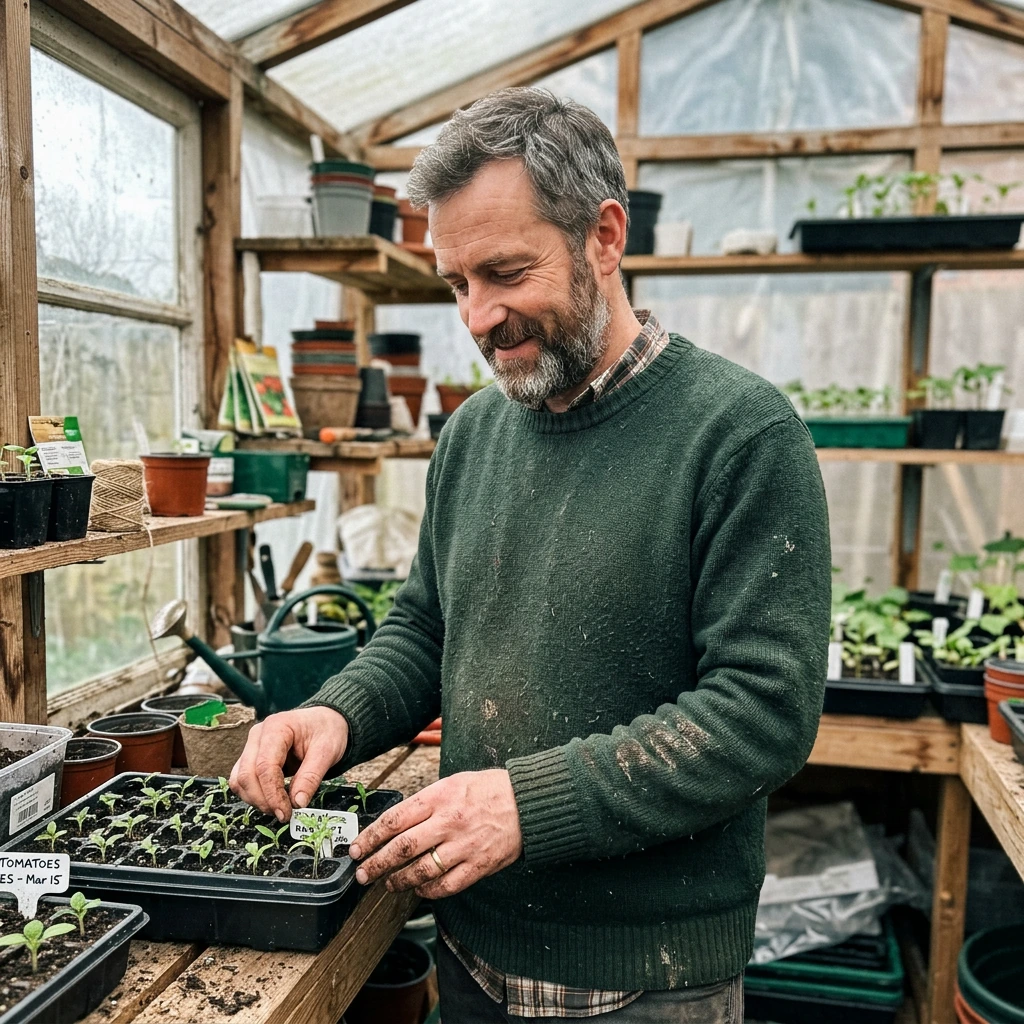
Physalis peruviana, the cape gooseberry, is the easiest exotic fruit on this list and a great starting point. Treat it as a half-hardy annual in the UK: sow indoors in February or March, grow on under glass until frosts have passed, plant out in May, and harvest from August through to October. It's highly productive in a good summer, extremely low-maintenance, and the paper-lantern husks make it easy to tell when fruit is ripe (the husk dries and splits slightly). In mild areas and polytunnels, established plants can be overwintered and become short-lived perennials. Cultivars like Goldie and Giant perform well in UK conditions.
Citrus and grapefruit
Citrus is a popular ambition but a genuine challenge outdoors in the UK. Most citrus is H2: frost-tender. The standard UK approach is to grow in large containers, keep outdoors from May to September, and overwinter in a frost-free conservatory or heated greenhouse. Lemons (especially Quatre Saisons, which crops almost year-round) and calamondin oranges are the most forgiving for UK growing. Cold-tolerant rootstocks based on Poncirus trifoliata (trifoliate orange) significantly improve cold hardiness and are the standard commercial approach to extending citrus range. Grapefruit is even more demanding: it needs higher heat to fruit properly and is really only viable in a heated glasshouse in the UK. For detailed, practical advice on cultivating grapefruit in Britain, see can you grow grapefruit in the UK. If grapefruit growing is your goal, go in with realistic expectations and a reliable heat source.
Prickly pear
Opuntia species vary enormously in hardiness. Several, including Opuntia humifusa and O. phaeacantha, are rated H6 by the RHS: fully hardy across the UK. Others are H3, suitable for mild coastal sites only. The main enemy of outdoor opuntia in the UK is not cold but wet: they need excellent drainage and will rot in waterlogged soil over winter. A raised, gritty bed against a south-facing wall or fence is ideal. Getting edible fruit from opuntia outdoors in the UK is possible but requires a long hot summer, which means good years in southern England and coastal sites. The pads are also edible (nopalitos), which gives you something even in years when fruit doesn't ripen. For a focused overview on whether you can grow prickly pear in the UK, see our dedicated guide titled “can you grow prickly pear in the UK.”.
Passionfruit
Passiflora edulis (the fruit-producing passionfruit) is H2–H3 and really needs a frost-free or minimally heated greenhouse in most of the UK to fruit reliably. On a very sheltered south-facing wall in Cornwall or the Scilly Isles it will occasionally crop outdoors. The hardier Passiflora caerulea survives UK winters in the south but produces smaller, less palatable fruit. For serious passionfruit production, a heated glasshouse with a minimum of 5–10°C is the practical answer. Plants are fast-growing and can be replaced cheaply, so many growers treat them almost as annuals.
Plantain and edible banana
Musa basjoo, the Japanese banana, is the most cold-hardy banana species you can grow in the UK and will survive outdoors in sheltered southern gardens with proper winter protection. However, it is primarily ornamental: actually getting edible fruit from it outdoors in the UK is extremely rare and requires an exceptionally warm, long summer. Genuine edible bananas and plantains (Musa acuminata cultivars, Musa x paradisiaca) are H2–H3 and need a large heated greenhouse to fruit in Britain. Growing them as dramatic foliage plants in a sheltered garden is realistic and enjoyable; expecting a regular crop of edible bananas outdoors in the UK is not. If you want to explore this more, the planted-in-ground basjoo with heavy autumn mulching approach is what most UK growers use. If you want a focused answer to 'does plantain grow in the UK', see our detailed note on basjoo versus edible plantains and what it takes for them to fruit.
General growing methods for exotic fruits in the UK
Site selection and soil
For outdoor exotics, a south- or south-west-facing wall or fence is the single most valuable asset you can offer. The RHS is clear on this: walls store daytime heat in their thermal mass and release it at night, reducing overnight lows and extending the effective growing season. Avoid frost pockets (low-lying areas where cold air settles). Most exotic fruits need well-drained soil: waterlogging in winter causes more deaths than actual frost for many species. Improve heavy clay with grit and organic matter, or build a raised bed. Slightly acid to neutral pH (6.0–7.0) suits most species, with citrus preferring the acidic end.
Container growing
Growing in containers is the default approach for most tender exotics in the UK because it gives you control: outside in summer, under cover in winter. Use a quality, free-draining compost (John Innes No. 3 is a reliable base for most woody exotics; a 50:50 mix of JI No. 3 and a gritty horticultural sand works well for citrus and cacti). Water regularly in summer but allow the compost to approach dryness between waterings for drought-tolerant species like pomegranate and prickly pear. Feed with a balanced liquid fertiliser through the growing season, switching to a lower-nitrogen, higher-potassium feed from midsummer to encourage fruit development and wood ripening. Pot up gradually rather than overpotting: too large a container holds excess moisture and can cause root problems.
Greenhouse and conservatory management
A lean-to or free-standing greenhouse or a well-lit conservatory significantly extends your options. Ventilate well in summer to prevent overheating, which stresses citrus and causes bud drop. In winter, the key question is whether you are providing frost-free (above 0°C), cool (3–5°C minimum) or warm (8–10°C minimum) conditions, as this determines which exotics you can maintain. Bubble-wrap insulation on greenhouse glass significantly reduces heating costs. A thermostatically controlled fan heater is more reliable than a paraffin heater for maintaining consistent temperatures around plants.
Winter protection and frost-proofing
Getting exotic fruits through a UK winter is where most beginners come unstuck. The approach varies by plant and site, but here are the main methods that actually work.
- Mulching: a deep mulch of straw, bark or bracken (15–30cm) over the root zone protects roots and the base of the plant even if top growth is killed. Essential for bananas, pomegranates and borderline-hardy exotics in colder regions.
- Fleece wrapping: two or three layers of horticultural fleece around the crown and stems of fan-trained or wall-trained exotics (fig, kiwi, pomegranate) reduces frost penetration and wind damage. Remove once hard frosts have passed in spring.
- Straw packing: stuff straw or bracken loosely between fleece-wrapped fig branches to protect the embryo fruitlets on the branch tips, which is where next year's crop is held. The RHS recommends this as standard practice.
- Moving containers: the simplest protection for pot-grown exotics is moving them into a frost-free shed, garage, greenhouse or conservatory. Do this before the first forecast frost rather than after.
- Heated propagation mats or pot heaters: for individual high-value container plants, a thermostatically controlled heat mat under the pot prevents root-zone freezing without heating a whole glasshouse.
- Glasshouse heating: a thermostatically controlled fan heater set to a minimum of 3°C (frost-free) covers most H3 species; set to 8–10°C for H2 citrus and passionfruit. Insulate with bubble wrap on the inside of the glass.
- Cloche protection: low-growing exotics like prickly pear can be covered with a large cloche or cold frame glazing during the wettest, coldest months, primarily to keep off excess moisture rather than just frost.
Propagation: how to make more plants
Propagating exotic fruits in the UK is more viable than most people realise, and it significantly reduces cost for species that establish well from seed or cuttings.
Seed
Physalis, passionfruit and pomegranate are all straightforward from seed, sown indoors in late winter or early spring at 20–25°C. Citrus seeds germinate readily but plants take many years to fruit and will not necessarily come true to the parent cultivar. Persimmon from seed is slow (5 to 10 years to fruit) and variable. For most woody exotics, seed is not the fastest or most reliable route to a cropping plant.
Cuttings
Fig is exceptionally easy from hardwood cuttings taken in winter: 15–25cm sections of pencil-thick growth rooted in gritty compost in a cold frame or cool greenhouse have a very high success rate. Hardy kiwi, feijoa and pomegranate can be propagated from semi-ripe cuttings taken in summer with bottom heat (20°C soil temperature) and high humidity. Passionfruit roots well from softwood or semi-ripe cuttings in spring or early summer. Prickly pear pads root easily in dry, gritty compost with minimal moisture until roots establish.
Layering
Air layering works well for loquat, feijoa and fig: wound a healthy stem, pack with moist sphagnum moss wrapped in cling film, and roots form within a few months. This is a low-risk method because the new plant stays on the parent until well-rooted. Simple ground layering (bending a flexible low branch into soil) works for hardy kiwi and feijoa.
Grafting and rootstocks
For citrus, purchasing grafted plants on Poncirus trifoliata (trifoliate orange) rootstock is strongly recommended. Poncirus-based rootstocks significantly improve cold tolerance of the scion and are the standard commercial approach. For persimmon, grafted plants on Diospyros lotus or D. virginiana rootstock fruit several years earlier than seedlings. Feijoa can be grafted but vegetative propagation by cuttings is usually simpler. Most UK nurseries selling these species supply grafted plants as a matter of course.
Planting-to-harvest timelines and realistic expectations
One of the most common frustrations with exotic fruit growing in the UK is underestimating how long it takes to get to first fruit. Here is a realistic summary, assuming reasonably good conditions for each species.
| Fruit | Time to first fruit (from planting) | Peak UK harvest period | Annual or perennial | Realistic UK yield |
|---|---|---|---|---|
| Fig (Brown Turkey, established wall) | 2–4 years | August–September | Perennial | 10–30+ fruits per branch in good years |
| Hardy kiwi (Actinidia arguta) | 3–5 years | September–October | Perennial | Dozens to hundreds of small fruits once established |
| Standard kiwi (A. deliciosa) | 4–7 years | October–November | Perennial | Moderate crop in favourable south English sites |
| Feijoa | 3–5 years | October–November | Perennial | Light–moderate crop; heavy in mild years/sites |
| Pomegranate | 3–5 years | October | Perennial (H3–H4) | Light crop in good south English/coastal summers |
| Persimmon | 4–7 years | October–November | Perennial | Small-moderate crop; best against south wall |
| Loquat | 3–6 years | April–June (flowers frost-risk) | Perennial | Light crop in mild south/coastal sites |
| Physalis (cape gooseberry) | 4–5 months from sowing | August–October | Annual (UK) / short perennial (mild) | High productivity; one of the UK's best exotic fruit bets |
| Citrus (lemon, Quatre Saisons) | 2–4 years (from grafted plant) | Autumn–spring (near year-round) | Perennial (container) | Small–moderate; consistent with care |
| Prickly pear (hardy Opuntia) | 3–5 years | August–September (rarely) | Perennial | Low; pads more reliable than fruit in the UK |
| Passionfruit (P. edulis, greenhouse) | 1–2 years | August–October | Short-lived perennial | Moderate under glass; low outdoors |
| Plantain/banana (Musa basjoo) | Rarely fruits outdoors in UK | N/A (UK outdoors) | Perennial rhizome | Not realistic outdoors; heated greenhouse only |
A few honest notes on that table. 'Realistic yield' is the range you can genuinely expect in a typical UK season, not what is theoretically possible in a perfect Mediterranean summer. Fig and physalis are the standout performers for effort-to-reward ratio. Hardy kiwi is exceptional value once established. Persimmon and loquat reward patience. Citrus in containers is absolutely achievable and a genuinely satisfying project but requires consistent attention to watering, feeding and winter temperatures. Banana and grapefruit are the two entries where I'd really press you to be honest with yourself about whether you have the setup to make it work.
Common pests, diseases and quick troubleshooting
Exotic fruits in the UK face a familiar set of problems, mostly because our damp, mild winters create ideal conditions for fungal disease and certain pests.
| Problem | Likely cause | Affected fruits | Fix |
|---|---|---|---|
| Brown, rotting fruit or branches | Grey mould (Botrytis) or fig canker | Fig, kiwi, feijoa | Improve air circulation, prune out affected wood, avoid overwatering |
| Yellowing leaves (container plants) | Overwatering or nutrient deficiency | Citrus, passionfruit, pomegranate | Check drainage, feed with specialist feed; citrus often shows iron/magnesium deficiency on alkaline water — use chelated iron feed and rainwater where possible |
| No fruit set | Lack of pollination or excess nitrogen | Feijoa, kiwi, pomegranate | Check pollinator variety or hand-pollinate; reduce nitrogen feed in midsummer |
| Fruit drop before ripening | Temperature stress or water stress | Citrus, fig, loquat | Consistent watering routine, keep citrus above 5°C, mulch root zone |
| Mealybug or scale insect | Common on greenhouse-grown exotics | Citrus, passionfruit, loquat | Treat with neem oil or insecticidal soap; biological controls (Cryptolaemus) for mealybug |
| Vine weevil (pot plants) | Vine weevil larvae eat roots in containers | Container-grown exotics generally | Use biological control nematodes (Steinernema kraussei) in late summer |
| Frost damage (blackened stems) | Late spring frost | Fig fruitlets, passionfruit, citrus | Prune back to live wood in spring; protect with fleece when frost forecast |
| Root rot (outdoor Opuntia) | Waterlogged soil in winter | Prickly pear, pomegranate | Improve drainage radically; add grit or move to raised bed |
Where to go next
This guide gives you the framework, but many of these fruits deserve a full deep-dive. For a concise list, see our guide to fruit you can grow in uk. Figs are one of the most rewarding fruits a UK grower can attempt, and the details of root restriction, winter fleece timing and cultivar choice matter more than you might expect. Physalis is so straightforward that it deserves more attention from UK kitchen gardeners than it gets. Prickly pear is genuinely under-explored for UK conditions, particularly the fully hardy Opuntia species that will survive anywhere in Britain given good drainage. Grapefruit is the hardest ask, and the honest answer is that you really need both the right setup and the right expectations. The plantain and banana question comes up constantly and the answer is nuanced: basjoo as an ornamental is easy, as a fruiting crop it's another matter entirely. Each of those topics has more to say than a single table row can cover. If you're asking "can frangipani grow in the UK", see our frangipani guide for regional hardiness, siting and overwintering tips.
FAQ
Can I grow exotic fruits in the UK?
Yes — many plants regarded as ‘exotic’ can be grown successfully in parts of the UK with sensible site choice and protection. Success depends on local climate (mildness, frost frequency), microclimate (south-facing walls, coastal sites), and whether you use a greenhouse, conservatory or containers. Some are reliably outdoor (fig, hardy kiwi, feijoa, loquat, certain prickly pears), others are best in containers/greenhouses (citrus, banana/plantain for fruiting, grapefruit) and a few need sheltered southern sites or specialist protection to crop consistently (persimmon, pomegranate, passionfruit). Use RHS/Met Office microclimate guidance and buy from reputable UK nurseries to match cultivars to your area.
Which exotic fruits are realistic for UK gardens and how do I decide which to try?
Practical, commonly successful choices: figs (Ficus carica), feijoa (Acca sellowiana), hardy kiwi (Actinidia arguta), loquat (Eriobotrya japonica), persimmon (Diospyros kaki), pomegranate (Punica granatum), hardy/selected Opuntia (prickly pear), physalis/cape gooseberry (Physalis peruviana), passionfruit (Passiflora incarnata or P. caerulea hybrids), Musa basjoo (Japanese banana) for foliage and occasionally fruit indoors, and container citrus (lemon, orange, kumquat). Decide by: your hardiness zone/microclimate (coastal/South/urban warm spots are best), whether you can provide a heated/lean-to greenhouse or frost protection, and how much time/space you have (container vs permanent planting). If in west Cornwall, the Isles of Scilly or other very mild spots you can attempt the most tender species outdoors; inland/Northern areas should favour sheltered walls, containers or glasshouse culture.
General site, soil and greenhouse guidance for marginal/exotic fruits
Site: choose full sun where possible, a sheltered south- or west-facing wall or a warm, well-ventilated greenhouse/lean-to. Soil: most prefer free-draining, fertile soil — incorporate well-rotted compost; many container plants need ericaceous-free, loam-based composts with good drainage. Greenhouse: unheated glasshouses allow earlier ripening; heated conservatories/greenhouses broaden the range to truly tender species (citrus, grapefruit, tropical bananas). Protection: use horticultural fleece, straw, hessian wraps, or temporary cloches for outdoor shrubs/trees; move container plants indoors/dry greenhouse for winter. Always check plant health certificates for bought material to meet biosecurity rules.
Propagation and planting timing for exotic fruits
Propagation: most are available as grafted trees or cultivars from nurseries (fig, citrus, pomegranate). Softwood/cuttings work for figs, feijoa, hardy kiwi and some cuttings of passionflower; seed is possible but loses cultivar traits. Rooting hardwood cuttings in late winter/early spring is common for fig and pomegranate. Planting timing: plant trees/large shrubs in spring or autumn (avoiding frosts); container-grown exotics can be planted or repotted in spring. In greenhouse setups, sow seeds or strike cuttings from late spring to early summer for best rooting.
What is a realistic planting-to-harvest timeline?
Short overview: annual/seasonal fruits (physalis, some passionfruit) produce within a single summer from established plants. Fig/feijoa/loquat/persimmon/pomegranate: allow 2–4 years to first meaningful crop from established grafted plants. Hardy kiwi often fruits in 3–5 years and may need male and female vines unless a self-fertile cultivar (e.g. 'Issai') is used. Citrus and banana grown from young plants typically take 3–6+ years to produce significant harvests, depending on winter temperatures and greenhouse heating.
Fig (Ficus carica) — outdoor or protected? key tips and problems
Suitability: routinely grown outdoors in much of the UK when fan-trained against a warm south-facing wall; also grown in large containers or greenhouses. Regional limits: does best in south/southwest, mild coastal pockets and sheltered urban gardens. Recommended cultivars: 'Brown Turkey' (reliable), 'Brunswick', 'Violette de Bordeaux'. Planting/soil/light: plant in free-draining fertile soil in full sun. Overwintering: wrap lower branches with straw/bracken or apply fleece to protect fruiting wood in colder areas; containers moved to sheltered frost-free spots. Pollination: generally self-fertile. Yields/expectations: 5–30 fruits per mature tree depending on climate and training; warmer sites give better ripening. Pests/diseases: scale, wasps, fungal rot in wet seasons — prune out infected wood, avoid waterlogging and improve ventilation.
Can You Grow Physalis in the UK? How to Do It
Grow physalis in the UK: choose varieties, sow and plant timings, protect from cold, and harvest lantern husks.