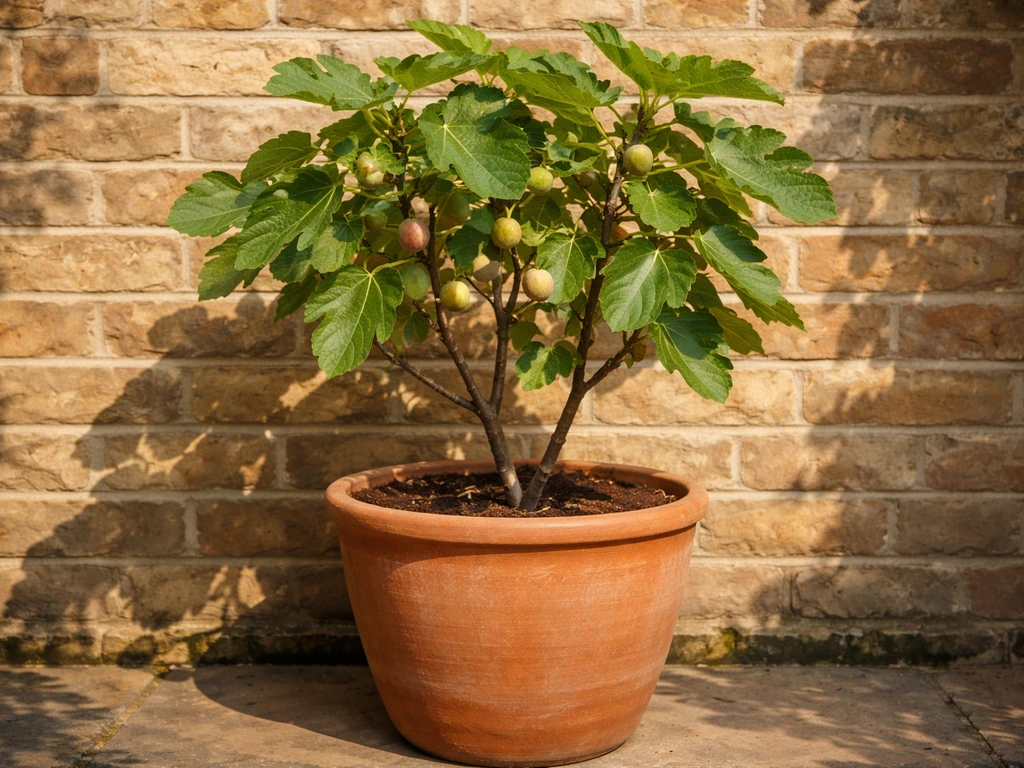
Yes, figs can absolutely grow in the UK, and with the right setup they'll fruit reliably every year. You won't get the bountiful Mediterranean harvests you see in travel photos, but a well-placed Brown Turkey fig on a south-facing wall or in a large container will give you a genuine crop of sweet, ripe fruit from late summer into autumn. The key is managing the roots, giving the plant as much warmth as possible, and protecting the tiny fruitlets that overwinter on the branches. Get those three things right and figs are one of the more rewarding fruits you can grow in Britain.
Can Figs Grow in the UK? How to Grow Fig Trees
James Hartwell
7 May 2026
What to realistically expect growing figs in the UK
Figs are rated around H5 on the RHS hardiness scale, which means they can handle moderate frost but will need protection in colder regions and during harsh winters. In the south of England, a fig against a sheltered wall can behave almost like a Mediterranean garden plant. In Scotland, the Midlands, or anywhere exposed to regular hard frosts, you'll need to work harder to keep it alive and productive, and container growing becomes more practical because you can bring the plant under cover.
The realistic crop window in the UK is late July through to October, depending on variety and how warm your summer is. In a really good year, you might get a small early (breba) crop from May to June on growth from the previous season, followed by a main crop in September to November. Most UK gardeners see one decent crop per year. Two crops happen occasionally in hot summers or under protection, but don't count on it as standard.
The biggest frustration for UK growers isn't usually cold killing the whole plant. It's the tiny pea-sized fruitlets that sit on the branch tips over winter. Those embryonic figs are what become next year's main crop. If a prolonged frost kills them, you lose the harvest. Protecting those fruitlets through winter is the single most important task in UK fig growing.
Best fig varieties for the UK and container vs outdoor growing
Brown Turkey is the variety to start with. It's the most reliably hardy, genuinely self-fertile (so you only need one plant), and widely available from UK nurseries. RHS plant details for the Brown Turkey fig list it as hardy to H3, hardy in coastal and relatively mild parts of the UK, roughly -5 to 1°C [most reliably hardy](https://www. rhs.
org. uk/plants/56327/ficus-carica-brown-turkey-%28f%29-fig-brown-turkey/details). It copes better with lower temperatures than most other varieties while still producing well-flavoured fruit. Brunswick is another solid UK choice with larger fruit, also self-fertile and reasonably hardy.
Both are a far better bet than the more exotic varieties you sometimes see in garden centres, many of which require fig wasps for pollination (not present in the UK) or simply can't handle a British winter.
| Variety | Hardiness | Self-fertile | Main crop timing | Best for |
|---|---|---|---|---|
| Brown Turkey | Good (H5) | Yes | Sept to Nov | Outdoor wall or container |
| Brunswick | Good (H5) | Yes | Aug to Oct | Outdoor wall, larger fruit |
| White Marseilles | Moderate | Yes | Sept to Oct | Sheltered southern gardens |
| Exotic/tropical varieties | Poor | Often no (needs fig wasp) | Variable | Not recommended for UK |
Container or in the ground?
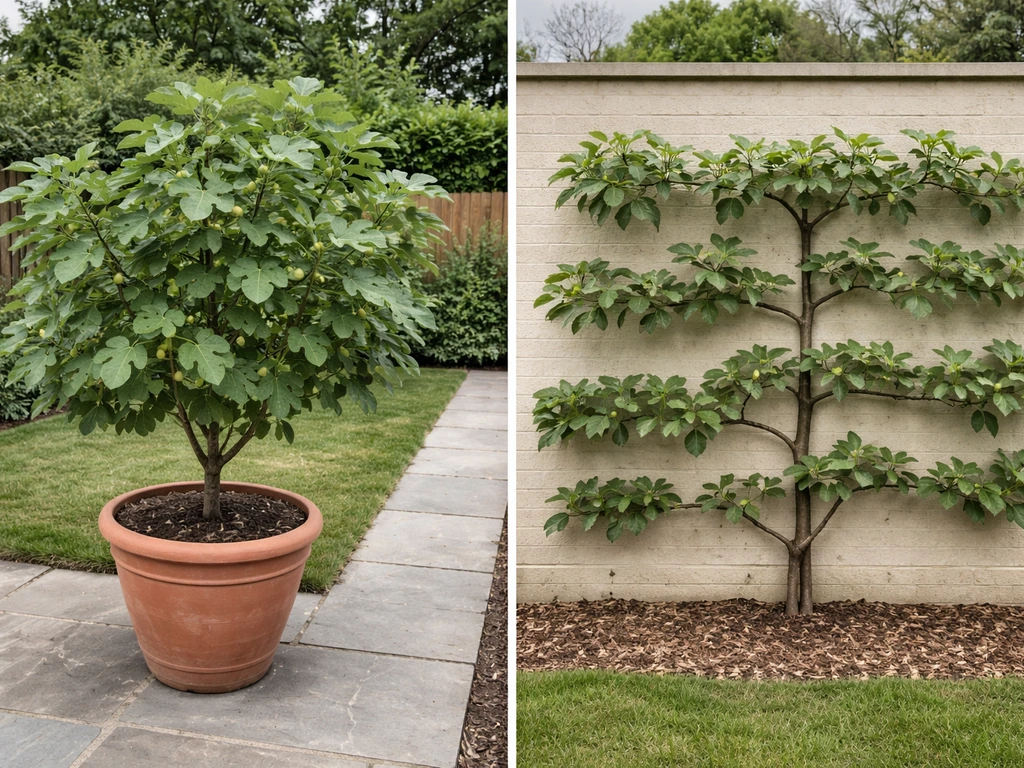
This is one of the most important decisions you'll make with figs. If you plant directly into open ground without restricting the roots, the plant puts almost all its energy into vegetative growth and produces very little fruit. Root restriction is essential for cropping. In a container, the roots are naturally constrained and the plant redirects its energy into fruiting. Containers also let you move the fig under cover in winter, which is a real advantage anywhere north of the Midlands or in exposed coastal spots.
If you want to plant into the ground, you can still get good results by restricting the roots. The traditional method is to dig a roughly 60cm cube planting pit and line the sides with paving slabs or bricks (leaving the base open for drainage) before filling with compost and planting. This mimics the root restriction of a container without you needing to lug a heavy pot around. The RHS recommends this approach alongside fan training against a sunny wall for maximum cropping outdoors.
How to plant your fig: site, soil, and setup
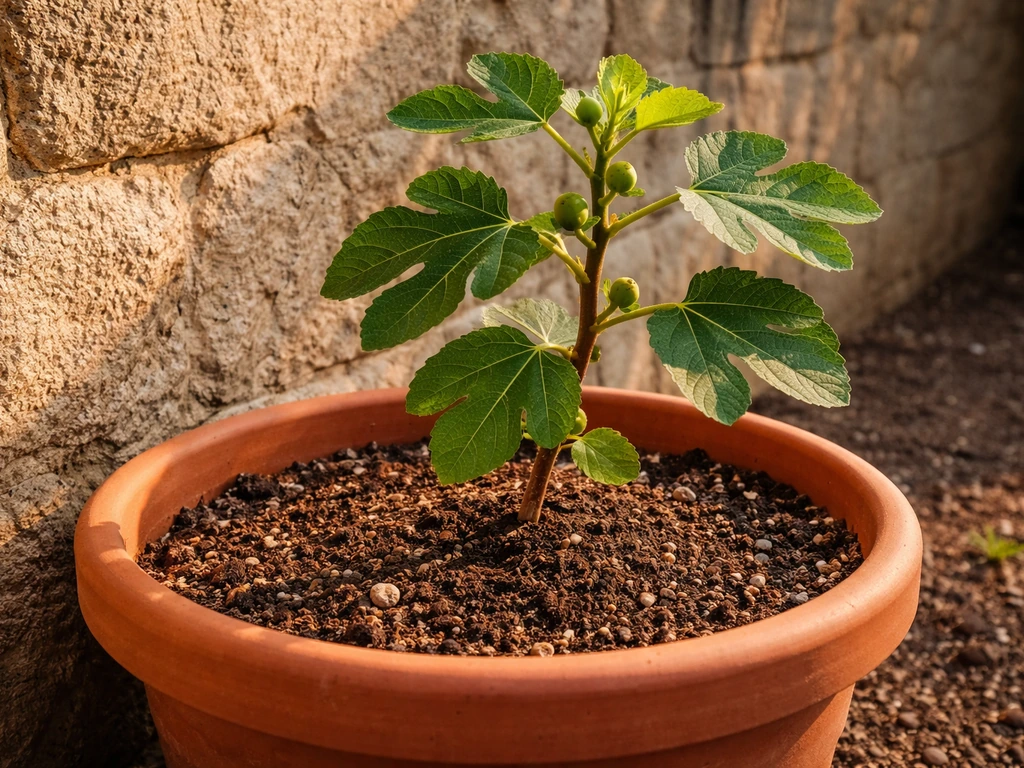
Choosing the right spot
Figs need as much warmth and sun as you can give them. A south-facing or south-west-facing wall is ideal. The wall stores heat through the day and radiates it back at night, creating a microclimate several degrees warmer than open ground. Avoid north-facing spots, frost pockets, and anywhere exposed to persistent cold winds. In warmer parts of the UK (the south coast, sheltered urban gardens, or any garden with a genuine sun trap), outdoor planting against a wall is very doable. Further north, prioritise a container so you have the option to protect the plant in winter.
Soil and pots
Figs prefer well-drained, moderately fertile soil. They don't need rich compost, and actually do better in slightly lean, gritty conditions than in heavily enriched beds. If planting in the ground, mix a little grit into your soil to improve drainage. For containers, use a loam-based compost such as John Innes No. 3, mixed with about 20% horticultural grit. A 30 to 45 litre container is a good starting size, though you'll likely need to repot into something larger (up to around 60 litres) as the plant matures. Make sure the pot has generous drainage holes and raise it slightly off the ground to prevent waterlogging.
Planting step by step
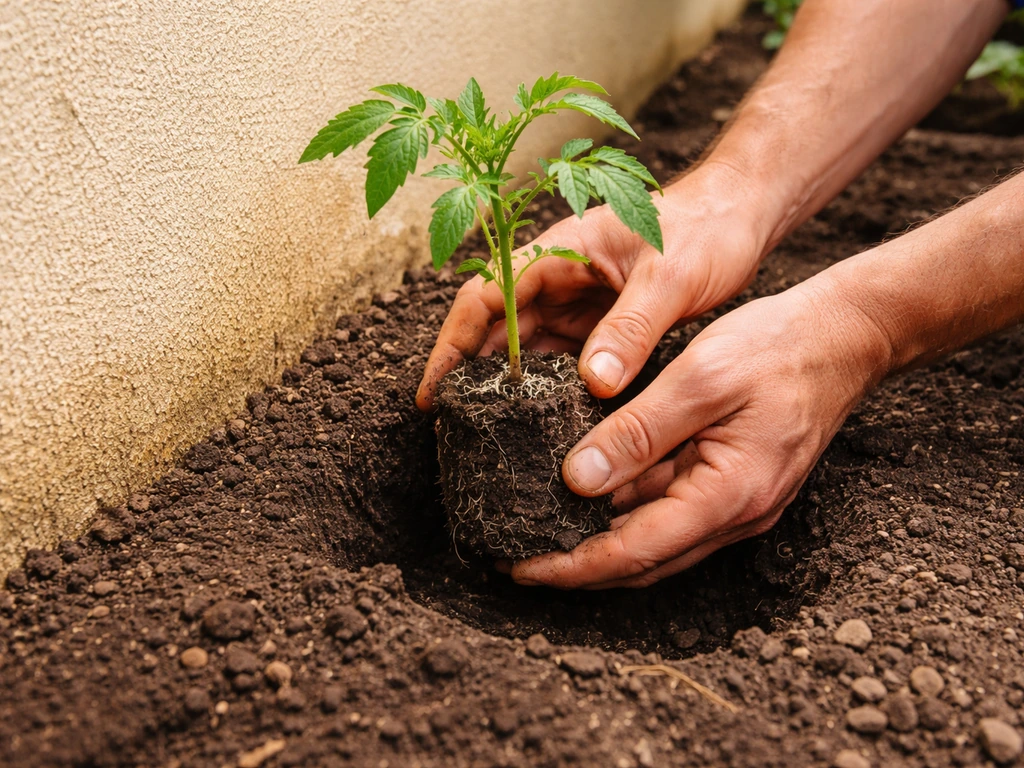
- Choose your site: south-facing wall or the warmest sheltered spot you have.
- For wall planting, position the plant 15 to 22.5cm away from the wall, angling the rootball very slightly toward it to encourage the stems to grow against the surface.
- For container growing, fill a large pot with John Innes No. 3 plus grit, plant at the same depth as the nursery pot, firm in, and water well.
- For in-ground planting with root restriction, dig a 60cm cube pit, line the sides (not the base) with slabs or bricks, fill with compost-and-grit mix, then plant.
- Water in thoroughly after planting and apply a mulch of bark or gravel around the base to retain moisture.
- Fix horizontal wires to the wall if fan training, spaced about 30cm apart, ready to tie in growth as it develops.
Spring is the ideal planting time, roughly March to May, once frosts are easing. Container-grown plants from nurseries can technically go in at any point in the growing season, but spring gives roots the longest establishment window before winter.
Looking after your fig through the growing season
Watering
Container-grown figs need regular watering from April through to September, especially during dry spells. Let the top inch or two of compost dry out slightly between waterings, but don't let the pot dry out completely or you'll get fruit drop. During July and August when fruit is swelling, consistent moisture is really important. Plants in the ground need far less attention once established, though a good soak during any extended dry stretch in summer helps fruit development.
Feeding
Container figs should be fed with a balanced liquid fertiliser (something like a general purpose 10-10-10 or tomato feed) every two to three weeks from late spring through to late summer. Switch to a high-potassium feed like tomato fertiliser from around July to encourage fruit ripening rather than leafy growth. Plants in the ground with restricted roots need less feeding but benefit from a balanced granular feed in spring and a potassium-rich liquid feed once a month through summer.
Pollination and fruiting
Here's one of the best things about growing figs in the UK: you don't need to worry about pollination at all. If you're wondering whether plantain grow in the UK, the answer is yes, but it's a different kind of plant and needs different conditions than figs does plantain grow in the uk. Varieties like Brown Turkey are self-fertile and the 'fruit' itself is actually a fleshy receptacle (a syconium) that develops without requiring fig wasp pollination, which is the process needed by some wild fig species. You plant one tree, and it fruits on its own. No pairing, no insect management, no tricks required.
Pruning and training for UK fruiting
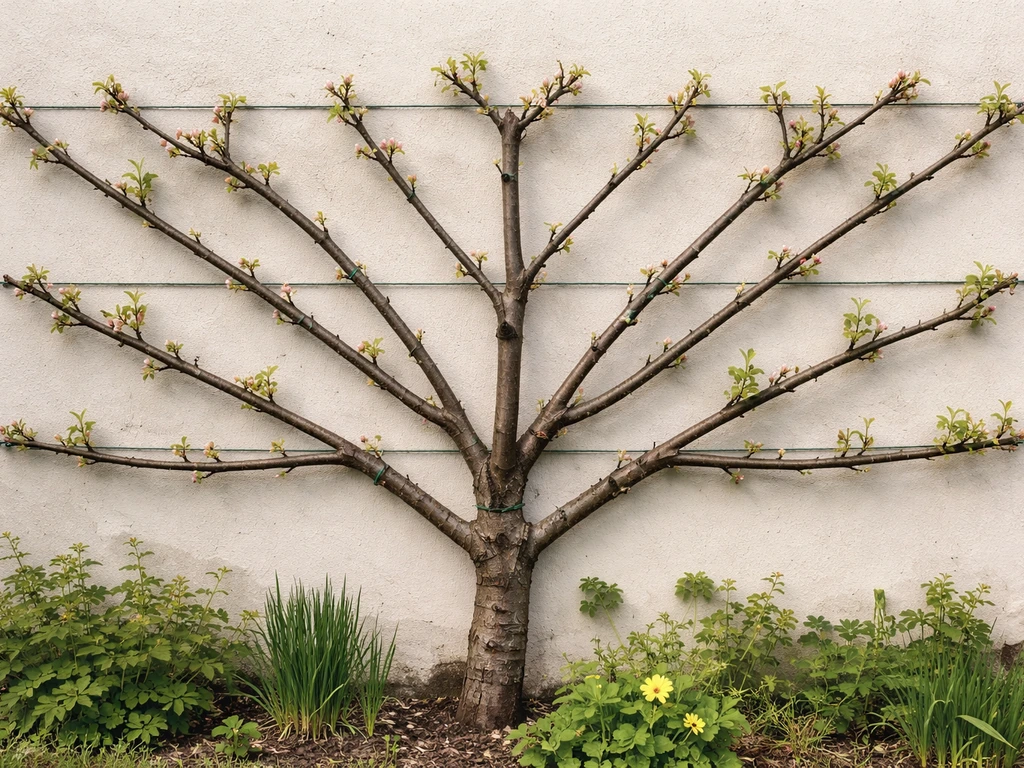
Fan training against a wall is the approach the RHS recommends for maximum UK cropping, and it genuinely makes a difference. Spreading the branches out in a flat fan shape exposes more of the plant to the warmth and light reflecting off the wall, which ripens fruit more reliably than an unpruned bush would. The RHS fan-training guidance also advises spacing the fig 15, 22.5 cm (6, 9 in) away from the wall or fence and training outward fan training should space the fig 15–22.5 cm from the wall or fence. It also makes winter protection a lot more manageable.
Spring (March to April) is the best time to do your main structural pruning because wounds heal quickly as the plant comes back into growth. Cut back any branches you want to shorten by up to one third, and remove crossing or inward-facing growth to open up the canopy. The aim is a well-spaced framework of branches, each getting plenty of light and airflow.
In summer (June to July), pinch out the growing tips of new shoots once they have five or six leaves. This encourages the plant to put energy into swelling existing fruit and forming the tiny embryonic fruitlets at the shoot tips that will become next year's crop. Don't go mad with summer pruning, though: you need some new growth to develop those overwintering fruitlets.
In early September, check the branches for any figs larger than a pea that clearly won't ripen before the cold arrives. Remove them. They're taking energy from the plant and won't come to anything in the UK climate. What you want to protect over winter are the tiny pea-sized or smaller fruitlets sitting right at the shoot tips. Those are your next year's harvest.
Overwintering and frost protection
This is where a lot of UK fig growers either win or lose their crop. The plant itself is reasonably tough and will usually survive all but the harshest British winters with minimal damage. The embryonic fruitlets are less resilient. A prolonged cold snap below around minus 5 to minus 8 degrees Celsius can kill them and wipe out the following year's harvest.
For wall-trained or in-ground figs
Once the leaves have dropped in late October or November, wrap the branches loosely with two or three layers of horticultural fleece, straw, or even bubble wrap. You want to insulate the tips without trapping moisture (which causes rot). Secure the wrapping with twine and remove it gradually in March as temperatures rise. In mild southern gardens with a genuinely sheltered wall, you might get away with no protection at all in average winters, but a fleece wrap costs almost nothing and takes ten minutes, so it's always worth doing.
For container figs
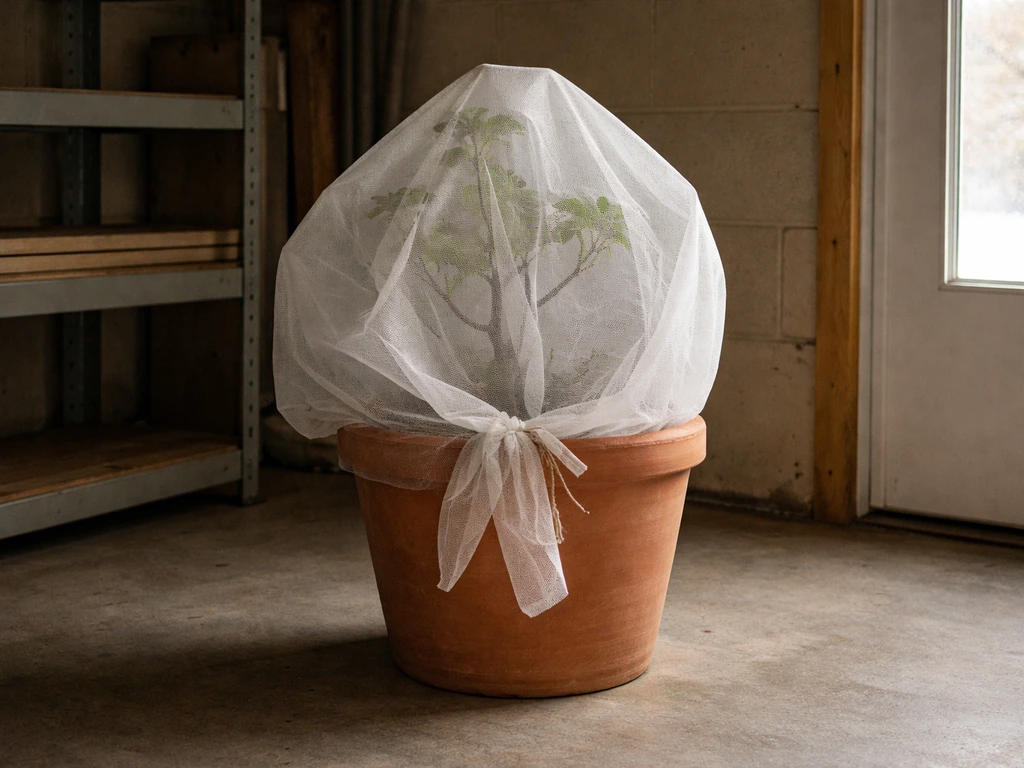
Move the pot to an unheated greenhouse, garage, or shed before the first hard frost. The space doesn't need to be heated, just frost-free. If you're leaving the container outside, wrap both the pot and the branches in fleece, and move it to the most sheltered spot you have, ideally against a south-facing wall. Check occasionally through winter and water very lightly if the compost becomes completely bone dry, but don't overwater a dormant plant.
Troubleshooting: the most common UK fig problems
No fruit (or very little fruit)
This is the number one complaint and it almost always comes down to one of three things: unrestricted roots, not enough sun and warmth, or the overwintering fruitlets being killed by frost. Check all three before anything else. If the plant is growing vigorously with lots of leafy growth but no fruit, root restriction is likely the issue. Move to a container or install a root-restricting pit.
Dieback
Some dieback on shoot tips over winter is completely normal, especially in colder parts of the UK. Just cut back to healthy wood in spring (you'll see the live, cream-coloured wood under the bark). If you're seeing significant die-back on main branches, it's likely a hard frost got through without adequate protection. Improve your winter wrapping for next year. The plant will usually recover, but it sets fruiting back by a season.
Pests
Vine weevil is a real problem for container figs: the grubs eat roots and you'll notice the plant suddenly wilting despite adequate watering. Check for white C-shaped grubs in the compost and treat with a biological nematode drench in spring or autumn when soil temperature is suitable. Scale insects can appear on stems and the undersides of leaves, leaving sticky honeydew residue. Treat with a horticultural oil spray in late spring. Red spider mite (especially under glass) is another possibility in hot, dry conditions: boost humidity and treat with biological controls or appropriate spray.
Fruit splitting or dropping early
Erratic watering is usually the culprit. Letting the compost dry out and then soaking it causes the fruit to swell too quickly and split. Keep moisture levels more consistent through the fruiting season, especially July through September. Fruit dropping before it's ripe can also be a sign of waterlogging, so double-check drainage if the problem persists.
What to do right now (May 2026)
If you're reading this in May, timing is great. This is the ideal moment to buy a container-grown Brown Turkey from a nursery or garden centre and get it planted or potted up. The growing season is just getting going, frosts are largely behind you (though keep an eye on late frost forecasts for northern regions), and the plant has the whole summer ahead to establish and start producing.
- Buy a named UK-hardy variety: Brown Turkey or Brunswick are your safest bets.
- Pick your sunniest, most sheltered south-facing spot, ideally against a wall.
- Pot into a 30 to 45 litre container with John Innes No. 3 and grit, or prepare a root-restricted in-ground bed.
- Start watering regularly and begin feeding with a balanced liquid feed every two to three weeks from now.
- Pinch out shoot tips once they reach five or six leaves in June or July.
- Plan your winter protection now: source fleece, and identify an unheated indoor space if you have a container.
- In early September, remove any large unripe figs that won't make it before winter and protect the small embryonic fruitlets.
Figs are one of those plants that reward a bit of system thinking: get the root restriction right, give them the warmest spot in the garden, and protect what's on the branches in winter. If you are also wondering can you grow prickly pear in the uk, the main idea is similar: warmth, protection from bad winter weather, and the right planting setup make all the difference.
Do those things and you'll almost certainly be harvesting your own figs within two to three seasons. They're not a beginner's mistake like trying to grow grapefruit or frangipani outdoors in the UK: they genuinely work here, and when you eat a sun-warmed fig from your own plant in late September, it's absolutely worth it.
If you are wondering can you grow grapefruit in the UK, you will usually need a very sheltered spot and careful container protection to have any chance.
FAQ
Can figs grow in the UK without a south-facing wall or greenhouse?
Yes, but your margin for error drops. Without a wall, choose a true sun trap (south-west corner, high wall casting reflected light) and grow in a container you can move under cover before hard frost. Open-ground, exposed sites usually mean weak crops because warmth and night-time radiated heat are missing.
What is the safest minimum temperature for protecting fig fruitlets in the UK?
Aim to prevent the pea-sized fruitlets at the tips from dropping below roughly -5 to -8°C for extended periods. That means insulating early (after leaf drop), keeping the plant protected on wind-exposed edges, and not relying on a single fleece layer in the coldest regions or during prolonged snaps.
Why does my fig have lots of leaves but no fruit, and what should I do first?
Most often it is energy going into growth because the roots are not restricted enough, or the plant is too shaded. Check how much sun it gets daily, then switch the setup: move it to a container or install the root-restricting pit (lined sides, open base) rather than adding more fertilizer.
Should I protect the whole plant or only the tips where the fruitlets are?
Focus on the shoot tips first. The main branches can survive colder conditions better, but the overwintering fruitlets are what determine next year’s crop. Wrap branches loosely, insulate the tip area well, and avoid tight wrapping that traps moisture against the plant.
Can I grow two figs in the ground instead of using a container or root pit?
You can, but spacing and root control matter. If you put multiple figs into open ground without restriction, vigorous root growth often reduces fruiting. If you want in-ground plants, use a root-restricting pit per tree (or keep them in separate large containers) so each plant can still redirect energy into fruit.
Do figs in the UK need a second variety for pollination?
In most UK garden situations, no. Common edible varieties like Brown Turkey are self-fertile, and the fig fruit you eat forms without fig wasps. The main exception is if you are growing a wild-type fig species that requires specific pollinators, which is not a normal UK garden goal.
Why are my figs splitting or dropping before they ripen?
Erratic moisture is the usual cause. Letting compost dry out fully, then soaking, can make fruit swell too fast and split. Also check drainage if fruit drops despite watering, because waterlogging can trigger premature drop. Keep moisture more even from July through September.
When should I repot a container-grown fig, and how big should it get?
Upgrade when roots fill the pot and growth stalls, usually as the plant establishes in the first season and again later. Start around 30 to 45 litres, and plan that mature plants may need up to about 60 litres for stable moisture and root restriction. Always ensure the drainage holes remain generous.
What is the best way to prune a UK fig for next year’s crop?
Use pruning timing to protect the fruitlets. Do the main structural pruning in spring, then pinch new shoot tips in early summer after they form about five or six leaves. In early September, remove larger figs that will not ripen, but leave the pea-sized (or smaller) tips that will overwinter.
Is vine weevil treatment different for figs compared with other container fruit?
Treat it similarly, but act quickly because root damage can cause sudden wilting even with correct watering. Check for C-shaped grubs in the compost, then use a biological nematode drench when soil or compost temperatures are suitable (spring or autumn). Also reduce overwintering stress by keeping the container frost-protected after treatment.
Can I grow figs from seed in the UK instead of buying a plant?
It is possible but rarely practical for reliable cropping. Seed-grown figs often do not produce true-to-type plants and can take longer to fruit, while the UK’s main limitation is already winter survival of fruitlets. For dependable results, buy a hardy, self-fertile variety and focus on winter protection.
What should I do if my fig suffered dieback after winter?
Light dieback on tips can be normal, remove it back to live, cream-coloured wood in spring. If dieback reaches main branches, you likely had insufficient protection or trapped cold at the tip area. Increase wrapping insulation and make sure the shelter method allows protection without sealing the plant tightly around damp fleece.
Next Article
Can You Grow Tiger Nuts in the UK? Practical Guide for Gardeners
Can you grow tiger nuts in the UK? Practical, regional guide with planting dates, containers, harvest & recipes.