Yes, you can grow physalis in the UK, and most gardeners who try it get decent harvests, but the setup and timing matter a lot. A polytunnel or greenhouse gives you the best shot at ripe fruit every year. A warm, sheltered south-facing spot outdoors can work in southern England, but expect more inconsistency. In Scotland or the north, indoor growing is pretty much essential if you want fruit rather than just an interesting plant.
Can You Grow Physalis in the UK? How to Do It

James Hartwell
12 May 2026
Is physalis actually feasible in the UK, and which types are worth trying?
The short version: feasible, yes, but the species you choose makes a real difference. The two types people most commonly try in Britain are Cape gooseberry (Physalis peruviana) and ground cherry (Physalis ixocarpa, sometimes called tomatillo). They look similar in their early stages but behave quite differently in UK conditions.
Cape gooseberry is the one with the papery lantern husks and sweet golden fruit. The RHS rates it as H3, meaning it's only reliably hardy in coastal and relatively mild parts of the UK, tolerating down to around -5°C but no lower. In most UK gardens it's treated as a tender annual, started indoors and cleared out before the first hard frost. That's not a dealbreaker, it just means you manage it as a summer crop rather than a permanent planting.
Ground cherry or tomatillo (Physalis ixocarpa) is rated H6 by the RHS, meaning the plant itself can survive down to -15 to -20°C. That makes it considerably hardier than Cape gooseberry as a plant. However, hardiness doesn't automatically mean easy fruiting in the UK, because you still need a long enough warm season to ripen the fruit. Both species come from South American or Mexican origins and want heat. The advantage of ixocarpa is that it's slightly more forgiving if you get a cold snap and you have a bit more time before needing to worry about frost killing the plant.
If you're after the classic sweet golden-husked fruit for eating fresh or in jam, Cape gooseberry is the one to go for. If you want tomatillos for cooking and you're in a cooler part of the UK, ixocarpa gives you a bit more resilience. Either way, the growing method is broadly similar, and what follows applies to both unless I say otherwise.
Choosing the right physalis variety for UK seasons
For Cape gooseberry, the standard Physalis peruviana is the most widely available and what most UK seed suppliers stock. There are some compact or dwarf forms which suit container growing better and may fruit slightly earlier, which matters when you're racing the British autumn. If you can find named varieties suited to shorter seasons, they're worth trying, but honestly the standard species does fine with a good start and a warm spot.
For ground cherry or tomatillo, the key is picking a variety with a shorter days-to-maturity figure. Some tomatillo varieties need a very long season and will struggle to ripen before October in most of the UK. Look for varieties described as 'early' or with around 65 to 75 days to maturity rather than 90-plus. Vital Seeds and other UK suppliers tend to stock varieties with UK growing in mind, so buying from a domestic supplier is a practical shortcut here.
The other thing worth knowing: both Cape gooseberry and tomatillo flower and fruit better when they're not swimming in nitrogen. Soil or compost that's too rich in nitrogen pushes the plant into lush leafy growth at the expense of flowers and fruit. More on that in the troubleshooting section, but it does affect which compost you choose when starting off.
Sowing and starting plants: timing, temperature, and potting
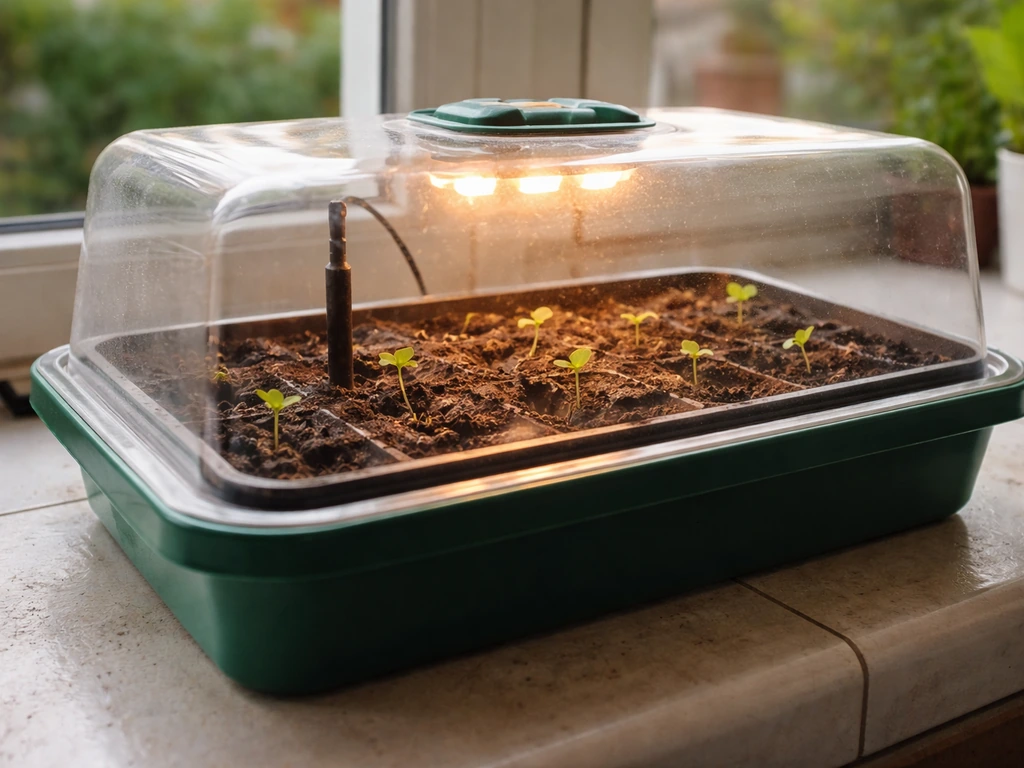
Timing is where a lot of UK growers go wrong, either starting too late or not giving seeds enough warmth to germinate well. Physalis needs heat to germinate. BBC Gardeners' World recommends a sowing temperature of 15 to 18°C, which is achievable on a warm windowsill. If you can push it to 21°C, even better: the RHS puts optimal germination at 21°C. Some UK suppliers like Nicky's Nursery actually recommend 30°C by day and 20°C by night if you want faster, more reliable germination, and they note that at a constant 18 to 22°C seeds can take 25 to 35 days to appear.
The practical advice: if you have a heated propagator, use it. If not, a warm airing cupboard works to get seeds moving, but move seedlings to a bright windowsill the moment you see shoots because they get leggy fast in low light. Sow physalis seeds on the surface of fine compost and press them in gently rather than burying them deeply, as they need some light to germinate well.
In the UK, sow indoors in late February to early March. That sounds early, but physalis is slow to get going and you want good-sized plants ready to go out or into a greenhouse in May. Starting in April is not too late, but you're giving yourself less of a season buffer. The RHS advises starting in early spring indoors for this reason.
- Sow seeds late February to mid-March indoors in small pots or seed trays filled with fine seed compost.
- Press seeds onto the surface and cover very lightly with vermiculite or a thin layer of compost, as they need light to germinate.
- Keep at 18 to 21°C minimum, using a heated propagator if possible.
- Expect germination in 7 to 35 days depending on temperature: warmer means faster.
- Once seedlings are large enough to handle, prick out into 9cm pots of multipurpose compost.
- Pot on into 1 to 2 litre pots as roots fill the smaller ones, and keep somewhere warm and bright until planting out time.
Outdoor vs greenhouse/polytunnel vs container: what works best
This is probably the most important decision you'll make when growing physalis in the UK, and the honest answer is that a polytunnel or cool greenhouse is the most reliable setup by a good margin. If you're comparing other warm-climate fruit options for the season, can you grow prickly pear in the uk is a useful related angle to check as well. Under cover, you can plant out in early to mid-May, the plants get protection from cold nights and wind, and they have the warmth they need to flower and fruit before the season ends. The RHS specifically recommends cool greenhouse culture for Cape gooseberry, and the growers I know who get consistent harvests are all growing under some form of cover.
Outdoors can work, but only in the right conditions. Plantain is a different plant from physalis, and if you're wondering whether plantain grows in the UK, the key factor is the specific variety and climate conditions plantain grow in the uk. Vital Seeds says plants can be hardened off and grown in a well-sheltered, south-facing spot, and the RHS confirms outdoor growing is feasible in milder areas once all frost risk has passed. If you're in southern England, the South West, or a sheltered coastal spot anywhere in the UK, you have a reasonable shot outdoors in a warm summer. In Scotland, the Midlands, or anywhere exposed, outdoor physalis is more of an experiment than a reliable crop.
| Setup | Best for | Typical harvest reliability | Key trade-offs |
|---|---|---|---|
| Polytunnel or greenhouse | All UK regions | High: fruit most years | Needs space under cover; watch for whitefly |
| Sheltered outdoor bed (south-facing) | South of England, mild coastal spots | Moderate: good summers only | Frost risk, shorter season, weather-dependent |
| Container (indoor/greenhouse) | All UK regions, small gardens | High if kept warm | Needs large pots (19 to 38 litres), regular watering and feeding |
| Container outdoors | South England in warm years | Low to moderate | Dries out fast; move under cover in cold spells |
Containers are genuinely useful for physalis, especially if you want flexibility. Gardenia recommends using 5 to 10 gallon (19 to 38 litre) pots with rich potting mix, which is bigger than most people expect. Go smaller and the plants get pot-bound quickly, which stresses them and cuts fruit production. The real advantage of containers is that you can move plants under cover if the weather turns, which in the UK is not an occasional scenario.
Planting out, care, feeding, watering, and pollination
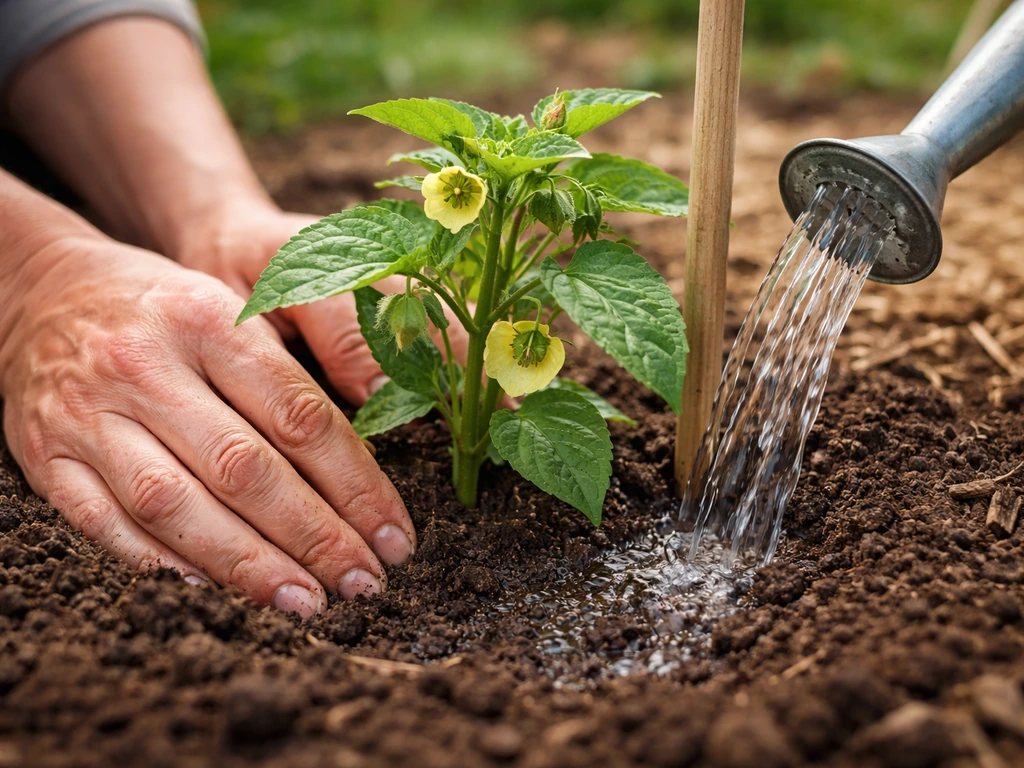
Don't rush planting out. For outdoor growing, wait until after the last frost date for your area, and then wait another week or two beyond that for the soil to warm up. Seedsavers recommends planting outdoors two to four weeks after your last expected frost. In most of England that means mid to late May. In Scotland, early June is safer. Under cover in a polytunnel you can get away with early May, which buys you valuable weeks.
Physalis plants grow bigger than most people expect, reaching 90cm to 150cm in a good season. Space them at least 60 to 90cm apart, and stake them at planting time rather than waiting until they flop over. If you're growing under cover, they'll easily push against the roof in a warm summer if you don't keep on top of them.
Watering should be consistent rather than occasional heavy doses. Like tomatoes, irregular watering can cause fruit problems. Feed with a tomato-type fertiliser (high in potassium and phosphorus, lower in nitrogen) once plants are established and starting to flower. Avoid over-feeding with general-purpose high-nitrogen fertilisers as this pushes leafy growth at the expense of fruit. A liquid seaweed feed early on and a switch to tomato feed at flowering is a reliable approach.
Pollination is generally self-managing with physalis. The flowers are pollinated by insects and to some extent by wind movement. If you're growing under cover, opening vents and doors on warm days helps pollinators get in. Vital Seeds suggests growing at least five plants together both to ensure good pollination and to give yourself enough of a crop to make it worthwhile. Gently shaking flowering stems on calm days can help set fruit if you're worried about pollination under cover.
Harvest timing and ripeness: reading the lantern husks
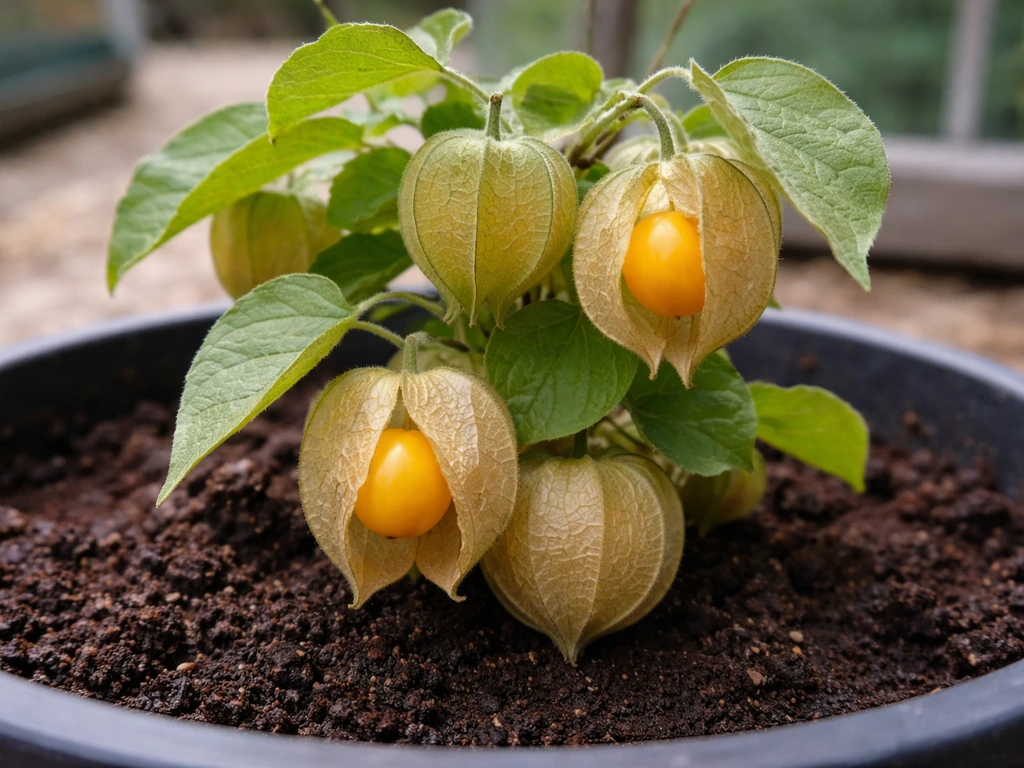
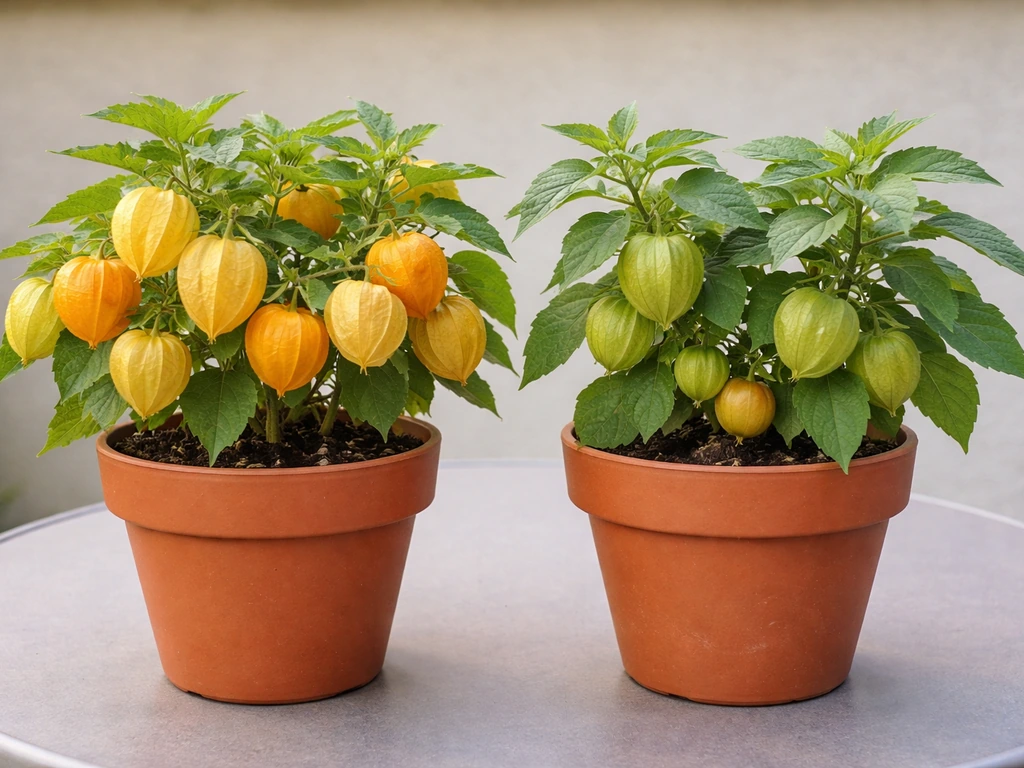
Physalis fruit doesn't shout at you when it's ready, which catches a lot of first-time growers out. The clue is in the husk. For Cape gooseberry, the papery outer lantern starts green and gradually turns tan or straw-coloured as the fruit ripens inside. When the husk is fully papery and dry-looking, and the fruit inside has turned a uniform golden-orange colour, it's ready. Compost Check describes this as the husk going from green to tan or straw-coloured, with the fruit inside developing a consistent golden-orange hue.
Don't pick fruit that has separated from the plant and fallen to the ground unless the husk is fully tan: fallen fruit isn't always ripe, despite what you might expect. And resist picking fruit while the husk is still green or firmly attached to the stem even if it looks physically big enough, because the sugars haven't fully developed yet. VegPlotter's grow guide flags this as a common mistake.
Once harvested, keep the husks on the fruit and they'll store for several weeks in a cool dry place, much longer than the naked fruit. UC Marin Master Gardeners also recommends keeping husked Physalis fruit in a cool, dry place after harvesting to store it properly keep the husks on the fruit and they'll store for several weeks in a cool dry place.
From flower to ripe fruit typically takes around 6 to 10 weeks under warm, steady conditions according to Gardenia's Cape gooseberry guide. In the UK, where warmth isn't always steady, that timeframe can stretch. This is why starting plants early and getting them into a warm spot quickly matters so much: you're trying to bank enough of those warm weeks before October.
For tomatillo, the husk fills out and the fruit eventually bursts through or tightly fills the lantern. Harvest when the husk is fully papery and the fruit has pushed it out firmly. Tomatillos for cooking are typically used when green and firm rather than waiting for them to turn yellow.
Common problems in UK grows
Lots of leaves, no fruit
This is the most common complaint. Nine times out of ten it's too much nitrogen in the soil or compost, either from a rich general feed or from planting into heavily manured ground. Physalis follows the same rule as tomatoes and chillies: once it's flowering, switch to a high-potassium feed. If the plant is already very leafy and slow to flower, ease off feeding altogether for a few weeks and make sure it's getting as much sun as possible.
Fruit not ripening before autumn
This is a season-length problem, and it's genuinely the biggest challenge of growing physalis outdoors in the UK. If your plants flowered late (because they went out late, or had a slow start), you may simply run out of warm weeks before October. The fix is: sow earlier (late February), get plants into a warm spot faster, and grow under cover if you can. If you're outdoors and autumn is closing in with fruit still green, bring containers inside or use a cloche or fleece to extend the warmth by a few weeks. It can be enough to tip unripe fruit over the line.
Flower drop
Flowers drop when plants are stressed, usually by cold nights, inconsistent watering, or very high temperatures under glass. In the UK, cold is more often the culprit than heat, especially in May and June. Make sure plants aren't going out too early, and if growing under cover, watch for cold nights in spring even inside a polytunnel.
Pests and disease under cover
If you're growing in a greenhouse or polytunnel, watch for glasshouse whitefly, which is the classic under-cover pest for solanaceous plants like physalis, tomatoes, and peppers. Yellow sticky traps help monitor numbers. Aphids and spider mites can also be issues in warm, dry conditions under glass. Keep air circulating and don't let the environment get too hot and stagnant. Outdoors, physalis is generally less troubled by pests, though slugs can damage young plants in spring.
Overwintering, re-growing, and realistic expectations by region
Cape gooseberry (H3) won't survive a normal UK winter outside unless you're in the mildest coastal spots. In most of the country, treat it as an annual and start fresh from seed each year. If you want to try overwintering a plant, take cuttings in late summer and root them in a warm greenhouse or on a windowsill, which is more reliable than trying to keep the whole parent plant alive. In a frost-free greenhouse, the parent plant may survive, but it will take up space all winter for uncertain benefit.
Ground cherry or tomatillo (H6) is a different story in theory. The plant itself is hardy to -15°C or below, meaning it could survive UK winters in the ground in most regions. In practice, it often dies back hard and regrows from the base, which shortens your effective season in the following year unless you're in a mild area. Whether that regrowth fruits reliably before autumn is the real question, and it's something of a gamble in the north or at altitude.
Realistically, here's what to expect by region:
| Region | Outdoor feasibility | Under cover feasibility | Overwintering Cape gooseberry |
|---|---|---|---|
| South West England / mild coast | Good in warm summers | Excellent | Possible in a frost-free spot |
| South East England | Moderate, sheltered spots only | Excellent | Unlikely outdoors |
| Midlands / East England | Low to moderate | Good | Not outdoors |
| North England / Wales | Low, marginal outdoors | Good with polytunnel | Not outdoors |
| Scotland | Not reliably outdoors | Possible with polytunnel/heated greenhouse | Not outdoors |
Physalis sits in similar territory to other warm-season crops that push the limits of what the UK can do. If you're looking for exotic fruits you can grow in the UK, this approach is a good starting point for similar tender plants too other warm-season crops. If you’re wondering which other fruit you can grow in the UK, it helps to match the crop to your local season and protection options fruit you can grow in uk.
It's more achievable than, say, growing grapefruit outdoors, and arguably more realistic in a polytunnel than something like frangipani, but it does need more heat and season length than most British veg. The gardeners who do best with it treat it like a chilli or an outdoor tomato: start early, grow warm, harvest before the nights get cold, and don't expect it to thrive on neglect. Do that, and you'll get fruit.
Skip the early start or stick it in a cold, shady corner, and you'll get a very leafy plant with not much to show for it come October.
FAQ
Can you grow physalis in the UK from store-bought plants instead of seed?
Yes, but you need to match your expectations. Growing physalis in the UK from seed usually works best for Cape gooseberry and tomatillo if you start late February to early March indoors, then plant out under cover in early to mid May. Buying plants is faster, but you still need a warm start to get fruit by autumn, and store-bought plants are often already set back from cold transit, so they may catch up later than seedlings.
Why is my physalis not germinating in the UK, and what should I do differently?
Avoid burying seeds and avoid deep potting. Sow on the surface of fine compost, press gently, and keep the container warm and bright. If you bury too deeply, germination is often patchy, and physalis seedlings can take 25 to 35 days to show at moderate temperatures, so it helps to label pots and not disturb them while waiting.
What pot size should I use if I want to grow physalis in containers in the UK?
With physalis, the pot size matters more than most people expect. Aim for roughly 19 to 38 litre pots, and plan on staking immediately, because container plants can become top-heavy as they grow 90 cm to 150 cm. If a pot is too small, plants get pot-bound quickly and you get fewer flowers and smaller fruit even if the plants look healthy.
Can I grow physalis outdoors in summer but bring it under cover if the weather turns cold?
You can, and it is often the easiest way to handle unpredictable weather. Move pots or containers into a greenhouse, conservatory, or polytunnel when nights are cold or when heavy rain is likely, and keep them under cover during spring cold snaps. Outdoors in the south can work, but a flexible “move on weather” approach usually beats planting in the ground where you cannot easily protect the crop.
Will physalis come back year after year if I grow it in the UK garden?
It depends on which physalis you mean. Cape gooseberry is typically treated as tender in the UK and is unlikely to survive normal winters outdoors inland, while tomatillo plants are hardier and may survive but still often die back and regrow. If you want a reliable long-term crop, container culture plus overwintering in a frost-free greenhouse is usually more dependable for keeping plants productive.
My physalis flowers but the fruit seems to suffer, what watering mistakes cause this?
Inconsistent watering is a real cause of fruit problems. Keep moisture steady, especially after flowering begins, and do not alternate between drying out and heavy soaking. Mulching helps reduce swings, and if plants are in a greenhouse or polytunnel, ventilate to prevent the mix of high humidity and dry roots that can also upset fruiting.
How can I fix excessive leafy growth and encourage fruiting in physalis?
Yes, especially if you see lots of leaves and few flowers, or if it is stuck before flowering. Do not keep feeding a high-nitrogen general fertilizer, once plants start flowering switch to a tomato-style feed higher in potassium and phosphorus, and if growth is very leafy, pause feeding for a few weeks rather than increasing it. Increasing sun exposure usually helps, because a cold or shaded plant struggles to transition to flowering.
Do physalis need pollinators in the UK, and what can I do if fruit set is poor in a polytunnel?
Under cover, pollination can be weaker because fewer insects get in. Open vents and doors on warm days, and gently shake flowering stems on calm days to help with set. If fruit is inconsistent, growing several plants together improves the chance of good pollen transfer.
How do I know exactly when to harvest Cape gooseberry physalis in the UK?
Use the husk as the timing guide, and do not rely on size alone. For Cape gooseberry, pick when the husks are fully papery and tan or straw-coloured, and the fruit inside has turned a uniform golden-orange. If fruit has fallen and the husk is still green, it may look large but can be unripe, so leave it.
When should I harvest tomatillo (ground cherry) in the UK for cooking versus eating fresh?
For cooking tomatillos, you typically harvest earlier than you would for sweet eating. If you want that tangy, firm “green” character for cooking, harvest when the fruit is green and firm, and the husk is filling out and papery. If you wait for yellowing, flavour changes and ripeness is less aligned with typical tomatillo culinary use.
What can I do in autumn if my physalis fruit is still green in the UK?
It is usually about season length and warmth. If you are seeing green fruit late in the year, bring container plants inside and use a cloche or fleece to extend temperatures by a few weeks. The goal is to keep plants warm during the day and protect them from cold nights long enough for husked fruit to ripen.
What pests should UK physalis growers watch for, and when do they usually appear?
Yes. If the plant is in a greenhouse or polytunnel, check regularly for glasshouse whitefly, yellow sticky traps help you spot early increases, and watch for aphids and spider mites when conditions get warm and dry. Outdoors, slugs can be a bigger early problem, so protect young plants in spring and remove hiding spots nearby.
Next Article
Can Figs Grow in the UK? How to Grow Fig Trees
Yes, figs can grow in the UK. Learn which types to choose and get step-by-step instructions for fruiting in containers.