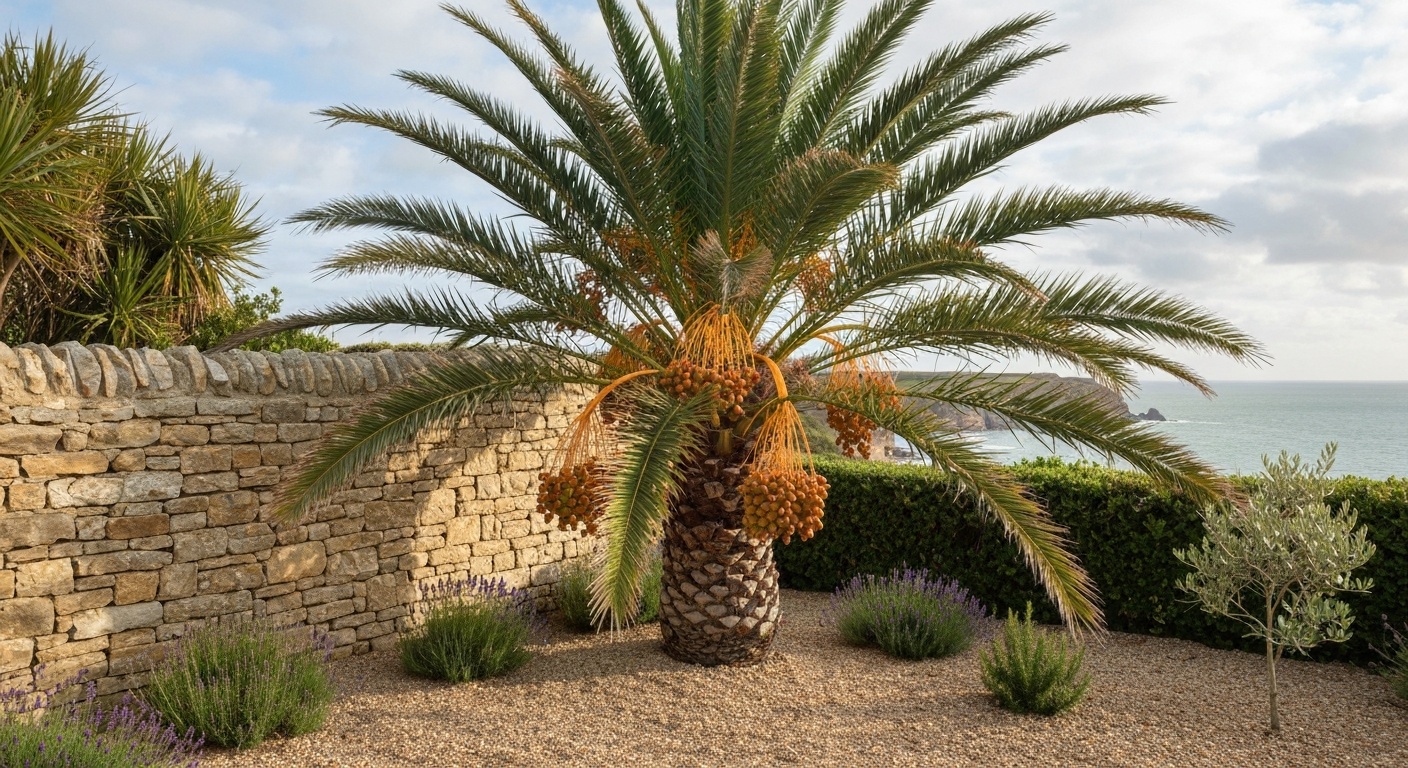
Date trees can survive in the UK, but fruiting outdoors is another matter entirely. You can grow Phoenix dactylifera (the true date palm) as a container specimen or in a heated greenhouse almost anywhere in Britain, and in the warmest, most sheltered coastal corners of southern England or the Channel Islands you might keep one outside year-round. What you almost certainly will not get is a meaningful crop of ripe dates from an outdoor tree in the UK. The summer heat simply isn't there. That's the honest answer, and everything else in this article builds from it.
Can Date Trees Grow in UK? Practical Guide for Gardeners
James Hartwell
25 Jul 2026
Who this guide is for and what to expect
If you want a tall, architectural palm to anchor a sheltered garden and you're happy for it to stay ornamental, the UK can actually deliver that in the right spot. If you want to eat dates from your own tree outdoors in Britain, you need to go in with very clear eyes about how much work and luck is involved. This guide covers both goals. It's aimed at UK gardeners, smallholders and plant enthusiasts who want a practical, climate-grounded answer rather than a vague 'it depends. If you have questions about the suitability of other unusual plants for Britain, for example, whether can coca leaves grow in the UK, see the related guidance for those species. ' I'll explain which species are worth attempting, what conditions they need, and where the line sits between a realistic ornamental project and a frustrating battle against the British climate.
UK climate realities for date palms: frost, heat and the core problem
Phoenix dactylifera originates in the hot, arid regions of the Middle East and North Africa. It needs long, dry, intensely hot summers to ripen fruit, with some varieties requiring the equivalent of several thousand growing degree-days (a measure that adds up daily heat above a base threshold temperature) between flowering and harvest. UK summers rarely sustain the kind of heat accumulation required. Even in the warmest parts of southern England, cool cloudy periods and relatively modest peak temperatures mean that a date palm outdoors is not going to reliably produce ripe fruit without serious intervention.
Cold is the second major obstacle. The true date palm is rated around H3 on the RHS hardiness scale, meaning it struggles once temperatures drop below about -5°C for any sustained period. Much of the UK regularly sees colder nights than that in winter. The most vulnerable part of the plant is the growing bud at the crown: if that freezes, the palm is finished. Even if the trunk survives a hard freeze, flower buds and developing fruit are particularly cold-sensitive, so a late frost can wipe out a season's potential fruiting even on a tree that otherwise looks healthy.
On top of cold winters and cool summers, UK soils are often poorly drained and wet, especially through autumn and winter. Date palms come from deep, free-draining, sandy soils and are highly vulnerable to root rot in waterlogged conditions. Wet roots in a cold winter is essentially a double blow that will kill a date palm faster than either problem alone.
Where date palms can actually succeed in Britain
The best real-world example of outdoor date palms in the UK is Ventnor Botanic Garden on the Isle of Wight. The garden sits in a sheltered coastal valley called the Undercliff, which creates a microclimate that can be up to 5°C warmer than the surrounding area. That combination of south-facing slopes, proximity to the sea, shelter from northerly winds, and buffering from cold air drainage means subtropical plants including date palms and olives are grown outdoors there year-round. It's an exceptional case, but it illustrates exactly what you need: not just 'southern England,' but a very specific combination of factors.
The Channel Islands occupy a similar position. Historic records from the European Palm Society document Canary Island date palms (Phoenix canariensis, a close relative) established in sheltered Channel Islands gardens, surviving sequences of mild winters, though cold spells like the severe 1986/87 winter caused losses. South Devon, sheltered parts of Cornwall, and south-facing coastal gardens along the Hampshire and Dorset coast also represent the outer edge of feasibility for outdoor date palm survival, though not fruiting.
Anywhere further north or inland, outdoor overwintering of a true date palm is a serious gamble without winter protection. Scotland, the Midlands, East Anglia, and upland areas generally are not viable for outdoor date palms without substantial infrastructure.
Which species are most likely to survive in Britain
The 'date palm' label covers quite a few different species, and choosing the right one matters enormously in the UK context. Phoenix dactylifera is the only true edible-date producer, but it's not the hardiest of the Phoenix genus. Its cousin Phoenix canariensis, the Canary Island date palm, is hardier (down to about -8°C) and is the one you're most likely to see in sheltered UK coastal gardens. It does not produce edible dates worth eating, but it's a genuinely impressive ornamental specimen. For people whose main goal is a palm-like appearance in the garden, there are far hardier options that aren't date palms at all.
| Species | Common name | Cold tolerance | RHS rating | Edible fruit in UK? | Best UK use |
|---|---|---|---|---|---|
| Phoenix dactylifera | True date palm | About -5°C | H3 | Unlikely outdoors; possible in heated greenhouse | Container/greenhouse specimen |
| Phoenix canariensis | Canary Island date palm | About -8°C | H3-H4 | No (inedible) | Sheltered coastal outdoor ornamental |
| Chamaerops humilis | European fan palm | About -12°C | H4 | No | Hardy outdoor ornamental, most of England |
| Trachycarpus fortunei | Windmill/Chusan palm | About -15°C | H5 | No | Most reliable outdoor palm across UK |
| Jubaea chilensis | Chilean wine palm | About -14°C | H5 | No (not date-like) | Sheltered UK gardens, slow-growing |
| Butia capitata | Jelly/pindo palm | About -10°C | H3-H4 | Small edible fruits | Sheltered southern gardens |
If your primary goal is a tough, palm-like tree that will reliably survive UK winters outdoors with minimal fuss, Trachycarpus fortunei is the standout choice. It tolerates around -15°C when sheltered and is grown successfully across much of lowland Britain. Chamaerops humilis (the European fan palm) is rated H4 by the RHS and performs well in sheltered positions with free-draining soil. These aren't date palms, but they give you the look without the climate fight. Carob trees are another Mediterranean option worth comparing if you want something edible and more cold-tolerant, and like palms they're worth considering as part of any Mediterranean planting scheme in a sheltered UK garden. For related guidance on growing Mediterranean and subtropical trees in Britain, see do acacia trees grow in uk.
Ornamental survivor, occasional fruiting, or commercial crop: what's actually realistic
It helps to be very clear about the three different levels of success you might be aiming for, because they require very different inputs and have very different likelihoods.
| Goal | Species | Location required | Infrastructure needed | Likelihood of success |
|---|---|---|---|---|
| Ornamental outdoor specimen | Phoenix canariensis or Chamaerops humilis | Sheltered south coast, Channel Islands, urban heat island | Well-drained soil, winter fleece in cold snaps | Moderate in the right spot |
| Occasional fruit production | Phoenix dactylifera | Heated greenhouse or conservatory, anywhere in UK | Reliable heat source, hand pollination, correct humidity | Possible with effort; yield will be small |
| Reliable annual fruiting | Phoenix dactylifera | Not feasible outdoors in the UK | Would require commercial-scale heated glasshouse | Very unlikely at meaningful scale |
| Commercial date production | Phoenix dactylifera | Not viable in UK climate | Not economically justifiable | Not realistic |
The middle option, growing a date palm in a greenhouse or large conservatory and coaxing it into fruit with hand pollination and supplementary heat, is genuinely achievable and is the realistic goal for enthusiasts. Don't expect a Medjool-date-style harvest, but with patience and the right conditions you can produce fruit. Date palms are dioecious, meaning you need both a male and a female tree to get fruit. Commercial growers use hand pollination methods including strand placement (placing male flower strands among female flowers), dry dusting of pollen, or pollen-suspension spraying. For a UK greenhouse grower, collecting pollen from a male plant and applying it to female flowers by hand is the practical approach.
Picking the right spot outdoors
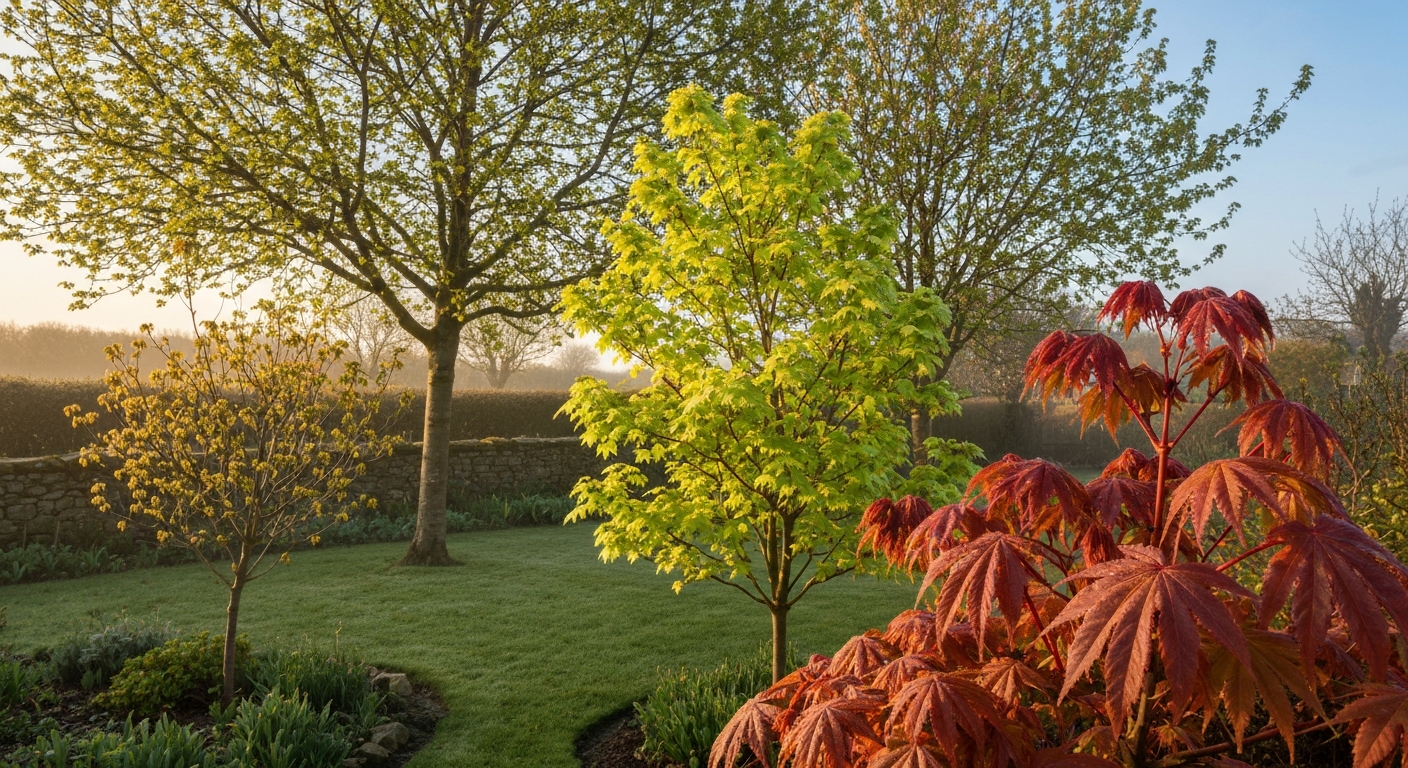
If you're in a genuinely mild part of the UK and want to try an outdoor date palm or Phoenix canariensis, site selection is everything. A south or south-west facing wall is ideal. The wall absorbs heat during the day and radiates it back at night, raising the local temperature by several degrees. This is the same principle that makes kitchen garden walls so effective for trained fruit trees. The palm should be sheltered from north and east winds, which are the coldest and most damaging. Proximity to the sea helps enormously because coastal waters moderate winter temperatures and reduce the risk of hard freezes. Urban heat islands, particularly in London and other large cities, also push winter minima up compared to rural areas at the same latitude. If you're also tracking seasonal leafing of other trees, see when do acers grow leaves UK for guidance on maple (Acer) leaf emergence timing.
Soil drainage is non-negotiable. If your garden holds water over winter, you need to either improve drainage radically with grit and organic matter, raise the planting area, or grow in a container. A date palm sitting in cold wet soil through a British winter is very likely to develop root rot even if the air temperature never drops to a damaging level. The Met Office factsheet, Microclimates (2023) explains that sheltered seaward slopes, south/south‑west aspects, proximity to large water bodies and sheltering topography can raise local minimums and reduce frost risk Met Office factsheet — Microclimates (2023). The Met Office's microclimate guidance reinforces the importance of sheltered seaward slopes and south-facing aspects, and these factors compound: a south-facing, well-drained site near the coast with a sheltering wall or topography behind it is dramatically better than any one of those factors alone.
Aspect, shelter and walls: a quick checklist
- South or south-west facing aspect for maximum sun and warmth
- A south-facing wall or fence directly behind the planting position
- Shelter from north and east winds, ideally from topography or established hedges/trees
- Free-draining soil with added grit if necessary; raised beds work well
- Coastal location or urban setting to benefit from temperature buffering
- Away from frost pockets (low-lying hollows where cold air collects)
Containers, greenhouses and conservatories: the more reliable route
For most UK gardeners, growing a date palm in a large container is the most practical approach. It lets you move the plant under cover in winter and bring it out during the warmer months to maximise light and heat. A container-grown Phoenix dactylifera can spend May to September outdoors in a sunny, sheltered spot and then be moved into a frost-free greenhouse, conservatory or even a cool but frost-free garage for the winter. The practical limit on this approach is size: date palms grow and, over time, a container specimen becomes very heavy and awkward to move. This is a long-term commitment, not just a seasonal task.
A heated greenhouse or large conservatory removes most of the climate constraints for keeping the plant alive and gives the best chance of fruiting. You need to maintain frost-free temperatures (minimum around 5°C is usually sufficient for survival, though warmer is better for growth and fruiting) and provide as much direct sunlight as possible. South-facing glass, supplementary grow-lights in winter, and careful humidity management all help. The key fruiting constraint in a greenhouse is still heat accumulation: you need sustained warm temperatures through the growing season to push flower and fruit development, and most UK greenhouses cool down significantly at night even in summer.
Practical tips for container and greenhouse growing
- Use a very free-draining compost mix: a roughly equal blend of loam-based compost (such as John Innes No. 3) and horticultural grit, with added perlite if drainage is still slow.
- Choose a container with large drainage holes and raise it off the ground on feet to prevent waterlogging.
- Water generously in the growing season but allow the compost to dry out significantly between waterings; in winter, water sparingly and only when the compost is almost fully dry.
- Feed with a balanced fertiliser (higher potassium in late summer to encourage hardening) from late spring through August, then stop completely.
- If attempting fruiting, buy both a known male and a known female plant; sexing is only possible once the plant flowers for the first time, which can take 5 to 8 years from seed.
- Collect male pollen when the male flower spike opens (it looks like a creamy, banana-shaped spike); store dried pollen in a sealed container in the freezer if timing doesn't match female flowering.
- Wrap outdoor or patio specimens in horticultural fleece during cold snaps, paying particular attention to protecting the growing crown at the top of the trunk.
- Repot every 2 to 3 years into a slightly larger container to maintain healthy root growth.
Seasonal care calendar
| Season | Key tasks |
|---|---|
| Late winter (Feb-Mar) | Keep frost-free; water very sparingly; check for pests under glass; plan for bringing outside once frosts ease |
| Spring (Apr-May) | Move containers outside after last frost risk; begin regular watering as temperatures rise; start feeding; watch for new growth and potential flower spikes |
| Early summer (Jun-Jul) | Hand-pollinate if flower spikes appear; increase watering in dry spells; feed monthly; ensure maximum sun exposure |
| Late summer (Aug-Sep) | Continue watering; switch to higher-potassium feed; any fruit will be developing now; reduce feed by end of September |
| Autumn (Oct-Nov) | Reduce watering significantly; bring containers inside before first frosts; mulch outdoor specimens heavily at the base; wrap crowns of borderline-hardy outdoor plants |
| Winter (Dec-Jan) | Keep frost-free under glass; water very rarely; inspect for scale insects; protect outdoor specimens with fleece during cold snaps |
Common problems to watch for
- Root rot from waterlogged soil or compost: the most common killer of date palms in the UK; always prioritise drainage
- Scale insects and red spider mite under glass: inspect the undersides of fronds regularly and treat early with appropriate controls
- Cold damage to the growing crown: if the spear (new central growth) turns mushy or brown after a freeze, the plant is likely dying; prompt treatment with copper-based fungicide can sometimes help if caught early
- Nutrient deficiency, particularly magnesium and potassium, showing as yellowing fronds: correct with a palm-specific fertiliser
- Sunscorch on plants moved too quickly from low-light winter positions to full outdoor sun: acclimatise gradually over a couple of weeks
Should you bother? A decision checklist
Before committing to a date palm, run through these questions honestly. They'll tell you fairly quickly which route, if any, makes sense for your situation.
- Are you in the south coast, Channel Islands, or a well-documented urban heat island? If yes, outdoor Phoenix canariensis is a realistic ornamental option. If no, plan for container or greenhouse growing.
- Do you have genuinely free-draining soil, or can you create it? If your garden holds water in winter, containers are safer than in-ground planting.
- Do you have a heated greenhouse, large conservatory, or at least a frost-free outbuilding for winter? If not, a date palm in the ground anywhere north of the south coast is risky.
- Are you growing for ornament or fruit? If fruit, factor in the need for both male and female plants, hand pollination, sustained summer heat, and the reality that results may be modest.
- Are you patient? A date palm grown from seed can take 5 to 8 years to produce its first flowers. Even a purchased semi-mature specimen will take time to establish before fruiting.
- Would a hardier alternative serve your goals better? If the look of a palm in the garden is the main goal, Trachycarpus fortunei or Chamaerops humilis will deliver that with far less effort and risk.
Where to find date palms in the UK
Phoenix dactylifera plants are available from specialist palm nurseries in the UK, and larger specimens occasionally appear at general garden centres, particularly in southern England. For the hardier ornamental palms like Trachycarpus fortunei and Chamaerops humilis, availability is wide and prices are reasonable for smaller specimens. If you want a specific known-sex plant for fruiting purposes, you'll need to source from a specialist nursery that can confirm the sex of their stock, which usually means buying a plant that has already flowered. Online specialist palm suppliers are often the most reliable source for labelled male or female Phoenix dactylifera.
The bottom line on date trees in the UK
Growing a date tree in the UK is possible, but the version that's possible is mostly an ornamental or greenhouse project rather than a fruit-production enterprise. The true date palm, Phoenix dactylifera, will survive outdoors only in very specific warm coastal microclimates and is best treated as a container or greenhouse plant everywhere else. It won't give you a reliable outdoor harvest of dates in Britain's climate. If you want a palm in the garden without the fight, the hardy alternatives, particularly Trachycarpus fortunei, are enormously more forgiving. If you want to push the boundaries and try for fruit, a heated greenhouse with hand pollination and careful management gives you the best shot. Go in with realistic expectations and the right infrastructure and it's a rewarding project; expect it to behave like a Middle Eastern crop in a British garden and you'll be disappointed. If you're also wondering whether hickory grows in the UK, see our separate guide 'does hickory grow in the UK' for region-specific advice.
FAQ
Can date trees grow in the UK?
Short answer: Mostly no for reliably ripening commercial dates; yes for some palms/related species as sheltered ornamentals in warm microclimates or under protection. True date palm (Phoenix dactylifera) needs long, hot, dry summers and high heat sums to ripen fruit — conditions rarely met outdoors in the UK except in exceptional sheltered coastal sites or in heated glasshouses. Hardy palms such as Trachycarpus fortunei or Chamaerops humilis survive outdoors across much of lowland Britain and can give a “date‑palm look” but won’t produce ripe edible dates reliably.
Which date or date‑like species are most likely to survive outdoors in parts of the UK?
Best prospects for survival (not necessarily fruit): Trachycarpus fortunei (windmill palm) — very widely planted and hardy to roughly −15°C; Chamaerops humilis (European fan palm) — hardy and suited to sheltered, well‑drained spots; Jubaea chilensis and Butia spp. can survive in the warmest sheltered coastal sites but need excellent drainage and wind protection; Phoenix canariensis (Canary Island date) may survive in mild coastal locations but is less cold‑tolerant than the hardiest palms. True date palm (Phoenix dactylifera) is marginal outdoors except in exceptional microclimates or in glasshouses.
Can Phoenix dactylifera (true date) fruit outdoors in the UK?
Unlikely in most of the UK. Fruit development requires high accumulated heat (growing degree‑days) and long, hot, dry summers; UK summers generally lack the necessary heat sum and dryness. Outdoor fruiting is only plausible in very sheltered, warm coastal microclimates (rare) or with protective/greenhouse strategies that raise temperatures and lower humidity during ripening. Even then you typically need hand pollination and careful management.
What’s the difference between growing for ornamental value and growing for fruit?
Growing for ornament focuses on survival and form: select hardier palm species, give shelter, good drainage and winter protection; you may never see flowers or fruit but get tropical structure. Growing for fruit (Phoenix dactylifera) requires specific heat, dry summers, male and female trees (or pollen on hand), precise irrigation timing, very good drainage and often a protected environment (greenhouse/hoop‑house) to reach sufficient temperatures for flowering and ripening. Expect much higher management and lower reliability for fruit.
Which UK locations and microclimates offer the best chance?
Best chances are the warmest, least frosty sites: Channel Islands, Isle of Wight (Ventnor area), sheltered south‑coast gardens (south Devon, Cornwall), very sheltered urban courtyards and rock/sea‑facing slopes with thermal buffering. Key features: south/south‑west aspect, protection from northerly winds, proximity to large water bodies, and well‑drained, south‑facing slopes. Use local frost records or Met Office/HadUK‑Grid data to check minimums; even these sites are marginal for true date fruiting.
How should I site and prepare soil for a date palm in the UK?
Choose the warmest, most sheltered spot with a south or south‑west aspect. Ensure excellent drainage — raised beds, gravelly free‑draining soils or sand amendments help. Avoid heavy, clay, waterlogged ground. Provide a deep soil profile (date palms develop deep roots). Incorporate organic matter for establishment but keep surface soils free‑draining; mulch to conserve heat but keep mulch away from the trunk to prevent rot.
Next Article
When Do Acers Grow Leaves in the UK? Timetable & Care Guide
When do Acers grow leaves in the UK? Budburst timing, species differences, frost risks & care tips.