
Yes, you can absolutely grow wheat in the UK, and it is one of the more rewarding grain crops to attempt at home. You may also wonder whether other crops like cassava can be grown in the UK, which depends heavily on temperature and protection can you grow cassava in the uk. Britain is already one of Europe's major wheat-growing nations, with winter wheat planted across millions of hectares every year from Aberdeenshire to Kent.
Can You Grow Wheat in the UK? Step-by-Step Guide

James Hartwell
29 Apr 2026
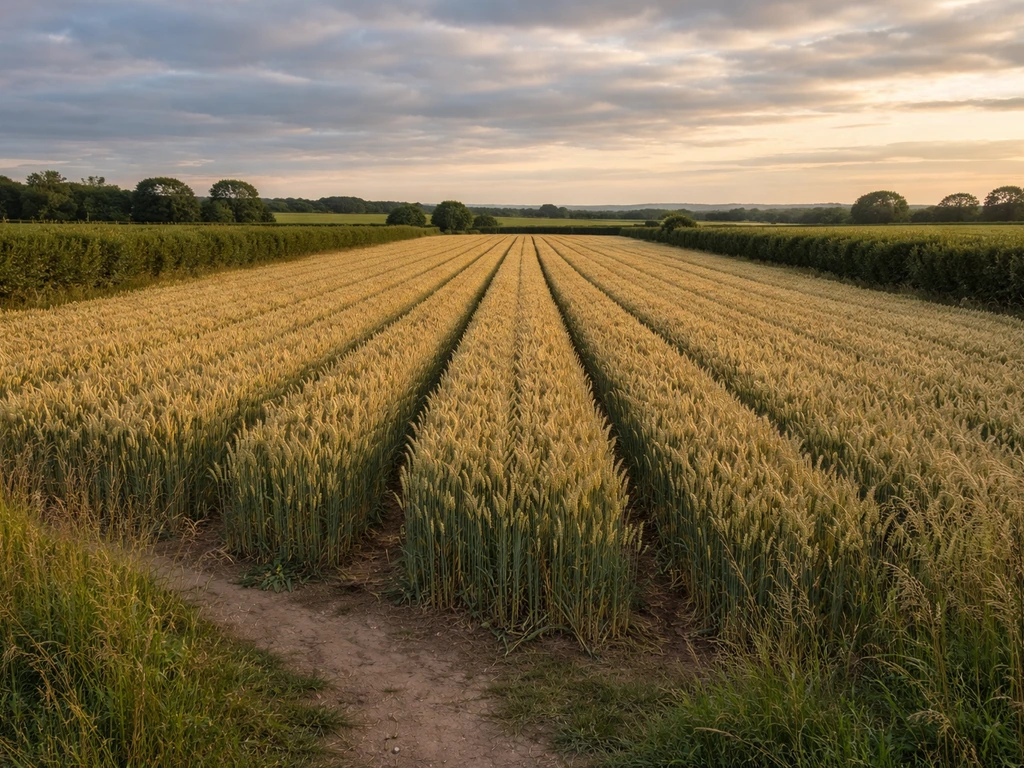
The climate suits it well. What changes for a home grower or smallholder is scale, variety choice, and a few practical realities around harvesting without a combine. Get those right and a first crop is very achievable. You can also grow other plants in the UK, including aloe vera, if you match its light and warmth needs grow aloe vera in the UK.
Is growing wheat in the UK actually realistic?
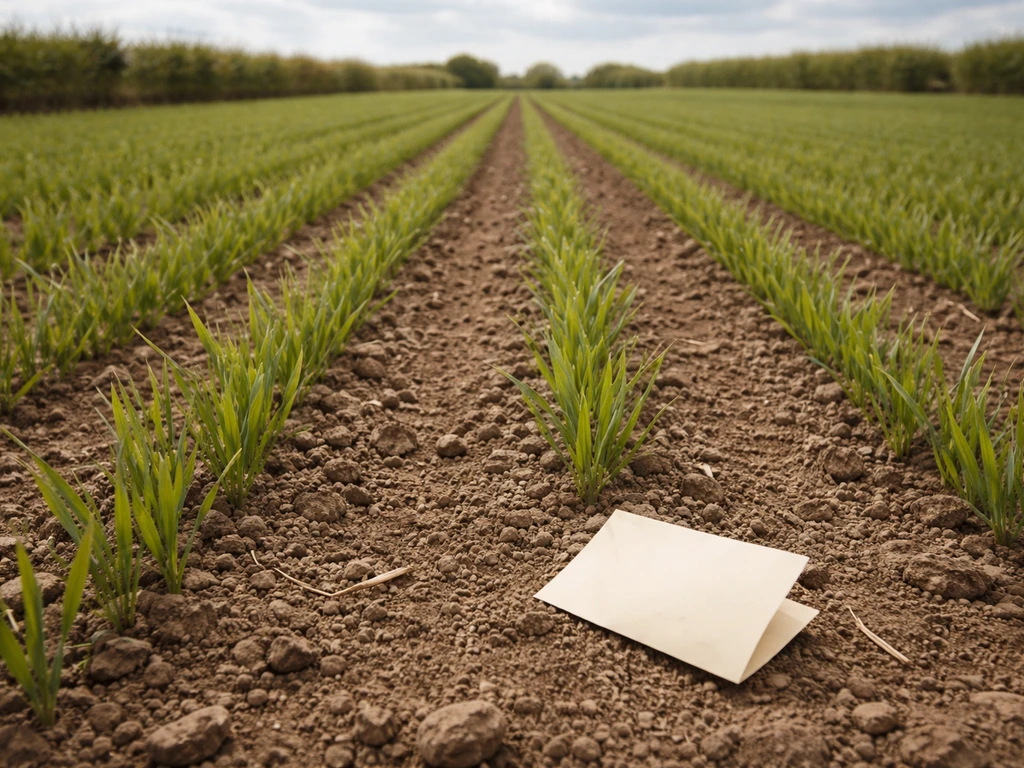
For most people asking this question, the honest answer is: yes, and more straightforwardly than you might think. Wheat is not a tropical exotic that needs coaxing through a British winter. It evolved in temperate climates, tolerates cold and rain, and genuinely thrives in the UK's long mild autumns and cool springs. The commercial farming industry here proves the point at scale every season.
What you should set realistic expectations about is yield and processing. A small plot of, say, 10 square metres will give you enough grain to experiment with, understand the crop, and produce a small amount of flour. You are not going to replace your bread supply from a raised bed, and that is fine. Many people grow wheat for the experience, for straw, or as part of a smallholding rotation alongside vegetables or livestock. Think of it less as a bulk food crop and more as a genuinely satisfying seasonal project with edible results.
Regionally, wheat grows well across most of England, Wales, and lowland Scotland. The further north and west you go, the more rainfall and shorter the growing season, which creates more disease pressure and can make harvest timing trickier. South and east England offer the most reliably dry harvests. That said, even in wetter regions like the Scottish Lowlands or South Wales, winter wheat is grown commercially. Altitude matters more than latitude. If your plot is above about 200 metres, conditions become more marginal and spring wheat is often the safer bet.
Winter wheat or spring wheat? Picking the right type and variety
This is the single most important decision you will make. Winter wheat and spring wheat are not interchangeable, and choosing the wrong one for your situation is the most common mistake beginners make.
Winter wheat
Winter wheat is sown in autumn (September to November in the UK), germinates and establishes before the cold sets in, sits through winter in a vegetative state, then resumes growth in spring and is harvested the following summer. It needs a period of cold to trigger proper ear development, a process called vernalisation. This is the main type grown commercially in the UK and generally gives higher yields than spring wheat. For a home grower with a garden plot or small field, winter wheat is perfectly manageable and suits the UK's climate very well.
Spring wheat
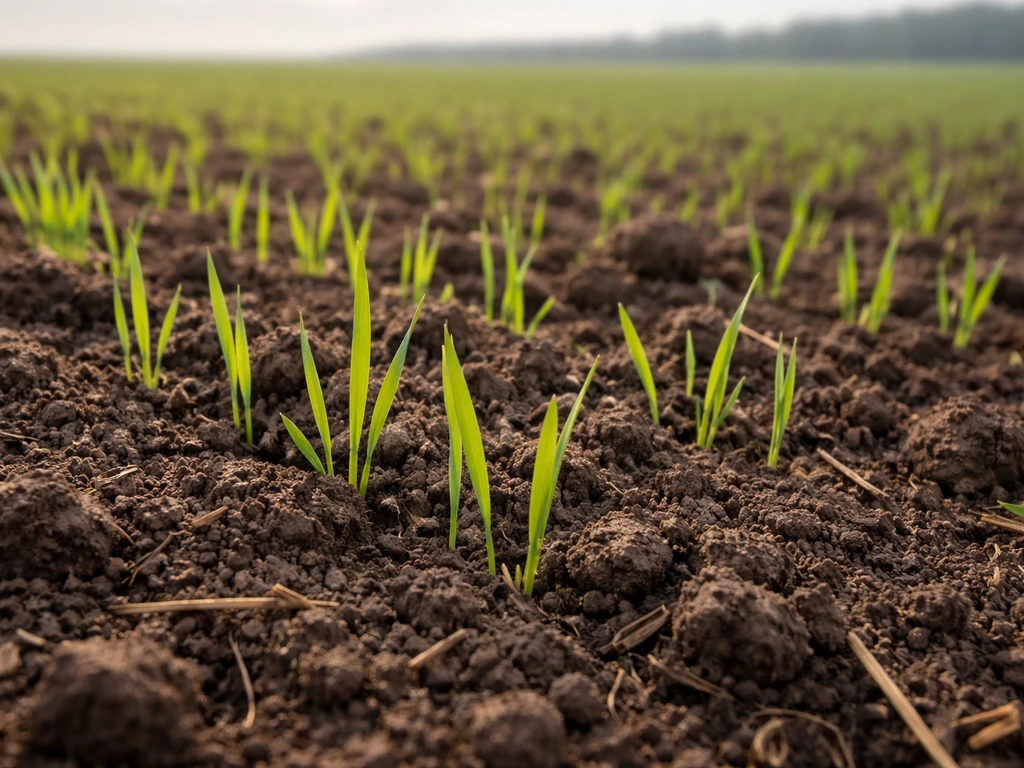
Spring wheat is sown from March onward, completes its entire growth cycle in one season, and is harvested in late summer or early autumn of the same year. It does not need vernalisation. Yields tend to be lower than winter wheat, but it is simpler to fit into a garden rotation, and if you miss the autumn sowing window it is the obvious backup. For growers in higher-altitude areas, northern Scotland, or wetter western regions, spring wheat reduces the disease exposure that comes with a long autumn and winter in the ground.
Which variety should you choose?
For UK growers, the best starting point for variety selection is the AHDB Recommended List. This is a formal UK trial framework where varieties are tested at multiple sites across Britain each year for yield, disease resistance, and agronomic performance. It is the closest thing to an official endorsement of what works under British conditions, and it even filters varieties by sowing date category, which is directly relevant when you are deciding whether to drill in September or push it to late October.
For a first attempt, look for varieties with good disease resistance ratings, particularly for septoria (more on that later). NIAB’s septoria blotch resistance in wheat slide deck is a useful starting point for understanding how resistance works and what to look for when choosing varieties blank" rel="noopener noreferrer">septoria (more on that later). Well-known UK winter wheat varieties that appear on Recommended Lists include KWS Zyatt and KWS Extase, both of which have strong commercial track records in British conditions. For spring wheat, varieties like Mulika (a breadmaking spring wheat) are grown successfully in the UK. Seed merchants such as KWS, Limagrain, and RAGT sell small quantities suitable for trial plots, and some specialist suppliers cater specifically for smallholders and gardeners.
What wheat actually needs: site, soil, and drainage

Wheat is not fussy, but it does have firm requirements around a few things. Get these right and most of the work is done.
- Sunlight: wheat needs a fully open, sunny site. It will struggle in partial shade. Choose the most open part of your garden or plot.
- Drainage: this is non-negotiable. Waterlogged soil will kill autumn-sown wheat over winter and encourages fungal diseases at any time of year. If your soil sits wet for more than a few days after rain, improve drainage before sowing or consider a raised bed setup.
- Soil pH: aim for 6.0 to 7.0. Below 6.0, lime the ground a few weeks before sowing. Most UK garden soils and allotments fall within a workable range.
- Soil structure: wheat needs a firm, fine seedbed. Heavy clay soils need more preparation than sandy or loamy soils. Work in organic matter over time, but do not add fresh compost immediately before sowing as it can create loose, poorly structured soil that affects establishment.
- Wind exposure: some airflow is fine and actually helps reduce fungal disease. However, very exposed, wind-blasted sites can cause lodging (the plants fall over) later in the season, particularly with taller heritage varieties.
For containers and raised beds, it is possible but the yields will be minimal. A 1-metre by 1-metre raised bed can produce a small handful of grain, which is worth doing as an educational experiment or with children, but not as a food source. A ground-level plot of at least 10 to 20 square metres gives you something more meaningful to work with. If you have a quarter of an acre or more, you are into proper small-scale production territory.
UK sowing calendar and how to plant wheat step by step
Timing your sowing correctly is the difference between a well-established crop and one that struggles. Here is the practical UK calendar.
| Type | Sowing window | Harvest timing |
|---|---|---|
| Winter wheat | September to November | July to August (following year) |
| Spring wheat | March to early April | August to September (same year) |
Step-by-step sowing instructions

- Prepare the seedbed two to three weeks before sowing. Dig or rotavate the soil, break down clods, and firm it with the back of a rake until you have a fine, crumbly surface. Remove weeds thoroughly at this stage because controlling weeds once wheat is established is much harder without herbicides.
- Check and adjust soil pH if needed. A simple pH test kit from any garden centre will tell you if you need to lime.
- Sow your seed at a depth of 2 to 4 cm. This is the recommended drilling depth for winter wheat and applies equally to spring wheat on most UK soils. Too shallow and birds will find the seed; too deep and emergence is slow and patchy.
- For a hand-broadcast approach on a small plot, scatter seed evenly and rake in. For a more controlled result, use a garden seed drill or make shallow furrows with a hoe, space about 15 to 20 cm apart, drop seed in, and cover.
- Aim for a target plant population of around 250 plants per square metre for standard varieties once established. To achieve this, sow roughly 300 to 400 seeds per square metre to allow for non-germination and early losses. Later sowings in October or November need higher seed rates because conditions are less ideal for germination.
- Firm the soil lightly after sowing, either by walking over it or using a roller or board. Good seed-to-soil contact is important for reliable germination.
- Water in if the soil is very dry, but in most UK autumns rainfall will handle this naturally.
Looking after your crop through the season
Feeding
Wheat is a heavy nitrogen user. For a small plot without access to professional fertilisers, a general-purpose granular fertiliser with a decent nitrogen content applied in early spring (February to March for winter wheat, around four to six weeks after emergence for spring wheat) will make a significant difference to yield. The standard commercial approach splits nitrogen applications, with the bulk applied around stem extension in April or early May. For a garden scale, one good feed in early spring is usually sufficient. Avoid applying nitrogen too late in the season as it pushes vegetative growth at the expense of grain filling.
Weed control
Weeds are your biggest competition problem, especially in the early stages. Without herbicides (which home growers typically do not use), your best tool is starting clean. Prepare your seedbed thoroughly, let the first flush of weeds germinate after cultivation, hoe them off, and then sow. Once the wheat reaches about 10 to 15 cm tall and starts to tiller, it shades out a lot of annual weeds. Hand-weeding is realistic on small plots. Perennial weeds like couch grass or bindweed are a serious problem and should be eradicated before you even think about sowing.
Watering
In most UK seasons, winter wheat does not need irrigation at all. Natural rainfall handles it. Spring wheat sown in March may benefit from watering during dry spells in May or June when the plants are actively growing and ears are forming. In a drought year, water stress at ear emergence can significantly reduce grain fill. For a small plot, this is easy to manage with a watering can or hose.
Growth management and lodging
Taller heritage varieties of wheat can lodge (fall over) if conditions are wet and windy in June or July. Modern shorter-strawed varieties bred for UK conditions are much more lodging-resistant. If you are using a heritage or heritage-style variety for flour quality reasons, be aware of this and choose a sheltered spot if you can. Lodged crops are difficult to harvest and more prone to disease and grain sprouting in wet weather.
Problems to watch for in UK conditions
Birds
Pigeons and sparrows will eat freshly sown seed and later peck at ripening ears. This is one of the most frustrating problems for small-plot growers. Netting your plot at sowing time is highly effective. At ripening, bird scarers, reflective tape, or a fine net over the crop will help. Without protection, bird damage can wipe out a significant proportion of your crop.
Septoria and fungal diseases
Septoria tritici is the most important wheat disease in the UK, full stop. It is a fungal leaf blotch that spreads in wet, mild conditions (which describes a lot of UK springs and autumns). Symptoms are brown blotchy lesions on the lower leaves, gradually moving up the plant. Commercial growers use fungicide programmes timed to protect newly emerging leaves, but for a home grower the practical response is preventive: choose a variety with strong septoria resistance from the Recommended List, avoid sowing too early (September sowings in warm autumns are more at risk than October sowings in cooler conditions), and ensure decent airflow around your plot. Yellow rust and brown rust can also appear in certain seasons and varieties.
Slugs
Slugs eat emerging seedlings and can devastate establishment on heavy, moist soils. AHDB notes that the optimum sowing depth in wheat is around 4 cm, with the exact depth depending on pest threats such as slugs and rooks and other establishment factors. This is more of a problem in the west and north of the UK. Ferric phosphate slug pellets are approved for organic use and are worth applying at sowing on any plot where slugs are known to be active.
Weather risks
A very wet harvest period is the main weather risk for UK wheat growers at any scale. Grain that sits in the field too long in wet conditions can sprout in the ear, which ruins milling quality and storability. Harvest timing is critical and requires watching the weather carefully. In northern and western regions, the harvest window can be frustratingly short.
Harvesting your wheat and handling the grain
When to harvest
Winter wheat is typically ready in July or August in the UK. Spring wheat tends to be ready a few weeks later, often into August or early September. The visual signs are unmistakeable: the ears turn golden, the stems dry out and straw-coloured, and the grains in the ear are hard and dry when you bite them. If in doubt, take a handful of ears from different parts of the plot and rub them out. The grain should be firm and chalky-white or pale yellow, not soft or doughy.
Harvesting on a small plot
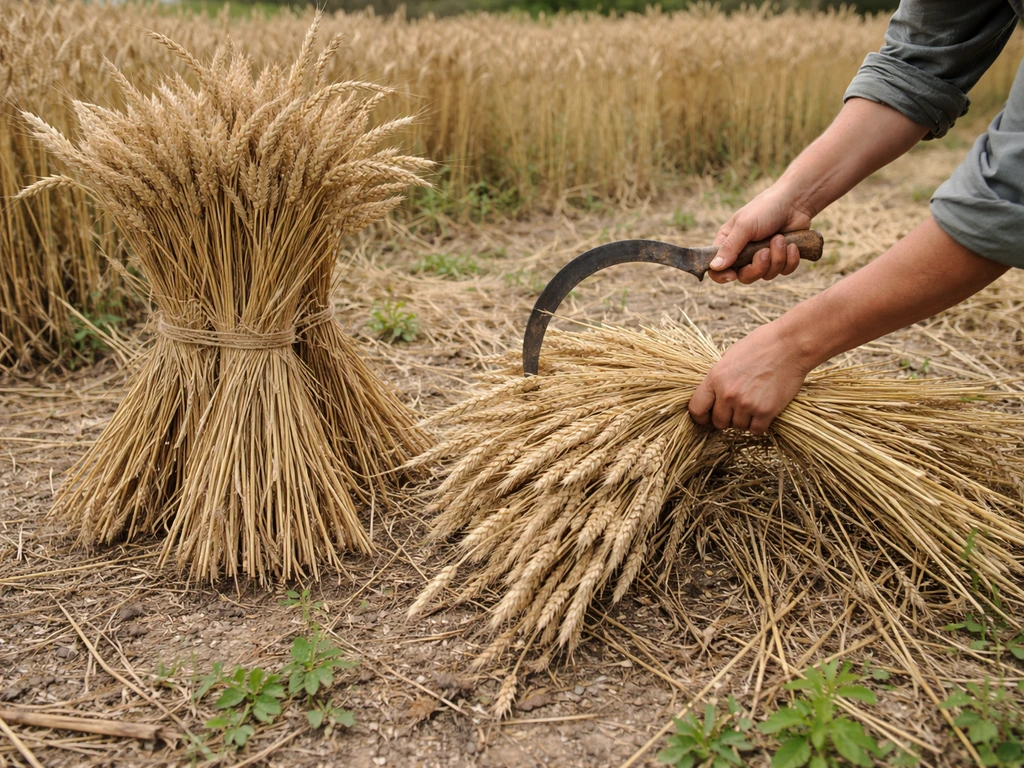
On a garden scale, you harvest by hand. Use a sickle or scythe (or even scissors on a very small plot) to cut the stems, tie them into sheaves, and leave them standing in a stook (a classic A-frame bundle arrangement) for a week or two in dry weather to finish drying. Then thresh the ears to separate grain from chaff. The simplest method is to beat the sheaves against the inside of a large tub or barrel. Winnowing by pouring the grain between two containers in a gentle breeze removes the lighter chaff.
Drying and storing grain safely
Grain stored at too high a moisture content will go mouldy and can become unsafe. AHDB guidance puts the key food safety risk threshold at 14. 5% moisture content. For safe home storage over more than a few weeks, aim to get grain down to around 13 to 14% moisture.
In a good UK summer harvest, freshly threshed grain can be as dry as 8 to 10% in eastern England, but in a wetter northern or western season it may come in much higher. Spread grain in thin layers on trays in a warm, airy space (a polytunnel on a sunny day works well) to finish drying before storing in sealed, airtight containers away from rodents. Check regularly in the first few weeks.
Getting started today: your practical checklist
If you are reading this in spring or summer, now is the time to plan and source seed for an autumn sowing. If it is already autumn, you may still have a sowing window open. Here is exactly what to do next.
- Decide on winter or spring wheat. If you can sow between now and early November, go for winter wheat for better yields. If you have missed the autumn window, plan for spring wheat from March.
- Choose a variety from the AHDB Recommended List. Filter for strong disease resistance, especially septoria. For a first attempt, stick with well-tested commercial varieties rather than heritage types, which need more management.
- Source your seed. KWS, Limagrain, and RAGT all sell certified UK seed. For small quantities, try specialist smallholder or heritage grain suppliers. Search for 'small quantity wheat seed UK' to find suppliers stocking 1 to 5 kg bags, which is sufficient for a substantial garden trial.
- Assess your site. Choose the sunniest, most open spot on your plot. Check drainage after heavy rain. Test soil pH if you have not done so recently.
- Prepare the seedbed at least two weeks before sowing. Clear weeds, cultivate, firm the surface.
- Sow at 2 to 4 cm depth, aiming for approximately 300 to 400 seeds per square metre. Net the plot immediately after sowing to protect from birds.
- Mark your sowing date in your calendar and note your expected harvest window. For winter wheat sown in October, plan for July harvest the following year.
- Feed in early spring with a nitrogen-containing fertiliser. Water if you get a very dry May or June.
- Watch the lower leaves from April onward for early septoria signs and check for slug damage after sowing.
- Harvest when grain is hard and straw is golden. Dry thoroughly before storage and keep below 14.5% moisture content.
Wheat is one of those crops that rewards attention to timing and preparation more than anything else. Get the sowing window right, choose a variety suited to UK conditions, protect from birds, and start with well-drained soil, and you are most of the way there. It is a very different growing project from vegetables, but deeply satisfying in a way that few other crops match.
If you have experimented with growing corn or amaranth in the UK, you already have a feel for the patience that grain crops require. Yes, and if you are wondering specifically about growing corn in the UK, you will want to choose varieties that suit your season and give them enough warmth and space. Wheat just happens to be considerably better suited to British weather than most of them.
FAQ
If I miss the autumn window for winter wheat, can I still get a crop that year?
Yes, but your options narrow. You can either switch to spring wheat and sow from March onward, or keep winter wheat anyway and accept you may lose some vernalisation quality and yield. For a first grow, it is usually safer to move straight to spring wheat when autumn sowing is missed.
Do I need to grow winter wheat, or is spring wheat easier for a UK beginner?
Spring wheat is typically easier for new growers because it avoids the long in-ground phase through autumn and winter and reduces disease pressure. However, winter wheat often performs better in UK trials, so if you can sow on time and protect from birds, winter can be very manageable too.
What soil type works best for home wheat in the UK?
Choose well-drained soil. Heavy, waterlogged ground increases slug and disease risk and makes harvest harder if rain delays drying. If your site holds water, raised beds or working in compost to improve structure can help, but containers will still give low yields.
How do I prevent birds without completely covering the whole plot forever?
Net early at sowing time, then keep it until the grain is safely past the most vulnerable stages (emerging seedlings and when ears start to form). A practical approach is to net right after sowing and remove or loosen it once the crop is tall and less attractive, then switch to a finer barrier when ears ripen.
Is wheat suitable for growing in Scotland and wetter west regions?
It can be, but you should expect a shorter, more weather-dependent harvest period. Spring wheat is usually the safer first choice in wetter or higher-altitude areas, and choosing a variety with strong disease resistance plus good airflow around the plot becomes even more important.
How much space do I need to make wheat worth doing for flour, not just a learning crop?
A rough rule is that 10 to 20 square metres gives a small experimental amount, while quarter of an acre or more is where you can realistically end up with enough grain for repeated milling. If you want to compare, keep notes on planted area, variety, and final threshed weight each season.
Can I save seed from my harvest to grow again next year?
You can, but test quality matters. Use seed only from the best, healthiest part of the plot and store it dry and cool to prevent mould. Also note that saved seed may not match the trial performance of purchased seed, so yield can drop unless you select carefully over multiple generations.
Do I need a combine or special machinery to harvest wheat at home?
No. For small plots you can harvest by hand, cut into sheaves, dry in stooks, then thresh and winnow manually. The critical constraint is time and dry weather, so plan to watch the forecast closely and have a place to dry and store grain quickly.
What’s the real risk if I harvest late in wet weather?
The biggest issue is sprouting in the ear and reduced milling quality, plus storability problems. Even if grain looks acceptable, sprouted or wet grain can be harder to dry to safe levels, so it is better to harvest at the first clear window and then manage drying indoors if rain interrupts.
How can I tell when wheat is ready without guessing?
Use both visual and physical checks. Look for golden ears and drying stems, then rub out grains from several spots across the plot. They should be hard and dry (not soft or doughy). If many grains are still green or leathery, you likely need more time.
Is 14.5% moisture content really the key number for storage safety?
It is a useful guideline for food safety risk, but conditions vary by season and storage setup. If you cannot confirm moisture with a meter, prioritize finishing drying until grain feels reliably dry, store in airtight containers, and check frequently in the first few weeks to catch problems early.
What fertilizer approach should I use if I cannot measure nitrogen precisely?
For small plots, it is usually better to apply a single early spring feed rather than guessing multiple doses. Follow the label instructions for your chosen granular fertiliser, aim for moderation, and avoid heavy late-season feeding because it can increase lodging and reduce grain fill.
What if my wheat gets lodging, can I still harvest and get usable grain?
Sometimes, but it is harder and riskier. Lodged crops are more prone to disease and wet-weather grain sprouting, so harvest promptly if the weather turns. Consider drying more aggressively after threshing, and inspect for mould before storing any grain.
What are the most common first-season mistakes when growing wheat in the UK?
The top ones are choosing the wrong type for the situation (winter vs spring), sowing too early in warm autumns (increasing septoria risk), skipping seedbed cleanliness, and waiting too long to harvest. If you correct those four areas, your odds improve a lot.
Next Article
Can You Grow Aloe Vera in the UK? How to Succeed
Can you grow aloe vera in the UK? Get UK-specific indoor, summer outdoor, or sheltered overwintering steps.