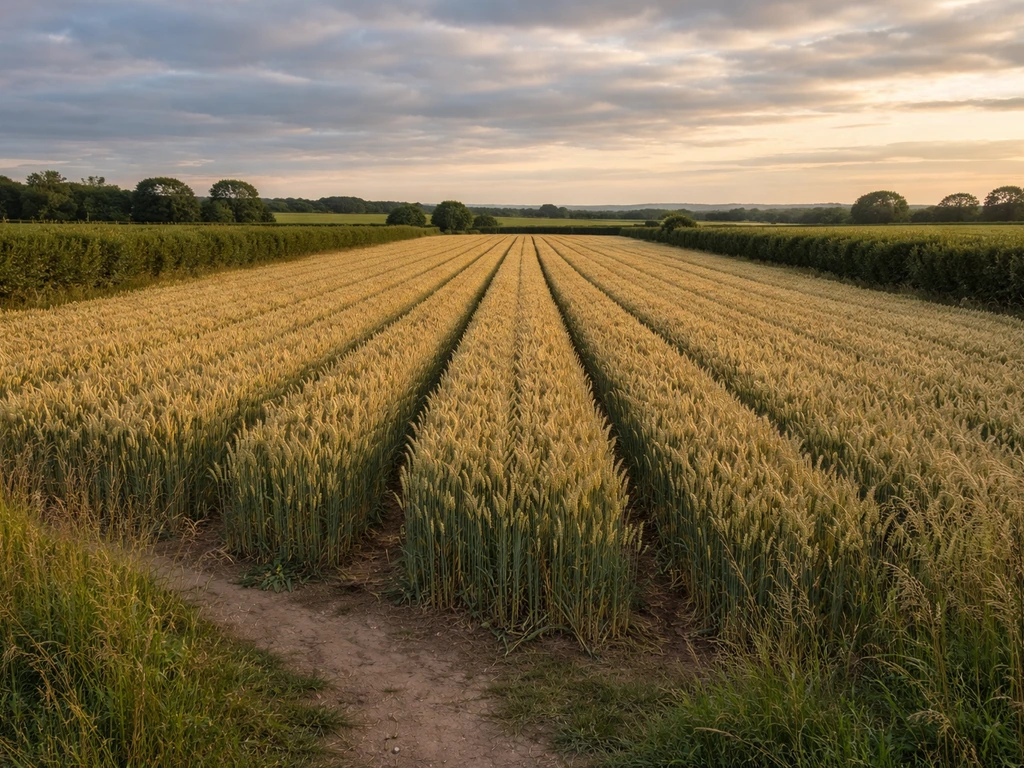
Yes, you can grow corn in the UK, and plenty of gardeners do it every year with genuinely good results. The catch is that success depends heavily on picking the right variety, starting at the right time, and giving your plants a warm, sheltered spot. In the south of England, outdoor corn is reasonably reliable in most summers. Further north, you need to be a bit more strategic: think polytunnel, raised beds, or at least a sheltered south-facing plot. It's not the easiest crop for British conditions, but it's absolutely doable, and when you pull a fresh cob straight from the garden and cook it within minutes of picking, you'll understand why people bother.
Can You Grow Corn in the UK? UK Guide to Success
James Hartwell
20 May 2026
Quick verdict: can corn grow in the UK?
Corn (or sweetcorn, as it's most commonly grown in UK gardens) is a warm-season crop that needs a decent run of summer heat to produce cobs. The UK sits at a challenging latitude for it, but it's not out of reach. If you specifically want to know can you grow wheat in the UK, the rules are a bit different since wheat is a cool-season crop and has its own planting window. The RHS is pretty honest about this: outdoor sowing is only truly reliable in southern areas and on warm, light soil. If you're in the Midlands, North, or Scotland, you can still succeed, but you're working against a shorter growing window and you need to lean on early varieties and a bit of protection. The key numbers to keep in mind are: soil temperature must be above 10°C before you sow or plant out, corn is frost-tender and will be killed by a late cold snap, and early varieties like Swift F1 need roughly 70 to 80 days from transplanting to harvest. That's tight for a UK summer but very much achievable.
Choosing the right corn variety for UK summers
Variety choice is probably the single biggest factor in whether your corn succeeds or stalls. The UK doesn't have the long, hot summers that American or southern European corn growers enjoy, so you want varieties bred for early maturity and performance in cool, short seasons. Avoid anything that bills itself as a 'main season' or late variety. Stick to early types.
Swift F1 is the go-to recommendation for most UK gardeners and it holds an RHS Award of Garden Merit. It consistently outperforms other varieties in cool, short summers, matures in around 70 to 80 days, and produces one to two well-filled cobs of roughly 20cm per plant from late summer. If you want a reliable first attempt, start here. Bodacious F1 is another solid early option at around 75 days to maturity and has some resistance to common rust, which is a disease worth thinking about in wetter UK summers. Other varieties worth looking at include Earlibird F1, Double Standard, Sweetie, and Sweet Nugget F1, all of which appear in UK variety trial guides and are suited to British conditions.
| Variety | Days to Maturity | Notes for UK Growers |
|---|---|---|
| Swift F1 (AGM) | 70-80 days | RHS recommended, best all-round choice for cool short summers |
| Earlibird F1 | ~70 days | Good for northern regions, very early maturing |
| Bodacious F1 | ~75 days | Some rust resistance, reliable early cropper |
| Double Standard | ~75 days | Bicolour cobs, suits UK trials |
| Sweet Nugget F1 | ~75 days | Compact plants, suitable for smaller plots |
Site, soil, and microclimate setup
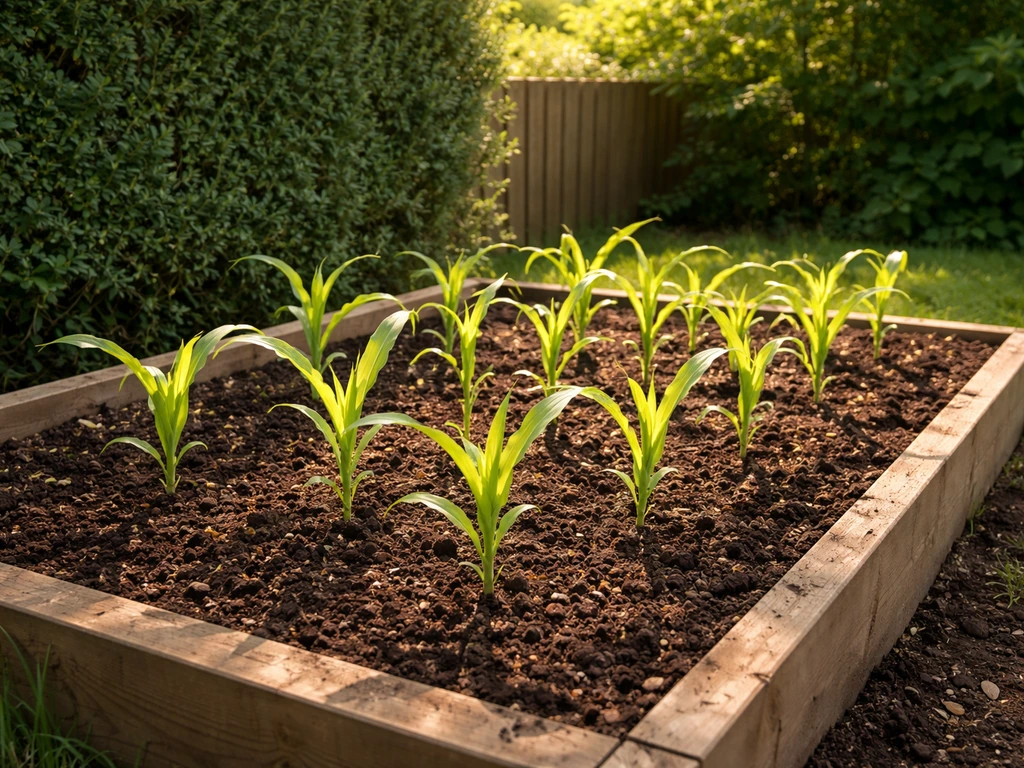
Corn is a sun-hungry crop and it won't apologise for it. You need a spot that gets full sun for the bulk of the day, ideally six or more hours, and one that's sheltered from strong winds. Wind matters for two reasons: young corn plants can be physically damaged by strong gusts, and the plants rely on wind to transfer pollen between them for cob formation. What you don't want is a wind tunnel. A south-facing border against a fence or wall is ideal. That heat-absorbing wall will raise your local temperature a couple of degrees, which makes a real difference over a British summer.
Soil should be free-draining but moisture-retentive, which sounds contradictory but just means a decent loam or well-improved sandy soil. Corn doesn't like sitting in waterlogged ground, but it also needs consistent moisture to develop well. Dig in plenty of compost before planting and aim for a slightly acidic to neutral pH around 6.0 to 7.0. Raised beds are worth considering, especially in the north, because they warm up faster in spring and drain better than compacted ground. You can warm your soil further by laying cloches or clear plastic over the bed two weeks before sowing or planting out, which is a straightforward trick that can give you a meaningful head start.
If you're in Scotland, northern England, or any area with a short frost-free growing season, a polytunnel or large cloche really shifts the odds in your favour. Growing under cover isn't cheating; it's just matching your tools to your climate. Even a simple polythene tunnel over a raised bed can extend your season enough to get a reliable harvest from an early variety. Containers are possible in theory but corn's root system is substantial and cobs are poor from pot-grown plants, so only attempt it if you have very large containers and no other option.
When and how to sow corn in the UK
The standard advice for most UK gardeners is to sow indoors in late April and transplant outside in late May to early June, once the risk of frost has passed and the soil has warmed above 10°C. This indoor start is the safer approach because corn seedlings killed by a late frost are a genuinely demoralising setback. Sow seeds individually into small pots or modules at a depth of about 2.5cm, and keep them somewhere warm: you're aiming for around 18 to 21°C for germination, which takes roughly 10 to 12 days. A windowsill above a radiator or a heated propagator works well.
Before you plant out, harden off the seedlings over a week or two by bringing them outside during the day and back under cover at night. Once they're acclimatised, plant them into their final position in a block formation, not a single row. This is important for pollination (more on that shortly). Space plants 34 to 45cm apart in each direction, in a grid pattern. A 4x4 block of 16 plants is a sensible minimum for a small plot. If you're in a warmer part of the south and want to direct-sow outdoors, wait until late May when soil temperatures have genuinely reached 10°C, use cloches to pre-warm the bed, sow 2.5cm deep, and keep the cloches on as long as practically possible over the young plants.
- Mid to late April: sow seeds indoors in individual pots at 2.5cm depth, keep at 18-21°C
- Germination in 10-12 days; grow on in a warm bright spot
- Early to mid May: begin hardening off seedlings outdoors during the day
- Late May to early June: plant out in a block, 34-45cm spacing in each direction, once soil exceeds 10°C
- Alternatively for southern UK only: direct sow outdoors in late May under cloches at 2.5cm depth
Ongoing care: watering, feeding, and keeping on top of weeds
Corn is a hungry, thirsty crop once it gets going. Water consistently through the growing season, particularly during three critical windows: at establishment just after planting, when the tassels appear at the top of the plant (this is flowering), and when the cobs are swelling. During dry spells, water deeply rather than giving a light splash every day. In a typical UK summer with reasonable rainfall you won't need to irrigate constantly, but during any dry stretch of more than a week, get the hosepipe out. Inconsistent watering during cob development leads to poor kernel fill and gaps on the cob.
Feed with a balanced general fertiliser at planting, then switch to a nitrogen-rich feed (a liquid seaweed or a general vegetable fertiliser) every two to three weeks once the plants are establishing. Corn is a heavy nitrogen user and will yellow off quickly on poor soils without feeding. Keep the bed weed-free especially in the early weeks, as young corn plants don't compete well with established weeds. Once plants are knee-height they shade the ground and weeds become less of an issue. Avoid hoeing too deeply around the roots, which are shallow and can be disturbed by careless cultivation.
Pollination and actually getting cobs
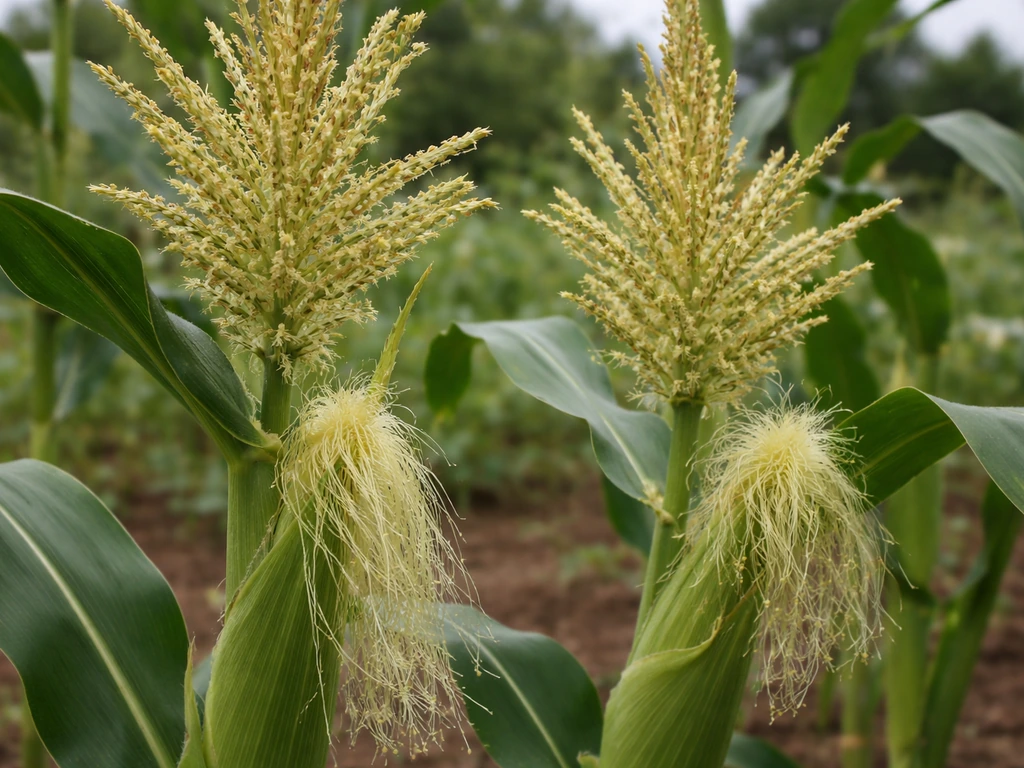
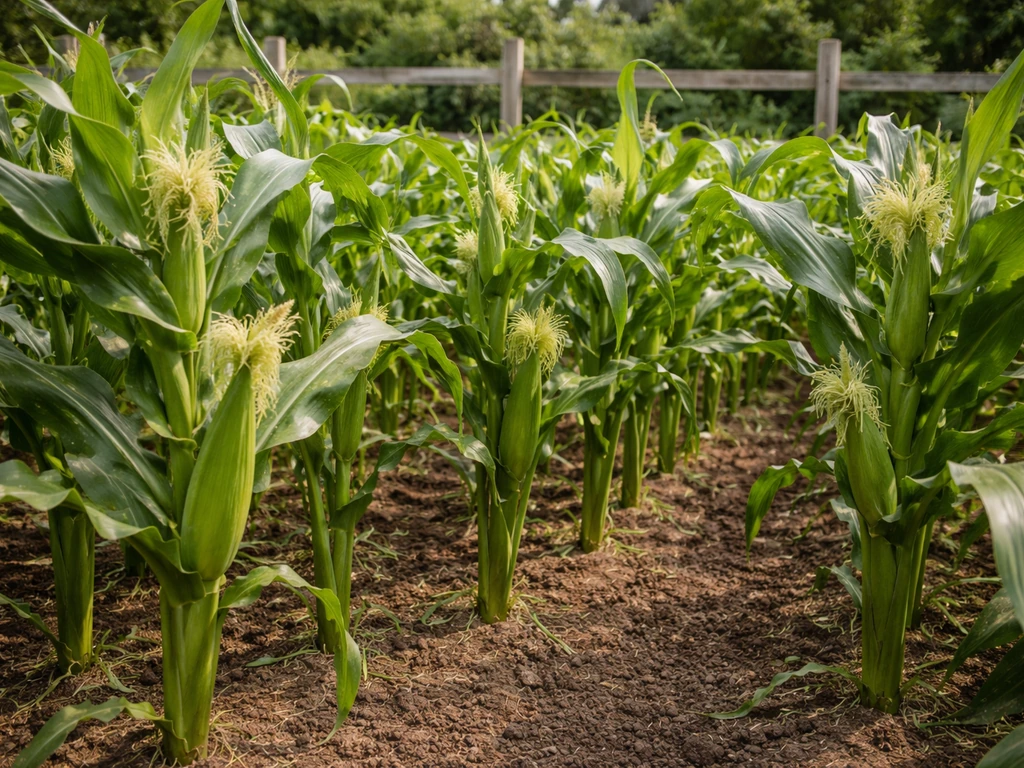
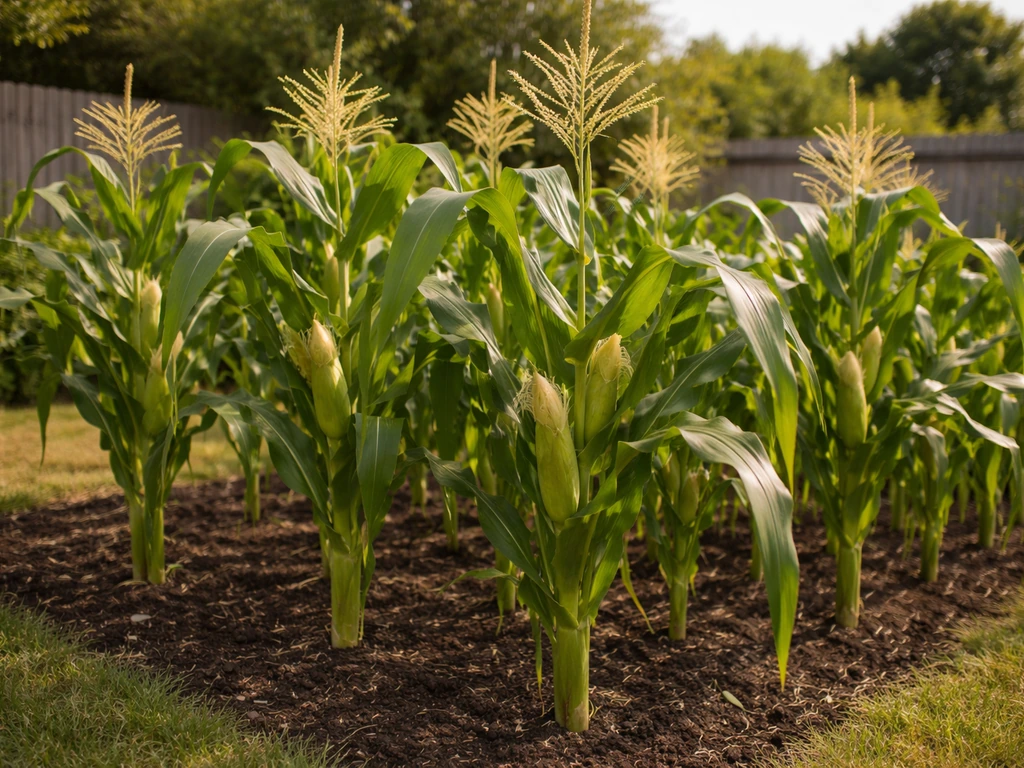
This is where small-plot corn growing can go wrong and it's worth understanding properly. Sweetcorn is wind-pollinated. The tassel at the top of each plant produces pollen, which needs to fall onto the silks (the fine threads emerging from the developing cobs lower down the plant). For this to happen reliably, you need multiple plants growing close together in a block. A single row of corn, or just two or three plants, produces poorly filled cobs with missing kernels because there simply isn't enough pollen flying around to hit every silk. The RHS specifically recommends block planting, not rows, for exactly this reason.
With a small plot, if pollination looks uncertain (for example during a windless, wet spell when the tassels are open), you can help things along. Shake the plants gently in the morning when tassels are visible and dry, or cut a tassel off and brush it directly over the silks on another plant. It feels a bit ridiculous but it genuinely works. Watch the silks: fresh silks are pale creamy or green and slightly sticky. Once pollination has happened they dry out and turn brown. That browning of the silks is your cue that cob development is underway.
Pests, diseases, and common problems in UK gardens
Slugs are your biggest enemy, particularly in the weeks just after transplanting. Young corn seedlings at ground level are exactly what slugs love, and a wet May or June in the UK can see a whole tray of carefully raised plants demolished overnight. Use biological slug control (nematodes) or copper barriers around seedlings, and go out at night with a torch to remove slugs by hand if numbers are high. The metaldehyde-based slug pellets that used to be standard are now banned in the UK, so lean on alternatives. Iron phosphate pellets are still available and are less harmful to wildlife.
Aphids can colonise the tassels and upper leaves of corn plants, particularly in warm settled weather. A jet of water knocks most of them off, and encouraging predatory insects by planting flowers nearby helps manage populations naturally. Common rust is a fungal disease showing up as small yellow flecks on the leaves that turn into orange-brown pustules. It's more of a problem in humid summers. Bodacious F1's partial rust resistance is a genuine selling point if you've had rust issues before. There's no cure once rust takes hold, but removing affected leaves and ensuring good air circulation helps slow its spread.
- Slugs: use nematodes, iron phosphate pellets, or hand-pick at night; protect seedlings closely in the first few weeks
- Aphids: blast off with water, encourage hoverflies and ladybirds, treat with insecticidal soap if severe
- Common rust: choose resistant varieties where possible, remove affected leaves, avoid overhead watering
- Badgers and squirrels: can damage cobs as they ripen; a simple wire fence or net over the crop helps
- Poor cob fill: almost always a pollination issue, see the block-planting advice above
When to harvest, what yield to expect, and is it worth it?
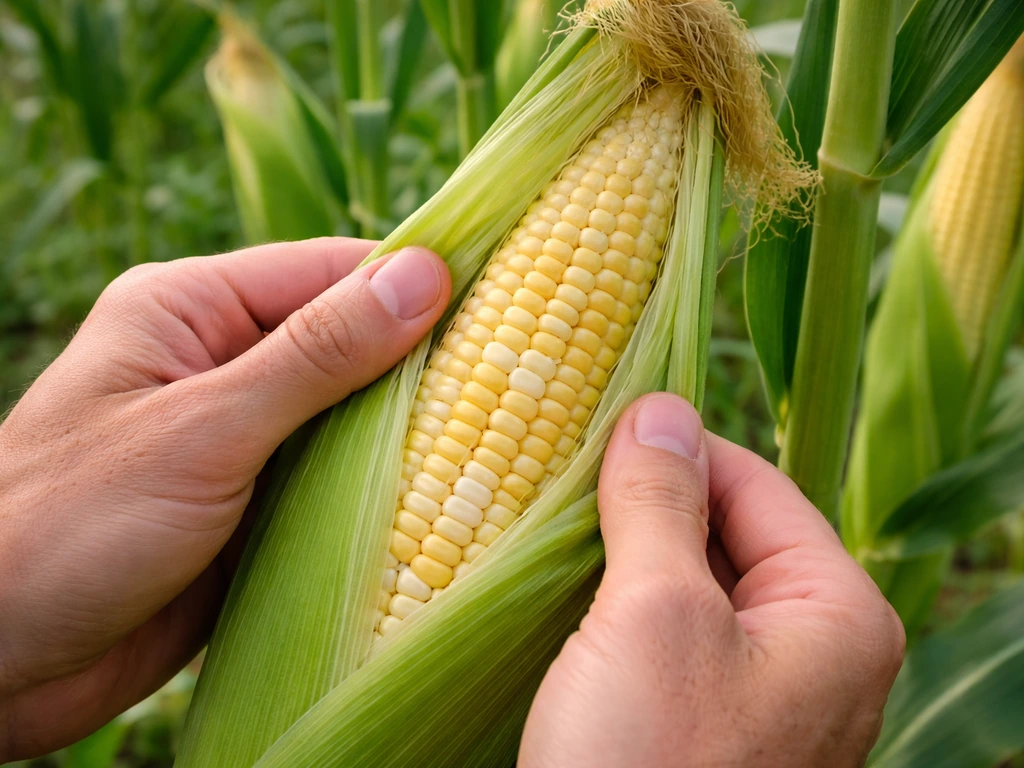
Judging harvest readiness is one of the skills you pick up quickly. Once the silks have fully browned, peel back a little of the husk and press a thumbnail into a kernel. If a milky white liquid spurts out, the cob is ready. If the liquid is watery, it needs more time. If it's starchy and doughy, you've left it too long. You're aiming for that milky stage, which in a good UK summer typically arrives from August onwards with an early variety. A word on timing once harvested: sweetcorn converts its sugars to starch rapidly after picking, losing around 50% of its sweetness within 24 hours. Get it in the pot within an hour or two of picking and you'll understand what fresh sweetcorn actually tastes like.
Expect one to two cobs per plant with a variety like Swift F1. A 16-plant block gives you a realistic harvest of 16 to 32 cobs over the season, which is a meaningful amount but not a glut. Yields vary significantly based on summer warmth: a hot July and August will give you plump, well-filled cobs; a grey, cold summer will leave you with undersized ones. That variability is just the reality of growing a warm-season crop at this latitude.
Is it worth doing again? For most people who try it with the right variety and setup, yes. The flavour of a just-picked homegrown cob eaten within minutes is genuinely unlike anything from a supermarket. It's also a satisfying plant to grow because it's visually dramatic and the kids love it. The main reasons people give up are picking the wrong variety, planting out too early into cold soil, or growing too few plants in a row instead of a block. Fix those three things and you're in a strong position. If you enjoy growing crops that need a bit of coaxing in British conditions, you might also want to look at amaranth and cassava, which are among the other warm-season plants that UK growers experiment with, though corn is considerably more achievable than either of those in most UK gardens. If you're specifically wondering can you grow cassava in the UK, it’s largely limited to very sheltered spots or indoor-style growing because cassava is far more frost-sensitive than corn. If you're also wondering about houseplants, you can grow aloe vera in the UK, but it needs warmth and protection.
Your corn-growing checklist for this season
- Choose an early variety: Swift F1 (AGM) is the safest bet for most UK regions
- Sow indoors in individual pots at 2.5cm depth in mid to late April at 18-21°C
- Harden off seedlings for one to two weeks before planting out
- Pre-warm your outdoor bed with cloches for two weeks before transplanting
- Plant out in late May to early June in a grid block, 34-45cm apart each way, minimum 4x4 plants
- Protect young transplants from slugs immediately using nematodes or iron phosphate pellets
- Water deeply and consistently, especially during tasselling and cob swell
- Feed with nitrogen-rich liquid fertiliser every two to three weeks
- Check for browning silks from late July onwards and test kernels for milky stage
- Harvest and cook within hours of picking for the best flavour
FAQ
Can you grow sweetcorn in containers in the UK?
Yes, but only as “sweetcorn for potted crops” rather than true container success. Corn’s root system is substantial, and you also need a block of plants for pollination, so small pots usually lead to poor kernel fill. If you must container-grow, use very large containers (deep, wide), keep soil consistently moist, and plant several pots close together so pollen can move between plants.
If the weather looks warm, can I still plant corn out early in the UK?
Don’t focus only on the calendar date, check soil and night temperatures. Even if you see a warm day, a cold night can stall growth or kill plants, because corn is frost-tender. Use the soil warmth rule (above about 10°C) plus a frost-free forecast, and expect you may need to delay planting outdoors if cold snaps keep returning in late spring.
What if my corn produces tassels but the cobs don’t fill properly?
This is normal with corn grown in cooler UK summers. If you get tassels but little cob fill, the common causes are insufficient plant numbers for pollen transfer, inconsistent watering during cob swelling, or plants being stressed by wind. Fixing it usually means planting a full block from the start and maintaining steady moisture once silks appear, because you cannot “rescue” kernel set after the fact.
Can I grow corn if I’m aiming for a late-summer harvest, not an August one?
Yes, but start with the “early” variety rule and adjust your harvest plan. Even early types need roughly 70 to 80 days from transplanting, and sweetcorn loses sweetness quickly after picking, so you want harvest timing to line up with a warm spell if possible. That often means aiming for transplants in late May to early June (or starting earlier under cover) rather than sowing too late outdoors.
Is daily light watering enough for sweetcorn in the UK?
You generally should not, because corn relies on consistent growth and steady moisture during flowering and cob swelling. Light, frequent watering encourages shallow roots, which makes plants more vulnerable to drought stress and kernel gaps. Aim for deep watering when the top layers start to dry, especially during tasselling and the first stages of cob enlargement.
How do I know if my corn needs more feeding, and what should I change?
Nitrogen deficiency shows up as yellowing, usually starting with older leaves, and it can happen even if your soil looks “okay.” Because UK soils can be variable, use a balanced feed at planting, then switch to a nitrogen-rich liquid every couple of weeks once growth is established, and stop overfeeding if plants become overly leafy with slow cob development.
What should I do if slugs keep destroying my corn seedlings?
If slugs take out seedlings repeatedly, improve the protection before transplanting. Use barriers around the planting area, consider nematodes preventively, and remove nearby hiding places like dense weeds or debris. Also, don’t keep seedlings outside unprotected in wet weather, because the damage often happens within hours after planting.
Can I prevent aphids and rust without spraying chemicals?
Yes, and it’s mostly about water stress and airflow. Aphids on tassels can be knocked off with a strong jet of water, and dense, humid plantings increase rust risk. Planting in a proper block with correct spacing and avoiding overcrowding helps circulation, and removing badly affected leaves can slow spread when rust appears.
How can I tell the exact day to pick my sweetcorn in the UK?
Harvest readiness is tied to cob maturity and the “silk signals” you mentioned. If you’re unsure, do a quick kernel test, but also check that the silks are fully browned and the kernels are plump and firm, not rubbery and underdeveloped. If the kernel liquid is watery or the cob looks thin, give it a few more days, because UK summers can vary and your first attempt might not be perfectly timed.
Next Article
Can You Grow Wheat in the UK? Step-by-Step Guide
Learn if you can grow wheat in the UK and follow a UK seasonal guide for soil, sowing, care, pests, and harvest.