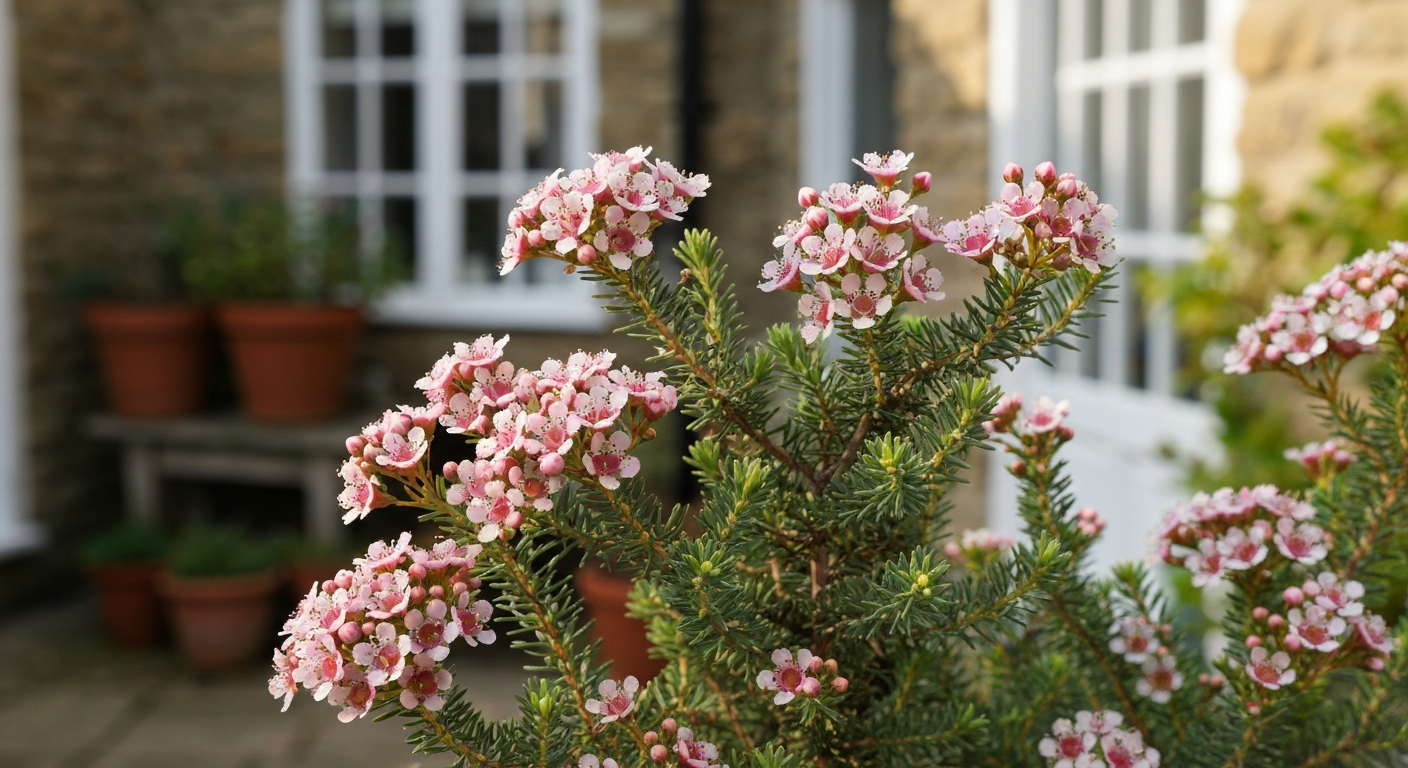
Yes, you can grow waxflower (Chamelaucium uncinatum, also called Geraldton wax) in the UK, but only certain gardeners in certain places will get away with it outdoors. The RHS gives it an H3 hardiness rating, which means it tolerates down to around −5°C but sits firmly in the "half-hardy" category. In practical terms, that points to containers brought inside for winter, a sheltered south-facing wall or courtyard, or a frost-free greenhouse in most of the country. If you're on the Isles of Scilly, the Channel Islands, or a genuinely sheltered coastal garden in Cornwall or Devon, you have a real shot at keeping it outside year-round. Everywhere else, expect to either protect it seriously or grow it primarily under glass. BBC Gardeners' World states Geraldton wax is "not sufficiently hardy to grow outside all year round in the UK" and advises keeping it in a conservatory or under glass in most parts of the country BBC Gardeners' World recommends growing Geraldton wax in a conservatory or under glass in most UK areas, noting it is "not sufficiently hardy to grow outside all year round in the UK"..
Can You Grow Wax Flower in UK? Practical Growing Guide

Who should actually try growing waxflower in the UK?
Waxflower is not a plant for anyone who wants something low-maintenance and left to its own devices. But for the right grower, it's genuinely rewarding and worth the effort.
Amateur gardeners with a conservatory, a well-lit porch, or a frost-free lean-to greenhouse are in the best position. You don't need a heated glasshouse, just something that keeps temperatures above about +4°C on the coldest nights. If you've already got marginal plants like lemon verbena or a tree fern surviving in a protected spot, waxflower is the next logical challenge.
Smallholders and cut-flower growers have good reason to explore it. Waxflower stems are commercially valuable, long-lasting in the vase, and genuinely beautiful. If you have a polytunnel already in use, you're most of the way there. A 1–3°C temperature advantage inside an unheated polytunnel compared to outside can be the difference between a plant that survives winter and one that doesn't.
Plant enthusiasts and collectors who like pushing boundaries will find waxflower a satisfying project. It's the kind of species where site selection, drainage, and understanding your microclimate really matter, and getting it right feels like a proper achievement. If you enjoy growing other Australian or South African species, you'll recognise the logic immediately: excellent drainage, full sun, and lean feeding.
Where in the UK is waxflower feasible?
The RHS H3 rating (half-hardy, tolerating −5°C to +1°C) is your starting point for mapping out where this plant can realistically go. But the Met Office regional data matters just as much. The UK is not one climate, and the difference between a sheltered Cornish garden and an exposed site in northern England is enormous. A Welsh inland site, for example, can see mean winter minimum daily temperatures around 1.5°C and 40+ days of air frost per year, which is a very different environment from Penzance.
| UK Region | Outdoor Viability | Best Approach |
|---|---|---|
| Isles of Scilly / Channel Islands | High — rarely hits −5°C | Outdoor planting with basic shelter |
| Cornwall, South Devon, Scilly coast | Moderate to good in sheltered spots | South-facing wall or courtyard, fleece in hard winters |
| South Coast (Dorset, Hampshire, Kent) | Possible in sheltered microclimates | Container or wall-trained, move under glass in cold snaps |
| London and the South-East | Marginal outdoors | Container as default; overwinter in frost-free greenhouse or conservatory |
| Midlands and East Anglia | Too risky outdoors | Greenhouse or conservatory only |
| Wales, Northern England | Not suitable outdoors | Frost-free glass structure essential |
| Scotland | Not suitable outdoors | Heated greenhouse required; not recommended unless you have the infrastructure |
One thing worth saying clearly: even in Cornwall or Devon, hard winters do happen. The February 2018 'Beast from the East' brought genuinely damaging temperatures to parts of the South-West that rarely see them. If you're planting outdoors in these milder regions, always have fleece to hand and know how to use it. The RHS notes that a heavier horticultural fleece layer gives around +2°C of frost protection, which can nudge an H3 plant through a bad night.
Understanding climate-feasibility and microclimates
When I'm assessing whether a marginally hardy plant is worth attempting, I always work backwards from the hardiness rating to my specific site, rather than reading someone else's success story and assuming it'll translate. An H3 rating tells you the plant can survive −5°C, but only under the right conditions. It doesn't mean it'll manage a sustained period of −3°C with wet roots on a north-facing slope.
The key factors to check for your own garden are how many air-frost days you typically see in winter, what your record low temperature is, how exposed the site is to wind, and whether you have structures, walls, or slopes that create warmth. South and south-west facing walls are classic microclimate makers, absorbing heat during the day and radiating it at night. A walled courtyard in Dorset can genuinely behave like a climate zone or two warmer than the surrounding countryside.
Look up your nearest Met Office weather station for local frost statistics rather than relying on county-level generalisations. Inland valley gardens can be frost pockets, while a coastal garden 50 metres away might rarely frost at all. This is the kind of site-specific thinking that separates successful attempts at difficult plants from expensive failures, and it applies to any species in the 'can I grow this?' category.
Site selection and soil: getting the basics right
Drainage is the single most important factor for waxflower. This is not an exaggeration. In its native Western Australian heathlands, Chamelaucium grows in light sandy soils that drain almost instantly. Wet roots in winter are not just stressful for the plant, they're a death sentence, and a fairly quick one. The plant is highly susceptible to soilborne pathogens including Phytophthora (root rot), which thrives in waterlogged conditions. Commercial growers in Australia sometimes use disease-resistant grafted rootstocks specifically because of this risk.
For in-ground planting in suitable UK climates, choose the most free-draining spot you have. Sandy or loamy soils are ideal. Heavy clay is problematic even if you improve it significantly. If your soil is clay or holds moisture through winter, a raised bed with substantial grit and coarse horticultural sand worked in is a much safer option than trying to plant directly. Aim for soil pH in the slightly acid to neutral range, roughly 6.0 to 7.0, though waxflower tolerates a reasonable range as long as drainage is right.
- Full sun to very light shade — a south or south-west facing position
- Excellent drainage: no waterlogging at any time of year
- Sandy, loamy or gritty soil — avoid heavy clay without major amendment
- Shelter from cold north and east winds, especially in borderline areas
- pH 6.0 to 7.0 preferred, but drainage matters more than exact pH
- Avoid planting in frost pockets or sites with poor air circulation
Container growing: often the smarter choice for UK gardens
For most UK gardeners outside the mildest coastal zones, growing waxflower in a container is the most sensible approach. It lets you move the plant to a frost-free space in winter and gives you complete control over the growing medium. Use a free-draining mix: something like three parts John Innes No. 2 blended with two parts coarse horticultural grit or perlite works well. Avoid peat-heavy, moisture-retentive composts, and don't use multi-purpose compost on its own.
Keep the pot size moderate. A large container holds more moisture around the roots for longer, which increases disease risk. Move up in pot size gradually as the plant grows rather than potting straight into an oversized container. Make sure the pot has good drainage holes and raise it on pot feet to prevent it sitting in a saucer of water.
In winter, move containers into a frost-free greenhouse, unheated conservatory, or enclosed porch once temperatures start dropping regularly below about +4°C. The RHS Growing in containers, RHS advice (overwintering, potting media and insulating pots guidance) recommends moving container plants to frost-free spaces, using free-draining potting media, keeping pots a moderate size, and insulating or wrapping pots for winter protection Growing in containers — RHS advice (overwintering, potting media and insulating pots guidance). An unheated polytunnel or lean-to typically stays 1–3°C warmer than outside air temperature, which is often enough. If you use a small thermostatically controlled greenhouse heater set to hold a minimum of +4 to +6°C, you'll cover even harsh UK winters comfortably.
Planting plan and seasonal care calendar
Kings Park Botanic Garden in Western Australia recommends autumn or winter planting for waxflower in its native climate, which corresponds to the plant's natural growth cycle. In the UK, the logic is different: plant in late spring after frost risk has passed, so the plant has a full growing season to establish before its first winter. For container plants, late April to May works well. For outdoor planting in sheltered coastal gardens, aim for the same window.
| Season / Month | Key Tasks |
|---|---|
| Spring (April–May) | Plant out or pot on; apply slow-release fertiliser; begin regular watering as growth picks up |
| Late Spring (May–June) | Monitor new growth; tip-prune lightly after flowering to maintain shape; watch for pests |
| Summer (June–August) | Water regularly but allow soil to dry between waterings; avoid overwatering; full sun essential |
| Autumn (September–October) | Reduce watering; prepare for winter; move containers under cover before first frost |
| Winter (November–February) | Keep frost-free under glass; water sparingly (just enough to prevent complete drying); minimal feeding |
| Late Winter (February–March) | Watch for early flowering; resume light feeding; plan any repotting before growth accelerates |
In the first year, the priority is establishment rather than flowering. Don't push the plant hard with feeding, and don't let it dry out completely in summer. A light slow-release native-plant fertiliser applied at planting is enough to get it started without overstimulating leafy growth at the expense of the root system.
Watering and feeding in British conditions
Waxflower is drought-tolerant once established, which sounds ideal for the UK but comes with a catch: established drought tolerance does not mean the plant handles wet conditions well. In a UK summer, you're generally watering to supplement rainfall during dry spells rather than providing primary irrigation. The key rule is to let the soil or compost dry out noticeably between waterings. Consistently damp compost is more dangerous than an occasional dry day.
In containers, check the compost by pushing a finger 3–4 cm into the mix. Water only when it feels dry at that depth. In summer this might mean watering every few days; in cool or wet periods, it might mean leaving the plant alone for a week or more. In winter under glass, water once every two to three weeks at most, just enough to prevent the compost from bone-dry desiccation.
For feeding, a slow-release fertiliser formulated for Australian or native plants (low in phosphorus) is the ideal choice, applied once in spring. High-phosphorus fertilisers, including many standard rose or shrub feeds, can damage Australian Proteaceae-related species and should be avoided. If you can't find a specialist native-plant fertiliser, a low-phosphorus, slow-release option is better than nothing, applied sparingly. Waxflower is not a hungry plant and over-feeding, particularly with nitrogen, pushes leafy growth at the expense of flowers.
Pruning and shaping for better flowering
Waxflower benefits from regular pruning to stay bushy and productive. Left unpruned, plants can become leggy and open, with flowers only at the tips of long bare stems. The good news is that pruning is straightforward once you know the timing and how hard to go.
The main pruning should happen immediately after flowering, which in UK conditions under glass is typically late winter to early spring. Remove spent flower stems and tip-prune the remaining growth to encourage branching. Kings Park guidance suggests you can safely reduce the plant by up to one-third at this stage. Don't cut back into completely bare old wood, as waxflower is not reliably able to regenerate from there in the way that some shrubs do.
Through the growing season, light tip-pruning of new growth by a few centimetres every six to eight weeks keeps the plant compact and stimulates the lateral shoots that carry the best flower displays. This is especially useful for container plants, where you want a manageable, bushy shape rather than a rangy shrub.
- Prune main stems by up to one-third immediately after flowering finishes
- Always cut back to a leaf node or side shoot, not into bare wood
- Tip-prune new growth through summer to encourage a bushy habit
- Remove any dead, damaged, or crossing stems in late spring
- Avoid any significant pruning in autumn or winter when the plant is going into a low-growth phase
Propagation and recommended varieties
Waxflower is typically propagated from semi-ripe cuttings taken in summer, from July to August. Take 8–10 cm tip cuttings from healthy, non-flowering growth, remove the lower leaves, and dip the cut end in rooting hormone. Insert into a free-draining propagation mix (equal parts perlite and coarse sand works well) and keep at around 18–20°C with bottom heat if possible. Rooting takes several weeks and is not always reliable, so take more cuttings than you need.
Chamelaucium uncinatum is the main species available in the UK, and it comes in several colour forms. White and purple-pink flowered selections are the most commonly stocked in specialist nurseries. Named cultivars like 'University' (deep purple-pink), 'Album' (white), and 'Early White' are worth seeking out if you want reliable colour. For cut-flower production, larger-flowered, more vigorous cultivars will give you better stem length and vase life. Check with Australian plant importers or specialist Mediterranean and Australian plant nurseries, as availability in mainstream UK garden centres is limited.
Pests, diseases and what to watch for
The biggest risk is root disease, specifically Phytophthora root rot, which thrives when drainage is poor or watering is excessive. There is no cure once a plant is significantly infected, so prevention through drainage and watering discipline is everything. If a plant collapses suddenly during or after a wet period and the roots are brown and mushy, Phytophthora is the most likely cause.
Myrtle rust (caused by Puccinia psidii) is a fungal disease that affects plants in the Myrtaceae family, which includes waxflower. Research has found that wild Chamelaucium uncinatum populations have no resistance to this pathogen. While myrtle rust is primarily a biosecurity concern in Australia and has limited UK presence currently, it is worth being aware of and monitoring. Keep an eye on regulatory notices if you're sourcing plant material, especially anything imported.
Under glass, watch for the usual suspects: red spider mite in hot dry conditions (raise humidity to deter them), scale insects on stems, and mealy bug. Good air circulation in your greenhouse or conservatory helps prevent the fungal issues that come with still, damp winter air. Avoid overhead watering on the foliage.
Waxflower as a cut flower in the UK
This is one of the genuinely compelling reasons to try waxflower in the UK. The cut stems are long-lasting in the vase (often two weeks or more), the flowers are delicate and unusual, and florists pay well for them. UK-grown waxflower is still a novelty in the domestic cut-flower market, which means smallholders with a polytunnel setup and a direct sales route could find a real gap here. Harvest stems when the majority of flowers on a stem are open but a few buds remain. Cut early in the morning, recut the stem ends underwater, and condition in fresh water for several hours before arranging.
If waxflower is too much of a stretch: alternative plants for colder areas
If you're in Scotland, the Midlands, or anywhere that sees regular hard frosts and doesn't have a greenhouse, waxflower is probably not worth the attempt. For similar guidance on assessing cold‑climate suitability for another marginal plant, see does wormwood grow in the UK. But the appeal of delicate, heather-like flowers on a compact shrub with good cut-flower potential is understandable, and there are alternatives that cover similar ground with much less infrastructure. If you're curious about another self-seeding option, see does wild lettuce grow in the UK for guidance on its suitability and management here.
- Erica and Calluna (heaths and heathers) — genuinely hardy across most of the UK, excellent late-season colour, similar fine-textured foliage and flower aesthetic
- Leptospermum scoparium (New Zealand tea tree) — RHS H4, hardier than waxflower, similar delicate flowers, good on well-drained soils in mild areas
- Ozothamnus rosmarinifolius — RHS H4, Australian native, fragrant white flowers, better cold tolerance than Chamelaucium
- Teucrium fruticans (shrubby germander) — tough Mediterranean shrub for well-drained sheltered spots, silver-grey foliage with lavender-blue flowers
- Escallonia — fully hardy in most of the UK, similar coastal tolerance, good cut-flower potential
A decision checklist for judging any non-native plant for UK conditions
Working through waxflower as a case study reveals a framework that applies to almost any unfamiliar species, whether you're asking about ghost pipe, milk thistle, wild lettuce, wormwood, or any other plant with uncertain UK viability. Use these questions every time.
- What is the RHS hardiness rating, and does your site realistically match it? (H3 means half-hardy — check your local frost statistics, not county averages)
- What is the plant's native climate? Hot and dry, tropical humid, high-altitude cold? Does any part of your garden approximate that, even with microclimate management?
- What does the plant need most critically? For waxflower it's drainage. Identify the non-negotiable factor and decide if you can genuinely provide it
- Is the limiting factor frost, waterlogging, humidity, light, or something else? Different problems need different solutions
- Can you provide protection (glass, fleece, wall shelter) and is that effort proportionate to what you'll get from the plant?
- What are the main disease and pest risks in UK conditions, and can you manage them without specialist intervention?
- Is there a hardier alternative that gives you most of what you want with less risk? If yes, is the original plant worth the extra effort anyway?
Waxflower sits at the optimistic end of what's achievable in the UK with the right setup. It's not a wild gamble in mild coastal gardens or under glass, but it's also not a plant you can stick in a border and forget. If you can answer yes to the essentials: excellent drainage, frost-free winter protection, full sun, and the discipline to water sparingly, then it's absolutely worth trying. If you're comparing other non-native candidates, you might also want to look up whether milk thistle grows in the UK (search: does milk thistle grow in the UK) as a comparable hardiness example.
FAQ
Short answer: can you grow waxflower (Chamelaucium spp.) in the UK?
Yes — but only in parts of the UK and with caveats. Chamelaucium (Geraldton wax and relatives) are RHS H3 (half‑hardy: approx. −5°C lower limit). They will survive outdoors reliably only in the mildest coastal/southern microclimates (Channel Islands, Isles of Scilly, sheltered south‑coast/South‑West sites) or in very sheltered courtyards and against warm walls. Elsewhere you must use containers and move plants under cover, a heated/insulated greenhouse, or provide seasonal protection (fleece/cloches) to avoid winter kill.
Region-by-region expectations and how to interpret RHS hardiness for your area
Use the RHS H3 rating (hardy to about −5°C) alongside local winter minima and frost frequency. Practical expectations: - Very mild coastal areas (Channel Islands, Isles of Scilly, mild south coasts): likely safe outdoors with good drainage. - South & South‑West England coastal pockets and well‑sheltered urban courtyards: often feasible with careful siting and shelter. - Central & northern England, Wales inland, Scotland, Northern Ireland: too risky outdoors year‑round; use containers/cover. - Highland and exposed sites: unsuitable outdoors. If your typical winter minima approach or go below −5°C, plan on winter protection or containerisation.
Site and soil: what exact planting conditions do Chamelaucium need?
Essential requirements: - Full sun to light afternoon shade. - Very free‑draining soil (sandy/gritty or raised bed). Avoid any site that holds water. - Neutral to slightly acidic or alkaline soils tolerated, but drainage is the priority. - Plant in autumn or spring when soil is workable. If your garden has heavy clay, plant on a raised mound, in a very gritty mix, or use containers; poor drainage is the commonest cause of failure.
Planting and seasonal care plan (year-round checklist)
Planting: use a gritty, free‑draining planting mix; add horticultural grit or sharp sand; plant on a small mound to shed water. Watering: establish with regular watering first season; thereafter drought tolerant — water sparingly and avoid waterlogging. Feeding: apply a low‑phosphate, slow‑release 'native' or ericaceous‑style fertiliser at planting and a light feed in spring. Pruning: tip‑prune after flowering (usually late winter/early spring for many cultivars) to keep bushy; reduce by no more than one‑third and never cut back into old wood. Winter: in marginal sites, protect with horticultural fleece, cloche or move container indoors; ensure pots are not sitting in frozen, saturated soil.
Propagation: how to propagate and recommended varieties for UK cultivation
Propagation: from semi‑ripe cuttings (late summer) struck in a free‑draining cutting mix with bottom heat or in glasshouse; seed is possible but less reliable for cultivar traits. Recommended varieties for UK use: choose named cultivars selected for garden performance and reported greater frost tolerance (Geraldton wax hybrids and selections). Select compact forms for containers and those noted by nurseries as 'hardier' or suited to coastal gardens. When sourcing, buy from reputable UK suppliers to reduce disease risk.
Container versus in‑ground: how to decide and how to overwinter containers
Containers are recommended outside the warmest coastal microclimates. Container protocol: use a medium high in grit and free‑draining compost, use pots sized to avoid excessive water retention (not overly large), ensure excellent drainage, and sit pots on pot feet to avoid standing water. Overwintering: move containers to a cold greenhouse/porch or an unheated conservatory; if leaving outside, position against a south or west wall, mulch surface, wrap pots with horticultural fleece or bubble wrap, and use fleece/cloches over the plant. For consistent success, overwinter above typical outdoor minima (aim to keep roots above −2 to −4°C and avoid prolonged soil saturation).
Can You Grow Pine Nuts in the UK? Practical Guide for Gardeners
Can you grow pine nuts in the UK? Practical verdict, best species, site tips, harvesting, yields and alternatives.