Yes, you can absolutely grow lion's mane mushrooms in the UK, but there's an important catch: it has to be indoors. Lion's mane (Hericium erinaceus) is actually a native British species, which sounds like good news until you realise that's exactly why growing it outdoors is a problem. Because it's rare and legally protected in the wild, both the RHS and Kew's Grow Wild project advise against outdoor cultivation. The concern is that cultivated strains could hybridise with or outcompete native populations. So if you were picturing logs in the garden, put that idea aside. Inside your home, though, this is one of the more beginner-friendly gourmet mushrooms you can try, and the UK's reliably cool, damp climate is actually well-suited to it. If you are wondering does lion's mane grow in the UK outdoors, the practical answer is that it should be grown indoors to avoid legal and ecological risks. Camomile can grow in the UK, but it does best when the soil is well drained and it gets enough sun does chamomile grow in uk.
Can you grow lion’s mane mushrooms in the UK? A guide
Indoor vs outdoor: what actually works in the UK
Indoors is the only realistic and responsible route. A spare bedroom, a kitchen counter, a cool utility room, a garage corner with some airflow, or even a large cupboard, all of these can work. What lion's mane needs is a temperature between 17 and 25°C for fruiting, relative humidity of 85 to 95%, CO2 levels below 1000 ppm (which basically means decent ventilation), and a modest amount of ambient light. Most UK homes hit that temperature range comfortably between May and October without any additional heating, and the cooler months still work if you can find a warm-enough spot indoors.
If you're in Scotland or the north of England, your ambient indoor temperatures in winter will likely be too low to fruit lion's mane without supplemental heat, unless you're growing near a heat source. In the south, a centrally heated room from autumn through spring stays well within the fruiting window. Avoid unheated garages and sheds from November to March anywhere in the UK, as night temperatures can easily drop below the 9°C minimum needed even for primordia formation. The outdoor option is simply off the table from an ecological responsibility standpoint, and UK weather is too unpredictable for it to be practical anyway.
What you'll need before you start
The easiest entry point by far is a ready-to-fruit grow kit, which is a fully colonised block of substrate (typically a mix of wood and grain) already packed with lion's mane mycelium. You open it, cut it, mist it, and wait. These kits are widely available from UK suppliers and cost very little. Fungi Foods sells a lion's mane fruiting block for around £9.99, while Grow Sow Greener offers a 2.5 kg ready-to-fruit block for around £11.24. Other good UK sources include BaltiSpore, MycoCultures, Micro Acres Wales, Maya Mushrooms, and Urban Farm-Produce.
If you want to go further and inoculate your own substrate from scratch, you'll need lion's mane grain spawn (available from the same suppliers), a suitable substrate such as hardwood sawdust supplemented with wheat bran or oat bran, polypropylene grow bags, and a pressure cooker for sterilisation. That's a bigger commitment and has more failure points, so if you're new to mushroom growing, start with a ready-made block. You can always graduate to making your own substrate runs once you understand what the mycelium looks like at each stage.
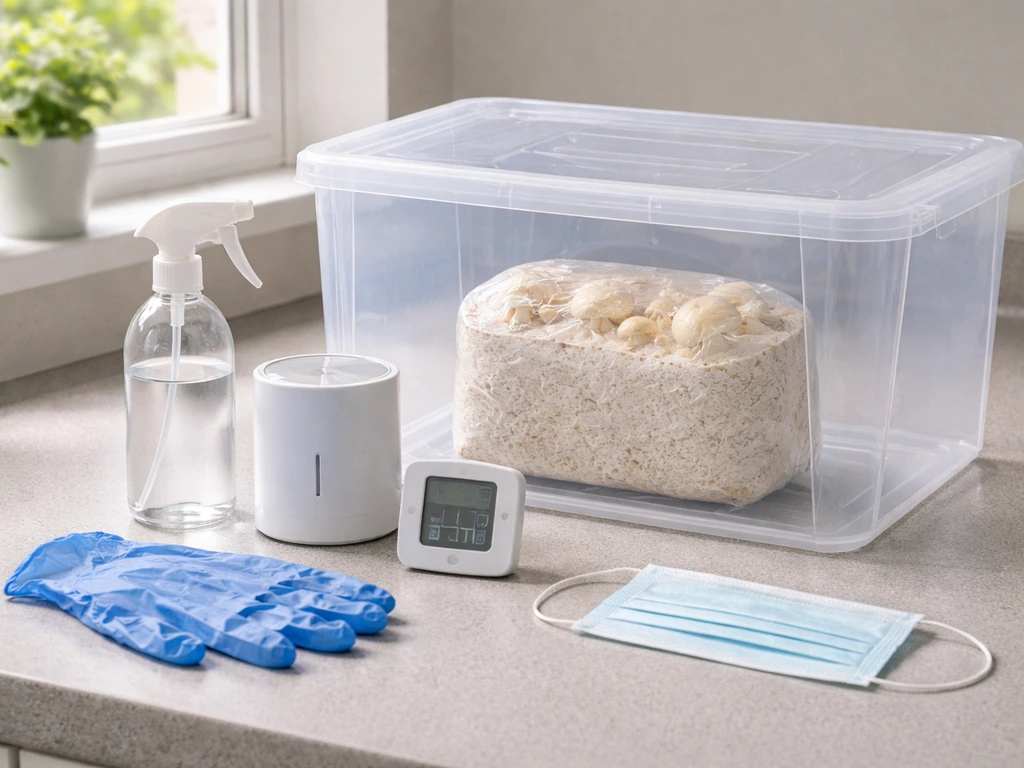
- Ready-to-fruit lion's mane block from a UK supplier (£9.99 to £12 for most options)
- A humidity tent (a large clear plastic bag or a purpose-made grow tent works well)
- A spray bottle filled with clean water for misting
- A thermometer and hygrometer to monitor temperature and humidity
- A sharp, clean knife or scalpel for making incisions in the bag
- Ambient light source (a north-facing windowsill or a basic LED strip is fine)
Step-by-step: from block to first harvest
When your kit arrives, check it immediately. Fully colonised blocks should be used within one to two weeks of delivery, or refrigerated at 1 to 7°C for up to six months (MycoCultures say up to three months for their kits; Fungi Foods advise up to six). If the block has already started pinning inside the bag after sitting in transit for a few days, that's normal and actually a sign of vigorous mycelium. Get started as soon as you can.
- Take your colonised block out of any outer packaging and inspect it. It should be white or off-white throughout with a firm texture. Greenish, black, or pink patches mean contamination and the block should be discarded.
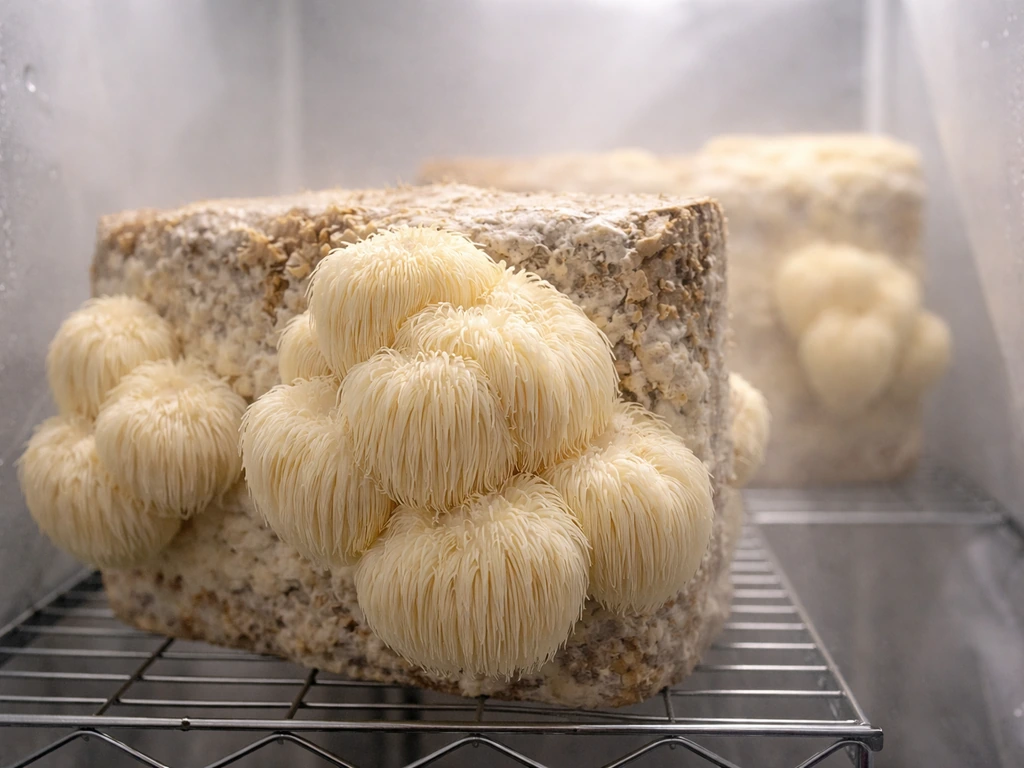
- Using a clean knife, make four staggered cross-shaped incisions about 1 inch by 1 inch on the sides of the grow bag. These are where the lion's mane will push through and form its characteristic white pom-pom fruitbodies. If pins appear elsewhere on the bag, make additional small cuts or remove the top of the bag entirely to redirect growth.
- Place the block inside a humidity tent. A large clear plastic bag loosely draped over the block works well, or sit the block in a container and tent it. Leave a small gap at the bottom for gas exchange.
- Mist the inside of the tent two to three times a day with clean water. You're aiming to keep humidity at 85 to 95% without waterlogging the cuts. The surface should look damp but not dripping. Avoid misting the mycelium directly at the incision points, especially early on.
- Keep the block somewhere with ambient light. A windowsill out of direct sun, or a shelf with a basic LED on for 12 hours a day, is all it needs. Direct sunlight will dry the block out rapidly.
- Within 5 to 15 days you should see white pins beginning to emerge from the incisions. These start as small fluffy tufts and develop into the distinctive cascading teeth (the 'mane') over the following days.
- Harvest when the teeth are clearly visible but before the edges start to yellow or brown. More on this in the harvesting section below.
- After harvest, let the block rest in a cooler, darker spot for 4 to 7 days. Then re-saturate it by misting heavily or dunking it briefly in water, and restart the fruiting conditions. Most blocks will give 2 to 3 flushes.
The conditions that matter most, and what they mean in practice
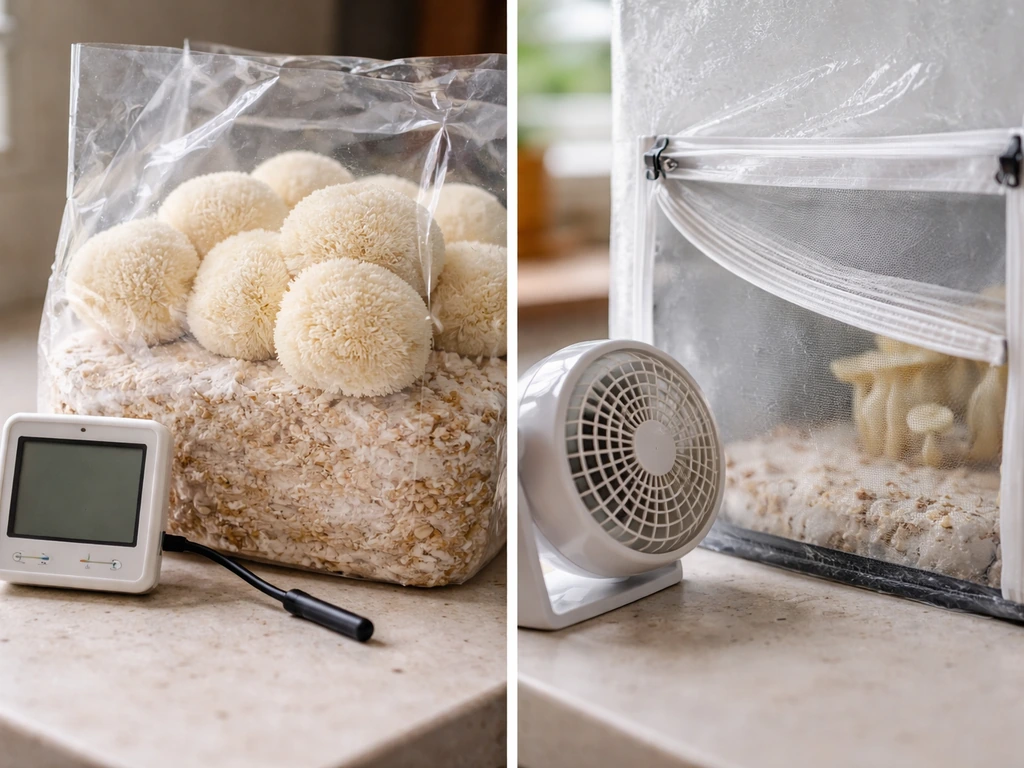
Lion's mane is not quite as forgiving as oyster mushrooms on conditions, so it helps to understand what each parameter actually means for your grow setup at home.
| Parameter | Target range | UK home reality |
|---|---|---|
| Fruiting temperature | 17 to 25°C | Achievable year-round in a heated room; harder in unheated garages in winter |
| Primordia formation temperature | 9 to 15°C | UK autumn and spring ambient temps naturally hit this in many homes |
| Relative humidity | 85 to 95% | Needs active misting and a tent; UK ambient humidity rarely reaches 85% |
| CO2 concentration | Below 1000 ppm | Requires regular fresh air exchange; a small gap in the tent is often enough |
| Light | 400 to 1200 lux (fruiting); 750 lux ideal | Ambient room light or a north-facing windowsill is sufficient |
| Time to harvest | 10 to 20 days per flush | Slightly longer in cooler conditions; up to 45 to 60 days in some controlled-grow environments |
The humidity tent is really the key piece of kit here. The UK's average indoor relative humidity hovers around 40 to 60%, which is far too dry for lion's mane to fruit well. The tent creates a microclimate that traps moisture from your misting, pushing humidity to the 85 to 95% range the mushroom needs. Just don't seal it completely: CO2 needs to escape and fresh air needs to get in, otherwise you'll end up with long, stringy, underdeveloped fruitbodies instead of the dense pom-pom shape you're after. A gap of a few centimetres at the base or a few small holes is usually enough.
One thing to watch for in UK homes specifically: radiators and central heating. If your block is sitting close to a radiator, it will dry out much faster than the misting can compensate for. The same applies to any block in direct sunlight. Both the RHS and MycoCultures' own guidance flag this as one of the most common causes of failed fruiting. Move the block somewhere cooler and shadier if you're struggling.
Troubleshooting: when things go wrong
No pins after 2 weeks
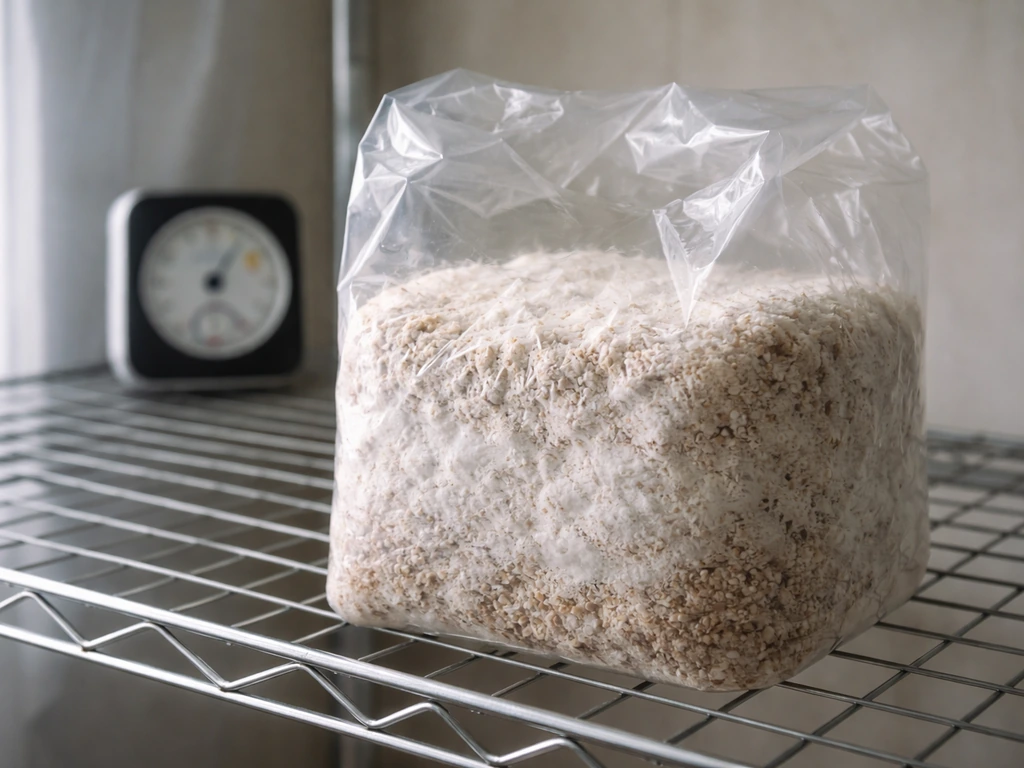
If nothing is happening after 15 days, the most likely culprits are low humidity, temperature out of range, or insufficient fresh air. Check your thermometer and hygrometer honestly. If your room is below 17°C, find somewhere warmer. If humidity isn't hitting 85%, mist more frequently or create a better seal on your tent while ensuring there's still some airflow. Also check that your incisions are actually open and not sealed up with dried mycelium.
Fuzzy or elongated growth
If you're getting long, hair-like mycelial growth rather than proper fruitbodies forming, CO2 is almost certainly too high. Open your tent more, increase the fresh air gap, or fan the block briefly a couple of times a day. Lion's mane needs CO2 below 1000 ppm to form properly shaped fruitbodies. In a sealed tent with no exchange, CO2 quickly rises above this and the mycelium produces elongated, underdeveloped growth as a response.
Yellowing or browning fruitbodies
Yellow or brown discolouration usually means one of two things: the mushroom is being harvested too late, or it's been exposed to excessive heat or direct sunlight. Harvest as soon as the teeth are clearly developed but still bright white. Lion's mane browns quickly once it starts to mature past its peak, and this speeds up considerably in warm or dry conditions.
Contamination (green, black, or pink patches)
If you see any green, black, or pink colouration on the block, that's mould contamination. Don't try to cut it out and carry on. Bag the entire block in a sealed bin bag and put it in your general waste. Do not compost it outdoors, and definitely don't bake or dispose of it in a way that releases spores into the environment. The RHS actually recommends baking used lion's mane cultures before disposal to prevent any ecological impact from cultivated spores reaching native populations.
Block drying out between mists
If the block is drying out faster than you can compensate with misting, move it away from heat sources and increase tent coverage. Between flushes, MycoCultures recommend a heavy misting or a brief dunk in water to re-saturate the block before restarting fruiting conditions. Think of it as the block needing a good drink to have the reserves to produce another flush.
Harvesting, storing, and eating your lion's mane safely
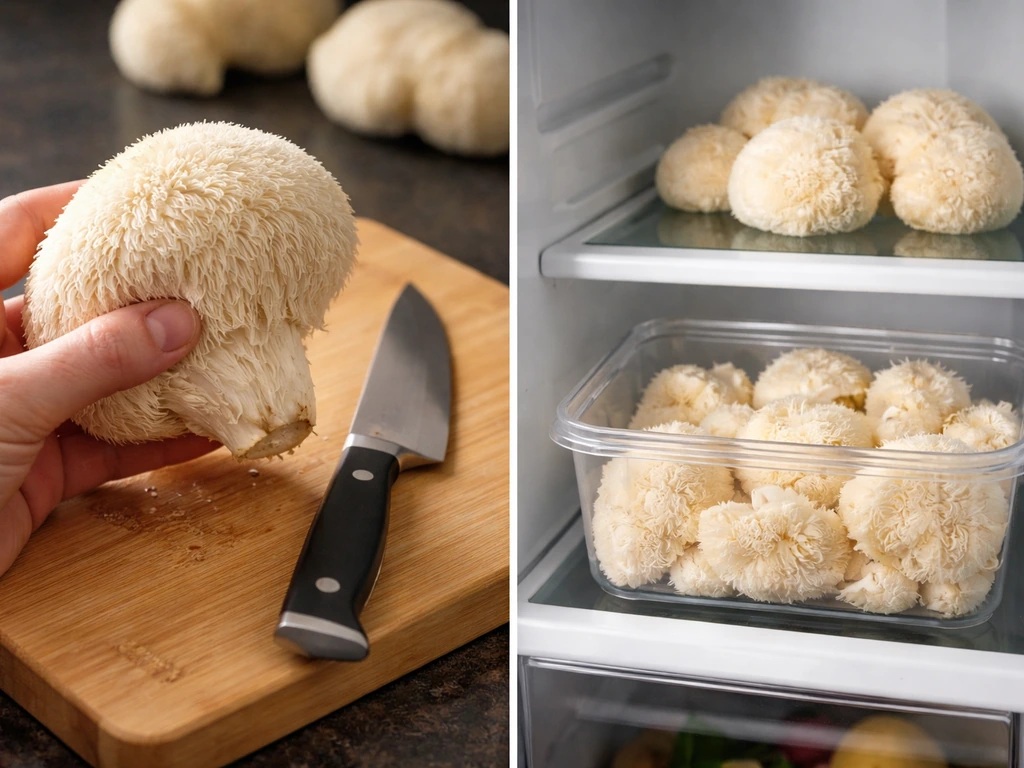
Harvest lion's mane by twisting and pulling the fruitbody off cleanly at the base, or cut it with a clean, sharp knife. The right moment is when the teeth are clearly visible and the whole fruitbody is still bright white. BaltiSpore's kit guidance is handy here: they specifically describe the development of 'toothiness' as the marker to watch for. Once that texture is fully formed and the mushroom feels firm but not hard, it's ready.
For storage, keep freshly harvested lion's mane in the fridge at 1 to 7°C. It will keep for around a week when refrigerated, though it's best used within three to four days. Do not wash it before storing as this speeds up deterioration. Discard any mushroom that has become slimy, smells unpleasant, or shows significant discolouration. These are signs of spoilage, and you don't want to cook with them.
Lion's mane should always be cooked before eating. Raw lion's mane can cause digestive discomfort in some people, and cooking improves both safety and flavour. It fries beautifully in butter, and its texture is often compared to crab meat or scallops. It has a mild, slightly sweet flavour that takes on whatever it's cooked with. If you have known allergies to mushrooms, start with a very small amount. Pregnant or nursing people, or those on certain medications, should check with a doctor before consuming any novel food. If you experience any unusual symptoms after eating it, stop and seek medical advice.
Effort, cost, and realistic success rates
Honestly, this is one of the more achievable mushroom grows for a UK beginner. A ready-to-fruit block from a good UK supplier costs around £10 to £12, takes about 10 to 20 days to produce a first flush, and requires only a spray bottle, a tent, and a decent spot in your home. The biggest failure modes are letting the block dry out near a radiator, sealing the tent too tightly, or ignoring the temperature range. If you can monitor conditions with a cheap hygrometer thermometer (under £10 from most garden centres or online) and mist consistently twice a day, your success rate is high.
The effort level is low to moderate. It's a daily commitment for misting and checking, but we're talking five minutes twice a day. Two to three flushes per block means you can get multiple harvests from that single £10 to £12 investment. If you enjoy the process and want to go deeper, moving to making your own blocks from grain spawn and hardwood sawdust substrate is absolutely doable, though the sterilisation and inoculation steps add complexity and more opportunities for contamination. For most people starting out, the kit approach is the right call.
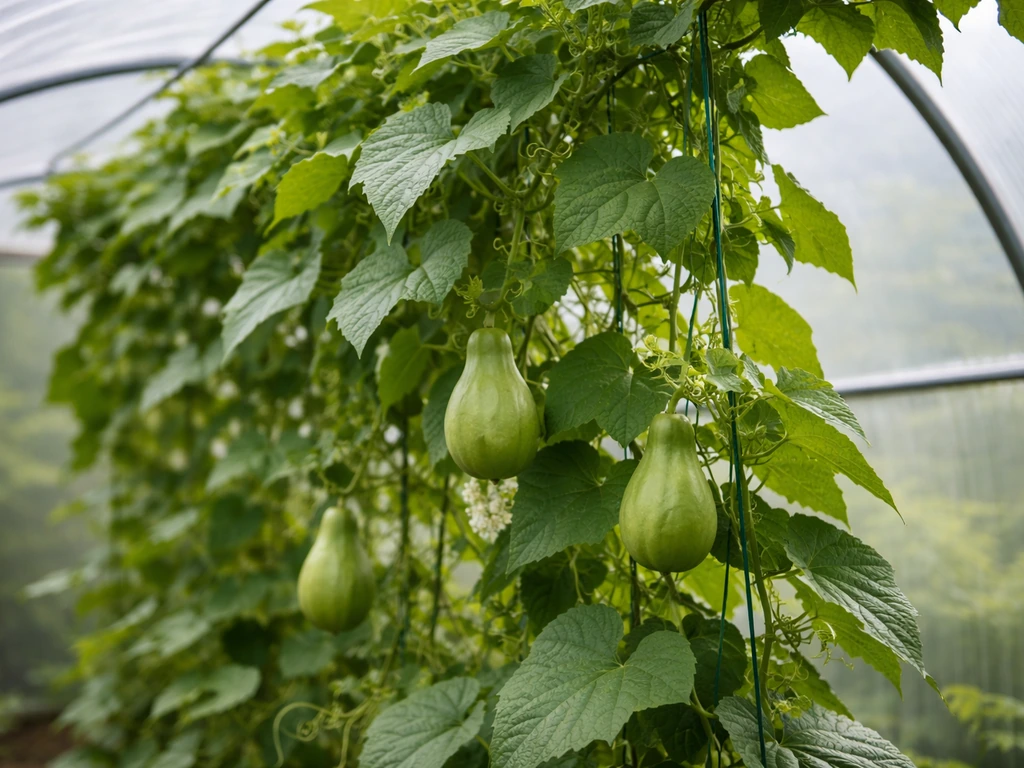
If you're also curious about other gourmet and medicinal mushrooms that can or can't realistically be grown in the UK, it's worth knowing that species like reishi and chaga present very different challenges, and wild-harvested species like cordyceps have their own fascinating (and complicated) UK status. You may also be wondering can you grow chayote in the UK, which is a very different proposition from growing mushrooms and depends heavily on temperature and season can you grow chayote in uk. For a similar question, you can also look at whether do cordyceps grow in the UK and what its current rules and practical limits are. Reishi is also something many people ask about, including whether it can be grown in the UK, but it has different requirements than lion's mane. If you’re wondering whether does chaga grow in the UK, the answer depends on where you look and the exact conditions the tree species provides. Lion's mane sits in a particularly interesting position: genuinely native to British woodlands in the wild, but one that you should only cultivate indoors out of respect for those fragile remaining wild populations.
FAQ
Can you grow lion’s mane outdoors in the UK if you’re careful with the risk of contamination?
No, the article’s guidance still applies. Even “careful” outdoor growing is discouraged because lion’s mane is legally protected in the wild in the UK, and cultivated strains could hybridise with native populations or spread via spores. Indoors is the responsible option.
What indoor setup works best if I don’t have a humidity tent?
A humidity tent is the simplest way to reach the 85 to 95% humidity range, but you can improvise with a large clear plastic tub or grow chamber plus a humidifier. The key is measurable humidity plus enough fresh air exchange, otherwise you’ll get elevated CO2 and long stringy growth.
If my home is below 17°C, is there a way to fruit lion’s mane without central heating?
Yes. You can use supplemental warmth near the fruiting area, for example a small thermostat-controlled heater in the room or keeping the tent in a warmer indoor microclimate. Avoid placing the block directly against a heat source, since heat spikes and drying are a common cause of browning and poor flushes.
How quickly can I expect my first harvest from a UK ready-to-fruit block?
The article says about 10 to 20 days for the first flush. A practical tip is to start checking for “toothiness” around day 10, since waiting until the teeth are fully dark or over-mature can lead to faster browning.
My block pinned inside the bag during shipping, is it still usable?
Usually, yes. Pinning in transit after a few days is often a sign of vigorous mycelium. Still, start fruiting conditions promptly because the first flush may begin earlier than usual and you’ll want to harvest at the bright white peak.
What’s the safest way to ventilate the humidity tent without dropping humidity too much?
Use brief, consistent air exchange rather than fully removing the block. For example, open a small vent gap or add small holes, then do short fans or quick openings on a schedule. The goal is to keep humidity high while ensuring CO2 stays under control.
How do I tell the difference between drying out and CO2 problems?
Drying out typically shows reduced development, slower growth, or browning, and it often happens near radiators or sunlight. CO2 issues show up as elongated, hair-like growth with poor tooth formation, especially when the tent is too sealed.
Is it okay to wash lion’s mane before cooking or storing?
The article advises against washing before storage. If you need to clean it, do a quick wipe or very light cleaning right before cooking, then cook promptly, because extra moisture can accelerate spoilage.
What should I do if I suspect mould but only see it on part of the block?
Don’t try to salvage. The article recommends bagging and disposing of the entire block if you see green, black, or pink mould, and not composting or disposing in ways that could release spores.
Can I re-use the substrate block after it stops producing flushes?
Typically, once production slows significantly across later flushes, the block has run out of usable nutrients and reserves. The article’s rehydration advice can help restart fruiting between flushes, but if temperatures and humidity are correct and you still get no new fruiting, it’s usually time to retire the block.
Is lion’s mane safe for everyone, and what’s the best first step if I have mushroom sensitivities?
It should always be cooked, and if you have known mushroom allergies, the article suggests starting with a small amount. If you have a sensitive gut or have reacted to other edible fungi before, consider discussing it with a clinician, especially if symptoms have occurred previously.
Can You Grow Chayote in the UK? Step-by-Step Guide
Can you grow chayote in the UK? Get a step-by-step guide to succeed in warmth, containers, and frost protection.